Caramelized Butternut Squash, Carrots, Brussels Sprouts & Sweet Potato with Feta, Walnuts & Cranberry-Honey Glaze
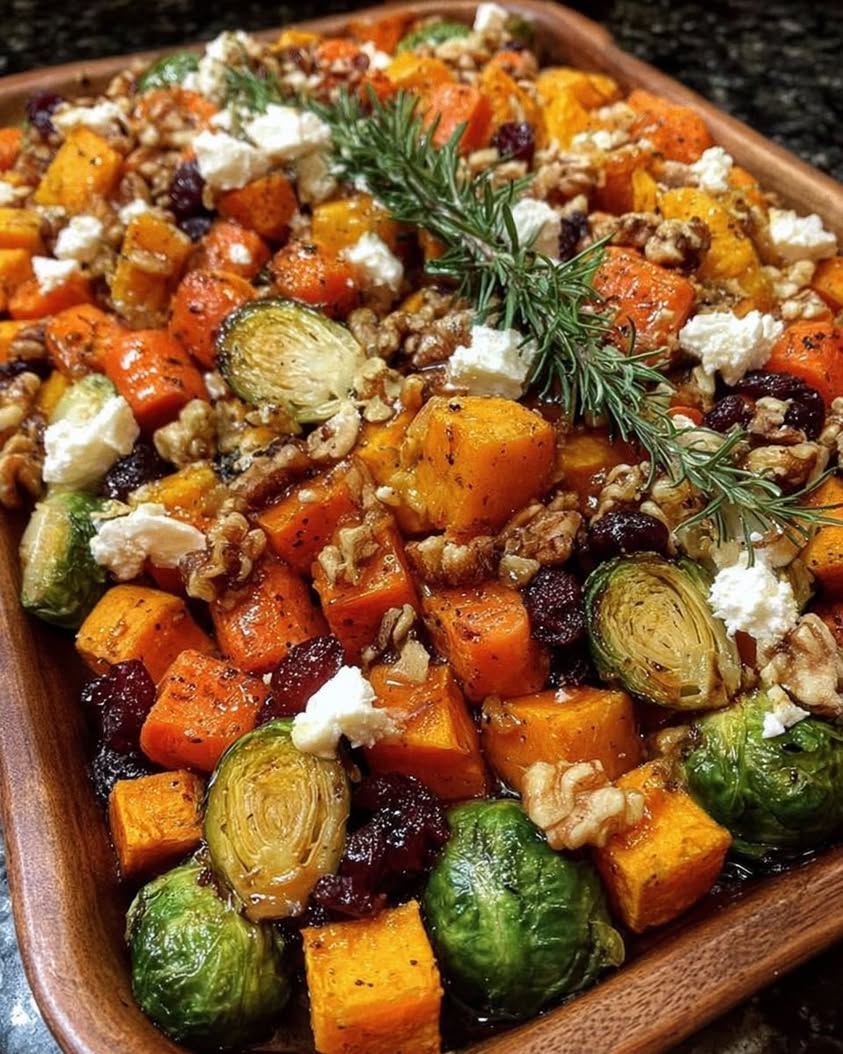
This Caramelized Butternut Squash, Carrots, Brussels Sprouts & Sweet Potato with Feta, Walnuts & Cranberry-Honey Glaze is the ultimate fall side dish. You get sweet, savory, and tangy flavors in every single bite. The vegetables caramelize beautifully in the oven, and that sticky cranberry-honey glaze brings everything together like magic. I love how this recipe turns humble vegetables into a show-stopping dish that even picky eaters will devour.
When you roast butternut squash and sweet potato at high heat, their natural sugars intensify. The Brussels sprouts get crispy edges while staying tender inside. Carrots add a subtle earthy sweetness that balances the tangy feta perfectly. Then you drizzle that warm cranberry-honey glaze over the top and sprinkle crunchy walnuts for texture. This is the kind of side dish that steals the spotlight at any holiday table or weeknight dinner.
What makes this Caramelized Butternut Squash, Carrots, Brussels Sprouts & Sweet Potato with Feta, Walnuts & Cranberry-Honey Glaze so special is how easy it is to prepare. You just chop everything, toss it with oil and seasonings, and let the oven do the work. Meanwhile you can focus on your main course or relax with a glass of wine. The feta adds a salty creaminess that contrasts with the sweet glaze, and the walnuts provide that satisfying crunch. Honestly this dish makes you feel like a gourmet chef with minimal effort.
Quick Recipe Highlights
- Flavor Profile: This dish delivers a perfect balance of sweet roasted vegetables, tangy crumbled feta cheese, and a bright cranberry-honey glaze. The walnuts add a nutty undertone that ties everything together beautifully. Each forkful offers a new combination of flavors that keeps you coming back for more.
- Texture: You get soft and caramelized interiors with crispy edges on the vegetables. The feta stays creamy and crumbly while the walnuts provide a satisfying crunch throughout. The glaze adds a sticky element that coats every piece perfectly.
- Aroma: Your kitchen fills with the warm scent of roasted root vegetables mingling with sweet honey and tart cranberries. The toasted walnuts add an earthy, nutty note that smells incredibly inviting. It is the kind of aroma that makes everyone wander into the kitchen asking what is for dinner.
- Visual Appeal: The vibrant orange of the butternut squash and sweet potato contrasts beautifully with the deep green Brussels sprouts. White crumbles of feta and golden brown walnuts create an impressive presentation on the plate. A glossy glaze makes everything look professionally finished and absolutely irresistible.
- Skill Level Needed: This recipe is perfect for beginners because it requires only basic knife skills and simple roasting techniques. There are no complicated steps or special techniques to master. Even if you are new to cooking roasted vegetables, you will get excellent results on your first try.
- Special Equipment: You need a large baking sheet or sheet pan with a rim to hold all the vegetables. A good chef knife makes chopping the butternut squash and sweet potato much easier. A small saucepan is useful for warming the cranberry-honey glaze before drizzling.
Recipe Overview
- Difficulty Level: This is an easy recipe because the steps are straightforward and forgiving. The oven does most of the work for you while you just toss and season the vegetables. Even if you walk away for a few extra minutes, the vegetables will still turn out beautifully caramelized. There is no risk of overcooking as long as you check for tenderness.
- Category: This dish works wonderfully as a side dish for roasted meats, poultry, or fish. It also stands alone as a satisfying vegetarian main course when paired with a grain like quinoa or farro. You can serve it at casual weeknight dinners or elegant holiday feasts with equal success.
- Cuisine: This recipe draws inspiration from Mediterranean and Middle Eastern culinary traditions that combine sweet and savory flavors. The combination of roasted vegetables with feta cheese and honey is classic in Greek cuisine. The addition of cranberries adds a distinctly American touch that makes this dish perfect for Thanksgiving or Christmas tables.
- Cost: All the vegetables in this recipe are affordable and available year-round at most grocery stores. Feta cheese is moderately priced and a little goes a long way for flavor. Walnuts and dried cranberries are pantry staples that you likely already have on hand.
- Season: This dish is absolutely perfect for autumn when butternut squash and Brussels sprouts are at their peak freshness. The warm, comforting flavors make it ideal for cooler weather meals from September through December. However you can enjoy this recipe year-round since most ingredients are available in any season.
- Occasion: This dish shines at Thanksgiving dinner, Christmas celebrations, and Easter brunches. It also works beautifully for potlucks and holiday parties where you want to impress guests. Even a simple Sunday dinner feels special when you serve this colorful, flavorful side dish.
Why You’ll Love This Recipe
The taste of this Caramelized Butternut Squash, Carrots, Brussels Sprouts & Sweet Potato with Feta, Walnuts & Cranberry-Honey Glaze is truly unforgettable. The vegetables get perfectly caramelized in the oven, developing deep, sweet flavors that make your mouth water. The salty feta provides a creamy counterpoint to the sweet glaze, and the walnuts add a pleasant crunch. Every single bite offers a new combination of textures and flavors that keeps you interested. Plus the cranberry-honey glaze adds a bright, tangy sweetness that ties everything together seamlessly. You will find yourself scraping the pan to get every last bit of that delicious glaze.
One of the best things about this recipe is how convenient it is for busy home cooks. You only need about fifteen minutes of active prep time to chop the vegetables and mix the glaze. The oven takes care of the rest while you tend to other parts of your meal or relax. The ingredients are simple and easy to find at any grocery store. You do not need any special cooking skills or expensive equipment to make this dish. It is the kind of recipe that makes you look like a pro without any of the stress.
From a nutritional perspective, this dish is packed with vitamins, fiber, and healthy fats. Butternut squash and sweet potatoes are loaded with beta-carotene and vitamin A for eye health. Brussels sprouts are rich in vitamin C and antioxidants that support your immune system. Walnuts provide omega-3 fatty acids that are great for brain health and reducing inflammation. The feta cheese adds calcium and protein without being overly heavy. You can feel good about serving this nutritious dish to your family and friends.
This recipe is also perfect for entertaining because it looks impressive with minimal effort. The vibrant colors of the roasted vegetables create a beautiful presentation on any table. Your guests will think you spent hours in the kitchen when really it was mostly hands-off time. The sweet and savory combination appeals to a wide range of palates and dietary preferences. Plus you can easily double or triple the recipe for larger gatherings without any issues. It is the kind of dish that makes you the star of any potluck or dinner party.
Finally this Caramelized Butternut Squash, Carrots, Brussels Sprouts & Sweet Potato with Feta, Walnuts & Cranberry-Honey Glaze is incredibly cost-effective. Root vegetables are some of the most affordable produce options available at any grocery store. A single batch costs less than fifteen dollars and feeds six people generously. The ingredients keep well in your pantry or refrigerator for future meals. You can also use any leftover vegetables you have on hand to customize the recipe. This is a budget-friendly way to create a restaurant-quality side dish at home.
Historical Background and Cultural Significance
The tradition of roasting root vegetables dates back thousands of years to ancient civilizations. Humans discovered that cooking vegetables over fire made them more digestible and flavorful. This technique evolved across cultures and continents as a fundamental cooking method. In the Mediterranean region, roasting vegetables with olive oil and herbs became a cornerstone of everyday cooking. The practice continues today as one of the simplest and most delicious ways to prepare vegetables.
Butternut squash originated in Central and South America where indigenous peoples cultivated it for thousands of years. European explorers brought squash seeds back to their home countries in the sixteenth century. Brussels sprouts have an interesting history too they were first cultivated in Belgium during the sixteenth century. Sweet potatoes have been a staple food in many cultures for millennia originating in Central and South America. Each of these vegetables carries a rich cultural heritage that adds depth to this modern recipe.
The combination of roasted vegetables with feta cheese and honey is deeply rooted in Greek culinary tradition. Greek cooks have been pairing salty cheese with sweet honey for centuries on everything from pies to vegetables. Walnuts are also a common ingredient in Greek cuisine appearing in dishes like baklava and spinach pies. The addition of cranberries is a more recent American innovation that reflects the fusion of different culinary traditions. This recipe represents how food evolves as different cultures share their ingredients and techniques with one another.
Regional variations of this dish exist all over the world each with its own unique twist. In the Middle East cooks might add pomegranate molasses instead of honey and use pistachios instead of walnuts. North African versions often include warm spices like cinnamon cumin and harissa for a bolder flavor profile. In Italy you might find roasted vegetables with gorgonzola cheese and pine nuts instead of feta. Each variation reflects the local ingredients and culinary preferences of its region. This flexibility is what makes roasted vegetable dishes so beloved across different cultures.
Ingredient Deep Dive
Butternut squash has been cultivated for over five thousand years starting in Central and South America. It is rich in beta-carotene which your body converts into vitamin A for healthy vision and immune function. When selecting butternut squash look for ones that feel heavy for their size with smooth unblemished skin. Store whole butternut squash in a cool dark place for up to two months. If you need a substitute try acorn squash or pumpkin for similar sweetness and texture.
Brussels sprouts are actually a member of the cabbage family and they grow on tall stalks in the field. They are an excellent source of vitamin C vitamin K and fiber that supports digestive health. Look for Brussels sprouts that are firm bright green and free of yellowing leaves. Store them in the refrigerator crisper drawer for up to a week in a breathable bag. If you dislike Brussels sprouts try broccoli or cauliflower as a substitute in this recipe.
Sweet potatoes are native to Central and South America where they were a dietary staple for ancient civilizations. They are packed with vitamin A vitamin C and manganese which supports bone health and metabolism. Choose sweet potatoes that are firm smooth and free from cracks or soft spots. Store them in a cool dark place away from onions which can cause them to spoil faster. You can substitute regular potatoes or yams if needed though the flavor will be different.
Carrots have been cultivated for over five thousand years originally in Afghanistan and the surrounding region. They are an excellent source of beta-carotene vitamin K and potassium for heart health. Look for carrots that are firm bright orange and have fresh green tops still attached. Remove the greens before storing carrots in the refrigerator crisper drawer for up to two weeks. You can substitute parsnips or celery root for a similar earthy flavor profile.
Feta cheese has been made in Greece for thousands of years using sheep milk or a mixture of sheep and goat milk. It is a good source of calcium protein and probiotics that support gut health. Choose feta that is stored in brine for the best flavor and texture available at most grocery stores. Store feta in its brine in the refrigerator for up to three months. You can substitute goat cheese or mild blue cheese for a similar salty tangy flavor.
Walnuts have been consumed by humans for over nine thousand years with evidence of cultivation in ancient Persia. They are rich in omega-3 fatty acids antioxidants and vitamin E that support brain health. Look for walnuts that smell fresh and nutty without any rancid or bitter notes. Store walnuts in an airtight container in the refrigerator for up to six months. You can substitute pecans almonds or hazelnuts for a different but equally delicious crunch.
Dried cranberries are a modern American invention first commercially produced in the 1980s. They provide fiber antioxidants and vitamin C while adding a pleasant tart sweetness. Choose dried cranberries that are plump and moist without added sugar if possible. Store them in a sealed container in a cool dark place for up to a year. You can substitute raisins dried cherries or chopped dried apricots for a similar sweet-tart effect.
Honey has been used by humans for at least eight thousand years as both food and medicine. It contains antioxidants and antibacterial compounds that support immune health. Choose raw honey if possible for the most flavor and health benefits available at farmers markets. Store honey in a sealed jar at room temperature away from direct sunlight for years. You can substitute maple syrup or agave nectar for a similar sweetening effect.
Common Mistakes to Avoid
- One common mistake is overcrowding the baking sheet which prevents proper caramelization. When vegetables are too close together they steam instead of roasting. Make sure to spread everything in a single layer with some space between each piece.
- Cutting the vegetables into uneven sizes causes some pieces to burn while others remain undercooked. Take your time to chop everything into uniform pieces about one inch in size. This ensures even cooking and perfect caramelization throughout the dish.
- Forgetting to toss the vegetables halfway through roasting leads to uneven browning. Set a timer for fifteen minutes and give everything a good stir with a spatula. This simple step makes a huge difference in the final result.
- Adding the feta cheese too early causes it to melt and lose its crumbly texture. Always wait until the vegetables are fully roasted before sprinkling the feta on top. The residual heat will warm it through without melting it completely.
- Using too much oil makes the vegetables soggy instead of crispy and caramelized. A light coating is all you need about two tablespoons for the entire batch. Toss the vegetables well to ensure even coverage without pooling oil.
- Skipping the salt step results in bland vegetables that lack depth of flavor. Salt is essential for drawing out moisture and enhancing caramelization. Season generously with kosher salt before roasting for the best flavor.
- Not preheating the oven properly leads to inconsistent cooking and poor caramelization. Always wait until your oven reaches the full four hundred degrees before putting the vegetables in. A hot oven is crucial for achieving that beautiful golden brown color.
- Adding the glaze too early causes it to burn and become bitter from the sugar content. Wait until the vegetables are fully roasted then drizzle the warm glaze over the top. This keeps the glaze bright and flavorful without any burnt taste.
Essential Techniques
Properly cutting butternut squash requires a sharp knife and some patience. Start by cutting off both ends with a sturdy chef knife. Slice the squash in half lengthwise and scoop out the seeds with a spoon. Peel the outer skin with a vegetable peeler then cut the flesh into uniform one-inch cubes. This technique ensures even cooking and prevents some pieces from being underdone while others burn.
Roasting vegetables at the right temperature is crucial for achieving caramelization without burning. Four hundred degrees Fahrenheit is the sweet spot for most root vegetables. This temperature is hot enough to create those beautiful brown edges while cooking the interiors through completely. The high heat also helps the natural sugars in the vegetables caramelize creating that sweet complex flavor you love.
Tossing vegetables halfway through roasting ensures even browning on all sides. Use a metal spatula or wooden spoon to gently stir the vegetables on the baking sheet. Make sure to scrape up any bits that have started sticking to the pan. This simple technique distributes the heat evenly and prevents some pieces from getting too dark while others stay pale.
Making the cranberry-honey glaze involves gently heating the ingredients together on the stove. Combine the dried cranberries honey and a splash of water or orange juice in a small saucepan. Warm everything over medium-low heat stirring occasionally until the cranberries plump up. The glaze should be loose enough to drizzle but thick enough to cling to the vegetables. This technique creates a beautiful glossy finish that makes the dish look professionally prepared.
Toasting walnuts brings out their natural oils and enhances their nutty flavor. Spread the walnuts on a separate baking sheet and toast them in the oven for about five minutes. Watch them carefully because nuts can burn quickly due to their high oil content. The walnuts are ready when they become fragrant and turn a shade darker. This extra step adds a deeper more complex flavor that elevates the entire dish.
Pro Tips for Perfect Caramelized Butternut Squash Carrots Brussels Sprouts Sweet Potato with Feta Walnuts Cranberry Honey Glaze
For the best caramelization make sure your vegetables are completely dry before tossing them with oil. Any excess moisture turns into steam and prevents browning. Pat them dry with a clean kitchen towel after washing for the best results.
Cut the butternut squash and sweet potato slightly smaller than the Brussels sprouts and carrots. Root vegetables are denser and take longer to cook through completely. Smaller pieces ensure everything finishes roasting at the same time for perfect texture throughout.
Use a rimmed baking sheet for this recipe because the vegetables release moisture as they roast. A rimmed pan prevents any liquid from dripping onto your oven floor and creating smoke. It also makes it easier to toss the vegetables halfway through cooking without spilling anything.
Line your baking sheet with parchment paper for easy cleanup and to prevent sticking. The caramelized sugar from the vegetables can be sticky and difficult to scrub off. Parchment paper eliminates this problem and makes cleanup a breeze after dinner.
Let the roasted vegetables rest for five minutes before adding the feta and glaze. This allows the vegetables to set and develop even more caramelized flavor. The brief rest also prevents the feta from melting too quickly when you sprinkle it on top.
Warm the cranberry-honey glaze just before serving so it stays fluid and easy to drizzle. Cold glaze can be thick and clumpy making it difficult to distribute evenly. A quick thirty seconds in the microwave or a minute on the stove makes all the difference.
Garnish with fresh herbs like thyme or parsley just before serving for a pop of green color. The herbs add freshness and visual appeal that makes the dish look even more appetizing. A finishing touch of flaky sea salt also enhances all the flavors beautifully.
Variations and Adaptations
Regional variations of this dish exist throughout the Mediterranean and Middle Eastern regions. In Lebanon cooks might add sumac and zaatar for a tangy herbal note that complements the sweet vegetables. Turkish versions often include pomegranate molasses and pistachios for a distinctly different flavor profile. Greek variations might incorporate oregano and lemon juice for brightness. Each regional twist adds unique character while maintaining the essential roasted vegetable foundation.
Seasonal adaptations allow you to enjoy this dish throughout the year using what is freshest. In spring try adding asparagus spears and fava beans to the roasting pan for a lighter version. Summer versions work beautifully with zucchini bell peppers and eggplant from the farmers market. Winter variations can include parsnips turnips and celery root for hearty cold-weather comfort. The basic technique of roasting vegetables with a sweet glaze works with almost any combination.
Dietary modifications make this recipe accessible to people with different food needs. For a vegan version simply omit the feta cheese and use maple syrup instead of honey. Gluten-free eaters can enjoy this dish as written since none of the ingredients contain gluten. Dairy-free versions work perfectly by using a plant-based feta alternative or skipping the cheese entirely. The recipe is naturally nut-free if you omit the walnuts or substitute pumpkin seeds instead.
Flavor variations let you customize this dish to match your personal preferences. Add warm spices like cinnamon nutmeg and allspice for a more autumnal flavor profile. Smoked paprika adds a subtle smoky depth that pairs beautifully with the sweet vegetables. A pinch of red pepper flakes brings gentle heat that contrasts with the sweet glaze. Fresh herbs like rosemary thyme or sage add aromatic complexity that elevates the entire dish.
Texture modifications can change the character of this dish completely. For extra crunch add toasted pepitas or sunflower seeds along with or instead of the walnuts. Crispy roasted chickpeas make an excellent addition that adds protein and texture. You can also leave some vegetables in larger chunks for a more rustic chunky texture. The choice is yours based on what texture you prefer in your side dishes.
Presentation alternatives allow you to serve this dish in different ways for various occasions. Serve the roasted vegetables on a large platter family-style for a casual gathering. Individual portions in small bowls or on plates work well for more formal dinners. You can also stuff the mixture into hollowed-out mini pumpkins for an impressive Thanksgiving centerpiece. The versatility of this dish makes it suitable for any serving style you prefer.
Serving and Presentation Guide
Start by choosing a large white or light-colored serving platter to show off the vibrant colors of the vegetables. Spread the roasted vegetables in an even layer so the colors really pop against the plate. Sprinkle the crumbled feta cheese generously over the top creating beautiful white pockets throughout. Drizzle the warm cranberry-honey glaze in a zigzag pattern over everything for a professional look. Finish with the toasted walnuts scattered across the top for visual interest and texture contrast.
Fresh herbs make an excellent garnish that adds both color and flavor to the finished dish. Chopped fresh parsley brings a bright green color that contrasts beautifully with the orange vegetables. Thyme leaves add tiny green specks and an earthy aroma that complements the roasted flavors. A sprinkle of chopped chives adds a mild onion flavor that ties everything together. The herbs also signal to your guests that this dish was made with care and attention.
This dish pairs wonderfully with a variety of main courses for a complete meal. Serve it alongside roast chicken or turkey for a classic comforting dinner combination. It also works beautifully with grilled salmon or seared fish for a lighter meal option. For vegetarians pair it with a hearty grain bowl or lentil loaf for protein. The sweet and savory flavors complement almost any main dish you choose to serve.
Modern serving suggestions include serving the vegetables over a bed of creamy polenta or whipped ricotta. The creamy base catches all the delicious juices and glaze for a stunning presentation. You can also serve the vegetables in individual cast iron skillets for a rustic look. Another option is to arrange the vegetables on a bed of arugula for a fresh peppery contrast. The possibilities are endless depending on your personal style and the occasion.
Temperature considerations are important for the best eating experience. Serve the vegetables warm or at room temperature but avoid serving them cold from the refrigerator. The flavors and textures are most enjoyable when the dish is served within thirty minutes of roasting. If you need to hold the dish for a while keep it in a warm oven at the lowest setting. This prevents the vegetables from drying out while keeping them ready to serve.
Wine and Beverage Pairing
White wine pairings work beautifully with the sweet and savory flavors of this dish. A crisp dry Riesling from Germany or Alsace has enough acidity to cut through the richness of the cheese and glaze. Sauvignon Blanc with its bright citrus notes complements the tangy cranberry flavors perfectly. An unoaked Chardonnay offers a clean finish that does not overpower the delicate vegetables. These wines enhance rather than compete with the complex flavors in the dish.
Red wine options can also work well particularly lighter styles with good acidity. A Pinot Noir from Oregon or Burgundy has enough fruit to match the sweetness without overwhelming the dish. Beaujolais is another excellent choice with its light body and bright cherry notes. Gamay and other light reds pair beautifully with the roasted vegetables and tangy cheese. Avoid heavy tannic reds that could overpower the delicate flavors of this side dish.
Non-alcoholic alternatives are perfect for guests who prefer not to drink alcohol. Sparkling water with a splash of cranberry juice and a squeeze of lime makes a festive non-alcoholic option. Apple cider served warm or cold complements the autumn flavors in the dish beautifully. A simple ginger ale or ginger beer adds a spicy kick that contrasts with the sweet glaze. These beverages enhance the meal without competing with the food flavors.
Coffee and tea pairings work well if you are serving this dish for brunch or a lighter meal. A warm chai latte with its blend of cinnamon cardamom and ginger complements the roasted vegetables. Herbal teas like hibiscus or rooibos offer fruity notes that mirror the cranberry flavors. For coffee drinkers a medium roast with caramel notes pairs nicely with the sweet glaze. The warmth of these beverages makes the meal feel cozy and complete.
Temperature considerations for beverages matter as much as the food itself. Serve white wines and sparkling beverages well-chilled around forty-five degrees Fahrenheit. Red wines benefit from being slightly cool around sixty degrees Fahrenheit for the best flavor. Hot beverages should be served immediately after preparation while they are still warm. The right serving temperature enhances both the beverage and the food flavors together.
Storage and Shelf Life
Store leftover Caramelized Butternut Squash Carrots Brussels Sprouts Sweet Potato with Feta Walnuts Cranberry Honey Glaze in an airtight container in the refrigerator. The vegetables will keep well for up to four days when properly stored. Make sure to let the dish cool completely before transferring it to a storage container. This prevents condensation from forming which can make the vegetables soggy. The flavors actually continue to develop and meld together overnight making leftovers even more delicious.
Temperature requirements are important for food safety and quality. Keep the dish refrigerated at forty degrees Fahrenheit or below at all times when not serving. Do not leave the dish at room temperature for more than two hours total. If you are serving it outdoors or at a party use a chafing dish or slow cooker to keep it warm. Bacteria grow rapidly in the danger zone between forty and one hundred forty degrees Fahrenheit.
Container recommendations focus on airtight options that prevent moisture loss and odor absorption. Glass containers with tight-fitting lids are ideal because they do not absorb flavors or stains. Plastic containers also work well but may retain odors from the garlic and onion in the dish. Avoid using metal containers because the acidic cranberry glaze can react with the metal. Choose a container size that fits the leftovers without too much empty space inside.
Signs of spoilage are easy to recognize and always worth paying attention to. A sour or off smell indicates that the vegetables have started to spoil and should be discarded. Any visible mold growth on the surface means the entire batch is no longer safe to eat. Slimy texture on the vegetables is another clear sign of spoilage and bacterial growth. When in doubt throw it out is always the safest rule for leftover food safety.
Reheating instructions help you enjoy leftovers without sacrificing quality and texture. The best method is to reheat the vegetables in a four hundred degree oven for about ten minutes. Spread them on a baking sheet in a single layer for even heating throughout. You can also use an air fryer at three hundred fifty degrees for five to seven minutes for crispy results. The microwave works in a pinch but the vegetables will lose their crispy edges and become softer.
Freezing guidelines allow you to preserve this dish for longer storage when needed. The vegetables freeze well for up to three months in an airtight freezer-safe container. However the feta cheese may become slightly crumbly and the walnuts may lose their crunch after freezing. For best results freeze the vegetables without the feta and walnuts and add them fresh after reheating. Label your container with the date so you remember when you prepared the dish.
Make Ahead Strategies
Prep ahead by chopping all the vegetables up to two days before you plan to serve the dish. Store the chopped vegetables in separate airtight containers in the refrigerator. The butternut squash and sweet potato should be kept in water to prevent browning. Drain them thoroughly before roasting and pat them dry for the best caramelization. This approach saves significant time on the day you plan to cook and serve the meal.
Make the cranberry-honey glaze up to one week ahead and store it in a sealed jar in the refrigerator. The glaze will thicken as it sits so warm it gently before using it on the finished dish. You can also double the glaze recipe if you want extra for drizzling over other dishes later. Having the glaze ready makes the final assembly much faster on the day of serving. This is a great time-saving strategy for busy holiday cooking.
Toast the walnuts up to three days ahead and store them in an airtight container at room temperature. The toasted nuts maintain their crunch and flavor for several days when properly stored. Do not chop them until right before serving to prevent them from becoming stale. Having the walnuts ready means you can assemble the final dish in just a few minutes. This simple step streamlines your cooking process significantly.
Crumble the feta cheese up to one day ahead and store it in the refrigerator in a covered container. The cheese stays fresh and crumbly when stored properly without additional moisture. Let it come to room temperature for about fifteen minutes before using for the best flavor. Keeping the components separate until serving ensures the best texture for each element. This make-ahead strategy works perfectly for stress-free entertaining.
Scaling Instructions
Halving the recipe is simple and works perfectly for smaller households or gatherings. Use half of each ingredient listed and a smaller baking sheet to maintain proper spacing. The cooking time stays approximately the same with the smaller batch. Check for doneness a few minutes earlier since smaller batches can cook faster. This adaptation is perfect for a romantic dinner for two or a small family meal.
Doubling or tripling the recipe requires some adjustments to ensure even cooking. Use two or three separate baking sheets instead of one crowded pan for the best results. Rotate the pans between the upper and lower oven racks halfway through cooking. You may need to add a few extra minutes of cooking time for larger batches. This scaling method works perfectly for holiday gatherings and large parties with many guests.
Equipment adjustments become necessary when scaling the recipe up significantly. Make sure you have enough baking sheets to spread the vegetables in a single layer. A convection oven setting helps circulate heat evenly when cooking multiple pans at once. Allow extra space between pans for proper air circulation during roasting. Having the right equipment ensures consistent results no matter how much you are making.
Nutritional Deep Dive
This dish provides an excellent balance of macronutrients from healthy carbohydrates and fats. The butternut squash and sweet potatoes are complex carbohydrates that provide sustained energy throughout the day. Brussels sprouts and carrots add fiber that supports digestive health and keeps you feeling full. The walnuts contribute healthy unsaturated fats that support heart health and brain function. Feta cheese adds a modest amount of protein that helps round out the nutritional profile of the dish.
Micronutrient analysis reveals that this dish is packed with essential vitamins and minerals. Butternut squash and sweet potatoes are among the best sources of beta-carotene which supports eye health. Brussels sprouts provide an impressive amount of vitamin C for immune function and collagen production. Carrots offer vitamin K which is important for blood clotting and bone health. Walnuts are rich in magnesium and copper which support nerve function and energy production. This combination of nutrients makes this dish a nutritional powerhouse.
Health benefits from regularly eating this dish include improved digestion and better blood sugar regulation. The fiber from the vegetables helps slow down the absorption of sugar preventing blood sugar spikes. Antioxidants from the cranberries and walnuts help reduce inflammation throughout the body. The healthy fats from walnuts support brain function and may reduce the risk of heart disease. Eating a variety of colorful vegetables also supports a healthy gut microbiome. This dish is a delicious way to get more nutrients into your diet.
Dietary Adaptations
For a gluten-free version this dish is naturally suitable as written since none of the ingredients contain gluten. Always check the labels on your dried cranberries and any spice blends for hidden gluten. Serve with gluten-free grains like quinoa or rice for a complete meal. This adaptation is perfect for those with celiac disease or gluten sensitivity. The recipe remains delicious and satisfying without any modifications needed.
For a dairy-free version simply omit the feta cheese or use a plant-based alternative. Many brands now offer excellent vegan feta made from tofu or nuts that crumbles beautifully. The cranberry-honey glaze adds enough flavor that the cheese is not essential to the dish. You can also add a sprinkle of nutritional yeast for a cheesy flavor without dairy. This adaptation makes the dish accessible to those with dairy allergies or lactose intolerance.
For a vegan version omit the feta cheese and use maple syrup or agave nectar instead of honey. The maple syrup adds a similar sweetness with its own distinct flavor profile. Add a handful of toasted pumpkin seeds for extra protein and crunch. This version is completely plant-based and still delivers all the delicious flavors of the original. Vegan guests will appreciate having such a flavorful and satisfying side dish option.
Troubleshooting Guide
If your vegetables are not caramelizing properly the oven temperature might be too low or the pan too crowded. Increase the oven temperature to four hundred twenty-five degrees and spread the vegetables in a single layer. Make sure the vegetables are dry before adding oil because moisture prevents browning. You can also try using a darker-colored baking sheet which absorbs heat better for more caramelization. These adjustments usually solve the problem quickly and easily.
If the glaze is too thick to drizzle smoothly add a splash of warm water or orange juice to thin it out. Start with one tablespoon and stir well before adding more if needed. The glaze should flow freely from a spoon but still coat the vegetables nicely. If it is too thin simmer it for a minute or two to reduce it down. Finding the right consistency ensures the glaze coats the vegetables perfectly without running off.
If the feta cheese melts and loses its crumbly texture you may have added it too early or Print
Caramelized Butternut Squash, Carrots, Brussels Sprouts & Sweet Potato with Feta, Walnuts & Cranberry-Honey Glaze
- Total Time: 45 minutes
- Yield: 4
Description
A hearty and vibrant roasted vegetable medley with a sweet-tart cranberry-honey glaze, crunchy walnuts, and creamy feta cheese.
Ingredients
- 2 cups butternut squash, peeled and cubed
- 2 cups sweet potato, peeled and cubed
- 1 cup carrots, sliced
- 2 cups Brussels sprouts, halved
- 3 tablespoons olive oil
- Salt and black pepper to taste
- 1/2 cup dried cranberries
- 1/4 cup honey
- 1/4 cup walnuts, chopped
- 1/2 cup crumbled feta cheese
Instructions
- Preheat oven to 425°F (220°C). Line a large baking sheet with parchment paper.
- In a large bowl, toss butternut squash, sweet potato, carrots, and Brussels sprouts with olive oil, salt, and pepper.
- Spread vegetables in a single layer on the prepared baking sheet. Roast for 25–30 minutes, stirring halfway, until tender and caramelized.
- In a small saucepan, combine dried cranberries and honey. Heat over medium-low for 2–3 minutes until cranberries soften and mixture becomes syrupy.
- Remove roasted vegetables from oven and transfer to a serving platter. Drizzle with cranberry-honey glaze.
- Top with crumbled feta cheese and chopped walnuts. Serve warm.
Notes
You can customize the seasonings to taste. For extra flavor, add fresh thyme or rosemary before roasting.
- Prep Time: 15 minutes
- Cook Time: 30 minutes
- Method: Main
- Cuisine: American