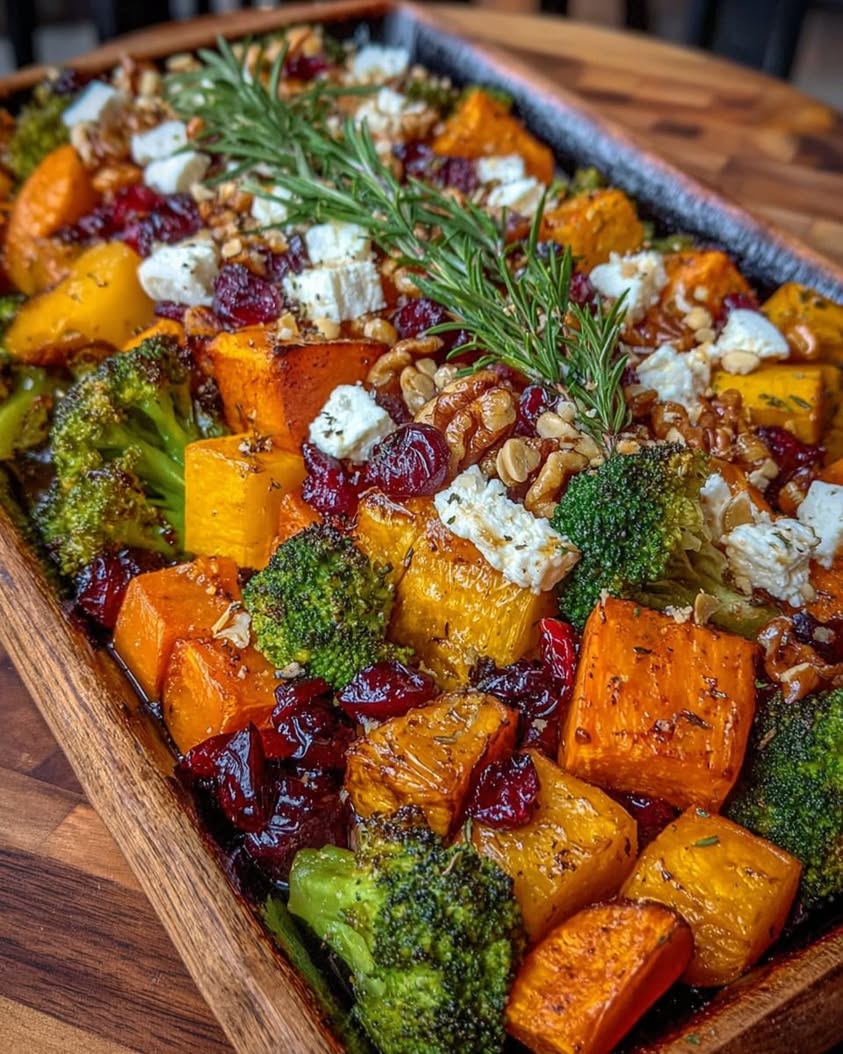
Caramelized Butternut Squash, Carrots, Broccoli & Sweet Potato with Feta, Walnuts & Cranberry-Honey Glaze: A Sweet and Savory Autumn Feast
Imagine a single sheet pan that delivers pure autumn magic. This Caramelized Butternut Squash, Carrots, Broccoli & Sweet Potato with Feta, Walnuts & Cranberry-Honey Glaze is that dish. The vegetables roast until their edges turn deeply golden, developing a natural sweetness that is both comforting and sophisticated. A glossy cranberry-honey glaze coats every piece, adding a tart-sweet finish that balances the earthy vegetables perfectly.
This is not just a side dish; it is a complete experience. The creamy feta crumbles provide a salty counterpoint, while the toasted walnuts add a satisfying crunch. The broccoli brings a hint of bitterness that rounds out the sweetness. This Caramelized Butternut Squash, Carrots, Broccoli & Sweet Potato with Feta, Walnuts & Cranberry-Honey Glaze is versatile enough for a weeknight dinner or a holiday centerpiece.
The beauty of this recipe lies in its simplicity. You toss everything in a bowl, spread it on a sheet pan, and let the oven do the work. The glaze reduces into a sticky, caramelized coating that clings to the sweet potatoes and butternut squash. It is a foolproof method that delivers restaurant-quality results without the fuss. This is the kind of dish that makes you look like a culinary hero with minimal effort.
Quick Recipe Highlights
- Flavor Profile: This dish is a masterclass in balance. The natural sugars in the sweet potato and butternut squash caramelize under high heat, creating a deep, nutty sweetness. The cranberry-honey glaze adds a bright, tangy note, while the feta provides a salty, creamy finish. Walnuts bring an earthy, toasted flavor.
- Texture: You get a wonderful variety of textures in every bite. The sweet potatoes become tender and creamy on the inside with crispy, caramelized edges. The broccoli florets char slightly, giving them a smoky, almost nutty texture. The walnuts offer a satisfying crunch, and the feta crumbles melt slightly into the warm vegetables.
- Aroma: Your kitchen will smell incredible while this roasts. The primary notes are sweet and earthy from the root vegetables. The cranberry-honey glaze adds a fruity, floral aroma as it bubbles. When you add the walnuts, a warm, toasty scent fills the air. The feta brings a subtle, salty dairy note.
- Visual Appeal: This dish is a feast for the eyes. The deep orange of the butternut squash and sweet potato contrasts beautifully with the green broccoli and the white feta. The dark red cranberries and golden walnuts add pops of color. The glaze gives everything a glossy, appetizing sheen.
- Skill Level Needed: This recipe is perfect for beginner and experienced cooks alike. The active prep time is minimal, and the oven does most of the work. You only need basic knife skills for cutting the vegetables. The technique is straightforward, making it a stress-free dish to prepare.
- Special Equipment: You will need a large rimmed baking sheet to ensure the vegetables roast evenly and do not steam. A sharp knife and a sturdy cutting board are essential for uniform vegetable cuts. A small bowl for mixing the glaze is also required. No fancy equipment is needed.
Recipe Overview
- Difficulty Level: This recipe is rated as easy because the steps are simple and forgiving. You do not need advanced cooking techniques. The main skill is cutting vegetables into even sizes for consistent roasting. As long as you follow the temperature and timing, success is almost guaranteed. It is an ideal entry point for someone new to roasting whole vegetables.
- Category: This dish fits perfectly as a hearty side dish for a main protein like roasted chicken or pork. It also works wonderfully as a vegetarian main course when served over quinoa or farro. You can also serve it as a warm salad or a festive holiday side. Its versatility makes it a staple in any meal plan.
- Cuisine: This recipe draws inspiration from American and Mediterranean culinary traditions. The combination of roasted root vegetables with honey and cranberries is classic American comfort food. The addition of feta and walnuts nods to Mediterranean flavors and textures. It is a fusion that feels both familiar and fresh.
- Cost: This is a budget-friendly dish, especially in the fall and winter months when these vegetables are in season. A large butternut squash is very affordable. Sweet potatoes and carrots are also low-cost ingredients. The walnuts and feta are the priciest components, but you use them sparingly. The cranberry-honey glaze uses pantry staples you likely have.
- Season: This dish is best from late summer through early winter. Butternut squash and sweet potatoes reach their peak sweetness in the fall. Fresh cranberries are available in the autumn. You can make it year-round, but the flavors are most vibrant during the cooler months. It is a celebration of the harvest season.
- Occasion: This recipe is ideal for Thanksgiving, Christmas, or any holiday gathering. It also shines at fall-themed dinner parties, potlucks, and family Sunday roasts. For a casual weeknight, it pairs beautifully with grilled chicken or fish. It is elegant enough for a special meal yet simple enough for a Tuesday night.
Why You’ll Love This Recipe
The taste of this dish is simply phenomenal. The high heat caramelizes the natural sugars in the sweet potatoes and butternut squash, creating a deep, almost buttery sweetness. The cranberry-honey glaze adds a tangy, fruity layer that cuts through the richness. The salty feta and crunchy walnuts provide the perfect contrast. Every bite is a complex, satisfying experience that keeps you coming back for more. It is a flavor profile that appeals to both adults and children.
This recipe is incredibly convenient for busy cooks. You only need one sheet pan, which means minimal cleanup. The active prep time is about 20 minutes, mostly for chopping vegetables. After that, the oven does all the work. You can walk away and focus on other parts of your meal. The recipe is also very forgiving; if you leave the vegetables in a few minutes longer, they only get better. It is the definition of set-it-and-forget-it cooking.
Nutritionally, this dish is a powerhouse. It is packed with fiber, vitamins A and C, and antioxidants from the colorful vegetables. The sweet potatoes provide complex carbohydrates for sustained energy. Butternut squash is rich in beta-carotene. Broccoli adds a healthy dose of vitamin K and folate. The walnuts contribute heart-healthy omega-3 fatty acids. Even the feta adds a modest amount of calcium. You get a nutrient-dense meal that tastes indulgent.
This dish is a showstopper at social gatherings. Its vibrant colors and glossy glaze make it a stunning centerpiece on any buffet table. Guests always ask for the recipe because it looks and tastes so impressive. The aroma alone will draw people into the kitchen. It is a conversation starter that showcases your cooking skills without requiring hours of labor. Serving this dish makes you a memorable host.
The recipe is incredibly cost-effective. The main ingredients are inexpensive root vegetables that are available year-round. A single butternut squash costs only a few dollars. Sweet potatoes and carrots are among the cheapest fresh produce items. The walnuts and feta add flavor richness without needing large amounts. This dish feeds a crowd for under fifteen dollars, making it a fantastic choice for budget-conscious entertaining.
Historical Background and Cultural Significance
The combination of roasted root vegetables is a tradition that spans many cultures. In ancient times, people cooked root vegetables in the embers of a fire, discovering that heat transforms starches into sweet, caramelized goodness. This basic technique is the foundation of our modern recipe. It connects us to millennia of human cooking history. The method is timeless and universal. Every culture has its own version of roasted vegetables.
In American cuisine, the roasted vegetable dish is a staple at holiday tables, especially Thanksgiving. The sweet potato, native to the Americas, has been a central ingredient for centuries. The addition of cranberries, also a native North American fruit, is a classic pairing. This recipe honors those traditions while adding modern touches like feta and walnuts. It is a contemporary take on a beloved classic. It bridges the past and present.
The use of honey as a glaze has deep roots in Middle Eastern and Mediterranean cooking. Honey was one of the earliest sweeteners used by humans. Combining it with tart cranberries is a clever twist that balances sweet and sour. The feta cheese, originating in Greece, adds a briny, creamy element that is unexpected in a typically American dish. This fusion shows how global flavors can create something new and exciting.
Regional variations of this dish are endless. In the American South, you might find roasted sweet potatoes with pecans and a brown sugar glaze. In the Mediterranean, roasted vegetables are often served with tahini and pomegranate molasses. This Caramelized Butternut Squash, Carrots, Broccoli & Sweet Potato with Feta, Walnuts & Cranberry-Honey Glaze combines several traditions into one cohesive recipe. It is a melting pot of flavors on a single sheet pan.
Ingredient Deep Dive
Butternut squash is a winter squash with a sweet, nutty flavor that intensifies when roasted. It has been cultivated in the Americas for thousands of years. It is an excellent source of vitamin A, providing over 100% of the daily value per serving. It also contains significant amounts of vitamin C, potassium, and fiber. Select a squash that feels heavy for its size with a hard, smooth skin. Store it in a cool, dark place for up to a month. You can substitute with acorn squash or pumpkin if needed.
Sweet potatoes are another nutritional powerhouse native to Central and South America. They are loaded with beta-carotene, which converts to vitamin A in the body. They also provide vitamin C, manganese, and fiber. Look for firm, unblemished sweet potatoes with smooth skin. Store them in a cool, dry, well-ventilated area away from onions and apples. They can last for weeks under ideal conditions. You can substitute with yams or regular potatoes for a different flavor profile.
Broccoli adds a beautiful green color and a slight bitterness that balances the sweetness of the other vegetables. It is a cruciferous vegetable rich in sulforaphane, a compound known for its cancer-fighting properties. It also provides high levels of vitamin K, vitamin C, and fiber. Choose broccoli with tight, dark green florets and firm stalks. Store it in the refrigerator in a plastic bag for up to a week. You can substitute with cauliflower or Brussels sprouts.
Carrots offer a natural sweetness and a beautiful orange hue to the dish. They are an excellent source of beta-carotene, vitamin K1, and potassium. They also provide fiber and antioxidants. Look for firm, smooth carrots with bright color. Baby carrots work well for convenience, but whole carrots have better flavor. Store them in the refrigerator with the tops removed to prevent moisture loss. They can last for several weeks. You can substitute with parsnips for a different, slightly spicy flavor.
Feta cheese is a brined curd white cheese from Greece, traditionally made from sheep milk or a mixture of sheep and goat milk. It adds a salty, tangy, creamy element that contrasts with the sweet vegetables. It is a good source of calcium and protein. Choose feta that is sold in blocks rather than pre-crumbled for better texture. Store it in its brine in the refrigerator for up to a month. You can substitute with goat cheese, queso fresco, or a dairy-free alternative.
Walnuts are a nut known for their high content of omega-3 fatty acids, particularly alpha-linolenic acid. They add a rich, earthy crunch and a slightly bitter note that deepens the dish. They are also a good source of protein, fiber, and antioxidants. Select walnuts that are not rancid; smell them before purchasing. Store them in an airtight container in the refrigerator or freezer to extend freshness. You can substitute with pecans, almonds, or even pepitas.
Cranberries are a tart, bright red fruit native to North America. They are packed with antioxidants, particularly proanthocyanidins, which can help prevent urinary tract infections. They also provide vitamin C and fiber. Fresh cranberries are available in the fall and winter. They should be firm and bounce. For the glaze, dried cranberries are more convenient and available year-round. You can substitute with dried cherries or pomegranate arils for a different tart flavor.
Honey is a natural sweetener produced by bees from flower nectar. It is sweeter than sugar, so you use less. It contains trace amounts of vitamins and antioxidants. The flavor of honey varies depending on its floral source; a mild honey like clover or orange blossom works best here. Store honey in a cool, dry place; it does not need refrigeration. It can crystallize over time, but you can gently warm it to return it to liquid. You can substitute with maple syrup, agave nectar, or brown sugar syrup.
Common Mistakes to Avoid
- Overcrowding the baking sheet: If you pile too many vegetables onto the sheet pan, they steam instead of roasting. This prevents caramelization and leads to soggy results. Use two sheet pans if needed to give the vegetables enough space.
- Cutting vegetables into uneven sizes: When the pieces are different sizes, some will burn while others remain undercooked. Aim for uniform, one-inch cubes for even cooking. Take the extra minute to measure your cuts for consistent results.
- Skipping the preheating step: Putting vegetables into a cold oven means they spend too long in the danger zone for texture. Always preheat the oven to the correct temperature before adding the sheet pan. This guarantees a good caramelization from the start.
- Not drying the vegetables thoroughly: Excess moisture from washing will create steam. Pat the vegetables dry with a clean kitchen towel after washing. Dry vegetables brown better and develop a better crust.
- Adding the feta too early: If you add feta at the beginning of roasting, it will melt into a greasy puddle. Add it during the last five minutes of cooking or as a garnish. This keeps it soft, creamy, and distinct.
- Using a low-quality glaze: The cranberry-honey glaze is the star of the dish. Do not use cheap honey or artificial cranberry syrup. Use quality ingredients for the best flavor. Real honey and pure dried cranberries make a big difference.
- Forgetting to toss halfway: Vegetables need to be flipped halfway through roasting for even browning. Use a spatula to turn them over. This ensures all sides get exposed to the high heat.
- Overcooking the broccoli: Broccoli cooks faster than root vegetables. If you add it at the beginning, it will turn to mush. Add the broccoli florets about halfway through the cooking time for perfect texture.
- Skipping the seasoning: Salt and pepper are essential for bringing out the flavors of the vegetables. Without them, the dish will taste flat. Season generously before roasting.
- Not lining the baking sheet: The sugary glaze can stick to an unlined sheet pan and burn. Use parchment paper or a silicone baking mat for easy cleanup. This also prevents the glaze from burning onto the pan.
Essential Techniques
Cutting Vegetables Evenly: This is the most important technique for consistent roasting. Start by peeling the butternut squash and sweet potatoes. Cut them into long planks, then into strips, and finally into one-inch cubes. For the broccoli, cut the florets into uniform bite-sized pieces. This ensures that all vegetables finish cooking at the same time. It also creates an attractive, professional appearance.
Making the Cranberry-Honey Glaze: The glaze is a simple reduction that provides the signature sticky-sweet coating. In a small saucepan, combine honey with rehydrated dried cranberries and a splash of water. Warm the mixture over low heat until the cranberries plump up and the honey becomes thin. Do not boil it, as that can make it too thick. The goal is a glossy, pourable consistency that clings to the vegetables.
Roasting for Caramelization: High heat and sufficient spacing are the keys to deep browning. Preheat the oven to 425 degrees Fahrenheit. Spread the vegetables in a single layer with space between each piece. Roast for 20 minutes, then toss and add the broccoli. Continue roasting until the edges are dark golden and crispy. The natural sugars in the vegetables will caramelize, creating a deep, complex flavor.
Toasting Walnuts: Toasting walnuts releases their natural oils and enhances their nutty flavor. You can toast them in a dry skillet over medium heat for 3 to 4 minutes, stirring constantly. Alternatively, spread them on a baking sheet and toast in a 350-degree oven for 5 to 7 minutes. Watch them carefully because they burn quickly. When they smell fragrant and turn slightly darker, they are done.
Testing for Doneness: Vegetables are done when they are tender and easily pierced with a fork. The edges should be caramelized and slightly crispy. The sweet potatoes and butternut squash should be creamy inside. The broccoli should be tender but still have a slight bite. Do not rely solely on time; use your senses to judge when the vegetables are perfectly cooked.
Pro Tips for Perfect Caramelized Butternut Squash, Carrots, Broccoli & Sweet Potato with Feta, Walnuts & Cranberry-Honey Glaze
Use a heavy-duty, rimmed baking sheet for the best heat distribution. Thin sheet pans can warp and cause uneven cooking. A good pan ensures that the vegetables brown evenly without hot spots. This is a worthwhile investment for any home cook.
Do not skip the step of patting the vegetables dry. Moisture is the enemy of caramelization. After washing, use a clean kitchen towel to remove excess water. Your vegetables will brown much better.
Season the vegetables with salt, pepper, and a pinch of cinnamon before roasting. The warm spice complements the sweetness of the sweet potatoes and butternut squash. It adds a subtle depth that makes the dish more complex.
Add the glaze in two stages. Toss half the glaze with the vegetables before roasting. Drizzle the remaining glaze over the vegetables in the last ten minutes of cooking. This builds layers of flavor and ensures a glossy finish.
Keep the feta in large crumbles. Do not crush it into dust. Large chunks stay creamy and distinct. Scatter them over the hot vegetables just before serving for the best texture and visual appeal.
Toast the walnuts separately and add them right before serving. This keeps them crunchy. If you add them too early, they will soften in the glaze. Their texture contrast is key to the dish.
Serve this dish warm, not hot. The flavors meld and develop as it cools slightly. Let it rest for five minutes after coming out of the oven. This also allows the glaze to set a bit.
Variations and Adaptations
Regional Variations: In the American Southwest, you could swap the walnuts for pepitas and add a sprinkle of chili powder to the glaze. For a Southern touch, use a bourbon-honey glaze and top with fried shallots. In the Mediterranean, substitute the cranberries for pomegranate arils and use pine nuts instead of walnuts. Each region brings a unique twist to the same basic concept.
Seasonal Adaptations: In the summer, use zucchini, bell peppers, and cherry tomatoes instead of the root vegetables. The glaze works beautifully with summer produce. In the spring, try asparagus, radishes, and new potatoes. The cranberry-honey glaze pairs well with almost any vegetable. Adapt the recipe to whatever is at its peak at the farmers market.
Dietary Modifications: To make this dish vegan, use maple syrup instead of honey. Omit the feta cheese or replace it with a vegan feta alternative made from tofu. The rest of the recipe is naturally plant-based. For a nut-free version, substitute the walnuts with sunflower seeds or toasted quinoa for crunch.
Flavor Variations: Add a teaspoon of orange zest to the glaze for a bright citrus note. Incorporate a sprig of fresh rosemary or thyme with the vegetables before roasting. For a spicy kick, add a pinch of cayenne pepper or red pepper flakes to the glaze. These small additions can transform the entire dish.
Texture Modifications: For extra crunch, sprinkle a crumbly topping of panko breadcrumbs mixed with melted butter over the vegetables in the last ten minutes. This creates a crispy crust. Alternatively, serve the dish over a bed of creamy polenta or mashed potatoes for a soft base.
Presentation Alternatives: Serve the vegetables in a large, shallow bowl for a family-style presentation. For individual servings, stack the vegetables in a small ramekin and invert onto the plate for a tower effect. Garnish with fresh herbs like parsley or mint for a pop of green.
Serving and Presentation Guide
Plating Techniques: For a rustic look, spread the roasted vegetables on a large wooden board. Drizzle any remaining glaze from the pan over the top. Crumble the feta and scatter the walnuts and cranberries across the surface. This family-style presentation is inviting and casual. It encourages sharing.
Garnishing Ideas: Fresh herbs are the best garnish. Finely chopped parsley adds a fresh, green note. A few microgreens or arugula leaves add a peppery bite. A light dusting of flaky sea salt just before serving enhances the sweetness and adds a satisfying crunch. Cinnamon sticks or star anise add a festive touch.
Traditional Accompaniments: This dish pairs perfectly with roasted chicken, turkey, or pork tenderloin. It also works well with a simple grilled fish like salmon. For a vegetarian meal, serve it alongside a hearty grain like farro, quinoa, or wild rice. A green salad with a lemon vinaigrette balances the richness.
Modern Serving Suggestions: Use this dish as a filling for grain bowls. Layer it over a base of arugula or spinach. Top with a poached egg for a complete meal. It also works beautifully as a warm salad topping. The possibilities are endless for creative serving.
Temperature Considerations: Serve this dish warm, between 120 and 140 degrees Fahrenheit. This temperature keeps the feta creamy and the walnuts crunchy. If the dish gets cold, the glaze will stiffen. Reheat leftovers gently in a warm oven to restore the texture.
Portion Control Tips: For a side dish, plan on about one and a half cups of vegetables per person. For a main course, two to three cups is appropriate. Keep in mind that the vegetables shrink during roasting, so start with generous portions. Leftovers store well and are great for meal prep.
Wine and Beverage Pairing
Wine Pairings: A light to medium red wine works beautifully with this dish. A Pinot Noir with its fruity notes complements the sweet vegetables and the cranberry-honey glaze. A Beaujolais or a light Zinfandel also works well. For a white wine, choose an off-dry Riesling or a Gewürztraminer. Their slight sweetness mirrors the glaze and stands up to the feta.
Non-Alcoholic Alternatives: Sparkling apple cider or a ginger beer are excellent choices. The bubbles cut through the richness of the dish. A tart pomegranate juice also pairs well, echoing the cranberry notes. For a warm option, try a spiced chai tea or a herbal rooibos with a touch of honey.
Coffee and Tea Pairings: If serving this as part of a brunch, a light roast coffee with fruity notes is a good match. For tea, a green tea with jasmine or a black tea like Earl Grey works. The floral notes of the tea complement the honey and fruit in the glaze.
Temperature Considerations: Serve all beverages slightly chilled or at room temperature. Overly cold drinks can dull the flavors of the food. If serving wine, a slight chill on a red wine is acceptable for this dish. White wine should be well chilled.
Serving Suggestions: Pour the wine or sparkling beverage into clear glasses to show off the color. Add a sprig of fresh rosemary or a cinnamon stick to warm apple cider for a festive touch. This attention to detail elevates the entire dining experience.
Storage and Shelf Life
Storage Methods: Store leftover Caramelized Butternut Squash, Carrots, Broccoli & Sweet Potato with Feta, Walnuts & Cranberry-Honey Glaze in an airtight container. Separate the feta and walnuts if you want to keep them fresh for longer. The vegetables will last for up to four days in the refrigerator. The flavors actually deepen and meld overnight.
Temperature Requirements: Keep the leftovers in the refrigerator at or below 40 degrees Fahrenheit. Do not leave the dish out at room temperature for more than two hours. If you are serving it at a buffet, place the dish on a warming tray or serve in small batches. This ensures food safety.
Container Recommendations: Use a glass or BPA-free plastic container with a tight-fitting lid. Avoid metal containers, as the acidic glaze can react with the metal. Do not stack heavy items on top of the container, as this can crush the vegetables. A wide, shallow container is best for easy reheating.
Signs of Spoilage: Discard the leftovers if you see any mold growing on the vegetables. If the feta develops a slimy texture or an off smell, it has gone bad. The vegetables will become soft and mushy after too many days. Use your nose and eyes to determine freshness.
Reheating Instructions: The best way to reheat this dish is in the oven. Spread the vegetables on a baking sheet and warm at 350 degrees Fahrenheit for 8 to 10 minutes. This restores some of the caramelized texture. You can use a microwave, but the vegetables will be softer. For best results, add a fresh sprinkle of walnuts and feta after reheating.
Freezing Guidelines: You can freeze the roasted vegetables without the feta or walnuts. Place them in a freezer-safe bag, removing as much air as possible. They will keep for up to three months. Thaw overnight in the refrigerator before reheating. Add fresh feta and walnuts after reheating for the best texture.
Make Ahead Strategies
Prep Timeline: You can make this dish mostly ahead of time. Up to two days in advance, peel and chop all the vegetables. Store them separately in airtight bags in the refrigerator. You can also make the cranberry-honey glaze and keep it in a jar. On the day of serving, simply toss and roast. This saves significant active time.
Storage Between Steps: If you are preparing the vegetables the night before, store cut sweet potatoes and butternut squash in a bowl of cold water. This prevents them from oxidizing and turning brown. Drain and pat them dry before roasting. Store the broccoli in a separate bag. Keep the glaze at room temperature.
Quality Impact Assessment: Roasted vegetables are always best fresh from the oven. The edges stay crisp, and the glaze is shiny and sticky. If you must make the entire dish ahead, roast it one day in advance. Reheat it in a hot oven to restore some texture. The feta will not be as creamy, but it is still delicious.
Assembly Tips: When reheating, add a fresh drizzle of the remaining glaze. This restores the glossy look and adds a fresh burst of flavor. Toss the vegetables gently to coat them. Serve immediately after reheating for the best quality.
Reheating Guidelines: To reheat a large batch, spread the vegetables on a baking sheet in a single layer. Cover with foil for the first five minutes to prevent burning. Remove the foil for the last five minutes to crisp the edges. This two-step process brings the dish back to life.
Fresh Element Additions: Always add fresh feta, walnuts, and a garnish of fresh herbs after reheating. Their fresh textures and flavors make the dish seem freshly made. Do not add these elements before storing, as they will get soggy or wilted.
Scaling Instructions
Halving the Recipe: Halving the recipe is straightforward. Use half of each ingredient. The cooking time stays the same, but check for doneness a few minutes earlier. Use a smaller baking sheet or a quarter sheet pan to ensure the vegetables are in a single layer. The same technique applies.
Doubling or Tripling: When doubling or tripling, you must use multiple sheet pans. Do not cram all the vegetables onto one pan. Use two or three pans and rotate them in the oven halfway through cooking. This ensures even browning. You may need to add five to ten minutes to the cooking time.
Equipment Adjustments: For large batches, use heavy-duty half-sheet pans. They are sturdy and hold more volume. If you do not have enough pans, cook the vegetables in batches. Keep the first batch warm in a low oven while the second batch cooks. This maintains quality.
Timing Modifications: The cooking time scales linearly with the quantity of vegetables. A single batch takes 35 minutes. A double batch may take 40 to 45 minutes because the oven takes longer to recover temperature. Use a thermometer to check the internal temperature of the thickest pieces. They should be tender.
Storage Considerations: If you make a large batch for a party, plan on storing leftovers properly. Divide the leftovers into smaller containers for faster cooling. This also makes reheating easier. Label the containers with the date. Consume within four days.
Nutritional Deep Dive
Macro Breakdown: This dish is rich in complex carbohydrates from the root vegetables. Each serving provides about 45 to 55 grams of carbohydrates, mostly from fiber and natural sugars. It contains roughly 12 grams of healthy fats from the walnuts and olive oil. The feta adds about 8 grams of protein per serving. It is a balanced dish with a good macronutrient profile.
Micronutrient Analysis: This dish is exceptionally high in vitamin A from the sweet potatoes and butternut squash. It also provides significant amounts of vitamin C from the broccoli and cranberries. Potassium levels are high from all the root vegetables. Walnuts add vitamin E and B vitamins. Feta contributes calcium. It is a nutrient-dense meal.
Health Benefits: The high fiber content supports digestive health and promotes satiety. The antioxidants in the cranberries and broccoli help fight inflammation. The omega-3 fatty acids from walnuts support brain and heart health. The beta-carotene in the orange vegetables is excellent for eye health. This dish supports overall wellness.
Dietary Considerations: This dish is naturally gluten-free. It is also vegetarian. It is relatively low in saturated fat, especially if you use a light hand with the feta. The sodium level is moderate. It is suitable for most dietary patterns, including Mediterranean and DASH diets. It is a whole-foods-based meal.
Portion Analysis: A one and a half cup serving as a side dish contains approximately 350 to 400 calories. This is a reasonable amount for a vegetable dish. For a main course, a two-cup serving is around 500 calories. The fiber and protein content make it very filling. It is a smart choice for weight management.
Weight Management Tips: Use less glaze and reduce the amount of honey for fewer calories. Increase the proportion of broccoli and carrots to lower the glycemic load. Use a light spray of oil instead of a heavy drizzle. The walnuts are calorie-dense, so use them sparingly for crunch.
Dietary Adaptations
Gluten-Free: This recipe is naturally gluten-free. All the ingredients are free from wheat, barley, and rye. Ensure that your feta cheese is labeled gluten-free. Some imported cheeses may have trace amounts of starch. Check the cranberries to make sure they are not dusted with flour.
Dairy-Free: To make this dairy-free, simply omit the feta cheese. You can replace it with a dairy-free feta alternative made from tofu or almonds. Alternatively, you can skip it entirely and add extra walnuts for richness. The dish is still very flavorful without cheese.
Vegan: For a vegan version, substitute the honey with maple syrup or agave nectar. Omit the feta cheese. Use a vegan feta or simply leave it out. The rest of the ingredients are plant-based. This version is packed with whole foods and is completely animal-free.
Low-Carb: This dish is naturally higher in carbohydrates due to the root vegetables. To make it low-carb, substitute sweet potatoes and butternut squash with cauliflower and radishes. The amount of net carbs is significantly reduced. The broccoli and carrots remain. Use the same glaze sparingly.
Keto: For a keto-friendly version, swap the root vegetables for cauliflower, celery root, and more broccoli. Use a sugar-free maple syrup alternative in the glaze. Reduce the amount of cranberries to lower sugar content. Add extra olive oil for healthy fats. The walnuts are perfect for keto.