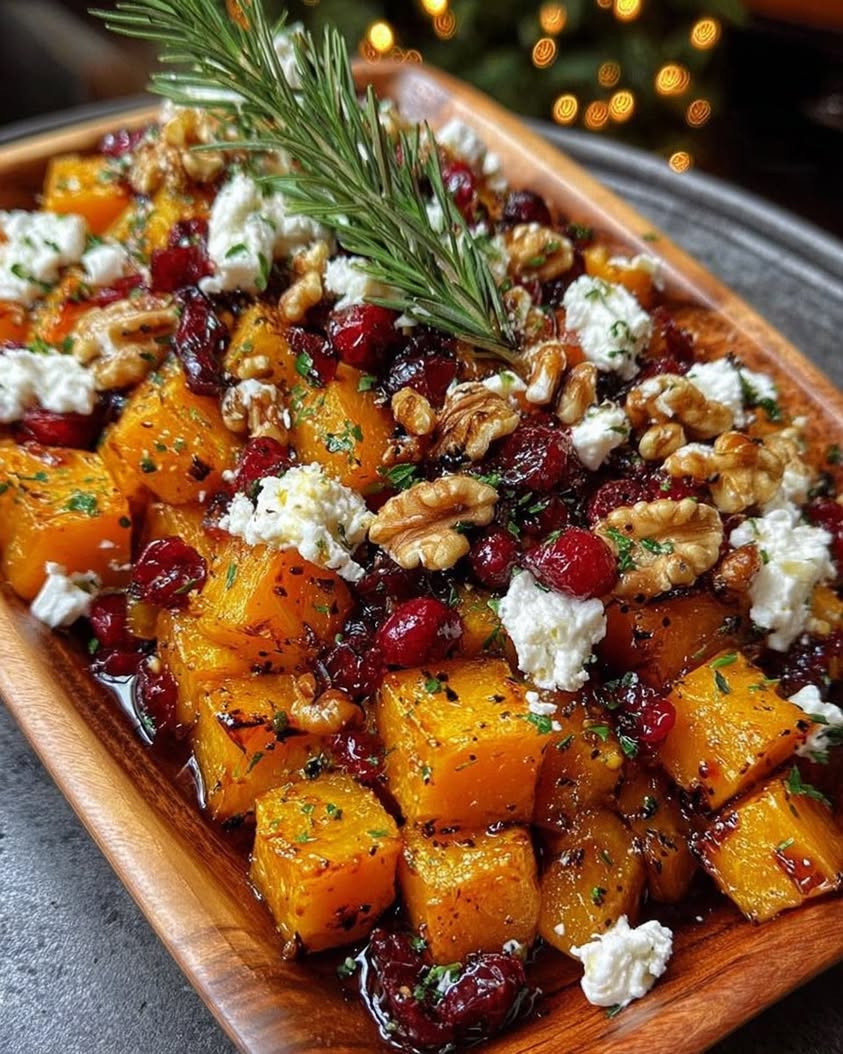
Caramelized Butternut Squash Salad with Feta, Walnuts, and Cranberry Honey Glaze
This caramelized butternut squash salad with feta, walnuts, and cranberry honey glaze is the perfect fall dish you have been waiting for. The sweet, nutty flavor of roasted squash pairs beautifully with salty feta and crunchy walnuts. A tangy cranberry honey glaze ties everything together, making every bite an absolute delight. You will love how the natural sugars in the squash caramelize in the oven, creating a golden, fork-tender texture. This recipe transforms simple ingredients into a show-stopping side or light main course. Whether you serve it for Thanksgiving dinner or a cozy weeknight meal, this dish brings warmth and comfort to your table.
The caramelized butternut squash salad with feta, walnuts, and cranberry honey glaze is incredibly easy to prepare. You only need a handful of fresh ingredients and about thirty-five minutes in the oven. The preparation involves peeling and cubing the squash, then tossing it with olive oil and spices. While the squash roasts, you can whisk together the simple cranberry honey glaze. Once the squash is tender and golden, you toss it with crumbled feta, toasted walnuts, and the glossy glaze. The result is a vibrant salad that looks as good as it tastes. This recipe proves that healthy eating does not have to be boring or complicated.
This caramelized butternut squash salad with feta, walnuts, and cranberry honey glaze is a sensory experience from start to finish. The aroma of roasted squash fills your kitchen with a sweet, earthy scent that signals autumn has arrived. The colors are stunning, with deep orange squash, bright white feta, and dark ruby cranberries. The textures range from the creamy squash to the crunchy walnuts and the soft, chewy dried cranberries. The glaze adds a glossy sheen that makes the dish look restaurant-quality. Every forkful delivers a perfect balance of sweet, salty, tangy, and nutty flavors. You will find yourself craving this dish long after the last bite.
Quick Recipe Highlights
- Flavor Profile: This caramelized butternut squash salad with feta, walnuts, and cranberry honey glaze offers a beautiful balance of sweet and savory notes. The natural sweetness of roasted butternut squash pairs wonderfully with the salty, tangy feta cheese. The cranberry honey glaze adds a tart-sweet finish that brightens the entire dish.
- Texture: You get a wonderful contrast of textures in every bite. The roasted squash is creamy and tender on the inside with lightly caramelized edges. The walnuts provide a satisfying crunch while the feta adds a soft, crumbly element.
- Aroma: The dominant aroma is the sweet, nutty scent of roasted butternut squash as it caramelizes in the oven. The cranberry honey glaze adds a fruity, floral note that fills your kitchen. Toasting the walnuts releases their rich, earthy fragrance just before assembly.
- Visual Appeal: This dish is a feast for the eyes with its vibrant orange squash, creamy white feta, and deep red cranberries. The walnuts add a warm brown tone, and the glaze gives everything a beautiful glossy finish. It looks stunning on a platter or in a simple serving bowl.
- Skill Level Needed: This recipe is perfect for beginners and experienced cooks alike. There are no complicated techniques involved, just basic knife skills for cubing the squash. The oven does most of the work, making this a forgiving and foolproof dish.
- Special Equipment: You will need a large baking sheet for roasting the squash in a single layer. A sharp chef’s knife and a vegetable peeler make quick work of preparing the squash. A small saucepan is useful for gently warming the cranberry honey glaze before serving.
Recipe Overview
- Difficulty Level: This recipe earns an easy rating because it relies on simple techniques and basic ingredients. Roasting the squash requires minimal hands-on time, and the glaze is a straightforward whisking job. There is no need for advanced cooking skills or special equipment. Even first-time cooks can achieve excellent results with this dish.
- Category: This recipe works beautifully as a side dish for holiday meals or a light vegetarian main course. It also shines as a hearty salad for lunch or a potluck contribution. You can serve it warm or at room temperature, making it incredibly versatile for any meal.
- Cuisine: This dish draws inspiration from Mediterranean and Middle Eastern flavor profiles. The combination of roasted squash, feta cheese, walnuts, and dried fruit is common in those culinary traditions. The cranberry honey glaze adds a distinctly American touch, making this a fusion recipe that celebrates the best of both worlds.
- Cost: This is a budget-friendly recipe that uses affordable, readily available ingredients. A medium butternut squash typically costs between two and four dollars depending on the season. Feta cheese, walnuts, and dried cranberries are pantry staples that offer great value for their flavor impact. Overall, this dish costs less than fifteen dollars to prepare for four servings.
- Season: Butternut squash is at its peak from early fall through winter, making this a perfect autumn and holiday dish. The flavors of cranberry and honey also evoke the cozy feeling of the harvest season. You can enjoy this recipe year-round, but it truly shines when squash is sweetest and most abundant.
- Occasion: This caramelized butternut squash salad with feta, walnuts, and cranberry honey glaze is ideal for Thanksgiving, Christmas, and Friendsgiving gatherings. It also makes a lovely addition to a fall brunch or a casual dinner party. The impressive presentation and balanced flavors make it suitable for both special occasions and everyday meals.
Why You Will Love This Recipe
You will love the incredible taste and texture of this caramelized butternut squash salad with feta, walnuts, and cranberry honey glaze. The roasting process transforms the squash into something magical, concentrating its natural sweetness and creating caramelized edges. The feta cheese provides a salty, tangy counterpoint that cuts through the sweetness beautifully. The walnuts add a toasty crunch that gives the dish structure and depth. The cranberry honey glaze ties everything together with its tart-sweet flavor. Each bite offers a new combination of flavors and textures that keeps you coming back for more.
Convenience is another major reason to love this recipe. The preparation is straightforward and requires minimal active cooking time. While the squash roasts in the oven, you can prepare the glaze or get other dishes ready. The recipe uses just one baking sheet and a small saucepan, making cleanup easy. You can make the components ahead of time and assemble the salad just before serving. This flexibility makes it a stress-free option for holiday entertaining. You get a complex, flavorful dish without spending hours in the kitchen.
Nutritional advantages make this recipe a smart choice for health-conscious cooks. Butternut squash is packed with vitamin A, vitamin C, and fiber, all essential for a strong immune system. Walnuts provide heart-healthy omega-3 fatty acids and protein. Feta cheese offers calcium and protein with fewer calories than many other cheeses. Dried cranberries deliver antioxidants and a natural sweetness. The olive oil and honey round out the dish with healthy fats and natural sugars. This salad proves that you can eat well and feel good about what you are serving.
Social and entertaining value is a key reason this recipe belongs in your collection. The stunning presentation makes it a conversation starter at any gathering. Guests will be impressed by the vibrant colors and thoughtful flavor pairings. The dish holds up well on a buffet table because it tastes great at room temperature. It also accommodates various dietary needs, including vegetarian and gluten-free eaters. Serving this salad shows your guests that you care about both flavor and presentation.
Cost-effectiveness and accessibility make this recipe a practical choice for everyday cooking. Butternut squash is one of the most affordable winter vegetables, especially when purchased in season. Walnuts and dried cranberries are pantry staples that keep well and offer long-term value. Feta cheese is relatively inexpensive compared to other specialty cheeses. The ingredients are available at any grocery store, so you do not need to hunt for obscure items. This recipe proves that eating well does not require a huge budget or a special trip to a gourmet market.
Historical Background and Cultural Significance
Butternut squash has a long history in the Americas, where indigenous peoples cultivated it for thousands of years. The word squash comes from the Narragansett word askutasquash, meaning eaten raw or uncooked. European settlers quickly adopted squash into their diets and developed new varieties over time. Butternut squash, as we know it today, was developed in the 1940s by Charles Leggett in Massachusetts. He crossed a Gooseneck squash with a Buttercup squash to create the smooth, sweet variety we enjoy today. This history reminds us that this humble vegetable has deep roots in American agriculture and cuisine.
The combination of squash with salty cheese and nuts is found in many culinary traditions around the world. Mediterranean cultures often pair roasted vegetables with feta or ricotta salata for a salty contrast. Middle Eastern cuisine frequently combines sweet roasted squash with tahini, pomegranate seeds, and walnuts. The addition of dried cranberries and honey reflects a distinctly American palate. Cranberries are native to North America and have been harvested by indigenous peoples for centuries. Honey has been used as a natural sweetener across cultures for thousands of years. This recipe celebrates these diverse influences in a single, harmonious dish.
The evolution of this recipe mirrors broader trends in American home cooking over the last few decades. In the 1980s and 1990s, home cooks began experimenting with roasted vegetables as a healthier alternative to casseroles. The popularity of Mediterranean cuisine in the early 2000s introduced ingredients like feta and walnuts to mainstream audiences. Food blogs and cooking shows further popularized the combination of sweet and savory flavors. The cranberry honey glaze represents a modern twist that elevates the dish beyond simple roasted squash. This recipe reflects how home cooking continues to evolve and incorporate global influences.
Regional variations of this dish exist across the United States, each putting a local spin on the core ingredients. In New England, cooks might use maple syrup instead of honey and add local apples for extra sweetness. Southern variations often include pecans instead of walnuts and a touch of cayenne for heat. West Coast versions might incorporate pomegranate seeds or persimmons for a seasonal twist. The basic formula of roasted squash, cheese, nuts, and a sweet-tart dressing remains consistent. These regional adaptations show the versatility and enduring appeal of this simple dish. No matter where you live, you can make this recipe your own with local ingredients.
Ingredient Deep Dive
Butternut squash is the star of this caramelized butternut squash salad with feta, walnuts, and cranberry honey glaze. This winter squash has a sweet, nutty flavor that intensifies significantly when roasted. Nutritionally, butternut squash is an excellent source of vitamin A in the form of beta-carotene. It also provides a good amount of vitamin C, potassium, and dietary fiber. When selecting butternut squash, look for one that feels heavy for its size with a firm, tan skin. Avoid squash with soft spots, cracks, or any signs of mold. Store whole butternut squash in a cool, dark place for up to three months. Once cut, wrap the unused portion tightly and refrigerate for up to five days. You can substitute butternut squash with other winter squash varieties like acorn or delicata for a different texture.
Feta cheese is the ideal salty counterpart to the sweet roasted squash in this dish. It is a brined curd white cheese from Greece, traditionally made from sheep’s milk or a blend of sheep and goat milk. Nutritionally, feta is lower in fat and calories than many other cheeses while still providing protein and calcium. It also contains probiotics that support gut health. When selecting feta, opt for blocks stored in brine rather than pre-crumbled dry feta for better flavor and texture. Store feta in its brine in an airtight container in the refrigerator for up to two weeks. For a dairy-free option, you can substitute with a high-quality vegan feta or omit it entirely. You can also use goat cheese or ricotta salata for a different flavor profile.
Walnuts add essential crunch and healthy fats to this caramelized butternut squash salad with feta, walnuts, and cranberry honey glaze. They are one of the best plant-based sources of omega-3 fatty acids, which support heart and brain health. Walnuts also provide protein, fiber, and antioxidants that help reduce inflammation. When selecting walnuts, look for ones that are plump and uniform in color without any rancid smell. Store them in an airtight container in the refrigerator or freezer to maintain freshness for up to six months. Toasting the walnuts before adding them to the salad deepens their flavor and adds extra crunch. You can substitute walnuts with pecans, almonds, or pine nuts for a different texture and taste. Always keep an eye on them while toasting because they can burn quickly.
Dried cranberries provide the tart, chewy element that balances the sweetness in this dish. They are made by drying fresh cranberries with added sugar to counteract their natural tartness. Nutritionally, dried cranberries are high in antioxidants called proanthocyanidins, which support urinary tract health. They also provide fiber and vitamin C. When selecting dried cranberries, look for ones that are plump and moist rather than hard and dry. Store them in a sealed container in a cool, dark place for up to six months. You can substitute dried cranberries with dried cherries, golden raisins, or chopped dried apricots for a different flavor. For a lower-sugar option, look for unsweetened dried cranberries at health food stores.
Honey serves as the base of the glaze and adds natural sweetness that complements the squash perfectly. It is a natural sweetener produced by bees from flower nectar and has been used in cooking for thousands of years. Different honey varieties offer distinct flavor profiles, from mild clover honey to robust buckwheat honey. Nutritionally, honey contains antioxidants and has antibacterial properties, though it is still a form of sugar. When selecting honey, choose raw, unfiltered honey for the best flavor and most health benefits. Store honey at room temperature in a sealed container; it does not need refrigeration. You can substitute honey with maple syrup for a different but equally delicious flavor. Note that honey should not be given to children under one year old due to botulism risk.
Olive oil is essential for roasting the squash and helps create those beautiful caramelized edges. It is a staple of Mediterranean cooking and is valued for its fruity flavor and health benefits. Extra virgin olive oil is the least processed form and contains the highest levels of antioxidants. It provides heart-healthy monounsaturated fats that support cardiovascular health. When selecting olive oil, look for bottles labeled extra virgin with a harvest date for freshness. Store olive oil in a cool, dark place away from heat and light to prevent rancidity. You can substitute olive oil with avocado oil or melted coconut oil for a different flavor. Do not use olive oil sprays for roasting because they can burn and leave a bitter taste.
Common Mistakes to Avoid
- One common mistake is cutting the butternut squash into uneven pieces. Uniform cubes ensure that all the squash cooks at the same rate, preventing some pieces from burning while others remain undercooked. Take your time to cut consistent one-inch cubes for the best results.
- Another frequent error is overcrowding the baking sheet. When you crowd the squash, it steams instead of roasting, preventing proper caramelization. Use a large baking sheet and spread the squash in a single layer with space between each piece.
- Many people skip the step of patting the squash dry after washing it. Excess moisture on the surface of the squash prevents caramelization and leads to soggy results. Pat the cubes dry with a clean kitchen towel before tossing them with oil.
- Avoid using cold honey directly from the refrigerator for the glaze. Cold honey is thick and difficult to whisk smoothly with the other ingredients. Let it come to room temperature or warm it gently before mixing.
- Do not skip toasting the walnuts before adding them to the salad. Raw walnuts have a slightly bitter taste and softer texture compared to toasted walnuts. A quick toast in a dry skillet enhances their flavor and adds the necessary crunch.
- Resist the temptation to add the feta cheese while the squash is still piping hot. Hot squash will cause the feta to melt and lose its distinct crumbly texture. Let the squash cool for five to ten minutes before tossing it with the feta.
- Another mistake is adding all the glaze at once instead of drizzling it gradually. Adding too much glaze at once can make the salad soggy and overwhelm the other flavors. Drizzle, toss, and taste before adding more.
- Do not use pre-shredded or pre-crumbled feta cheese for this recipe. These products often contain anti-caking agents that prevent the cheese from melting properly and affect its texture. Always buy a block of feta and crumble it yourself.
Essential Techniques
Roasting is the most important technique for this caramelized butternut squash salad with feta, walnuts, and cranberry honey glaze. The high heat of the oven causes the natural sugars in the squash to caramelize, creating deep flavor and a beautiful golden color. To master roasting, preheat your oven to 400 degrees Fahrenheit and use a heavy baking sheet. Do not line the sheet with parchment paper because the squash needs direct contact with the hot metal for proper browning. Toss the squash cubes with olive oil and salt, then spread them in a single layer. Roast for twenty-five to thirty-five minutes, flipping halfway through, until the squash is tender and caramelized on the edges. The visual cue for doneness is a deep golden-brown color and a fork that easily pierces the flesh.
Making a glaze is another essential technique that elevates this dish from good to great. A glaze is a thin, flavorful sauce that coats the ingredients and adds a glossy finish. For this cranberry honey glaze, you combine honey, dried cranberries, apple cider vinegar, and a pinch of salt. Warm the mixture gently in a small saucepan over low heat until the honey thins and the cranberries plump up slightly. Do not let it boil, because boiling can make the honey bitter. The glaze should be fluid enough to drizzle but thick enough to cling to the squash. Let the glaze cool for a few minutes before using it so it thickens slightly. You can also make the glaze ahead of time and rewarm it gently before serving.
Toasting nuts is a simple technique that makes a significant difference in the final dish. Toasting brings out the natural oils in the walnuts, enhancing their flavor and making them crunchier. You can toast walnuts in a dry skillet over medium heat or on a baking sheet in the oven. For stovetop toasting, watch the nuts carefully and shake the pan frequently to prevent burning. They are done when they become fragrant and slightly darker in color, usually after three to five minutes. For oven toasting, spread the walnuts on a baking sheet and bake at 350 degrees Fahrenheit for five to seven minutes. Let the toasted walnuts cool completely before adding them to the salad so they stay crunchy. Store any leftover toasted nuts in an airtight container for up to one week.
Pro Tips for Perfect Caramelized Butternut Squash Salad with Feta, Walnuts, and Cranberry Honey Glaze
Always choose a butternut squash that feels heavy for its size. A heavier squash means it has more moisture and will be sweeter and more tender after roasting. Light squash can be dry and stringy, which will not caramelize well.
Peel the squash with a sharp vegetable peeler rather than a knife. A peeler removes the skin more evenly and reduces waste. Make sure to remove all the green-tinged outer skin because it becomes tough and bitter when cooked.
Cut the squash into precisely one-inch cubes for even cooking. Use a sharp chef’s knife and take your time with this step. Inconsistent sizes lead to some pieces burning while others remain undercooked.
Season the squash generously with salt before roasting. Salt helps draw out moisture and enhances the natural sweetness of the squash. Do not be shy with the salt because it is the primary seasoning for the vegetable.
Use a metal spatula to flip the squash halfway through roasting. A metal spatula is thin enough to get under the caramelized edges without damaging them. Flip each piece individually for the most even browning.
Let the roasted squash rest for five minutes before adding the other ingredients. This brief rest allows the squash to set and prevents the feta from melting on contact. The squash will still be warm enough to soften the glaze slightly.
Add the toasted walnuts just before serving to preserve their crunch. If you add them too early, they will absorb moisture from the glaze and become soft. Toss them in at the last minute for the best texture.
Reserve a small amount of crumbled feta and extra walnuts for garnish. A final sprinkle on top makes the dish look more polished and appetizing. This simple touch elevates the presentation significantly.
Variations and Adaptations
Regional variations of this caramelized butternut squash salad with feta, walnuts, and cranberry honey glaze offer exciting new flavors. In the American Southwest, you might add roasted poblano peppers and use pepitas instead of walnuts. A pinch of cumin or chili powder in the glaze would complement the smoky heat. In the Pacific Northwest, substituting hazelnuts for walnuts and using marionberry preserves in the glaze creates a distinctly local flavor. These regional adaptations show how versatile the basic recipe can be with simple ingredient swaps.
Seasonal adaptations allow you to enjoy this recipe throughout the year. In the summer, you can substitute grilled zucchini or yellow squash for the butternut squash and use fresh berries instead of dried cranberries. In the spring, roasted asparagus and fresh peas make excellent additions to the salad. The cranberry honey glaze works beautifully with any roasted vegetable, so do not be afraid to experiment. Each season offers new produce that can shine in this versatile dish.
Dietary modifications make this recipe accessible to almost everyone. For a vegan version, omit the feta cheese and use a vegan feta alternative or simply double the walnuts for extra protein. Replace the honey with maple syrup or agave nectar to keep the recipe fully plant-based. For a nut-free version, substitute the walnuts with roasted pumpkin seeds or sunflower seeds. These modifications ensure that everyone can enjoy this delicious salad regardless of dietary restrictions.
Flavor variations allow you to customize this dish to your personal preferences. Try adding fresh herbs like thyme or rosemary to the squash before roasting for an earthy note. A sprinkle of cinnamon or nutmeg in the glaze adds warm, spicy undertones that pair beautifully with the squash. For a bolder flavor, add a minced shallot or a clove of garlic to the glaze while it warms. These small additions can transform the dish into something entirely new.
Texture modifications can change the eating experience significantly. For extra crunch, add toasted panko breadcrumbs or crispy fried shallots on top. You can also try roasting the squash until it is very dark and almost crispy on the edges for a more intense caramelized flavor. For a softer texture, steam the squash briefly before roasting to ensure it is completely tender throughout. Play around with the texture to find your perfect version.
Presentation alternatives make this recipe suitable for different occasions. Serve the salad family-style on a large platter for a casual dinner. For a more elegant presentation, plate individual servings on small plates or arrange the components in a deconstructed format. You can also serve the squash warm over a bed of arugula or mixed greens for a heartier salad. The flexibility of this recipe means you can dress it up or down as needed.
Serving and Presentation Guide
Plating techniques can make this caramelized butternut squash salad with feta, walnuts, and cranberry honey glaze look like a professional dish. For a family-style presentation, spread the roasted squash on a large, shallow platter. Drizzle the glaze over the top, then scatter the crumbled feta and toasted walnuts evenly. Finish with a final drizzle of glaze and a sprinkle of fresh thyme leaves for color. This approach encourages sharing and shows off the vibrant colors of the ingredients. For individual servings, arrange the squash in a small mound in the center of each plate and garnish carefully.
Garnishing ideas can elevate the visual appeal of this dish even further. A few fresh thyme or rosemary sprigs add a pop of green that contrasts beautifully with the orange squash. A light sprinkle of flaky sea salt, like Maldon, adds a delicate crunch and enhances all the flavors. For a touch of elegance, add a few fresh pomegranate seeds for a jewel-like appearance. Edible flowers, such as nasturtiums or pansies, make this dish suitable for special occasions. Remember that garnishes should be edible and complement the flavors of the dish.
Traditional accompaniments can turn this salad into a complete meal. Serve it alongside roasted chicken or turkey for a classic fall dinner. It also pairs beautifully with grilled pork chops or seared salmon for a more substantial entree. For a vegetarian meal, serve the squash over cooked quinoa or farro with a side of crusty bread. The sweet and savory flavors of the salad complement a wide range of main dishes. Consider the occasion and your guests preferences when choosing accompaniments.
Modern serving suggestions include using this salad as a topping for flatbreads or crostini. Spread the roasted squash on a warm flatbread, add crumbled feta and walnuts, and drizzle with the glaze for an easy appetizer. You can also fold the salad into a warm grain bowl with quinoa or brown rice for a hearty lunch. Another idea is to serve it alongside a simple green salad with a lemon vinaigrette for a light dinner. These modern twists keep the recipe feeling fresh and relevant.
Temperature considerations are important for the best eating experience. This salad tastes excellent warm, at room temperature, or even slightly chilled. If serving it warm, let the squash rest for about five minutes before adding the feta to prevent melting. For room temperature serving, you can prepare all the components ahead of time and assemble up to an hour before serving. Cold leftovers make a delicious lunch the next day. The versatility of serving temperatures makes this recipe incredibly convenient for entertaining.
Portion control tips help you serve the right amount for your group. As a side dish, plan for about one cup of the finished salad per person. As a light main course, increase the portion to about one and a half cups. The salad is quite filling due to the squash and walnuts, so guests may not need a large portion. Always make a little extra because leftovers are wonderful. You can easily double the recipe for larger gatherings if needed.
Wine and Beverage Pairing
Wine pairings for this caramelized butternut squash salad with feta, walnuts, and cranberry honey glaze should consider the sweet and savory elements. A dry Riesling with its bright acidity and subtle fruit notes complements the sweetness of the squash without overpowering it. The acidity cuts through the richness of the feta and the oil, cleansing the palate between bites. Another excellent choice is a Grüner Veltliner from Austria, which offers notes of white pepper and citrus that pair beautifully with the cranberry glaze. For red wine lovers, a light-bodied Pinot Noir with its earthy undertones and soft tannins works wonderfully. Avoid heavily oaked wines because they can clash with the delicate flavors of the dish.
Non-alcoholic alternatives are equally satisfying with this recipe. A sparkling water with a splash of cranberry juice and a squeeze of lime mirrors the tartness of the glaze. The bubbles also help cleanse the palate between bites. For a cozy, warm option, serve a cup of spiced apple cider or a chai tea latte. The warm spices in these beverages complement the roasted squash beautifully. A chilled glass of kombucha, especially a cranberry or ginger flavor, offers a tangy and refreshing pairing. These non-alcoholic options ensure that everyone can enjoy a perfectly paired beverage.
White wine remains the safest and most versatile choice for this dish. A Sauvignon Blanc with its herbaceous notes and high acidity can stand up to the sweetness of the squash and the tanginess of the feta. Look for a bottle from New Zealand or the Loire Valley for the best results. A Chenin Blanc, either dry or off-dry, offers stone fruit flavors and a touch of honey that echoes the glaze. A dry Gewürztraminer with its lychee and rose petal notes is another excellent option, especially if you have added warm spices to the dish. These white wines are reliable crowd-pleasers for this recipe.
For those who prefer red wine, a Beaujolais is an outstanding choice. This light red wine from the Gamay grape offers bright red fruit flavors and low tannins that will not overpower the squash. Serve it slightly chilled for the best experience. A lighter style of Zinfandel, sometimes called White Zinfandel, also works because its subtle sweetness echoes the honey glaze. Avoid heavy red wines like Cabernet Sauvignon or Syrah, as their bold tannins can clash with the delicate flavors. Stick with light, fruity reds for the best pairing.
Serving suggestions for beverages include serving wine slightly chilled, even red wines like Beaujolais. This temperature enhances the fruitiness and makes the wine more refreshing. For white wines, serve them at about 45 to 50 degrees Fahrenheit. If serving sparkling water, add plenty of ice and a decorative garnish like a cranberry sprig. Always offer water alongside wine so guests can hydrate between sips. These small details make the dining experience more enjoyable for everyone.
Storage and Shelf Life
Proper storage methods are essential to maintain the quality of this caramelized butternut squash salad with feta, walnuts, and cranberry honey glaze. Store the assembled salad in an airtight container in the refrigerator for up to three days. The flavors will continue to meld as it sits, making it even more delicious the next day. Keep in mind that the walnuts will lose some of their crunch over time. For the best texture, consider storing the components separately and assembling just before serving. Always use a clean spoon when serving to prevent contamination.
Temperature requirements are straightforward for this dish. The salad must be refrigerated at 40 degrees Fahrenheit or below to prevent bacterial growth. Do not leave the salad at room temperature for more than two hours. If you are serving it at a party or picnic, keep it on ice or in a cooler. When reheating, only reheat what you plan to eat immediately. Repeated temperature changes can degrade the texture of the squash and the quality of the glaze.
Container recommendations focus on airtight seals to prevent the salad from drying out or absorbing odors from other foods. Glass containers are ideal because they do not retain odors or stains. If using plastic containers, choose BPA-free options and ensure the seal is clean. You can also use a large bowl covered tightly with plastic wrap for short-term storage. Portion the salad into smaller containers for easy grab-and-go lunches. Label the containers with the date so you know how long they have been stored.
Signs of spoilage are easy to identify with this dish. If you see any mold growth on the squash, feta, or walnuts, discard the entire salad immediately. A sour or off smell indicates that the feta or squash has started to spoil. Slimy texture on the squash or walnuts is another clear sign of spoilage. Do not taste the salad if you suspect it has gone bad. When in doubt, it is always safer to throw it out. Fresh ingredients are always the best choice for both flavor and safety.
Reheating instructions help you enjoy leftovers without sacrificing quality. The best method is to reheat the squash gently in a 350-degree Fahrenheit oven for about five to ten minutes. You can also use a microwave, but the squash may become slightly softer. Avoid reheating the feta and walnuts directly because they will not recover their original texture. Instead, remove the squash, reheat it, and then add fresh feta and walnuts. Alternatively, enjoy the leftovers cold as a salad.
Freezing guidelines are limited for this dish because of the feta and walnuts. The feta will become crumbly and less creamy after thawing, while the walnuts will lose their crunch. If you want to freeze the dish, freeze only the roasted squash and the glaze separately. You can freeze them for up to three months in airtight containers. Thaw the squash in the refrigerator overnight, then reheat it in the oven. Add fresh feta, walnuts, and herbs after reheating for the best results.
Make Ahead Strategies
Prep timeline strategies allow you to enjoy this caramelized butternut squash salad with feta, walnuts, and cranberry honey glaze with minimal stress on serving day. Up to three days ahead, you can peel and cube the butternut squash. Store the cubes in an airtight container in the refrigerator. You can also make the cranberry honey glaze up to one week ahead and store it in a jar in the refrigerator. The day before serving, roast the squash and let it cool completely before storing it in an airtight container. On serving day, all you need to do is toast the walnuts, crumble the feta, and assemble the salad.
Storage between steps requires careful attention to maintain quality. Keep the cubed raw squash in a sealed container with a paper towel to absorb excess moisture. Change the paper towel if it becomes wet. Store the glaze in a glass jar and let it come to room temperature before using it. Keep the roasted squash separate from the other components until you are ready to serve. This prevents the feta and walnuts from absorbing moisture and becoming soggy. Proper storage between steps ensures that every component tastes fresh.
Quality impact assessment is important when making this dish ahead of time. The roasted squash holds up very well for up to two days in the refrigerator. Its flavor actually improves as it marinates in the residual oils and spices. The glaze also stores beautifully and retains its flavor. The main quality concern is the walnuts, which lose crunch over time, and the feta, which can dry out. For the best texture, always add these components fresh on serving day. The salad will still taste good if assembled a few hours ahead, but the walnuts will be noticeably softer.
Assembly tips for make-ahead success include layering the components strategically. When assembling the salad, start with a layer of roasted squash on the bottom of the serving dish. Drizzle half the glaze over the squash, then add the crumbled feta and walnuts. Finish with the remaining glaze and a fresh garnish of herbs. If you are serving the salad hours later, wait to add the walnuts and fresh herbs until just before serving. This keeps them crunchy and vibrant. For individual servings, portion the squash Print
Caramelized Butternut Squash with Feta, Walnuts & Cranberry-Honey Glaze
- Total Time: 45 minutes
- Yield: 4
Description
Roasted butternut squash caramelized to perfection, topped with creamy feta, crunchy walnuts, and a sweet-tangy cranberry-honey glaze. A festive and flavorful side dish that’s perfect for fall gatherings.
Ingredients
- 1 large butternut squash, peeled, seeded, and cut into 1-inch cubes
- 2 tablespoons olive oil
- 1/2 teaspoon salt
- 1/4 teaspoon black pepper
- 1/3 cup dried cranberries
- 3 tablespoons honey
- 2 tablespoons apple cider vinegar
- 1/2 cup crumbled feta cheese
- 1/4 cup chopped walnuts
- 1 tablespoon fresh thyme leaves (optional)
Instructions
- Preheat oven to 425°F (220°C). Line a baking sheet with parchment paper.
- In a large bowl, toss the butternut squash cubes with olive oil, salt, and pepper until evenly coated.
- Spread the squash in a single layer on the prepared baking sheet. Roast for 25-30 minutes, flipping halfway through, until tender and caramelized with golden edges.
- While the squash roasts, prepare the cranberry-honey glaze: In a small saucepan, combine dried cranberries, honey, and apple cider vinegar. Bring to a simmer over medium heat, then reduce heat and cook for 3-4 minutes until cranberries soften and the mixture thickens slightly. Remove from heat.
- Transfer the roasted squash to a serving platter. Drizzle with the cranberry-honey glaze, then sprinkle with crumbled feta cheese and chopped walnuts. Garnish with fresh thyme if desired. Serve warm or at room temperature.
Notes
You can customize the seasonings to taste. For extra heat, add a pinch of red pepper flakes to the glaze. To make this dairy-free, omit the feta cheese or substitute with a vegan feta.
- Prep Time: 15 minutes
- Cook Time: 30 minutes
- Method: Main
- Cuisine: American