Caramelized Butternut Squash with Brie and Hot Honey Pecans: A Warm, Gooey, Sweet and Savory Side Dish
Caramelized Butternut Squash with Brie and Hot Honey Pecans brings together the best of fall and winter flavors on a single sheet pan. Therefore, when the air turns crisp and the markets overflow with winter squash, this dish becomes the answer to every dinner question. The natural sugars in the squash deepen into a rich, amber glaze as it roasts, and the brie melts into creamy pools that contrast beautifully with the crunch of spicy-sweet pecans. Moreover, this recipe delivers restaurant-quality results with almost no effort, which makes it a reliable favorite for both weeknights and holiday tables.
If you have ever wondered how to make caramelized butternut squash that actually tastes caramelized, the secret lies in high heat, a little patience, and the right balance of fat and sweetness. Because the squash roasts in a hot oven without crowding, its edges brown deeply and its interior turns silky. Meanwhile, the hot honey pecans add a cayenne-kissed crunch that keeps every bite exciting. In addition, the brie brings a luxurious, earthy creaminess that ties the whole dish together. Consequently, this caramelized butternut squash with brie and hot honey pecans recipe has become a staple in my kitchen, and it will likely become one in yours too.
This dish shines because it works as a side, an appetizer, or even a light vegetarian main course. For example, you can serve it alongside roasted chicken, pile it onto crostini, or spoon it over farro for a hearty grain bowl. Furthermore, the hot honey pecans make extra batches worthwhile because they store well and taste incredible on salads, cheese boards, and ice cream. Because the recipe relies on simple techniques, even beginner cooks can nail it on the first try. As a result, this caramelized butternut squash with brie and hot honey pecans earns a permanent spot in your seasonal rotation.
Quick Recipe Highlights
- Flavor Profile: Sweet, nutty squash meets earthy, melted brie and a spicy honey glaze. The hot honey pecans add warmth from cayenne and a deep caramel note that lingers pleasantly on the palate.
- Texture: The squash turns tender with caramelized, slightly crisp edges. Creamy brie oozes over each piece, while the candied pecans deliver a satisfying crunch in every bite.
- Aroma: Roasting squash fills the kitchen with a warm, buttery scent. Toasted pecans and spicy honey add nutty, floral, and gently smoky notes that build anticipation.
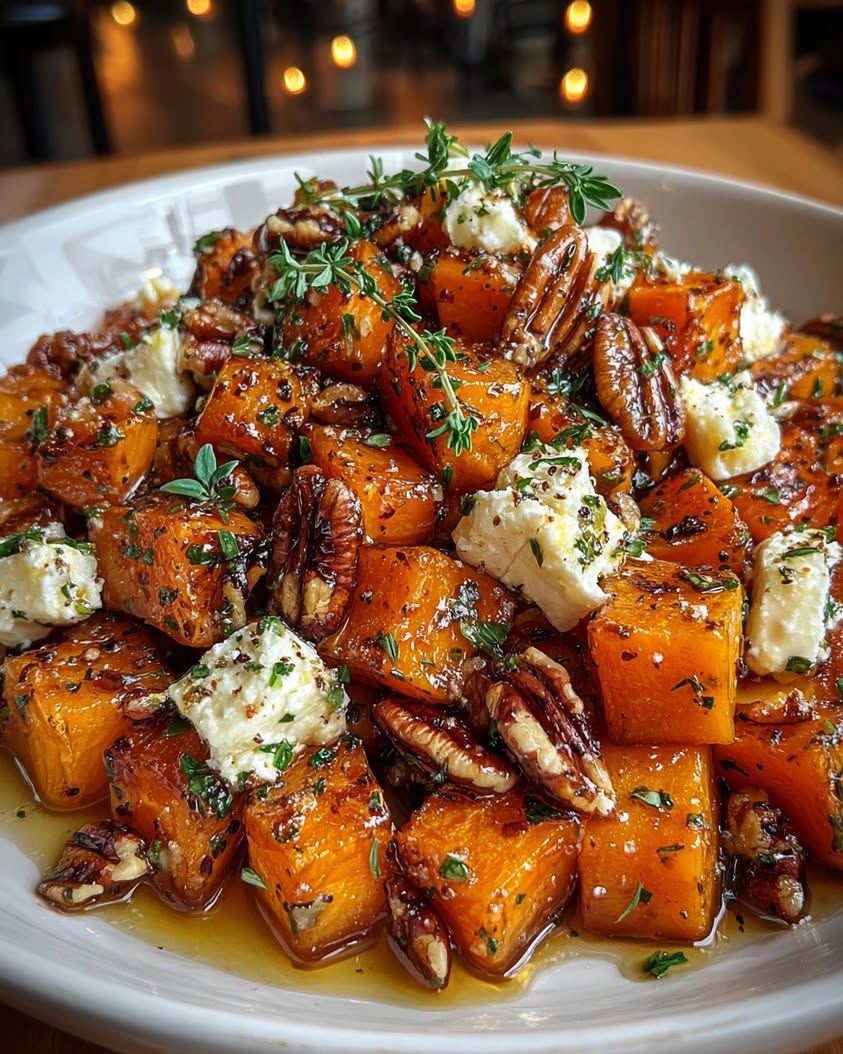
- Visual Appeal: Deep orange squash cubes contrast with ivory brie and glossy amber honey. The pecans scatter across the top like little jewels, and fresh thyme adds a pop of green.
- Skill Level Needed: This recipe suits beginners because it requires only basic knife skills and oven timing. Nevertheless, experienced cooks will appreciate the layered flavors and the ease of customization.
- Special Equipment: You need a large rimmed sheet pan, a sharp chef’s knife, a cutting board, and a small saucepan. Parchment paper helps with cleanup, and a pastry brush makes glazing simple.
Recipe Overview
- Difficulty Level: This recipe lands squarely in the easy category because the oven does most of the work. You simply peel, cube, season, and roast the squash. Meanwhile, the pecans toast on the stovetop in a few minutes, and the brie melts during the final minutes of baking.
- Category: This dish functions as a side dish, an appetizer, or a vegetarian main. It fits beautifully into holiday menus and also works for casual weeknight dinners. Additionally, it makes a stunning addition to brunch tables and potlucks.
- Cuisine: The recipe draws on American comfort food traditions with a nod to French technique through the brie. Hot honey reflects Southern and global influences that have become popular across U.S. kitchens. Overall, it represents modern American seasonal cooking.
- Cost: Butternut squash costs very little, especially in fall. Brie ranges from moderate to premium depending on quality, and pecans add the biggest expense. However, the dish still feeds six people affordably when compared to meat-based sides.
- Season: Fall and winter suit this recipe best because squash peaks in flavor and price during those months. The warm spices and honey feel cozy when temperatures drop. Nevertheless, you can make it year-round with decent results.
- Occasion: Thanksgiving, Christmas, Friendsgiving, and holiday potlucks love this dish. It also works for dinner parties, date nights, and meal prep Sundays. Because it looks impressive, it fits celebrations without demanding stress.
Why You’ll Love This Recipe
The taste and texture of this caramelized butternut squash with brie and hot honey pecans hit every note you want in a cold-weather dish. The squash develops a deep, almost candy-like sweetness as it roasts, and the brie melts into a buttery, earthy counterpoint. Meanwhile, the hot honey pecans add crunch and a gentle burn that keeps your palate interested. Because each component brings something different, the dish never feels one-dimensional. In addition, the combination of sweet, salty, creamy, and spicy satisfies cravings in a way that few side dishes can match.
Convenience and preparation benefits make this recipe a weeknight hero. You need one sheet pan for the squash and one small pan for the pecans, which means cleanup stays minimal. Furthermore, the active prep time takes only about fifteen minutes, and the oven handles the rest. Because you can roast the squash ahead and assemble later, the dish fits busy schedules. Additionally, the hot honey pecans keep for weeks, so you can make them in bulk and sprinkle them on everything.
Nutritional advantages give this dish extra appeal for health-conscious eaters. Butternut squash delivers fiber, vitamin A, vitamin C, and potassium with very few calories. Pecans contribute healthy fats and antioxidants, while brie offers protein and calcium in moderate amounts. Moreover, honey provides natural sweetness without refined sugar, and cayenne may support metabolism. Because the recipe uses olive oil instead of butter for roasting, it stays lighter than many holiday sides.
Social and entertaining value sets this caramelized butternut squash with brie and hot honey pecans apart from ordinary side dishes. Guests always ask for the recipe because the flavors feel unexpected yet comforting. Additionally, the dish presents beautifully on a platter, which makes it camera-ready for gatherings. Because it suits vegetarian diets, it accommodates mixed groups without extra cooking. Furthermore, it pairs well with wine, cocktails, and mocktails, so it fits any bar setup.
Cost-effectiveness and accessibility round out the reasons to love this recipe. Butternut squash ranks among the most affordable produce items in fall and winter, and brie comes in many price points. Pecans cost more, yet a little goes a long way because the hot honey pecans pack intense flavor. Because every ingredient comes from a standard grocery store, you never need specialty shopping trips. Consequently, this dish delivers impressive results on a realistic budget.
Historical Background and Cultural Significance
The origin story of this dish begins with butternut squash, a winter squash variety developed in Massachusetts during the 1940s. A plant breeder named Charles Leggett crossed various squash types to create a sweeter, smoother, more manageable vegetable. Because the new squash stored well and tasted rich, it spread quickly across American farms and home kitchens. Meanwhile, brie has centuries of French history behind it, with documented production dating back to the eighth century in the Île-de-France region. The marriage of these two ingredients reflects modern American cooking, which freely blends global traditions.
Cultural importance of winter squash runs deep in the Americas. Indigenous peoples cultivated squash for thousands of years and often roasted it over open fires. Moreover, squash formed part of the Three Sisters agricultural system alongside corn and beans. Because squash symbolized abundance and survival, it became central to harvest celebrations. Today, that legacy continues in Thanksgiving tables and autumn menus across the United States. Similarly, hot honey has roots in Southern cooking and in global traditions that pair chile heat with sweetness.
The evolution of this recipe reflects broader trends in American home cooking. Over the past two decades, home cooks have embraced sheet pan dinners, roasted vegetable sides, and bold sweet-spicy flavor combinations. Furthermore, the rise of artisanal honey and small-batch chile products made hot honey a pantry staple. Because social media rewards visually striking dishes, brie-topped squash gained popularity online. As a result, this caramelized butternut squash with brie and hot honey pecans represents a modern classic in the making.
Regional variations appear across the country and beyond. In the South, cooks might add bourbon to the honey glaze or use pecans grown locally in Georgia and Texas. On the West Coast, chefs often pair the squash with goat cheese instead of brie for a tangier finish. In New England, maple syrup sometimes replaces honey for a deeper, darker sweetness. Meanwhile, in the Midwest, casseroles inspired by this flavor profile include wild rice and dried cranberries for extra heartiness.
Ingredient Deep Dive
Butternut squash anchors this dish with its sweet, nutty flesh and vibrant orange color. This winter squash originated in the Americas and became a staple of indigenous agriculture long before European contact. Nutritionally, it delivers massive amounts of vitamin A, plus vitamin C, potassium, and fiber. When you shop, choose squash that feels heavy for its size with a matte, unblemished skin. Store it whole in a cool, dark place for up to three months, or refrigerate cut pieces for five days. If you cannot find butternut, acorn, delicata, or kabocha squash all work well.
Because butternut squash has a dense texture, it holds up beautifully to high-heat roasting. The natural sugars concentrate as moisture evaporates, which creates that coveted caramelized exterior. Additionally, the flesh absorbs olive oil and seasonings without turning mushy. For the best results, cut uniform cubes so everything cooks evenly. Furthermore, avoid overcooking, since squash turns to paste quickly once it passes the ideal point. When you nail the timing, the result tastes sweet, tender, and slightly crisp at the edges.
Brie brings a creamy, earthy richness that transforms roasted squash into something luxurious. This soft-ripened cheese originated in France and traditionally ages under a bloomy white rind. Nutritionally, brie provides protein, calcium, and healthy fats, though it also contains saturated fat and sodium. When selecting brie, look for a firm wheel with a snowy rind and a faint aroma of mushrooms and cream. Avoid brie that smells strongly of ammonia, since that signals over-ripening. Store brie wrapped in parchment and then plastic in the refrigerator, and use it within a week. For substitutions, camembert, goat cheese, or cream cheese work in a pinch. Because brie melts at low heat, add it during the final minutes of roasting to prevent greasiness.
Additionally, brie offers versatility beyond this recipe. You can bake it in puff pastry, slice it onto sandwiches, or melt it into pasta. However, its role here centers on contrast, since the creamy texture balances the caramelized squash. When brie warms, it becomes spreadable and slightly tangy, which cuts through the honey’s sweetness. Consequently, each bite feels balanced rather than cloying.
Pecans contribute crunch, buttery flavor, and a distinctly American story. These native nuts grew wild across the southern United States and Mexico for centuries before commercial cultivation began. Nutritionally, pecans rank high in healthy monounsaturated fats, antioxidants, and manganese. When buying pecans, choose halves or pieces with a light golden color and a sweet, nutty smell. Avoid shriveled or bitter nuts, since rancidity develops quickly. Store pecans in the refrigerator for six months or the freezer for up to two years. If you need a substitute, walnuts, almonds, or pistachios all work, though the flavor shifts slightly.
Because pecans toast quickly, they demand constant attention in the pan. The sugars in the hot honey glaze caramelize around them, creating a candied shell that shatters pleasantly. Additionally, a pinch of cayenne and flaky salt elevates the nuts from simple to extraordinary. When you make a double batch, you will find endless uses for the leftovers. Furthermore, the pecans stay crunchy for weeks when stored properly in an airtight container.
Hot honey ties everything together with its sweet, spicy, glossy finish. This condiment gained mainstream popularity in the 2010s, though the concept of chile-infused honey dates back centuries in Mediterranean and Southern cooking. Nutritionally, honey provides quick energy and trace antioxidants, while cayenne adds capsaicin with potential anti-inflammatory benefits. When buying hot honey, read labels and choose one with real chile peppers rather than artificial flavoring. Store it in a cool, dark pantry for up to a year. If you prefer, make your own by warming honey with dried chiles and letting it steep. Because heat levels vary, taste as you go and adjust to your preference.
Furthermore, hot honey works far beyond this recipe. Drizzle it over fried chicken, pizza, cornbread, or biscuits. Because it balances sweet and spicy so well, it also shines on cheese boards and roasted vegetables. When you brush it over the squash before roasting, it helps deepen the caramelization. As a result, the honey becomes both a glaze and a finishing drizzle.
Common Mistakes to Avoid
- Cutting the squash into uneven pieces leads to some cubes burning while others stay raw. Take time to trim the squash into uniform one-inch cubes so everything roasts at the same rate. Consistent sizing matters more than perfect shapes.
- Crowding the sheet pan traps steam and prevents browning. Spread the squash in a single layer with space between pieces, and use two pans if necessary. Because caramelization requires dry heat, airflow makes all the difference.
- Skipping the preheat leaves the oven too cool when the squash goes in. Always preheat to 425°F for at least fifteen minutes so the squash sears immediately. A hot oven jumpstarts the Maillard reaction.
- Under-seasoning the squash produces a flat, bland result. Season generously with salt and pepper before roasting, and taste a piece after baking. Remember that brie and honey add richness, but salt builds the foundation.
- Adding brie too early causes it to melt into a greasy puddle. Wait until the last five minutes of roasting, then scatter the brie over the hot squash. The residual heat softens it perfectly without breaking the cheese.
- Burning the pecans happens fast because of their high fat content. Toast them over medium heat and stir constantly, pulling them off the heat when they smell nutty. If they darken too much, start over, since burnt nuts taste bitter.
- Using cold honey makes glazing difficult because it clings and clumps. Warm the honey gently in the microwave or a saucepan so it drizzles smoothly. Warm honey also coats the squash more evenly.
- Forgetting to dry the squash after washing leads to soggy results. Pat the cubes thoroughly with a clean towel before tossing with oil. Excess moisture steams the squash instead of roasting it.
- Reheating the entire dish in the microwave ruins the pecans and toughens the brie. Instead, reheat only the squash and add fresh brie and pecans afterward. This keeps textures intact.
- Ignoring carryover cooking causes overcooked squash. Pull the pan from the oven when the squash feels tender but still holds its shape. It continues cooking for a minute or two on the hot pan.
Essential Techniques
Mastering the cube cut matters because uniform pieces guarantee even cooking. Start by slicing off both ends of the squash, then stand it upright and peel downward with a sharp knife. Next, halve the squash lengthwise, scoop out the seeds, and cut each half into planks. Finally, stack the planks and cut them into one-inch cubes. This method keeps your fingers safe and produces consistent results. With practice, the whole process takes under ten minutes.
High-heat roasting creates the caramelized exterior that defines this dish. Because ovens vary, use an oven thermometer to confirm your temperature reaches 425°F. Arrange the squash on a rimmed sheet pan in a single layer, and avoid parchment if you want maximum browning on the bottom. Additionally, rotate the pan halfway through cooking so every piece browns evenly. When the edges turn deep golden brown and the centers feel tender, you know the technique worked.
Toasting nuts on the stovetop gives you control that the oven cannot match. Because pecans burn quickly, stay at the pan and stir constantly with a wooden spoon. When they release a toasted aroma and turn one shade darker, remove them immediately. Then, toss them in the hot honey mixture off the heat so the glaze thickens without scorching. Visual cues matter here, so trust your nose and eyes rather than the clock alone.
Melting brie properly requires gentle heat and good timing. Because brie breaks when overheated, add it only during the final five minutes of roasting. Tear or slice the brie into small pieces so it softens quickly and distributes evenly. Additionally, return the pan to the oven just until the cheese slumps and turns glossy. When brie looks soft but still holds its shape, it has reached the perfect stage.
Pro Tips for Perfect Caramelized Butternut Squash with Brie and Hot Honey Pecans
First, choose a squash with a long neck, since the neck contains solid flesh without seeds. This shape gives you more uniform cubes and less waste. Additionally, a heavy squash signals high moisture content and sweet flavor.
Second, toss the squash with a pinch of brown sugar or maple syrup before roasting to boost browning. Because sugar caramelizes at a lower temperature than the squash’s natural sugars, this trick deepens color and flavor. However, keep the amount small so the dish does not turn overly sweet.
Third, preheat the sheet pan in the oven for five minutes before adding the squash. Because the hot surface sears the bottom of each cube on contact, you get faster browning and better texture. Just be careful when arranging the squash on a hot pan.
Fourth, reserve some hot honey for drizzling after baking. The fresh drizzle adds shine and a bright kick that roasting mellows. Furthermore, a final drizzle makes the dish look glossy and appetizing on the table.
Fifth, scatter fresh thyme leaves over the finished dish for herbal contrast. Because thyme pairs naturally with squash, honey, and brie, it ties the flavors together. Add the herbs after baking so they stay green and fragrant.
Sixth, serve the dish warm but not piping hot, since brie tastes best when slightly softened rather than molten. Additionally, let the dish rest for five minutes before serving so the cheese sets just enough. This resting period also lets the flavors meld.
Seventh, make extra hot honey pecans and store them separately for other uses. Because they stay crunchy for weeks, they become a secret weapon for salads and cheese boards. You will thank yourself later.
Eighth, taste and adjust the seasoning right before serving. A final pinch of flaky salt and a squeeze of lemon juice can brighten the whole dish. Because flavors fade as food cools, last-minute adjustments matter.
Variations and Adaptations
Regional variations offer endless ways to reinterpret this dish. In the South, cooks often add crumbled bacon and a splash of bourbon to the honey glaze. Meanwhile, New England kitchens might swap maple syrup for honey and use sharp cheddar instead of brie. On the West Coast, goat cheese and pepitas create a tangier, crunchier version. Additionally, Southwestern cooks sometimes add chili powder and lime zest for a smoky, citrusy twist.
Seasonal adaptations keep the recipe fresh all year. In spring, substitute asparagus or rhubarb for part of the squash, though the cooking times differ. During summer, grilled peaches and burrata mimic the sweet-creamy contrast of the original. In fall, delicata squash and apple slices add variety. Furthermore, winter months welcome parsnips, carrots, and sweet potatoes alongside the butternut.
Dietary modifications make the dish accessible to more eaters. For a dairy-free version, use a plant-based brie alternative or cashew cream. To go vegan, replace honey with agave or maple syrup and skip the cheese entirely. For a low-carb approach, reduce the honey and serve smaller portions. Additionally, a paleo version uses coconut oil and raw honey for compliance.
Flavor variations let you customize the profile. Add smoked paprika for depth, cinnamon for warmth, or rosemary for piney notes. Because the base flavors are neutral, they accept almost any spice blend. Try a curry version with garam masala and cilantro, or an Italian version with balsamic and basil.
Texture modifications suit different preferences. If you prefer softer squash, roast at 400°F for a longer time. For extra crunch, broil the finished dish for one minute before serving. Additionally, adding toasted breadcrumbs or fried shallots introduces another layer of crispness.
Presentation alternatives help the dish fit any table. Serve it in a hollowed-out squash shell for a rustic centerpiece. Alternatively, arrange it on a flat platter for a modern look, or portion it into ramekins for individual servings. Because the colors pop, simple white dishes work best.
Serving and Presentation Guide
Plating techniques can elevate this dish from homestyle to elegant. Spread the squash across a large platter in a single layer, then tuck brie pieces between the cubes. Drizzle the hot honey over everything and finish with pecans and thyme. Because negative space helps food look intentional, avoid piling the squash into a mound.
Garnishing ideas add color and texture that make the dish memorable. Fresh pomegranate seeds bring ruby red jewels and a tart burst. Meanwhile, microgreens or arugula add peppery freshness. Toasted pepitas or fried sage leaves also work beautifully as garnishes.
Traditional accompaniments include roast chicken, pork tenderloin, and turkey. Because the dish leans sweet, it balances savory mains perfectly. Additionally, crusty bread helps soak up every bit of honey and melted brie.
Modern serving suggestions expand the possibilities. Spoon the squash over farro, quinoa, or wild rice for a grain bowl. Pile it onto crostini for an elegant appetizer. Alternatively, fold it into a galette or frittata for brunch.
Temperature considerations matter because brie changes texture as it cools. Serve the dish within fifteen minutes of baking for the best experience. If it cools completely, reheat gently in the oven rather than the microwave so the cheese softens evenly.
Portion control tips help with meal planning. A half-cup serving suits a side dish, while a full cup works as a vegetarian main. Because the dish satisfies richly, smaller portions often suffice. For buffets, plan on six to eight servings per batch.
Wine and Beverage Pairing
Wine pairings for this dish favor whites with good acidity and a touch of sweetness. A dry Riesling balances the honey and cayenne beautifully. Meanwhile, Chardonnay with light oak complements the creamy brie. For red lovers, a light Pinot Noir or Beaujolais works without overwhelming the squash.
Non-alcoholic alternatives keep the meal inclusive and refreshing. Sparkling apple cider echoes the autumn flavors. Ginger beer delivers spice that mirrors the hot honey. Additionally, a kombucha with citrus notes cuts through the richness.
Coffee and tea pairings might surprise you, yet they work beautifully. A medium-roast coffee with nutty notes mirrors the pecans. Chai tea brings cinnamon and cardamom that harmonize with the honey. Green tea with jasmine adds floral contrast.
Temperature considerations matter for beverage service. Serve white wines well chilled and reds slightly cool to keep the pairing fresh. Non-alcoholic options taste best over ice or well chilled. Because the dish itself is warm, cool drinks provide balance.
Serving suggestions include offering two options so guests can choose. Place a bottle of Riesling and a pitcher of sparkling cider on the table. Provide small glasses so guests can sample both. This thoughtful touch elevates the meal.
Storage and Shelf Life
Storage methods determine how well this dish holds up. Transfer leftovers to an airtight container and refrigerate within two hours of cooking. Keep the pecans separate so they stay crunchy. Because brie changes texture when cold, expect it to firm up in the fridge.
Temperature requirements keep food safe. Store the dish at 40°F or below in the refrigerator. Avoid leaving it at room temperature for more than two hours. When in doubt, throw it out.
Container recommendations include glass containers with tight lids. Glass resists stains and odors better than plastic. Additionally, shallow containers cool food faster, which reduces bacterial risk.
Signs of spoilage include off smells, sliminess, or mold on the cheese. The squash should smell sweet and earthy, not sour. If anything looks questionable, discard it immediately.
Reheating instructions protect the texture. Warm the squash in a 350°F oven for ten minutes, then add fresh brie and pecans. Because the microwave toughens the cheese and softens the nuts, avoid it when possible.
Freezing guidelines apply mainly to the squash. Freeze roasted squash cubes in a single layer, then transfer to freezer bags for up to three months. Do not freeze the brie or the honey pecans, since both suffer texturally. Thaw the squash overnight in the refrigerator before reheating.
Make Ahead Strategies
Prep timeline helps you plan for parties without stress. Peel and cube the squash up to two days ahead and store it in water in the refrigerator. Drain and dry thoroughly before roasting. Meanwhile, make the hot honey pecans up to two weeks ahead and store them at room temperature.
Storage between steps keeps components fresh. Keep the squash in a sealed container with a paper towel to absorb moisture. Refrigerate the brie wrapped tightly, and let it sit at room temperature for thirty minutes before baking. Store the honey in a squeeze bottle for easy drizzling.
Quality impact assessment reveals that this dish holds up remarkably well. The squash tastes nearly as good on day two, though the brie and pecans need refreshing. Because the flavors deepen overnight, some cooks prefer the leftovers. Just add fresh garnishes before serving.
Assembly tips streamline the final steps. Roast the squash ahead and cool it completely, then refrigerate. On serving day, reheat the squash, top with brie, and broil for two minutes. Finish with hot honey, pecans, and thyme.
Reheating guidelines keep the texture intact. Use a 350°F oven and cover the dish loosely with foil for the first five minutes. Then uncover and continue until heated through. This method prevents drying while warming evenly.
Fresh element additions before serving make the dish taste newly made. Add a squeeze of lemon, a sprinkle of flaky salt, and fresh herbs. Because these touches take seconds, they deliver big returns.
Scaling Instructions
Halving the recipe works easily because the ingredients divide cleanly. Use three cups of squash, three ounces of brie, and half a cup of pecans. Reduce the honey to two tablespoons and keep the spices the same. Because smaller batches roast faster, check the squash at twenty minutes.
Doubling or tripling requires attention to pan space. Use two or three sheet pans rather than crowding one, and rotate them halfway through baking. Increase the honey and spices proportionally, but taste as you go. Additionally, expect a slightly longer total time because more mass in the oven slows roasting.
Equipment adjustments matter when scaling up. A second sheet pan prevents steaming, and an extra saucepan helps with larger batches of pecans. If you triple the recipe, consider roasting the squash in batches for the best browning. Cleanup takes longer, but the results reward the effort.
Timing modifications keep quality high. Larger batches may need five extra minutes in the oven, while smaller batches finish sooner. Because ovens vary, rely on visual cues rather than strict timing. When the edges caramelize, the squash is ready.
Storage considerations change with volume. Big batches require multiple containers and more fridge space. Cool everything completely before sealing so condensation does not soften the squash. Label containers with dates so you use the oldest first.
Nutritional Deep Dive
Macro breakdown for one serving shows a balanced profile. Each serving delivers roughly 320 calories, 8 grams of protein, 30 grams of carbohydrates, and 20 grams of fat. The fat comes mostly from pecans, olive oil, and brie, while the carbs come from squash and honey. Because the dish satisfies, a single serving often feels like enough.
Micronutrient analysis reveals impressive numbers. Butternut squash provides over 400 percent of the daily value for vitamin A per serving. Additionally, it delivers vitamin C, potassium, and manganese. Pecans add vitamin E and zinc, while brie contributes calcium and vitamin B12.
Health benefits include support for vision, immunity, and heart health. Because squash offers fiber and antioxidants, it supports digestion and reduces inflammation. Meanwhile, pecans provide healthy fats that promote satiety. In moderation, brie adds protein and calcium to the mix.
Dietary considerations matter for special diets. The recipe suits vegetarians and gluten-free eaters naturally. However, those watching sodium should reduce the salt, and those managing blood sugar should moderate the honey. Because brie contains dairy, vegan eaters need substitutions.
Portion analysis helps with meal planning. A half-cup portion works as a side dish and delivers about 160 calories. A full-cup portion functions as a main and delivers about 320 calories. Because the dish is rich, smaller portions often satisfy fully.
Weight management tips include using less honey and more spices for flavor. Additionally, choose a lighter cheese like goat cheese to reduce fat. Because squash is low in calories, you can enjoy a generous portion of it while moderating the richer toppings.
Dietary Adaptations
Gluten-free eaters can enjoy this recipe as written because no ingredient contains gluten. However, check labels on the hot honey and any add-ins. If you serve the dish with bread or crostini, choose gluten-free options. Because the recipe is naturally gluten-free, no swaps are needed.
Dairy-free versions require replacing the brie. Use a cashew-based vegan brie or a creamy plant-based cheese that melts well. Alternatively, drizzle tahini over the squash for richness without dairy. Because tahini pairs beautifully with honey and pecans, this swap tastes excellent.
Vegan adaptations involve two changes. First, replace honey with agave nectar or maple syrup. Second, omit the brie or use a vegan alternative. Because the squash and pecans carry so much flavor, the dish still satisfies without animal products.
Low-carb versions reduce the honey and skip the honey drizzle. Use a sugar-free sweetener if needed, and serve smaller portions of squash. Because squash contains natural carbohydrates, moderation matters for strict low-carb diets.
Keto adaptations demand bigger changes. Butternut squash contains too many carbs for strict keto, so substitute roasted radishes or cauliflower. Keep the brie and pecans, and use a keto-friendly sweetener in the honey. Because the flavors remain similar, the dish still feels indulgent.
Paleo versions use raw honey, olive oil, and grass-fed brie if dairy is tolerated. Omit any refined sugar and choose pecans without added oils. Because the recipe relies on whole foods, paleo eaters need only minor tweaks.
Low-FODMAP adaptations keep the squash portions modest because butternut contains moderate FODMAPs. Use maple syrup instead of honey, since honey ranks high in FODMAPs. Choose brie, which is low in lactose, and enjoy small portions.
Other specific diets may require further changes. Nut-free eaters can substitute sunflower seeds for pecans. Nightshade-free eaters should skip the cayenne and use black pepper instead. Because the recipe is flexible, most diets find a workable version.
Troubleshooting Guide
Texture issues usually stem from moisture or crowding. If the squash turns mushy, you likely overcrowded the pan or skipped drying the cubes. Next time, use two pans and pat the squash dry. Additionally, roast longer at higher heat to drive off moisture.
Flavor balance problems arise when one element dominates. If the dish tastes too sweet, add more salt and a squeeze of lemon. If it tastes bland, increase the cayenne and add fresh herbs. Because flavors build, taste at every stage.
Temperature problems include uneven browning and cold centers. Rotate the pan halfway through cooking and use an oven thermometer to verify temperature. If your oven runs cool, increase the setting by 25°F. Because every oven differs, adjust accordingly.
Equipment challenges often involve dull knives or thin sheet pans. A sharp knife makes cubing squash safer and faster. A heavy, rimmed sheet pan prevents warping and promotes even browning. Because good tools make cooking easier, invest in a few key items.
Ingredient substitutions can change timing and texture. If you swap brie for goat cheese, add it at the same point but expect a tangier result. If you use walnuts instead of pecans, toast them a minute less because they burn faster. Because substitutions shift flavor, taste before serving.
Timing concerns arise when guests arrive late or ovens run behind. Roast the squash ahead and reheat just before serving. Keep the pecans at room temperature and add them last. Because the dish forgives reheating, timing stress disappears.
Recipe Success Stories
Community feedback consistently praises this dish for its balance of flavors. Readers report making it three times in one month during the holidays. Many say the hot honey pecans disappear before the meal starts. Because the recipe is simple, even novice cooks achieve impressive results.
Variation successes include a reader who added bacon and maple syrup for a brunch version. Another swapped in delicata squash and goat cheese for a lighter take. A third used the pecans on a salad with blue cheese and cranberries. Because the base recipe is flexible, creativity flour Print
Caramelized Butternut Squash with Brie & Hot Honey Pecans
- Total Time: 45 minutes
- Yield: 4
Description
Roasted butternut squash with caramelized edges, topped with melted Brie, spicy hot honey, and crunchy pecans. A perfect blend of sweet, savory, and spicy flavors.
Ingredients
- 1 large butternut squash (about 2-3 pounds), peeled, seeded, and cut into 1-inch cubes
- 2 tablespoons olive oil
- 1 teaspoon salt
- 1/2 teaspoon black pepper
- 8 ounces Brie, cut into small pieces
- 1/2 cup pecan halves
- 1/4 cup honey
- 1/2 teaspoon red pepper flakes (adjust to taste)
- Fresh thyme leaves, for garnish (optional)
Instructions
- Preheat oven to 425°F (220°C). Line a baking sheet with parchment paper.
- In a large bowl, toss butternut squash cubes with olive oil, salt, and pepper. Spread in a single layer on the prepared baking sheet.
- Roast for 25-30 minutes, flipping halfway, until squash is tender and caramelized.
- Meanwhile, in a small skillet, toast pecans over medium heat until fragrant, about 3-5 minutes. Remove and set aside.
- In the same skillet, combine honey and red pepper flakes. Warm over low heat until honey is runny and infused, about 2 minutes. Remove from heat.
- When squash is done, remove from oven and dot with Brie pieces. Return to oven for 3-5 minutes, until Brie is melted.
- Transfer squash to a serving platter. Drizzle with hot honey and sprinkle with toasted pecans and fresh thyme, if desired.
- Serve warm and enjoy!
Notes
You can customize the seasonings to taste.
- Prep Time: 15 minutes
- Cook Time: 30 minutes
- Method: Side Dish
- Cuisine: American