Caramelized Beet and Pear Towers with Feta Snow and Citrus Honey Drip: A Showstopping Salad
If you want a salad that turns heads at the table, these Caramelized Beet and Pear Towers with Feta Snow and Citrus Honey Drip deliver drama on every plate. The caramelized beet and pear towers stack earthy sweetness with bright citrus notes, and the feta snow adds a salty chill that melts into the warm honey drip. You get a restaurant-quality dish without leaving your kitchen, and your guests will remember it long after the plates clear. This recipe transforms humble root vegetables and ripe pears into an elegant first course that feels both rustic and refined.
The magic of these caramelized beet and pear towers comes from contrast. Roasting concentrates the natural sugars in beets and pears until they turn jammy and deep, while the feta snow brings a light, airy saltiness that cuts through the sweetness. Then the citrus honey drip ties everything together with a glossy tang. You build each tower layer by layer, so the presentation looks intentional and polished. Even better, the components come together without fussy techniques, and you can prep most of the work ahead of time.
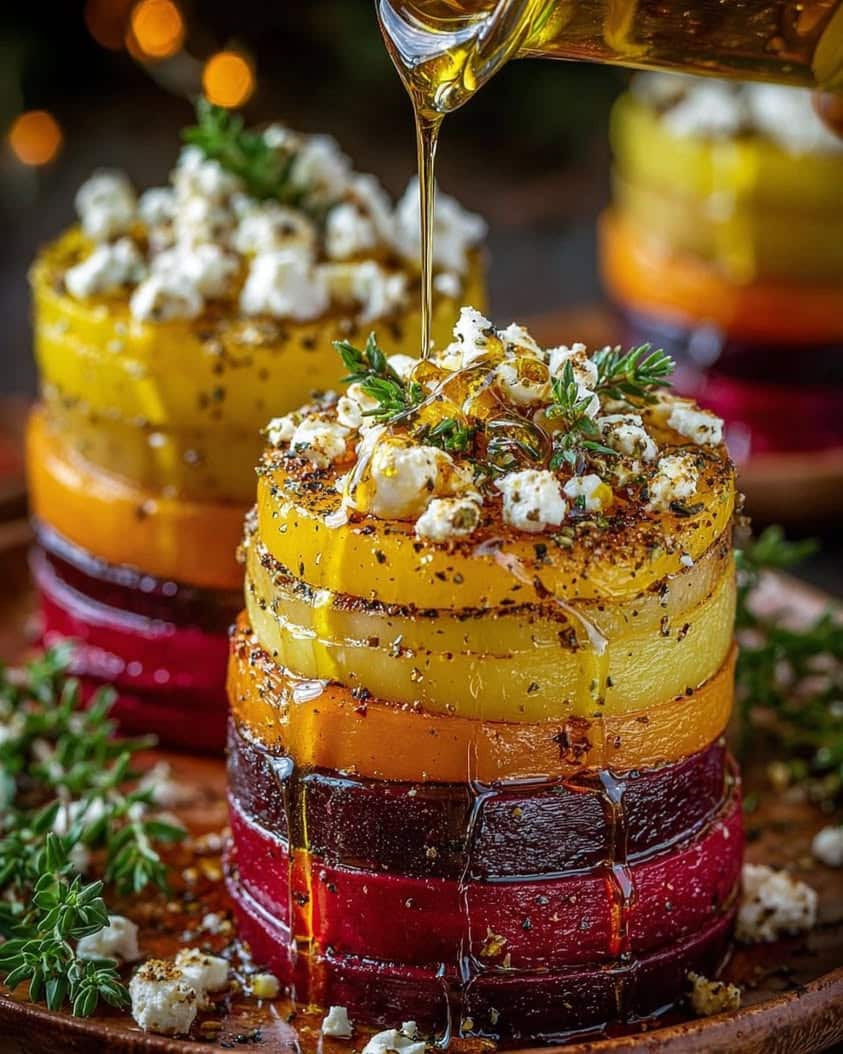
Serve these caramelized beet and pear towers as a starter for a dinner party, a holiday side, or a light lunch with crusty bread. The colors alone make the dish photo-ready, with ruby beets, golden pears, and snowy feta against a drizzle of amber honey. Whether you cook for a crowd or a quiet table for two, this recipe rewards you with flavors that taste far more complicated than the actual effort. Grab your sheet pan and a sharp knife, and let us walk through every step.
Quick Recipe Highlights
- Flavor Profile: Sweet roasted beets and pears meet salty feta and bright citrus honey. The combination balances earthiness, acidity, and gentle sweetness in every bite.
- Texture: Tender, jammy layers of beet and pear contrast with the crumbly chill of feta snow. The honey drip adds a silky finish that coats your tongue.
- Aroma: Warm caramel notes from roasting fill the kitchen, followed by fresh citrus zest and a hint of thyme. The scent alone signals something special.
- Visual Appeal: Deep crimson beets and honey-gold pears stack into neat towers. White feta snow and glossy amber drip create a striking plate.
- Skill Level Needed: You need basic knife skills and comfort with a hot oven. The assembly rewards patience more than advanced technique.
- Special Equipment: A sheet pan, parchment paper, a small food processor or grater, and a squeeze bottle help you execute cleanly. A mandoline makes thin slices easier but stays optional.
Recipe Overview
- Difficulty Level: Intermediate fits best because you roast, slice, and assemble multiple components. None of the steps demand professional training, yet timing and knife work matter. The feta snow requires a light touch so it stays fluffy. Overall, a confident home cook handles this recipe with ease.
- Category: This dish works as a starter, a side salad, or a light main when paired with grains. It shines on holiday menus and dinner party tables. You can also serve it as a brunch centerpiece.
- Cuisine: The recipe draws from modern Mediterranean and farm-to-table traditions. Roasted root vegetables echo European country cooking, while the feta snow nods to avant-garde plating. Citrus and honey connect the flavors across seasons. The result feels contemporary yet grounded in classic pairings.
- Cost: Expect moderate costs because beets and pears stay affordable year-round. Feta, honey, and citrus add small expenses that stretch across servings. A block of quality feta costs more than crumbles but tastes far better.
- Season: Fall and winter suit this dish best because beets and pears peak then. The warm roasted flavors comfort cool weather gatherings. You can make it year-round with greenhouse produce.
- Occasion: Holidays, dinner parties, showers, and elegant weeknight dinners all fit. The towers impress without requiring a caterer. They also work for potlucks when you assemble on site.
Why You Will Love This Recipe
First, the taste and texture keep you coming back. Caramelized beet and pear towers combine sweet, salty, earthy, and bright notes in a single forkful. The beets turn jammy in the oven, and the pears soften into honeyed slices. Meanwhile, the feta snow stays cold and crumbly, so each bite delivers temperature contrast. The citrus honey drip adds acidity that lifts the whole dish. You get a salad that eats like a composed dessert, yet it stays savory and balanced.
Second, convenience makes this recipe a weeknight contender. You roast the beets and pears on one sheet pan, and the oven does most of the work. The feta snow takes two minutes in a food processor, and the honey drip simmers in a small saucepan. Cleanup stays minimal because parchment catches the mess. You can also roast the vegetables a day ahead and assemble at serving time. That flexibility makes entertaining far less stressful.
Third, the nutritional profile gives you a reason to feel good about seconds. Beets deliver folate, fiber, and nitrates that support heart health. Pears add fiber and vitamin C, while feta contributes calcium and protein. Honey brings natural sweetness in small amounts, and citrus adds vitamin C. The dish stays vegetarian and gluten-free as written. You get real nutrients with no heavy cream or processed ingredients.
Fourth, these caramelized beet and pear towers shine socially. The vertical presentation sparks conversation before anyone takes a bite. Guests photograph the plate, and the colors pop against white dishes. Serving individual towers also feels personal and generous. For holidays, the dish adds a wow factor that complements roasted meats and casseroles. You become the host who serves something unexpected and beautiful.
Fifth, cost-effectiveness keeps this recipe accessible. Beets and pears rank among the cheapest produce at most markets. A single block of feta stretches across four servings, and pantry staples like honey and citrus cover the drip. You avoid expensive proteins and specialty oils. Compared with restaurant salads priced at fifteen dollars or more, these towers cost a fraction per plate. You eat well without stretching your budget.
Historical Background and Cultural Significance
Beets have fed humans for thousands of years, starting with wild sea beets along Mediterranean coasts. Ancient Romans and Greeks cultivated leafy varieties, and later Europeans bred the swollen root we roast today. By the nineteenth century, beets became a staple across Eastern and Central Europe. Cooks there pickled, boiled, and roasted them through long winters. The earthy sweetness we celebrate in caramelized beet and pear towers traces directly to those traditions.
Pears carry their own rich history across Europe and Asia. Romans grafted and spread pear varieties throughout their empire, and French orchardists refined poaching and roasting techniques. In many cultures, pears symbolized fertility and prosperity, appearing on holiday tables for centuries. Pairing pears with root vegetables became common in Northern European kitchens. The combination of sweet fruit and savory roots reflects a practical, seasonal approach to cooking.
Feta holds deep cultural importance in Greece, where protected designation rules govern its production. Shepherds have made brined sheep and goat cheeses for millennia, and feta remains central to Greek meals. The salty tang balances sweet produce beautifully, which explains its wide use in salads. Crumbling feta into a snow-like texture updates the tradition while keeping its essence. Modern chefs adopted this technique to add elegance without heaviness.
Honey and citrus have symbolized hospitality across the Mediterranean for ages. Honey appears in ancient Greek and Roman cooking, and citrus arrived through trade routes from Asia. Combining them into a warm drip reflects modern farm-to-table sensibilities. Today, chefs plate vegetable dishes with architectural flair, and home cooks follow suit. These caramelized beet and pear towers sit at that intersection of tradition and contemporary style.
Ingredient Deep Dive
Beets anchor this dish with their deep color and earthy flavor. Cultures across Europe and the Middle East have prized beets for centuries, using them in soups, salads, and preserves. Nutritionally, beets deliver folate, manganese, and dietary nitrates that support blood flow. When you shop, choose firm beets with smooth skin and fresh greens attached. Smaller beets roast faster and taste sweeter. Store them unwashed in a cool, dark place for up to two weeks, or roast and refrigerate them for five days. If you need a substitute, try golden beets for a milder taste or sweet potatoes for a different texture.
Beets also offer impressive versatility beyond the tower. You can pickle the stems, sauté the greens, and roast the roots for multiple meals. Their natural sugars caramelize beautifully under high heat, which makes them ideal for this recipe. Red beets bleed color, so wear gloves during prep if stains bother you. Golden beets avoid the mess and add sunny color. Either way, roasting concentrates flavor and removes the raw, metallic edge some tasters dislike.
Pears bring honeyed sweetness and soft texture to the towers. European cultures have grown pears for thousands of years, and orchards spread from Rome to France to England. Nutritionally, pears supply fiber, vitamin C, and potassium with modest calories. Select pears that feel firm but give slightly at the stem end. Bosc pears hold shape well when roasted, while Anjou pears soften more quickly. Ripen pears at room temperature, then refrigerate them for up to five days. In a pinch, firm apples or quince make solid substitutes.
Pears pair naturally with earthy roots because their sugars balance the soil flavors. Roasting pears deepens their sweetness and creates tender, translucent slices. Leave the skin on for color and fiber, and core them cleanly before slicing. A squeeze of lemon keeps cut pears from browning during prep. Choose just-ripe fruit so slices hold their shape on the plate. Overripe pears turn mushy and collapse during assembly.
Feta contributes salty tang and creamy crumble to the recipe. Greek tradition has protected feta production for generations, and the cheese remains a staple of Mediterranean tables. Feta delivers calcium, protein, and probiotics when made with live cultures. Buy feta packed in brine rather than pre-crumbled versions, which taste drier and less fresh. Check labels for sheep milk content, which gives the best flavor. Store feta in its brine in the fridge for up to two weeks. Goat cheese or ricotta salata work as substitutes with slightly different profiles.
Feta snow transforms the cheese into a light, icy topping. You freeze the feta briefly, then grate or pulse it into fluffy flakes. The cold texture contrasts with warm vegetables and melts slowly on the tongue. This technique lets salty flavor spread evenly across the plate. Make the snow just before serving so it stays cold and airy. Pre-crumbled feta will not work well because it lacks the moisture and structure to flake.
Honey and citrus form the glossy drip that finishes each tower. Honey has sweetened Mediterranean cooking since antiquity, and citrus arrived through ancient trade routes. Together they create a balance of sweet and sour that lifts roasted vegetables. Choose a mild honey like clover or orange blossom so it does not overpower the beets. Fresh lemon and orange juice add brightness, and zest deepens aroma. Store honey at room temperature and citrus in the fridge for best results. Maple syrup offers a vegan alternative with similar body.
Fresh thyme and olive oil round out the ingredient list. Thyme grows across Mediterranean hillsides and pairs beautifully with roots and fruit. Olive oil carries flavor and helps caramelization develop in the oven. Choose a good extra virgin olive oil for drizzling and finishing. Both ingredients keep well in a cool pantry. Substitute rosemary for thyme if you prefer a piney note.
Common Mistakes to Avoid
- Under roasting the beets leaves them crunchy and dull. Give them enough time until a knife slides in easily. Roast beets separately if they need longer than pears.
- Slicing beets too thick makes towers unstable and tough. Aim for quarter-inch rounds that stack neatly. A mandoline helps you keep consistent thickness.
- Using overripe pears leads to mushy layers that collapse. Choose firm pears that still hold their shape after roasting. Test with a gentle press before buying.
- Skipping the citrus in the honey drip leaves the dish cloying. Acid balances sweetness and brightens the beets. Taste the drip and adjust with more lemon if needed.
- Making feta snow in advance causes it to clump and soften. Grate or pulse the cheese right before plating. Keep it frozen until the final moment.
- Dressing the plates too early makes everything soggy. Add the honey drip at the table or right before serving. Guests see the glossy finish at its best.
- Overcrowding the sheet pan steams the vegetables instead of caramelizing them. Give each piece space to brown. Use two pans if necessary.
- Discarding beet greens wastes a bonus ingredient. Sauté them with garlic and olive oil for a side dish. Store them in a damp towel in the fridge.
- Using cold feta straight from the fridge without freezing leads to sticky crumbles. A short freeze firms the cheese so it flakes beautifully.
- Ignoring seasoning until the end leaves flavors flat. Salt the beets and pears before roasting and taste the drip. Season each component as you go.
Essential Techniques
Roasting for caramelization matters most in this recipe. High heat drives moisture out of the beets and pears, then browns their natural sugars into deep flavor. Without proper roasting, the vegetables taste raw and watery. Preheat the oven fully before adding the pan, and avoid crowding the pieces. Flip once midway through cooking so both sides brown evenly. You know the technique worked when the edges turn dark golden and the centers feel tender. If the vegetables steam instead of browning, raise the heat or spread them onto a second pan.
Slicing uniformly supports both presentation and stability. Even slices stack into balanced towers, while uneven pieces wobble and slide. Use a sharp chef knife or a mandoline for consistent quarter-inch rounds. Cut perpendicular to the vegetable so each slice shows the full cross section. Wipe your knife between beets to limit color transfer. Visual cues help here: slices should look like coins of the same thickness. Practice on one beet first, then continue with confidence.
Making feta snow requires a light touch and a cold start. Freeze the block for about ten minutes so it firms without turning rock hard. Grate on the large holes of a box grater, or pulse briefly in a food processor. Stop before the cheese turns into paste. You want fluffy, separate flakes that fall like snow. Work quickly and return leftovers to the freezer. Success shows as airy white flakes that hold shape on the plate. If the feta clumps, it warmed too much or processed too long.
Emulsifying the honey drip creates a glossy, cohesive sauce. Warm honey with citrus juice and a pinch of salt over low heat, then whisk until smooth. The acid and sugar bind into a syrup that coats a spoon lightly. Avoid boiling, which darkens the honey and dulls the citrus. Taste and adjust for balance, adding more lemon if it feels too sweet. The drip should look amber and shiny with a fresh citrus aroma. Cool slightly before drizzling so it thickens just enough to cling to the towers.
Pro Tips for Perfect Caramelized Beet and Pear Towers
Roast beets and pears on separate areas of the pan because they cook at different rates. Beets typically need more time, and separating them prevents overcooking. Check both with a knife and pull each when tender.
Wear gloves while handling red beets to protect your hands from stains. The pigment bonds to skin quickly and lingers through several washes. Gloves also keep your feta snow pristine white.
Build towers on a thin smear of honey drip to anchor the base slice. This small step keeps the stack from sliding during transport to the table. It also adds flavor directly under the first layer.
Season each layer lightly with flaky salt as you stack. Layered seasoning distributes flavor evenly rather than concentrating it at the top. Flaky salt also adds pleasant crunch.
Chill your serving plates for ten minutes before plating. Cold plates keep the feta snow firm and slow the melting process. Room temperature plates soften the snow too fast.
Garnish with small thyme sprigs and citrus zest curls for a polished look. These touches add aroma and color without clutter. Place them deliberately rather than scattering randomly.
Taste the honey drip both warm and cooled, because sweetness changes with temperature. Adjust with a squeeze of lemon before serving. A balanced drip makes the whole dish sing.
Assemble towers close to serving time to preserve texture and temperature contrast. You can slice components hours ahead and stack at the last minute. This timing keeps every element at its best.
Variations and Adaptations
For a regional variation, lean into Greek flavors by adding crumbled walnuts and a drizzle of oregano oil. Toasted nuts bring crunch, and oregano echoes the feta’s Mediterranean roots. You might also scatter kalamata olives for a briny punch. These additions keep the tower structure intact while deepening the cultural connection.
Seasonal adaptations let you cook this dish year-round. In summer, use peaches or nectarines instead of pears for a juicy, floral note. In spring, try roasted radishes and strawberries for a peppery twist. Winter calls for apples and parsnips alongside the beets. Adjust roasting times based on the fruit’s water content.
Dietary modifications expand the recipe’s reach. Swap feta for a plant-based nut cheese to make the dish vegan, and replace honey with maple syrup. For dairy-free but not vegan, try a firm sheep cheese or whipped cashew spread. Each swap changes texture slightly, so taste and adjust the seasoning.
Flavor variations offer endless experiments. Add a pinch of cinnamon or cardamom to the honey drip for warmth, or infuse it with fresh ginger for heat. A splash of balsamic vinegar deepens the glaze with tangy complexity. Smoked paprika on the beets adds a subtle charred note.
Texture modifications keep the dish interesting for different preferences. Add toasted pepitas or candied walnuts for crunch, or fold in pomegranate seeds for juicy pops. Crispy fried shallots bring savory depth. Keep the feta snow as the constant textural contrast.
Presentation alternatives suit casual and formal settings alike. Arrange the components as a composed salad on a platter instead of stacking towers. Layer everything on a crostini for an appetizer, or toss into farro for a hearty grain bowl. The flavors work in any format.
Serving and Presentation Guide
Plating technique determines whether the towers look intentional or messy. Place a spoonful of honey drip slightly off-center on each plate, then build the tower on top. Alternate beet and pear slices for color contrast, and add small feta snow mounds between layers. Finish with more snow on top and a final drizzle. Wipe the rim clean before serving for a polished edge.
Garnishing ideas elevate the visual story. Add fresh thyme sprigs, curls of citrus zest, and a scatter of flaky salt. Microgreens bring bright green contrast against the ruby beets. A few toasted walnuts or pistachios add visual texture. Keep garnishes small and deliberate so the tower remains the star.
Traditional accompaniments include crusty bread, sharp greens, and a simple vinaigrette on the side. Arugula or watercress adds peppery bites between rich forkfuls. Warm flatbread suits Mediterranean menus, and toasted sourdough works for American tables. Serve a light soup alongside for a complete lunch.
Modern serving suggestions push the dish into new territory. Pair with labneh or whipped ricotta on the side for extra creaminess. Add a sprinkle of sumac or za’atar for a contemporary Middle Eastern touch. Serve with a glass of dry rosé and call it a celebration.
Temperature considerations matter for the full effect. Serve the beets and pears warm or at room temperature, and keep feta snow cold right until plating. Warm vegetables against cold snow create the signature contrast. Avoid serving the dish straight from the fridge, which dulls flavors.
Portion control tips help you plan for guests. One tower of about three to four layers suits a starter, while two towers make a light main. For buffets, build smaller towers of two layers and pass on trays. Plan for one beet and one pear per two guests as a rough guide.
Wine and Beverage Pairing
Wine pairings should echo the dish’s balance of sweet and acid. A dry riesling offers aromatic fruit and crisp acidity that mirrors the honey drip. Sauvignon blanc brings grassy brightness that lifts the feta. For red drinkers, a light pinot noir works without overwhelming the beets. Avoid heavily oaked wines that clash with the delicate citrus notes.
Non-alcoholic alternatives keep everyone at the table covered. Sparkling water with lemon and thyme feels refreshing and echoes the dish. A citrus spritz with orange juice and soda adds festive flair. Chilled hibiscus tea brings tartness that balances the sweet beets beautifully.
Tea and coffee pairings rarely appear with salad, yet they can work here. A light green tea with citrus notes complements the honey drip. Iced mint tea refreshes the palate between bites. Skip dark coffee, which overwhelms the delicate flavors.
Serve all beverages well chilled, especially sparkling options. Cold drinks contrast with warm vegetables and cold feta for a lively mouthfeel. Keep glasses topped and pour near the table for freshness. Garnish with citrus twists to tie the drink to the dish.
Storage and Shelf Life
Storage methods matter for each component separately. Keep roasted beets and pears in airtight containers in the fridge for up to four days. Store the honey drip in a small jar at room temperature for a week, or refrigerate it for two weeks. Feta snow does not store well once grated, so make it fresh each time.
Temperature requirements stay consistent across components. The fridge should hold roasted vegetables at forty degrees or below. Honey drip stays stable at room temperature, and feta stays in its brine in the fridge. Never leave dairy at room temperature for more than two hours.
Container recommendations help preserve quality. Glass containers resist staining better than plastic and keep smells contained. Label and date each container so you use the oldest first. For the honey drip, a squeeze bottle makes drizzling easy at serving time.
Signs of spoilage include sour smells, sliminess, or mold on the vegetables. Feta should smell briny and clean, never sharp or rancid. Discard any component that looks questionable, and trust your nose. Food safety beats thrift every time.
Reheating instructions vary by component. Warm roasted beets and pears in a low oven or microwave until heated through. Avoid high heat, which dries out the fruit. Reheat only what you plan to use, and keep the drip at room temperature.
Freezing guidelines suit the roasted components but not the feta. Freeze beets and pears in sealed bags for up to two months. Thaw in the fridge overnight and reheat gently before building towers. Skip freezing feta snow, which loses texture completely.
Make Ahead Strategies
Prep timelines make this dish entertaining-friendly. Roast the beets and pears one day ahead, then cool and refrigerate them. Make the honey drip up to a week ahead and store it in a jar. Wash and dry fresh herbs the morning of your event. This pacing spreads the work across two days.
Storing between steps keeps components fresh. Wrap roasted vegetables tightly and separate beets from pears to prevent color bleed. Keep the honey drip covered to avoid evaporation. Slice vegetables the morning of serving for the best texture.
Quality impact stays minimal with smart planning. Roasted beets and pears taste nearly as good on day two, and the honey drip improves as flavors meld. Only the feta snow demands last-minute attention. Plan to grate feta within thirty minutes of serving.
Assembly tips help you plate quickly for guests. Set up a station with sliced vegetables, feta snow, drip, and garnishes. Build towers on chilled plates and drizzle at the last second. Clear the counter before guests arrive for a calm finish.
Reheating guidelines during prepped meals keep textures intact. Warm the vegetables gently, and never microwave the feta. If serving buffet-style, hold the roasted components in a warm oven at two hundred degrees. Keep feta snow in a bowl over ice.
Fresh element additions bring life to prepped components. Add fresh citrus zest and herbs right before serving. A last-minute shower of flaky salt and a squeeze of lemon revives the flavors. Small touches make prepped food taste newly made.
Scaling Instructions
Halving the recipe suits smaller households or romantic dinners. Use one large beet and one pear, and reduce the feta to two ounces. The honey drip halves easily, though you may want to keep the full amount for extra drizzling. Roasting time stays the same because the pieces remain the same size.
Doubling or tripling the recipe works well for parties. Use two or three sheet pans to prevent overcrowding, which steams the vegetables. Increase the honey drip proportionally, and keep the feta snow quantity flexible. You can always grate more cheese at the last minute.
Equipment adjustments keep the process smooth at larger volumes. Borrow extra sheet pans and sharp knives if hosting a big event. A food processor speeds up feta grating for crowds. Set up assembly stations with multiple plates for faster plating.
Timing modifications become necessary at scale. Larger batches need longer roasting because pans hold more mass. Rotate pans halfway through cooking and check doneness early. Allow extra time for slicing and assembly when cooking for a crowd.
Storage considerations grow with batch size. Use larger containers or multiple smaller ones for even cooling. Cool roasted vegetables completely before sealing to avoid condensation. Label everything if you prep several dishes at once.
Nutritional Deep Dive
Macro breakdown shows a balanced, moderate-calorie dish. Each serving provides roughly two hundred eighty calories, with about seven grams of protein and twelve grams of fat. Carbohydrates land near thirty-eight grams, most from the vegetables and fruit. Fiber reaches about six grams per serving thanks to beets and pears. The honey adds sugar, though the amount stays modest.
Micronutrient analysis reveals impressive highlights. Beets deliver folate, manganese, and nitrates, while pears add vitamin C and potassium. Feta contributes calcium and vitamin B12, and honey brings trace minerals. Citrus supplies vitamin C and antioxidants. Each bite offers real nutritional value beyond empty calories.
Health benefits stem from whole-food ingredients. Beets support blood pressure and exercise performance through dietary nitrates. Fiber from pears and beets promotes digestive health. Calcium from feta supports bone strength. Olive oil provides heart-healthy monounsaturated fats.
Dietary considerations keep the dish flexible. The recipe stays vegetarian and gluten-free as written. You can make it vegan with nut cheese and maple syrup. Those watching sodium should moderate feta, since brined cheese runs salty. Diabetics should watch the honey drizzle portion.
Portion analysis helps you fit the dish into daily goals. One tower covers a starter portion with moderate calories. Two towers plus a protein make a satisfying lunch. Track the honey drip if you monitor sugar intake, and drizzle lightly.
Weight management tips keep the dish light. Go heavier on beets and pears, which fill you up with fiber and water. Use feta generously in flavor but modestly in volume, since a little goes far. The honey drip adds sweetness, so a little covers a lot.
Dietary Adaptations
Gluten-free diners enjoy this recipe without changes because it uses no grains. Double-check the feta and honey labels for additives, since some brands add fillers. Serve with gluten-free bread if you want something on the side. The dish naturally fits celiac-friendly menus.
Dairy-free versions swap feta for a firm plant-based cheese or whipped cashew spread. The texture changes, but the salty contrast remains. Choose a nut cheese that grates or crumbles well. Almond-based feta alternatives work especially close to the original.
Vegan adaptations combine dairy-free cheese with maple syrup instead of honey. Roast the vegetables the same way and build towers with plant-based snow. Taste the drip and adjust the maple with extra lemon. The result stays impressive and fully plant-based.
Low-carb eaters reduce the honey drip or skip it entirely. The beets and pears carry modest carbs, so portion awareness matters. Add extra feta and olive oil for satiety. Focus on the salad’s savory elements to keep carbs low.
Keto adaptations require more changes. Skip pears and honey, and use beets in small amounts. Add avocado and more feta for fat and volume. The tower concept still works with roasted beets and generous cheese.
Paleo diners avoid dairy and refined sugar, so swap feta for nut cheese and honey for maple. Choose grass-fed cheese if dairy stays allowed in your version. Keep the focus on whole ingredients. The recipe adapts cleanly with these swaps.
Low-FODMAP eating limits certain fruits and dairy. Beets and pears contain fermentable sugars, so small portions matter. Use lactose-free feta or a plant-based alternative. Work with a dietitian to fit the dish into your plan.
Other diets like Mediterranean and flexitarian welcome this recipe happily. It emphasizes vegetables, healthy fats, and small amounts of dairy. The presentation fits special menus and everyday tables. Nearly everyone at a gathering finds something to enjoy.
Troubleshooting Guide
Texture issues often trace to roasting time. If beets turn out crunchy, return them to the oven in ten-minute increments. If pears turn mushy, pull them earlier next time and choose firmer fruit. Keep components separate on the pan so each roasts at its own pace. Test with a knife rather than relying on timers alone.
Flavor balance problems usually involve the drip. A cloying honey drizzle needs more lemon juice or a pinch of salt. A flat dish needs more acid and salt across the components. Taste each part as you cook and adjust before assembly. Small tweaks keep flavors bright.
Temperature problems disrupt the snow’s texture. If feta snow melts too fast, chill your plates and work quickly. Keep the cheese frozen until plating and add it last. Serving outdoors in heat calls for extra chilling. Consider assembling plates in the kitchen just before serving.
Equipment challenges arise with dull knives and small pans. A sharp knife makes clean slices possible, so hone your blade first. Use two sheet pans if crowded, since steaming prevents caramelization. A box grater handles feta fine if you lack a food processor. Improvise with what you have.
Ingredient substitutions change texture but not spirit. Golden beets replace red ones for less mess, and apples stand in for pears. Ricotta salata works for feta if needed. Each swap shifts the dish slightly, so taste and adjust the drip.
Timing concerns ease with planning. Roast vegetables early in the day and assemble at serving time. Make the drip ahead and reheat gently. Build towers just before guests sit down. A relaxed timeline produces better results.
Recipe Success Stories
Community feedback shows home cooks loving the visual payoff. Many readers report guests assuming the dish came from a restaurant. Photographers praise how the colors pop on camera with minimal styling. Several cooks say the recipe became their go-to holiday starter. The enthusiasm keeps growing as more people try it.
Variation successes include a version with roasted apples and walnuts for autumn. Another reader used whipped goat cheese instead of feta snow and raved about the creamy texture. Some cooks added pomegranate seeds for a jeweled look during the holidays. Each adaptation keeps the core contrast intact.
Adaptation stories highlight how flexible the recipe is. A vegan reader swapped in cashew cheese and maple syrup and shared glowing photos. A low-carb cook skipped the drip and added extra feta. Families report kids eating beets for the first time because the towers looked fun. The dish converts skeptics.
Reader suggestions improved the method over time. One tip suggested chilling plates, which keeps feta snow crisp. Another reader recommended a squeeze bottle for the drip, which speeds plating. A home cook shared that a mandoline cuts prep time in half. These small insights make the recipe stronger.
Photography tips from the community help others share their results. Shoot from a low angle to emphasize tower height, and use natural light for the feta’s glow. Wipe plate rims and add a final drizzle right before the shutter clicks. Dark backgrounds make the beet color sing.
Frequently Asked Questions
Can I prepare these caramelized beet and pear towers ahead of time? Yes, you can roast the beets and pears a day ahead and refrigerate them. Make the honey drip up to a week in advance and store it in a jar. Grate the feta snow fresh within thirty minutes of serving so it stays airy. Assemble towers at the last minute for the best texture and temperature contrast. This planning makes entertaining far easier Print
Caramelized Beet & Pear Towers with Feta Snow & Citrus Honey Drip
- Total Time: 45 minutes
- Yield: 4
Description
A stunning stack of caramelized beets and pears, topped with a snowy feta crumble and a sweet-tart citrus honey drizzle. Perfect as an elegant appetizer or light main course.
Ingredients
- 2 medium beets, peeled and sliced into 1/4-inch rounds
- 1 ripe but firm pear, cored and sliced into 1/4-inch rounds
- 2 tablespoons olive oil
- 1 tablespoon honey, plus 2 tablespoons for drizzle
- 1/2 teaspoon salt
- 1/4 teaspoon black pepper
- 4 ounces feta cheese, crumbled and frozen for 15 minutes
- 1 tablespoon fresh lemon juice
- 1 teaspoon orange zest
- Fresh thyme leaves, for garnish
Instructions
- Preheat oven to 400°F (200°C). Toss beet slices with 1 tablespoon olive oil, 1 tablespoon honey, salt, and pepper. Spread on a baking sheet and roast for 20-25 minutes until tender and caramelized, flipping halfway.
- In a small bowl, whisk remaining 2 tablespoons honey, lemon juice, and orange zest to make the citrus honey drip. Set aside.
- While beets roast, heat remaining 1 tablespoon olive oil in a skillet over medium heat. Add pear slices and cook for 2-3 minutes per side until golden and slightly softened. Remove from heat.
- To assemble towers, alternate beet and pear slices, stacking 3-4 layers on each plate, finishing with a beet slice on top.
- Remove feta from freezer and crumble finely over the towers to create a 'snow' effect.
- Drizzle each tower with citrus honey drip and garnish with fresh thyme leaves. Serve immediately.
Notes
You can customize the seasonings to taste. For a vegan version, substitute feta with a plant-based alternative and use maple syrup instead of honey. Ensure beet and pear slices are similar in size for even stacking.
- Prep Time: 15 minutes
- Cook Time: 30 minutes
- Method: Main
- Cuisine: American