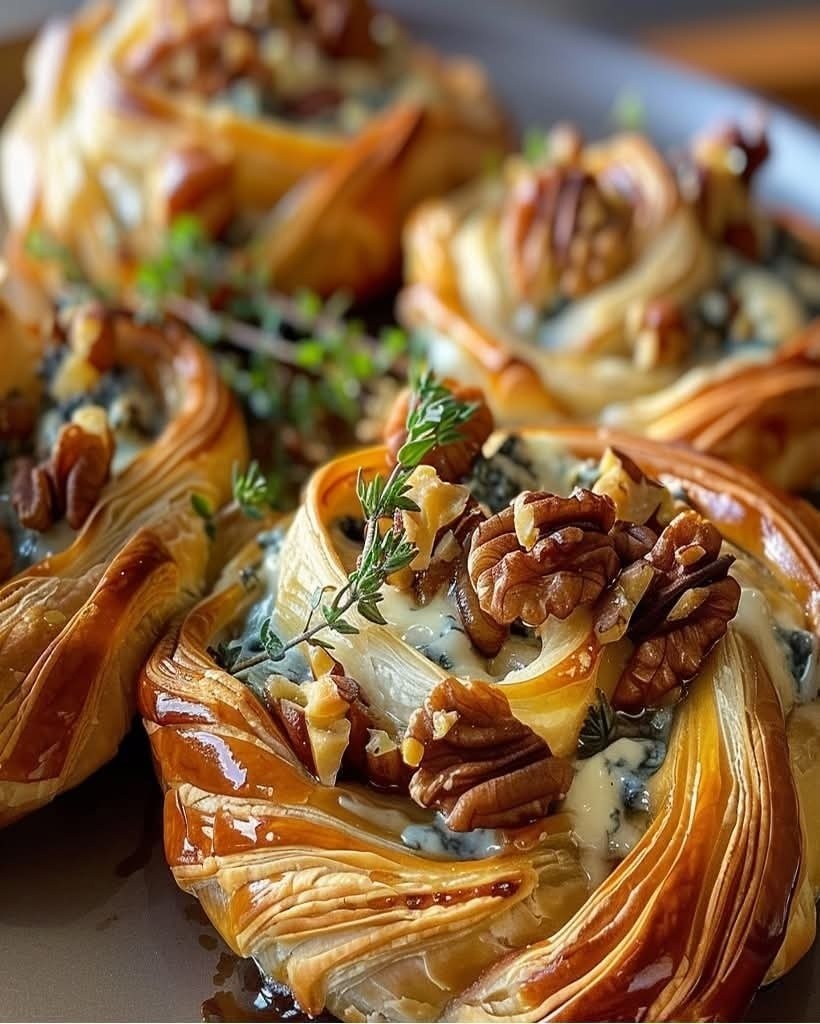
Blue Cheese and Walnut Puff Pastry Twirls with Fresh Thyme: The Ultimate Savory Appetizer
Imagine pulling apart warm, flaky layers of golden pastry to reveal a savory, molten heart of tangy blue cheese and crunchy walnuts. These Blue Cheese and Walnut Puff Pastry Twirls with Fresh Thyme are exactly that kind of irresistible treat. They are the perfect combination of elegant and easy, making them a guaranteed crowd-pleaser for any gathering. Moreover, they transform simple, store-bought puff pastry into something spectacularly gourmet with minimal effort.
The magic of this recipe lies in its brilliant balance of flavors and textures. Creamy, pungent blue cheese melts beautifully against the buttery pastry. Meanwhile, toasted walnuts add a delightful crunch and earthy depth. Finally, fresh thyme provides an aromatic, herbal note that ties everything together. Consequently, each bite is a complex symphony of savory goodness. These twirls are the ultimate shortcut to impressive entertaining.
Whether you need a last-minute appetizer, a sophisticated snack for a cocktail party, or a delicious addition to a holiday spread, these pull-apart pastries deliver. They are visually stunning, incredibly flavorful, and deceptively simple to make. Ultimately, this recipe proves that you do not need to be a professional baker to create something truly special and memorable for your guests.
Quick Recipe Highlights
- Flavor Profile: These twirls offer a bold, savory experience. The tangy, salty punch of blue cheese is perfectly balanced by the rich, buttery pastry and the earthy, toasted walnuts. Fresh thyme adds a subtle, aromatic layer that elevates the entire flavor profile.
- Texture: Experience a fantastic textural contrast. The exterior is shatteringly crisp and flaky, giving way to tender, airy layers within. The creamy, melted blue cheese provides a soft, gooey center, while the walnuts contribute a satisfying, crunchy counterpoint in every bite.
- Aroma: As these bake, your kitchen will fill with an incredible fragrance. The scent of baking butter from the puff pastry is unmistakable. It mingles beautifully with the nutty aroma of toasting walnuts and the warm, herbal scent of fresh thyme, creating an irresistible preview of the deliciousness to come.
- Visual Appeal: These twirls are as beautiful as they are tasty. They bake into a gorgeous, deep golden brown with visible, puffed layers. The spiral pattern showcases the filling, and a sprinkle of extra thyme makes them look professionally crafted and utterly inviting on any platter.
- Skill Level Needed: This is a beginner-friendly recipe designed for success. It uses pre-made puff pastry as a brilliant shortcut. The techniques involved—spreading, rolling, and slicing—are straightforward. Therefore, even novice cooks can achieve impressive, bakery-quality results with confidence.
- Special Equipment: You need only basic kitchen tools. A sharp knife or pizza cutter is essential for clean slicing. Additionally, a baking sheet lined with parchment paper ensures easy release and cleanup. A rolling pin helps even out the pastry, but you can also use a wine bottle in a pinch.
Recipe Overview
- Difficulty Level: We rate this recipe as easy for several important reasons. First, it utilizes store-bought puff pastry, eliminating the need for complex dough-making. The assembly process is logical and simple: spread, sprinkle, roll, slice, and bake. Consequently, the margin for error is very small, guaranteeing great results for cooks of all levels.
- Category: This recipe falls squarely into the appetizer and snack category. It is ideal for finger food at parties, gatherings, or holiday events. Furthermore, it can easily serve as a sophisticated accompaniment to soups or salads for a light lunch or starter course at a dinner party.
- Cuisine: While puff pastry has strong French origins, this recipe is a modern, fusion-style creation. It combines the French technique of using pâte feuilletée with bold, accessible flavors. The use of blue cheese and walnuts nods to classic European flavor pairings often found in salads and cheese boards.
- Cost: This is a cost-effective way to create a luxurious-tasting appetizer. A package of puff pastry and a small amount of blue cheese and walnuts form the base. Since these ingredients are potent, a little goes a long way. Overall, you can create an impressive platter for a fraction of the cost of store-bought gourmet bites.
- Season: These twirls are wonderfully versatile across seasons. They feel cozy and rich during fall and winter holidays. Conversely, they are also perfect for spring gatherings and summer cocktail parties served at room temperature. Their savory nature makes them a year-round favorite.
- Occasion: They are the ultimate party food. Think holiday parties, game day spreads, book club meetings, or wine tastings. They also make an elegant offering for bridal or baby showers. Basically, any event that calls for delicious, shareable, and visually appealing food is the right occasion.
Why You’ll Love This Recipe
You will adore the incredible taste and texture of these Blue Cheese and Walnut Puff Pastry Twirls. Firstly, the flavor combination is sophisticated yet deeply satisfying. The sharp, salty blue cheese melts into the pastry layers, creating pockets of creamy richness. Meanwhile, the walnuts toast as they bake, enhancing their nutty flavor and providing a crucial crunch. Finally, the fresh thyme cuts through the richness with its clean, aromatic quality. Every single bite delivers a perfect balance that will have your guests asking for the recipe.
The convenience factor of this recipe is a major win. By starting with quality store-bought puff pastry, you save hours of labor without sacrificing an ounce of flakiness or flavor. The assembly takes mere minutes. Simply roll out the pastry, scatter over your filling, roll it up, and slice. After that, just bake until golden and puffed. This streamlined process means you can have a gourmet-level appetizer ready from start to finish in well under an hour, which is a game-changer for busy hosts.
From a nutritional perspective, these twirls offer some benefits amidst the indulgence. Walnuts are an excellent source of omega-3 fatty acids, antioxidants, and plant-based protein. Blue cheese provides calcium and protein, though it is higher in sodium and fat. Using puff pastry sparingly as a vessel allows the flavorful, nutrient-dense fillings to shine. Portion control is easy with these individual twirls, helping you enjoy a treat mindfully.
The social and entertaining value of this dish is immense. Food that is meant to be shared, like these pull-apart twirls, naturally encourages conversation and interaction. Placing a platter of these golden, spiraled pastries in the center of a table creates an instant focal point. They are elegant enough for a formal cocktail party but approachable enough for a casual game night. Ultimately, they make you look like a culinary rockstar with minimal stress.
Finally, the cost-effectiveness and accessibility of the ingredients make this recipe a keeper. You likely have thyme growing in a pot or can find it easily. A small wedge of blue cheese and a handful of walnuts are inexpensive, especially compared to pre-made gourmet appetizers. This recipe democratizes fancy flavors, allowing anyone to create a restaurant-quality bite at home without a restaurant-sized budget. It is impressive, delicious, and smart cooking all in one.
Historical Background and Cultural Significance
The story of puff pastry, or pâte feuilletée, is a cornerstone of French patisserie. Its invention is often credited to the painter Claude Lorrain in the 17th century, though some food historians trace laminated dough techniques back further. The classic method involves enveloping a block of butter in dough, then repeatedly rolling and folding to create hundreds of delicate layers. When baked, the water in the butter turns to steam, pushing the layers apart to achieve that legendary, airy flakiness. This labor-intensive technique made puff pastry a symbol of culinary refinement and skill for centuries.
In modern home kitchens, the widespread availability of high-quality frozen puff pastry has been a revolution. It has democratized this classic technique, allowing home cooks to incorporate professional-level flakiness into their baking without the day-long process. This accessibility has led to a proliferation of creative recipes, like these twirls, that use the pastry as a versatile canvas for both sweet and savory fillings. Consequently, puff pastry has evolved from a chef’s secret to a beloved staple in freezer sections worldwide.
The cultural pairing of blue cheese and walnuts is timeless, particularly in European cuisine. Think of a classic French salad with Roquefort, walnuts, and pear, or an Italian cheese board featuring Gorgonzola and nocci. This combination works because the bold, salty funk of the cheese is beautifully tempered by the sweet, earthy, and slightly bitter notes of the nut. It is a partnership built on contrast and balance, one that feels instinctively right and has been celebrated across cultures for generations.
Our recipe for Blue Cheese and Walnut Puff Pastry Twirls sits at the intersection of these histories. It takes the ancient, perfected technique of laminated dough (in a convenient form) and fills it with a classic, revered flavor pairing. The “twirl” or spiral presentation is a modern, visually appealing way to showcase the layers and filling. This recipe represents how contemporary home cooking often blends tradition with convenience to create something new, delicious, and perfectly suited for today’s entertaining needs.
Ingredient Deep Dive
Puff Pastry: Frozen puff pastry is the miraculous shortcut in this recipe. Traditionally made with just flour, water, salt, and a massive amount of butter through a process called lamination, it creates hundreds of flaky layers when baked. For best results, always thaw it slowly in the refrigerator overnight. Never use a microwave, as it can melt the butter layers and ruin the rise. Look for brands that use real butter (check the ingredient list) for the best flavor and texture. While homemade is rewarding, quality store-bought delivers exceptional results with a fraction of the effort.
Blue Cheese: This bold cheese, characterized by blue or green veins of mold (Penicillium), adds a pungent, salty, and tangy depth. Varieties like Danish Blue, Gorgonzola Dolce, or Roquefort all work wonderfully. Blue cheese crumbles easily when cold, so use it straight from the fridge for sprinkling. Nutritionally, it is a good source of calcium and protein but is high in saturated fat and sodium, so a little provides big flavor. If you are new to blue cheese, start with a milder variety like Gorgonzola Dolce. For a stronger punch, opt for a crumbly, aged Stilton or Roquefort.
Walnuts: Walnuts bring essential crunch and a rich, earthy flavor that complements the sharp cheese. They are nutritional powerhouses, packed with omega-3 fatty acids, antioxidants, and minerals like manganese. Toasting them before use is non-negotiable. It deepens their flavor, enhances their crunch, and removes any raw bitterness. Simply spread them on a baking sheet and toast in a 350°F oven for 8-10 minutes, watching carefully to prevent burning. Let them cool before chopping. For a different twist, you could substitute pecans or hazelnuts, though walnuts are classic for a reason.
Fresh Thyme: Do not be tempted to use dried thyme here. Fresh thyme leaves provide a bright, slightly minty, and lemony aroma that cuts through the richness of the cheese and butter. To strip the leaves from the woody stems, simply hold the top of a stem and run your fingers down it. The leaves will pop right off. Fresh herbs are best added just before baking to preserve their delicate flavor. If you must substitute, fresh rosemary (used sparingly, as it is potent) or chives could work, but thyme is the ideal herbal partner.
Egg Wash (Egg & Water): This simple mixture is the secret to that beautiful, glossy, deep golden-brown finish. The egg proteins promote browning (the Maillard reaction), while the water slightly dilutes the egg for easier brushing. Be sure to brush it on lightly and evenly. Avoid letting it pool around the bottom of the twirls, as it can glue them to the pan and inhibit rising. For a dairy-free version, you can use just milk or even a plant-based milk, though the color may be slightly less rich.
Common Mistakes to Avoid
- Using Puff Pastry That Is Too Warm: This is the number one error. If the pastry becomes soft and sticky, the butter layers will melt and merge. Consequently, you will lose the flaky separation. Always work with pastry that is cold but pliable. If it gets too warm while rolling, pop it back in the fridge for 10 minutes.
- Not Toasting the Walnuts: Skipping the toasting step means missing out on deep, nutty flavor. Raw walnuts can taste slightly bitter and lack the satisfying crunch. Toasting transforms them, making their flavor more complex and their texture perfectly crisp against the soft cheese and pastry.
- Overfilling the Pastry: It is tempting to add more cheese for extra flavor, but overfilling can cause problems. Excess moisture from the cheese can leak out and make the pastry soggy. Additionally, too much filling can prevent the layers from sealing properly, causing the twirls to unravel during baking.
- Slicing with a Dull Knife: A dull knife will crush the delicate layers of your rolled pastry log instead of cutting cleanly through them. This compressed edge will not puff up properly in the oven. Always use a very sharp serrated or chef’s knife, and use a gentle sawing motion for clean cuts.
- Placing Twirls Too Close on the Baking Sheet: Puff pastry needs room for hot air to circulate around it to achieve even cooking and maximum rise. If the twirls are crowded, they will steam each other instead of baking, resulting in soggy bottoms and uneven browning. Always leave about 1.5 inches of space between them.
- Underbaking: Removing the twirls from the oven when they are just lightly golden may leave the center doughy. They should be a deep, rich golden brown all over. This ensures the layers are fully cooked through and crisp. If the tops are browning too fast, you can tent them loosely with foil.
- Not Using Parchment Paper: Baking directly on a sheet pan risks the melted cheese sticking and burning on the pan. This makes cleanup difficult and can cause the twirls to break when you try to remove them. Parchment paper guarantees easy release and protects your baking sheets.
- Brushing Egg Wash on the Cut Sides: When applying the egg wash, brush only the tops and visible spiral layers. Avoid getting egg wash on the cut sides of the twirls. If it drips down and seals the layered edges to the pan, it can prevent those outer layers from puffing up and outwards.
Essential Techniques
Thawing Puff Pastry Correctly: This technique is crucial for success. The goal is to thaw the pastry just enough to be workable but not so much that the butter softens. The best method is to transfer the sheets from the freezer to the refrigerator for 6-8 hours or overnight. If you are short on time, you can leave the sealed package at room temperature for about 30-40 minutes. Never use a microwave or warm water, as uneven thawing will melt the butter layers and ruin the pastry’s ability to rise into separate, flaky sheets.
Rolling and Sealing the Log: After sprinkling your filling, start rolling the pastry sheet tightly from one long end to the other. A tight roll ensures the twirls hold their shape and have a pronounced spiral. Once rolled, gently press the final seam to seal it. If the pastry is too cold and won’t stick, you can moisten the edge very lightly with water or a bit of egg wash to act as glue. Then, gently roll the log back and forth to even it out before chilling. This chill firms the log for cleaner slicing.
The Chill Before Slicing: Do not skip chilling the rolled log. After rolling, wrap it in plastic wrap and place it in the freezer for 15-20 minutes or the fridge for 30-40 minutes. This firms up the butter again, making the log much easier to slice cleanly without squashing. A firm log yields neat, defined spirals that will puff evenly in the oven. If you slice a warm log, the filling will ooze, and the shape will distort.
Clean Slicing for Maximum Rise: Use a sharp, serrated bread knife or a very sharp chef’s knife. A dull blade will press down and fuse the delicate layers. Place the chilled log on a cutting board. Using a gentle sawing motion, cut straight down into slices about 3/4-inch to 1-inch thick. Avoid sawing back and forth excessively. After each cut, you can wipe the blade clean if filling sticks to it. This ensures every twirl has a clean, defined edge that will open up beautifully in the oven’s heat.
Pro Tips for Perfect Blue Cheese and Walnut Puff Pastry Twirls
First, always toast your walnuts ahead of time and let them cool completely. Hot walnuts will start to melt the butter in the puff pastry upon contact, potentially greasing the layers. Cool, toasted nuts ensure maximum crunch and no structural compromise.
For easier rolling, lightly flour your work surface and rolling pin. However, use flour sparingly. Excess flour incorporated into the dough can make it tough. A pastry scraper is a great tool to help lift and start the initial roll without tearing.
Create a flavor boost by adding a tiny drizzle of honey over the filling before rolling. The subtle sweetness beautifully counteracts the salty blue cheese and bitter walnuts, adding another layer of complexity that will surprise and delight your guests.
If your blue cheese is very moist or creamy, consider crumbling it and then placing it in the freezer for 10 minutes before using. This firms it up, making it easier to sprinkle evenly and preventing it from becoming too pasty when you spread it.
For a stunning presentation, sprinkle a few extra thyme leaves and some finely chopped walnuts on top of the twirls after applying the egg wash. This adds visual texture and a preview of the flavors inside before the first bite is taken.
To ensure even baking and browning, rotate your baking sheet halfway through the cooking time. Ovens often have hot spots, and this simple step guarantees every twirl is equally golden and perfect.
Let the twirls rest on the baking sheet for 5 minutes after removing them from the oven. This allows the structure to set slightly, making them easier to transfer to a serving platter without falling apart while still serving them warm.
For a party, consider making a double batch and freezing the unbaked, sliced twirls. Arrange them on a parchment-lined sheet, freeze solid, then transfer to a bag. You can bake them straight from frozen, adding just 2-3 minutes to the bake time.
Variations and Adaptations
Regional Variations: Take inspiration from global flavor profiles. For a Mediterranean twist, use crumbled feta cheese, chopped Kalamata olives, and oregano. For a French-inspired version, try Brie or Camembert (rind removed) with finely diced ham and whole grain mustard. An Italian variation could feature sun-dried tomatoes, grated Parmesan, and basil pesto swirled with the cheese.
Seasonal Adaptations: Embrace produce from the season. In autumn, incorporate finely diced roasted butternut squash and sage with the blue cheese. For spring, a mixture of goat cheese, lemon zest, and fresh chives is bright and lovely. In summer, a tapenade (olive paste) and goat cheese combination feels fresh and robust.
Dietary Modifications: For a gluten-free option, use a certified gluten-free puff pastry brand. To make it dairy-free, substitute the blue cheese with a dairy-free “blue style” cheese alternative and use a plant-based butter puff pastry. Be sure to check all labels carefully for hidden allergens.
Flavor Variations: The base formula is endlessly adaptable. Swap blue cheese for sharp cheddar and add cooked, crumbled bacon. Try a sweet and savory combo with brie, thinly sliced pear, and a sprinkle of cinnamon. For an herby delight, mix cream cheese with a blend of fresh dill, parsley, and chives.
Texture Modifications: Add different textural elements. Incorporate finely chopped dried apricots or figs for a chewy contrast. A sprinkle of everything bagel seasoning on top before baking adds crunch and flavor. For extra creaminess, spread a very thin layer of cream cheese under the blue cheese.
Presentation Alternatives: Instead of individual twirls, try a pull-apart wreath. After rolling the log, connect the ends to form a circle, then slice most of the way through at 1-inch intervals and fan the slices outward. You can also cut the pastry into squares, add filling, and fold into triangles for hand pies.
Serving and Presentation Guide
Plating Techniques: For visual impact, arrange the warm twirls in a spiral pattern on a large, round platter or a rustic wooden board. Alternatively, stack them slightly offset in the center of a rectangular slate for a modern look. Use fresh thyme sprigs and whole walnuts to fill gaps and decorate the platter, creating height and texture.
Garnishing Ideas: A final flourish makes them restaurant-worthy. Right before serving, drizzle a tiny amount of high-quality honey or balsamic glaze over the platter. A light flake of sea salt on top enhances the flavors. For color, add edible flowers like nasturtiums or small clusters of red currants in the winter.
Traditional Accompaniments: These savory pastries pair classically with a crisp, green salad dressed in a simple vinaigrette for a light meal. They are also a natural fit on a cheese or charcuterie board, complementing cured meats, fresh fruit like grapes and figs, and cornichons. A bowl of tomato soup for dipping is a cozy, comforting partner.
Modern Serving Suggestions: Serve them as part of a brunch spread alongside quiche and fresh fruit. For a cocktail party, offer them with a signature drink, like a gin and tonic or a crisp white wine. You can also miniaturize them by cutting the log into thinner slices for one-bite passed hors d’oeuvres.
Temperature Considerations: These twirls are best served warm, when the cheese is still soft and the pastry is at its crispiest. However, they are also perfectly delicious at room temperature, making them ideal for buffets. Avoid serving them cold from the fridge, as the pastry will lose its flakiness and become firm.
Portion Control Tips: One standard twirl (about 1-inch thick) is a perfect single serving for an appetizer. For a larger crowd where many other foods are offered, you can slice them slightly thinner to yield more pieces. If serving as a main component with a salad, plan for 2-3 twirls per person.
Wine and Beverage Pairing
Wine Pairings: The bold, salty flavor of blue cheese calls for wines that can stand up to it without being overwhelmed. A classic pairing is a sweet wine like Sauternes, whose sweetness beautifully contrasts the saltiness. Alternatively, a robust, fruity red like a Zinfandel or a Shiraz works wonderfully. For white wine lovers, choose an off-dry Riesling or a rich, oaked Chardonnay. The key is to match intensity with intensity or use sweetness to counterbalance salt.
Non-Alcoholic Alternatives: Sparkling apple cider or a non-alcoholic sparkling wine provides the celebratory effervescence to cut through the richness. A tart, homemade lemonade or a ginger beer also offers a refreshing contrast. For a more sophisticated option, try a Seedlip Garden 108 with tonic water and a thyme garnish, mirroring the herbal notes in the twirls.
Coffee and Tea Pairings: These pastries can be a delightful part of a brunch or afternoon tea. A medium-roast coffee with low acidity complements the savory notes without bitterness. For tea, a robust black tea like English Breakfast or Earl Grey holds its own. A smoky Lapsang Souchong could create an intriguing flavor contrast with the blue cheese.
Temperature Considerations: Always serve your chosen beverage at its ideal temperature. White wines and sparkling options should be well-chilled. Red wines should be served slightly below room temperature. Non-alcoholic sparklers are also best cold. This ensures the beverage refreshes the palate between each rich, savory bite of the puff pastry twirl.
Serving Suggestions: Offer a pairing option or two to cater to different preferences. For a party, you might set out bottles of a recommended red and white wine alongside a carafe of sparkling water with citrus slices. Providing pairing notes on a small card can also be a fun, educational touch for your guests.
Storage and Shelf Life
Storage Methods: Once completely cooled, store leftover twirls in a single layer in an airtight container. If you need to stack them, place a sheet of parchment paper between layers to prevent them from sticking together. They can be kept at room temperature for up to 1 day, but the pastry will lose its crispness. For longer storage, the refrigerator is better.
Temperature Requirements: For short-term storage (1-2 days), the refrigerator is ideal. The cool temperature slows staling and prevents the dairy filling from spoiling. Always bring them to room temperature or reheat before serving again, as the pastry will become firm when cold. Do not leave them at room temperature for more than 4 hours due to the dairy content.
Container Recommendations: A shallow, rigid airtight container is best to prevent the twirls from being crushed. You can also use a storage plate tightly wrapped with plastic wrap. Avoid storing them in a bag where they can get jostled and break apart. If the pastry has softened, reheating will help restore some crispness.
Signs of Spoilage: Discard the twirls if you notice any off odors, especially a sour or rancid smell. Visible mold growth is an obvious sign. If the pastry becomes excessively soggy or the cheese develops an unusual texture, it is safest to throw them out. When in doubt, remember the adage: when in doubt, throw it out.
Reheating Instructions: To recrisp, preheat your oven or toaster oven to 350°F (175°C). Place the twirls on a baking sheet and heat for 5-8 minutes, until warm and crisp. Avoid using the microwave, as it will make the pastry very soggy and chewy. The oven method is the only way to restore a pleasant texture.
Freezing Guidelines: These twirls freeze exceptionally well, both baked and unbaked. For unbaked, freeze the sliced twirls on a sheet pan, then transfer to a freezer bag. Bake from frozen, adding 2-4 minutes. For baked, let them cool completely, freeze on a tray, then bag. Reheat frozen baked twirls in a 375°F oven for 10-12 minutes. They will keep for up to 2 months.
Make Ahead Strategies
Prep Timeline: You can prepare these twirls up to 24 hours in advance with excellent results. The best approach is to complete the recipe through the slicing step. Arrange the sliced twirls on your parchment-lined baking sheet, then cover the entire sheet tightly with plastic wrap. Refrigerate overnight. The next day, simply remove the plastic, brush with egg wash, and bake. The chilling time actually benefits the pastry, allowing the gluten to relax.
Storage Between Steps: If making ahead, the critical point is after slicing. The unbaked, sliced twirls must be kept very cold. The covered baking sheet in the refrigerator is perfect. Do not let them sit at room temperature for long before baking, as the butter will soften. You can also freeze the unbaked slices at this stage for longer-term make-ahead planning.
Quality Impact Assessment: Making them ahead often improves the final product. The extended chill time ensures the butter is very firm, which can lead to a better, more dramatic rise in the oven. The flavors also have time to meld slightly. You will not notice any decline in quality; in fact, they may be even flakier.
Assembly Tips for Make-Ahead: When assembling for later, be meticulous about sealing the log’s final seam so it doesn’t come undone in the fridge. After slicing, ensure the twirls are not touching on the tray to prevent them from freezing together. Write a note to remind yourself to add the egg wash just before baking, as applying it the night before can make the pastry soggy.
Reheating Guidelines for Pre-Baked: If you bake them completely ahead of time, let them cool fully before storing. To serve, reheat in a 350°F oven for 5-7 minutes to restore warmth and crispness. They will not be quite as perfect as fresh-from-the-oven, but this method is far superior to serving them cold or microwaved.
Fresh Element Additions: If making ahead, consider adding a final fresh garnish after reheating. A new sprinkle of fresh thyme leaves or a drizzle of honey post-bake will add a bright, fresh element that makes them taste just-made. This little trick elevates pre-made food significantly.
Scaling Instructions
Halving the Recipe: Halving is straightforward. Use one sheet of puff pastry instead of two. Halve all the filling ingredients proportionally. The assembly process remains identical. Baking time may be slightly reduced by 1-2 minutes since you are baking fewer items, but always rely on visual cues—a deep golden brown color—as your primary doneness indicator.
Doubling or Tripling: For larger batches, work in stages to keep the pastry cold. Prepare one log at a time, returning the unused pastry sheets to the fridge. You may need to use multiple baking sheets or bake in consecutive batches. Do not overcrowd the oven; bake one sheet at a time on the middle rack for even heat circulation. The bake time per batch should remain consistent.
Equipment Adjustments: When scaling up, ensure you have enough baking sheets and parchment paper. You might need a larger work surface or to clear more fridge space for chilling multiple logs. A large, sharp knife and a big cutting board are essential for efficiently slicing multiple logs. Consider using a ruler to ensure uniform slice thickness across all batches.
Timing Modifications: The prep time will increase linearly as you make more. However, the bake time per tray will not change significantly. The main timing consideration is if baking multiple trays. Use the oven’s convection setting if available for more even baking, or rotate the trays front-to-back and top-to-bottom halfway through the baking time.
Storage Considerations for Large Batches: If making a huge batch for an event, consider a mix of fresh and frozen. Bake some fresh for immediate serving and freeze the rest of the unbaked slices for future use. This prevents waste and gives you a ready-to-bake appetizer on hand. Label freezer bags with the date and baking instructions.
Nutritional Deep Dive
Macro Breakdown: One twirl is a rich, indulgent bite. The primary macronutrients come from the carbohydrates in the pastry (providing energy), fats from the butter, cheese, and walnuts (for flavor and satiety), and protein from the cheese and nuts. It is not a low-calorie food, but it is a nutrient-dense one. The walnuts contribute healthy polyunsaturated and monounsaturated fats, including omega-3s, which are beneficial for heart health.
Micronutrient Analysis: This appetizer offers several key micronutrients. Blue cheese is a notable source of calcium, crucial for bone health, and phosphorus. Walnuts provide a significant amount of manganese, important for metabolism and bone formation, as well as copper and magnesium. The egg wash contributes small amounts of vitamins like B12 and selenium. While not a primary source of vitamins, it contributes mineral diversity to your diet.
Health Benefits: The walnuts are the standout health component, linked to improved brain function, reduced inflammation, and better heart health due to their antioxidant and omega-3 content. Moderate cheese consumption can be part of a healthy diet, providing calcium and protein. Enjoying such flavorful foods mindfully also supports psychological well-being and the social aspect of eating, which is an important part of holistic health.
Dietary Considerations: This recipe is not suitable for those with dairy allergies, gluten intolerance (unless using GF pastry), or nut allergies. It is also high in sodium due to the cheese and pastry. Individuals on low-sodium or low-fat diets should enjoy these in moderation or seek the adaptations suggested in the Dietary Adaptations section. Always check with a healthcare provider for specific dietary needs.
Portion Analysis: The beauty of this recipe is built-in portion control. Each twirl is a single, satisfying serving. This helps prevent overindulgence compared to a large, free-form pastry you might cut yourself. Being aware that one is a treat allows you to enjoy it fully as part of a balanced meal or party spread without guilt.
Weight Management Tips: If managing weight, pair one twirl with a large, fiber-rich salad filled with vegetables to create a balanced plate. The fat and protein in the twirl will promote satiety, while Print
Blue Cheese, Walnut and Thyme Pull Apart Puff Pastry Twirl
- Total Time: 45 minutes
- Yield: 4
Description
A savory, flaky puff pastry twirl filled with creamy blue cheese, crunchy walnuts, and aromatic thyme, perfect for appetizers or a light meal.
Ingredients
- 1 sheet frozen puff pastry, thawed
- 1/2 cup crumbled blue cheese
- 1/4 cup chopped walnuts
- 1 tablespoon fresh thyme leaves
- 2 tablespoons unsalted butter, melted
- 1/4 teaspoon black pepper
- 1 egg, beaten (for egg wash)
Instructions
- Preheat oven to 400°F (200°C). Line a baking sheet with parchment paper.
- Roll out the puff pastry sheet on a lightly floured surface into a rectangle. Brush with melted butter, then sprinkle evenly with blue cheese, walnuts, thyme, and black pepper.
- Starting from one long edge, tightly roll the pastry into a log. Slice the log into 1-inch thick rounds and place them cut-side up on the baking sheet, slightly spaced apart. Brush tops with egg wash.
- Bake for 20-25 minutes until golden brown and puffed. Let cool slightly before serving.
Notes
You can customize the seasonings to taste.
- Prep Time: 15 minutes
- Cook Time: 30 minutes
- Method: Appetizer
- Cuisine: American