Vibrant Beetroot Avocado Feta Salad Recipe for Healthy Eating
This Vibrant Beetroot Avocado Feta Salad Recipe for Healthy Eating brings together earthy roasted beets, creamy avocado, and salty feta cheese in one stunning bowl. Moreover, the dish delivers a perfect balance of sweet, tangy, and savory flavors that will wake up your taste buds. If you want a colorful salad that looks impressive yet takes minimal effort, this recipe deserves a spot in your weekly rotation.
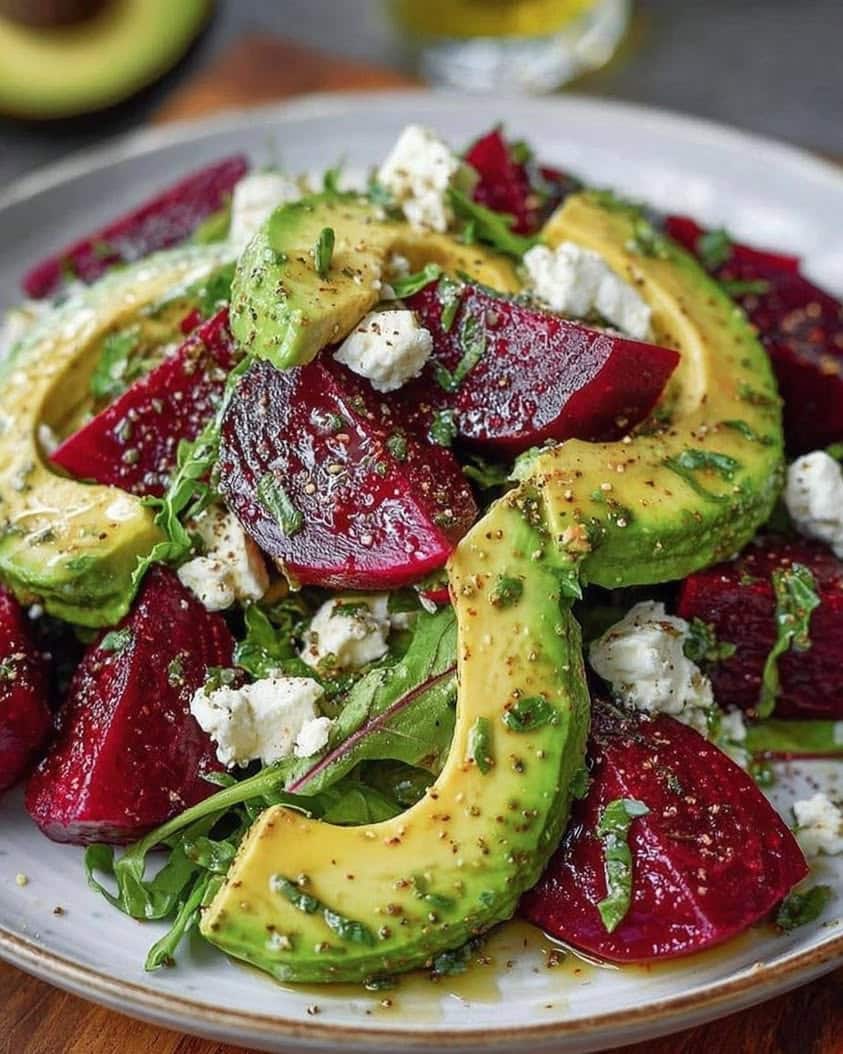
When you slice into a roasted beet, its deep ruby color bleeds onto the plate like a work of art. In addition, the creamy green avocado contrasts beautifully against the purple beets and white feta crumbles. The first bite offers a burst of tangy balsamic dressing that coats every ingredient. Consequently, you get a restaurant-quality salad without leaving your kitchen. This Vibrant Beetroot Avocado Feta Salad Recipe for Healthy Eating proves that healthy food can also be exciting and delicious.
Furthermore, this salad fits seamlessly into many eating plans because it is naturally gluten-free and packed with nutrients. The beets provide folate and fiber while the avocado delivers healthy monounsaturated fats. Meanwhile, the feta adds a salty punch that ties everything together. Whether you serve it as a side dish or a light main course, this Vibrant Beetroot Avocado Feta Salad Recipe for Healthy Eating will quickly become a household favorite.
Quick Recipe Highlights
- Flavor Profile: This salad combines the natural sweetness of roasted beets with the creamy richness of avocado. Additionally, the feta cheese brings a salty, tangy element that balances the entire dish. The balsamic vinaigrette ties all the flavors together with a hint of acidity.
- Texture: You get a delightful mix of textures in every bite. The roasted beets offer a tender, slightly firm bite while the avocado provides a buttery, smooth mouthfeel. Meanwhile, the feta crumbles add a crumbly contrast, and the toasted walnuts deliver a satisfying crunch.
- Aroma: The earthy scent of roasted beets fills the kitchen as they come out of the oven. Furthermore, the fresh mint and basil in the dressing release bright, herbaceous notes. The balsamic vinegar adds a sweet, tangy aroma that makes the salad irresistible.
- Visual Appeal: This salad looks like a piece of art on a plate. The deep magenta beets, bright green avocado, and white feta create a striking color contrast. In addition, the dark green herbs and golden walnuts add visual interest that makes the dish Instagram-worthy.
- Skill Level Needed: This recipe requires only basic kitchen skills. You need to roast beets, chop vegetables, and whisk a simple dressing. Therefore, even a beginner cook can master this dish on the first try.
- Special Equipment: You need a sharp chef’s knife and a cutting board for prepping the vegetables. Additionally, a small whisk or a jar with a lid works perfectly for making the vinaigrette. A baking sheet lined with aluminum foil makes roasting the beets easy and cleanup-free.
Recipe Overview
- Difficulty Level: This recipe earns an easy rating because it involves minimal hands-on cooking. Most of the time is spent waiting for the beets to roast in the oven. Furthermore, the assembly requires no special technique or advanced knife skills. Consequently, anyone can make this salad with confidence.
- Category: This dish works as a side salad, a light lunch, or even a main course when you add protein. It also functions beautifully as an appetizer for dinner parties. Additionally, you can bring it to potlucks and picnics because it holds up well at room temperature.
- Cuisine: This salad draws inspiration from Mediterranean and Middle Eastern culinary traditions. The combination of beets, feta, and fresh herbs appears frequently in Greek and Israeli cooking. Meanwhile, the avocado adds a modern Californian twist that makes the dish feel contemporary. Therefore, this recipe blends old-world flavors with new-world creativity.
- Cost: The ingredients cost approximately $12 to $15 for four servings. Beets are inexpensive root vegetables that you can buy year-round. Avocados and feta cheese cost slightly more but remain affordable. Overall, this salad delivers excellent value for a nutritious and impressive dish.
- Season: This salad shines during spring and summer when fresh herbs and avocados are at their peak. However, roasted beets are available all year, so you can make this dish anytime. During fall and winter, the earthy flavors feel especially comforting. Consequently, this recipe works in every season.
- Occasion: Serve this Vibrant Beetroot Avocado Feta Salad Recipe for Healthy Eating at brunches, dinner parties, or holiday gatherings. It also works well for meal prep lunches during the workweek. Additionally, the stunning colors make it a centerpiece for any celebration table.
Why You’ll Love This Recipe
The taste and texture of this salad will win you over from the very first bite. Roasting the beets caramelizes their natural sugars, which transforms them from earthy to sweet and rich. Meanwhile, the creamy avocado melts in your mouth and provides a cooling contrast to the warm beets. The feta cheese adds a salty tang that keeps every bite interesting. Furthermore, the balsamic vinaigrette brings a sweet acidity that ties all the elements together. When you add crunchy walnuts and fresh herbs, you create a symphony of flavors and textures that feels incredibly satisfying.
Convenience and preparation benefits make this recipe a weeknight winner. You can roast the beets ahead of time and store them in the refrigerator for up to five days. Then, when you are ready to eat, you simply slice the avocado, crumble the feta, and whisk the dressing. The entire assembly takes less than ten minutes. Additionally, this recipe requires only one baking sheet and a few bowls. Therefore, cleanup is quick and stress-free, which means you spend more time enjoying your meal and less time scrubbing dishes.
Nutritional advantages set this salad apart from typical side dishes. Beets are rich in folate, manganese, and antioxidants that support heart health and reduce inflammation. Avocados provide healthy monounsaturated fats that keep you full and satisfied. Feta cheese adds calcium and protein, while walnuts contribute omega-3 fatty acids. Moreover, the olive oil in the dressing delivers additional heart-healthy fats. Consequently, this Vibrant Beetroot Avocado Feta Salad Recipe for Healthy Eating nourishes your body while delighting your palate.
Social and entertaining value makes this dish a hit at gatherings. The vibrant colors immediately catch the eye and spark conversation among guests. Additionally, the salad accommodates many dietary restrictions, so everyone at the table can enjoy it. You can serve it family-style on a large platter or plate individual portions for a more elegant presentation. Furthermore, the recipe doubles easily, so you can feed a crowd without extra effort. Therefore, this salad helps you host with confidence and style.
Cost-effectiveness and accessibility round out the list of reasons to love this recipe. All the ingredients are easy to find at any grocery store or farmers market. Beets, avocados, and feta cheese are affordable staples that do not require a specialty shop. Moreover, the recipe uses simple pantry items like olive oil, balsamic vinegar, and Dijon mustard for the dressing. Consequently, you can create a restaurant-quality salad at home for a fraction of the price you would pay at a cafe.
Historical Background and Cultural Significance
The origin story of beet and feta combinations traces back to ancient Mediterranean civilizations. Greeks and Romans cultivated beets for both food and medicine thousands of years ago. They valued the root vegetable for its ability to purify the blood and aid digestion. Meanwhile, feta cheese has been a staple in Greek cuisine since the Byzantine era. When these two ingredients met on the plate, a culinary partnership was born. Over centuries, cooks refined the pairing and added local ingredients like olive oil and herbs.
Cultural importance of this salad varies across regions. In Greece, beet salads with feta and yogurt appear on taverna menus throughout the country. In Israel, roasted beet salads with feta and mint have become a staple of modern Israeli cuisine. Additionally, Eastern European cultures embrace beets in dishes like borscht and pickled beet salads. Therefore, the combination of beets and feta holds a special place in many culinary traditions around the world.
The evolution of this recipe reflects changing tastes and global ingredient availability. Originally, beet salads featured only roasted or boiled beets with simple dressings. However, as avocados became more widely available outside tropical regions, creative cooks began adding them to classic dishes. The creamy texture of avocado complements the earthy beets in ways that surprise and delight. Furthermore, the addition of toasted nuts and fresh herbs represents a modern approach to layering flavors and textures.
Regional variations of beet and feta salad abound. In Greece, you might find it with yogurt dressing and dill. In California, chefs add avocado, citrus, and toasted seeds. Meanwhile, in Australia, beetroot salad often includes pumpkin and goat cheese instead of feta. Each region adapts the dish to local ingredients and preferences. Consequently, this Vibrant Beetroot Avocado Feta Salad Recipe for Healthy Eating represents one delicious interpretation of a globally loved combination.
Ingredient Deep Dive
Beets have a long and fascinating history that stretches back to prehistoric times. Ancient civilizations grew beets for their leafy greens before they cultivated the root. The Romans later discovered the sweet, earthy flavor of the root and began roasting it. By the 19th century, beets became a major sugar source in Europe. Today, beets appear in salads, soups, and juices around the world. Their deep red color comes from betalain pigments, which also provide powerful antioxidant properties.
Nutritionally, beets pack an impressive punch. One cup of cooked beets contains about 3.8 grams of fiber, which supports digestive health. Additionally, beets are rich in folate, manganese, and potassium. The nitrates in beets may improve blood flow and lower blood pressure. Furthermore, the antioxidants in beets fight inflammation and may reduce the risk of chronic diseases. Therefore, adding beets to your diet offers numerous health benefits.
When selecting beets, look for firm, smooth roots with deep, vibrant color. Avoid beets that feel soft or have wrinkled skin, as these signs indicate age. Smaller beets tend to be sweeter and more tender than large ones. If you buy beets with the greens attached, choose bunches with fresh, crisp leaves. Furthermore, you can use the beet greens in other recipes, such as sautés or smoothies.
Store raw beets in the refrigerator crisper drawer for up to two weeks. First, trim the greens about two inches from the root to prevent moisture loss. Then, place the beets in a perforated plastic bag or a container with a lid. Once roasted, beets keep in the refrigerator for up to five days. You can also freeze roasted beets for up to three months.
If you cannot find fresh beets, you have several substitution options. Canned or jarred beets work in a pinch, though they have a softer texture and less intense flavor. You can also substitute sweet potatoes or carrots for a similar earthy sweetness. However, the color and flavor profile will change significantly. For the best results, use freshly roasted beets whenever possible.
Avocados originated in Mexico and Central America, where people have cultivated them for over 10,000 years. The Aztecs called them ahuacatl, which means testicle, referring to their shape. Spanish explorers brought avocados to Europe in the 16th century. Today, avocados grow in tropical and Mediterranean climates worldwide. California and Mexico are the largest producers for the U.S. market. The creamy texture and mild flavor make avocados incredibly versatile.
From a nutritional standpoint, avocados are a superfood. They are loaded with monounsaturated fats, particularly oleic acid, which supports heart health. Additionally, avocados provide fiber, potassium, vitamin K, vitamin E, and B vitamins. One-half of an avocado contains about 160 calories and 15 grams of healthy fat. Furthermore, avocados help your body absorb fat-soluble nutrients from other foods in the same meal.
Choose avocados that feel slightly soft when you gently squeeze them. Avoid avocados with soft spots, dark bruises, or mold. Additionally, the stem should come off easily, revealing green flesh underneath. If the stem resists or reveals brown flesh, the avocado is either underripe or overripe. For same-day use, select a ripe avocado. For later use, buy firm avocados and let them ripen on the counter for a few days.
Store ripe avocados in the refrigerator for up to three days. To slow browning, keep the pit in the avocado and wrap it tightly in plastic wrap. You can also brush the cut surface with lemon or lime juice. Furthermore, mashed avocado freezes well for up to three months if you add a little lime juice. When you are ready to use it, thaw it in the refrigerator overnight.
If you need an avocado substitute, consider using mashed banana or pureed white beans for creaminess. However, these alternatives will change the flavor profile significantly. For a lower-fat option, you can use steamed and mashed zucchini. Nevertheless, nothing quite replicates the buttery richness of a ripe avocado.
Feta cheese has a rich history that originates in Greece. The name feta comes from the Italian word fetta, meaning slice. Greek shepherds have made feta for thousands of years using sheep’s milk or a blend of sheep and goat milk. The cheese ages in brine, which gives it a salty, tangy flavor. In 2002, the European Union granted feta protected designation of origin status. Therefore, true feta must come from specific regions in Greece.
Nutritionally, feta cheese offers calcium, protein, and phosphorus. One ounce of feta contains about 75 calories and 6 grams of fat. Additionally, feta provides probiotics that support gut health. However, feta is high in sodium, so people watching their salt intake should use it sparingly. Furthermore, feta contains less lactose than many other cheeses, making it easier to digest for some people.
When buying feta, look for blocks packed in brine rather than pre-crumbled varieties. Brined feta has a creamier texture and fresher flavor. Additionally, check the label to ensure the cheese comes from Greece or a reputable producer. Avoid feta that looks dry or has excessive liquid in the package. Furthermore, taste a small piece before buying if possible.
Store feta cheese in its original brine in the refrigerator. If the brine is not enough to cover the cheese, add a simple saltwater solution. Feta keeps for up to three months unopened and about one week after opening. Additionally, change the brine every few days to maintain freshness. If feta develops a slimy texture or off smell, discard it immediately.
For substitutions, you can use goat cheese, ricotta salata, or halloumi. Each offers a different flavor and texture but works well in this salad. Goat cheese provides a tangier taste, while ricotta salata offers a milder flavor. Halloumi adds a firm, squeaky texture that holds up well when grilled. Ultimately, choose the substitute that best matches your dietary needs and taste preferences.
Common Mistakes to Avoid
- Not roasting the beets long enough results in hard, unpalatable pieces. Beets need to roast until a knife slides in easily with no resistance. Therefore, always test doneness before removing them from the oven.
- Cutting avocados too early causes them to brown before serving. Additionally, pre-cut avocado turns mushy and loses its appealing texture. Wait until the last moment to slice or dice your avocado.
- Using pre-crumbled feta leads to dry, flavorless cheese that lacks creaminess. Instead, buy a block of feta packed in brine and crumble it yourself. This small step makes a big difference in texture and taste.
- Overdressing the salad drowns the ingredients and makes everything soggy. Start with half the dressing and add more as needed. Remember, you can always add more but you cannot take it away.
- Skipping the toasted nuts removes an important layer of crunch and flavor. Toasting walnuts or pecans takes only a few minutes and elevates the dish. Therefore, never skip this step if you want the best results.
- Not seasoning the beets after roasting leaves them bland. Sprinkle salt and pepper on the beets while they are still warm. This helps the seasoning absorb into the flesh.
- Assembling the salad too far in advance causes the avocado to brown and the greens to wilt. Instead, prepare all components separately and combine just before serving. This keeps everything fresh and vibrant.
- Using cold beets straight from the refrigerator mutes their flavor. Let roasted beets come to room temperature before assembling the salad. Room-temperature beets taste sweeter and pair better with the other ingredients.
- Forgetting to wash the fresh herbs leaves grit and dirt in the salad. Always rinse herbs under cool water and pat them dry. Furthermore, remove any thick stems before chopping.
- Ignoring the importance of a good olive oil ruins the dressing. Use extra-virgin olive oil for the best flavor. Cheap olive oil can taste bitter or rancid and will detract from the overall dish.
Essential Techniques
Roasting beets properly is the foundation of this recipe. First, preheat your oven to 400 degrees Fahrenheit. Then, wash the beets thoroughly and trim the stems about one inch from the root. Next, wrap each beet loosely in aluminum foil and place them on a baking sheet. Roast for 40 to 60 minutes, depending on the size of the beets. A knife should slide in easily when they are done. After roasting, let the beets cool slightly before peeling. The skins should slip off easily with your fingers or a paper towel.
Toasting nuts brings out their natural oils and enhances their flavor. Start by placing the nuts in a dry skillet over medium heat. Stir frequently to prevent burning, which happens quickly. Toast for three to five minutes until the nuts smell fragrant and turn golden brown. Alternatively, you can toast nuts in a 350-degree oven for about 10 minutes. Always watch them closely because they can go from perfectly toasted to burnt in seconds.
Whisking a vinaigrette creates a smooth, emulsified dressing that coats every ingredient. Begin by combining the balsamic vinegar, Dijon mustard, and a pinch of salt in a small bowl. Then, slowly drizzle in the olive oil while whisking constantly. This technique creates an emulsion that holds together. If the dressing separates, simply whisk it again before serving. Additionally, you can make the dressing in a jar with a lid and shake it vigorously.
Slicing avocado without making a mess requires a sharp knife and a gentle hand. First, cut the avocado in half lengthwise around the pit. Then, twist the halves apart and remove the pit with a spoon. Next, use a spoon to scoop the flesh out in one piece. Finally, slice or dice the avocado on a cutting board. To prevent browning, squeeze lemon or lime juice over the avocado immediately.
Pro Tips for Perfect Beetroot Avocado Feta Salad
- Roast the beets a day ahead to save time on the day you serve the salad. Additionally, chilled roasted beets slice more easily and hold their shape better in the salad.
- Use a mix of golden and red beets for a stunning color contrast. The golden beets add brightness while the red beets provide depth. Furthermore, the variation makes the salad visually exciting.
- Add a handful of arugula or baby spinach for extra greenery and a peppery kick. The greens also provide a bed for the other ingredients. Consequently, the salad becomes more substantial and satisfying.
- Drizzle a little honey into the balsamic dressing for a touch of sweetness. The honey balances the acidity of the vinegar and complements the earthy beets. However, taste the dressing before adding more honey.
- Crumble the feta into large, irregular pieces rather than fine crumbs. Large pieces deliver bursts of salty flavor that stand out against the sweet beets. Furthermore, the rustic look adds charm to the presentation.
- Use fresh herbs like mint, basil, or dill to brighten the salad. Fresh herbs add a pop of color and a burst of freshness. Additionally, they pair beautifully with the Mediterranean flavors in this dish.
- Let the salad sit at room temperature for 10 minutes before serving. This allows the flavors to meld and the ingredients to reach their optimal taste. Consequently, the salad tastes more cohesive and delicious.
- Season each layer with a pinch of salt and pepper as you build the salad. Seasoning throughout ensures every bite is perfectly flavored. Therefore, do not wait until the end to add salt and pepper.
Variations and Adaptations
Regional variations of this salad reflect local ingredients and culinary traditions. In Greece, cooks often add yogurt to the dressing for extra creaminess. Meanwhile, in Israel, you might find this salad topped with za’atar and tahini. In Australia, roasted pumpkin often replaces beets for a sweeter flavor. Furthermore, in France, chefs use goat cheese instead of feta for a tangier taste. Each region puts its own spin on the classic combination.
Seasonal adaptations allow you to enjoy this salad year-round. In spring, add fresh peas and radishes for a bright, crunchy texture. During summer, cherry tomatoes and corn kernels bring sweetness and juiciness. In fall, roasted butternut squash and apples complement the earthy beets. Meanwhile, winter calls for hearty additions like roasted Brussels sprouts and pomegranate seeds.
Dietary modifications make this salad accessible to everyone at the table. For a vegan version, omit the feta and use a dairy-free alternative like almond-based cheese. Additionally, replace honey with maple syrup in the dressing. For a dairy-free option, simply skip the feta or use a cashew-based cheese. Furthermore, for a nut-free version, replace walnuts with sunflower seeds or pumpkin seeds.
Flavor variations let you customize the salad to your preferences. Add a drizzle of tahini for a nutty, creamy element. Alternatively, sprinkle sumac or smoked paprika for a warm, smoky note. For a citrusy twist, add orange segments and use orange juice in the dressing. Additionally, a dash of cumin adds warmth and depth to the flavor profile.
Texture modifications can make the salad crunchier or creamier. Add sliced radishes or diced cucumber for extra crunch. Alternatively, increase the avocado for a creamier mouthfeel. For a crispy element, top the salad with homemade croutons or crispy shallots. Furthermore, toasted seeds like pepitas add a satisfying crunch.
Presentation alternatives help you serve this salad in creative ways. Serve it in a hollowed-out avocado half for an elegant appetizer. Alternatively, layer the ingredients in a mason jar for a portable lunch. You can also arrange the salad on a bed of quinoa or farro for a heartier meal. Furthermore, wrap the ingredients in a pita or tortilla for a delicious sandwich.
Serving and Presentation Guide
Plating techniques can transform this salad into a visually stunning dish. Start by spreading a swoosh of dressing on the bottom of a large platter. Then, arrange the beet slices in a circular pattern around the platter. Next, tuck avocado slices between the beets. Finally, scatter feta crumbles, walnuts, and fresh herbs over the top. This creates a beautiful, restaurant-quality presentation.
Garnishing ideas elevate the salad from simple to spectacular. Sprinkle microgreens over the top for a delicate, fresh look. Additionally, add edible flowers like nasturtiums or pansies for a pop of color. A final drizzle of balsamic glaze adds shine and visual appeal. Furthermore, a sprinkle of flaky sea salt adds texture and a professional touch.
Traditional accompaniments complement the flavors of this salad. Serve it alongside warm pita bread and hummus for a Mediterranean meal. Additionally, grilled chicken or lamb pairs beautifully with the earthy beets. For a vegetarian meal, add a side of roasted chickpeas or quinoa. Furthermore, a bowl of lentil soup makes a cozy and satisfying combination.
Modern serving suggestions offer creative ways to enjoy this salad. Serve it as a topping for bruschetta or crostini for an elegant appetizer. Alternatively, use it as a filling for tacos or wraps. You can also add it to a grain bowl with farro, quinoa, or brown rice. Furthermore, serve it as a side dish with grilled fish or steak.
Temperature considerations affect the flavor and texture of the salad. Serve the salad at room temperature for the best taste. Cold beets and avocado mute the flavors and create an unpleasant mouthfeel. However, if you must refrigerate the salad, let it sit at room temperature for 15 minutes before serving. Additionally, warm beets slightly if they have been refrigerated.
Portion control tips help you serve the right amount for different occasions. As a side dish, plan for about one cup of salad per person. For a main course, increase the portion to two cups and add protein. Additionally, for an appetizer, serve half-cup portions in small bowls or cups. Furthermore, for a buffet, provide a large serving spoon and let guests serve themselves.
Wine and Beverage Pairing
Wine pairings for this salad should complement the earthy beets and creamy avocado. A crisp Sauvignon Blanc works beautifully with the tangy feta and balsamic dressing. Additionally, a dry Rosé offers a fruity note that balances the earthy flavors. For red wine lovers, a light Pinot Noir provides a subtle earthiness that mirrors the beets. Furthermore, a sparkling wine like Prosecco adds a festive touch.
Non-alcoholic alternatives ensure everyone can enjoy a refreshing drink with the meal. Sparkling water with lemon and mint complements the fresh herbs in the salad. Additionally, a cucumber-lime cooler offers a crisp, refreshing contrast. Iced green tea with a hint of honey provides a light, earthy pairing. Furthermore, a beet and carrot juice blend echoes the flavors of the salad.
Coffee and tea pairings may seem unusual for salad but can work beautifully. A light green tea with grassy notes complements the earthy beets. Additionally, a chamomile tea offers a floral note that pairs well with the herbs. For coffee lovers, a cold brew with a splash of oat milk provides a smooth, refreshing option. Furthermore, a hibiscus tea adds a tart note that mirrors the balsamic dressing.
Temperature considerations for beverages matter when serving this salad. Serve white wine and sparkling beverages well-chilled for a refreshing contrast. Red wine should be slightly cooler than room temperature to avoid overwhelming the salad. Additionally, serve non-alcoholic drinks over ice for a crisp, cooling effect. Furthermore, warm tea or coffee works best as an after-meal beverage.
Serving suggestions for beverages enhance the dining experience. Offer guests a choice of still or sparkling water with lemon slices. Additionally, provide a pitcher of infused water with cucumber and mint. For wine, pour a small taste first to let guests decide. Furthermore, keep extra bottles chilled and ready for refills.
Storage and Shelf Life
Storage methods for this salad require separation of components for best results. Store roasted beets in an airtight container in the refrigerator for up to five days. Additionally, keep the dressing in a separate jar with a lid. Store crumbled feta in its brine or in an airtight container. Furthermore, keep walnuts in a sealed bag at room temperature or in the refrigerator.
Temperature requirements for storage are straightforward. Refrigerate all components at 40 degrees Fahrenheit or below. Additionally, keep the salad away from the refrigerator door where temperatures fluctuate. For longer storage, freeze roasted beets for up to three months. However, do not freeze avocado or dressing, as they do not thaw well.
Container recommendations help maintain freshness and prevent spoilage. Use glass containers with airtight lids for beets and dressing. Additionally, use a small jar for the vinaigrette to make shaking easy. For feta, keep it in its original brine in a covered container. Furthermore, use a separate container for walnuts to keep them crunchy.
Signs of spoilage indicate when to discard components. Beets that smell sour or develop a slimy texture should be thrown away. Additionally, avocado that turns brown and mushy is past its prime. Feta that develops an off smell or mold should be discarded immediately. Furthermore, walnuts that smell rancid or taste bitter are no longer safe to eat.
Reheating instructions for this salad are minimal because it is served cold or at room temperature. However, if you prefer warm beets, gently heat them in a skillet over low heat. Alternatively, microwave them for 30 seconds. Do not overheat, as this can make the beets mushy. Furthermore, let the beets cool slightly before adding them to the salad.
Freezing guidelines apply mainly to the roasted beets. Cool the beets completely before freezing. Then, slice or dice them and place them in a freezer-safe bag. Remove as much air as possible and seal tightly. Label the bag with the date and freeze for up to three months. Thaw in the refrigerator overnight before using.
Make Ahead Strategies
Prep timeline for making this salad ahead of time starts with roasting the beets. You can roast beets up to five days in advance and store them in the refrigerator. Additionally, make the dressing up to a week ahead and keep it in a jar. Toast the walnuts up to three days ahead and store them in an airtight container. Furthermore, crumble the feta up to two days ahead.
Storage between steps keeps each component fresh and ready to use. Keep roasted beets in a covered container in the refrigerator. Store dressing in a jar with a tight lid and shake before using. Keep feta in its brine in the refrigerator. Additionally, store toasted walnuts at room temperature in a sealed bag.
Quality impact assessment helps you decide what to prep ahead. Roasted beets actually taste better after a day in the refrigerator because the flavors deepen. Dressing also improves with time as the ingredients meld. However, avocado must be cut fresh because it browns quickly. Additionally, fresh herbs should be chopped just before serving.
Assembly tips for make-ahead salads ensure everything comes together quickly. Arrange the beets, feta, and walnuts on a platter and refrigerate. Then, just before serving, add the avocado and drizzle the dressing. This keeps the avocado fresh and the walnuts crunchy. Furthermore, toss gently to combine without mashing the avocado.
Reheating guidelines for make-ahead components are simple. If you refrigerate the beets, let them come to room temperature before serving. Alternatively, warm them gently in a skillet. Do not microwave the entire salad, as this will ruin the avocado and greens. Furthermore, warm only the beets if you prefer them hot.
Fresh element additions at the last minute keep the salad vibrant. Add avocado slices, fresh herbs, and a final drizzle of dressing just before serving. Additionally, sprinkle flaky sea salt and cracked black pepper over the top. A squeeze of lemon juice brightens the flavors. Furthermore, a handful of microgreens adds a fresh, delicate touch.
Scaling Instructions
Halving the recipe works well when you need fewer servings. Use two medium beets, one avocado, and two ounces of feta. Additionally, reduce the dressing ingredients by half. Keep the same roasting time for the beets, as smaller batches do not cook faster. Furthermore, use a smaller platter for serving.
Doubling or tripling the recipe requires a few adjustments. Use a larger baking sheet or roast beets in batches. Additionally, make extra dressing in a larger jar. Increase the amount of avocado, feta, and walnuts proportionally. Furthermore, use a large platter or two platters for serving a crowd.
Equipment adjustments for larger batches ensure even cooking. Use a large sheet pan that fits all the beets in a single layer. Additionally, use a larger skillet for toasting more nuts. For the dressing, use a blender or food processor for larger quantities. Furthermore, use a large mixing bowl for tossing the salad.
Timing modifications for scaling up may be necessary. Roasting more beets can take slightly longer, so check them at the original time and add more minutes as needed. Additionally, toasting more nuts may require a larger pan and more stirring. However, the assembly time remains the same regardless of batch size.
Storage considerations for scaled recipes require more containers. Use multiple airtight containers for extra beets. Additionally, store extra dressing in a larger jar. Keep extra feta in its brine in a larger container. Furthermore, store extra walnuts in a larger sealed bag.
Nutritional Deep Dive
Macro breakdown for one serving of this salad provides a balanced nutritional profile. Each serving contains approximately 320 calories, 24 grams of fat, 22 grams of carbohydrates, and 8 grams of protein. The healthy fats come primarily from avocado, olive oil, and walnuts. Additionally, the carbohydrates come from beets and vegetables. Furthermore, the protein comes from feta cheese and walnuts.
Micronutrient analysis reveals a wealth of vitamins and minerals. Beets provide folate, manganese, potassium, and vitamin C. Avocados deliver vitamin K, vitamin E, vitamin B6, and potassium. Feta adds calcium, phosphorus, and vitamin B12. Additionally, walnuts contribute omega-3 fatty acids and antioxidants. Furthermore, olive oil provides vitamin E and polyphenols.
Health benefits of this salad extend beyond basic nutrition. The nitrates in beets may improve blood flow and exercise performance. Healthy fats from avocado support heart health and brain function. Additionally, fiber from beets and avocado promotes digestive health. The antioxidants in all the ingredients fight inflammation and protect cells from damage. Furthermore, the combination of nutrients supports overall wellness.
PrintBeetroot Avocado Feta Salad
- Total Time: 60 minutes
- Yield: 4
Description
A vibrant and refreshing salad featuring roasted beetroot, creamy avocado, and salty feta cheese, tossed with a light lemon vinaigrette. Perfect for a healthy lunch or side dish.
Ingredients
- 3 medium beetroots, roasted, peeled, and cut into wedges
- 2 ripe avocados, sliced
- 200g feta cheese, crumbled
- 4 cups mixed salad greens (e.g., arugula, spinach)
- 1/4 cup extra-virgin olive oil
- 2 tablespoons fresh lemon juice
- 1 teaspoon Dijon mustard
- 1 teaspoon honey
- Salt and freshly ground black pepper, to taste
- 1/4 cup toasted walnuts or pumpkin seeds (optional)
Instructions
- Preheat oven to 400°F (200°C). Wrap beetroots in foil and roast for 40-50 minutes, until tender. Cool, peel, and cut into wedges.
- In a small bowl, whisk together olive oil, lemon juice, Dijon mustard, honey, salt, and pepper to make the vinaigrette.
- In a large salad bowl, arrange mixed greens. Top with roasted beetroot wedges, avocado slices, and crumbled feta cheese.
- Drizzle the vinaigrette over the salad and gently toss to combine. Sprinkle with toasted walnuts or pumpkin seeds if desired.
Notes
You can customize the seasonings to taste.
- Prep Time: 15 minutes
- Cook Time: 45 minutes
- Method: Salad
- Cuisine: American