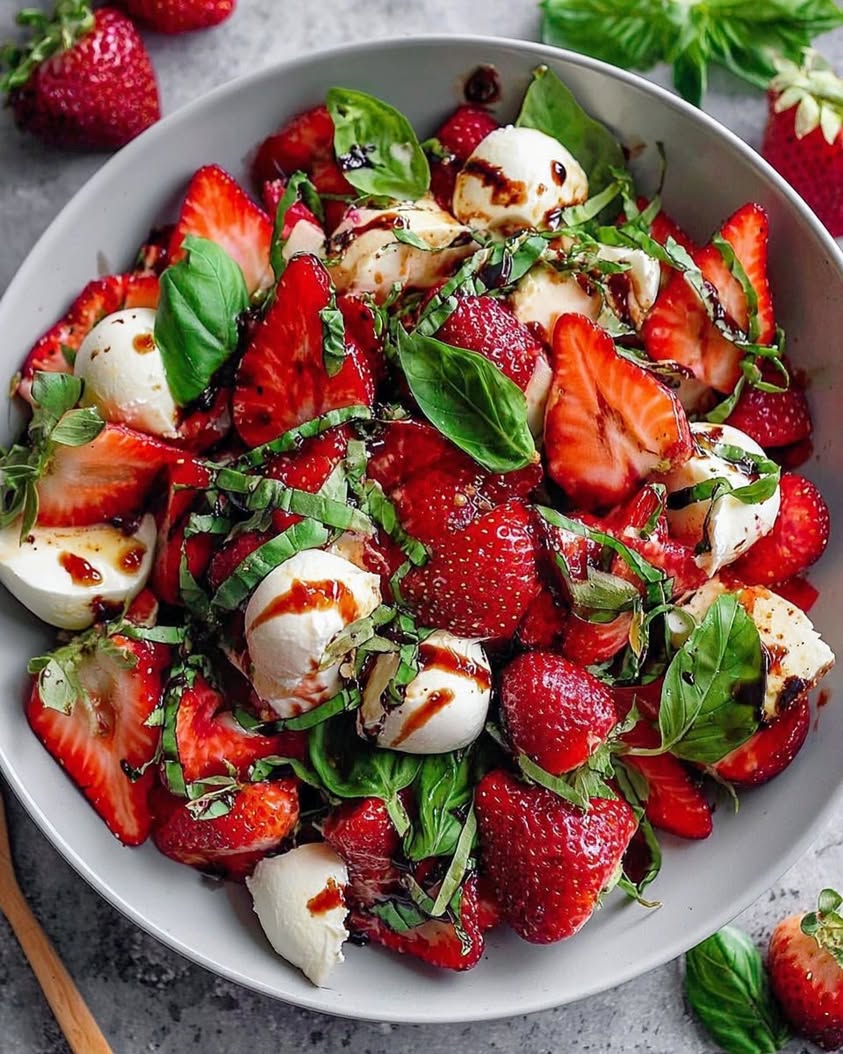
The Perfect Balsamic Strawberry Caprese Salad Recipe for Summer
This Balsamic Strawberry Caprese Salad recipe for summer is the ultimate celebration of peak season produce. Imagine ripe, juicy strawberries mingling with creamy fresh mozzarella and fragrant basil leaves. A drizzle of thick balsamic glaze ties everything together with a perfect sweet and tangy finish. This salad is refreshing, elegant, and comes together in just minutes. It is the perfect dish for warm weather gatherings and light weeknight dinners alike. Every bite delivers a burst of summer flavor.
The combination might sound unusual at first. Strawberries and cheese, however, have a long and delicious history together. The natural sweetness of the fruit perfectly complements the rich, milky flavor of the mozzarella. The balsamic glaze adds a sophisticated depth that elevates the entire salad. This recipe transforms simple ingredients into a stunning culinary experience. It is a dish that looks impressive but requires almost no effort at all. For anyone looking for a show-stopping summer appetizer or side dish, look no further.
What makes this easy caprese salad with strawberries truly special is its versatility. It works beautifully as a light lunch alongside crusty bread. It serves as a vibrant side dish for grilled chicken or fish. It also shines as an appetizer at a summer party. The bright red strawberries, white cheese, and green basil create a visually striking plate. This salad is not just food; it is a celebration of the season. Get ready to discover your new favorite summer recipe.
Quick Recipe Highlights
- Flavor Profile: This salad offers a perfect balance of sweet, tangy, and savory notes. The juicy strawberries provide a natural sweetness that pairs beautifully with the creamy, mild mozzarella. The balsamic glaze adds a rich, slightly tangy complexity that pulls every element together.
- Texture: You get a wonderful combination of textures in every single forkful. The strawberries offer a soft, juicy pop while the mozzarella provides a smooth, creamy, and slightly springy bite. The fresh basil leaves add a delicate, tender crispness that completes the experience.
- Aroma: The aromatic notes of this salad are incredibly inviting and fresh. You smell the sweet, floral fragrance of ripe strawberries immediately. This is perfectly complemented by the peppery, slightly sweet aroma of fresh basil and the rich, woody scent of the balsamic reduction.
- Visual Appeal: This dish is a feast for the eyes with its vibrant, contrasting colors. The bright ruby red of the strawberries sits next to the pristine white of the mozzarella. Fresh green basil leaves and a glossy drizzle of dark balsamic glaze create a gorgeous, restaurant-quality presentation.
- Skill Level Needed: This is one of the easiest salads you can make, requiring absolutely no cooking experience. If you can slice fruit and cheese, you can master this recipe. The key is using the best ingredients you can find and arranging them nicely on a plate.
- Special Equipment: You do not need any special equipment for this recipe. A sharp knife and a cutting board are the only essential tools. You might also want a small bowl for arranging the ingredients and a serving platter for the final presentation.
Recipe Overview
- Difficulty Level: This recipe earns an easy rating because it involves no heat, no complicated techniques, and no precise timing. You simply slice ingredients and arrange them on a plate. It is a perfect starting point for beginner cooks who want to create something impressive. Even experienced home cooks appreciate its simplicity and speed.
- Category: This dish is a salad first and foremost, but it truly is a versatile appetizer as well. It also works wonderfully as a light side dish for many main courses. You can even serve it as a snack or part of a larger antipasto spread. It defies strict categorization because it fits so many roles.
- Cuisine: This recipe puts a distinctly American spin on the classic Italian Caprese salad. The traditional version uses tomatoes, but this adaptation celebrates the peak of strawberry season. It honors the Italian principle of using a few high-quality ingredients to create something magical. The addition of balsamic glaze is a modern, widely loved twist.
- Cost: This salad is surprisingly affordable when strawberries are in season. Fresh mozzarella is a reasonably priced cheese available at most grocery stores. A high-quality balsamic glaze is an investment, but a little goes a long way. Overall, this dish is a budget-friendly way to serve something that tastes luxurious.
- Season: Summer is the undisputed season for this Balsamic Strawberry Caprese Salad. This is when local strawberries are at their sweetest, juiciest, and most flavorful. Basil also thrives in the summer heat, offering its best fragrance. You can make it in other seasons with imported berries, but the flavor will not compare to summer perfection.
- Occasion: This salad is perfect for almost any summer occasion you can imagine. It is elegant enough for a dinner party or holiday barbecue. It is also simple enough for a casual weekday lunch. Picnics, potlucks, and garden parties are all ideal settings for this colorful and refreshing dish.
Why You Will Love This Recipe
The primary appeal of this strawberry caprese appetizer lies in its incredible taste and texture combination. The sweetness of a perfectly ripe strawberry is a revelation when paired with creamy, milky mozzarella. The fresh basil adds a peppery, aromatic note that cleanses the palate. The balsamic glaze then wraps everything up with a rich, tangy sweetness that enhances every ingredient. It is a symphony of flavors that tastes far more complex than the ingredient list suggests. You will find yourself craving this unique and delightful combination again and again.
Convenience is another major reason this recipe earns a permanent spot in your rotation. Preparation takes only about 15 minutes from start to finish. There is no cooking, no heating, and no complicated steps involved. You simply wash your produce, slice your ingredients, and arrange them artfully on a plate. This makes it an ideal last-minute dish for unexpected guests or busy weeknights. You can have a stunning, restaurant-quality salad on the table in less time than it takes to order takeout.
From a nutritional standpoint, this salad is a fantastic choice for a healthy diet. Strawberries are packed with vitamin C, antioxidants, and fiber, making them a nutritional powerhouse. Fresh mozzarella provides a good source of protein and calcium for strong bones and muscles. Basil offers beneficial compounds with anti-inflammatory properties. The olive oil in the glaze adds heart-healthy monounsaturated fats. This salad proves that healthy food can also be incredibly delicious and satisfying.
The social and entertaining value of this dish cannot be overstated. It is a show-stopping centerpiece that guests will rave about long after the party ends. The vibrant colors and elegant presentation create an instant sense of occasion. It is also a conversation starter because the combination of strawberries and cheese often surprises people. Served on a large platter, it encourages sharing and communal dining. It is the perfect dish to build a summer gathering around.
Finally, this salad is remarkably cost-effective and accessible for its perceived value. When strawberries are in season, they are sold at very reasonable prices at farmers markets and grocery stores. Fresh mozzarella is an affordable ingredient that delivers a high-end feel. A bottle of balsamic glaze lasts for many uses, making the cost per serving very low. This recipe allows you to serve something that feels gourmet without spending a lot of money. It is proof that the best dishes are often the simplest ones.
Historical Background and Cultural Significance
The Caprese salad, or Insalata Caprese, has its origins on the beautiful island of Capri, Italy. The traditional version consists of sliced tomatoes, fresh mozzarella, basil, olive oil, salt, and pepper. It was created to represent the colors of the Italian flag: red, white, and green. The dish became popular in the mid-20th century and is now a staple of Italian cuisine worldwide. Its simplicity is its genius, allowing the quality of the ingredients to shine through. This salad is a testament to the Italian culinary philosophy of using a few perfect ingredients.
Culturally, the Caprese salad represents the essence of Italian summer cooking. It is a dish that relies entirely on the quality of seasonal produce. A perfect summer tomato is sweet, juicy, and full of flavor. The same principle applies when adapting the recipe for strawberries. This salad is not about complicated techniques but about celebrating nature at its peak. It is a humble dish that has become a symbol of elegant simplicity in home cooking and fine dining everywhere.
The evolution of this recipe into a Balsamic Strawberry Caprese Salad reflects a modern American love for fresh, seasonal cooking. Chefs and home cooks began experimenting with the classic formula, substituting tomatoes with other fruits. Strawberries proved to be a natural and delicious alternative, especially in the summer. The addition of balsamic glaze, a staple in modern American kitchens, became a popular way to add depth. This adaptation showcases how traditional recipes can evolve and be reborn in new culinary contexts.
Regional variations of the Caprese salad are now common across the United States. Some versions use peaches or nectarines during their peak season. Others incorporate different herbs like mint or arugula for a peppery kick. The Balsamic Strawberry Caprese Salad specifically has become a hallmark of summer menus in the Pacific Northwest and California. These states are known for their incredible strawberry harvests. The recipe continues to evolve as people find new ways to celebrate fresh, local ingredients.
Ingredient Deep Dive
Strawberries are the star of this salad and have a rich cultural history. Wild strawberries grew across Europe, Asia, and the Americas for centuries. The modern garden strawberry, however, is a hybrid created in France in the 18th century. It was a cross between a North American variety and a Chilean one. Today, strawberries are one of the most popular fruits worldwide. They symbolize summer, sweetness, and abundance in many cultures.
Strawberries are also a nutritional powerhouse, packed with vitamin C, manganese, and antioxidants. When selecting strawberries, look for firm, bright red berries with fresh green tops. Avoid any that are mushy, dull, or have signs of mold. Store them in the refrigerator in a single layer on a paper towel-lined tray. For this recipe, you can substitute strawberries with sliced peaches or nectarines for a different flavor.
Fresh mozzarella is another crucial component of this salad. This cheese originated in the Campania region of Italy, where it was made from water buffalo milk. Today, most mozzarella is made from cow’s milk. It is prized for its soft, creamy texture and mild, milky flavor. The best mozzarella is sold in water or whey to maintain its moisture and freshness. It should be eaten within a day or two of purchase for the optimal texture.
Nutritionally, fresh mozzarella is a good source of protein and calcium. When selecting it, look for a ball that feels springy and releases clear liquid, not cloudy or yellow liquid. Store it in its original liquid in the refrigerator. For a dairy-free alternative, you can use firm, drained tofu or a high-quality vegan mozzarella. However, the flavor and texture will be noticeably different from the real thing.
Basil is the aromatic herb that ties the salad together with its bright, peppery flavor. It has a long history in Mediterranean and Asian cuisines. Genovese basil is the traditional choice for Italian dishes. It has large, tender leaves with a sweet, slightly spicy flavor. Basil is rich in vitamins A and K, as well as antioxidants.
When buying fresh basil, look for vibrant green leaves without any dark spots or wilting. Store it like a bouquet of flowers by placing the stems in a glass of water on the counter. Do not refrigerate it, as cold temperatures cause the leaves to turn black. If you cannot find fresh basil, you can substitute it with fresh mint for a different but equally refreshing flavor profile.
Common Mistakes to Avoid
- Using underripe strawberries is a common mistake that leads to a sour, hard salad. The berries should be deep red, fragrant, and give slightly to gentle pressure. Rely on your sense of smell, as ripe strawberries have a sweet, unmistakable aroma.
- Overcooking the balsamic reduction is another error that ruins the glaze. It needs to be thick and syrupy, but if cooked too long, it becomes bitter and hard. Watch it carefully as it simmers, and remove it from heat as soon as it coats the back of a spoon.
- Slicing the mozzarella too thinly causes it to fall apart and lose its texture. Aim for slices that are about half an inch thick. This thickness allows the cheese to maintain its creamy structure and provide a satisfying chew.
- Forgetting to pat the mozzarella dry is a small mistake that dilutes the dressing. Excess moisture from the cheese can pool on the plate and thin out the balsamic glaze. Blot the mozzarella slices gently with paper towels before arranging them.
- Using a cheap balsamic vinegar is a mistake that will leave your salad tasting acidic. A good balsamic is naturally sweet and syrupy. If you cannot find a quality glaze, simmer a decent balsamic vinegar with a little sugar until it thickens.
- Adding the balsamic glaze too early causes the strawberries to become mushy and release their juices. Drizzle the glaze over the salad just before serving. This preserves the freshness and texture of the ingredients for the best possible experience.
- Neglecting to season the salad is a major oversight that results in a flat, lifeless dish. A small pinch of flaky sea salt and a crack of black pepper are essential. Salt enhances the sweetness of the strawberries and the creaminess of the mozzarella.
- Using dried basil is a mistake that will not provide the same fresh, vibrant flavor. Dried basil is earthy and can be bitter. Always use fresh basil leaves for this recipe to achieve the correct aromatic profile and texture.
- Overcrowding the serving platter makes the salad look messy and harder to eat. Give the ingredients enough space so each piece is visible and easy to pick up. A clean, organized arrangement is more visually appealing and practical.
- Serving the salad straight from the refrigerator is a missed opportunity for better flavor. Cheese and strawberries both taste best at room temperature. Let the assembled salad sit out for about 15 minutes before serving to take the chill off.
Essential Techniques
The primary technique for this salad is proper slicing. Consistent, even slices are important for both visual appeal and balanced eating. Using a sharp, non-serrated knife is ideal for clean cuts through strawberries and mozzarella. For strawberries, slice them lengthwise into quarters or halves, depending on their size. For mozzarella, you want slices that are firm and not too thin. Mastering this simple knife skill makes the entire dish look professional and intentional.
The art of arrangement is the second crucial technique. There are two main approaches to plating this salad. The classic method is to alternate slices of strawberry and mozzarella in a circular pattern on a large plate. You then tuck basil leaves between the pieces for a beautiful presentation. Alternatively, you can arrange everything in neat rows on a rectangular platter. The goal is to create a visually harmonious pattern that invites people to dig in. This is where you can express your creativity.
Making a perfect balsamic glaze is a simple cooking technique that requires careful attention. You can buy a good quality glaze, but making it at home is easy with a bit of time. Combine one cup of balsamic vinegar with two tablespoons of brown sugar in a small saucepan. Bring it to a gentle simmer over medium heat, then reduce the heat to low. Let it cook, stirring occasionally, until it is reduced by half and coats the back of a spoon.
This process usually takes about 15 to 20 minutes. The visual cue for success is when the glaze looks like warm maple syrup. It will continue to thicken as it cools, so do not over-reduce it. If it becomes too thick, you can thin it with a teaspoon of warm water. A properly made glaze is essential for the sweet-tangy finish that defines this salad. It adds a professional touch that makes the dish feel special.
Pro Tips for Perfect Balsamic Strawberry Caprese Salad
Always use strawberries that are at the absolute peak of ripeness for the best flavor. If you can, buy them from a local farmers market or pick them yourself. The difference in sweetness and texture is remarkable compared to grocery store berries. Taste one before you start assembling to ensure it is perfectly sweet.
Bring your fresh mozzarella to room temperature before slicing it for the creamiest texture. Cold mozzarella is firm and bouncy, while room temperature cheese is soft and luscious. Take it out of the refrigerator about 30 minutes before you plan to assemble the salad. This small step makes a significant difference in the final eating experience.
Use a high-quality, aged balsamic vinegar for your glaze if you are making it from scratch. An aged balsamic is naturally sweeter and thicker, requiring less reduction time. It also has a more complex flavor profile with notes of fig and molasses. This depth of flavor cannot be achieved with a cheap, young vinegar.
Consider adding a few grinds of fresh black pepper and a pinch of flaky sea salt. Salt is a flavor enhancer that makes the strawberries taste even sweeter and the cheese taste richer. A high-quality finishing salt, like Maldon sea salt, provides a pleasant crunch. These simple seasonings elevate the salad from good to unforgettable.
For a more substantial salad, add some arugula or mixed greens to the base of the plate. The peppery bite of arugula complements the sweet strawberries and creamy mozzarella beautifully. This addition also turns the dish into a more filling main course salad. It adds another layer of texture and flavor.
Drizzle the balsamic glaze in a decorative pattern for a more elegant presentation. You can use a spoon to create a thin zigzag or a series of dots across the plate. Alternatively, you can put the glaze in a squeeze bottle for more control. This small touch makes the dish look like it came from a professional kitchen.
Do not slice the basil too far in advance, as it will begin to oxidize and turn brown. Tear the leaves gently with your hands just before adding them to the salad. Tearing rather than cutting preserves the delicate edges and prevents bruising. This keeps the basil looking fresh and vibrant for a longer time.
Variations and Adaptations
Regional variations of this salad are popular across the United States. In the South, some cooks substitute the basil with fresh mint for a cooler, more refreshing taste. Others add a sprinkle of crushed red pepper for a touch of heat. In California, cooks often add sliced avocado for extra creaminess. These adaptations show how a simple recipe can be customized to reflect local tastes and available ingredients.
Seasonal adaptations are a wonderful way to enjoy this salad year-round. In the fall, you can substitute the strawberries with sliced figs or pears. In the spring, fresh apricots or peaches make a wonderful replacement. Each fruit brings its own unique sweetness and texture to the dish. This flexibility makes the recipe a true staple for any season.
Dietary modifications are easy to implement for this recipe. For a dairy-free version, substitute the mozzarella with a high-quality vegan mozzarella or firm, drained tofu. For a gluten-free version, the recipe is naturally gluten-free as written. For a lower-fat version, you can use part-skim mozzarella, though the texture will be slightly different. These adjustments ensure that almost everyone can enjoy this delicious salad.
Flavor variations offer endless possibilities for those who like to experiment. Try adding a drizzle of honey to the strawberries before adding the glaze for extra sweetness. Add some toasted pine nuts or walnuts for a nutty crunch. You could also add a few slices of ripe avocado for a creamy, buttery element. Each variation brings a new dimension to the classic combination.
Texture modifications can make the salad more interesting for different palates. For a crunchier version, add some toasted slivered almonds or pumpkin seeds. You can also add some crumbled, crispy bacon for a savory, salty element. For a softer texture, let the strawberries macerate in a little sugar for 10 minutes before assembling. This draws out their juices and makes them even more tender.
Presentation alternatives can transform this salad for different occasions. For individual servings, layer the ingredients in a small glass or jar for a beautiful parfait effect. For a party, you can skewer a piece of strawberry, a basil leaf, and a cube of mozzarella for easy appetizers. For a more rustic look, serve the salad on a wooden board. The presentation can be adapted to fit any event.
Serving and Presentation Guide
Plating techniques for this salad are simple but impactful. Begin by selecting a large, flat white platter to make the colors pop. Start arranging the strawberry and mozzarella slices in an alternating, slightly overlapping pattern around the platter. Tuck the fresh basil leaves between the slices, allowing them to peek out. This creates a beautiful, organized presentation that is easy for guests to serve themselves.
Garnishing ideas can take this salad to the next level visually. A light drizzle of extra-virgin olive oil over the top adds a beautiful sheen and extra flavor. A final sprinkle of flaky sea salt and fresh black pepper is essential for seasoning. You can also add a few whole basil leaves in the center of the platter as a focal point. A few edible flowers, like nasturtiums or violets, can add a pop of color for special occasions.
Traditional accompaniments for this salad are classic Italian breads. A crusty baguette or ciabatta is perfect for sopping up the balsamic glaze and juices. A side of warm, crusty garlic bread also pairs beautifully. For a lighter option, serve the salad alongside grilled shrimp or chicken. The fresh, bright flavors complement any grilled protein wonderfully.
Modern serving suggestions for this salad are all about convenience and creativity. You can serve it as a deconstructed salad on individual plates for a more refined look. For a buffet, present it on a large platter with small tongs for easy serving. You can also layer the ingredients in a clear glass trifle dish for a stunning visual effect. The possibilities are endless, so feel free to get creative.
Temperature considerations are important for the best eating experience. The strawberries and mozzarella should be at room temperature for the optimal texture and flavor. The balsamic glaze can be served at room temperature or slightly warm. If you are serving the salad outside on a hot day, keep it in a cool, shaded spot until serving. The salad is best enjoyed within an hour of assembly.
Portion control tips are helpful for serving this salad as part of a larger meal. For a side salad, plan for about 4 ounces of strawberries and 4 ounces of mozzarella per person. For a main course, double those portions. If you are serving the salad as an appetizer, smaller portions are appropriate. Always make a little extra, as this salad is always popular and disappears quickly.
Wine and Beverage Pairing
Wine pairings for this Balsamic Strawberry Caprese Salad are wonderful and varied. A crisp, dry rosé from Provence is an excellent choice that complements the strawberries and tangy balsamic. The wine’s light body and delicate fruit notes will not overpower the salad. A Sauvignon Blanc, with its bright acidity and herbal notes, also pairs beautifully. The wine’s acidity cuts through the richness of the mozzarella.
Non-alcoholic alternatives are just as delicious for this dish. A sparkling water with a splash of cranberry or pomegranate juice mirrors the sweet-tart profile of the salad. A chilled hibiscus iced tea offers floral notes that complement the strawberries and basil. Herbal iced tea, like a mint or lemon balm tea, is also a refreshing and palate-cleansing option. These drinks enhance the meal without competing with the flavors.
Coffee and tea pairings are not typical for a fresh salad, but an iced coffee can be a surprising match. The bitterness of the coffee contrasts nicely with the sweet fruit and creamy cheese. For a more traditional pairing, a cup of green tea works well. Its light, grassy notes do not overpower the delicate flavors of the salad. These options are best for a lunch or brunch setting.
Temperature considerations for beverages depend on the occasion. For a hot summer day, an ice-cold glass of rosé or sparkling water is refreshing and welcome. If you are serving the salad as a first course at a dinner party, a slightly chilled white wine is appropriate. For a picnic, a thermos of chilled tea or a bottle of good cider works perfectly. The beverage should always complement the meal, not compete with it.
Serving suggestions for the beverage are simple. If you are serving wine, decant it or simply open it 15 minutes before serving to let it breathe. For non-alcoholic drinks, serve them in clear glasses over ice for visual appeal. A sprig of fresh mint or a strawberry slice makes a lovely garnish for any drink. The presentation of the beverage is an extension of the care you put into the salad itself.
Storage and Shelf Life
Storage methods for this salad are best applied to the unassembled components. The salad does not store well once assembled because the strawberries release their juices and the basil wilts. For the best results, store the strawberries, mozzarella, basil, and glaze separately. The strawberries should be kept in the refrigerator in a covered container for up to three days. The fresh mozzarella should remain in its original liquid in the refrigerator.
Temperature requirements are crucial for keeping the ingredients fresh. Strawberries need cold storage at around 32 to 34 degrees Fahrenheit. Fresh mozzarella should be kept at around 35 to 40 degrees Fahrenheit. The balsamic glaze can be stored at room temperature in a sealed container. Basil, however, is best kept at room temperature with its stems in water, similar to a bouquet.
Container recommendations vary by ingredient. Strawberries are best stored in a shallow container lined with paper towels to absorb excess moisture. The container should have some ventilation to prevent mold growth. Fresh mozzarella should stay in its original plastic container with the liquid. If you open it, transfer the cheese and liquid to a sealed container. The balsamic glaze can be stored in a glass jar with a tight-fitting lid.
Signs of spoilage are important to recognize to ensure food safety. Strawberries become soft, mushy, and develop mold spots when they are going bad. Fresh mozzarella will become slimy, develop a sour smell, or the liquid will turn cloudy. Basil leaves will turn black and become slimy. If you notice any of these signs, discard the ingredient immediately. Always trust your senses when evaluating freshness.
Reheating instructions are not applicable to this no-cook salad. The salad is meant to be served fresh and cold. If you are using a homemade balsamic glaze that has thickened too much in the refrigerator, you can gently warm it in the microwave for a few seconds. You can also let it sit at room temperature for 30 minutes to thin it out. Never reheat the mozzarella or strawberries.
Freezing guidelines are not recommended for this salad. Fresh strawberries become mushy and watery when thawed, losing their desirable texture. Fresh mozzarella also changes texture after freezing, becoming grainy and crumbly. Basil becomes black and limp. It is best to make this salad fresh, close to the time you plan to serve it. The ingredients are all readily available, so there is no need to freeze them.
Make Ahead Strategies
A simple prep timeline helps you get ahead for this salad. You can wash and slice the strawberries up to four hours in advance. Store them in a covered container in the refrigerator to keep them fresh. You can also slice the mozzarella up to two hours before serving. Keep the slices covered with plastic wrap so they do not dry out. This prep work reduces the final assembly time to just a few minutes.
Storage between steps is important for maintaining ingredient quality. Keep the sliced strawberries and mozzarella in separate covered containers in the refrigerator. Do not combine them until you are ready to serve the salad. The basil leaves should be stored at room temperature with their stems in water. The balsamic glaze can be made days in advance and stored in a glass jar at room temperature or in the refrigerator.
Quality impact assessment is important for make-ahead preparations. Sliced strawberries will begin to soften and release their juices over time. For the best texture, slice them no more than four hours ahead. Sliced mozzarella can dry out if left uncovered for too long. Keep it well sealed to maintain its creamy texture. The basil is the most fragile ingredient and should be added at the very last minute to prevent wilting.
Assembly tips for make-ahead success are straightforward. Do not assemble the salad until you are ready to serve it. Arrange the ingredients on the platter and keep it covered in the refrigerator for up to 30 minutes. Add the basil leaves and drizzle the balsamic glaze just before bringing the salad to the table. This ensures the basil stays vibrant and the strawberries remain firm and fresh.
Reheating guidelines are not applicable to this cold salad. The only component that might need preparation is the balsamic glaze. If you made the glaze ahead of time and it has thickened in the refrigerator, simply let it sit at room temperature for 30 minutes. You can also warm it gently in a small saucepan or microwave for a few seconds. Never apply heat to the salad itself.
Fresh element additions are the key to keeping the salad vibrant when serving it later. Always add the fresh basil at the very last moment. A squeeze of fresh lemon juice over the strawberries can help keep them bright and prevent browning. A final sprinkle of flaky sea salt right before serving wakes up all the flavors. These small touches ensure the salad tastes as fresh as if it were just made.
Scaling Instructions
Halving the recipe is simple for this salad. For two servings, use half the strawberries, half the mozzarella, and a smaller handful of basil. The preparation time will be slightly less because you have fewer items to slice. Use a smaller platter or serve on individual plates. The balsamic glaze recipe is easy to halve by using half the vinegar and half the sugar.
Doubling or tripling the recipe requires a bit more planning but is still very easy. Use a large platter or multiple platters to accommodate the extra ingredients. You will need to double or triple all ingredients proportionally. The prep time will increase slightly as you will have more slicing to do. The assembly process remains the same, just on a larger scale.
Equipment adjustments for larger quantities involve using bigger tools. You will need a larger cutting board and a sharper knife to handle the increased volume. Use a large serving platter or multiple smaller platters for the final presentation. If you are making the balsamic glaze, you may need a slightly larger saucepan. The mixing bowl for the glaze should be bigger to prevent boiling over.
Timing modifications are minimal when scaling this recipe. The slicing time will increase by a few minutes for each additional serving. The balsamic glaze reduction time remains the same regardless of the quantity. The key is to stay organized and work efficiently. Having all your ingredients washed and ready before you start slicing helps speed up the process significantly.
Storage considerations for larger batches are important for leftovers. This salad is best served fresh, so try to make only what you plan to eat. If you have leftovers, store the components separately as previously advised. Leftover assembled salad will not keep well. It is always better to have a little too much of the components than to be left with a soggy, unappealing leftover salad.
Nutritional Deep Dive
Macro breakdown for this salad makes it a balanced and healthy option. A typical serving contains approximately 250 to 300 calories, depending on the exact portions. It provides about 15 grams of protein from the mozzarella, which is excellent for satiety. The carbohydrates come primarily from the strawberries and the balsamic glaze, totaling around 20 grams. The fat content is about 15 grams, mostly from the mozzarella and the olive oil in the glaze.
Micronutrient analysis reveals this salad is packed with essential vitamins and minerals. Strawberries are an excellent source of vitamin C, providing over 100 percent of the daily recommended intake per serving. They also contain significant amounts of manganese and folate. Fresh mozzarella is a good source of calcium and phosphorus for bone health. Basil contributes vitamin K, which is important for blood clotting and bone health.
Health benefits from this salad are numerous and significant. The high vitamin C content from the strawberries supports a healthy immune system and healthy skin. The antioxidants in both strawberries and balsamic vinegar help combat oxidative stress in the body. The calcium from the mozzarella supports strong bones and teeth. The healthy fats from the cheese and olive oil aid in the absorption of fat-soluble vitamins.
Dietary considerations for this salad make it a great choice for many people. It is naturally gluten-free and low in carbohydrates. It is also a good source of protein and healthy fats, which promote feelings of fullness. For those watching their sodium intake, the sodium content is moderate and comes mainly from the cheese. You can reduce the sodium by using part-skim mozzarella or skipping the added salt.
Portion analysis for weight management is very favorable. A serving of this salad is satisfying without being too high in calories. The protein and fiber help you feel full for longer, reducing the urge to snack. The portion size is generous, making it a great choice for a light lunch or dinner. For a lower-calorie option, you can reduce the amount of mozzarella or use a lower-fat version.
Weight management tips for this salad are practical and easy to implement. Use a kitchen scale to measure your portions accurately for consistent results. Pair this salad with a lean protein source like grilled chicken or shrimp for a more complete meal. The salad is also a fantastic way to increase your vegetable intake without feeling like you are dieting. Its fresh, satisfying flavors make healthy eating a pleasure.
Dietary Adaptations
Gluten-free adaptation is not needed because this salad is naturally gluten-free. All the core ingredients, strawberries, mozzarella, basil, and balsamic vinegar, are free Print
Balsamic Strawberry Caprese Salad
- Total Time: 15 minutes
- Yield: 4
Description
A fresh twist on the classic Caprese salad, featuring ripe strawberries, creamy mozzarella, and a tangy balsamic glaze.
Ingredients
- 1 pint fresh strawberries, hulled and sliced
- 8 oz fresh mozzarella cheese, sliced or torn
- 1/4 cup fresh basil leaves, torn
- 2 tablespoons balsamic glaze
- 1 tablespoon extra-virgin olive oil
- Salt and freshly ground black pepper to taste
Instructions
- Arrange strawberry slices and mozzarella pieces on a serving platter, alternating and overlapping them.
- Tuck basil leaves between the strawberries and mozzarella.
- Drizzle olive oil and balsamic glaze over the salad.
- Season with salt and pepper to taste.
- Serve immediately as a refreshing appetizer or side dish.
Notes
You can customize the seasonings to taste.
- Prep Time: 15 minutes
- Cook Time: 0 minutes
- Method: Appetizer
- Cuisine: Italian-American