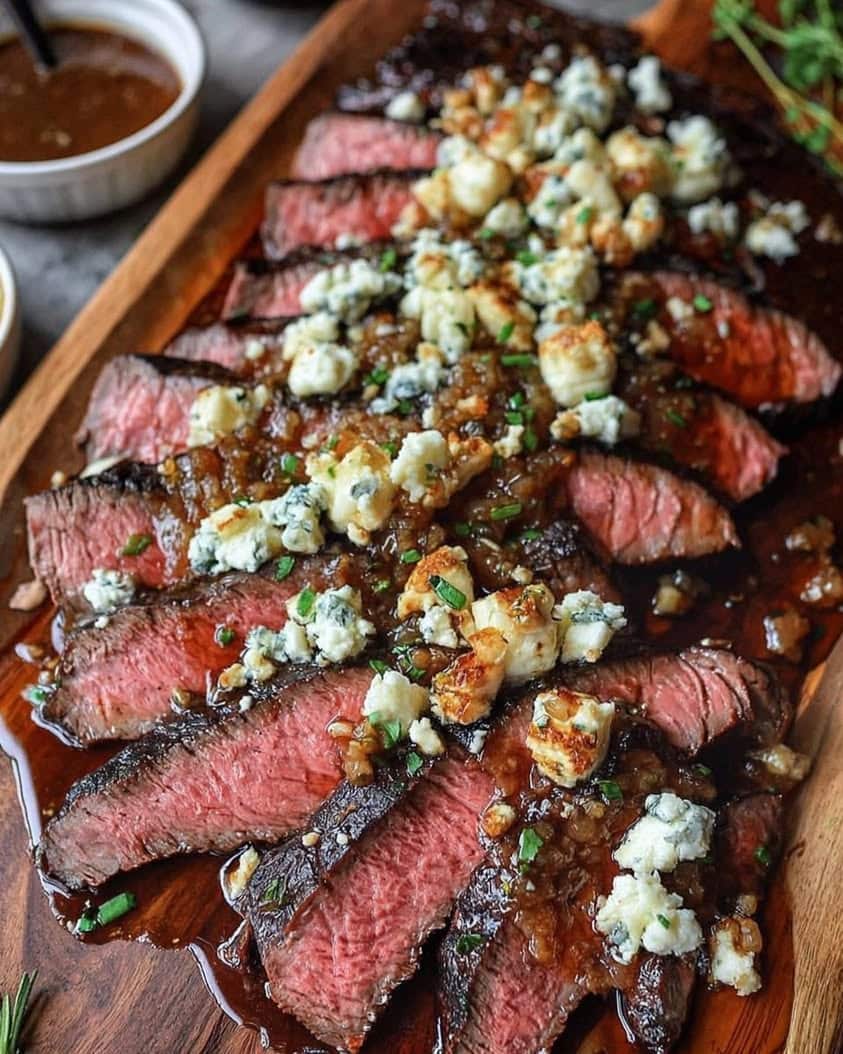
The Ultimate Balsamic Marinated Flank Steak with Blue Cheese Crust: A Bold and Elegant Dinner
Welcome to your new favorite weeknight showstopper. This Balsamic Marinated Flank Steak with Blue Cheese Crust delivers a perfect combination of tangy, savory, and creamy flavors. The marinade tenderizes the meat beautifully, while the blue cheese crust creates an irresistible texture contrast. You will love how the balsamic vinegar caramelizes on the grill, forming a slightly sweet and sticky exterior that pairs perfectly with the pungent blue cheese. This recipe proves that gourmet dining at home is completely achievable, even on a busy Tuesday.
First, we need to talk about the star protein. Flank steak is an affordable cut that offers incredible beefy flavor, but it requires a little love to reach its full potential. The balsamic marinade does all the heavy lifting here by breaking down the fibers and infusing the meat with a rich, tangy depth. Then, we add the blue cheese crust right before serving. The crust melts quickly under high heat, creating a warm, creamy layer that clings to each slice. This Balsamic Marinated Flank Steak with Blue Cheese Crust is designed to impress without causing you any stress.
The aroma of this dish is absolutely captivating. As the flank steak hits the hot skillet or grill, the balsamic vinegar releases a sweet and smoky scent that fills your kitchen. Meanwhile, the blue cheese adds a distinct, earthy note that signals something truly special is being prepared. You will find that this meal works beautifully for a romantic date night, a small family gathering, or even a fancy dinner party. Every bite offers a remarkable harmony of bold flavors and satisfying textures.
Quick Recipe Highlights
- Flavor Profile: This dish delivers a delightful balance of tangy balsamic, savory beef, and pungent blue cheese. The marinade adds sweetness and acidity, while the cheese provides a salty, creamy kick that cuts through the richness of the meat.
- Texture: You get a tender, juicy interior from the marinated flank steak, paired with a slightly charred, caramelized exterior. The blue cheese crust adds a soft, melt-in-your-mouth layer that contrasts beautifully with the steak’s firm bite.
- Aroma: Expect a wonderful combination of smoky grilled beef, sweet and tangy balsamic reduction, and the distinct earthy, funky fragrance of blue cheese. This aroma will draw everyone to the table.
- Visual Appeal: The deep mahogany color of the grilled steak is stunning, accented by a creamy, speckled blue cheese crust. Slicing into the meat reveals a perfect pink interior, making for a gorgeous presentation on the plate.
- Skill Level Needed: This recipe is perfect for intermediate home cooks. While the techniques are straightforward, managing the heat for a perfect sear and getting the crust just right requires a little attention and practice.
- Special Equipment: You will need a large, heavy-bottomed skillet or a grill, a meat thermometer for perfect doneness, and a sharp knife for slicing the steak against the grain.
Recipe Overview
- Difficulty Level: We rate this recipe as medium difficulty. The steps themselves are simple, but achieving the perfect internal temperature requires a reliable meat thermometer and a little confidence. However, the instructions are clear, making it a very approachable challenge for anyone wanting to level up their steak game.
- Category: This recipe fits perfectly into main course dinners, special occasion meals, and summer grilling menus. It is also fantastic for meal prep, as the sliced steak can be used in salads, wraps, or grain bowls throughout the week.
- Cuisine: This dish draws inspiration from American steakhouse traditions, combined with the bold, tangy flavors of Italian balsamic vinegar and the classic French ingredient of blue cheese. It is a modern fusion that celebrates the best of Western cooking.
- Cost: Making this Balsamic Marinated Flank Steak with Blue Cheese Crust is very cost-effective. Flank steak is a budget-friendly cut, and balsamic vinegar and blue cheese are pantry staples that deliver huge flavor for a relatively small investment.
- Season: While you can enjoy this steak year-round, it is especially perfect for late spring, summer, and early fall. The grilling method brings out the best flavors, and the dish pairs wonderfully with fresh seasonal vegetables like grilled asparagus or a crisp tomato salad.
- Occasion: This dish is versatile enough for a casual weeknight dinner, yet elegant enough for a birthday celebration, an anniversary, or a holiday meal. It is also a fantastic recipe for impressing guests at a backyard barbecue.
Why You’ll Love This Recipe
The first reason to love this recipe is the incredible taste and texture contrast. The tangy balsamic marinade tenderizes the flank steak while adding a deep, sweet, and acidic flavor that is simply addictive. Then, the creamy, salty blue cheese crust melts onto the warm meat, creating a luxurious finish that feels far more complex than it actually is. You will adore how each bite offers a new sensation, from the charred crust to the juicy, pink center. This combination is a true crowd-pleaser that feels both rustic and refined at the same time.
Convenience is the second reason this recipe deserves a permanent spot in your rotation. The hands-on time is minimal, requiring only about fifteen minutes of active preparation. The marinade does all the work for you, so you can prepare the flank steak earlier in the day and let it soak up those amazing flavors. Then, the actual cooking is incredibly fast, taking less than fifteen minutes from start to finish. This means you can pull off a restaurant-quality meal on a busy weeknight without spending hours in the kitchen.
Nutritionally, this meal offers a fantastic balance of high-quality protein and healthy fats. Flank steak is a lean cut of beef that is packed with iron and B vitamins, which help support energy levels and overall health. The balsamic vinegar contains antioxidants that are beneficial for your heart. Even the blue cheese, despite its reputation, provides calcium and a satisfying dose of flavor that means you need less to feel completely satisfied. When paired with a side of vegetables, this dish supports your health goals while still feeling indulgent.
This recipe also excels in its social and entertaining value. Nothing impresses guests quite like a perfectly cooked steak with a gourmet crust. The stunning presentation and amazing aroma will make you look like a professional chef. Moreover, this recipe is a great conversation starter because it feels unique and special. You can easily double the recipe for a larger crowd, and the prep work means you can spend more time with your guests instead of being stuck in the kitchen.
Finally, cost-effectiveness and accessibility make this recipe a winner. Flank steak is one of the most affordable cuts of beef, making it a smart choice for feeding a family or entertaining on a budget. The other ingredients are all common items that you can find at any grocery store. You do not need any exotic spices or expensive equipment. This means you can enjoy a truly special meal that feels luxurious without breaking the bank. It democratizes fine dining and brings it right to your dinner table.
Historical Background and Cultural Significance
Flank steak has a long history as a working-class cut of meat, cherished for its intense beef flavor despite its toughness. It comes from the abdominal muscles of the cow, which get a lot of exercise, resulting in a lean but very flavorful piece of meat. Historically, it was considered a less desirable cut and was often used for stews or ground meat. However, as cooking techniques evolved and global flavors became more popular, flank steak was rediscovered by chefs for its ability to absorb marinades and its quick cooking time.
The cultural importance of flank steak can be seen in many cuisines around the world. In Latin America, it is the star of the dish called arrachera, which is marinated and grilled to perfection. In Chinese cuisine, it is often used in stir-fries because it slices beautifully against the grain. In the United States, it became a staple of backyard barbecues and steakhouse menus. This versatility has made flank steak a beloved ingredient that transcends cultural boundaries and unites food lovers everywhere.
The evolution of this particular recipe is a story of culinary fusion. The combination of balsamic vinegar, a staple of Italian cooking, with blue cheese, a classic French and American ingredient, creates a modern and sophisticated flavor profile. Over the past few decades, home cooks and chefs alike have experimented with different marinades and crusts for steak. The blue cheese crust was a natural progression from garlic butter or herb crusts, adding a welcome tang and creaminess that balances the tangy marinade beautifully.
Regional variations of this dish are fascinating to explore. In the southern United States, you might find a version with a spicy blue cheese crust that includes cayenne or smoked paprika. In the Midwest, the flank steak might be grilled over hickory wood for a smokier flavor base. In California, the dish often includes fresh herbs from the garden, like rosemary or thyme, in the marinade. These variations show how adaptable and beloved this core concept has become, welcoming local ingredients and personal preferences to create something truly unique.
Ingredient Deep Dive
Flank steak is the foundation of this dish and deserves careful selection. Look for a steak that is uniform in thickness, typically about one inch, which ensures even cooking. The meat should be a deep red color with a fine, even grain. The marbling, the white fat streaks within the muscle, should be minimal but present. A good flank steak will feel firm and spring back when pressed. When you cook it correctly, it rewards you with an incredibly beefy flavor that is unmatched by many other cuts.
Balsamic vinegar is the soul of the marinade, providing both acidity and a complex sweetness. For this recipe, choose a good quality balsamic vinegar that is not too watery. Traditional balsamic vinegar from Modena, Italy, is made from cooked grape must and aged for years, developing a thick, syrupy consistency. For a more budget-friendly option, look for a bottle labeled as balsamic vinegar of Modena. The key is to avoid cheap imitation balsamic that is mostly sugar and coloring, as it will not provide the same depth of flavor.
Blue cheese is the star of the crust, and your choice matters significantly. A good blue cheese should be creamy, moist, and have a distinct, pungent aroma without being overly aggressive. One excellent option is Gorgonzola, which is creamy and mild. Another great choice is Roquefort, which is saltier and more crumbly. A domestic blue cheese, such as Maytag Blue, can also be fantastic. Use a high-quality cheese that you enjoy eating on its own, because its flavor will be the highlight of the finished dish.
When it comes to storage, flank steak should be kept in the coldest part of your refrigerator and used within a couple of days of purchase. Balsamic vinegar can be stored in a cool, dark pantry indefinitely, though its flavor will slowly evolve over time. Blue cheese needs to be wrapped loosely in wax paper or its original packaging and stored in the cheese drawer of your refrigerator. It can last for several weeks if kept properly. Always let your steak and cheese come to room temperature for about thirty minutes before cooking for the best results.
Substitution options for this Balsamic Marinated Flank Steak with Blue Cheese Crust are very flexible. If you cannot find flank steak, you can use skirt steak or a thick-cut sirloin. For the blue cheese, you can substitute gorgonzola, roquefort, or even a sharp feta cheese for a less intense but still delicious crust. If you do not have balsamic vinegar, a combination of red wine vinegar and a little maple syrup will work in a pinch. These substitutions will change the flavor profile slightly, but they will still produce a fantastic meal.
Common Mistakes to Avoid
- Not marinating the flank steak long enough is a common error. The marinade needs at least two hours to tenderize and flavor the meat. Skipping this step or rushing it will result in a less flavorful and tougher steak. Plan ahead to allow for proper marinating time.
- Using a cold steak is a big mistake. Cooking a cold flank steak causes it to cook unevenly, with the outside overcooking before the inside reaches the right temperature. Always let your steak rest at room temperature for about thirty minutes before it hits the heat.
- Overcooking the flank steak is perhaps the most frequent issue. Flank steak is best enjoyed medium-rare, between 130 and 135 degrees Fahrenheit. Cooking it beyond medium will cause it to become tough and dry, losing all its wonderful flavor and texture.
- Skipping the meat thermometer is a recipe for disaster. Guessing the internal temperature is very difficult, even for experienced cooks. A reliable digital instant-read thermometer is the only way to ensure perfect doneness every single time.
- Not slicing against the grain is a crucial error. Flank steak has long, tough muscle fibers. If you slice with the grain, you will get long, chewy strips of meat. Always slice perpendicular to those lines to create short, tender pieces that are easy to chew.
- Adding the blue cheese crust too early is a common pitfall. The cheese should only be added during the last minute of cooking, after the steak has been flipped. Adding it too soon will cause it to burn or melt away completely, losing the beautiful crust.
- Using a non-stick pan for the sear is not ideal. Non-stick pans do not get hot enough for a proper, deep brown crust. Use a heavy-bottomed stainless steel or cast iron skillet for the best results, which allows the heat to build up and sear the meat perfectly.
- Neglecting to dry the steak before cooking is a simple mistake. After marinating, pat the flank steak dry with paper towels. Excess moisture on the surface will create steam instead of a sear, preventing that beautiful caramelized crust from forming.
- Forgetting to rest the steak after cooking is a serious misstep. Resting the meat allows the juices to redistribute throughout the steak. Cutting into it immediately will cause all those delicious juices to run out onto the cutting board, leaving you with a dry steak.
- Using low-quality ingredients is a sure way to compromise the final dish. A cheap balsamic vinegar will be watery and overly sweet, while a low-quality blue cheese will be bland and crumbly. Spend a little more on good ingredients for the best possible flavor.
Essential Techniques
Marinating meat is a fundamental technique that combines flavoring and tenderizing. The acid in the balsamic vinegar, along with the salt, helps to relax the proteins in the flank steak, making it more tender. It is important to seal the steak and marinade in a plastic bag or a non-reactive bowl, ensuring that every surface is coated. Flip the bag occasionally to distribute the flavors evenly. Never marinate in a metal bowl, as the acid can react with the metal and alter the taste of your food.
Getting the perfect sear on a steak is an essential skill for any home cook. The key is to use high heat and a heavy pan, such as cast iron. You must heat the pan until it is smoking hot before you add the oil and then the steak. Once the steak is in the pan, do not move it. Let it sit undisturbed for several minutes to develop a deep, golden-brown crust. The crust is created by a chemical reaction called the Maillard reaction, which produces complex, savory flavors that are the hallmark of great steak.
Slicing against the grain is a simple technique that dramatically improves the texture of flank steak. To find the grain, look for the long, parallel lines that run along the surface of the meat. You need to cut perpendicular to these lines, creating short, thin slices. This shortens the muscle fibers, making each bite incredibly tender. If you are unsure, make a small cut into the raw steak to see the direction of the fibers. This small step makes a huge difference in the eating experience.
Creating a cheese crust on a hot steak requires precision and timing. The key is to apply the crumbled blue cheese during the final minute of cooking, after the steak has been flipped and is nearing its target temperature. The residual heat from the pan and the steak will gently melt the cheese. You want it to become soft and warm, but not completely liquid and running off. Using a spoon, carefully press the cheese crumbles onto the surface of the steak to help them adhere evenly for a beautiful, creamy crust.
Pro Tips for Perfect Balsamic Marinated Flank Steak with Blue Cheese Crust
First, always use a digital meat thermometer. Guessing the doneness of a thin cut like flank steak is very risky. Insert the thermometer sideways into the thickest part of the steak for the most accurate reading. This ensures you hit your target temperature every time without having to cut into the meat to check.
Second, do not skip the resting period. After you remove the steak from the heat, let it rest on a clean cutting board for at least five minutes. This crucial step allows the juices to settle and redistribute, resulting in a more moist and flavorful final product. Cover it loosely with foil to keep it warm.
Third, make sure your pan is incredibly hot before you add the steak. If the pan is not hot enough, the steak will steam instead of searing. A good test is to splash a few drops of water on the pan; if they dance and evaporate instantly, you are ready. Only then should you add your oil and then the steak.
Fourth, do not overcrowd the pan. If you are cooking more than one steak, leave plenty of space between them. If the pieces are touching, they will trap steam and prevent a good sear. Cook in batches if necessary to maintain high heat and get that beautiful crust on every piece of meat.
Fifth, season the steak generously with salt and pepper after patting it dry, even though it has marinated. The marinade adds flavor, but a final seasoning of salt right before cooking enhances the crust and brings out the beefy taste. Freshly ground black pepper adds a wonderful aromatic kick as well.
Sixth, let the blue cheese come to room temperature before you crumble it. Cold cheese is harder to work with and will not melt as evenly or quickly. A softer, room temperature cheese will spread beautifully and melt into a creamy, luscious layer on top of your perfectly cooked flank steak.
Seventh, if you are using a grill, create a two-zone fire. Sear the steak directly over high heat first, then move it to a cooler part of the grill to finish cooking through if needed. This prevents the outside from burning before the inside is cooked to your liking, giving you more control over the final doneness.
Eighth, always slice the steak immediately before serving. Once rested, slice the entire steak against the grain. Arrange the slices on a warm serving platter and spoon any accumulated juices over the top. This makes for a gorgeous presentation and ensures every person gets some of that delicious blue cheese crust.
Variations and Adaptations
Regional variations for this dish are exciting to explore. For a Southwestern twist, add a teaspoon of smoked paprika and a pinch of cumin to the balsamic marinade. You can also top the blue cheese crust with some crispy fried onions or a sprinkle of chili flakes for extra heat and texture. This adaptation adds a smoky, spicy dimension that feels completely new while staying true to the original concept.
Seasonal adaptations make this recipe year-round friendly. In the summer, serve the sliced steak over a bed of fresh arugula with cherry tomatoes and a simple lemon vinaigrette. In the fall, pair it with roasted butternut squash and a drizzle of balsamic reduction. In the winter, serve it alongside creamy mashed potatoes and sautéed mushrooms for a hearty and comforting meal.
Dietary modifications are very easy to implement. To make this recipe gluten-free, simply ensure your balsamic vinegar is certified gluten-free and avoid adding any flour to the crust. The dish is naturally low in carbs and sugar. For a low-sodium version, use a low-salt blue cheese and reduce the salt in the marinade. It is already dairy-heavy, but for a dairy-free option, you can omit the blue cheese crust and instead finish the steak with a tangy chimichurri sauce.
Flavor variations can completely transform this dish. Try adding a tablespoon of honey or maple syrup to the marinade for a sweeter, stickier glaze. You can also infuse the marinade with fresh herbs like rosemary, thyme, or oregano. For a more pungent flavor, add a clove of minced garlic or a teaspoon of Dijon mustard. Each of these additions will create a unique and delicious outcome.
Texture modifications are also possible. If you prefer a crispier crust, you can mix the blue cheese with some panko breadcrumbs before pressing it onto the steak. For a smoother texture, you can blend the blue cheese with a little cream cheese to create a spreadable paste. This variation results in a more uniform, velvety layer that coats the entire surface of the flank steak evenly.
Presentation alternatives can elevate your dining experience. Instead of slicing the whole flank steak, you can serve it as a whole piece on a large wooden board, allowing guests to slice their own portions. You can also cut the steak into bite-sized cubes before serving, tossing them with additional crumbled blue cheese and a splash of balsamic glaze for a fantastic appetizer or salad topper.
Serving and Presentation Guide
Plating techniques for this dish are all about showcasing the beautiful contrast. Use a large, warm white plate or a wooden board as your canvas. Slice the rested flank steak against the grain and arrange the slices in a slight fan pattern. This not only looks elegant but also makes it easy for people to serve themselves. Leaving a small gap between the slices allows the rich color of the meat to shine.
Garnishing ideas can add a final burst of freshness and color. A sprinkle of fresh chopped chives or parsley adds a bright green contrast to the dark steak and creamy cheese. A few small, whole arugula leaves placed on top of the steak add a peppery bite and a touch of elegance. For a final flourish, drizzle a little extra balsamic reduction or a high-quality extra-virgin olive oil around the plate.
Traditional accompaniments for this flank steak are simple and classic. A side of roasted or grilled asparagus is a perfect pairing, providing a slight bitterness that cuts through the richness. Creamy mashed potatoes are another wonderful choice, offering a smooth and buttery base for the savory steak and its juices. A simple green salad with a tangy vinaigrette also works beautifully to balance the meal.
Modern serving suggestions can make this dish feel more contemporary. Serve the sliced steak over a bed of creamy polenta or cheesy grits for a Southern-inspired twist. You can also use the steak as the protein in a loaded grain bowl with farro, roasted vegetables, and a lemony tahini dressing. For a low-carb option, serve it on a bed of sautéed spinach or zucchini noodles.
Temperature considerations are critical for the best eating experience. The flank steak should be served warm, not piping hot, after its resting period. The blue cheese crust should be soft and melted but not runny. The accompaniments should be warm to complement the meat. Serving everything at the right temperature ensures that each component shines and creates a harmonious meal.
Portion control tips can help you manage your servings. For a main course, plan for about 6 to 8 ounces of raw flank steak per person. This will yield about 4 to 5 ounces of cooked meat per serving. When slicing, aim for uniform pieces that are about half an inch thick. This not only looks professional but also ensures that every person gets a consistent amount of the delicious blue cheese crust.
Wine and Beverage Pairing
Wine pairings for this bold dish are essential for a complete dining experience. A full-bodied red wine is the traditional and most successful choice. A Cabernet Sauvignon with its firm tannins and black fruit flavors stands up beautifully to the rich beef and tangy blue cheese. Alternatively, a Malbec from Argentina offers notes of plum and a hint of spice that complement the balsamic marinade perfectly. A Zinfandel with its bold fruit and peppery finish is also an excellent match.
Non-alcoholic alternatives are just as satisfying. A rich and tart cherry or pomegranate juice provides a similar fruity, acidic profile to red wine. A sparkling water with a splash of balsamic and a twist of lemon is a refreshing and elegant choice. For something more complex, try a non-alcoholic red wine blend that mimics the tannic structure of the real thing, which can be found at many specialty grocery stores.
Coffee and tea pairings are less common but can be very effective. A dark roast coffee with its smoky, bitter notes can stand up to the bold flavors of the steak and cheese, especially as an after-dinner drink. For tea, a robust black tea like Assam or a smoky Lapsang Souchong can be a surprising and delightful pairing, cutting through the richness of the meal with its smoky, astringent character.
Temperature considerations for your beverage are important. Red wine should be served slightly below room temperature, around 60 to 65 degrees Fahrenheit, to prevent it from tasting too alcoholic. Non-alcoholic drinks should be served well-chilled to provide a refreshing contrast to the warm steak. Coffee should be served hot to maximize its aromatic qualities, while tea can be served either hot or iced depending on the season and your preference.
Serving suggestions can enhance the entire experience. Offer your guests a choice of a couple of different wine options to see what they prefer. Consider providing a palate-cleansing sorbet or a small salad with a citrus vinaigrette between courses if you are serving a multi-course meal. Matching the glassware to the specific beverage, such as using a large-bowled glass for red wine, can also elevate the perception and enjoyment of the pairing.
Storage and Shelf Life
Proper storage methods are key to enjoying your leftover Balsamic Marinated Flank Steak with Blue Cheese Crust. Once the steak has cooled completely, wrap it tightly in plastic wrap or aluminum foil. Then, place it in an airtight container to prevent it from drying out or absorbing odors from your refrigerator. If you have leftover blue cheese, it should be stored separately in its original wrapper or in a new piece of wax paper.
Temperature requirements are very specific for safety and quality. The cooked steak should be refrigerated at a temperature of 40 degrees Fahrenheit or below. If you are not going to eat the leftovers within three to four days, it is best to freeze it. The blue cheese can be stored in the refrigerator for several weeks if it is kept properly wrapped. Never leave the cooked steak at room temperature for more than two hours.
Container recommendations can make a difference in longevity. For the steak, a vacuum-sealed bag is the gold standard for preventing freezer burn, but a high-quality plastic container with a tight seal works very well. Glass containers are also excellent because they do not absorb odors like plastic can. For the blue cheese, avoid using cling film directly on the surface, as it can trap too much moisture and lead to spoilage.
Signs of spoilage are important to recognize. If the cooked steak develops a slimy texture, a sour or off smell, or if you see any mold growth, it should be discarded immediately. Blue cheese can sometimes develop a slight ammonia smell if it is very old, but if it smells strongly of ammonia or has a slimy, gooey texture, it is best to throw it away. When in doubt, it is always safer to dispose of questionable food.
Reheating instructions are crucial to avoid drying out the steak. The best method is to reheat the sliced steak in a hot skillet with a little bit of beef broth or water. This adds moisture and prevents the meat from becoming tough. You can also reheat it in a microwave on a low power setting for a short time, but this is more likely to result in a drier texture. The blue cheese crust will not be as perfect after reheating, but the flavor will still be excellent.
Freezing guidelines allow you to enjoy this meal later. The cooked, sliced flank steak freezes very well for up to three months. Wrap it tightly in plastic wrap and then place it in a freezer-safe bag, removing as much air as possible. To thaw, place the frozen steak in the refrigerator overnight. It is not recommended to freeze the blue cheese crust separately, as it will become crumbly and lose its creamy texture. Add fresh blue cheese when you reheat the steak.
Make Ahead Strategies
A detailed prep timeline makes this recipe incredibly efficient. The most important make-ahead step is the marinade itself. You can prepare the balsamic marinade up to two days in advance and store it in the refrigerator. Then, place the flank steak in the marinade up to eight hours before you plan to cook. This allows the flavors to fully penetrate the meat without making it mushy from too much acid.
Proper storage between steps is critical for safety and quality. While the steak is marinating, keep it in the refrigerator in a sealed plastic bag or a covered bowl. If you are preparing the blue cheese crumbles a day ahead, store them in a small container in the refrigerator, but let them come to room temperature before applying them to the hot steak. Do not combine the cheese with any other ingredients until right before cooking.
Assessing the quality impact of making ahead is important. The balsamic marinade actually improves the flavor of the flank steak, making it more tender and flavorful. The blue cheese, however, is best added fresh right at the end. Pre-cooking the steak and then reheating it will result in a tougher texture, but it is still possible if you are very careful with reheating methods. The final quality will be slightly lower than fresh, but still very good.
Assembling the dish before cooking is easy. When you are ready to cook, simply remove the flank steak from the marinade and pat it very dry. This is the only preparation needed. The blue cheese crust should be applied during the last minute of cooking, so it cannot be assembled beforehand. This makes the final assembly incredibly fast and simple, perfect for when you are short on time on the actual day of serving.
Reheating guidelines for made-ahead components can help. If you have cooked the steak earlier in the day, let it cool completely and store it in the refrigerator. To reheat, slice the steak against the grain and place the slices in a hot skillet with a splash of beef broth. Cover the skillet and heat for about two to three minutes until just warmed through. Then, add fresh blue cheese crumbles on top and let them melt for a final minute before serving.
Adding fresh elements is essential for the best final dish. Always apply the blue cheese crust fresh, as it will not reheat well. A squeeze of fresh lemon juice over the top of the finished steak can brighten up the flavors if you are serving it reheated. A final garnish of fresh herbs like chives or parsley will also help revive the dish and make it feel freshly made, adding a pop of color and freshness.
Scaling Instructions
Halving the recipe is very straightforward. Simply use half the amount of each ingredient for the marinade and the crust. The cooking time for a single half-pound flank steak will be slightly shorter, so it is essential to use your meat thermometer to check for doneness. The same principles apply: sear it hot, rest it properly, and slice it against the grain.
Doubling or tripling the recipe is also easy, but it requires some adjustments. The key is to avoid overcrowding the pan. If you are cooking two or three flank steaks, you will need to cook them in batches to maintain high heat for a good sear. You can keep the cooked steaks warm on a separate sheet pan in a low oven, set to 200 degrees Fahrenheit, while you finish the rest.
Equipment adjustments are necessary when scaling up. You might need to use your largest cast iron skillet or two pans simultaneously. Alternatively, you can use a large griddle or a flat-top grill to cook multiple steaks at once. If you are grilling, make sure you have enough space on the grill grate for even cooking. The most important thing is to maintain that high, dry heat.
Timing modifications are crucial when scaling up. Preheating a larger pan will take a few minutes longer. Cooking multiple steaks in batches will add to the total cooking time. Remember to account for the resting period for each batch. The completed steaks can be held in a warm oven, but be careful not to dry them out. A little patience here goes a long way toward a perfect result.
Storage considerations become important with a larger batch. Leftovers will be plentiful, so plan your storage containers accordingly. The cooked steak can be stored in the refrigerator for up to four days. For longer storage, slice the steak and portion it out into freezer-safe bags. You can then use the portions for quick lunches or dinners throughout the month. Always label your containers with the date for reference.
Nutritional Deep Dive
The macro breakdown for this dish is excellent for a high-protein diet. A typical serving of cooked flank steak provides around 30 to 35 grams of high-quality protein, which is essential for muscle repair and satiety. The fat content is moderate, coming mostly from the steak itself and the blue cheese, providing around 15 to 20 grams of fat per serving. This balanced macro profile makes it a satisfying meal that keeps you feeling full and energized.
A micronutrient analysis reveals a powerhouse of vitamins and minerals. Flank steak is loaded with iron, which is crucial for transporting oxygen in your blood and preventing fatigue. It is also an excellent source of zinc, a mineral that supports your immune system. The blue cheese adds a significant amount of calcium, which is vital for bone Print
Balsamic Marinated Flank Steak with Blue Cheese Crust
- Total Time: 2 hours 30 minutes
- Yield: 4
Description
A tender flank steak marinated in a tangy balsamic mixture, then topped with a savory blue cheese crust and broiled to perfection.
Ingredients
- 1.5 lbs flank steak
- 1/3 cup balsamic vinegar
- 1/4 cup olive oil
- 2 cloves garlic, minced
- 1 teaspoon dried rosemary
- 1/2 teaspoon salt
- 1/4 teaspoon black pepper
- 4 ounces blue cheese, crumbled
- 1/4 cup breadcrumbs
- 2 tablespoons fresh parsley, chopped
Instructions
- In a shallow dish, whisk together balsamic vinegar, olive oil, minced garlic, rosemary, salt, and pepper. Add flank steak, turning to coat. Cover and refrigerate for at least 2 hours or overnight.
- Preheat broiler. Remove steak from marinade and pat dry. Place on a broiler pan. Broil 4-5 inches from heat for 4-6 minutes per side for medium-rare.
- In a small bowl, combine crumbled blue cheese, breadcrumbs, and parsley. Press mixture onto the top of the cooked steak.
- Return steak to broiler for 1-2 minutes until cheese is melted and crust is golden. Let rest 5 minutes before slicing against the grain.
Notes
You can customize the seasonings to taste.
- Prep Time: 15 minutes
- Cook Time: 15 minutes
- Method: Main
- Cuisine: American