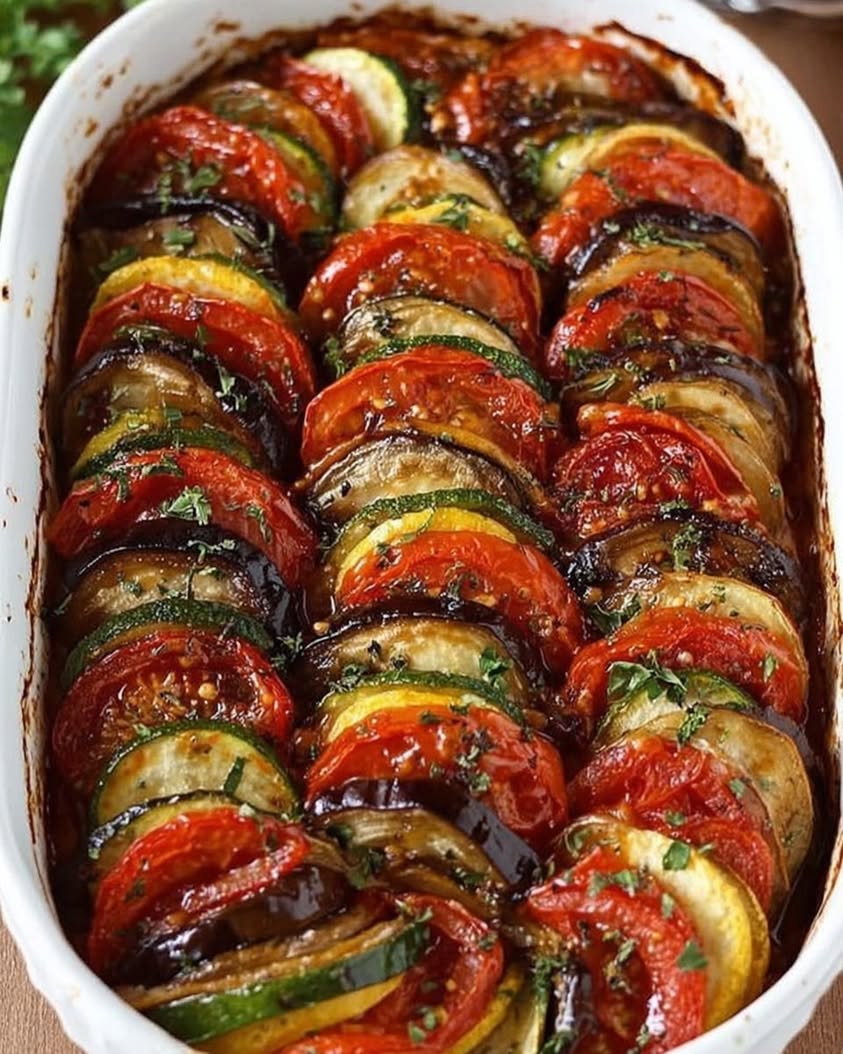
The Ultimate Baked Ratatouille with Tomatoes, Zucchini, and Eggplant: A Provencal Summer Classic
This Baked Ratatouille with Tomatoes, Zucchini, and Eggplant is the epitome of summer comfort food. You will find that the magic of this dish lies in its simplicity and the incredible flavor that develops as the vegetables meld together in the oven. Each bite offers a burst of sweetness from blistered tomatoes, the creamy tenderness of slow-roasted eggplant, and the subtle earthiness of zucchini, all bound together by a rich, herby tomato sauce. This is not just a side dish; it is a main course that celebrates the peak of the season’s harvest.
For those who believe that a classic ratatouille requires hours of stovetop stirring, this baked version offers a liberating alternative. We have streamlined the process without sacrificing a single note of flavor. Simply slice your vegetables, layer them in a baking dish with a fragrant tomato base, and let the oven work its magic. The result is a deeply satisfying, rustic dish that fills your kitchen with the aromas of Provence. This Baked Ratatouille with Tomatoes, Zucchini, and Eggplant is forgiving, foolproof, and absolutely delicious.
The beauty of this specific method is in how it concentrates the natural sugars in the vegetables. Instead of a mushy stew, you get tender, carmelized pieces that retain their individual character. The vibrant colors of the dish also make it a spectacular centerpiece for any table. Whether you serve it warm with crusty bread, cold as a salad, or alongside grilled fish or chicken, this recipe is destined to become a staple in your home. We will guide you through every step so you can achieve perfect results every time.
Quick Recipe Highlights
- Flavor Profile: The taste is a harmonious balance of sweet, savory, and herbaceous elements. The tomatoes provide a bright acidity that cuts through the richness of the eggplant, while the zucchini offers a mild, slightly sweet counterpoint. From the herbes de Provence to the garlic, every component contributes to a complex yet approachable flavor symphony.
- Texture: We achieve a perfect textural contrast here. The bottom layer is a luscious, jammy tomato sauce, while the top remains beautifully intact with tender but not mushy vegetables. The roasted edges of the zucchini and eggplant offer a slight chewiness that complements the soft interior of the dish. You will experience a satisfying mouthfeel with every forkful.
- Aroma: The aroma of this dish is absolutely intoxicating. As it bakes, the essential oils from the garlic and herbs mingle with the sweet perfume of roasting tomatoes and caramelizing onions. Your entire home will fill with the welcoming, earthy, and slightly sweet scent of a Provencal kitchen. It is an aroma that promises warmth and deep, satisfying flavor.
- Visual Appeal: This recipe creates a stunning visual presentation. The vibrant red of the tomatoes contrasts beautifully with the deep purple of the eggplant and the bright green of the zucchini. The golden-brown caramelization on the edges adds a rustic touch. This dish is a feast for the eyes, making it perfect for dinner parties or a special family meal.
- Skill Level Needed: This recipe is classified as easy and is perfect for beginner cooks. There are no complicated techniques like flambéing or making a roux. The most challenging part is slicing the vegetables evenly, which is a simple knife skill. This Baked Ratatouille with Tomatoes, Zucchini, and Eggplant is a wonderful project for anyone learning to cook.
- Special Equipment: You will only need a few basic kitchen tools for this recipe. A sharp chef’s knife and a sturdy cutting board are essential for preparing the vegetables. You will also need a large, shallow baking dish, preferably a 9×13 inch ceramic or glass dish, to ensure even cooking. Lastly, a mixing bowl and a spoon for the tomato sauce are necessary.
Recipe Overview
- Difficulty Level: We have rated this recipe as easy because it relies on straightforward techniques and simple ingredients. The oven does most of the work for you, eliminating the need for constant stirring or precise temperature control. Even if you are a novice cook, you can confidently prepare this dish. The steps are intuitive and forgiving, making it a great choice for a relaxed weekend meal or a stress-free weeknight dinner.
- Category: This dish fits perfectly into several meal categories. It works wonderfully as a hearty main course for lunch or dinner when served with crusty bread and a green salad. It can also be a spectacular side dish for grilled meats, fish, or tofu. Additionally, it makes a fantastic appetizer when spooned onto crostini or served as a component of a mezze platter.
- Cuisine: This Baked Ratatouille with Tomatoes, Zucchini, and Eggplant is a cornerstone of Provencal cuisine from the South of France. This culinary tradition emphasizes fresh, seasonal vegetables, aromatic herbs, and simple, rustic preparations. The dish reflects the sun-drenched landscape of the region, celebrating the bounty of the summer garden. It is a testament to the philosophy that great food comes from quality ingredients, not complicated techniques.
- Cost: The ingredients for this recipe are remarkably cost-effective, especially during the summer months. Eggplant, zucchini, and tomatoes are generally inexpensive, and you can often find them on sale at farmers’ markets. Canned tomatoes and dried herbs are pantry staples with a low per-serving cost. Overall, this is a budget-friendly way to create a gourmet-tasting meal for your family. You can feed six people for a very small investment.
- Season: The absolute best time to prepare this recipe is during the peak of summer, from July through September. This is when tomatoes, zucchini, and eggplant are at their most flavorful, sweet, and affordable. Using in-season produce will dramatically elevate the quality of your finished dish. However, you can still make a very good version in the winter by using high-quality canned tomatoes and sourcing firm, fresh vegetables from the grocery store.
- Occasion: This dish is wonderfully versatile for a wide range of occasions. It is perfect for a casual summer barbecue or a potluck dinner, as it travels well and tastes great at room temperature. It also makes an elegant and impressive vegetarian centerpiece for a dinner party. You can even prepare it for a simple, nourishing weeknight meal that feels special without requiring hours of work.
Why You Will Love This Recipe
First and foremost, the taste and texture of this dish are simply outstanding. The sweet, jammy tomatoes and the tender, creamy eggplant create a luxurious mouthfeel, while the zucchini adds a pleasant bite. The flavors meld together perfectly, creating a dish that is greater than the sum of its parts. It is a comforting and satisfying meal that appeals to both vegetarians and meat-eaters alike. The deep, savory notes will leave you feeling completely content.
Secondly, the convenience and preparation benefits are a major draw. After a quick 20-minute prep session, you can walk away and let the oven do the work. There is no standing over a hot stove or monitoring a simmering pot. This hands-off approach frees up your time to do other things, like set the table or spend time with your guests. It is the perfect recipe for a busy weekday when you want a home-cooked meal without the stress.
From a nutritional standpoint, this Baked Ratatouille with Tomatoes, Zucchini, and Eggplant is a powerhouse of vitamins and fiber. Eggplant is packed with antioxidants, zucchini is low in calories and high in water content, and tomatoes are a fantastic source of lycopene. This dish is naturally low in fat and calories, making it a guilt-free option for those watching their weight. You are eating a rainbow of vegetables, which is excellent for your overall health. It is a delicious way to meet your daily vegetable goals.
Furthermore, this recipe offers incredible social and entertaining value. It is a stunning dish to present to guests, with its vibrant colors and rustic elegance. It pairs beautifully with a wide variety of wines and other dishes, making it a versatile addition to any menu. Because it can be made ahead of time, it removes the stress of last-minute cooking during a party. Your guests will be impressed by the depth of flavor and your seemingly effortless preparation.
Finally, the cost-effectiveness and accessibility of this recipe cannot be overstated. You are using simple, inexpensive ingredients that are available in almost any grocery store. This makes it a perfect choice for feeding a crowd on a budget. Additionally, the recipe is highly adaptable; you can swap out vegetables based on what you have on hand. This combination of affordability, convenience, and incredible flavor ensures you will return to this recipe time and time again.
Historical Background and Cultural Significance
The origins of ratatouille are deeply rooted in the peasant cooking of Provence, a region in southeastern France. The name itself comes from the French word “touiller,” meaning “to stir,” and the Occitan “ratatolha,” which refers to a simple stew. Originally, it was a humble dish created by farmers to use up the abundance of summer vegetables from their gardens. It was a practical, economical meal that made the most of the seasonal harvest, and it did not require expensive ingredients like meat or imported spices. This practical origin is key to its enduring appeal.
Culturally, ratatouille holds a significant place in French culinary identity. It represents the “cuisine du terroir,” or the cooking of the land, which emphasizes local, seasonal, and rustic ingredients. It is a symbol of the Provencal way of life, which values simplicity, quality, and the enjoyment of food with family and friends. The dish is celebrated at festivals and in homes across the region, and it is a source of regional pride. A proper ratatouille is a mark of a good home cook in Provence, and it is often passed down through generations.
The evolution of the recipe has seen it move from a simple peasant stew to a sophisticated culinary classic. In the 20th century, chefs like Auguste Escoffier began to refine the dish, often cooking the vegetables separately to preserve their individual textures and flavors before combining them. This is a key debate in the culinary world: the “ratatouille à la provençale” (mixed together and stewed) versus the “ratatouille niçoise” (cooked separately then layered). Our baked version takes inspiration from both, offering a simpler method that still yields excellent results. The 2007 Disney film “Ratatouille” further propelled the dish into the global spotlight, introducing it to a new generation.
Regional variations of the dish are plentiful across the Mediterranean. In Italy, a similar dish called “ciambotta” uses a wider variety of vegetables like bell peppers and potatoes. In Spain, “pisto manchego” is a similar vegetable stew that often includes eggs and cured ham. Greece has “briam,” a layered baked vegetable dish that is very close to our own. Each variation reflects the local produce and culinary traditions of its region. This demonstrates how a simple concept “baked vegetables with herbs” can be adapted and celebrated in countless delicious ways.
Ingredient Deep Dive
Eggplant: The eggplant, or aubergine, has a long and storied history, originating in India and spreading to the Middle East and Europe through trade routes. It was initially met with suspicion in Europe due to its relation to the nightshade family, but it eventually became a staple in Mediterranean cuisine. Nutritionally, eggplant is low in calories and a good source of dietary fiber, potassium, and vitamin B1. Its spongy texture makes it perfect for absorbing the flavors of the tomato sauce and herbs. When selecting eggplant, look for ones that are firm, heavy for their size, and have smooth, shiny skin without blemishes. To store, keep it in a cool, dry place or the crisper drawer of your refrigerator for up to a week. A good substitution for eggplant is large portobello mushroom caps, which offer a similar meaty texture, or even firm yellow squash.
Zucchini: Zucchini, a summer squash native to the Americas, was developed in Italy in the 19th century and quickly became a favorite across Europe. It is incredibly versatile and grows prolifically, often ending up as a gift from gardeners to their neighbors. This vegetable is an excellent source of vitamin C, manganese, and antioxidants. Its high water content makes it light and refreshing, providing a beautiful contrast to the denser eggplant. When shopping for zucchini, choose ones that are small to medium in size, as they will be more tender and have fewer seeds. The skin should be firm, glossy, and free of soft spots. Store them in a plastic bag in the refrigerator for up to a week. If you need a substitute, yellow summer squash is an almost perfect swap, or you can use sliced bell peppers for a different texture and flavor profile.
Tomatoes: The tomato, another native of the Americas, was introduced to Europe by Spanish explorers in the 16th century and initially used as a decorative plant. It was only later that its culinary potential was fully realized, particularly in Italian and Provencal cooking. They are a powerhouse of nutrition, especially rich in lycopene, a powerful antioxidant linked to heart health and cancer prevention. For the best flavor in this dish, use ripe, in-season Roma or San Marzano tomatoes for their meaty texture and low seed count. When out of season, high-quality canned San Marzano tomatoes are a superior alternative to bland, pale fresh ones. Store fresh tomatoes at room temperature away from direct sunlight. Never refrigerate them, as this destroys their flavor and texture. A suitable substitute for fresh tomatoes in this recipe is a 28-ounce can of whole, peeled tomatoes, crushed by hand.
Common Mistakes to Avoid
- Not salting the eggplant is a common pitfall. This step is crucial for drawing out excess moisture and any potential bitterness. If you skip this, your ratatouille may end up watery and less flavorful.
- Using unripe, out-of-season vegetables is another frequent error. Hard, pale tomatoes and overly large, seedy zucchini will result in a bland and watery dish. Always try to use the best produce you can find.
- Cutting the vegetables into uneven slices leads to inconsistent cooking. Some pieces will be overcooked and mushy while others remain underdone. Aim for uniform, half-inch thick rounds for even results.
- Overcrowding the baking dish will steam the vegetables instead of roasting them. This prevents caramelization and results in a watery, mushy texture. A single layer, or slightly overlapping, is best for achieving that desirable roasted edge.
- Skipping the initial saute of the aromatics is a missed opportunity for flavor. Cooking the onion and garlic in olive oil before adding the tomatoes builds a rich, flavorful base that is critical to the dish’s depth.
- Using a baking dish that is too small is a problem. The vegetables need enough space to roast and release their moisture. A shallow, wide dish is much better than a deep, narrow one.
- Adding too much liquid is a common mistake. The vegetables will release a significant amount of water as they cook, so you need to start with a relatively thick tomato sauce. Adding extra liquid will create a soup.
- Neglecting to season each layer properly will result in a flat-tasting dish. Be sure to season the tomato sauce, then sprinkle the layered vegetables with salt, pepper, and herbs. Layering flavor is essential for a memorable result.
Essential Techniques
Salting the Eggplant: This technique is vital for achieving the perfect texture in your ratatouille. By sprinkling the sliced eggplant with salt and letting it sit for 20-30 minutes, you draw out excess moisture and any bitter compounds. This step concentrates the eggplant’s flavor and prevents your finished dish from becoming watery. To master it, simply lay the slices in a colander over a bowl, sprinkle generously with salt, and let them sweat. After the time is up, you will see beads of moisture on the surface. Rinse the slices thoroughly and pat them completely dry with paper towels. A common pitfall is not rinsing off the salt, which can make the dish too salty. The visual cue for success is the appearance of the moisture beads and the slices becoming slightly more pliable.
Building the Tomato Base: Creating a flavorful tomato sauce is the foundation of this dish. Begin by sweating finely diced onion and minced garlic in a generous amount of good olive oil. Cook them until they are soft and translucent, not browned. Then, add your crushed tomatoes and allow them to cook down and thicken slightly. This process concentrates the tomato flavor and melds the aromatics. Common pitfalls are burning the garlic or not cooking the sauce long enough. The visual cue for a well-built base is a sauce that has darkened slightly in color and is thick enough to hold its shape on a spoon. This base will be the bed upon which your vegetables rest.
Layering for Even Cooking: How you arrange the vegetables in the baking dish directly impacts the final result. Start by spreading the thickened tomato sauce evenly across the bottom. Then, arrange your sliced zucchini and eggplant in overlapping concentric circles or in neat rows. This is not just for presentation; it ensures that each slice is in direct contact with the sauce and the heat of the dish, promoting even cooking. A common pitfall is piling the vegetables too high, which leads to steaming. The visual cue for success is a single, beautiful layer of vegetables that covers the entire surface of the sauce. This arrangement guarantees that every slice is perfectly tender.
Pro Tips for Perfect Baked Ratatouille with Tomatoes, Zucchini, and Eggplant
For the best results, use a mandoline slicer to achieve perfectly uniform vegetable slices. This guarantees even cooking and a beautiful presentation. It is a small investment that makes a huge difference in the final dish.
Do not be shy with the olive oil. It is a crucial ingredient that adds richness and helps the vegetables caramelize beautifully. You need enough to coat the bottom of the pan and to lightly dress the vegetables before baking.
Consider adding a layer of thinly sliced red bell pepper between the eggplant and zucchini. It adds a sweet, slightly smoky flavor and a beautiful pop of red that enhances the visual appeal of the dish.
To elevate the herbaceous flavor, add a couple of sprigs of fresh thyme and a bay leaf to the tomato sauce as it simmers. Remove them before layering the vegetables. This infuses the base with a more delicate, aromatic quality.
If you want a slightly firmer texture in your vegetables, you can par-roast them separately for 10 minutes before layering. This is a classic French technique that ensures each vegetable retains its individual character. It adds a step, but it is worth the effort.
Allow the ratatouille to rest for at least 15 minutes after it comes out of the oven. This resting period allows the juices to be reabsorbed, making the dish less watery and easier to serve. It also allows the flavors to fully meld together.
For an extra layer of flavor, you can sprinkle a generous amount of freshly grated Parmesan cheese or vegan nutritional yeast over the top of the vegetables during the last 10 minutes of baking. This creates a savory, golden-brown crust that is delicious.
Variations and Adaptations
Regional Variations: For a Niçoise-style ratatouille, cook each vegetable separately in a pan before combining them for a final simmer. This preserves their distinct textures. For a more rustic Provencal version, feel free to chop the vegetables into chunks instead of slices for a heartier, stew-like consistency. You can also include diced potatoes or green beans to make it more filling, as is done in some southern Italian variations of the dish.
Seasonal Adaptations: In the fall, you can swap out some of the zucchini for butternut squash or pumpkin for a sweeter, earthier flavor profile. In the spring, add some fresh asparagus spears and peas for a vibrant twist. During the winter, rely on high-quality canned tomatoes and sturdy vegetables like celeriac and carrots. You can also add a pinch of smoked paprika or a dash of red pepper flakes to warm up the flavors when summer produce is scarce.
Dietary Modifications: This dish is naturally gluten-free and vegan, making it suitable for a wide range of dietary needs. For a low-carb or keto version, simply omit the onions and use a smaller amount of tomatoes, which are slightly higher in carbs. You can add more zucchini and eggplant to compensate. For a higher protein version, you can nestle some cooked chickpeas or white beans into the sauce before layering the vegetables.
Flavor Variations: Experiment with different herb combinations. Try using fresh basil and oregano for a more Italian flavor, or add a pinch of saffron and cumin for a North African twist. For a slightly spicy kick, include a finely chopped chili pepper or a sprinkle of red pepper flakes in the aromatic base. A splash of balsamic vinegar or a teaspoon of capers can add a wonderful tangy complexity to the final dish.
Texture Modifications: If you prefer a smoother, more uniform texture, you can blend a portion of the finished ratatouille and stir it back into the whole vegetables. This creates a thicker, more cohesive sauce. For a crispier topping, you can finish the dish under the broiler for a few minutes, watching it closely to prevent burning. Alternatively, you can top the vegetables with a layer of crunchy breadcrumbs tossed in olive oil and herbs.
Presentation Alternatives: Instead of layering in a large dish, you can serve individual portions by layering the vegetables in small ramekins or mini gratin dishes. This makes for a stunning individual presentation at a dinner party. You can also serve the ratatouille as a topping for bruschetta, inside a baked potato, or as a filling for a savory crepe or omelet.
Serving and Presentation Guide
For plating techniques, serve the ratatouille family-style in its baking dish for a rustic and inviting look. Alternatively, gently spoon a generous portion onto a warm plate, using a slotted spoon to leave excess liquid behind. For a more polished look, you can carefully lift out a few slices of each vegetable and arrange them in a neat stack. The key is to showcase the beautiful, colorful layers.
Garnishing ideas are simple but effective. A drizzle of high-quality extra virgin olive oil just before serving adds a fresh, peppery finish. A sprinkle of fresh basil or flat-leaf parsley provides a bright, herbal note and a pop of green. For a final touch of elegance, add a few flakes of sea salt, like fleur de sel, which will create a pleasant crunch and burst of flavor.
Traditional accompaniments for ratatouille include crusty French bread for soaking up the delicious juices. It is also a classic side dish for grilled or roasted meats like lamb, chicken, or fish. A simple green salad with a vinaigrette dressing is a perfect light contrast to the rich, savory vegetable dish. It is often served with rice, couscous, or polenta to make it a complete meal.
Modern serving suggestions are plentiful. Spoon it over creamy goat cheese on toast for a fantastic appetizer. Use it as a filling for a hearty sandwich or a topping for a grain bowl. It can also be blended into a smooth soup or used as a sauce for pasta. The versatility of this Baked Ratatouille with Tomatoes, Zucchini, and Eggplant is one of its greatest strengths.
Temperature considerations are important. This dish is excellent served warm, but it is also incredibly delicious at room temperature, which allows the flavors to fully develop. Cold ratatouille makes a great salad. This makes it a perfect make-ahead dish for picnics and potlucks. You can serve it at any temperature from just out of the oven to straight from the refrigerator.
Portion control tips are straightforward. As a main course, one cup of ratatouille is a generous serving. As a side dish, half a cup is a standard portion. This recipe, which yields about six cups, can easily be adjusted to feed more people by doubling the ingredients. It is a very forgiving dish that scales up well without requiring major adjustments to the cooking time.
Wine and Beverage Pairing
For wine pairings, a light to medium-bodied red wine is an excellent choice. A classic Côtes du Rhône or a young Grenache from the South of France is a natural and perfect match. The herbal notes in the wine will complement the herbes de Provence in the dish. A chilled Beaujolais or a Pinot Noir from the Loire Valley also works beautifully, with their bright acidity cutting through the richness of the vegetables.
Non-alcoholic alternatives are just as delightful. A crisp, dry sparkling water with a squeeze of lemon or lime is a refreshing palate cleanser. A strong, herbal iced tea, like a mint or hibiscus tea, provides a lovely, aromatic counterpoint to the savory flavors. A simple tomato juice or a Clamato juice, slightly spiced with Worcestershire sauce and a dash of hot sauce, is a bold and savory complement to the dish itself.
Coffee and tea pairings are less traditional but still possible. A light, floral green tea, such as a Jasmine or Sencha, would not overpower the delicate flavors of the vegetables. For a richer pairing, a dark roast coffee with notes of chocolate and nuts can provide a grounding contrast. These are not the most common pairings, but they can work well if you are serving the ratatouille as part of a larger brunch or dinner spread.
Temperature considerations are crucial for wine. Red wines should be served slightly chilled, around 55-60 degrees Fahrenheit, to keep them refreshing. White wines, if you choose one, should be well-chilled. For non-alcoholic beverages, serving them ice-cold is always a safe bet, especially on a hot summer day when you are serving this dish. Always taste your beverage alongside a bite of the food to assess the harmony.
Serving suggestions for beverages are simple. For a casual meal, a carafe of water and a bottle of wine on the table is perfect. For a more formal dinner, you can offer a specific wine pairing with each course. Regardless of the setting, always have a non-alcoholic option available. Serving the beverage in a nice glass enhances the overall dining experience and shows that you have put thought into every detail.
Storage and Shelf Life
Storage methods are straightforward for this dish. After the ratatouille has cooled completely to room temperature, transfer it to an airtight container. It is important to avoid leaving it out for more than two hours to prevent bacterial growth. The container you choose should be just large enough to hold the ratatouille with minimal headspace to prevent excess air from drying it out. Glass or BPA-free plastic containers work best.
Temperature requirements are for refrigeration. Store your leftover ratatouille in the refrigerator at a constant temperature of 40 degrees Fahrenheit or below. The high water content of the vegetables means it is susceptible to spoilage if not kept cold. It is best to place the container in the back of the fridge where the temperature is most stable, rather than in the door where it fluctuates.
Container recommendations focus on minimizing air exposure. A container with a tight-fitting, airtight seal is non-negotiable. You can also press a piece of plastic wrap directly onto the surface of the ratatouille before sealing the lid. This creates a barrier that prevents moisture from escaping and prevents it from absorbing odors from other foods in your refrigerator, like onions or garlic.
Signs of spoilage are easy to spot. The most obvious sign is a sour or off-putting smell. Visually, look for any mold growth, which can appear as fuzzy spots of green, white, or black. A change in texture, such as a slimy film on the surface of the vegetables, is another clear indicator. If you see or smell any of these signs, it is best to discard the entire dish to be safe.
Reheating instructions are simple for the best results. The best method is to reheat the ratatouille gently on the stovetop over medium-low heat, stirring occasionally. You can also reheat it in a 350-degree Fahrenheit oven until warmed through, which helps retain the texture of the vegetables. Microwaving is the fastest option but can make the vegetables a bit mushy. If using a microwave, use medium power and stir halfway through.
Freezing guidelines are excellent for this dish. This ratatouille freezes very well. Allow it to cool completely, then portion it into freezer-safe bags or containers. It will keep for up to three months. When you are ready to use it, thaw it overnight in the refrigerator. The texture may be slightly softer after thawing, but the flavor will remain superb. This makes it a fantastic meal prep option for busy weeks.
Make Ahead Strategies
Prep timeline is crucial for a stress-free experience. You can prepare the entire tomato base and slice the vegetables up to 24 hours in advance. Keep the sauce and the sliced, salted vegetables in separate airtight containers in the refrigerator. The eggplant should be rinsed and dried before storing. When you are ready to bake, simply layer the dish and put it in the oven. This saves you a significant amount of time on the day of serving.
Storage between steps is important to maintain quality. The tomato sauce can be stored in the refrigerator for up to three days before using. The sliced vegetables are best prepared and stored within 24 hours to prevent them from oxidizing and losing their vibrant color. Always wrap the sliced zucchini tightly in plastic wrap or a damp paper towel inside a bag to keep them from drying out. The eggplant should be stored in a single layer between paper towels to absorb any excess moisture.
Quality impact assessment is positive for most steps. The flavor of the ratatouille actually improves after a day or two in the refrigerator as the ingredients meld together. Prepping the sauce and slices ahead of time has virtually no negative impact on the final dish. However, pre-baking the entire dish and then reheating it is also an excellent strategy. The texture remains very good, and the flavors are even more developed.
Assembly tips for make-ahead include not adding any fresh herbs until just before baking. Herbs like basil can wilt and lose their flavor if they sit for too long. If you are layering the dish a few hours before baking, keep the assembled dish covered with foil in the refrigerator. Take it out of the fridge about 30 minutes before baking to take the chill off. This ensures more even cooking.
Reheating guidelines for a fully baked, make-ahead dish are simple. To reheat the entire dish, place it in a 350-degree Fahrenheit oven, covered with foil, for 20-30 minutes. Remove the foil for the last 5 minutes to crisp up the top. For individual portions, the stovetop or microwave are perfectly fine options. The goal is to heat it through without drying it out.
Fresh element additions are a great way to brighten up the dish when serving. Just before serving, drizzle the reheated ratatouille with a little fresh, high-quality extra virgin olive oil. Sprinkle with a handful of fresh, torn basil or chopped parsley. You can also add a final grating of Parmesan cheese or a squeeze of fresh lemon juice to add a burst of freshness that refreshes the dish after reheating.
Scaling Instructions
Halving the recipe is very easy to do. Simply cut all of the ingredient quantities in half. You will then need to use a smaller baking dish, such as an 8×8 inch square pan, to ensure the vegetables are still in a single, even layer. The cooking time will be slightly shorter, so start checking for doneness around the 35-minute mark. The same flavor principles apply, just on a smaller scale.
Doubling or tripling the recipe is straightforward for feeding a crowd. You will need a much larger baking vessel, such as a half-sheet pan or two 9×13 inch dishes. The key is to avoid overcrowding. Use multiple dishes if necessary. The cooking time may increase slightly, but you should primarily check for visual cues like the vegetables being tender and the sauce bubbling.
Equipment adjustments are necessary when scaling. For a single batch, a 9×13 inch dish is perfect. For a double batch, you will want two separate 9×13 inch dishes or a large roasting pan. Using one very large, deep pan will lead to uneven cooking and a mushy texture due to the extra moisture. You need surface area for the liquid to evaporate and for the vegetables to caramelize.
Timing modifications are important for scaled batches. A single batch takes about 45 minutes in the oven. For a double batch, check for doneness at around 50-60 minutes. The best way to know is to insert a knife into the center of the dish; it should slide through the thickest part of the eggplant with little resistance. The sauce should be bubbling vigorously around the edges of the dish.
Storage considerations for scaled batches are significant. A large quantity of ratatouille will take a long time to cool to room temperature. It is best to portion it into smaller, shallow containers to speed up the cooling process before refrigerating. This is a critical food safety step to prevent the growth of bacteria. Never put a large, hot pot of food directly into the refrigerator.
Nutritional Deep Dive
Macro breakdown for this dish is very favorable. It is naturally low in calories, fat, and protein, and it is a good source of carbohydrates from the vegetables themselves. The olive oil contributes healthy monounsaturated fats, which are beneficial for heart health. A typical serving contains approximately 150-200 calories, depending on the amount of oil used. This makes it a light yet satisfying option for any meal.