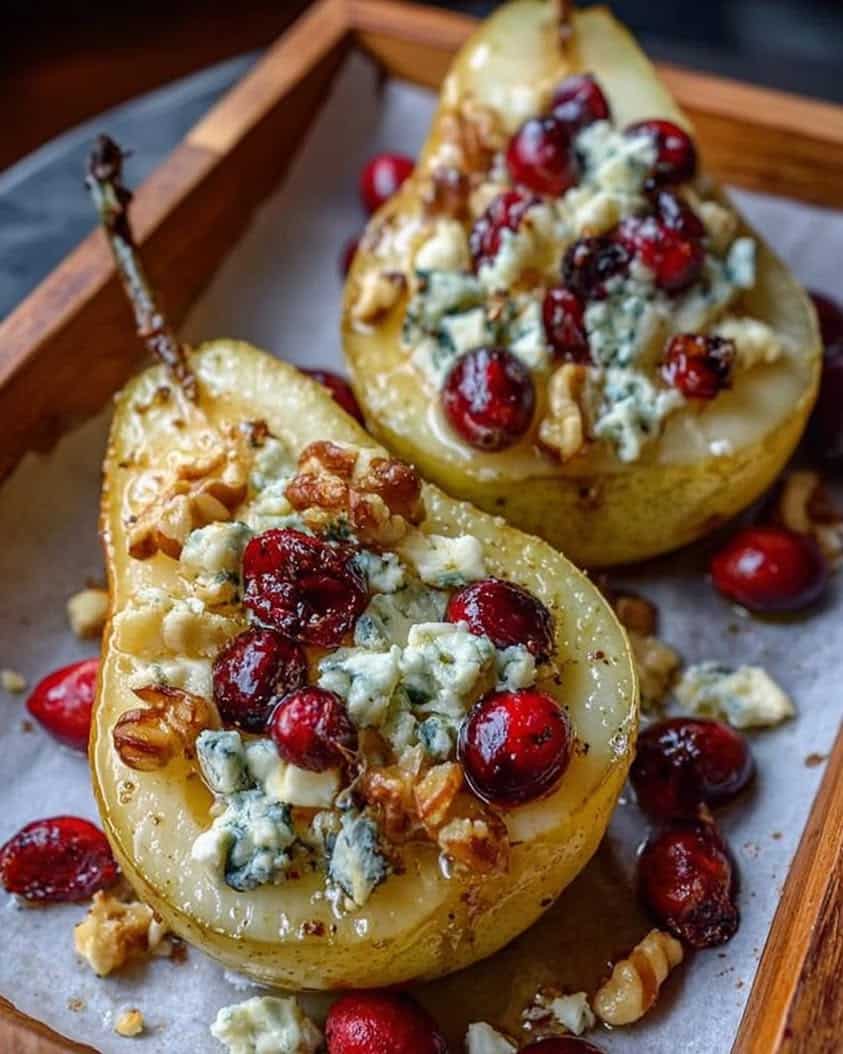
Baked Pears with Cranberries, Honey, Walnuts and Blue Cheese: An Elegant Seasonal Dessert
Baked Pears with Cranberries, Honey, Walnuts and Blue Cheese bring together sweet, savory, and tangy flavors in one stunning dish. When you slice into a warm, tender pear and taste the creamy blue cheese melting into the honey, you experience a moment of pure culinary joy. This recipe transforms simple ingredients into something that feels fancy enough for a dinner party yet easy enough for a cozy weeknight treat.
The natural sweetness of ripe pears deepens as they roast in the oven. Meanwhile, the tart cranberries burst with bright flavor, and the toasted walnuts add a satisfying crunch. A drizzle of golden honey ties everything together, while the blue cheese introduces a bold, creamy contrast that keeps every bite interesting. Whether you serve this as a dessert, an appetizer, or a side dish, Baked Pears with Cranberries, Honey, Walnuts and Blue Cheese will impress anyone at your table.
Many home cooks shy away from recipes that seem too elegant or complicated. However, this dish requires only basic kitchen skills and a handful of accessible ingredients. If you can slice a pear and turn on an oven, you can make this recipe. Additionally, the entire process takes under an hour from start to finish. Consequently, Baked Pears with Cranberries, Honey, Walnuts and Blue Cheese fits beautifully into busy schedules without sacrificing elegance or flavor.
Quick Recipe Highlights
- Flavor Profile: The combination of sweet honey, tart cranberries, earthy walnuts, and pungent blue cheese creates a complex flavor experience. Each ingredient balances the others perfectly. As a result, no single element overpowers the dish.
- Texture: Soft, juicy pear flesh contrasts beautifully with crunchy walnuts and creamy blue cheese. The cranberries add a pleasant pop when you bite into them. Therefore, every spoonful delivers a satisfying range of textures.
- Aroma: Warm cinnamon and honey fill your kitchen as the pears roast. The nutty scent of toasted walnuts adds depth to the aroma. Consequently, the smell alone makes your mouth water before the first bite.
- Visual Appeal: Golden-brown pears nestled among ruby-red cranberries create a gorgeous presentation. Crumbled blue cheese adds a lovely marbled look on top. Furthermore, a final drizzle of honey gives the dish a glossy, inviting finish.
- Skill Level Needed: This recipe suits beginners and experienced cooks alike. You need only basic knife skills and the ability to operate an oven. Thus, anyone can create a restaurant-quality dish at home.
- Special Equipment: A sharp paring knife makes coring the pears much easier. You also need a baking dish that holds all six pear halves comfortably. Additionally, a small skillet helps toast the walnuts evenly.
Recipe Overview
- Difficulty Level: This recipe earns an easy rating because it involves minimal prep work and straightforward steps. You simply prepare the pears, combine the filling ingredients, and bake. Furthermore, the oven does most of the work for you. Even a first-time cook can master Baked Pears with Cranberries, Honey, Walnuts and Blue Cheese without stress.
- Category: You can serve this dish as a dessert, an appetizer, or a side dish alongside roasted meats. It works wonderfully as a light ending to a heavy meal. Additionally, many people enjoy it as part of a brunch spread.
- Cuisine: This recipe draws inspiration from European culinary traditions, particularly French and Italian cooking. Both cultures prize the combination of fruit, cheese, and nuts. Over time, American cooks have embraced this flavor pairing and added their own touches. Consequently, Baked Pears with Cranberries, Honey, Walnuts and Blue Cheese represents a beautiful fusion of Old World elegance and New World ingredients.
- Cost: The ingredients for this recipe cost approximately twelve to eighteen dollars total, depending on seasonal availability. Pears and cranberries are relatively inexpensive, especially in autumn. Blue cheese and walnuts represent the priciest components. Nevertheless, the overall cost per serving remains quite reasonable.
- Season: Fall and winter provide the ideal time to make this dish because pears and cranberries reach peak freshness. The warm, comforting flavors suit cooler weather perfectly. However, you can find decent pears year-round, so this recipe works in any season.
- Occasion: This dish shines at holiday gatherings, dinner parties, and intimate date nights. It also works well for Thanksgiving or Christmas celebrations. Moreover, you can bring it to potlucks because it travels easily and looks impressive.
Why You Will Love This Recipe
First and foremost, the taste of Baked Pears with Cranberries, Honey, Walnuts and Blue Cheese delivers pure indulgence. The sweetness of the honey-soaked pears melts in your mouth. Simultaneously, the tangy blue cheese cuts through that sweetness with a bold, savory note. The cranberries add brightness, and the walnuts provide crunch. Consequently, your taste buds experience a symphony of flavors that keeps you coming back for more.
Secondly, this recipe offers incredible convenience. You need only fifteen minutes of hands-on preparation before the oven takes over. While the pears bake, you can set the table, pour drinks, or relax. Furthermore, cleanup requires just a few dishes and utensils. As a result, Baked Pears with Cranberries, Honey, Walnuts and Blue Cheese makes entertaining feel effortless.
Thirdly, this dish provides solid nutritional value. Pears deliver fiber and vitamin C, while walnuts supply healthy omega-3 fatty acids. Cranberries add antioxidants that support immune health. Although blue cheese and honey contain fat and sugar, you use them in moderate amounts. Therefore, you can feel good about serving this recipe to your family and friends.
Fourthly, this recipe creates a wonderful social experience. When you place a beautiful baking dish of warm pears on the table, guests immediately take notice. The inviting aroma draws everyone in, and the stunning presentation sparks conversation. Additionally, the communal nature of sharing such a dish builds connection and warmth among diners. Thus, Baked Pears with Cranberries, Honey, Walnuts and Blue Cheese becomes more than food; it becomes a memory.
Finally, this recipe proves remarkably cost-effective. You do not need expensive cuts of meat or exotic imported ingredients. Instead, humble pears, cranberries, and walnuts form the foundation. The blue cheese adds a touch of luxury without breaking the bank. Consequently, you can serve an elegant dish that impresses guests while staying within your grocery budget.
Historical Background and Cultural Significance
The practice of baking fruit with honey and nuts dates back to ancient Rome. Wealthy Romans enjoyed pears poached in honey and wine, often served with cheese. This combination of sweet fruit and savory cheese became a hallmark of Roman banquets. Consequently, the roots of Baked Pears with Cranberries, Honey, Walnuts and Blue Cheese stretch back thousands of years.
During the Middle Ages, European cooks continued the tradition of pairing fruit with cheese and nuts. Monasteries often cultivated pear trees and kept bees for honey. Monks and nuns prepared baked pears as a simple yet nourishing treat. Additionally, the addition of nuts provided protein and healthy fats, making the dish more filling. Therefore, this recipe evolved as both a practical and pleasurable food.
Cranberries entered the picture much later when European settlers encountered them in North America. Native American tribes had used cranberries for centuries in pemmican and other foods. Settlers quickly recognized the tart berry’s potential and began incorporating it into their cooking. Consequently, the marriage of European baked pears with native cranberries created a uniquely American twist on an old-world classic.
Today, Baked Pears with Cranberries, Honey, Walnuts and Blue Cheese appears on menus at fine restaurants and home tables alike. Chefs appreciate its versatility and visual appeal. Home cooks love its simplicity and impressive results. Furthermore, the dish adapts easily to different seasons and dietary needs. Thus, this recipe continues to evolve while honoring its rich historical roots.
Ingredient Deep Dive
Pears have been cultivated for over four thousand years, originating in regions of Europe and Asia. Ancient Greeks and Romans prized pears for their sweetness and versatility. Today, dozens of varieties grow worldwide, each with unique characteristics. Furthermore, pears symbolize abundance and longevity in many cultures.
Nutritionally, pears deliver impressive benefits. One medium pear provides about six grams of fiber, which supports digestive health. Additionally, pears contain vitamin C, vitamin K, and potassium. Because of their high fiber content, pears promote feelings of fullness and help regulate blood sugar. Therefore, pears make an excellent choice for health-conscious eaters.
When selecting pears for baking, choose firm varieties like Bosc or Anjou. These hold their shape well during roasting. Avoid very ripe or soft pears, as they turn mushy in the oven. Look for pears with smooth skin and no soft spots or bruises. Consequently, proper selection ensures the best texture in your finished dish.
Store pears at room temperature until they reach desired ripeness. Once ripe, move them to the refrigerator to extend their shelf life. You can keep firm pears refrigerated for up to several weeks. However, check them regularly for signs of spoilage. If you need a substitute, apples work beautifully in place of pears.
Cranberries hold deep cultural significance in North America. Native American tribes used cranberries for food, medicine, and dye. They also incorporated the berry into ceremonies and trade. When European settlers arrived, they learned about cranberries from indigenous peoples. Consequently, the berry became a staple of American cuisine.
These tiny red berries pack a powerful nutritional punch. Cranberries overflow with antioxidants, particularly proanthocyanidins, which help prevent urinary tract infections. They also provide vitamin C and fiber. Furthermore, cranberries support heart health and may reduce inflammation. As a result, adding cranberries to your diet offers numerous benefits.
Select fresh cranberries that feel firm and have a deep red color. Avoid berries that appear shriveled, soft, or discolored. During peak season, you can find fresh cranberries at most grocery stores. However, frozen cranberries work just as well in this recipe. Simply use them straight from the freezer without thawing.
Store fresh cranberries in the refrigerator for up to several weeks. For longer storage, freeze them in an airtight bag for up to a year. If you need a substitute, dried cranberries work in a pinch, though reduce the honey slightly. Additionally, tart cherries or raspberries offer similar tangy notes.
Honey represents one of the oldest sweeteners known to humanity. Ancient civilizations used honey for food, medicine, and religious rituals. Bees produce honey by collecting nectar from flowers and transforming it through enzymatic activity. Furthermore, honey never spoils when stored properly, making it a remarkable pantry staple.
Beyond its sweetness, honey offers health benefits. Raw honey contains antioxidants and antibacterial compounds. It can soothe sore throats and support immune function. Although honey contains natural sugars, it provides more complexity than refined sugar. Therefore, using honey in moderation adds both flavor and wellness benefits.
Choose raw, unfiltered honey for the best flavor and nutritional profile. Local honey may also help with seasonal allergies. When baking, note that honey browns faster than sugar, so watch your dish carefully. If you need a substitute, maple syrup or agave nectar work well. However, each alternative brings its own distinct flavor.
Store honey at room temperature in a sealed container. If honey crystallizes, simply place the jar in warm water to restore its liquid state. Avoid refrigerating honey, as cold temperatures accelerate crystallization. With proper storage, your honey will remain fresh for years.
Walnuts have a long history dating back to ancient Persia and Rome. The Romans called walnuts “Jupiter’s nuts” and believed they had medicinal properties. Traders spread walnuts along the Silk Road, introducing them to Asia and Europe. Eventually, walnuts made their way to the Americas and became a beloved ingredient.
These brain-shaped nuts actually benefit brain health. Walnuts contain high levels of omega-3 fatty acids, which support cognitive function. They also provide protein, fiber, and antioxidants. Furthermore, walnuts may reduce inflammation and improve heart health. Consequently, adding walnuts to your diet offers significant advantages.
Select walnuts that feel heavy for their size and smell fresh. Avoid nuts that appear shriveled or smell rancid. You can buy walnuts in shells or already shelled for convenience. Additionally, toasting walnuts enhances their flavor and crunch. Simply spread them on a baking sheet and toast at 350 degrees for five to ten minutes.
Store walnuts in an airtight container in the refrigerator or freezer. Because of their high oil content, walnuts go rancid quickly at room temperature. Refrigeration extends their shelf life significantly. If you need a substitute, pecans or almonds work beautifully in this recipe.
Blue cheese encompasses a family of cheeses made with cultures that create blue-green veins. Roquefort from France and Gorgonzola from Italy represent two famous varieties. Legend tells of a shepherd who left his lunch in a cave and discovered moldy cheese upon returning. Regardless of its origin, blue cheese has delighted cheese lovers for centuries.
Nutritionally, blue cheese provides calcium, protein, and healthy fats. It also contains beneficial bacteria from the aging process. Although blue cheese is high in sodium and saturated fat, small amounts add significant flavor. Therefore, using blue cheese as a accent rather than a main ingredient keeps the dish balanced.
Choose blue cheese that looks moist and has distinct blue veining. Avoid cheese that appears dry, crumbly, or excessively pungent. Taste a small sample before buying if possible. Additionally, different varieties offer different levels of sharpness. Roquefort tends to be bold and tangy, while Gorgonzola dolce is creamier and milder.
Store blue cheese wrapped in parchment paper, then loosely in plastic. This allows the cheese to breathe while preventing it from drying out. Keep it in the refrigerator and use within a few weeks. If you need a substitute, feta or goat cheese provide similar creaminess, though without the blue veins.
Common Mistakes to Avoid
- Using overripe pears: Soft pears turn mushy during baking and lose their shape. Always choose firm pears for this recipe. Consequently, your finished dish will have better texture and presentation.
- Skipping the coring step: The core of a pear contains tough seeds and fibrous material. Removing the core creates a well for the filling and ensures tender results. Therefore, take the time to core each pear properly.
- Not toasting the walnuts: Raw walnuts taste somewhat flat and bland. Toasting brings out their natural oils and enhances their nutty flavor. Additionally, toasted walnuts provide better crunch. Thus, never skip this simple but important step.
- Overloading with blue cheese: Blue cheese has a powerful flavor that can overwhelm other ingredients. Use it sparingly to complement rather than dominate. As a result, the pears and cranberries remain the stars of the dish.
- Baking at too high a temperature: High heat causes the honey to burn and the pears to dry out. A moderate oven temperature ensures even cooking and caramelization. Therefore, stick to 375 degrees for the best results.
- Not basting the pears: Basting with the pan juices keeps the pears moist and flavorful. Without basting, the fruit may become dry. Consequently, take a moment halfway through baking to spoon juices over the pears.
- Adding blue cheese too early: Blue cheese melts quickly and can become runny if added at the start. Wait until the last few minutes of baking to add the cheese. Thus, it stays creamy without turning into a puddle.
- Ignoring the resting time: Letting the dish rest after baking allows the flavors to meld. It also prevents burning your mouth on hot fruit. Therefore, wait at least five minutes before serving.
- Using the wrong baking dish: A dish that is too small crowds the pears, causing them to steam rather than roast. Choose a dish that gives each pear half breathing room. As a result, the pears caramelize beautifully.
- Forgetting to grease the dish: Without greasing, the honey and fruit juices stick to the pan. This makes cleanup difficult and can cause the pears to tear. Consequently, always grease your baking dish before adding the pears.
Essential Techniques
Coring pears requires a steady hand and a sharp paring knife or melon baller. First, slice the pear in half lengthwise. Then, use the knife or melon baller to scoop out the seeds and tough center. Take care not to cut through the bottom of the pear. Additionally, you can leave a small amount of the stem for visual appeal. Mastering this technique ensures clean, elegant pear halves that hold their filling.
Toasting walnuts transforms their flavor from mild to rich and nutty. Spread the walnut pieces in a single layer on a dry skillet or baking sheet. Cook over medium heat, stirring frequently, until they smell fragrant and turn golden brown. This process takes about five to seven minutes on the stovetop or ten minutes in the oven. Watch carefully because nuts burn quickly. Consequently, toasting elevates the entire dish.
Basting keeps the pears moist and infuses them with flavor. Halfway through baking, remove the dish from the oven. Use a spoon or baster to scoop up the pan juices and drizzle them over the pears. This simple step prevents drying and adds shine. Furthermore, basting distributes the honey and cranberry flavors evenly. As a result, every bite tastes delicious.
Balancing flavors distinguishes a good dish from a great one. Taste the filling before baking and adjust as needed. If the mixture seems too sweet, add a squeeze of lemon juice. If it lacks brightness, add a pinch of salt. Additionally, remember that blue cheese adds saltiness, so season accordingly. Consequently, your finished dish will have perfectly balanced flavors.
Pro Tips for Perfect Baked Pears with Cranberries, Honey, Walnuts and Blue Cheese
- Choose the right pears. Bosc pears offer a firm texture and subtle sweetness that works beautifully in this recipe. Anjou pears also perform well. Avoid Bartlett pears, which become too soft when baked.
- Use a light-colored baking dish. Dark dishes absorb more heat and can cause the bottoms of the pears to burn. A glass or ceramic dish distributes heat evenly for consistent results.
- Warm the honey slightly. If your honey is thick or crystallized, warm it gently in the microwave or a warm water bath. This makes it easier to drizzle evenly over the pears.
- Add a pinch of cinnamon. A light dusting of cinnamon enhances the warm, cozy flavors of this dish. Nutmeg or cardamom also work well. However, use spices sparingly to avoid overpowering the fruit.
- Let guests add their own blue cheese. Some people love blue cheese, while others prefer less. Serve extra crumbled blue cheese on the side so everyone can customize their portion.
- Garnish with fresh herbs. A sprig of fresh thyme or rosemary adds a beautiful pop of color and an aromatic touch. Additionally, the herbal notes complement the sweet and savory flavors.
- Serve warm, not hot. Let the dish cool for five to ten minutes before serving. This allows the flavors to settle and prevents guests from burning their mouths.
- Double the recipe for a crowd. This recipe scales easily. Simply use two baking dishes and rotate them in the oven for even cooking.
Variations and Adaptations
Regional variations of baked pears exist throughout Europe and North America. In France, cooks often poach pears in red wine before baking. Italian versions may feature mascarpone instead of blue cheese. American cooks frequently add cranberries and pecans for a holiday twist. Consequently, you can adapt this recipe to reflect your own regional tastes and traditions.
Seasonal adaptations allow you to enjoy this dish year-round. In spring, substitute fresh berries for cranberries. During summer, use peaches or nectarines instead of pears. Fall and winter remain the classic seasons for this recipe. However, feel free to experiment with whatever fruit looks best at your local market.
Dietary modifications make this recipe accessible to more people. For a vegan version, replace honey with maple syrup and omit the blue cheese. Use dairy-free cheese alternatives if desired. For a gluten-free version, this recipe already qualifies since it contains no wheat products. Therefore, most eaters can enjoy this dish with minor adjustments.
Flavor variations let you customize the taste profile. Add vanilla extract to the honey for warmth. Use balsamic glaze instead of honey for a tangier result. Sprinkle fresh orange zest over the pears before baking. Furthermore, a drizzle of dark chocolate over the finished dish creates a decadent dessert.
Texture modifications suit different preferences. If you prefer softer pears, bake them longer. For firmer texture, reduce the baking time. Add extra walnuts for more crunch. Alternatively, use slivered almonds or pistachios for variety. Consequently, you can tailor the texture to your liking.
Presentation alternatives keep the dish fresh and exciting. Serve the pears on a bed of arugula for a savory salad. Arrange them over vanilla ice cream for a stunning dessert. Place them on a cheese board alongside crackers and grapes. Thus, you can present Baked Pears with Cranberries, Honey, Walnuts and Blue Cheese in countless beautiful ways.
Serving and Presentation Guide
Plating techniques elevate this dish from homey to elegant. Place one pear half in the center of a small plate. Spoon some of the pan juices and cranberries over the top. Then, sprinkle blue cheese and walnuts artfully. A final drizzle of honey adds shine. Consequently, your presentation will impress even the most discerning guests.
Garnishing ideas add visual interest and freshness. A sprig of fresh thyme or rosemary looks beautiful and adds aroma. Pomegranate seeds provide a jewel-like pop of color. Additionally, a light dusting of powdered sugar creates a snowy effect. Therefore, choose garnishes that complement the flavors and enhance the overall look.
Traditional accompaniments include crusty bread, crackers, and a cheese board. These items complement the sweet and savory nature of the dish. A simple green salad with vinaigrette provides a refreshing contrast. Furthermore, a glass of port or dessert wine pairs beautifully. As a result, you can create a complete and satisfying meal.
Modern serving suggestions offer creative ways to enjoy this recipe. Serve the pears over Greek yogurt for a protein-packed breakfast. Chop leftovers and toss them into a salad for lunch. Use the filling as a topping for oatmeal or pancakes. Additionally, the pears work wonderfully as a topping for goat cheese crostini.
Temperature considerations affect the dining experience. This dish tastes best served warm or at room temperature. Cold pears lose some of their aromatic appeal. However, you can make the dish ahead and gently reheat it. Consequently, plan your timing to serve the pears at their optimal temperature.
Portion control tips help you manage servings. One pear half makes a satisfying dessert portion. For a lighter option, serve half a pear per person. If serving as a side dish, pair each pear half with roasted meat or poultry. Therefore, adjust portions based on how you plan to use the dish.
Wine and Beverage Pairing
Wine pairings enhance the flavors of Baked Pears with Cranberries, Honey, Walnuts and Blue Cheese. A sweet Riesling complements the honey and fruit. Port wine pairs beautifully with blue cheese. For a drier option, choose a Sauvignon Blanc or Pinot Grigio. Consequently, the right wine elevates the entire experience.
Non-alcoholic alternatives ensure everyone can enjoy a suitable beverage. Sparkling apple cider offers sweetness and effervescence. Cranberry juice mixed with sparkling water provides a tart, refreshing option. Additionally, ginger ale or ginger beer adds a spicy kick. Therefore, you can create a festive drink for any guest.
Coffee and tea pairings work wonderfully with this dessert. A cup of Earl Grey tea complements the citrus notes in the dish. Chamomile tea offers a soothing finish. For coffee lovers, a mild roast with subtle sweetness pairs nicely. Thus, you can end your meal with a warm, comforting beverage.
Temperature considerations apply to beverages as well. Serve white wines and sparkling drinks well-chilled. Red wines and ports taste best at slightly below room temperature. Hot beverages should be comfortably warm, not scalding. As a result, proper temperature enhances enjoyment.
Serving suggestions for beverages include offering a variety of options. Set up a small beverage station with wine, water, and non-alcoholic choices. Provide elegant glassware to elevate the experience. Additionally, offer garnishes like lemon slices or cinnamon sticks. Consequently, guests feel pampered and cared for.
Storage and Shelf Life
Storage methods determine how long your leftovers remain fresh. Transfer cooled pears to an airtight container. Pour any remaining pan juices over the top. Then, seal the container and refrigerate. Consequently, the pears stay moist and flavorful.
Temperature requirements for storage are straightforward. Keep the pears in the refrigerator at or below forty degrees Fahrenheit. Do not leave them at room temperature for more than two hours. Furthermore, avoid storing them near strong-smelling foods, as pears absorb odors easily.
Container recommendations include glass or plastic containers with tight-fitting lids. Glass containers do not stain or retain odors. Plastic containers offer convenience and portability. Whichever you choose, ensure a proper seal. Therefore, your pears remain fresh and delicious.
Signs of spoilage include mold, off smells, and mushy texture. If you notice any of these signs, discard the pears immediately. Do not attempt to salvage spoiled food. Consequently, always check leftovers before eating.
Reheating instructions help you enjoy leftovers safely. Place the pears in a baking dish and cover with foil. Warm in a 350-degree oven for ten to fifteen minutes. Alternatively, microwave individual portions for thirty to sixty seconds. Furthermore, you can enjoy the pears cold if you prefer.
Freezing guidelines allow for longer storage. Place cooled pears in freezer-safe containers. Pour pan juices over the top and seal tightly. Label with the date and freeze for up to three months. When ready to eat, thaw overnight in the refrigerator. Thus, you can enjoy this dish anytime.
Make Ahead Strategies
Prep timeline makes entertaining easier. You can core the pears up to twenty-four hours in advance. Store them in a bowl of water with lemon juice to prevent browning. Additionally, combine the filling ingredients ahead of time. Then, refrigerate until ready to assemble. Consequently, the final steps take only minutes.
Storage between steps ensures food safety and quality. Keep prepped pears covered and refrigerated. Store the filling mixture separately in an airtight container. If you toast walnuts in advance, keep them in a sealed bag at room temperature. Therefore, each component stays fresh until you need it.
Quality impact assessment helps you decide what to prep ahead. Coring pears ahead works well without sacrificing quality. Toasting walnuts ahead also maintains their flavor. However, assembling the entire dish ahead may cause the pears to become soggy. Consequently, complete the final assembly just before baking.
Assembly tips for make-ahead preparation include arranging pears in the baking dish, adding the filling, and covering with plastic wrap. Refrigerate for up to twelve hours. When ready to bake, remove from the refrigerator and let sit at room temperature for fifteen minutes. Then, bake as directed.
Reheating guidelines for make-ahead dishes ensure optimal results. Reheat covered at 350 degrees until warmed through. Add blue cheese during the last few minutes of reheating. This prevents the cheese from becoming too soft. As a result, your dish tastes freshly made.
Fresh element additions enhance make-ahead dishes. Add fresh herbs, extra walnuts, or a drizzle of honey just before serving. These touches revive the flavors and add visual appeal. Therefore, no one will guess you prepared the dish in advance.
Scaling Instructions
Halving the recipe works easily for smaller households. Use three pears instead of six. Reduce the filling ingredients by half. Bake in a smaller dish and check for doneness a few minutes earlier. Consequently, you can enjoy this dish without excessive leftovers.
Doubling or tripling the recipe accommodates larger gatherings. Use two or three baking dishes to avoid crowding. Rotate the dishes halfway through baking for even cooking. Additionally, you may need to extend the baking time slightly. Therefore, plan for a few extra minutes.
Equipment adjustments may be necessary when scaling. A larger baking dish works for doubled recipes. However, ensure the pears still have room to roast rather than steam. If your oven cannot fit multiple dishes, bake in batches. As a result, every pear bakes perfectly.
Timing modifications ensure success when scaling. Larger batches may take longer to cook. Start checking for doneness at the original time, then add minutes as needed. Furthermore, keep an eye on the honey to prevent burning. Consequently, you can serve perfectly baked pears regardless of batch size.
Storage considerations for scaled recipes involve having enough containers. Plan ahead and have extra airtight containers ready. Label and date each container for easy identification. Thus, you can manage leftovers efficiently.
Nutritional Deep Dive
Macro breakdown reveals a balanced nutritional profile. Each serving contains approximately twenty grams of carbohydrates, mostly from the fruit and honey. You also get about five grams of protein from the walnuts and blue cheese. Fat content comes primarily from walnuts and cheese, totaling around ten grams. Therefore, this dish provides a satisfying macronutrient mix.
Micronutrient analysis shows impressive vitamin and mineral content. Pears deliver vitamin C, vitamin K, and potassium. Cranberries add antioxidants and additional vitamin C. Walnuts provide magnesium and vitamin E. Blue cheese contributes calcium and phosphorus. Consequently, this dish offers a wide range of essential nutrients.
Health benefits of this recipe extend beyond basic nutrition. The fiber in pears supports digestive health and helps lower cholesterol. Omega-3 fatty acids in walnuts promote heart and brain health. Antioxidants in cranberries fight inflammation and support immune function. Therefore, this dish contributes positively to overall wellness.
Dietary considerations include notes for various eating styles. This recipe suits vegetarians who eat dairy. Gluten-free eaters can enjoy it without modification. Those watching sodium should limit blue cheese. Additionally, people managing blood sugar should moderate honey. Thus, awareness of these factors helps you make informed choices.
Portion analysis helps with meal planning. One pear half with toppings contains around two hundred calories. This makes it a reasonable dessert or snack option. Pair it with protein for a more filling meal. Consequently, you can fit this dish into various dietary patterns.
Weight management tips for enjoying this dish include watching portion sizes. Stick to one pear half per serving. Reduce honey if you want fewer calories. Add extra walnuts for satiety without many added carbs. As a result, you can enjoy this treat while supporting your goals.
Dietary Adaptations
Gluten-free eaters can enjoy this recipe as written. None of the ingredients contain wheat, barley, or rye. However, always check labels on blue cheese and other packaged items. Some brands add gluten-containing ingredients. Therefore, verify before serving to someone with celiac disease.
Dairy-free versions require omitting the blue cheese. Replace it with a dairy-free cheese alternative if desired. Alternatively, skip the cheese entirely and add extra walnuts. The dish still tastes delicious without dairy. Consequently, dairy-free eaters can enjoy this recipe with simple swaps.
Vegan adaptations need two changes. Replace honey with maple syrup or agave nectar. Omit blue cheese or use a vegan cheese substitute. Additionally, check that your walnuts and cranberries have no added animal products. Thus, vegans can enjoy this dish with minor modifications.
Low-carb versions reduce the honey and fruit. Use less honey or a sugar-free sweetener. Choose smaller pears or serve half portions. Additionally, reduce cranberries, which contain natural sugars. As a result, you can lower the carb count significantly.
Keto adaptations require more substantial changes. Omit honey entirely or use a keto-friendly sweetener. Reduce pear portions and cranberries. Increase walnuts and blue cheese for fat and protein. Therefore, keto dieters can enjoy a modified version of this dish.
Paleo versions omit blue cheese and refined sweeteners. Use raw honey sparingly or replace with dates. Choose walnuts and cranberries without added sugars. Additionally, ensure all ingredients are whole and unprocessed. Thus, paleo followers can adapt this recipe successfully.
Low-FODMAP adaptations require careful attention to serving sizes. Pears contain sorbitol and fructose, which can trigger symptoms. Limit portions to half a pear. Cranberries are generally well-tolerated in small amounts. Blue cheese is low in lactose and often acceptable. Therefore, consult your healthcare provider before trying this recipe on a low-FODMAP diet.
Troubleshooting Guide
Texture issues often arise from using overripe pears or baking too long. If your pears turn mushy, reduce baking time next attempt. Choose firmer varieties like Bosc. Additionally, check for doneness earlier. As a result, you can achieve the perfect tender-but-not-mushy texture.
Flavor balance problems occur when one ingredient dominates. If the dish tastes too sweet, add lemon juice or reduce honey. If it tastes too salty, use less blue cheese. For more brightness, add orange zest. Consequently, you can adjust the flavors to your preference Print
Baked Pears with Cranberries, Honey, Walnuts & Blue Cheese
- Total Time: 45 minutes
- Yield: 4
Description
A elegant and flavorful dessert or appetizer featuring ripe pears baked with honey, dried cranberries, crunchy walnuts, and tangy blue cheese. Perfect for fall and winter gatherings.
Ingredients
- 4 ripe but firm pears (such as Bosc or Anjou)
- 1/2 cup dried cranberries
- 1/4 cup honey
- 1/2 cup chopped walnuts
- 4 ounces blue cheese, crumbled
- 2 tablespoons unsalted butter, melted
- 1/2 teaspoon ground cinnamon
- 1/4 teaspoon ground nutmeg
- Pinch of salt
- Fresh thyme sprigs, for garnish (optional)
Instructions
- Preheat the oven to 375°F (190°C). Lightly grease a baking dish large enough to hold the pear halves in a single layer.
- Cut the pears in half lengthwise and scoop out the seeds and core with a melon baller or spoon, leaving a small indentation.
- In a small bowl, combine the dried cranberries, honey, melted butter, cinnamon, nutmeg, and salt. Mix well.
- Place the pear halves cut-side up in the prepared baking dish. Spoon the cranberry-honey mixture evenly into the hollowed centers of the pears.
- Sprinkle the chopped walnuts over the filling, then top each pear half with crumbled blue cheese.
- Bake for 25-30 minutes, until the pears are tender and the cheese is slightly melted and golden.
- Remove from the oven and let cool for a few minutes. Garnish with fresh thyme sprigs if desired. Serve warm.
Notes
You can customize the seasonings to taste. For a variation, try swapping blue cheese with goat cheese or feta. Drizzle with additional honey before serving if desired.
- Prep Time: 15 minutes
- Cook Time: 30 minutes
- Method: Dessert
- Cuisine: American