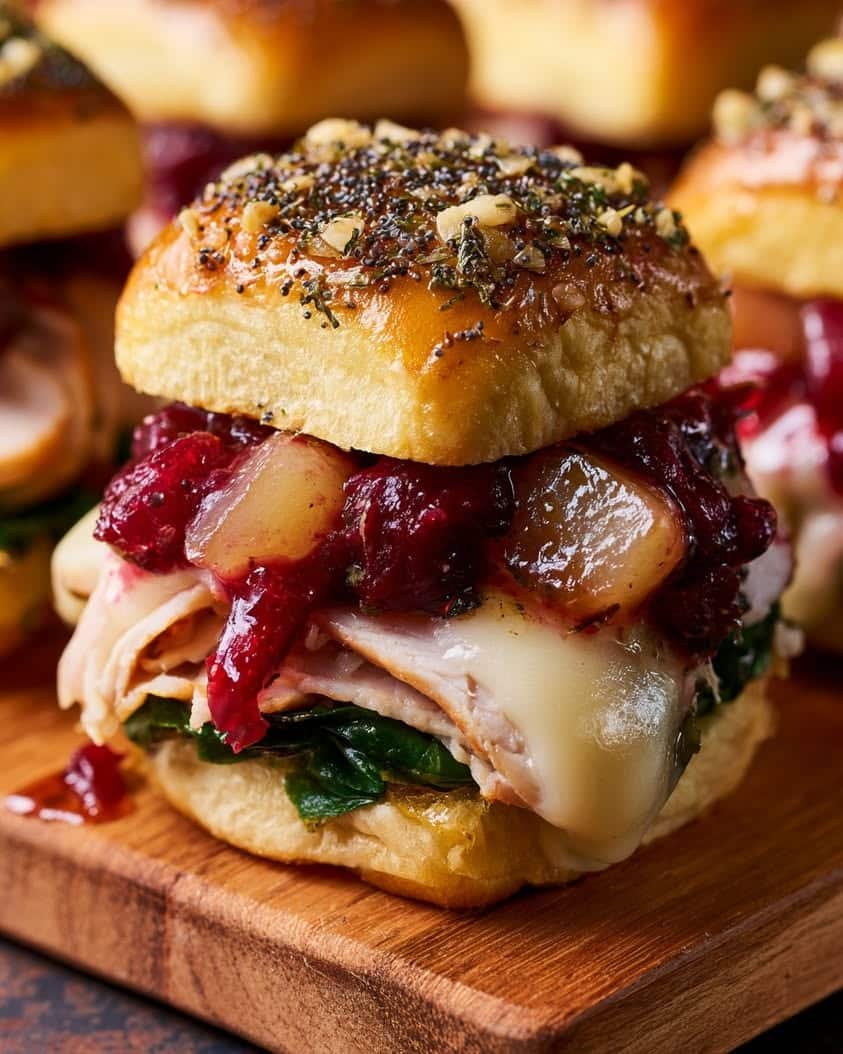
Turkey White Cheddar Sliders with Apple-Cranberry Chutney: The Ultimate Fall Party Recipe
If you love hosting friends and family during the cooler months, these Turkey White Cheddar Sliders with Apple-Cranberry Chutney will quickly become your go-to party recipe. These sliders combine savory roasted turkey, sharp white cheddar cheese, and a sweet-tart homemade chutney that bursts with autumn flavors. Every bite delivers a perfect balance of hearty protein, melty cheese, and bright fruitiness that keeps guests coming back for more. Whether you plan a casual game day gathering or an elegant holiday appetizer spread, this Turkey White Cheddar Sliders with Apple-Cranberry Chutney recipe fits beautifully into any occasion.
The magic of this dish starts with the apple-cranberry chutney, which you can prepare ahead of time and store in the refrigerator for days. As the chutney simmers, your kitchen fills with warm notes of cinnamon, ginger, and fresh citrus. Meanwhile, the turkey stays juicy and tender thanks to a simple seasoning blend and a quick roast in the oven. The white cheddar melts into every layer, creating that irresistible cheese pull everyone loves. Once you assemble the sliders on soft Hawaiian rolls and brush them with a buttery glaze, the oven finishes the job in minutes. These Turkey White Cheddar Sliders with Apple-Cranberry Chutney taste like a cozy autumn evening wrapped in a bun.
Furthermore, this recipe offers incredible versatility for busy home cooks. You can prep the chutney and cook the turkey a day in advance, then simply assemble and bake right before your guests arrive. As a result, you spend less time stressed in the kitchen and more time enjoying the party. The ingredient list stays short and budget friendly, which makes this dish accessible for weeknight dinners too. In addition, the sliders appeal to both kids and adults because the flavors stay balanced and approachable. Overall, these Turkey White Cheddar Sliders with Apple-Cranberry Chutney deliver big flavor with minimal effort, and that combination makes any gathering memorable.
Quick Recipe Highlights
- Flavor Profile: These sliders balance savory roasted turkey with the sharp tang of white cheddar and the sweet-tart punch of apple-cranberry chutney. The buttery glaze adds a rich, slightly sweet finish that ties every element together beautifully.
- Texture: Soft Hawaiian rolls cradle tender sliced turkey and gooey melted cheese, while the chutney adds a pleasing chunky texture. The glazed tops develop a slight crispness in the oven that contrasts nicely with the pillowy interior.
- Aroma: Expect warm cinnamon, cloves, and ginger from the chutney to fill your kitchen as it simmers. The roasted turkey and toasted butter glaze add savory, comforting notes that make everyone hungry before the first bite.
- Visual Appeal: Golden-brown glazed tops, melted white cheddar peeking between the layers, and jewel-toned chutney create a stunning presentation. Arrange them on a wooden board with fresh sage or rosemary for an effortless, seasonal look.
- Skill Level Needed: This recipe suits beginners because it relies on simple techniques like simmering, slicing, and assembling. If you can stir a pot and use a knife safely, you can master these sliders with confidence.
- Special Equipment: You need a large skillet for the chutney, a rimmed baking sheet for the turkey and sliders, and a sharp knife for slicing. A basting brush helps apply the butter glaze evenly across the tops.
Recipe Overview
- Difficulty Level: I rate this recipe easy because the steps stay straightforward and forgiving. The chutney simmers on its own with occasional stirring, and the turkey roasts hands-off in the oven. Assembly takes just minutes, and the final bake requires no special attention. Even first-time cooks can serve these sliders proudly.
- Category: These sliders work as an appetizer, a party snack, or even a main course when paired with a side salad. They also shine on game day tables, holiday buffets, and potluck spreads. You can serve them for lunch or dinner without changing a thing.
- Cuisine: This recipe blends classic American comfort food with seasonal New England flavors. The concept draws from slider traditions popular in the U.S. for decades, while the apple-cranberry chutney nods to harvest-season cooking in the Northeast. The combination feels both familiar and fresh.
- Cost: Expect to spend roughly 15 to 20 dollars for a dozen sliders depending on your local grocery prices. Turkey breast, white cheddar, and Hawaiian rolls make up most of the cost. The chutney uses affordable pantry staples like apples, cranberries, sugar, and spices.
- Season: Fall and winter suit this recipe best because apples and cranberries reach peak freshness then. Nevertheless, you can make it year-round with frozen cranberries and stored apples. The warm spices make it especially comforting during the holiday season.
- Occasion: Serve these sliders for Thanksgiving leftovers, Christmas parties, Super Bowl gatherings, or casual weekend lunches. They also work well for baby showers and bridal events because guests can grab them easily. Any occasion that calls for satisfying finger food fits perfectly.
Why You’ll Love This Recipe
The taste and texture of these Turkey White Cheddar Sliders with Apple-Cranberry Chutney hit every note your palate craves. Savory turkey brings substance, sharp white cheddar adds a creamy bite, and the chutney delivers sweetness with a tart edge. Meanwhile, the buttery glaze on the rolls adds a subtle richness that elevates the whole sandwich. Each bite stays moist and flavorful, and the textures range from soft to gooey to slightly crisp. As a result, guests rarely stop at one slider, and you will feel proud of what you served.
Convenience makes this recipe a true winner for busy hosts. You can prepare the chutney up to a week ahead and roast the turkey the day before. Then, assembly takes less than ten minutes before the final bake. Because the oven does most of the work, you avoid hovering over the stove when guests arrive. Consequently, you enjoy your own party instead of scrambling in the kitchen. The make-ahead flexibility alone makes these Turkey White Cheddar Sliders with Apple-Cranberry Chutney worth adding to your rotation.
Nutritionally, these sliders offer meaningful benefits compared to many party foods. Turkey breast provides lean protein with less saturated fat than beef, and white cheddar contributes calcium and protein. The chutney includes real fruit, which adds fiber and vitamins along with natural sweetness. Since you control the sugar and sodium, you avoid the additives found in store-bought sauces. Therefore, you serve a dish you can feel good about with balanced macros and wholesome ingredients.
Social and entertaining value runs high with this recipe because sliders encourage mingling and easy eating. Guests grab one with a napkin and keep chatting, and the small size keeps portions manageable. The seasonal apple-cranberry flavor sparks conversation and compliments, especially during autumn events. Furthermore, the recipe yields twelve sliders, which scales up easily for larger crowds. Hosts love recipes like this that feed a group without requiring formal plating or servers, so the party stays relaxed and fun.
Cost-effectiveness and accessibility round out the reasons to love these Turkey White Cheddar Sliders with Apple-Cranberry Chutney. The ingredients come from any standard grocery store, and no specialty items are required. Compared to catered appetizers, this recipe delivers impressive flavor at a fraction of the price. Moreover, the turkey stretches further than a whole bird because you slice it thin for sliders. You feed a crowd generously while keeping your budget intact, and leftovers taste just as good the next day.
Historical Background and Cultural Significance
The slider itself traces back to the early twentieth century at White Castle, which introduced small square burgers in 1921. The tiny size made them easy to eat and affordable, and they quickly became an American icon. Over the decades, cooks began adapting the concept with different proteins and regional ingredients. As a result, the term slider expanded beyond burgers to include any small sandwich served on a soft bun. These Turkey White Cheddar Sliders with Apple-Cranberry Chutney carry that tradition forward with seasonal flair.
Apple and cranberry pairings hold deep roots in American harvest cooking, especially in New England. Colonists combined native cranberries with apples from early orchards to create sauces and preserves that lasted through winter. Chutney arrived later through British and Indian culinary influence, adding spice and vinegar to fruit-based condiments. Consequently, the apple-cranberry chutney in this recipe reflects centuries of cultural exchange on American tables. Each spoonful connects to a long history of preserving seasonal fruit.
Turkey became the centerpiece of American holiday tables in the nineteenth century, and its popularity grew through the twentieth century. By the 1950s, turkey moved beyond holidays into everyday cooking as producers made it more available. Meanwhile, home cooks searched for creative ways to use leftover turkey, and sandwiches became a natural solution. Therefore, these sliders honor that tradition by turning turkey into a party-ready dish. The recipe celebrates resourcefulness, which has always defined American home cooking.
Regional variations of fruit chutneys appear across the country, from Southern apple butter to Pacific Northwest cranberry relishes. Each region adapts the formula to local orchards and family preferences. The Midwest favors sweeter chutneys, while coastal cooks often add citrus or wine for brightness. Additionally, home cooks in the South sometimes include pecans or bourbon for depth. These Turkey White Cheddar Sliders with Apple-Cranberry Chutney embrace that spirit of adaptation, so you can adjust the chutney to reflect your own regional and family traditions.
Ingredient Deep Dive
Turkey breast serves as the protein backbone of these sliders, and it holds cultural significance as a staple of American celebrations. Native to North America, turkey has fed families for centuries and symbolizes abundance at holiday meals. Nutritionally, turkey breast delivers lean protein, B vitamins, and selenium while staying low in fat. When you shop, look for a boneless breast with even thickness and a pinkish hue, and avoid packages with excess liquid. Store raw turkey in the coldest part of your refrigerator and use it within two days of purchase. In a pinch, sliced deli turkey works as a substitute, though roasted fresh turkey brings superior flavor.
White cheddar cheese brings sharp complexity and history to these sliders, tracing back to the village of Cheddar in Somerset, England. Cheddar remains one of the most popular cheeses worldwide, and the white variety skips the annatto coloring used in orange versions. The cheese supplies calcium, protein, and a satisfying melting quality that holds sandwiches together. Choose a block of sharp white cheddar and shred or slice it yourself for better melt and fresher flavor. Wrap the cheese tightly and store it in the refrigerator for up to two weeks. If white cheddar is unavailable, aged Gruyere or provolone make worthy substitutes.
Apples anchor the chutney with natural sweetness and historical importance in American orchards. Since colonial times, apples have provided food security because they store well through winter. The fruit offers fiber, vitamin C, and antioxidants, especially in the skin. For this recipe, choose firm, tart varieties like Granny Smith or Honeycrisp because they hold shape and balance the sugar. Store apples in the refrigerator crisper drawer to extend freshness. Pears or firm peaches can replace apples if needed, though the flavor profile shifts slightly.
Cranberries add tart brightness and deep cultural meaning, especially in New England where Native Americans introduced them to colonists. The berry contains vitamin C, fiber, and unique antioxidants that support urinary health. Fresh cranberries feel firm and bounce when dropped, so choose bags with plump, unblemished berries. Keep them refrigerated for up to a month or freeze them for a year. If fresh cranberries are out of season, dried cranberries work with reduced sugar, and frozen berries perform just as well with no thawing required.
Hawaiian rolls provide the soft, slightly sweet base that makes sliders so addictive. The rolls draw inspiration from Portuguese sweet bread brought to Hawaii, and they became an American party staple over recent decades. They contribute carbohydrates for energy along with a tender crumb that absorbs the glaze beautifully. Purchase rolls that feel soft and smell fresh, and check the date on the package. Store them at room temperature and use within a few days, or freeze extras. Brioche buns or dinner rolls make fine substitutes when Hawaiian rolls are unavailable.
Common Mistakes to Avoid
- Overcooking the turkey dries out the meat and ruins the slider’s moisture balance. Use a meat thermometer and pull the turkey at 160 degrees Fahrenheit since carryover cooking raises it to the safe 165 mark. Resting the meat before slicing locks in juices.
- Skipping the rest period causes juices to pour out and leave the turkey tough. Always rest roasted turkey for at least ten minutes before slicing. This simple pause makes a noticeable difference in texture.
- Slicing the turkey too thick makes sliders hard to bite and overwhelms the other layers. Aim for thin, even slices around an eighth of an inch. A sharp knife and a steady hand help you achieve consistent results.
- Adding cold cheese to a cold sandwich prevents proper melting during the bake. Layer the cheese against the warm turkey or let ingredients come closer to room temperature. The final oven time then melts the cheddar fully.
- Overloading the sliders with chutney makes the rolls soggy and the filling spill out. Spread a moderate layer of chutney on the bottom roll and keep the ratio balanced. Remember that the chutney carries strong flavor, so a little goes far.
- Forgetting to glaze the tops leaves the rolls plain and dry. The butter glaze adds flavor, shine, and a slight crispness that defines a great slider. Brush it generously and evenly right before baking.
- Baking at too high a temperature burns the roll tops before the cheese melts. Keep the oven at 350 degrees Fahrenheit and check the sliders at the ten-minute mark. Cover them loosely with foil if the tops brown too quickly.
- Serving the sliders cold after assembly reduces the melty appeal. Bake them right before serving and transfer them hot to the table. A few minutes in the oven transforms leftover sliders back to their best texture.
- Using unseasoned turkey creates a flat, boring filling. Season the meat well with salt, pepper, and herbs before roasting, and taste the chutney as it cooks. Balanced seasoning makes every layer taste intentional.
- Ignoring the chutney’s sugar level during cooking allows it to scorch or turn overly sweet. Stir frequently and lower the heat if the mixture darkens too fast. Taste often and adjust sugar and vinegar for balance.
Essential Techniques
Simmering the chutney properly builds the foundation of the recipe because it develops concentrated flavor and thick texture. Start with medium heat to soften the apples and release juices, then lower the heat to a gentle simmer. Stir occasionally and watch for a thick, glossy consistency that holds its shape on a spoon. The visual cue for success is a chutney that mounds slightly when you drag a spoon through it. Additionally, the aroma turns deep and fragrant rather than sharp or vinegary when it finishes cooking.
Roasting the turkey breast evenly requires attention to thickness and heat distribution. If the breast is uneven, pound it to a uniform thickness or tie it to create an even shape. Roast at 375 degrees Fahrenheit on a rimmed baking sheet and check the internal temperature early to avoid overcooking. The visual cue of success is a golden exterior with clear juices and an internal reading of 160 degrees Fahrenheit. Letting the meat rest afterward keeps the slices juicy and neat.
Slicing against the grain matters because it shortens the muscle fibers and makes every bite tender. Locate the direction of the grain before you start, then cut perpendicular to it with a sharp, long knife. Use smooth strokes rather than sawing motions to protect the meat’s structure. The visual cue of success is clean slices that hold together yet feel soft when you bend them. This technique takes a minute to learn and pays off in every sandwich.
Assembling the sliders with care prevents sogginess and uneven layers. Start with the bottom rolls in a baking dish, add chutney in a thin layer, then turkey, then cheese, and finish with the tops. Keep the filling centered so the sandwiches bake evenly. The visual cue of success is level, well-stacked sliders with no gaps between the rolls. Also, leave the rolls attached in their sheet, since baking them as one block makes serving easier and keeps edges soft.
Glazing and baking the tops creates the signature finish of these sliders. Melt butter with a touch of honey or maple syrup and brush the mixture over the tops in an even coat. Bake until the tops turn golden and the cheese melts visibly at the edges. The visual cue of success is a glossy surface and a pervasive buttery aroma that fills the kitchen. This step takes only a few minutes, yet it transforms plain rolls into party-worthy sandwiches.
Pro Tips for Perfect Turkey White Cheddar Sliders with Apple-Cranberry Chutney
Make the chutney at least one day ahead because the flavors deepen overnight and the texture thickens. Warm it slightly before assembly so it spreads easily. This step saves time on party day and improves taste, so it delivers a double benefit.
Toast the cut sides of the rolls for two to three minutes before building the sliders. Toasting creates a barrier that resists sogginess from the chutney and keeps the bread from getting mushy.
Season the turkey generously and let it sit at room temperature for fifteen minutes before roasting. This encourages even cooking and helps the seasoning penetrate beyond the surface.
Use a thermometer every time because oven temperatures vary and visual cues mislead. Pull the turkey at 160 degrees Fahrenheit and rest it until it reaches 165 internally.
Slice the cheddar thin so it melts quickly and distributes evenly. Thin slices create better coverage than thick slabs and avoid pooling grease.
Bake the sliders covered with foil for the first eight minutes and uncover them for the final few. This approach melts the cheese and warms the filling without scorching the tops.
Serve the sliders immediately after baking for the best cheese pull and texture. If you must hold them, keep them warm in a 200 degree oven and cover loosely with foil.
Garnish with fresh herbs like thyme or rosemary for a pop of color and aroma. A small touch of greenery makes the platter look polished and seasonal, especially at holiday events.
Variations and Adaptations
Regional variations add personality to these Turkey White Cheddar Sliders with Apple-Cranberry Chutney depending on where you live or grew up. New England cooks might add a splash of maple syrup and fresh sage to the chutney for deeper autumn flavor. Southern cooks often introduce pecans and a pinch of cayenne for richness and gentle heat. Midwestern families may fold in dried cherries for extra sweetness, while West Coast cooks might use sourdough rolls instead of Hawaiian rolls. Each adaptation reflects local ingredients and traditions, so feel free to borrow from the region you love most.
Seasonal adaptations keep this recipe relevant all year long. In autumn, use fresh cranberries and crisp new apples for bright, tart flavor. During summer, swap in peaches and cherries for a sunny, sweeter chutney that pairs beautifully with turkey. Spring brings rhubarb and strawberries as lovely alternatives, and winter welcomes dried apricots and orange zest. Since the base technique stays the same, the recipe never grows stale.
Dietary modifications make these sliders accessible to more guests without losing their spirit. For gluten-free versions, choose gluten-free slider rolls and confirm the chutney ingredients contain no hidden gluten. For dairy-free needs, use a meltable plant-based cheddar and brush the tops with olive oil instead of butter. For a vegan option, replace the turkey with thick-cut roasted portobello mushrooms and use plant-based cheese. Each swap keeps the flavor profile strong, and everyone at the table can enjoy a slider.
Flavor variations let you riff on the recipe without much effort. Add Dijon mustard to the chutney for extra tang, or whisk a little horseradish into the butter glaze for a bold kick. Try smoked paprika in the turkey seasoning for a gentle smokiness that complements the cheddar. If you love heat, add minced jalapeno or a dash of red pepper flakes to the chutney. These small changes make a familiar recipe feel new.
Texture modifications help you adapt the sliders to different preferences. If you want crunch, add a thin layer of shredded cabbage or sliced green apple between the cheese and the top roll. For a softer bite, use pulled turkey instead of sliced and serve on brioche rolls. If you prefer a crispier top, bake the sliders uncovered the whole time and watch closely. These tweaks change the eating experience without altering the core recipe.
Presentation alternatives keep the recipe fresh for repeat events. Serve the sliders as a party platter with toothpicks and a side of extra chutney for dipping. Alternatively, plate them individually with a small side salad for a plated lunch. For kid-friendly events, cut the sliders into quarters for bite-size portions. With a few creative choices, the same recipe fits any table.
Serving and Presentation Guide
Plating techniques shape the first impression, so arrange the sliders thoughtfully on a large wooden board, slate platter, or ceramic tray. Keep them slightly overlapping in neat rows to create abundance and invite grabbing. Place a small bowl of extra chutney in the center for dipping or spreading. Additionally, add a few sprigs of fresh rosemary or sage around the edges for a seasonal accent. A clean, organized platter communicates care and makes the food look as good as it tastes.
Garnishing ideas add a final flourish without extra effort. Sprinkle toasted sesame seeds or finely chopped parsley over the glazed tops for contrast. Arrange thin apple slices near the platter to echo the chutney’s main ingredient. A small dish of cinnamon sticks adds a warm aromatic touch that fits the season beautifully.
Traditional accompaniments round out the meal with familiar comforts. Serve these sliders with roasted sweet potato wedges, a crunchy apple slaw, or a simple green salad dressed with cider vinaigrette. For holiday events, pair them with mashed potatoes or a stuffing side. These classic pairings echo the turkey dinner flavors and make the meal feel complete.
Modern serving suggestions embrace a lighter, trendier approach. Serve the sliders alongside a grain bowl with farro and roasted vegetables for a balanced lunch. Offer a charcuterie board with grapes, nuts, and aged cheese for a relaxed grazing table. Alternatively, present them as part of a slider flight featuring two or three varieties. These fresh approaches suit casual gatherings and modern entertaining styles.
Temperature considerations matter because sliders taste best warm and melty. Serve them within fifteen minutes of baking for the ideal cheese pull and bread texture. If your event runs long, hold them in a low oven and replenish the platter in small batches. Furthermore, warm the serving platter before plating to help the sliders retain heat.
Portion control tips keep your event running smoothly. Plan for two to three sliders per guest as an appetizer and three to four as a main course. Place a small stack of napkins and tongs beside the platter so guests serve themselves easily. Cutting the sliders in half offers lighter portions for mixed crowds, and it lets guests sample other dishes too.
Wine and Beverage Pairing
Wine pairings can elevate these Turkey White Cheddar Sliders with Apple-Cranberry Chutney into a truly memorable spread. A crisp, dry Riesling balances the chutney’s sweetness with bright acidity and complements the turkey without overpowering it. Alternatively, an unoaked Chardonnay brings a creamy texture that mirrors the white cheddar. For red wine fans, a light Pinot Noir offers soft tannins and red fruit notes that harmonize with cranberry. Since the flavors lean savory-sweet, avoid heavily oaked wines that clash with the fruit.
Non-alcoholic alternatives keep every guest included and refreshed. Sparkling apple cider delivers seasonal flavor and bubbles that cut through the richness of the cheese. Cranberry spritzers made with soda water and a squeeze of lime add tart brightness and a festive color. Additionally, a chilled ginger ale brings gentle spice that mirrors the chutney’s warm notes. Offer at least two non-alcoholic options so guests have variety.
Coffee and tea pairings suit daytime events and cozy gatherings. An English breakfast tea offers structure that stands up to the sharp cheddar, while chai tea echoes the chutney’s cinnamon and ginger. For coffee, a medium roast with nutty notes complements the turkey and cheese without dominating. Moreover, an iced cranberry tea makes a lovely warm-weather choice and ties into the recipe’s flavors.
Temperature considerations guide how you serve these beverages. Chill white wines, cider, and spritzers to around 45 to 50 degrees Fahrenheit for the best refreshment. Serve red wines slightly cooler than room temperature to keep them lively against the rich sliders. Hot tea and coffee should stay comfortably warm, and preheat carafes to preserve heat during long events.
Serving suggestions help you set up a seamless beverage station. Place wine glasses, an ice bucket, and non-alcoholic options on a separate table to prevent crowding near the food. Label each drink clearly so guests know what they are pouring. Offer small tasting glasses so guests can try multiple options alongside their sliders.
Storage and Shelf Life
Storage methods determine how well leftovers keep their quality and safety. Store the chutney separately from the sliders because the bread absorbs moisture quickly. Place the chutney in an airtight glass jar and refrigerate it for up to two weeks. Wrap assembled sliders in foil and refrigerate them for up to three days. Keeping components separate preserves texture and flavor best.
Temperature requirements keep food safe and fresh. Refrigerate all components at 40 degrees Fahrenheit or below, and never leave the sliders at room temperature for more than two hours. Reheat leftovers to 165 degrees Fahrenheit to eliminate bacteria. A refrigerator thermometer helps you confirm the appliance stays at a safe temperature.
Container recommendations make a real difference in quality. Use shallow glass containers for the chutney so it cools quickly and evenly. Store sliced turkey in a glass container with a tight lid to prevent drying. For sliders, choose a baking dish with a fitted cover or wrap them snugly in heavy foil. Glass and thick plastic work better than thin materials that let air in.
Signs of spoilage protect your guests from foodborne illness. Discard chutney if you see mold, bubbling, or a sour off smell, and toss turkey that feels slimy or smells unpleasant. Sliders that look soggy or develop an odd odor should go in the trash. When in doubt, throw it out, since safety always comes first.
Reheating instructions help leftovers taste almost as good as fresh. Reheat sliders in a 350 degree oven, covered with foil, for ten to twelve minutes until warmed through. If the tops look dry, brush them with a little melted butter before reheating. Reheat the chutney gently on the stovetop or in the microwave, stirring often for even heat.
Freezing guidelines extend shelf life for busy weeks. Freeze the chutney in small jars or ice cube trays for up to three months. Freeze sliced turkey in portion bags with the air pressed out for up to two months. Assemble and freeze unbaked sliders for up to a month, then bake from frozen with ten extra minutes of covered baking time.
Make Ahead Strategies
A prep timeline keeps party day calm and organized. Two days before, make the apple-cranberry chutney and refrigerate it in an airtight jar. One day before, roast and slice the turkey and store it in a sealed container. The morning of the event, slice the cheese and arrange the rolls, then assemble and bake about twenty minutes before guests arrive.
Storage between steps preserves freshness without extra work. Keep the chutney covered in the fridge, wrap the turkey tightly, and slice the cheese just before assembly. Leave the rolls in their packaging until you build the sliders. These simple habits prevent drying and sogginess.
Quality impact assessment helps you plan realistically. The chutney actually improves overnight as flavors meld, so making it early is a pure win. Sliced turkey stays moist for a day when stored properly. Assembled sliders lose quality after a few hours, so wait until close to serving time to build them.
Assembly tips speed up the final steps. Set out all components in order before you begin, then work quickly in assembly-line fashion. Keep the rolls attached as a block for faster building and even baking. Slather, layer, cap, glaze, and bake without interruption.
Reheating guidelines keep make-ahead sliders tasting fresh. If you assemble ahead, cover and refrigerate them for up to four hours, then bake a few minutes longer to heat through. Check the center with a thermometer to confirm they reach a safe temperature. Cover with foil if the tops brown too fast.
Fresh element additions at the last minute restore brightness. Add a little fresh chopped apple or a squeeze of lemon to the chutney before serving. Sprinkle fresh herbs over the baked sliders for color and aroma. These small touches make make-ahead food taste freshly made.
Scaling Instructions
Halving the recipe works easily for smaller households or intimate gatherings. Use six rolls instead of twelve and cut the turkey and cheese amounts roughly in half. Make the full batch of chutney anyway, since it stores well and improves leftovers. Bake the smaller batch in a square pan for even heat, and check for doneness a few minutes earlier.
Doubling or tripling the recipe requires equipment adjustments for success. Use two or three baking sheets or large baking dishes so the sliders stay in a single layer. Increase the chutney recipe in a larger pot and allow extra simmering time for evaporation. Keep the oven racks spaced evenly and rotate the pans halfway through baking.
Equipment adjustments prevent crowding and uneven cooking. Choose rimmed baking sheets with enough space for the rolls to sit snug but not compressed. Use a wide skillet for larger chutney batches to encourage evaporation. Borrow or borrow extra baking dishes if needed, and keep hot pads handy.
Timing modifications keep larger batches from drying out. Add a few minutes to the covered baking stage and monitor the center of the batch with a thermometer. Rotate pans for even browning, and avoid stacking pans in the oven. Smaller batches, by contrast, may finish faster, so check early.
Storage considerations grow with the batch size. Divide the chutney among several small jars for easier cooling and portioning. Store extra turkey in shallow containers so it chills fast. For assembled sliders, keep extras in a single layer and refrigerate promptly after serving.
Nutritional Deep Dive
The macro breakdown of these Turkey White Cheddar Sliders with Apple-Cranberry Chutney shows a balanced profile. Each slider delivers roughly 220 to 260 calories, with about 14 to 18 grams of protein from the turkey and cheese. Carbohydrates land around 20 to 24 grams, contributed mostly by the rolls and fruit. Fat stays moderate at 9 to 12 grams, depending on the cheese and butter amounts. These numbers make the sliders a sensible choice when portioned reasonably.
The micronutrient analysis reveals meaningful contributions to daily needs. Turkey supplies B vitamins, especially niacin and B6, along with selenium and zinc. White cheddar adds calcium, phosphorus, and vitamin A, while apples and cranberries bring vitamin C and polyphenol antioxidants. Together, these nutrients support energy metabolism, immune function, and bone health.
Health benefits stem from the recipe’s whole-food ingredients and balanced design. Lean turkey supports muscle maintenance with less saturated fat than many sandwich meats. The fruit chutney adds fiber and antioxidants, and the cheese provides satiating protein and fat. Because you control the sugar and sodium, the recipe beats most store-bought party foods on nutritional quality.
Dietary considerations help guests with restrictions navigate the menu. The recipe contains dairy and gluten as written, so label ingredients clearly at buffets. Offer the dietary adaptations outlined earlier so more guests can partake. A simple note card beside the platter listing key allergens shows thoughtfulness and keeps everyone safe.
Portion analysis shows that two sliders make a reasonable appetizer serving, while three to four suit a main meal. Pair sliders with vegetables or a salad to stretch portions and add nutrients. The small size naturally supports portion awareness because guests see exactly how much they take.
Weight management tips center on balance rather than restriction. Enjoy the sliders alongside lighter sides, and choose sparkling water between richer bites. The protein and fiber in this recipe promote fullness, which helps prevent overeating. Pairing one slider with a big salad makes a satisfying, moderate meal.
Dietary Adaptations
For gluten-free needs, choose gluten-free slider rolls from a trusted brand and verify the chutney contains no barley malt or wheat-based vinegar. Many Hawaiian roll substitutes now exist in gluten-free versions. Check cheese labels for added fillers, and confirm the turkey seasoning mix has no gluten. With these swaps, the recipe fits seamlessly into a gluten-free lifestyle.
For dairy-free needs, select a meltable plant-based white cheddar and replace butter in the glaze with olive oil or vegan butter. The chutney itself contains no dairy, so it works as is. Read cheese labels Print
Turkey-White Cheddar Sliders with Apple-Cranberry Chutney
- Total Time: 45 minutes
- Yield: 4
Description
Juicy turkey sliders topped with sharp white cheddar and a sweet-tart apple-cranberry chutney, served on soft slider buns. Perfect for parties or a cozy dinner.
Ingredients
- 1 lb ground turkey
- 1 teaspoon salt
- 1/2 teaspoon black pepper
- 1/2 teaspoon garlic powder
- 1 tablespoon olive oil
- 8 slider buns
- 8 slices white cheddar cheese
- For the chutney: 1 cup peeled and diced apple
- 1/2 cup dried cranberries
- 1/4 cup apple cider vinegar
- 1/4 cup brown sugar
- 1/4 teaspoon ground cinnamon
- 1/4 teaspoon ground ginger
- Pinch of salt
Instructions
- In a small saucepan, combine apple, cranberries, vinegar, brown sugar, cinnamon, ginger, and salt. Bring to a simmer over medium heat, then reduce heat to low and cook, stirring occasionally, until thickened and apples are tender, about 15 minutes. Set aside to cool.
- In a bowl, mix ground turkey with salt, pepper, and garlic powder. Form into 8 small patties.
- Heat olive oil in a large skillet over medium heat. Cook patties until browned and cooked through, about 3-4 minutes per side.
- Top each patty with a slice of white cheddar and cover skillet briefly to melt cheese.
- Split slider buns and lightly toast if desired. Place a turkey patty on each bun bottom, spoon chutney over, and replace bun top.
- Serve immediately.
Notes
You can customize the seasonings to taste.
- Prep Time: 15 minutes
- Cook Time: 30 minutes
- Method: Main
- Cuisine: American