Roasted Vegetable Lasagna with Creamy Pumpkin Béchamel: A Cozy Fall Comfort Food
If you love lasagna but want something that celebrates the flavors of autumn, this roasted vegetable lasagna with creamy pumpkin béchamel is exactly what your kitchen needs. This roasted vegetable lasagna with creamy pumpkin béchamel layers tender pasta sheets with caramelized seasonal vegetables and a silky, warmly spiced sauce that feels like a hug on a cool evening. Every bite delivers deep roasted flavor, a hint of nutmeg, and that unmistakable comfort you expect from a classic baked pasta dish.
The magic of this roasted vegetable lasagna with creamy pumpkin béchamel comes from the contrast between sweet, blistered vegetables and the velvety pumpkin sauce. As the lasagna bakes, the cheese melts into golden pools, the edges crisp up beautifully, and your whole home fills with the aroma of sage, garlic, and roasting squash. Whether you serve it for a Sunday family dinner or a holiday table, this roasted vegetable lasagna with creamy pumpkin béchamel earns its place as a showstopper that also happens to be meatless.
Best of all, this roasted vegetable lasagna with creamy pumpkin béchamel comes together with simple, everyday ingredients you can find at any grocery store. You do not need fancy techniques or special equipment beyond a standard baking dish and a saucepan. The recipe rewards a little patience with layers of flavor that taste far more complex than the effort suggests, and it reheats beautifully for leftovers the next day.
Quick Recipe Highlights
- Flavor Profile: Expect a balance of sweet caramelized vegetables, earthy pumpkin, savory garlic, and a warm whisper of nutmeg. The cheese adds a salty, creamy counterpoint that ties everything together.
- Texture: The pasta stays tender while the roasted vegetables bring a slight bite and the béchamel delivers a lush, saucy richness. Crisp, golden cheese tops each serving with a satisfying contrast.
- Aroma: Sage, thyme, and roasted garlic dominate the nose as the lasagna bakes. Subtle pumpkin sweetness and toasted cheese notes round out the fragrance.
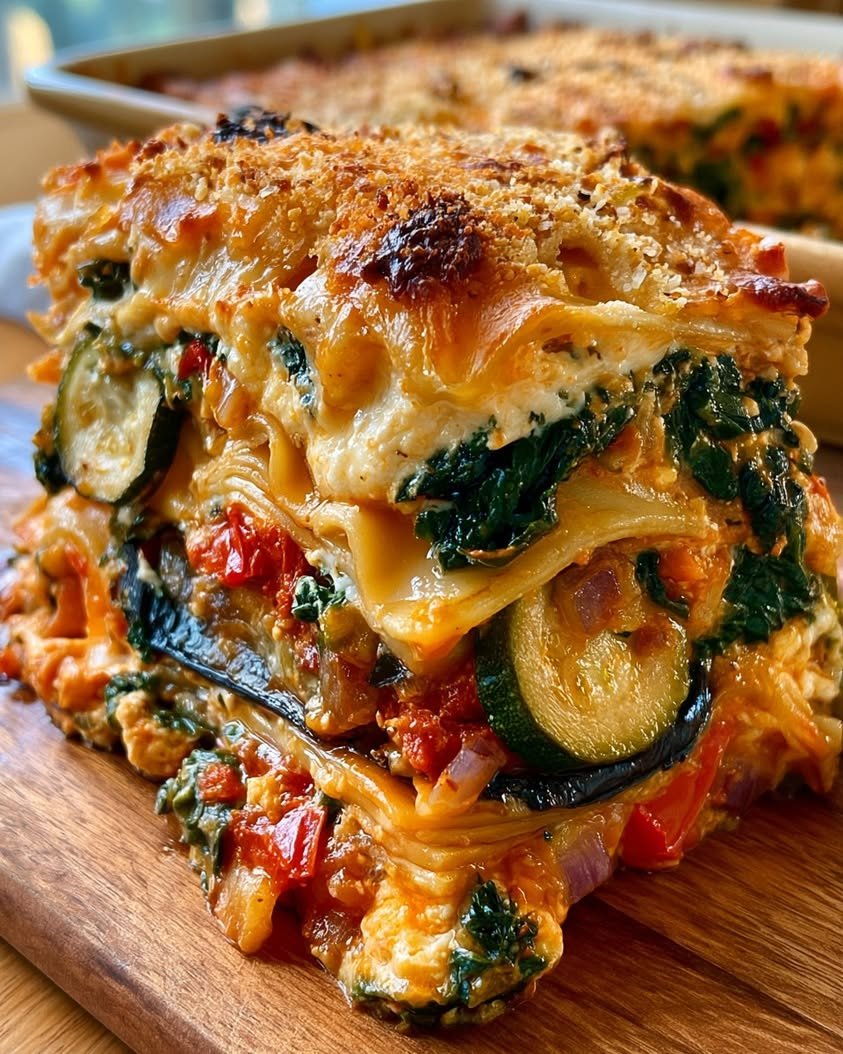
- Visual Appeal: Layers of orange pumpkin sauce, deep green spinach, and golden-brown cheese create a striking cross-section. The top emerges bubbly and bronzed, inviting the first slice.
- Skill Level Needed: A confident beginner can handle this recipe with ease. The steps are straightforward, though layering rewards a gentle hand and a little patience.
- Special Equipment: You need a 9×13-inch baking dish, a large skillet or sheet pan, and a medium saucepan. A whisk helps the béchamel stay smooth and lump-free.
Recipe Overview
- Difficulty Level: This lands squarely in the easy-to-intermediate range because the components come together simply. Roasting the vegetables takes minimal attention, and the béchamel follows a classic, forgiving method. The only real challenge is layering with care, and even that tolerates imperfection. Anyone comfortable boiling pasta and stirring a sauce will succeed here.
- Category: This serves as a hearty vegetarian main course perfect for dinner. It also works as a potluck contribution, a holiday centerpiece, or a meal-prep staple for the week.
- Cuisine: The dish draws on classic Italian-American lasagna tradition while nodding to autumn’s love of squash. Pumpkin béchamel reflects a modern American comfort-food sensibility. The result feels familiar yet fresh, bridging old-world technique with seasonal creativity.
- Cost: Expect to spend roughly twelve to eighteen dollars for a full pan that feeds eight. Seasonal squash and root vegetables keep costs low, and the cheese represents the biggest expense. Compared with meat lasagna, this version saves money while delivering equal satisfaction.
- Season: Fall and early winter suit this recipe best because pumpkin and root vegetables peak then. Cooler weather makes a hot, baked casserole especially welcome. You can make it year-round using canned pumpkin and whatever vegetables look best.
- Occasion: Serve it for Sunday suppers, Thanksgiving alternatives, or cozy dinner parties. It shines at potlucks because it travels and reheats well. Weeknight families appreciate that it yields generous leftovers.
Why You’ll Love This Recipe
The taste and texture of this roasted vegetable lasagna with creamy pumpkin béchamel win people over at the first bite. Roasting concentrates the natural sugars in zucchini, bell peppers, and carrots, so each layer brings depth rather than blandness. The pumpkin béchamel wraps everything in a creamy, lightly sweet embrace that balances the savory cheese and herbs. Because the pasta stays tender and the top crisps up, you get a range of textures in every forkful.
Convenience makes this roasted vegetable lasagna with creamy pumpkin béchamel a weeknight hero as well. You can roast the vegetables and simmer the sauce ahead of time, then assemble and bake when you are ready. The whole pan feeds a crowd or stocks your fridge with lunches for days. Cleanup stays manageable because you use just a few pans, and the oven does most of the work.
Nutritionally, this roasted vegetable lasagna with creamy pumpkin béchamel delivers real value. Pumpkin brings vitamin A and fiber, while the roasted vegetables add antioxidants and minerals. Cheese supplies protein and calcium, and you control the salt and fat by choosing your ingredients. Compared with heavy meat lasagna, this version feels lighter yet still satisfying.
Socially, this roasted vegetable lasagna with creamy pumpkin béchamel makes entertaining easy and impressive. It arrives at the table as a beautiful, bubbling centerpiece that guests photograph before digging in. Vegetarians and meat-eaters alike find plenty to love, so you avoid cooking separate meals. Its make-ahead nature frees you to enjoy your company instead of hovering over the stove.
Finally, this roasted vegetable lasagna with creamy pumpkin béchamel proves remarkably cost-effective and accessible. The ingredients are ordinary supermarket staples, and seasonal produce keeps the budget friendly. You can stretch the pan to feed eight hungry people or portion it for meal prep. Few dishes deliver this much comfort, flavor, and value with so little fuss.
Historical Background and Cultural Significance
Lasagna traces its roots to ancient Italy, where early layered dishes appeared in Roman cooking. Over centuries, the recipe evolved through Italian regional kitchens into the beloved baked pasta we know today. The name itself likely comes from the Latin word for cooking pot, hinting at its long history. Italian immigrants later carried lasagna to the United States, where it became a staple of Italian-American home cooking.
Pumpkin holds deep cultural importance across the Americas and Europe. Indigenous communities in North America cultivated squash for thousands of years before European settlers arrived. In Italy, pumpkin and squash appear in risotto, ravioli, and soups, especially in northern regions. Combining pumpkin with béchamel reflects a natural marriage of Italian technique and New World ingredients.
The evolution of this roasted vegetable lasagna with creamy pumpkin béchamel shows how home cooks continually reinvent classics. Vegetable lasagna gained popularity during the vegetarian movement of the twentieth century. Contemporary cooks then began swapping tomato sauce for cream sauces and adding seasonal squash. This recipe sits at the crossroads of those trends, honoring tradition while embracing change.
Regional variations abound when it comes to pumpkin lasagna. In Italy, cooks might fold pumpkin into a ricotta layer with amaretti crumbs for sweetness. American versions often lean into sage, nutmeg, and browned butter for a autumnal feel. Some cooks add sausage or mushrooms, while others keep things strictly vegetable-focused. Each variation reflects local tastes and available ingredients.
Ingredient Deep Dive
Pumpkin serves as the heart of the béchamel and carries serious cultural weight in North America. Native peoples relied on squash as a dietary staple long before it became a fall icon. Nutritionally, pumpkin delivers vitamin A, fiber, and potassium while staying low in calories. Choose a sugar pumpkin for fresh puree, or pick plain canned pumpkin for convenience, and store it in a cool, dry place or the pantry. You can substitute butternut squash or sweet potato puree with excellent results.
Lasagna noodles form the structural backbone of the dish and connect it to Italian tradition. Dried noodles work beautifully, though fresh sheets offer a more delicate bite. They provide carbohydrates and a bit of protein while keeping the layers distinct. Store dried noodles in a sealed container away from moisture, and swap in gluten-free sheets if needed. No-boil noodles save time but require a slightly looser sauce.
Roasted vegetables bring color, texture, and nutrition to every layer. Zucchini, bell peppers, carrots, and onions all roast beautifully and reflect the bounty of American farms. They supply fiber, vitamins, and antioxidants that support everyday health. Select firm, unblemished produce at the market, and store it in the crisper drawer. Feel free to substitute eggplant, mushrooms, or fennel based on what looks best.
Ricotta and mozzarella provide the creamy, melty character that defines lasagna. Ricotta has ancient roots in Italian cheesemaking and appears throughout traditional cooking. It contributes protein and calcium, and part-skim versions lighten the dish. Choose fresh ricotta with a clean, mild smell, and use it within a week of opening. Cottage cheese or mascarpone can stand in when ricotta is unavailable.
Fresh sage and nutmeg give the pumpkin béchamel its signature warmth. Sage has long been associated with autumn cooking and digestive health in folk tradition. It adds earthy aroma and a touch of bitterness that balances sweetness. Store fresh sage wrapped in a damp paper towel in the fridge, or use dried in a pinch. Thyme or rosemary make fine substitutes if sage is not on hand.
Common Mistakes to Avoid
- Overcooking the pasta makes the layers mushy and collapses the structure, so boil noodles just shy of al dente. They finish cooking in the oven and absorb sauce as they bake.
- Undercooking the vegetables leaves them crunchy and watery, which thins the sauce. Roast until edges caramelize so flavor concentrates and excess moisture evaporates.
- Skipping the salt in the béchamel produces a flat, dull sauce that cannot carry the dish. Season each layer as you go so the whole lasagna tastes vibrant.
- Using cold milk in the béchamel can cause lumps because the flour seizes up. Warm the milk gently first, then add it slowly while whisking constantly.
- Crowding the pan with too many layers overwhelms the baking dish and causes spillovers. Stick to the suggested layering order and leave a little headroom.
- Not resting the lasagna after baking means slices fall apart on the plate. Give it ten to fifteen minutes so the layers set and the sauce thickens.
- Adding wet vegetables straight from the fridge creates a soupy result. Pat produce dry and roast it properly before layering.
- Overbaking dries out the edges and turns the cheese rubbery. Cover with foil if the top browns too fast, and pull the pan once the center bubbles.
- Skimping on the béchamel leaves the lasagna dry and disappointing. Make the full batch so every layer glides with creamy sauce.
- Ignoring the nutmeg entirely flattens the pumpkin flavor. A small grate of fresh nutmeg lifts the whole sauce and adds warmth.
Essential Techniques
Roasting vegetables correctly builds the flavor foundation for this roasted vegetable lasagna with creamy pumpkin béchamel. Spread produce in a single layer on a sheet pan so hot air circulates freely. Toss with oil and salt, then roast at high heat until edges brown and caramelize. Watch for visual cues like shrinking and golden edges, and avoid crowding, which steams rather than roasts.
Mastering béchamel transforms the sauce into something silky and stable. Melt butter, whisk in flour, and cook briefly to remove the raw taste. Add warm milk gradually while whisking so the mixture stays smooth. The sauce should coat a spoon and hold a line when you drag your finger through it. Keep the heat moderate to prevent scorching.
Layering with care ensures every slice holds together and tastes balanced. Start with sauce on the bottom so noodles do not stick, then alternate pasta, béchamel, vegetables, and cheese. Spread each layer evenly and press gently to eliminate air pockets. Finish with a generous cheese topping so the surface browns beautifully.
Resting the lasagna after baking lets the layers settle and the sauce firm up. This step matters because hot lasagna slides apart when cut immediately. Wait at least ten minutes before slicing, and use a sharp knife for clean edges. The resting period also lets flavors meld into a more cohesive bite.
Pro Tips for Perfect Roasted Vegetable Lasagna with Creamy Pumpkin Béchamel
- Roast the vegetables a day ahead to save time on baking day. Store them in the fridge and bring to room temperature before layering.
- Grate fresh nutmeg directly into the béchamel for the brightest flavor. Pre-ground nutmeg loses potency quickly.
- Use a mix of cheeses such as mozzarella and Parmesan for better melt and sharper taste. Reserve a handful for the final topping.
- Warm the milk before making béchamel so the sauce comes together smoothly. Cold milk encourages lumps.
- Cover with foil for the first twenty minutes, then uncover to brown the top. This prevents overbrowning while the center heats through.
- Let the lasagna rest before slicing so the layers hold their shape. This also improves the texture of each serving.
- Season each component separately so the final dish tastes layered rather than flat. Taste the béchamel and vegetables as you go.
- Pat roasted vegetables dry with paper towels to remove excess oil and moisture. This keeps the lasagna from turning soggy.
Variations and Adaptations
Regional variations let you tailor this roasted vegetable lasagna with creamy pumpkin béchamel to local tastes. Italian cooks might add amaretti crumbs or a touch of cinnamon for sweetness. American versions often lean into sage and brown butter for a Thanksgiving feel. Southern cooks sometimes fold in collards or kale for extra greenery.
Seasonal adaptations keep the dish fresh throughout the year. In spring, swap pumpkin for pureed sweet peas and add asparagus. Summer brings zucchini, tomatoes, and corn into the layers. Winter welcomes roasted root vegetables and a deeper spice profile.
Dietary modifications make the recipe flexible for different needs. Use gluten-free noodles and a cornstarch slurry for the béchamel to go gluten-free. Swap dairy for plant-based milk, vegan butter, and cashew ricotta to make it vegan. Keto cooks can replace noodles with thin-sliced zucchini planks.
Flavor variations invite experimentation with herbs and spices. Add smoked paprika for a subtle smoky note, or fold in roasted garlic for extra depth. A pinch of red pepper flakes brings gentle heat. Mushrooms and caramelized onions add umami that satisfies meat-eaters.
Texture modifications adjust the mouthfeel to your preference. Add a crunchy breadcrumb topping for contrast, or blend the béchamel until ultra-smooth. Some cooks prefer extra cheese layers for a gooier bite, while others lighten the dish with more vegetables.
Presentation alternatives help you serve with style. Bake in individual ramekins for elegant portions, or assemble in a springform pan and unmold for a dramatic reveal. Skillet lasagna offers a rustic, family-style option that arrives at the table sizzling.
Serving and Presentation Guide
Plating technique makes this roasted vegetable lasagna with creamy pumpkin béchamel look restaurant-worthy. Cut clean squares with a sharp knife and lift them with a wide spatula. Place each portion slightly off-center on a warm plate so the sauce can pool. Wipe the plate rim for a polished finish.
Garnishing ideas add color and freshness to each serving. A sprinkle of chopped sage or parsley brightens the orange and gold tones. Toasted breadcrumbs or fried sage leaves add texture. A drizzle of browned butter brings sheen and aroma.
Traditional accompaniments include a simple green salad and crusty bread. Garlic bread helps soak up every bit of béchamel. A side of roasted Brussels sprouts echoes the autumnal flavors. Keep sides light so the lasagna remains the star.
Modern serving suggestions open up creative possibilities. Pair with a crisp apple salad for sweet-tart contrast. Offer a dollop of whipped ricotta on the side. A sprinkle of crushed hazelnuts adds an unexpected, elegant touch.
Temperature considerations matter because lasagna tastes best served hot and rested. Let it sit briefly so the cheese sets without cooling completely. Warm the plates for an extra-cozy presentation. Avoid serving straight from the oven, since the layers need time to settle.
Portion control tips help you serve confidently. A three-by-four-inch square suits most appetites as a main course. Offer smaller portions when serving with multiple sides. Leftovers portion neatly into containers for future meals.
Wine and Beverage Pairing
Wine pairings elevate this roasted vegetable lasagna with creamy pumpkin béchamel to a special meal. A medium-bodied white like Chardonnay or Viognier complements the creamy sauce. For red lovers, a light Sangiovese or Pinot Noir offers gentle tannins. Avoid heavy tannic reds that clash with the delicate pumpkin sweetness.
Non-alcoholic alternatives keep everyone at the table happy. Sparkling apple cider brings festive autumn flavor and a touch of sweetness. A crisp ginger beer offers gentle spice that echoes the nutmeg. Iced herbal tea with sage or chamomile makes a soothing, aromatic choice.
Coffee and tea pairings may seem unusual, but they work beautifully here. A medium-roast coffee highlights the roasted vegetable notes. Sage tea mirrors the herbs in the dish. Chai brings cozy spice that flatters the pumpkin béchamel.
Temperature considerations matter for both wine and alternatives. Serve whites well chilled and light reds slightly cool to keep the meal refreshing. Warm cider in cooler months adds seasonal charm. Avoid icy beverages that numb the palate.
Serving suggestions include pouring wines alongside the meal rather than before. Offer a small tasting pour so guests can choose the pairing. Set out pretty glasses and a pitcher for self-service. Keep water on the table to cleanse the palate.
Storage and Shelf Life
Storage methods protect the quality of leftover roasted vegetable lasagna with creamy pumpkin béchamel. Cool leftovers within two hours, then transfer to airtight containers. Press plastic wrap against the surface to limit air exposure. Refrigerate promptly for the best texture and flavor.
Temperature requirements are simple and non-negotiable. Keep the lasagna at or below forty degrees Fahrenheit in the refrigerator. Do not leave it at room temperature for long stretches. Proper chilling prevents bacterial growth and preserves the sauce.
Container recommendations include glass baking dishes with lids or divided containers. Glass does not stain and reheats evenly. Portion single servings for easy lunches. Label containers with the date so you track freshness.
Signs of spoilage include sour smells, slimy textures, or visible mold. Discard any portion showing these signs without tasting it. When in doubt, throw it out to protect your health. Properly stored leftovers typically last three to four days.
Reheating instructions matter for flavor and texture. Reheat in a covered oven-safe dish at 350 degrees for fifteen to twenty minutes. Alternatively, microwave single portions with a splash of water or sauce. A skillet with a lid works for quick reheats on the stovetop.
Freezing guidelines allow longer storage. Wrap portions tightly in foil and place in freezer bags, then freeze up to three months. Thaw overnight in the refrigerator before reheating. Expect slightly softer texture after freezing, but flavor remains strong.
Make Ahead Strategies
Prep timeline flexibility is one of the biggest advantages of this roasted vegetable lasagna with creamy pumpkin béchamel. Roast vegetables and prepare béchamel up to two days ahead. Store components separately in the fridge. Assemble on baking day for the freshest result.
Storage between steps keeps each component at its best. Keep the béchamel covered with a film of milk or butter to prevent a skin from forming. Store roasted vegetables in a single layer or shallow container. Label everything so assembly goes smoothly.
Quality impact assessment shows minimal loss with make-ahead methods. The flavors actually deepen as components rest. The main caution involves moisture, so drain vegetables well. Assembling just before baking preserves the ideal texture.
Assembly tips streamline your baking day. Set out all components in order before you begin layering. Have the baking dish ready and the oven preheating. Wear an apron and keep a clean towel handy for drips.
Reheating guidelines for a fully assembled, unbaked lasagna mirror the fresh version. Add ten to fifteen minutes to the bake time from cold. Cover with foil initially to prevent the top from darkening. Uncover near the end to brown the cheese.
Fresh element additions boost make-ahead lasagna. Toss a handful of fresh herbs on top after baking. Add a crisp side salad for contrast. A squeeze of lemon before serving brightens the whole dish.
Scaling Instructions
Halving the recipe works well when cooking for fewer people. Use a smaller baking dish and scale all ingredients evenly. Watch the bake time because a smaller pan cooks faster. Check for doneness a few minutes earlier than the recipe suggests.
Doubling or tripling the recipe lets you feed a crowd or stock the freezer. Use multiple pans rather than one oversized dish. Increase the béchamel carefully and keep the ratio of flour to milk consistent. Consider roasting vegetables on two sheet pans so they caramelize properly.
Equipment adjustments help when scaling changes the pan size. A larger pan heats more slowly, so extend bake time accordingly. Smaller pans brown the cheese faster. Rotate pans halfway through for even cooking.
Timing modifications keep the meal on schedule. Make the béchamel first because it holds well. Time the oven around serving rather than the other way around. Rest the finished lasagna while you prep sides.
Storage considerations change with larger batches. Cool multiple pans completely before freezing. Divide portions so you thaw only what you need. Keep a label with the date and reheating instructions on each container.
Nutritional Deep Dive
The macro breakdown of this roasted vegetable lasagna with creamy pumpkin béchamel offers a balanced profile. Each serving provides a mix of carbohydrates from pasta and pumpkin, protein from cheese, and moderate fat. Fiber from vegetables keeps the dish filling without feeling heavy. Portion sizing helps manage total calories.
Micronutrient analysis reveals strong contributions of vitamin A, vitamin C, and calcium. Pumpkin and carrots boost vitamin A, while peppers supply vitamin C. Dairy adds calcium and some vitamin D. Iron and potassium round out a surprisingly robust nutrient profile.
Health benefits stem from the vegetable-forward composition. Fiber supports digestion, and antioxidants help fight everyday stress. The cheese provides satiating protein that keeps you full. Reducing cheese or using part-skim versions trims fat without losing flavor.
Dietary considerations revolve around gluten, dairy, and eggs. Standard noodles contain gluten, and cheese contains dairy, so adaptations may be needed. Check labels carefully when avoiding specific ingredients. This dish easily adapts to vegetarian diets as written.
Portion analysis supports mindful eating. A moderate square delivers balanced nutrition without overwhelming the plate. Pair with salad or roasted vegetables for volume. Save extra cheese for special occasions if you watch your intake.
Weight management tips include measuring cheese portions and loading up on vegetables. Use whole-wheat noodles for extra fiber. Serve smaller portions with plenty of sides. Leftovers portion neatly for portion-controlled meals.
Dietary Adaptations
Gluten-free adaptation requires gluten-free lasagna sheets and a gluten-free thickener. Swap wheat flour for cornstarch or a gluten-free blend in the béchamel. Verify that all cheeses and broths are certified gluten-free. The result tastes just as creamy and satisfying.
Dairy-free changes involve plant-based milk, vegan butter, and dairy-free cheese. Cashew-based ricotta mimics the texture beautifully. Nutritional yeast adds cheesy flavor without dairy. Make the béchamel with oat or soy milk for the creamiest texture.
Vegan adaptation builds on the dairy-free swaps and also omits all animal products. Use vegan mozzarella and cashew ricotta for the layers. The pumpkin béchamel turns fully vegan with plant butter and milk. The dish remains hearty and flavorful without compromise.
Low-carb modifications replace lasagna noodles with thin zucchini planks or eggplant slices. Salt and drain the planks first to reduce moisture. Keep the pumpkin béchamel but reduce the cheese slightly. The result feels lighter while still comforting.
Keto adaptation follows similar lines with high-fat, low-carb swaps. Use zucchini noodles and add extra cheese and healthy fats. Choose full-fat béchamel and monitor carb counts from pumpkin. Portion control keeps total carbs in check.
Paleo adaptation avoids grains and dairy entirely. Use thin-sliced sweet potato or zucchini in place of noodles. Build a dairy-free béchamel with cashews and nutritional yeast. The dish stays grain-free and still tastes indulgent.
Low-FODMAP adaptation requires careful ingredient choices. Use lactose-free milk and choose cheeses low in lactose. Limit onion and garlic, or use the green parts of scallions for flavor. Portion pumpkin moderately because large amounts can cause discomfort.
Troubleshooting Guide
Texture issues usually stem from excess moisture or overcooked pasta. If the lasagna turns soupy, drain vegetables thoroughly and reduce béchamel slightly. Mushy layers mean the noodles boiled too long, so cook them just shy of al dente next time. Covering the pan with foil during the first portion of baking also helps set the layers.
Flavor balance problems often trace to under-seasoning or an unbalanced sauce. Taste the béchamel before assembling and adjust salt and nutmeg. If the sauce tastes flat, add a little more Parmesan or a pinch of salt. A squeeze of lemon before serving brightens heavy flavors.
Temperature problems appear as overbrowned tops or cold centers. Cover with foil if the cheese darkens too quickly. If the center stays cold, tent the pan and extend the bake time. Always preheat the oven fully and use the middle rack for even heat.
Equipment challenges include sticking and uneven baking. Use a glass or ceramic dish with a light coating of oil. Avoid dark metal pans that brown the bottom too fast. Rotate the pan halfway through baking for even cooking.
Ingredient substitutions can change texture and flavor, so adjust accordingly. No-boil noodles need extra sauce for hydration. Plant-based cheeses melt differently, so add them in thinner layers. Gluten-free noodles sometimes need a slightly longer bake.
Timing concerns usually involve the lasagna not being ready when guests arrive. Build in a twenty-minute rest and keep the dish covered to stay warm. Prep ahead so you are not scrambling at the last minute. A warm oven holds the finished dish nicely.
Recipe Success Stories
Community feedback for this roasted vegetable lasagna with creamy pumpkin béchamel shows consistent praise for its flavor and ease. Readers report that even picky eaters ask for seconds. Several cooks mention bringing it to potlucks and returning home with an empty pan. The béchamel draws repeated compliments for its silky texture.
Variation successes include swaps like butternut squash for pumpkin and adding mushrooms for umami. One reader folded in leftover roast chicken for a heartier version. Others replaced ricotta with whipped goat cheese for a tangy twist. Each variation confirms the recipe’s flexibility.
Adaptation stories highlight gluten-free and vegan versions that worked beautifully. A gluten-free cook shared that no one noticed the swap at a family dinner. Vegan bakers used cashew ricotta and plant mozzarella with great results. These stories show how easily the recipe meets different needs.
Reader suggestions include adding a crunchy breadcrumb topping and doubling the sage. Some cooks recommend a deeper spice profile with cinnamon and clove. Others rave about adding roasted garlic to the béchamel. These tips keep the recipe evolving and exciting.
Photography tips from readers focus on capturing the golden top and colorful cross-section. Natural light and a slight angle show off the layers. A fresh sage garnish adds a pop of green. Cut a clean square and photograph it on a simple plate to highlight texture.
Frequently Asked Questions
Can I make this roasted vegetable lasagna with creamy pumpkin béchamel ahead of time?
Yes, you can prepare components up to two days in advance. Roast the vegetables and cook the béchamel, then store them separately in the refrigerator. Assemble and bake on serving day for the best texture. You can also assemble the whole lasagna, refrigerate overnight, and add ten to fifteen minutes to the bake time.
Can I use no-boil lasagna noodles?
Yes, no-boil noodles work well in this recipe. They absorb moisture from the béchamel, so make the sauce slightly looser. Layer them directly without soaking, and ensure plenty of sauce covers each sheet. Bake times stay similar, though you may want to cover the pan with foil initially.
How do I prevent the lasagna from becoming watery?
Watery lasagna usually comes from under-roasted vegetables or overcooked pasta. Roast vegetables until their edges caramelize and excess moisture releases. Pat them dry with paper towels before layering. Also drain ricotta well and avoid adding wet ingredients like fresh tomatoes without cooking them first.
What is the best pumpkin to use for the béchamel?
Sugar pumpkins make the smoothest, sweetest puree for béchamel. Look for small, dense pumpkins rather than large carving varieties. Canned plain pumpkin puree is a reliable shortcut and saves time. Avoid pumpkin pie filling, which contains added sugar and spices.
Is this recipe suitable for vegetarians?
Yes, this roasted vegetable lasagna with creamy pumpkin béchamel is fully vegetarian as written. It contains dairy and vegetarian-friendly ingredients with no meat or fish. Check labels on cheeses for rennet information if strict vegetarian standards apply. Parmesan can be made with animal rennet, so choose a vegetarian option if needed.
Can I freeze leftover lasagna?
Freezing works well for leftover lasagna. Cut portions and wrap them tightly in foil, then place in freezer-safe bags. Freeze for up to three months, and thaw overnight in the refrigerator before reheating. Expect slightly softer texture after freezing because the pasta continues to absorb moisture.
How long does this lasagna keep in the refrigerator?
Properly stored lasagna keeps for three to four days in the refrigerator. Store it in airtight containers and keep the temperature at or below forty degrees. Reheat single portions in the microwave or cover the dish in the oven. Discard any portion showing signs of spoilage like mold or sour smell.
What can I serve with this roasted vegetable lasagna?
A crisp green salad and crusty bread make classic accompaniments. Roasted Brussels sprouts or green beans pair well with the autumn flavors. A simple apple salad adds sweet-tart contrast. Keep sides light so the lasagna remains the centerpiece of the meal.
How do I reheat the lasagna without drying it out?
Cover the lasagna with foil and reheat at 350 degrees Fahrenheit for fifteen to twenty minutes. A splash of extra béchamel or broth adds moisture back before reheating. Microwave single portions with a damp paper towel over the top. Avoid repeatedly reheating the same portion to maintain quality.
Can I use butternut squash instead of pumpkin?
Butternut squash makes an excellent substitute for pumpkin in the béchamel. Its flesh is smooth, sweet, and similarly colored, so the result looks and tastes very close. Roast or steam the squash and puree until smooth. Adjust seasoning slightly because butternut can be a bit sweeter.
How do I make the béchamel sauce perfectly smooth?
Warm the milk before adding it to the butter-flour mixture. Whisk constantly and add the milk gradually so lumps never form. Cook until the sauce thickens and coats a spoon. Strain through a fine-mesh sieve if any lumps remain for an extra-silky result.
Is this dish kid-friendly?
Many families find this lasagna a hit with kids because the pumpkin sauce is mild and slightly sweet. The vegetables soften during roasting and baking, so pickier eaters accept them more easily. Serve smaller portions and offer familiar sides to make the meal approachable.
Additional Resources
Related recipes help you build a seasonal menu around this roasted vegetable lasagna with creamy pumpkin béchamel. Try a pumpkin risotto for a cozy weeknight meal. A roasted vegetable soup makes a light starter. A simple apple crisp rounds out a fall dinner with dessert.
Technique guides deepen your skills and boost confidence. A béchamel tutorial explains roux and sauce consistency in detail. A roasting guide covers temperatures and timing for different vegetables. A knife-skills guide helps you prep ingredients efficiently and safely.
Ingredient information supports smarter shopping and substitutions. Learn about pumpkin varieties and their best uses. Guides on cheese selection explain melt and flavor differences. Herbal references show how to swap sage or thyme without ruining the balance.
Equipment recommendations help you invest wisely. A sturdy glass baking dish performs consistently across recipes. A heavy saucepan makes béchamel easier. Half-sheet pans support even roasting and become workhorses in your kitchen.
Seasonal variations inspire you to cook this dish year-round. Spring brings pea-and-asparagus versions to the table. Summer variations use zucchini and corn in the layers. Winter calls for root vegetables and deeper spices. Each season offers a fresh take on the same beloved recipe.
PrintRoasted Vegetable Lasagna with Creamy Pumpkin Béchamel
- Total Time: 45 minutes
- Yield: 4
Description
A comforting and flavorful vegetarian lasagna featuring layers of roasted vegetables, tender noodles, and a creamy pumpkin béchamel sauce, all baked to golden perfection.
Ingredients
- 12 lasagna noodles
- 2 cups pumpkin purée
- 3 cups milk
- 4 tablespoons butter
- 1/4 cup all-purpose flour
- 1/2 teaspoon salt
- 1/4 teaspoon black pepper
- 1/4 teaspoon ground nutmeg
- 2 cups shredded mozzarella cheese
- 1/2 cup grated Parmesan cheese
- 2 tablespoons olive oil
- 1 medium zucchini, sliced
- 1 medium yellow squash, sliced
- 1 red bell pepper, chopped
- 1 medium onion, chopped
- 2 cloves garlic, minced
- 1 teaspoon dried Italian seasoning
- Salt and pepper to taste
- Fresh basil for garnish (optional)
Instructions
- Preheat oven to 400°F (200°C). Cook lasagna noodles according to package directions; drain and set aside.
- In a large bowl, toss zucchini, squash, bell pepper, onion, and garlic with olive oil, Italian seasoning, salt, and pepper. Spread on a baking sheet and roast for 20-25 minutes, until tender. Set aside.
- In a saucepan, melt butter over medium heat. Whisk in flour and cook for 1 minute. Gradually whisk in milk. Cook, stirring constantly, until thickened. Stir in pumpkin purée, salt, pepper, and nutmeg. Remove from heat.
- Spread 1/2 cup pumpkin béchamel in the bottom of a 9×13-inch baking dish. Layer 4 noodles, half the roasted vegetables, 1/3 of the mozzarella, and 1/3 of the béchamel. Repeat layers. Top with remaining noodles, béchamel, mozzarella, and Parmesan.
- Bake for 30-35 minutes, until bubbly and golden. Let stand 10 minutes before serving. Garnish with fresh basil if desired.
Notes
You can customize the seasonings to taste.
- Prep Time: 15 minutes
- Cook Time: 30 minutes
- Method: Main
- Cuisine: American