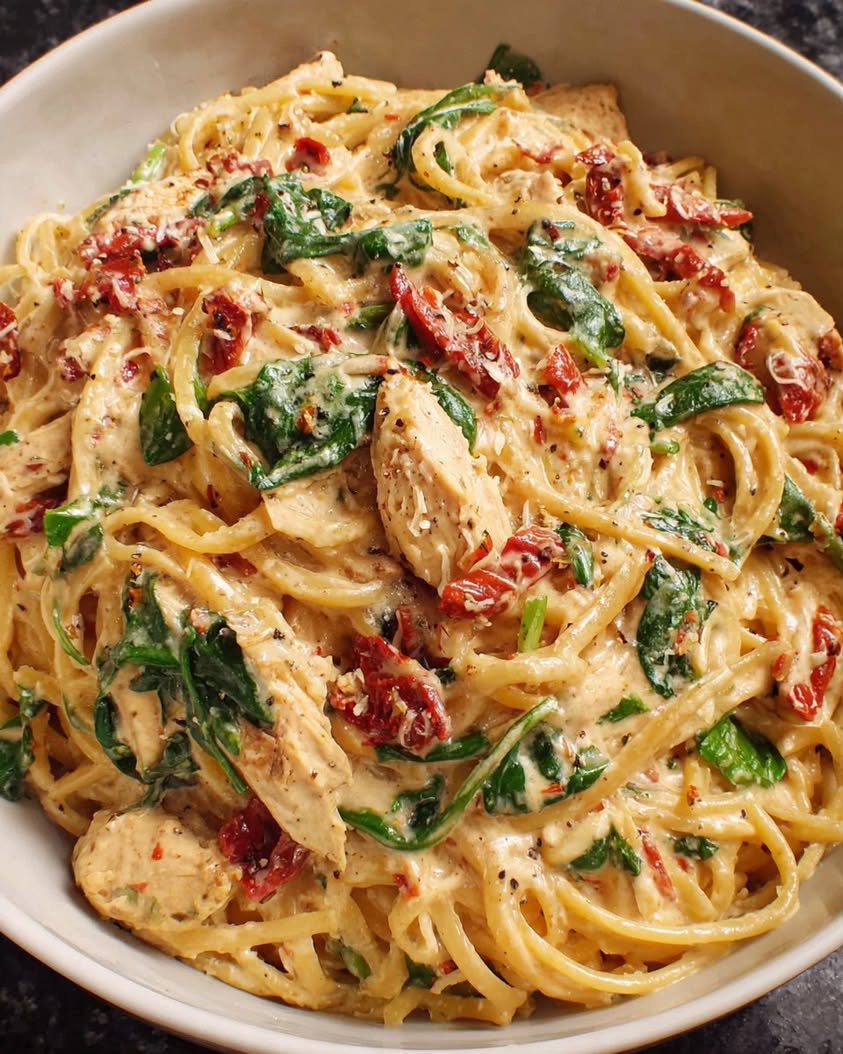
Spaghetti & Spinach with Sun-Dried Tomato Chicken Cream Sauce: A Weeknight Dinner Worth Craving
If you crave a dinner that feels restaurant-worthy yet comes together on a busy Tuesday, this Spaghetti & Spinach with Sun-Dried Tomato Chicken Cream Sauce belongs on your table. The dish pairs tender spaghetti with juicy seared chicken, wilted spinach, and a velvety cream sauce that carries the sweet-tangy punch of sun-dried tomatoes. Every forkful delivers comfort and brightness at the same time, and the whole meal lands on your plate in about forty minutes. You get bold flavor without a complicated technique list, which makes this recipe a reliable favorite for both new cooks and seasoned home chefs.
The magic of this Spaghetti & Spinach with Sun-Dried Tomato Chicken Cream Sauce starts with a simple fond built in the skillet. As the chicken sears, browned bits collect at the bottom of the pan, and those bits dissolve into the cream sauce to create deep savory flavor. Meanwhile, the sun-dried tomatoes release their concentrated sweetness, and fresh spinach folds in at the end for a pop of green and gentle earthiness. The sauce clings to each strand of pasta, so no bite feels dry or plain. You taste richness first, then a bright tomato tang, then a clean finish from the spinach.
Beyond flavor, this Spaghetti & Spinach with Sun-Dried Tomato Chicken Cream Sauce solves a real weeknight problem. It uses pantry staples you likely already own, it cooks in one skillet plus one pot, and it scales easily for a crowd. You can prep the ingredients in the morning and finish the dish in under half an hour at dinnertime. Families love it because picky eaters can adjust the spinach on their own plates, and adults love it because the sun-dried tomato cream sauce tastes far more complex than the effort suggests. Serve it once, and it quickly becomes part of your regular rotation.
Quick Recipe Highlights
- Flavor Profile: The sauce balances heavy cream richness with the sweet-tart intensity of sun-dried tomatoes. Garlic and a touch of Parmesan add savory depth. The result tastes bold yet balanced, never overly heavy.
- Texture: Seared chicken brings a tender, juicy bite against silky pasta. Wilted spinach adds a soft, yielding contrast. The cream sauce coats every strand without turning gluey.
- Aroma: Garlic sizzling in olive oil fills the kitchen first. Then the sun-dried tomatoes release a sweet, roasted scent. Finally, the cream and Parmesan bring a warm, nutty finish.
- Visual Appeal: Golden chicken slices sit atop a tangle of pasta flecked with ruby-red tomatoes and bright green spinach. A dusting of Parmesan finishes the plate with a snowy contrast.
- Skill Level Needed: This recipe suits beginners because it relies on basic searing, simmering, and tossing. You only need to watch the cream so it does not boil over. No advanced knife work or pastry skills are required.
- Special Equipment: A large skillet or braiser handles the chicken and sauce. A stockpot boils the spaghetti. Tongs make tossing easy, and a wooden spoon helps scrape up the browned bits.
Recipe Overview
- Difficulty Level: We rate this recipe easy because each step follows logically from the last. You sear chicken, build a sauce in the same pan, cook pasta, and combine everything. The technique list stays short, and the timing stays forgiving. Even a first-time cook can succeed with basic attention.
- Category: This dish works as a main course for dinner. It also fits lunch leftovers and casual entertaining. You can serve it as a standalone meal or pair it with a simple salad.
- Cuisine: The recipe draws on Italian-American tradition, where cream sauces and sun-dried tomatoes became popular in the 1980s and 1990s. It also borrows from Tuscan cooking, which often pairs chicken with spinach and tomatoes. The result feels familiar yet slightly elevated.
- Cost: A pound of spaghetti costs about two dollars, and chicken thighs or breasts run six to nine dollars. Cream, Parmesan, and sun-dried tomatoes add another six to eight dollars. The whole meal feeds four for roughly twenty dollars, which beats most takeout orders.
- Season: You can make this dish year-round, but it shines in fall and winter when comfort food appeals. In summer, fresh basil and cherry tomatoes make excellent additions. Spinach stays available in every season, so the recipe never depends on a narrow harvest window.
- Occasion: Weeknight dinners, casual dinner parties, and potluck gatherings all suit this recipe. It also works for date nights at home because the flavors feel special. Kids enjoy it too, which makes it a strong family option.
Why You’ll Love This Recipe
Taste and texture drive this dish from the first bite. The cream sauce carries a lush, coating quality that makes each strand of spaghetti feel indulgent. Sun-dried tomatoes deliver a concentrated sweetness that cuts through the fat, and the spinach adds a mild, grassy note that keeps the plate from feeling heavy. The chicken brings savory depth and a meaty chew, so the dish satisfies even hearty appetites. You get layers of flavor in every forkful, and none of them require hard-to-find ingredients.
Convenience makes this recipe a weeknight hero. You need about fifteen minutes of prep and twenty-five minutes of cooking, which fits between work and bedtime. Most of the ingredients live in your pantry or fridge already. The method uses one skillet and one pot, so cleanup stays manageable. You can also prep the chicken and chop the spinach ahead of time, then finish the dish quickly when hunger hits. That flexibility makes the recipe feel effortless on busy days.
Nutritional advantages give this dish extra appeal. Chicken provides lean protein, and spinach delivers iron, vitamin K, and fiber. Sun-dried tomatoes contribute antioxidants like lycopene, and Parmesan adds calcium. The cream raises the fat content, but you control the amount, and a moderate serving keeps the meal balanced. Pair it with a side salad, and you get a well-rounded plate that supports an active lifestyle without feeling like diet food.
Social and entertaining value rounds out the case for this recipe. The dish looks impressive on a platter, with its ruby tomatoes and green spinach against golden cream. Guests assume you spent hours in the kitchen, yet you actually finished in under an hour. You can double the batch for a crowd and keep it warm on the stove. For potlucks and casual parties, this Spaghetti & Spinach with Sun-Dried Tomato Chicken Cream Sauce earns compliments and requests for the recipe.
Cost-effectiveness seals the deal. Restaurant versions of this dish often cost eighteen to twenty-five dollars per plate. Making it at home feeds four for about twenty dollars total, and you often have leftovers for lunch. The ingredients stay accessible at any grocery store, and none of them require a specialty shop. You save money, eat better, and enjoy the satisfaction of cooking something that tastes far more expensive than it costs.
Historical Background and Cultural Significance
The origin story of this dish traces back to Italian-American kitchens in the late twentieth century. Sun-dried tomatoes arrived in the United States in the 1980s and quickly became a trendy ingredient in upscale restaurants. Chefs paired them with cream sauces to create rich, sweet-savory plates that felt modern and luxurious. Home cooks adopted the combination, and chicken cream pasta dishes entered the mainstream. Over time, spinach joined the recipe for color and nutrition, and spaghetti became the standard pasta choice.
Cultural importance ties the dish to the broader story of Italian-American cuisine. Immigrant cooks adapted traditional Italian ingredients to American pantries, and cream sauces represented that adaptation. In Italy, cream appears less often in pasta, but in the States, it became a signature element of dishes like Alfredo and vodka sauce. This recipe sits within that tradition, and it reflects how food cultures blend and evolve across generations and borders.
The evolution of the recipe shows how home cooks shape a dish over time. Early versions often used heavy cream alone, but later cooks added chicken broth to lighten the sauce. Some versions swapped spinach for basil or arugula, and others added mushrooms or artichokes. The core combination of sun-dried tomatoes, cream, chicken, and pasta stayed constant because it works. Each tweak built on the last, and the recipe grew into the flexible, forgiving dish home cooks love today.
Regional variations reveal how geography shapes flavor. In the American South, cooks sometimes add Cajun seasoning for heat. In the Northeast, garlic and oregano dominate the profile. In California, fresh herbs and lemon zest lighten the plate. Italian cooks might use pancetta instead of chicken and toss the sauce with rigatoni. These variations share a common thread, which is the sweet-tangy pull of sun-dried tomatoes against a creamy base. That thread connects kitchens across regions and generations.
Ingredient Deep Dive
Spaghetti serves as the backbone of this dish, and its history stretches back centuries in Italy. Durum wheat semolina gives spaghetti its firm bite and golden color. Nutritionally, it supplies complex carbohydrates and some protein, and enriched versions add iron and B vitamins. Look for brands with a rough, bronze-die texture, which holds sauce better. Store dry spaghetti in a cool, dark pantry for up to two years. For substitutions, linguine, penne, or fettuccine all work well and hold the cream sauce nicely.
Chicken brings lean protein and savory depth to the recipe. Cultures worldwide rely on chicken as a versatile, affordable meat, and its mild flavor absorbs seasonings well. A three-ounce portion delivers about twenty-five grams of protein plus selenium and B vitamins. Choose boneless, skinless thighs for juiciness or breasts for a leaner option. Store raw chicken in the coldest part of the fridge and cook it within two days. Firm tofu or shrimp make solid substitutes if you want a different protein.
Sun-dried tomatoes deliver the signature sweet-tart punch of this sauce. Mediterranean cooks have dried tomatoes in the sun for centuries to preserve the harvest, and the technique concentrates flavor and nutrients. These tomatoes contain lycopene, fiber, and vitamin C, and their umami quality boosts any sauce. Choose tomatoes packed in oil for softer texture or dry-packed for a chewier bite. Keep oil-packed tomatoes in the fridge after opening, and store dry ones in a cool pantry. Roasted red peppers offer a sweeter substitute, and tomato paste works in a pinch.
Fresh spinach adds color, earthiness, and a nutrition boost. Spinach originated in Persia and spread through Asia and Europe before reaching the Americas. It supplies iron, vitamin K, folate, and fiber, and it wilts quickly in heat. Choose vibrant, crisp leaves with no yellowing, and wash them well to remove grit. Store spinach in a damp paper towel inside a sealed bag for up to five days. Kale, Swiss chard, or arugula make easy swaps, and frozen spinach works when you drain it thoroughly.
Heavy cream creates the silky body of the sauce. Cream has enriched European cooking for centuries, and its fat carries flavor and coats the tongue. It provides fat-soluble vitamins and a small amount of calcium. Choose fresh cream with no additives, and check the date before buying. Keep cream in the coldest part of the fridge and use it within a week of opening. Half-and-half lightens the dish, and full-fat coconut milk makes a dairy-free substitute with a slight sweetness.
Parmesan and garlic round out the flavor base. Parmesan originated in northern Italy and ages for months to develop its nutty, salty character. It delivers calcium, protein, and umami. Buy a wedge and grate it fresh for the best melt and flavor. Wrap the wedge tightly and store it in the fridge for several weeks. Garlic has flavored cuisines worldwide for thousands of years and brings sulfur compounds with potential health benefits. Choose firm, heavy bulbs and store them in a cool, dry spot. Pecorino or nutritional yeast can stand in for Parmesan, and shallots can replace garlic in a milder profile.
Common Mistakes to Avoid
- Overcrowding the pan when searing chicken steams the meat instead of browning it. Work in batches and give each piece space, so you build the flavorful fond the sauce depends on.
- Boiling the cream sauce at a hard roll can cause it to break or turn grainy. Keep the heat low and stir gently once the cream goes in.
- Skipping the pasta water leaves you without a tool to loosen the sauce. Always reserve a cup before draining, because the starchy water helps the sauce cling.
- Adding spinach too early turns it to mush and dulls its color. Fold it in at the very end and let residual heat wilt it.
- Undercooking the garlic creates a raw bite, while burning it turns the sauce bitter. Sauté it for just thirty seconds until fragrant.
- Using dry-packed sun-dried tomatoes without rehydrating leaves hard, chewy pieces. Soak them in hot water for ten minutes or use oil-packed ones.
- Overcooking the pasta makes it mushy and unable to hold the sauce. Cook it one minute shy of the package time and finish it in the sauce.
- Seasoning only at the end leads to flat flavor. Salt the chicken before searing and season the sauce in layers as it builds.
- Letting the dish sit before serving causes the sauce to thicken and clump. Toss and plate right away, and loosen with pasta water if needed.
- Rushing the chicken rest time causes juices to run out and dry the meat. Let it rest five minutes before slicing so it stays juicy.
Essential Techniques
Searing chicken properly builds the flavor foundation for the entire sauce. Pat the meat dry, season it well, and heat the skillet until the oil shimmers. Place the chicken in the pan and leave it alone for several minutes, so a golden crust forms. Resist the urge to move it, because the crust releases naturally once it browns. Watch for a deep golden color and a slight pull from the pan as your cue. Common pitfalls include a cold pan and wet meat, both of which prevent browning. This technique matters because the browned bits dissolve into the cream sauce and deliver savory depth.
Building the cream sauce requires patience and gentle heat. After removing the chicken, sauté the garlic and sun-dried tomatoes in the same pan to lift the fond. Pour in the cream and broth, then stir constantly while the sauce thickens. Keep the heat at a low simmer, because a hard boil can split the cream. The sauce should coat the back of a spoon and look glossy, not oily. Taste as you go and adjust salt and pepper. This technique matters because a smooth, stable sauce defines the final texture of the dish.
Tossing pasta with sauce in the pan creates a cohesive plate. Add the drained spaghetti to the skillet along with a splash of pasta water, then toss vigorously with tongs. The starch in the water helps the sauce emulsify and cling to each strand. Keep the heat low and toss for about a minute, until the sauce coats evenly. Watch for a shiny, unified look, which signals a proper emulsion. This technique matters because it separates a restaurant-quality dish from one with sauce pooling at the bottom of the bowl.
Pro Tips for Perfect Spaghetti & Spinach with Sun-Dried Tomato Chicken Cream Sauce
Salt your pasta water generously, using about a tablespoon per gallon. Properly seasoned water flavors the spaghetti from the inside out, so the final dish needs less sauce-side salt. Add the pasta only after the water reaches a rolling boil, and stir during the first minute to prevent sticking.
Reserve at least one cup of pasta water before draining. Starchy water acts as a natural emulsifier and lets you loosen the sauce without diluting flavor. Add it a splash at a time when tossing, and stop when the sauce looks glossy and clings well.
Sear the chicken in batches if your skillet is small. Crowding traps steam and prevents browning, which costs you flavor. Give each piece room, and let the pan recover heat between batches for consistent results.
Slice sun-dried tomatoes into thin strips so they distribute evenly. Large chunks dominate a bite, while slivers spread sweetness through every forkful. If you use dry-packed tomatoes, soak them first and save the soaking liquid for the sauce.
Fold in the spinach off the heat and let it wilt from residual warmth. This keeps the leaves bright green and tender. Stir gently so the spinach folds through the pasta instead of clumping in one spot.
Grate Parmesan fresh for the best flavor and melt. Pre-shredded cheese often contains anti-caking agents that prevent smooth melting. Add most of the cheese to the sauce and save a little for finishing the plate.
Rest the chicken for five minutes before slicing so juices stay in the meat. Slice against the grain for the most tender bite. Thin slices integrate better with the pasta when you toss everything together.
Taste the sauce right before serving and adjust the salt, pepper, and a pinch of sugar if the tomatoes taste sharp. Small adjustments at the end make a big difference in the final balance.
Variations and Adaptations
Regional variations let you steer this dish toward different flavor profiles. Add Cajun seasoning and a pinch of cayenne for a Southern kick that pairs well with cream. Finish with lemon zest and fresh basil for a California-style plate that feels bright and light. Italian cooks might swap in pancetta and use rigatoni, and a splash of white wine adds complexity. Each region brings its own pantry to the table, and the dish adapts easily without losing its identity.
Seasonal adaptations keep the recipe fresh throughout the year. In summer, fold in cherry tomatoes and fresh basil instead of sun-dried tomatoes for a lighter bite. In fall, add roasted mushrooms or butternut squash cubes for earthy sweetness. Spring calls for peas or asparagus tips, which add a green crunch. Winter welcomes extra cream and a touch of nutmeg for warmth. The core method stays the same, and the produce shifts with the calendar.
Dietary modifications make the recipe accessible to more diners. Use gluten-free spaghetti and verify the broth and Parmesan are gluten-free for a celiac-safe version. Swap cream for full-fat coconut milk and skip the Parmesan for dairy-free diners. For vegan guests, replace chicken with chickpeas or firm tofu and use nutritional yeast in place of cheese. Each swap changes the flavor slightly, but the dish remains satisfying.
Flavor variations let you play with the sauce itself. Add a teaspoon of Dijon mustard for tang, or stir in pesto for a herbal boost. A pinch of red pepper flakes brings gentle heat, and a splash of white wine adds acidity. Smoked paprika contributes a subtle campfire note, while fresh thyme deepens the aroma. Try one change at a time so you can taste its impact and decide what you love.
Texture modifications let you customize the bite. Swap spaghetti for penne or rigatoni when you want sauce inside the tubes. Add toasted breadcrumbs for crunch, or fold in toasted pine nuts for richness. A handful of crispy pancetta adds a savory crackle, and a final shower of Parmesan gives a fine, snowy grit. These small changes keep the dish interesting without altering the core method.
Presentation alternatives suit different occasions. Serve the dish family-style in a wide bowl with a serving spoon, or plate individual portions with chicken fanned on top. A drizzle of olive oil and a basil sprig elevates a dinner-party plate. For a buffet, keep the pasta and sauce separate and let guests build their own bowls. Presentation changes the mood, and the recipe supports all of them.
Serving and Presentation Guide
Plating techniques shape the first impression of this dish. Twirl a portion of spaghetti onto a warm plate using tongs or a carving fork, then nestle sliced chicken beside it. Spoon extra sauce over the top so the plate glistens. Wipe the rim clean for a polished look. Warm plates keep the cream sauce from seizing, so heat them in a low oven for a few minutes before serving.
Garnishing ideas add color and texture to the plate. A shower of freshly grated Parmesan creates a snowy contrast against the red tomatoes. Torn basil leaves add a fresh, herbal note, and a crack of black pepper adds visual texture. Toasted pine nuts or breadcrumbs bring crunch, and a small basil sprig finishes the plate with height. Keep garnishes simple so the dish itself stays the star.
Traditional accompaniments round out the meal. A simple green salad with a lemon vinaigrette cuts the richness of the cream sauce. Warm crusty bread lets guests soak up extra sauce, and a glass of dry white wine complements the tomatoes. Garlic bread works for a casual night, and roasted vegetables add color and fiber for a balanced plate.
Modern serving suggestions fit contemporary tastes. Serve the dish in shallow bowls for a bistro feel, or present it on a large platter for a communal meal. A side of charred broccolini adds a smoky note, and a sprinkle of chili flakes appeals to heat lovers. For a lighter plate, serve a smaller pasta portion with a larger salad. These choices keep the meal flexible and current.
Temperature considerations matter for cream sauces. Serve the dish immediately after tossing, while the sauce is glossy and warm. Cream sauces thicken as they cool, so a lukewarm plate feels heavy. If you must hold the dish, keep it over low heat with a splash of pasta water and stir occasionally. Never microwave a plated portion, because the sauce can split.
Portion control tips help you serve appropriate amounts. A standard serving is about one and a half cups of pasta with a palm-sized piece of chicken. Use a measuring cup or a kitchen scale for accuracy if you track portions. Serve with a generous side of vegetables to fill the plate, and save extra sauce for another meal. Balanced portions keep the meal satisfying without overloading the plate.
Wine and Beverage Pairing
Wine pairings center on acidity and body to balance the cream sauce. A dry white like Pinot Grigio or Sauvignon Blanc cuts through the richness with bright acidity. An unoaked Chardonnay offers a rounder mouthfeel that matches the sauce’s texture. For red drinkers, a light Sangiovese or Pinot Noir works because the tannins stay soft. Avoid heavily oaked wines, which can clash with the tomatoes and make the dish taste bitter.
Non-alcoholic alternatives keep the meal inclusive. Sparkling water with lemon cleanses the palate between bites. Iced tea with a slice of orange offers gentle tannins that pair well with chicken. A virgin spritz with soda and bitters feels festive without alcohol. Cranberry juice mixed with soda gives a tart counterpoint to the cream. These options let every guest enjoy a thoughtful pairing.
Coffee and tea pairings rarely suit a cream pasta dinner, so save them for dessert. An espresso after the meal cuts richness and aids digestion. A light herbal tea like chamomile or mint finishes the evening gently. If you serve dessert, a black tea with bergamot notes complements chocolate or almond sweets. Keep the focus on the meal, and let coffee close the night.
Temperature considerations affect how beverages taste with the dish. Serve white wine well chilled at about forty-five to fifty degrees Fahrenheit. Red wines taste best slightly below room temperature, around sixty degrees. Sparkling water should be ice cold for the most refreshing contrast. A warm beverage dulls the palate, so keep drinks cool to balance the warm, rich pasta.
Serving suggestions make the pairing feel intentional. Pour wine into stemmed glasses to concentrate aroma, and offer water alongside for hydration. Set out a small pitcher of lemon water for the table so guests can refresh their palates. If you serve beer, choose a crisp pilsner or a Belgian witbier, both of which pair well with cream. Small touches like chilled glasses and a garnish elevate the experience.
Storage and Shelf Life
Storage methods determine how well leftovers hold up. Cool the dish within two hours of cooking, then transfer it to shallow airtight containers. Keep the pasta and sauce together, because separating them causes the pasta to dry out. Press plastic wrap against the surface before sealing to limit air exposure. Label the container with the date so you can track freshness.
Temperature requirements keep leftovers safe. Store the dish in the refrigerator at forty degrees Fahrenheit or below. Place containers on a middle shelf rather than the door, where temperatures fluctuate. Never leave the dish at room temperature for more than two hours. If you plan to freeze portions, chill them fully first to prevent ice crystals.
Container recommendations improve texture and flavor retention. Glass containers with locking lids resist stains and odors better than plastic. For single servings, use small containers so you reheat only what you need. Keep sauce-heavy portions in deeper containers to prevent leaks. Avoid foil, which reacts with acidic tomatoes and can affect taste.
Signs of spoilage help you decide when to discard leftovers. Sour smells, sliminess, or visible mold mean the dish has gone bad. Cream sauces spoil faster than tomato-based ones, so check within three days. If the sauce looks separated or watery after reheating, it may still be safe but the texture will suffer. When in doubt, throw it out.
Reheating instructions preserve the best texture. Warm leftovers gently on the stovetop over low heat with a splash of water or broth. Stir often and stop when the sauce loosens and coats the pasta. In the microwave, use medium power in short bursts and stir between intervals. Avoid high heat, which can split the cream and toughen the chicken.
Freezing guidelines extend shelf life but require care. Freeze the dish in portions for up to two months, accepting that the cream sauce may separate slightly on thawing. Thaw overnight in the fridge, then reheat gently and stir to recombine. For fresher results, freeze the sauce and chicken separately from the pasta. Cook fresh spaghetti on serving day for the best texture.
Make Ahead Strategies
A prep timeline makes weeknight cooking stress-free. Chop the chicken, slice the sun-dried tomatoes, and mince the garlic the night before. Wash and dry the spinach, then store it in a sealed bag. Grate the Parmesan and keep it in a container. With these steps done, you can finish the dish in about twenty-five minutes after work. This approach saves time without hurting quality.
Storage between steps keeps prepped ingredients fresh. Keep raw chicken in a sealed container in the coldest part of the fridge and use it within a day. Store chopped garlic and tomatoes in small bowls covered with plastic wrap. Keep spinach dry, because moisture speeds spoilage. Label everything with the date, and arrange the containers together so you can grab them quickly.
Quality impact assessment helps you decide what to prep ahead. Chopped vegetables and grated cheese hold up perfectly for a day or two. Cooked pasta, on the other hand, turns gummy when stored, so cook it fresh. The sauce tastes best the day it is made, though it holds for a couple of days. Focus prep on ingredients, not finished components.
Assembly tips speed up the final cook. Set out all ingredients before you turn on the stove, a habit chefs call mise en place. Measure the cream and broth in advance, and keep pasta water at the ready. Have the colander in the sink and a warm serving bowl nearby. With everything in place, the cooking flows smoothly from sear to sauce to toss.
Reheating guidelines for prepped components keep flavors intact. If you cook the chicken ahead, reheat it gently in the sauce so it stays moist. Warm the sauce over low heat and add the chicken near the end. Do not boil the cream, because it can split. Toss with freshly cooked pasta and finish with cheese for a just-made taste.
Fresh element additions lift make-ahead meals. Add a squeeze of lemon, torn basil, or a final shower of Parmesan right before serving. These small touches restore brightness and make the dish taste freshly made. A drizzle of olive oil adds gloss, and a crack of black pepper wakes up the flavors. Simple finishing steps keep leftovers from tasting tired.
Scaling Instructions
Halving the recipe works well for smaller households. Use half a pound of spaghetti and half a pound of chicken. Reduce the cream to three quarters of a cup, because a full half-cup can taste too rich for a smaller batch. Use a medium skillet instead of a large one, and expect slightly shorter cooking times. The dish serves two with a small lunch leftover.
Doubling or tripling the recipe suits gatherings and meal prep. Use the largest skillet you own, or sear the chicken in batches and build the sauce in a wide Dutch oven. Increase the cream proportionally, but add broth gradually and taste as you go. Cook pasta in two pots if one pot cannot hold the volume. Expect added time for browning and simmering, roughly ten to fifteen extra minutes.
Equipment adjustments keep quality high at scale. A wide, heavy-bottomed pan browns chicken more evenly than a small one. Use a large stockpot for bigger pasta batches, and keep a second sheet pan ready for resting chicken. Tongs and a spider strainer make handling larger volumes easier. Plan for extra bowls and platters so the finished dish does not sit in one crowded pan.
Timing modifications prevent mistakes at scale. Brown chicken in batches so the pan stays hot, adding a few minutes overall. Bring a larger pot of water to a boil early, because more water takes longer to heat. Simmer the sauce gently and hold finished components warm in a low oven. Build in a ten-minute buffer before serving so the meal lands on time.
Storage considerations for scaled batches keep leftovers safe. Divide extras into several shallow containers so they cool quickly. Keep portions sized for one or two meals, and label them with dates. If you plan to share with friends, pack in disposable containers for easy transport. Always cool food fully before sealing to avoid condensation and spoilage.
Nutritional Deep Dive
The macro breakdown shows a balanced, satisfying meal. Each serving delivers roughly forty to forty-five grams of carbohydrates from pasta, thirty grams of protein from chicken and cheese, and twenty to twenty-five grams of fat from cream and oil. Total calories land around five hundred to five fifty per serving. These numbers support a filling dinner without excess, and they scale with portion size.
Micronutrient analysis reveals hidden benefits. Spinach contributes iron, vitamin K, folate, and vitamin A. Sun-dried tomatoes add lycopene, potassium, and vitamin C. Chicken supplies selenium, niacin, and B6. Parmesan brings calcium and phosphorus. Together, these ingredients cover a wide range of daily needs and support energy, immunity, and bone health.
Health benefits extend beyond basic nutrition. Protein supports muscle repair and keeps you full longer. Fiber from spinach and tomatoes aids digestion. Antioxidants from tomatoes and garlic fight oxidative stress. Fat from cream helps absorb fat-soluble vitamins from the spinach. A moderate serving fits well into most eating patterns.
Dietary considerations help diners with specific needs. The dish contains gluten from pasta, dairy from cream and cheese, and meat from chicken. Those with lactose intolerance can use lactose-free cream and aged Parmesan, which contains little lactose. Celiac diners should use certified gluten-free pasta and check the broth. Vegetarians can skip the chicken and add chickpeas for protein.
Portion analysis guides mindful eating. One and a half cups of finished pasta with three ounces of chicken makes a balanced plate. Use a food scale if you track macros, and measure cream with a cup rather than pouring freely. Add extra spinach to bulk up the plate without many calories. Pair with a side salad to increase volume and fiber.
Weight management tips make the dish fit wellness goals. Reduce cream to half a cup and add extra broth for a lighter sauce. Use whole-wheat pasta for more fiber and a lower glycemic impact. Serve a smaller pasta portion with a double serving of spinach. These tweaks trim calories while keeping the flavors you love.
Dietary Adaptations
Gluten-free diners can enjoy this dish with a few swaps. Use certified gluten-free spaghetti made from rice, corn, or quinoa. Check that the broth and Parmesan contain no hidden gluten, and use gluten-free flour if you thicken the sauce. Cook the pasta in fresh water to avoid cross-contamination from shared pots. The dish tastes nearly identical with these changes.
Dairy-free versions rely on plant-based swaps. Replace heavy cream with full-fat coconut milk or cashew cream for a similar richness. Use nutritional yeast or a dairy-free Parmesan alternative for cheesy flavor. Check that the sun-dried tomatoes and broth contain no dairy. The sauce may look slightly different, but the flavor stays bold and satisfying.
Vegan adaptations go a step further. Swap chicken for chickpeas, white beans, or firm tofu browned in olive oil. Use coconut cream for the sauce and nutritional yeast for the cheese note. Add a pinch of smoked paprika to replace the savory depth of chicken. The result is a hearty plant-based pasta dish that captures the spirit of the original.
Low-carb and keto versions focus on reducing pasta. Serve the sauce and chicken over zucchini noodles, spaghetti squash, or palmini hearts of palm. Increase the spinach and sun-dried tomatoes for volume. Use heavy cream and Parmesan, which fit keto macros. Watch the tomatoes, because they contain some natural sugar. These swaps keep the dish flavorful and diet-friendly.
Paleo adaptations require grain and dairy swaps. Use spiralized sweet potato or zucchini for the pasta, and replace cream with coconut milk. Skip the Parmesan or use a paleo-approved cheese Print
Spaghetti & Spinach with Sun-Dried Tomato Chicken Cream Sauce
- Total Time: 45 minutes
- Yield: 4
Description
A creamy and flavorful pasta dish featuring tender chicken, sun-dried tomatoes, and fresh spinach in a rich cream sauce.
Ingredients
- 12 oz spaghetti
- 2 boneless, skinless chicken breasts, sliced
- 1 tbsp olive oil
- 1/2 cup sun-dried tomatoes, chopped
- 3 cloves garlic, minced
- 1 cup heavy cream
- 1/2 cup grated Parmesan cheese
- 4 cups fresh spinach
- Salt and pepper to taste
- Optional: red pepper flakes
Instructions
- Cook spaghetti according to package directions; drain and set aside.
- Heat olive oil in a large skillet over medium-high heat. Season chicken with salt and pepper, and cook until golden and cooked through, about 5-7 minutes. Remove chicken from skillet.
- In the same skillet, add garlic and sun-dried tomatoes; sauté for 1 minute. Pour in heavy cream and bring to a simmer. Stir in Parmesan cheese until melted.
- Add spinach and cook until wilted, about 2 minutes. Return chicken to skillet and add cooked spaghetti. Toss to combine and heat through. Serve hot.
Notes
You can customize the seasonings to taste.
- Prep Time: 15 minutes
- Cook Time: 30 minutes
- Method: Main
- Cuisine: American