Garlic Butter Steak Bites and Creamy Alfredo Tortellini Recipe: The Ultimate Comfort Food Mashup
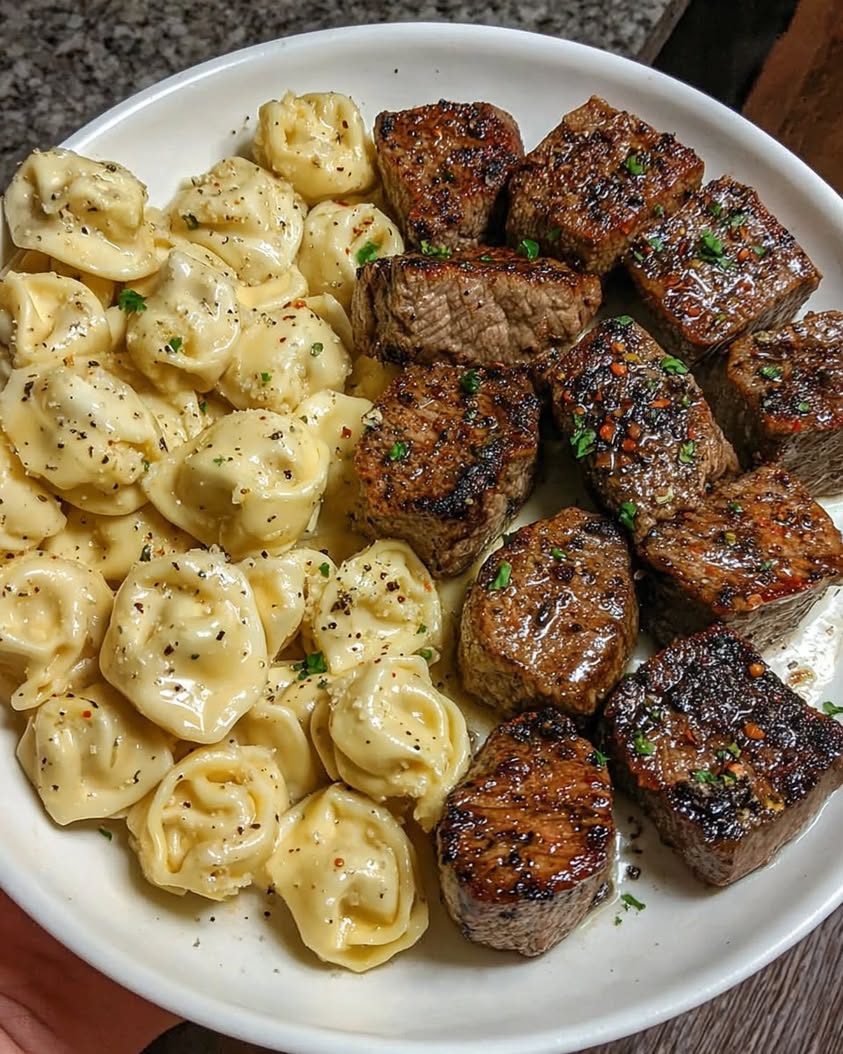
This Garlic Butter Steak Bites and Creamy Alfredo Tortellini Recipe brings together two beloved comfort foods in one unforgettable skillet meal. Imagine tender, juicy steak bites seared in rich garlic butter, tossed with pillowy cheese-filled tortellini and coated in a velvety homemade Alfredo sauce. The combination delivers a restaurant-quality dinner you can make at home in about 40 minutes, and it looks impressive enough to serve on date night yet easy enough for a busy weeknight.
The first time I made this Garlic Butter Steak Bites and Creamy Alfredo Tortellini Recipe, my family fought over the last spoonful. The sirloin bites develop a deep brown crust while staying pink and juicy inside. Meanwhile, the tortellini soaks up that garlicky cream sauce, and every forkful tastes like pure indulgence. Because this recipe uses simple pantry staples and one skillet, cleanup stays easy, and the flavor payoff is enormous.
If you love steakhouse flavors without the steakhouse bill, this recipe delivers. Additionally, the garlic butter steak bites cook in minutes, so you avoid overcooking expensive cuts. The creamy Alfredo tortellini comes together in the same pan, which means fewer dishes and deeper flavor. Whether you serve it for a cozy dinner at home or a small gathering with friends, this dish consistently earns rave reviews.
Quick Recipe Highlights
- Flavor Profile: Rich garlic butter coats savory steak, while Parmesan cream sauce adds tang and depth. Fresh parsley brightens the richness.
- Texture: Juicy, tender steak bites contrast beautifully with soft, chewy tortellini. The creamy sauce clings to every piece.
- Aroma: Toasted garlic, browned butter, and seared beef fill the kitchen with an irresistible smell. Parmesan adds a nutty note.
- Visual Appeal: Golden-brown steak, white cream sauce, and green parsley create a beautiful contrast. Cheese tortellini add plump, inviting shapes.
- Skill Level Needed: A confident beginner can nail this recipe with basic knife skills and a hot skillet. Timing matters most.
- Special Equipment: A large stainless steel or cast iron skillet works best for a proper sear. You also need a wooden spoon and tongs.
Recipe Overview
- Difficulty Level: This dish lands at easy to moderate because it involves searing steak and making a cream sauce. However, each step uses simple techniques anyone can learn quickly. The total process takes about 40 minutes from start to finish. Most home cooks succeed on the very first attempt.
- Category: This recipe works as a main course for dinner. It fits weeknight meals, date nights, and holiday dinners equally well. You can also serve it as a hearty pasta course.
- Cuisine: The dish blends American steakhouse tradition with Italian-American pasta comfort. Garlic butter steak bites draw from classic steakhouse cooking, while Alfredo tortellini comes from Italian-American cuisine. Together they create a modern fusion comfort meal. This style of cooking has become hugely popular in American home kitchens.
- Cost: Expect to spend roughly 18 to 24 dollars total for four servings. Sirloin tips and frozen tortellini keep costs reasonable. Parmesan and cream add a few dollars but deliver big flavor. Overall, this beats restaurant prices by a wide margin.
- Season: This recipe shines in fall and winter when comfort food cravings hit hardest. However, it works year-round thanks to readily available ingredients. Spring and summer versions benefit from fresh herbs and lighter sides. Cooler months make the creamy sauce especially satisfying.
- Occasion: Serve this dish for romantic date nights, family dinners, or casual gatherings with friends. It also works beautifully for holiday entertaining. The impressive presentation makes guests feel special.
Why You’ll Love This Recipe
The taste and texture appeal of this Garlic Butter Steak Bites and Creamy Alfredo Tortellini Recipe is genuinely hard to beat. Each bite delivers savory, garlicky beef with a perfectly seared crust, followed by creamy, cheesy pasta that melts in your mouth. The sauce carries hints of butter, Parmesan, and black pepper that complement the steak without overpowering it. Because the flavors build in one pan, every element tastes connected and intentional. Even picky eaters tend to fall in love with this dish.
Convenience and preparation benefits make this recipe a weeknight hero. You need just one large skillet, about 40 minutes, and a handful of easy-to-find ingredients. There is no need to boil a separate pot of water if you cook the tortellini directly in the sauce, though you can boil it separately for faster results. Cleanup takes minutes because everything happens in one pan. Furthermore, the recipe scales easily for larger crowds.
Nutritional advantages matter here too, despite the indulgent flavor. Sirloin provides a strong dose of high-quality protein, iron, and zinc. Cheese tortellini add calcium and some protein as well. Meanwhile, the cream sauce delivers satiety, so you feel full with a modest portion. When you pair this dish with a green vegetable or salad, you create a balanced plate. You control the sodium and preservatives by cooking from scratch.
Social and entertaining value runs high with this recipe. It looks and smells impressive the moment you set it on the table, so guests immediately feel excited. You can plate it family-style in a large bowl or serve it in individual pasta bowls. The dish pairs beautifully with wine, garlic bread, and a simple salad. Because it holds well for a short time, you can chat with guests instead of hovering over the stove. Hosting becomes genuinely enjoyable.
Cost-effectiveness and accessibility round out the appeal. Steakhouse dinners often cost 30 to 50 dollars per person, yet this homemade version feeds four for under 25 dollars. Sirloin tips, frozen tortellini, and everyday dairy items stay budget-friendly. You can find every ingredient at any standard grocery store. Therefore, this recipe delivers luxury flavor at a fraction of the price, which makes it a repeat favorite in many households.
Historical Background and Cultural Significance
The origin story of this dish combines two separate culinary traditions. Garlic butter steak bites trace back to American steakhouse culture, where chefs sear prime cuts in butter and aromatics. Alfredo tortellini, on the other hand, comes from Italian-American kitchens that adapted Italian pasta traditions for local tastes. When home cooks began combining the two in the 2010s, the mashup exploded on social media. Today it stands as a modern American comfort food classic.
Cultural importance plays a role because this recipe reflects how American cooking evolves through fusion. Italian immigrants brought tortellini and cream sauces to cities like New York and Chicago. Meanwhile, American beef culture celebrated the sizzling steakhouse experience. Combining these influences creates a dish that feels both nostalgic and new. Families across the country now serve versions of this meal for celebrations and cozy nights alike.
The evolution of the recipe shows how home cooks simplify restaurant techniques. Early versions required separate pans for steak and pasta. Modern one-skillet methods reduce cleanup while keeping flavors bold. Food bloggers and TikTok creators popularized quick versions using frozen tortellini and jarred sauce shortcuts. However, the from-scratch Alfredo version remains the gold standard for flavor. Over time, cooks have refined ratios and timing for consistent results.
Regional variations appear across the United States. In the South, cooks sometimes add Cajun seasoning for a spicy kick. In the Midwest, extra cream and cheese create an even richer sauce. West Coast versions often include mushrooms or spinach for freshness. Some Italian-American families swap tortellini for fettuccine or ravioli. Regardless of region, the core combination of garlic butter steak and creamy pasta stays constant.
Ingredient Deep Dive
Sirloin steak sits at the heart of this recipe. This cut comes from the rear of the cow and offers a great balance of flavor and affordability. Historically, sirloin has fed American families for generations because it delivers beefy taste without premium prices. Nutritionally, it supplies protein, iron, zinc, and B vitamins. When shopping, look for bright red color, fine marbling, and a firm texture. Store it in the coldest part of your fridge and use within three days. You can substitute ribeye, flank, or strip steak if you prefer.
Sirloin also rewards proper handling. Pat it completely dry before searing, because moisture steams the meat instead of browning it. Cut against the grain for maximum tenderness. Additionally, let the steak rest briefly before slicing so juices redistribute. These small steps make a huge difference in the final texture. If sirloin is unavailable, skirt steak or flat iron work beautifully.
Garlic provides the signature aroma and flavor of this dish. This allium has been cultivated for over 5,000 years across Asia and the Mediterranean. Cultures worldwide prize garlic for both medicine and cooking. It offers antioxidants and compounds that support heart health. Choose firm, heavy heads with tight papery skins. Store garlic in a cool, dry, dark place for weeks. Jarred minced garlic works in a pinch, though fresh cloves taste far superior.
Fresh garlic transforms when it hits hot butter. It sweetens and mellows, losing its harsh raw bite. Therefore, never burn garlic, because burnt garlic turns bitter and ruins the sauce. Add it late in the cooking process for the best results. You can also roast garlic beforehand for a deeper, sweeter flavor.
Butter brings richness and helps create the pan sauce. This dairy product has ancient roots in European and Middle Eastern cooking. American butter typically contains around 80 percent fat, which delivers incredible flavor. It provides vitamin A and small amounts of vitamin D. Choose unsalted butter so you control the sodium level. Keep it wrapped in the fridge and use within a month. Ghee or olive oil can replace butter for dairy-free needs.
Brown butter takes this recipe to another level. When butter melts and browns, milk solids toast and create nutty notes. This technique adds complexity to the steak bites and the Alfredo sauce. Watch for a golden color and a toasted aroma, then act quickly. Burnt butter tastes acrid, so pull the pan off heat at the right moment.
Tortellini stars as the pasta element of this dish. Legend says tortellini originated in Emilia-Romagna, Italy, inspired by the shape of Venus’s navel. Italians serve it in broth or with cream sauces, especially during holidays. The filled pasta provides carbohydrates, protein from the cheese filling, and calcium. Look for refrigerated or frozen tortellini with simple ingredient lists. Store it in the fridge for up to a week or freeze for months. Ravioli or fettuccine substitute easily.
Cheese tortellini specifically pairs well with Alfredo sauce. The ricotta and Parmesan filling echoes the sauce flavors, creating harmony. Three-cheese versions add extra depth. Check labels for fillers and excess sodium, because quality varies widely between brands.
Heavy cream forms the base of the Alfredo sauce. This ingredient became central to Italian-American cooking in the twentieth century. Cream delivers richness, body, and a silky mouthfeel. It contains fat-soluble vitamins and provides quick energy. Select cream with no added stabilizers or gums when possible. Keep it refrigerated and use within a week of opening. Half-and-half or evaporated milk work as lighter substitutes.
Parmesan cheese delivers salty, nutty umami to the sauce. Italians have produced this aged cheese for nearly a thousand years in Parma and Reggio Emilia. It offers protein, calcium, and a concentrated flavor that goes far. Buy a wedge and grate it fresh for the best melt and taste. Wrap the wedge tightly and refrigerate for months. Pecorino Romano or Grana Padano make fine alternatives.
Common Mistakes to Avoid
- Overcrowding the pan when searing steak causes steaming instead of browning. Work in batches so each piece gets direct contact with the hot surface. This step takes a few extra minutes but delivers far better texture.
- Skipping the pat-dry step leaves surface moisture on the meat. Wet steak will not develop a proper crust. Always blot the cubes thoroughly with paper towels before seasoning.
- Using low heat for the steak produces gray, tough results. High heat creates the Maillard reaction that builds deep flavor. Preheat the skillet until it shimmers before adding anything.
- Burning the garlic ruins the entire dish with bitterness. Add garlic after the steak has seared and lower the heat slightly. Stir constantly for just 30 seconds until fragrant.
- Adding cold cream to a hot pan can cause curdling. Temper the cream by warming it slightly or adding it slowly while stirring. Keep the heat at medium-low once the cream goes in.
- Overcooking the tortellini turns it mushy and pasty. Fresh tortellini needs only 3 to 5 minutes in simmering liquid. Frozen versions take slightly longer, so check package directions.
- Under-seasoning the pasta water or sauce creates flat flavor. Salt the cooking liquid generously, and taste the sauce before serving. Adjust with salt and pepper as needed.
- Letting the sauce sit too long without stirring causes it to thicken and clump. Stir occasionally and add a splash of cream or pasta water to loosen it. Serve promptly for the best texture.
- Cutting the steak with the grain leads to chewy bites. Identify the grain lines and slice perpendicular to them. This simple step dramatically improves tenderness.
- Forgetting to rest the steak before slicing wastes precious juices. Give the seared cubes a few minutes on a board. The resting period keeps the meat moist and flavorful.
Essential Techniques
Searing steak properly ranks as the most important technique in this recipe. High heat creates a brown crust through the Maillard reaction, which generates hundreds of flavor compounds. To master it, preheat your skillet until a drop of water evaporates instantly. Dry the meat, season it, and lay pieces flat without crowding. Avoid moving the pieces for the first minute so the crust forms. You know it worked when you see a deep brown surface and smell a rich, roasted aroma.
Building a cream sauce requires patience and the right heat level. Alfredo sauce breaks when it gets too hot, so medium-low heat becomes your friend. Add cream gradually while stirring, then let it thicken gently. Whisk in grated Parmesan off the heat to prevent clumping. The sauce should coat the back of a spoon and look glossy, not grainy. If it looks oily or separated, whisk in a tablespoon of warm cream to bring it back.
Cooking tortellini correctly protects their delicate texture. Fresh tortellini cook in just a few minutes, while frozen ones need a bit longer. Taste one before draining to check for doneness. The pasta should feel tender but still hold its shape. Reserve a cup of cooking water before draining, because that starchy liquid thins the sauce beautifully. Never rinse tortellini, since the surface starch helps sauce cling.
Balancing flavors finishes the dish like a pro. Taste the sauce and check for salt, richness, and brightness. If it tastes flat, add salt. If it feels too heavy, add a squeeze of lemon or extra parsley. If it needs depth, add more Parmesan. This tasting process takes thirty seconds and transforms good results into great ones. Trust your palate and adjust boldly.
Pro Tips for Perfect Garlic Butter Steak Bites and Creamy Alfredo Tortellini Recipe
First, freeze the steak for 15 minutes before cutting. Slightly firm meat holds its shape and lets you cut uniform cubes. Uniform pieces cook evenly and look beautiful on the plate. This small step makes a noticeable difference.
Second, season the steak cubes generously with salt and pepper right before searing. Salt draws out moisture if added too early, so timing matters. A heavy hand with pepper adds a nice bite against the creamy sauce.
Third, use a stainless steel or cast iron skillet rather than nonstick. These materials develop a better sear and create fond that flavors the sauce. Plus, you can deglaze without worrying about scratching the surface.
Fourth, add a splash of beef broth or white wine after searing the steak. This step lifts the browned bits from the pan and adds incredible depth. Let the liquid reduce by half before adding cream.
Fifth, grate your own Parmesan cheese for the smoothest sauce. Pre-shredded cheese contains anti-caking agents that prevent proper melting. Fresh grating takes two minutes and delivers superior results.
Sixth, reserve pasta water before draining the tortellini. This starchy liquid thins the Alfredo sauce without diluting flavor. Add it one tablespoon at a time until you reach the perfect consistency.
Seventh, finish with fresh parsley and a pinch of red pepper flakes. The herbs add brightness, while the flakes bring gentle heat. These garnishes also make the dish look restaurant-worthy.
Eighth, serve immediately in warm bowls. This dish tastes best hot, and warm bowls keep it that way longer. A quick rinse of the bowls with hot water does the trick.
Variations and Adaptations
Regional variations let you tailor this dish to local tastes. Southern cooks often add Cajun or Creole seasoning to the steak for a spicy kick. Midwestern versions double the cream and cheese for extra richness. Italian-American families might use a splash of Marsala wine in the sauce. Southwestern cooks sometimes add diced green chiles and cumin. Each regional twist keeps the core recipe intact while adding local character.
Seasonal adaptations keep the dish exciting all year long. In summer, toss in cherry tomatoes and fresh basil for brightness. Fall versions benefit from sauteed mushrooms and thyme. Winter calls for extra cream and a touch of nutmeg. Spring welcomes asparagus tips and lemon zest. These adjustments align the recipe with what looks best at the market.
Dietary modifications make this recipe accessible to more people. Swap regular tortellini for gluten-free versions found in most stores. Use coconut cream and nutritional yeast for a dairy-free Alfredo. Plant-based steak alternatives work surprisingly well for vegan eaters. Each swap changes the dish slightly, yet the spirit stays intact.
Flavor variations allow endless creativity. Add sun-dried tomatoes for tangy sweetness. Stir in pesto for a basil-forward twist. Use truffle oil for an upscale touch. Chipotle cream brings smoky heat. Bourbon or brandy added to the pan creates a sophisticated edge. Choose one variation at a time so flavors stay balanced.
Texture modifications suit different preferences. Add toasted breadcrumbs for crunch. Stir in crispy pancetta or bacon for contrast. Fold in sauteed spinach for body. Toasted pine nuts deliver a satisfying bite. Each addition layers new sensations into the dish.
Presentation alternatives keep serving fresh. Plate in individual ramekins for elegant portions. Serve over a bed of mashed potatoes for extra comfort. Spoon into hollowed bread bowls for a fun twist. Skewer the steak bites as an appetizer version. These options make the recipe versatile for any gathering.
Serving and Presentation Guide
Plating techniques turn this dish into a showstopper. Twirl a portion of tortellini in the center of a shallow bowl using tongs. Arrange steak bites around the pasta in a ring. Spoon extra sauce over the top for glossy shine. This simple approach looks intentional and elegant without much effort.
Garnishing ideas elevate the visual appeal instantly. Sprinkle chopped fresh parsley for color. Add shaved Parmesan curls for texture. A pinch of red pepper flakes brings a pop of red. Fresh basil leaves offer a fragrant touch. Choose one or two garnishes so the plate stays clean.
Traditional accompaniments round out the meal. Warm garlic bread soaks up extra sauce beautifully. A simple green salad with lemon vinaigrette cuts the richness. Steamed broccoli or roasted asparagus add color and nutrition. Crusty Italian bread works as a rustic alternative.
Modern serving suggestions bring a fresh perspective. Pair with roasted Brussels sprouts and balsamic drizzle. Serve alongside a charcuterie board for a party spread. Offer cauliflower rice for a lower-carb option. Grilled zucchini ribbons add a light summer touch.
Temperature considerations matter for the best experience. Serve the dish hot, between 130 and 140 degrees Fahrenheit. Warm the bowls or plates beforehand. Avoid letting plates sit at room temperature for long. Cold Alfredo sauce loses its silky texture.
Portion control tips help with balanced eating. A serving size of about one and a half cups works well as a main course. Pair with a vegetable side to fill the plate. Smaller portions suit lighter appetites. Leftovers reheat beautifully for lunch the next day.
Wine and Beverage Pairing
Wine pairings enhance the meal significantly. A medium-bodied red like Merlot or Chianti complements the steak without overpowering the cream. For white wine lovers, an oaked Chardonnay brings buttery notes that match the Alfredo. A dry Rosé offers fresh acidity that cuts through richness. Avoid heavy tannic wines like Cabernet Sauvignon, which clash with cream sauces.
Non-alcoholic alternatives keep everyone included. Sparkling water with lemon cleanses the palate between bites. Iced tea with a hint of peach pairs surprisingly well. Cranberry spritzer adds tart balance. Homemade lemonade offers sweet-tart refreshment. These options feel festive without alcohol.
Coffee and tea pairings work for after-dinner enjoyment. A medium-roast coffee brings nutty notes that echo the Parmesan. Earl Grey tea offers bergamot brightness. Chamomile tea soothes after a rich meal. Avoid heavily flavored teas that compete with the food.
Temperature considerations affect enjoyment. Red wines taste best at 60 to 65 degrees Fahrenheit. Whites shine at 45 to 50 degrees. Serve sparkling beverages well chilled. Coffee should be hot but not scalding.
Serving suggestions for beverages include proper glassware. Use wide-bowl wine glasses to release aromas. Offer water glasses alongside wine. Provide coasters and napkins. A small pitcher for water keeps the table tidy.
Storage and Shelf Life
Storage methods protect the quality of leftovers. Cool the dish within two hours of cooking. Transfer to shallow airtight containers for faster chilling. Separate steak from pasta if possible, since they reheat differently. Label containers with the date for safety.
Temperature requirements keep food safe. Refrigerate at 40 degrees Fahrenheit or below. Never leave the dish at room temperature for more than two hours. Bacteria grow quickly in the danger zone between 40 and 140 degrees. When in doubt, throw it out.
Container recommendations make a difference. Glass containers resist stains and odors better than plastic. BPA-free plastic works well for short-term storage. Divide into single portions for easier reheating. Press plastic wrap against the surface to prevent skin formation.
Signs of spoilage tell you when to discard. Sour smells indicate bacterial growth. Slimy texture on the pasta means it has gone bad. Mold appears as fuzzy spots in various colors. Discoloration of the cream sauce signals trouble. Trust your senses and discard anything questionable.
Reheating instructions preserve texture. Warm gently on the stovetop over medium-low heat. Add a splash of cream or broth to loosen the sauce. Microwave in 30-second intervals, stirring between each. Avoid high heat, which toughens the steak.
Freezing guidelines extend shelf life. Freeze in airtight containers for up to two months. Thaw overnight in the refrigerator before reheating. The cream sauce may separate slightly after freezing, so whisk well. Fresh parsley added after reheating restores brightness.
Make Ahead Strategies
A prep timeline keeps cooking stress-free. Chop the steak and refrigerate up to 24 hours ahead. Grate the Parmesan and store it in an airtight container. Measure spices into small bowls for quick assembly. Wash and chop parsley the morning of serving. These steps cut active cooking time in half.
Storage between steps protects quality. Keep raw steak separate from other ingredients. Store prepped vegetables in labeled containers. Refrigerate sauce components until ready to cook. Bring everything to room temperature before starting.
Quality impact assessment helps set expectations. Fully assembled dishes taste best fresh, though leftovers hold well for two days. Prepped ingredients maintain near-perfect quality for 24 hours. Sauces made ahead may thicken, so adjust with cream. Plan accordingly for the best results.
Assembly tips streamline the final steps. Have all ingredients within arm’s reach before turning on the stove. Preheat the skillet while you gather everything. Cook steak first, then build the sauce in the same pan. Toss pasta last so it stays tender.
Reheating guidelines for make-ahead versions mirror standard methods. Warm gently and adjust consistency with liquid. Taste and reseason before serving. Fresh herbs and cheese revive the dish.
Fresh element additions make leftovers taste new. Add a squeeze of lemon before serving. Toss in fresh spinach that wilts from residual heat. Top with crispy bacon or breadcrumbs. These touches transform yesterday’s dinner into a fresh meal.
Scaling Instructions
Halving the recipe works easily for two servings. Use half the steak, tortellini, cream, and cheese. Keep the garlic amount the same for bold flavor. Reduce the skillet size to avoid overcrowding. Cooking times stay nearly identical.
Doubling or tripling requires planning. Use a larger skillet or work in batches for the steak. Increase the sauce ingredients proportionally. Cook pasta in a separate large pot for bigger batches. Keep finished components warm in a low oven.
Equipment adjustments prevent problems. A 12-inch skillet handles a doubled recipe with care. For tripling, use two skillets or a large Dutch oven. Invest in a pasta pot with a colander insert for big batches. Tongs and a sturdy wooden spoon become essential.
Timing modifications matter with larger batches. Searing takes longer because you cook in batches. Sauce reduction may need extra minutes. Pasta cooks in the same time regardless of quantity. Plan an extra 10 to 15 minutes for doubled recipes.
Storage considerations change with volume. Larger containers fill quickly, so plan space in advance. Portion extras into single servings before chilling. Share with neighbors or freeze for later. Leftovers keep for three days in the fridge.
Nutritional Deep Dive
The macro breakdown of this dish provides substantial energy. Each serving delivers roughly 700 to 800 calories. Protein lands around 40 grams thanks to the steak and cheese. Fat reaches about 45 grams from butter, cream, and cheese. Carbohydrates total about 45 grams, mostly from the tortellini. These numbers support an active lifestyle.
Micronutrient analysis reveals surprising benefits. Sirloin provides iron, zinc, and B12 for energy and immunity. Parmesan contributes calcium and phosphorus for bone health. Garlic adds manganese and vitamin B6. Cream supplies vitamin A and D. Together these nutrients support overall wellness.
Health benefits extend beyond basic nutrition. Protein promotes satiety and muscle repair. Calcium supports strong bones. Iron prevents fatigue. Antioxidants from garlic fight inflammation. Enjoying this dish occasionally fits a balanced diet.
Dietary considerations matter for special needs. Those watching sodium should use unsalted butter and low-sodium broth. People with lactose intolerance may need dairy-free swaps. Individuals managing blood sugar should moderate pasta portions. Always consult a professional for personalized advice.
Portion analysis helps with mindful eating. A one-and-a-half-cup serving satisfies most adults. Pair with vegetables to balance the plate. Smaller portions suit children and lighter appetites. Second helpings are fine occasionally, so enjoy without guilt.
Weight management tips keep the dish in rotation. Use half-and-half instead of heavy cream for fewer calories. Add extra vegetables to increase volume. Choose lean sirloin over fattier cuts. Practice portion awareness without strict restriction.
Dietary Adaptations
Gluten-free versions require simple swaps. Choose gluten-free tortellini from brands like Conte’s or Cappello’s. Verify that the broth and seasonings contain no hidden gluten. Use cornstarch instead of flour if you thicken the sauce. These changes keep the dish safe for celiac diners.
Dairy-free adaptations work better than you might expect. Replace butter with vegan butter or olive oil. Use full-fat coconut cream for the Alfredo base. Nutritional yeast adds cheesy flavor without dairy. Choose dairy-free tortellini or make your own with cashew ricotta.
Vegan versions skip animal products entirely. Use plant-based steak alternatives like seitan or portobello mushrooms. Coconut cream and cashew cream replace dairy cream. Nutritional yeast and miso paste create umami depth. The result satisfies plant-based eaters beautifully.
Low-carb adaptations cut the pasta. Swap tortellini for hearts of palm noodles or zucchini noodles. Add extra steak to keep protein high. Use heavy cream without thickeners. This version suits keto and diabetic diets.
Keto versions keep fat high and carbs low. Zucchini noodles replace tortellini entirely. Butter and heavy cream fit keto macros perfectly. Parmesan adds flavor without carbs. Pair with a large green salad for balance.
Paleo adaptations avoid grains and dairy. Use spiralized vegetables instead of pasta. Replace butter with ghee or coconut oil. Coconut cream makes the Alfredo sauce paleo-friendly. Grass-fed steak boosts nutrient quality.
Low-FODMAP versions help sensitive stomachs. Garlic infuses flavor through oil rather than direct consumption. Use lactose-free cream and hard aged cheeses. Choose gluten-free pasta without high-FODMAP additives. These tweaks keep the dish gentle.
Other specific diets can adapt this recipe too. Mediterranean diets favor olive oil and extra vegetables. Whole30 eliminates dairy and grains, so use compliant swaps. Autoimmune protocol versions skip nightshades and dairy. Each adaptation requires care but remains possible.
Troubleshooting Guide
Texture issues often stem from heat and timing. Tough steak means you overcooked it, so aim for medium-rare. Mushy pasta signals overcooking, so check it early. Grainy sauce results from overheating, so lower the temperature. Fix each issue by adjusting technique next time.
Flavor balance problems have simple solutions. Too salty means you added too much Parmesan or salt. Add cream or unsalted broth to dilute. Too bland means you need more salt, garlic, or acid. A squeeze of lemon often wakes up flat flavors. Too rich means you should add brightness with herbs or vinegar.
Temperature problems ruin consistency. A cold pan prevents searing, so preheat properly. Overheated cream curdles, so keep heat moderate. Cold plates cool the food fast, so warm them. Each fix improves the final dish.
Equipment challenges arise with the wrong tools. A thin pan burns easily, so use heavy-bottomed cookware. Dull knives crush steak instead of slicing, so sharpen regularly. Small skillets crowd the meat, so cook in batches. The right tools make cooking enjoyable.
Ingredient substitutions change results subtly. Ground beef works but loses the steakhouse feel. Dried herbs replace fresh at one-third the amount. Jarred garlic saves time but tastes milder. Each swap calls for small adjustments.
Timing concerns plague busy cooks. Overlapping tasks saves minutes. Prep everything before turning on the stove. Cook pasta while the steak rests. These strategies keep dinner on schedule.
Recipe Success Stories
Community feedback confirms this recipe’s popularity. Readers report making it weekly for their families. Many say it replaced their usual pasta night rotation. Photos shared online show beautiful, glossy results. The consistent praise speaks to the recipe’s reliability.
Variation successes inspire new ideas. One reader added sun-dried tomatoes and never looked back. Another used venison instead of beef with great results. A vegetarian version with mushrooms won over skeptics. These stories prove the recipe’s flexibility.
Adaptation stories highlight creativity. A busy mom prepped everything on Sunday for easy weeknight dinners. A college student made it in a dorm kitchen with a single burner. A grandmother passed the recipe to her grandchildren. Each story shows how food brings people together.
Reader suggestions improve the recipe over time. Many recommend adding a pinch of nutmeg to the sauce. Others suggest finishing with truffle oil for special occasions. A few swap in smoked paprika for depth. These tips enrich the cooking experience.
Photography tips help readers capture beautiful shots. Natural light works best for creamy sauces. Shoot from a 45-degree angle for depth. Garnish right before photographing for freshness. A simple linen napkin adds rustic charm.
Frequently Asked Questions
Can I use a different cut of steak for this recipe? Yes, many cuts work beautifully. Ribeye, strip steak, and flank steak all deliver excellent results. Choose tender cuts with good marbling for the best texture. Avoid tough cuts like chuck unless you marinate them first. Adjust cooking times based on thickness.
How do I prevent the Alfredo sauce from curdling? Keep the heat at medium-low once you add cream. Stir constantly and add the cream slowly. Temper cold cream by warming it slightly first. If curdling happens, whisk in a tablespoon of warm cream to smooth it out.
Can I make this recipe ahead of time? You can prep ingredients up to 24 hours ahead. However, the finished dish tastes best fresh. If making ahead, store components separately and assemble just before serving. Reheat gently with a splash of cream.
What is the best tortellini for this dish? Cheese tortellini works best because it complements the Alfredo sauce. Refrigerated versions offer the best texture. Frozen tortellini provides convenience with good results. Avoid dried tortellini, which tends to taste tough.
How do I keep the steak bites juicy? Sear over high heat for a short time. Do not overcook past medium-rare. Let the meat rest before slicing. Cut against the grain for tenderness. These steps lock in juices.
Can I use jarred Alfredo sauce instead of homemade? Yes, jarred sauce works in a pinch. However, homemade tastes far superior and takes only minutes. If using jarred, doctor it with extra garlic, Parmesan, and cream. The result improves dramatically with small additions.
Is this recipe spicy? No, this recipe is mild and creamy. The red pepper flakes are optional. Add more if you enjoy heat. Otherwise, skip them entirely. The dish suits all spice tolerance levels.
What sides pair well with this dish? Garlic bread, green salads, and roasted vegetables all work beautifully. Steamed broccoli adds color and nutrition. A simple Caesar salad offers crunch. Crusty bread soaks up extra sauce.
How long do leftovers last? Store leftovers in airtight containers in the refrigerator. They keep safely for up to three days. Reheat gently on the stovetop or in the microwave. Add cream or broth to restore consistency Print
Garlic Butter Steak Bites & Creamy Alfredo Tortellini
- Total Time: 45 minutes
- Yield: 4
Description
Tender, juicy steak bites seared in garlic butter, served alongside cheese tortellini tossed in a rich, creamy Alfredo sauce. A decadent and satisfying meal perfect for a special dinner.
Ingredients
- 1 lb sirloin steak, cut into 1-inch cubes
- 2 tablespoons olive oil
- 4 tablespoons unsalted butter, divided
- 4 cloves garlic, minced
- 1 teaspoon salt
- 1/2 teaspoon black pepper
- 1/2 teaspoon smoked paprika
- 1 (20 oz) package cheese tortellini
- 1 cup heavy cream
- 1/2 cup grated Parmesan cheese
- 1/4 teaspoon nutmeg
- Fresh parsley, chopped (for garnish)
Instructions
- Season steak bites with salt, pepper, and smoked paprika.
- Heat olive oil in a large skillet over high heat. Add steak bites and sear for 2-3 minutes per side until browned and cooked to desired doneness. Remove steak from skillet and set aside.
- Reduce heat to medium. In the same skillet, melt 2 tablespoons butter. Add minced garlic and cook for 30 seconds until fragrant.
- Add heavy cream and bring to a simmer. Stir in Parmesan cheese and nutmeg. Cook until sauce thickens slightly, about 3-4 minutes.
- Meanwhile, cook tortellini according to package instructions. Drain.
- Add cooked tortellini to the Alfredo sauce and toss to coat. Add remaining 2 tablespoons butter and stir until melted.
- Return steak bites to the skillet and gently toss with the pasta. Cook for 1-2 minutes to heat through.
- Garnish with fresh parsley and serve hot.
Notes
You can customize the seasonings to taste.
- Prep Time: 15 minutes
- Cook Time: 30 minutes
- Method: Main
- Cuisine: American