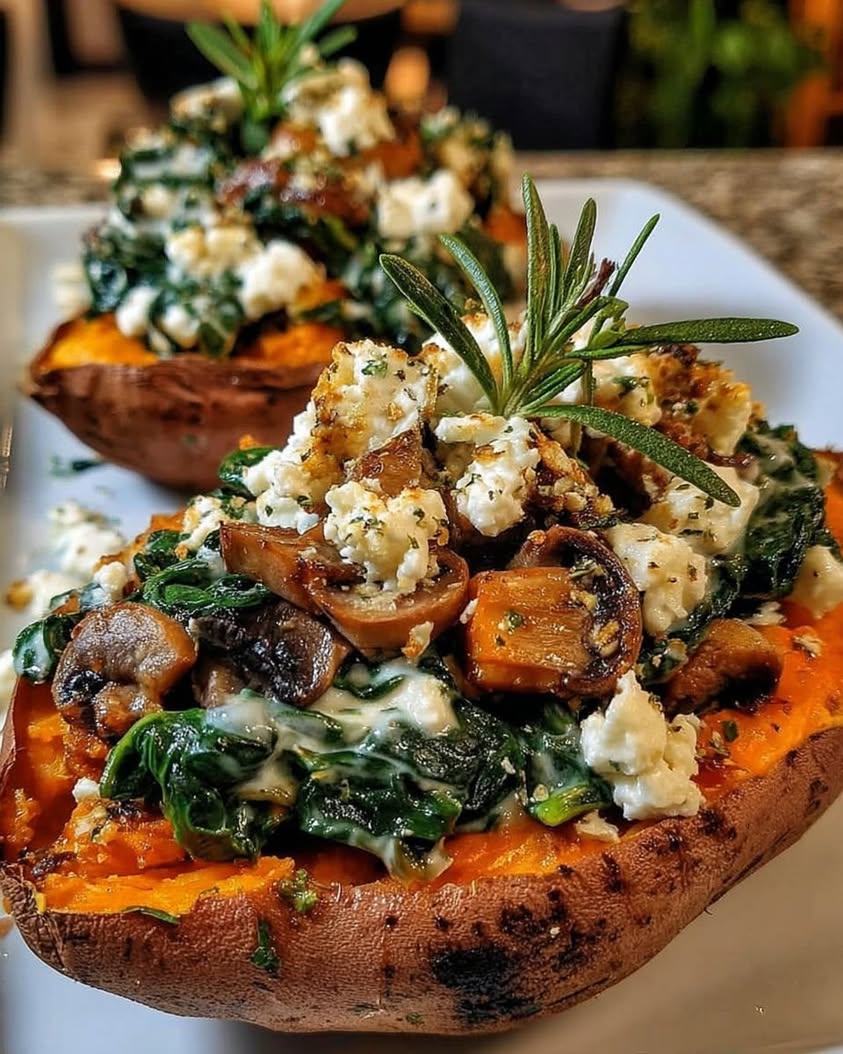
Stuffed Sweet Potatoes with Spinach, Mushroom, Feta and Rosemary Drizzled with Lemon Garlic Yogurt Sauce: A Mediterranean-Inspired Comfort Food
Stuffed Sweet Potatoes with Spinach, Mushroom, Feta and Rosemary Drizzled with Lemon Garlic Yogurt Sauce bring together the earthy sweetness of roasted sweet potatoes and the savory depth of sautéed mushrooms and wilted spinach. Moreover, the tangy crumble of feta cheese and the bright, creamy drizzle of lemon garlic yogurt sauce transform simple ingredients into a restaurant-worthy meal. This recipe celebrates Mediterranean flavors while honoring the comforting appeal of a loaded baked potato. Consequently, you get a dish that feels indulgent yet nourishes your body with vitamins, fiber, and protein. Whether you serve these stuffed sweet potatoes for a weeknight dinner or a weekend gathering, they always impress.
If you have been searching for a healthy stuffed sweet potato recipe that does not sacrifice flavor, your search ends here. The combination of spinach, mushroom, feta, and rosemary creates a rich, aromatic filling that pairs beautifully with the natural caramelization of roasted sweet potatoes. Meanwhile, the lemon garlic yogurt sauce adds a refreshing zip that cuts through the richness and lifts every bite. As a result, this dish balances sweet, savory, tangy, and creamy elements in perfect harmony. Plus, the recipe comes together with minimal fuss, making it ideal for both beginner cooks and seasoned home chefs.
Furthermore, this stuffed sweet potatoes with spinach, mushroom, feta and rosemary recipe fits seamlessly into many eating styles. It works as a vegetarian main course, a hearty side dish, or a meal-prep staple you can assemble ahead of time. Because the ingredients are affordable and widely available, you can enjoy a nourishing Mediterranean-inspired meal without breaking your budget. In addition, the lemon garlic yogurt sauce comes together in minutes and doubles as a dressing for salads, grilled vegetables, or grain bowls. Therefore, this recipe delivers exceptional value in every sense.
Quick Recipe Highlights
- Flavor Profile: The roasted sweet potatoes deliver natural caramel sweetness, while the sautéed mushrooms and spinach add deep umami and earthy notes. Feta cheese contributes a salty, tangy bite, and the lemon garlic yogurt sauce brings bright citrus and creamy richness. Rosemary ties everything together with a piney, aromatic finish.
- Texture: You get a tender, fluffy sweet potato interior that contrasts beautifully with the slightly crisp skin. The mushroom and spinach filling offers a soft, savory bite, while crumbled feta adds a subtle crumble. Finally, the silky yogurt sauce coats your palate and creates a luscious mouthfeel.
- Aroma: As the sweet potatoes roast, their caramelized sugars fill your kitchen with warmth and comfort. The rosemary and garlic release fragrant oils as they hit the hot pan, creating an irresistible savory perfume. Meanwhile, the lemon zest in the yogurt sauce adds a fresh, citrusy top note that brightens the entire dish.
- Visual Appeal: The vibrant orange flesh of the sweet potatoes creates a stunning base for the dark green spinach and golden-brown mushrooms. White feta crumbles scatter across the top like little clouds, and the creamy yogurt sauce drizzle adds elegant contrast. A final sprinkle of fresh rosemary or lemon zest makes the plate look polished and inviting.
- Skill Level Needed: This recipe requires only basic cooking skills, such as roasting, sautéing, and mixing. If you can chop vegetables and operate an oven, you can make this dish successfully. Therefore, it suits beginners who want an impressive result without advanced technique.
- Special Equipment: You need a sheet pan or baking dish for roasting the sweet potatoes. A large skillet handles the mushroom and spinach filling, and a small bowl works for whisking the lemon garlic yogurt sauce. Additionally, a fork or small spoon helps fluff the sweet potato interiors before stuffing.
Recipe Overview
- Difficulty Level: This recipe earns an easy rating because it relies on straightforward techniques that anyone can master. Roasting sweet potatoes requires no special skill, and sautéing mushrooms and spinach takes only a few minutes of attention. The yogurt sauce comes together with simple whisking, and the final assembly involves basic spooning and drizzling. Consequently, even a first-time cook can produce a beautiful, flavorful result.
- Category: This dish functions as a main course for lunch or dinner, yet it also works beautifully as a hearty side dish alongside grilled chicken or fish. Additionally, you can serve it as a vegetarian entrée for holiday gatherings or potlucks. Because it satisfies hunger and delivers bold flavor, it fits multiple menu roles with ease.
- Cuisine: The recipe draws inspiration from Mediterranean and Middle Eastern culinary traditions, where stuffed vegetables and yogurt-based sauces appear frequently. Sweet potatoes originated in the Americas, but the filling ingredients reflect Greek, Turkish, and Levantine influences. Consequently, this dish represents a modern fusion that honors multiple food cultures. The lemon garlic yogurt sauce echoes tzatziki, while the rosemary and feta evoke Greek island cooking.
- Cost: The ingredients for this recipe cost approximately twelve to sixteen dollars total, depending on your region and where you shop. Sweet potatoes rank among the most affordable produce items, and frozen spinach offers an economical alternative to fresh. Feta cheese and plain yogurt add modest expense, while pantry staples like garlic, lemon, and rosemary round out the list. Therefore, each serving costs roughly three to four dollars, making this an excellent budget-friendly meal.
- Season: Sweet potatoes reach peak sweetness in autumn and winter, which makes this dish ideal for cooler months. However, you can find quality sweet potatoes year-round in most U.S. grocery stores. The comforting, warming nature of this recipe suits fall and winter especially well, yet the bright lemon yogurt sauce keeps it refreshing enough for spring and summer. Consequently, you can enjoy stuffed sweet potatoes with spinach, mushroom, feta and rosemary any time of year.
- Occasion: This recipe shines for casual weeknight dinners when you want something nourishing but not complicated. It also works wonderfully for meal prep Sundays, holiday side dishes, or meatless Monday menus. Additionally, the impressive presentation makes it suitable for dinner parties and special occasions. Because it accommodates various dietary needs, it serves as a reliable crowd-pleaser for mixed groups.
Why You’ll Love This Recipe
The taste and texture combination in these stuffed sweet potatoes with spinach, mushroom, feta and rosemary creates pure magic in every bite. Sweet roasted potato pairs with savory, garlicky mushrooms and tender spinach in a way that feels both comforting and sophisticated. Meanwhile, the salty feta crumbles add pops of tangy flavor that keep your palate interested. Then the lemon garlic yogurt sauce swoops in with creamy brightness that ties all the elements together. As a result, each forkful delivers a new layer of flavor that makes you want more.
Convenience and preparation benefits make this recipe a weeknight hero for busy households. You can roast the sweet potatoes while you prepare the filling, which means minimal multitasking and efficient use of time. Furthermore, the entire dish requires only one sheet pan and one skillet, so cleanup stays manageable. The lemon garlic yogurt sauce takes less than five minutes to whisk together, and you can make it ahead of time. Consequently, you get a wholesome, impressive meal on the table in about an hour with very little stress.
Nutritional advantages abound in this stuffed sweet potato recipe, which makes it a smart choice for health-conscious eaters. Sweet potatoes deliver beta-carotene, fiber, and complex carbohydrates that fuel your body and keep you satisfied. Spinach contributes iron, calcium, and vitamins A and C, while mushrooms provide B vitamins and antioxidants. Additionally, feta cheese adds protein and calcium, and Greek yogurt boosts the protein content of the sauce. Therefore, this dish supports your wellness goals without tasting like diet food.
Social and entertaining value sets this recipe apart because it looks stunning on a platter and invites conversation. When you serve stuffed sweet potatoes with spinach, mushroom, feta and rosemary at a dinner party, guests always ask for the recipe. The colorful presentation and layered flavors make it feel like a restaurant-quality dish, yet you prepared it with minimal effort. Moreover, the recipe accommodates vegetarian guests and those with gluten sensitivities, which simplifies menu planning. As a result, you can host with confidence knowing everyone at the table will find something to love.
Cost-effectiveness and accessibility ensure this recipe remains a staple in your rotation for years to come. Sweet potatoes, spinach, mushrooms, and yogurt rank among the most affordable items in the grocery store. Feta cheese costs slightly more, but a little goes a long way in terms of flavor impact. Additionally, you can find every ingredient at a standard supermarket without hunting specialty stores. Consequently, you can feed four people a nutritious, flavorful Mediterranean-inspired meal for less than the cost of takeout.
Historical Background and Cultural Significance
The origin story of stuffed sweet potatoes with spinach, mushroom, feta and rosemary reflects a beautiful collision of culinary traditions from different continents. Sweet potatoes originated in Central and South America, where indigenous peoples cultivated them for thousands of years before European explorers carried them across the globe. Meanwhile, the tradition of stuffing vegetables dates back to ancient Mediterranean and Middle Eastern cultures, where cooks filled eggplants, peppers, and squash with seasoned mixtures. When these two traditions met in modern kitchens, the stuffed sweet potato was born. Consequently, this dish represents a delicious example of culinary globalization.
Cultural importance surrounds the individual ingredients in this recipe, each carrying centuries of history. Spinach traveled from ancient Persia to Europe and became a staple in Mediterranean cooking, celebrated for its versatility and nutrition. Mushrooms have appeared in cuisines worldwide, valued for their earthy flavor and meaty texture that satisfies without animal protein. Feta cheese originated in Greece and holds protected designation of origin status, symbolizing Greek culinary heritage. Furthermore, yogurt-based sauces appear throughout Turkish, Greek, and Indian traditions as cooling accompaniments to warm dishes. Therefore, every component of this recipe tells a story.
The evolution of this recipe mirrors broader trends in American home cooking toward global flavors and plant-forward meals. During the past two decades, home cooks have embraced Mediterranean diets for their health benefits and vibrant tastes. Simultaneously, social media platforms elevated stuffed vegetables and bowl-style meals to viral status, inspiring creative variations. Consequently, the stuffed sweet potato became a canvas for cooks who wanted to combine familiar comfort with international flair. The lemon garlic yogurt sauce, in particular, reflects the growing popularity of yogurt-based dressings in American kitchens.
Regional variations of stuffed sweet potatoes with spinach, mushroom, feta and rosemary appear across the United States and beyond. In the Pacific Northwest, cooks might add smoked salmon or dried cranberries for a local twist. Southern cooks sometimes incorporate black beans, corn, and avocado to create a Southwestern version. Meanwhile, Mediterranean restaurants often serve similar dishes with lamb, pine nuts, or harissa for added heat. Regardless of region, the core combination of sweet potato, greens, and tangy cheese remains beloved. Therefore, you can adapt this recipe to reflect your own regional tastes and available ingredients.
Ingredient Deep Dive
Sweet potatoes anchor this recipe and bring natural sweetness, vibrant color, and impressive nutritional value. These root vegetables originated in Central America and spread worldwide because they thrive in warm climates and store well. Nutritionally, sweet potatoes deliver massive amounts of beta-carotene, which your body converts to vitamin A for healthy vision and immune function. Additionally, they provide fiber, potassium, and vitamin C in generous quantities. When selecting sweet potatoes, choose firm specimens with smooth skin and no soft spots or sprouts. Store them in a cool, dark place for up to two weeks, but avoid refrigeration, which dulls their flavor. If you cannot find sweet potatoes, you can substitute regular potatoes, butternut squash, or acorn squash with good results.
Spinach contributes vibrant color, iron, and a mild earthy flavor that balances the sweetness of the potato. This leafy green originated in Persia and traveled along trade routes to reach Europe, Asia, and eventually the Americas. Moreover, spinach offers impressive amounts of vitamins K, A, and C, plus folate and iron for healthy blood and bones. When buying fresh spinach, look for crisp, dark green leaves without yellowing or slime. Store fresh spinach in a sealed bag with a paper towel to absorb moisture, and use it within five days. Frozen spinach works as a convenient substitute, requiring only thawing and draining before use. Alternatively, you can swap in kale, Swiss chard, or arugula for different flavor profiles.
Mushrooms provide the savory, umami-rich element that makes this filling so satisfying and hearty. These fungi have appeared in human diets for thousands of years, valued for their meaty texture and ability to absorb flavors. Nutritionally, mushrooms deliver B vitamins, selenium, and antioxidants that support immune health and cellular function. When selecting mushrooms, choose firm caps with no slimy spots and a fresh, earthy smell. Cremini, button, or shiitake mushrooms all work beautifully in this recipe. Store mushrooms in a paper bag in the refrigerator, and use them within a week. If you prefer, you can substitute eggplant, zucchini, or even lentils for a different texture.
Feta cheese adds salty, tangy complexity that contrasts beautifully with the sweet potato and creamy yogurt sauce. This brined cheese originated in Greece and has been produced for centuries using sheep milk or a blend of sheep and goat milk. Furthermore, feta provides protein, calcium, and probiotics that support bone health and digestion. When buying feta, look for blocks packed in brine rather than pre-crumbled varieties, which tend to dry out. Store feta in its brine in the refrigerator for up to two weeks. If you need a substitute, try goat cheese, ricotta salata, or a firm tofu crumble for a dairy-free option.
Rosemary infuses this dish with a piney, aromatic fragrance that elevates the entire recipe. This woody herb grows throughout the Mediterranean region and has symbolized remembrance and fidelity since ancient times. Additionally, rosemary contains antioxidants and anti-inflammatory compounds that support overall wellness. When selecting fresh rosemary, choose bright green needles with a strong scent and no browning. Store fresh rosemary in the refrigerator wrapped in a damp paper towel, or freeze it for longer storage. Dried rosemary works in a pinch, but use only half the amount because its flavor concentrates. Thyme, oregano, or sage can substitute if rosemary is unavailable.
Lemon and garlic form the backbone of the yogurt sauce and bring bright, punchy flavor to the dish. Lemons originated in Asia and spread throughout the Mediterranean, where they became essential to countless recipes. Garlic has been cultivated for over five thousand years and appears in nearly every world cuisine for its pungent, savory qualities. Both ingredients offer vitamin C, antioxidants, and antimicrobial properties that support health. Choose lemons that feel heavy for their size and garlic bulbs that are firm and papery. Store lemons in the refrigerator for up to three weeks and garlic in a cool, dark spot for several months.
Greek yogurt creates the creamy, tangy base for the lemon garlic sauce that drizzles over the stuffed sweet potatoes. Yogurt production dates back thousands of years to Central Asia and the Middle East, where fermentation preserved milk and created a nutritious food. Moreover, Greek yogurt offers high protein content, probiotics, and calcium that support muscle health and digestion. When selecting yogurt, choose plain, full-fat or low-fat varieties without added sugar or flavors. Store yogurt in the refrigerator and use it within the expiration date. For dairy-free versions, coconut yogurt or cashew yogurt work as excellent substitutes.
Common Mistakes to Avoid
- Undercooking the sweet potatoes leads to firm, unpleasant texture that ruins the dish. Always roast until a fork slides in easily with no resistance. Depending on size, this takes forty-five to sixty minutes at 400 degrees Fahrenheit.
- Overcrowding the skillet when sautéing mushrooms causes them to steam instead of brown. Cook mushrooms in a single layer and work in batches if necessary. This ensures proper caramelization and deeper flavor development.
- Adding spinach too early results in wilted, mushy greens that lose their vibrant color. Wait until mushrooms are fully browned, then add spinach last and cook just until wilted. This preserves texture and visual appeal.
- Skipping the sweet potato prick before roasting can cause explosions in your oven. Always pierce each potato several times with a fork to allow steam to escape. This simple step prevents messy accidents and ensures even cooking.
- Making the yogurt sauce too thin happens when you add too much lemon juice at once. Add lemon juice gradually and whisk thoroughly before adding more. The sauce should coat the back of a spoon but still drizzle easily.
- Using cold yogurt directly from the refrigerator creates a lumpy sauce that will not blend smoothly. Let yogurt come to room temperature for fifteen minutes before mixing. This small step ensures a silky, homogeneous sauce.
- Neglecting to season the sweet potato flesh leaves the dish tasting flat despite flavorful toppings. Sprinkle salt and pepper inside each potato after fluffing. This step seasons from the inside out for better overall flavor.
- Choosing sweet potatoes that are too large results in uneven cooking and excessive leftovers. Medium-sized potatoes weighing eight to ten ounces each work best. They cook evenly and provide ideal portions for stuffing.
- Forgetting to drain frozen spinach leads to watery filling that soggy the sweet potatoes. Squeeze thawed spinach in a clean kitchen towel until dry. This removes excess moisture and keeps the filling concentrated and flavorful.
- Serving immediately without letting the potatoes rest briefly causes the filling to slide off. Let stuffed potatoes sit for two to three minutes before serving. This allows the filling to settle and makes eating easier.
Essential Techniques
Roasting sweet potatoes properly forms the foundation of this entire dish, so mastering this technique matters greatly. The goal is to achieve tender, fluffy interiors with caramelized, slightly crisp skin that holds up to stuffing. First, preheat your oven to 400 degrees Fahrenheit and line a sheet pan with parchment paper for easy cleanup. Scrub each sweet potato clean, pat dry, and prick several times with a fork to allow steam to escape. Rub the skins with a thin layer of olive oil and sprinkle with salt, which helps the skin crisp and adds flavor. Place potatoes on the prepared pan with space between them for even heat circulation. Roast for forty-five to sixty minutes, turning once halfway through, until a fork slides in easily. Let them cool for five minutes before slicing open.
Sautéing mushrooms to achieve golden-brown caramelization requires patience and proper pan technique. Start by heating a large skillet over medium-high heat until a drop of water sizzles and evaporates immediately. Add olive oil and swirl to coat the pan, then add sliced mushrooms in a single layer without overcrowding. Resist the urge to stir constantly, which prevents browning, and instead let mushrooms sit for two to three minutes per side. They will release moisture first, then begin to brown as that moisture evaporates. Add garlic and rosemary during the last minute of cooking to prevent burning and maximize flavor release. Season with salt and pepper, then proceed with adding spinach. This technique creates deeply savory mushrooms that make the filling irresistible.
Wilting spinach correctly preserves its bright color and tender texture without turning it into mush. Add spinach to the hot skillet after mushrooms are fully cooked and garlic becomes fragrant. Stir gently with tongs, turning leaves over so they contact the hot pan surface evenly. Within one to two minutes, the spinach will collapse and turn deep green, signaling it is ready. Remove the pan from heat immediately to stop the cooking process and prevent sogginess. Season the mixture with additional salt and pepper to taste. If you use frozen spinach, thaw and drain it thoroughly, then add it to the pan for just thirty seconds to warm through. This technique keeps your filling vibrant and delicious.
Whisking the lemon garlic yogurt sauce to silky perfection takes only a few minutes but requires attention to order and technique. Begin with room-temperature Greek yogurt in a small bowl and whisk it smooth before adding anything else. Grate or mince garlic finely, then add it along with lemon zest for maximum citrus flavor. Squeeze fresh lemon juice gradually, whisking constantly, and taste as you go to avoid overwhelming acidity. Add a pinch of salt and a drizzle of olive oil to round out the flavors and create a glossy finish. If the sauce seems thick, add a teaspoon of water or milk to reach drizzling consistency. This technique produces a creamy, bright sauce that elevates every bite.
Pro Tips for Perfect Stuffed Sweet Potatoes
Choose sweet potatoes of uniform size so they finish roasting at the same time. Medium potatoes weighing eight to ten ounces each work best for individual servings. Furthermore, uniform size ensures even cooking and consistent presentation. If your potatoes vary in size, remove smaller ones first and continue roasting larger ones.
Rub the sweet potato skins with olive oil and coarse salt before roasting to create a crispy, flavorful exterior. This simple step adds texture and enhances the natural sweetness of the flesh. Additionally, the salt draws out moisture and concentrates flavor. Do not skip this step if you want restaurant-quality results.
Sauté mushrooms over medium-high heat and resist stirring too often to achieve proper browning. Let them develop a golden crust before flipping or stirring. Consequently, you develop deeper umami flavor that makes the filling taste rich and satisfying. This technique separates good stuffed sweet potatoes from exceptional ones.
Make the lemon garlic yogurt sauce at least thirty minutes ahead of serving to let flavors meld. The garlic and lemon will mellow and blend with the yogurt over time. Moreover, letting the sauce rest improves its texture and makes it easier to drizzle. Store it covered in the refrigerator until ready to use.
Fluff the sweet potato interior with a fork before adding filling to create space and improve texture. This step breaks up dense flesh and allows the filling to nestle into every crevice. Additionally, fluffing helps the potato absorb the lemon garlic yogurt sauce more effectively. Season the fluffed flesh with salt and pepper for layered flavor.
Warm your serving plates before plating to keep the stuffed sweet potatoes hot at the table. Cold plates pull heat from the food and cause rapid cooling. Simply run plates under hot water and dry them, or place them in a warm oven for a minute. This small detail makes a noticeable difference in the dining experience.
Drizzle the lemon garlic yogurt sauce in a zigzag pattern over the stuffed sweet potatoes for visual appeal. This technique creates an elegant presentation that looks professional yet effortless. Furthermore, the sauce distribution ensures every bite gets creamy brightness. Use a spoon or small squeeze bottle for precise control.
Garnish with fresh herbs, lemon zest, or additional feta crumbles just before serving for maximum freshness. These finishing touches add color, aroma, and texture that elevate the dish. Additionally, they signal to guests that you paid attention to presentation details. Serve immediately after garnishing for the best visual impact.
Variations and Adaptations
Regional variations of stuffed sweet potatoes with spinach, mushroom, feta and rosemary allow you to customize the dish to your taste preferences. For a Southwestern twist, substitute black beans for mushrooms and add cumin, chili powder, and lime to the yogurt sauce. Mediterranean cooks might incorporate sun-dried tomatoes, olives, and oregano for a Greek-inspired version. Meanwhile, Middle Eastern adaptations could feature za’atar, pine nuts, and tahini instead of yogurt sauce. Additionally, Indian-inspired variations might use curry powder, paneer, and mint yogurt sauce. Each regional interpretation brings new dimensions to the basic recipe while maintaining its core appeal.
Seasonal adaptations let you enjoy this dish year-round with the best available produce. In spring, swap spinach for fresh peas, asparagus, or arugula and add lemon zest to the filling. Summer versions might feature fresh corn, zucchini, and basil with a lighter yogurt sauce. During autumn, roasted Brussels sprouts, apples, and sage create a cozy, harvest-inspired dish. Winter calls for hearty additions like kale, caramelized onions, and hazelnuts. Consequently, you never tire of this recipe because it evolves with the seasons.
Dietary modifications make this recipe accessible to nearly everyone at your table. For a vegan version, replace feta with cashew cheese or nutritional yeast and use coconut yogurt for the sauce. Dairy-free eaters can substitute goat cheese or a plant-based feta alternative without sacrificing tanginess. Gluten-free diners already enjoy this recipe as written since it contains no wheat products. Low-carb and keto adaptations might use smaller sweet potatoes or substitute roasted acorn squash. Therefore, you can serve this dish confidently to guests with various dietary needs.
Flavor variations invite creativity and personal expression in the kitchen. Add smoked paprika or chipotle powder to the mushroom filling for a smoky, spicy kick. Herbs de Provence or Italian seasoning can replace rosemary for a different aromatic profile. For extra umami, drizzle a little balsamic glaze over the finished dish. Citrus lovers might add orange zest along with lemon for a sweeter, brighter sauce. Additionally, a sprinkle of red pepper flakes adds heat for those who enjoy spicy food.
Texture modifications help you adjust the dish to your preferred mouthfeel. If you like crunch, top with toasted walnuts, pecans, or pumpkin seeds before serving. Creaminess lovers can add mashed avocado or a dollop of hummus beneath the yogurt sauce. For a heartier texture, mix cooked quinoa or farro into the mushroom and spinach filling. Crispy fried shallots or caramelized onions add depth and crunch. Consequently, you can tailor the texture to suit any preference.
Presentation alternatives transform this recipe for different occasions and dining styles. Instead of whole stuffed potatoes, slice roasted sweet potato rounds and pile toppings on each like crostini. You can also scoop out the flesh, mash it with the filling, and return it to the skins for a twice-baked approach. For a bowl-style meal, cube roasted sweet potatoes and layer them with spinach, mushrooms, feta, and yogurt sauce. Family-style service on a large platter encourages sharing and conversation. Therefore, you can adapt the presentation to match your event and aesthetic.
Serving and Presentation Guide
Plating techniques for stuffed sweet potatoes with spinach, mushroom, feta and rosemary focus on highlighting the colorful layers and textures. Place each potato on a warm plate with the split facing upward and the filling mounded generously. Use a spoon to drizzle the lemon garlic yogurt sauce in a sweeping arc across the top rather than dumping it in one spot. Scatter feta crumbles and fresh herbs strategically for visual balance and height. Furthermore, leaving a little space between the potato and plate edge creates an elegant frame. These simple techniques make your dish look polished and appetizing.
Garnishing ideas elevate the visual appeal and add fresh flavor to each serving. Microgreens, pea shoots, or fresh parsley add bright green pops of color against the orange sweet potato. Lemon zest curls or thin lemon slices provide citrus aroma and visual interest. Toasted pine nuts or sesame seeds add texture and a nutty finish. Additionally, a light dusting of smoked paprika or sumac creates a beautiful color contrast. Choose two or three garnishes that complement the flavors without overwhelming the plate.
Traditional accompaniments for this Mediterranean-inspired dish include warm pita bread, tabbouleh, or a simple cucumber and tomato salad. These sides echo the flavors in the filling and create a cohesive meal. A bowl of olives and pickled vegetables adds tangy contrast and visual variety. Furthermore, crusty sourdough bread works well for mopping up extra yogurt sauce. Consider serving hummus or baba ganoush as an appetizer to complete the Mediterranean theme. These pairings transform a simple stuffed potato into a memorable feast.
Modern serving suggestions offer creative ways to present this dish for contemporary dining. Serve stuffed sweet potatoes on a bed of arugula dressed with olive oil and lemon for a restaurant-style plate. Alternatively, slice potatoes in half lengthwise and arrange them on a wooden board with dipping sauces for a casual grazing platter. For brunch, top with a poached egg and serve with mimosas. Additionally, you can offer the filling and potatoes separately as a build-your-own station for parties. These modern approaches keep the dish fresh and exciting.
Temperature considerations matter for both food safety and optimal enjoyment of this recipe. Serve stuffed sweet potatoes hot from the oven when the potato flesh is fluffy and the filling is warm. The lemon garlic yogurt sauce should be cool or room temperature to provide refreshing contrast. If you make the sauce ahead, let it sit at room temperature for fifteen minutes before serving. Furthermore, warm your plates to keep the dish hot throughout the meal. Avoid serving cold sweet potatoes, which lose their appealing texture.
Portion control tips help you serve appropriate amounts whether for everyday meals or entertaining. One medium stuffed sweet potato satisfies most adults as a main course, especially with sides. For lighter appetites or as a side dish, serve half a potato per person. When feeding a crowd, offer one and a half potatoes per person to account for seconds. Additionally, pair with filling sides like salad or soup to stretch the meal further. These guidelines ensure everyone leaves the table satisfied.
Wine and Beverage Pairing
Wine pairings for stuffed sweet potatoes with spinach, mushroom, feta and rosemary should complement the earthy, tangy, and slightly sweet flavors. A crisp Sauvignon Blanc works beautifully, as its herbal notes echo the rosemary and its acidity cuts through the creamy yogurt sauce. Alternatively, a dry Rosé offers red fruit flavors and bright acidity that balance the feta and lemon. For red wine lovers, a light-bodied Pinot Noir provides earthy notes that harmonize with mushrooms and spinach. Furthermore, an unoaked Chardonnay brings buttery richness that complements the roasted sweet potato. Choose wines with good acidity to refresh the palate between bites.
Non-alcoholic alternatives ensure everyone can enjoy a thoughtful beverage alongside this dish. Sparkling water with lemon and fresh mint offers effervescence and citrus that mirrors the yogurt sauce. Homemade lemonade with rosemary simple syrup adds herbal sweetness that complements the savory filling. Additionally, kombucha provides tangy probiotics and light carbonation that cleanse the palate. Iced green tea with ginger delivers antioxidants and a subtle earthiness that pairs well with mushrooms. These options feel special without requiring alcohol.
Coffee and tea pairings might seem unconventional, but certain varieties complement this recipe beautifully. A light roast coffee with floral notes enhances the rosemary and lemon without overpowering the dish. Alternatively, a cup of chamomile tea offers gentle sweetness and calming properties that suit an evening meal. Green tea with jasmine provides floral aromatics that lift the Mediterranean flavors. Furthermore, mint tea, a staple in North African cuisine, refreshes the palate and aids digestion. Experiment with these pairings to discover your favorite combination.
Temperature considerations for beverages affect how they interact with the food. Serve white wines and non-alcoholic alternatives well chilled to provide refreshing contrast to the warm potatoes. Red wines should be served slightly cool, around sixty degrees Fahrenheit, to maintain their fruit flavors without overwhelming the palate. Coffee and tea taste best hot but not scalding, allowing aromas to develop without burning your tongue. Additionally, offer room-temperature water throughout the meal to cleanse the palate. Proper temperature enhances both the beverage and the food experience.
Serving suggestions for beverages include offering options in attractive glassware that matches the meal’s aesthetic. Use stemless wine glasses for casual dinners or traditional stemware for more formal occasions. Serve sparkling water in tall glasses with citrus twists for visual appeal. Additionally, provide a pitcher of water with lemon slices and fresh herbs on the table for self-service. For coffee, offer small cups after the meal to encourage lingering conversation. These thoughtful touches make the dining experience feel complete and considered.
Storage and Shelf Life
Storage methods for stuffed sweet potatoes with spinach, mushroom, feta and rosemary determine how well they keep and how good they taste later. Store components separately whenever possible to maintain optimal texture and flavor. Keep roasted sweet potatoes whole in an airtight container, and store the mushroom-spinach filling in its own container. The lemon garlic yogurt sauce should remain in a separate sealed jar. Consequently, you can reassemble the dish quickly and enjoy freshly combined flavors. If you must store assembled potatoes, wrap them tightly and accept some texture changes.
Temperature requirements for food safety and quality mean refrigerating all components within two hours of cooking. Set your refrigerator to forty degrees Fahrenheit or below to prevent bacterial growth. The roasted sweet potatoes and filling keep safely for up to four days under proper refrigeration. Furthermore, the yogurt sauce stays fresh for five to seven days because the acidic lemon juice acts as a mild preservative. Never leave perishable food at room temperature for extended periods, especially in warm weather. Follow these guidelines to ensure your leftovers remain safe and delicious.
Container recommendations help preserve quality and make reheating easier. Use glass containers with airtight lids for the best results, as glass does not absorb odors or stain. For the yogurt sauce, choose a glass jar with a tight-fitting lid that allows you to shake before serving. If you pack lunches, consider compartment containers that keep components separate until mealtime. Additionally, label containers with dates so you know when to use them. These simple practices keep your food fresh and organized.
Signs of spoilage to watch for include off smells, discoloration, or sliminess on any component. The yogurt sauce should smell fresh and tangy, not sour or yeasty. Mushrooms and spinach filling should look and smell like they did when freshly cooked, without gray spots or slime.Sweet potatoes develop an off odor or mushy texture when spoiled, so discard them if they seem questionable. When in doubt, throw it out to protect your health. Trust your senses and err on the side of caution.
Reheating instructions for the best results involve warming components separately when possible. Reheat sweet potatoes in the oven at 350 degrees Fahrenheit for ten to fifteen minutes until heated through. Alternatively, microwave them for one to two minutes, though the oven preserves texture better. Warm the mushroom-spinach filling in a skillet over medium heat until hot. Keep the lemon garlic yogurt sauce cold and drizzle it over the hot components just before serving. This approach maintains the contrast between warm and cool elements.
Freezing guidelines allow you to extend shelf life, though some texture changes occur. Freeze roasted sweet potatoes and the mushroom-spinach filling separately in freezer-safe containers for up to three months. The yogurt sauce does not freeze well because it separates and becomes grainy upon thawing, so make it fresh. Thaw frozen components overnight in the refrigerator before reheating. Consequently, you can enjoy this dish with minimal effort even months later. Label and date everything for easy rotation.