“`html
Vibrant Roasted Beets and Carrots with Creamy Burrata Salad: A Colorful Side Dish
Welcome to a dish that truly celebrates the earthy sweetness of root vegetables. This vibrant roasted beets and carrots with creamy burrata salad is more than just a side dish; it is a statement of color and flavor on any dining table. We will guide you through roasting techniques that caramelize the natural sugars to perfection, then we pair the warm, tender vegetables with the cool, luxurious creaminess of burrata. The result is a harmonious blend of textures and tastes that feels both rustic and refined.
Moreover, this vibrant roasted beets and carrots with creamy burrata salad is incredibly versatile. It works beautifully as a show-stopping holiday side, a light yet satisfying lunch, or a colorful addition to a weekend brunch. The visual appeal is undeniable, with jewel-toned beets and bright orange carrots creating a stunning mosaic. Furthermore, the preparation is straightforward, making it accessible for weeknight cooking yet elegant enough for entertaining guests. Actually, the balance of simple ingredients and impressive presentation makes this recipe a valuable addition to your culinary repertoire.
Consequently, we will explore every aspect of this vibrant roasted beets and carrots with creamy burrata salad in this post. We will delve into the best varieties of beets and carrots to use, master the perfect roasting method, and learn how to select the creamiest burrata. Additionally, we will cover essential tips, common pitfalls, and creative variations to keep this dish exciting. Therefore, whether you are a seasoned home cook or a beginner, you will find everything you need to create a perfect version of this delightful salad.
Quick Recipe Highlights
- Flavor Profile: The flavor is a delightful balance of sweet, earthy, and savory. Roasting intensifies the natural sweetness of beets and carrots, providing a caramelized depth. Meanwhile, the burrata adds a mild, milky richness, and our simple vinaigrette contributes a bright, tangy note that cuts through the creaminess, therefore creating a well-rounded taste experience.
- Texture: This salad is a study in textural contrast. The roasted vegetables are tender with slightly crispy, caramelized edges. The burrata offers a soft, creamy, and slightly elastic texture that spreads luxuriously. Additionally, we introduce toasted nuts for a satisfying crunch and fresh herbs for a delicate, leafy element, thereby making every bite interesting.
- Aroma: The aroma is incredibly inviting and predominantly savory with sweet undertones. As the vegetables roast, they release a nutty, caramelized fragrance. The garlic and herbs (thyme or rosemary) add an aromatic earthiness. The burrata itself is subtly milky, and a final drizzle of olive oil and lemon zest provides a fresh, citrusy lift.
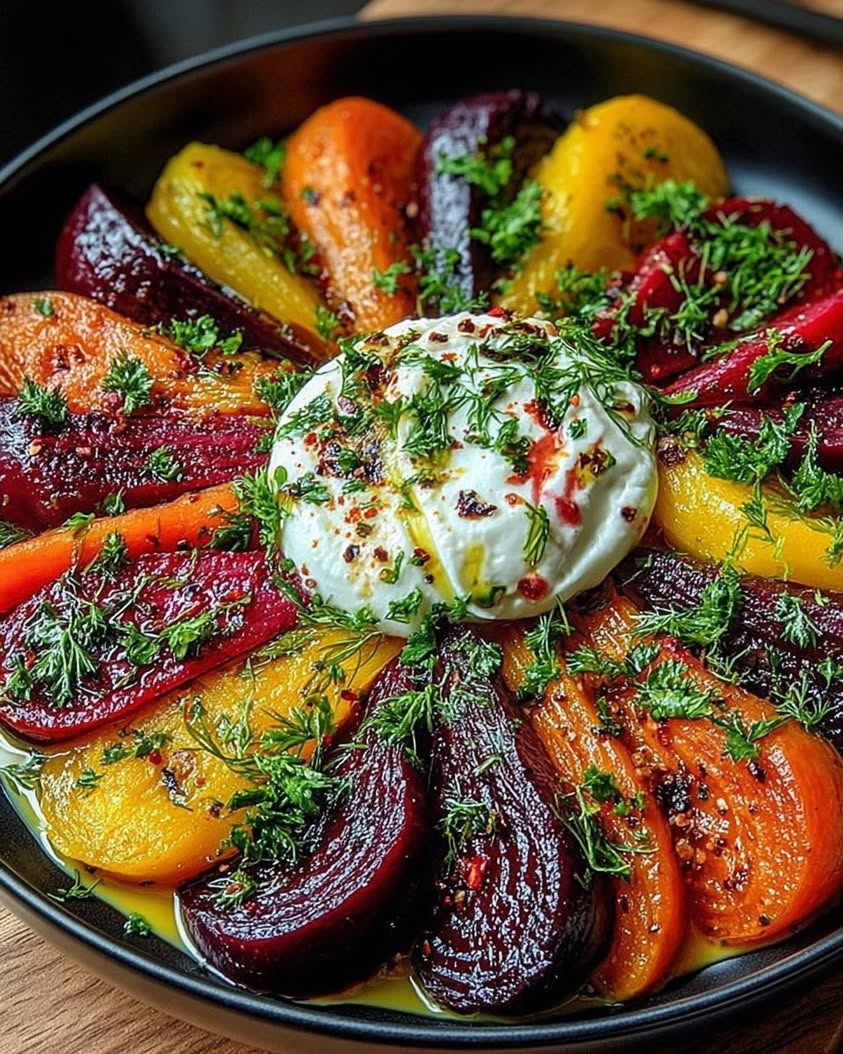
- Visual Appeal: Visually, this dish is a feast for the eyes. The deep magenta and golden yellow of the beets pair beautifully with the vibrant orange of the carrots. The creamy white burrata acts as a stunning canvas, while a sprinkle of green herbs and a colorful drizzle of balsamic glaze finish the presentation. Therefore, it is truly a vibrant roasted beets and carrots with creamy burrata salad.
- Skill Level Needed: This recipe is perfect for beginners, but it also appeals to experienced cooks because it is simple and nearly foolproof. The main techniques are basic knife skills and roasting. No complex culinary terms or advanced methods are required, and the steps are easy to follow, ensuring a successful outcome for anyone.
- Special Equipment: You will need a large baking sheet for roasting, preferably a heavy-duty one to ensure even heat distribution. Aluminum foil or parchment paper for easy clean-up is also helpful. A sharp chef’s knife and a cutting board are essential, and a small bowl for whisking the vinaigrette is required.
Recipe Overview
- Difficulty Level: I rate this recipe as easy because it involves straightforward steps like peeling, chopping, tossing with oil, and roasting. There is minimal active cooking time, and the oven does most of the work. The only slightly delicate step is plating the burrata, but even that is forgiving because it is meant to be a rustic, torn presentation.
- Category: This dish primarily falls into the side dish category, but its richness and composition also allow it to serve as a light main course for lunch or a vegetarian dinner. It can also be considered a salad course, full of roasted vegetables rather than raw greens. Therefore, it is a versatile dish that can adapt to different parts of a meal.
- Cuisine: The culinary tradition is contemporary American with strong Mediterranean influences. The use of burrata, a fresh Italian cheese, is a clear nod to Italian cuisine. However, the technique of roasting root vegetables until caramelized and serving them in a rustic salad is a hallmark of modern American cooking that embraces farm-to-table and seasonal ingredients.
- Cost: The cost of this dish is generally low to moderate, depending on your location and the season. Beets and carrots are typically inexpensive root vegetables, especially when in season. Burrata can be the more expensive ingredient, but it is now widely available at many grocery stores at a reasonable price. Additionally, you only need a few pantry staples for the dressing.
- Season: The best season is undoubtedly fall and winter when root vegetables are at their peak freshness and sweetness. The heartiness of the roasted vegetables is perfectly comforting during cooler months. However, with farmers’ markets and modern shipping, you can often find good quality beets and carrots year-round, making it a possible dish for any time of year.
- Occasion: This vibrant roasted beets and carrots with creamy burrata salad is perfect for many occasions. It is an elegant side for Thanksgiving, Christmas, or Easter dinner. Moreover, it is a wonderful choice for a dinner party, a potluck, a family gathering, or a casual weekend lunch. Its beautiful presentation makes it appropriate for celebrations, while its simple preparation is perfect for everyday meals.
Why You’ll Love This Recipe
One of the primary reasons you will love this vibrant roasted beets and carrots with creamy burrata salad is its incredible flavor profile. The roasting process magically transforms the gritty earthiness of raw beets and carrots into sweet, nutty, and intensely flavorful morsels. When you pair them with the luxurious, mild creaminess of burrata, you get a match made in heaven. The cold, silky cheese contrasts beautifully with the warm, tender vegetables, and adding a simple lemon vinaigrette ties everything together with a bright, zesty punch.
Furthermore, the convenience is unmatched. Therefore, it is an ideal recipe for busy weeknights when you want a healthy, homemade meal without spending hours in the kitchen. The most time-consuming part is just waiting for the oven to finish its work. You can easily prep the vegetables ahead of time, store them in the fridge, and roast them right before you are ready to eat. In fact, it needs minimal attention, allowing you to multi-task and prepare other parts of your meal simultaneously.
Nutritionally, this dish is a powerhouse. Beets are loaded with essential nutrients like folate, manganese, and potassium. They are also known for their high levels of antioxidants, specifically betalains, which have anti-inflammatory properties. Carrots are famously rich in beta-carotene, which is excellent for vision and immune health. Additionally, the healthy fats from the olive oil and the protein and fat from the burrata create a satisfying and balanced dish that supports overall well-being.
Additionally, this salad has great social and entertaining value. Its stunning presentation inevitably becomes a conversation starter. The vibrant colors of the vegetables, the creamy white burrata, and the fresh herb garnish create a restaurant-quality visual appeal. Therefore, serving this to guests will surely impress them and make you feel like a culinary artist. It looks and tastes so complex that your friends and family will assume you spent hours preparing it, but you will know our little secret.
Finally, it is highly cost-effective and accessible for most home cooks. The main ingredients, beets, and carrots, are some of the most affordable vegetables available. They have a long shelf life, reducing waste, and they are available in almost every grocery store. Burrata, while once a specialty item, is now commonly found in the specialty cheese section of most supermarkets. The rest of the ingredients are kitchen staples, meaning you will likely have everything you need to make this delicious salad with minimal extra cost.
Historical Background and Cultural Significance
The history of the vibrant roasted beets and carrots with creamy burrata salad is more a recent culinary evolution than a centuries-old tradition. It is a product of the modern farm-to-table movement in North America and the Mediterranean, where chefs began to champion seasonal vegetables. Beets and carrots have long histories as food staples, with origins in the Mediterranean and Middle East. Roasting them is an ancient, simple technique that enhances their natural sweetness. However, the specific pairing of them and, more importantly, the combination with fresh burrata is a contemporary creation.
Burrata itself has a relatively short, well-documented history. It was invented in the early 20th century in the Apulia region of Italy, specifically in the town of Andria. It was a clever way to reuse scraps of fresh mozzarella. The outer shell is solid mozzarella, but the inside is filled with stracciatella and cream, creating that distinct, soft, and buttery texture. Initially, it was a local delicacy due to its perishability, but advancements in packaging and shipping have made it a global phenomenon, thus inspiring chefs worldwide to create such dishes.
Consequently, this particular salad represents a union of these separate histories. Chefs in the United States, especially those focusing on seasonal, rustic Italian-inspired cooking, began pairing roasted root vegetables with high-quality fresh cheeses. This dish likely evolved from simpler recipes of roasted vegetables topped with goat cheese or ricotta. By introducing burrata, chefs found a richer, more decadent alternative. Therefore, the recipe demonstrates a cultural exchange and an ongoing evolution of food traditions, blending earthy American-style roasting with a distinctly Italian dairy product.
Furthermore, regional variations of this dish are abundant. In Italy, you might find a similar salad with more emphasis on simple, high-quality olive oil and maybe some bitter greens like arugula. In California, you might see additions like blood oranges or pomegranate seeds for extra sweetness and color during the winter months. In the American Southwest, perhaps a sprinkle of smoky paprika or cilantro. These variations show how a base recipe can be adapted to local ingredients and palates, thereby reflecting a global integration and preference for vibrant, colorful, and healthful food.
Ingredient Deep Dive
Beets are the undisputed stars of this vibrant roasted beets and carrots with creamy burrata salad. These root vegetables have been cultivated for thousands of years, originally prized for their leaves. The roots we enjoy today were developed later, and they have long been an important food source in Eastern and Central Europe. Nutritionally, beets are a fantastic source of folate, manganese, and fiber. Meanwhile, their vibrant color comes from betalains, antioxidants with powerful anti-inflammatory and detoxifying properties. When selecting beets, you should choose small to medium-sized roots that are heavy for their size and have smooth, firm skin. The leaves, if still attached, should be vibrant and crisp, indicating freshness. Additionally, you can store fresh beets in a cool, dark, and humid place for a couple of weeks or in the fridge inside a plastic bag for an even longer shelf life.
Carrots are our other main vegetable, providing a naturally sweet counterpoint to the earthy beets. Cultivated for over a thousand years, carrots have a long history that spans Asia and Europe. Of course, they are justly famous for their beta-carotene, which the body converts into Vitamin A. This nutrient is essential for good vision, a robust immune system, and healthy skin. So, look for carrots that are firm with a bright orange color. However, sometimes you can find them in purple, yellow, or red varieties, which can add even more visual interest to your salad. The greens are usually removed before sale in the US because they leach moisture from the roots, and you should store carrots in a crisper drawer in a sealed bag or container, where they can last for several weeks.
Burrata is the heart of this dish’s creamy, luxurious finish. This Italian cheese originates from the Puglia region and is a product of resourcefulness. Essentially, it is an outer shell of solid mozzarella cheese that is filled with a soft, stringy curd called stracciatella and fresh cream. Due to its high moisture content, burrata is best consumed within 48 hours of being made. Therefore, you should always check the “sell by” date and purchase it as fresh as possible. When selecting, look for a plump, round pouch that is taut, and when you gently spring it, it should feel slightly tender inside. You will usually find it in the specialty cheese section of the supermarket, stored in a tub of brine or whey to keep it moist. It cannot be frozen and must be kept refrigerated, ideally at 34°F to 38°F (1°C to 3°C).
Extra-virgin olive oil is a crucial ingredient for both roasting and the dressing. It adds a fruity, peppery flavor and provides healthy monounsaturated fats. Always choose a high-quality bottle for the best taste, especially for the dressing where its flavor is not hidden by cooking. A good balsamic vinegar or a fresh lemon are also critical. Balsamic glaze adds a sweet, tart, and slightly syrupy finish, while lemon offers a bright, acidic lift that balances the richness of the cheese. Fresh thyme or rosemary brings an aromatic, woodsy note that complements the earthiness of the roots.
Common Mistakes to Avoid
- Not peeling the beets and carrots thoroughly: For this dish, you want the roasted vegetables to be tender and the skins removed. The skin on beets can be quite tough and fibrous, and after roasting, it can have a slightly dirty, clay-like texture. As a result, not peeling them properly will lead to an unpleasant mouthfeel. Carrot skins are more subtle, but still unnecessary for this recipe.
- Cutting all the vegetables to the exact same size: While uniformity is generally good for cooking, you must consider different densities. It is better to cut the carrots into slightly smaller pieces than the beets, as carrots can cook faster. Alternatively, you could stagger starting them, adding carrots to the pan halfway through, but sizing them appropriately is easier and more reliable.
- Overcrowding the baking sheet: Most ovens rely on air circulation to crisp and caramelize. If you pile the vegetables on top of each other, they will steam instead of roast. This leads to soggy, bland vegetables. You must arrange them in a single, even layer on the baking sheet. Use two sheets if necessary.
- Using too little oil: Oil is essential for conducting heat onto the vegetables, facilitating caramelization, and preventing them from sticking. A dry vegetable will not brown properly and may dry out. Ensure every piece is lightly but thoroughly coated with olive oil before seasoning.
- Asking for too high of an oven temperature: While a very hot oven (450°F+) can create great browning, it also increases the risk of burning the outside of the vegetables before the inside becomes tender. The recipe usually calls for 400°F (200°C), which is the perfect balance for even cooking and caramelization.
- Forgetting to season the dressing properly: A bland dressing can ruin the entire dish. Season the vinaigrette generously with salt and pepper before drizzling it over the salad. And, taste the ready-made dressing on a piece of roasted vegetable to ensure the seasoning is just right.
- Serving the burrata straight from the fridge: Burrata is best when its flavors are at their peak. Serving it too cold can mute its flavor and give a slightly harder texture. Let it sit at room temperature for about 20-30 minutes before you are ready to plate the salad.
- Mixing the burrata into the hot vegetables: Because burrata has a high moisture content and is delicate, tossing it with hot vegetables will cause it to melt and lose its shape. The beauty of this dish is in the contrast of warm and cool, so always plate the burrata first or on top and spoon the warm vegetables over it just before serving.
Essential Techniques
The first key technique is the proper preparation of the vegetables. It starts with peeling and then cutting them into uniform pieces, but as stated, you need to be careful about sizes. I always cut beets into 1-inch chunks. Carrots, on the other hand, I cut into more modest 3/4-inch pieces. To master this, use a sharp knife and cut on a stable cutting board. A common pitfall is making some pieces too small that they burn or some too large that they remain hard inside. Thus, take your time and aim for consistency that allows for even cooking.
The second important technique is roasting. The goal is caramelization, not just cooking. To achieve this, you must have a hot oven and a preheated baking sheet. Putting vegetables on a cold pan lowers the temperature immediately, preventing optimal browning. I prefer to place the baking sheet in the oven while it is preheating, then carefully add the coated vegetables. Also, you must resist the urge to stir the vegetables too often. Leaving them undisturbed allows the Maillard reaction to occur, creating deep, complex flavors. Another common pitfall is not flipping them at all, which leads to uneven browning, so give them a stir about halfway through.
The final technique to master is making a quick vinaigrette. The process combines fat and acid into a temporary emulsion. To make a successful vinaigrette, start with your acid (vinegar or lemon juice) and seasonings in a bowl. Then, slowly whisk in the oil in a steady stream, or in a small jar, put all ingredients, seal tightly, and shake vigorously. Thus, both methods will create a slightly thickened, homogenous dressing. The most common pitfall is separating, which is okay; simply whisk again right before dressing. Ensure you taste and adjust the seasoning, as the vinaigrette is a crucial component that brings the whole salad together.
Pro Tips for Perfect Vibrant Roasted Beets and Carrots with Creamy Burrata Salad
To start, always line your baking sheet with parchment paper. This is a game-changer for two reasons. First, it makes clean-up a breeze, as the sugars from the vegetables can be stubbornly sticky. Second, it helps prevent the bottoms of the vegetables from burning before they are fully cooked, ensuring a perfect roast all around.
Season the dressing while the vegetables are roasting. By the time the vegetables come out of the oven, your vinaigrette will have aged for a bit, allowing the flavors of shallots (if using), garlic, and herbs to meld together. This creates a more cohesive and flavorful dressing that will coat the vegetables beautifully. If you prepare it right before, it might taste too sharp or disjointed.
Use fresh burrata for the absolute best result. Those date labels are essential. Burrata is meant to be consumed very fresh, and there is a noticeable difference in texture and flavor between a fresh one and one that has been sitting on the shelf for a few days. So, plan your shopping accordingly, ideally, purchase it the same day you plan to serve this dish.
Warm your serving plate. Since the vegetables are hot, place them on a slightly warmed platter or plate. This will help keep the salad warm for longer. This one simple step can significantly elevate the dining experience because it prevents the food from cooling down too quickly. A warm bowl offers a more pleasant mouthfeel for the whole meal.
Think about the colors. A vibrant roasted beets and carrots with creamy burrata salad is a dish we eat first with our eyes. Therefore, when arranging the roasted vegetables, do not stir them together too much on the serving platter. Keep some of the beet pieces and carrot pieces separate to create distinct color blocks rather than one giant pink mix. This brilliant presentation will make the salad even more tantalizing.
Finally, do not overdress the salad. You want just enough dressing to coat the vegetables and to flavor the burrata. Overdressing will make the salad soggy, and the burrata might become too wet and lose its creamy character. Start with about 2/3 of the dressing, then as you mix, add more only if needed.
Variations and Adaptations
This vibrant roasted beets and carrots with creamy burrata salad is incredibly customizable. For a taste of different regions, you can try some delightful variations. A classic Mediterranean twist would be to add a handful of fresh arugula or baby spinach leaves underneath the roasted vegetables, then toss lightly with the dressing. This adds a peppery bite that cuts through the sweet vegetables and rich cheese, echoing a classic Italian contorno.
Seasonal adaptations make this dish a year-round staple. During summer, you might want to add fresh sweet corn kernels that you have quickly grilled or sautéed. A handful of cherry tomatoes bursting with juiciness would also be a spectacular addition. In spring, you could introduce fresh peas and some chopped mint or pea shoots. Then again, for a wintery variation, roasting some parsnips or sweet potatoes alongside the carrots and beets would be wonderful.
Furthermore, there are numerous ways to adapt the recipe to various dietary needs. For a vegan version of the vibrant roasted beets and carrots with creamy burrata salad, simply omit the burrata or substitute it with a high-quality vegan cashew-based ricotta or even a simple slice of grilled tofu that has been marinated to mimic a creamy taste. For a dairy-free approach, you might top the vegetables with a swirl of dairy-free yogurt blended with garlic and herbs.
Flavor variations can easily be achieved by adding different herbs or spices. Instead of thyme, try using fresh rosemary, sage, or a mix of Italian herbs. For a hint of warmth, dust the vegetables with ground cumin, coriander, or even smoked paprika before roasting. A pinch of chipotle powder would add a mild, smoky heat. To continue, a squeeze of orange juice instead of balsamic vinegar in the dressing would offer a sweeter, more floral citrus note.
You can also alter the texture to your liking. To add a crunchy element, sprinkle the finished salad with some toasted walnuts, pecans, or pine nuts. Pumpkin seeds are also a great choice. To make it more of a complete meal, you could add some cooked quinoa or farro directly to the vegetables. On the other hand, for a more refreshing option, you could shave raw beets or carrots into thin ribbons to mix with the roasted ones.
Lastly, explore different presentation alternatives. Instead of a big salad platter, you can serve this as a starter. Place a single, large piece of burrata on a plate, spoon a few roasted vegetables around it, and drizzle with balsamic glaze and basil oil. This forms a stunning and elegant appetizer. You could also serve it in a large glass bowl so you can see all the beautiful layers of colors from top to bottom.
Serving and Presentation Guide
Plating this vibrant roasted beets and carrots with creamy burrata salad is about showcasing its beautiful colors and textural contrasts. The most communal way is to serve it family-style on a large, wide, rustic platter. Start by tearing the burrata into large chunks and placing them at the center of the platter. Then, spoon the hot roasted vegetables around and on top of the cheese. This will soften the burrata and allow its creamy center to begin to ooze out, mixing with the dressed vegetables.
For a harmonious look, garnish the dish generously with fresh herbs. A shower of freshly chopped parsley, dill, or chives works beautifully and adds a bright green color against the magenta, orange, and white. We also recommend a final dusting of flaky sea salt, such as Maldon, which adds a pleasant textural crunch and a pop of pure salinity. Furthermore, a few cracks of black pepper freshly ground from your mill are must-have flavor enhancers.
Traditionally, this dish is often paired with balsamic glaze. A drizzle of balsamic glaze over the top before serving not only adds sweetness and acidity but also provides a dark, glossy contrast that makes the colors pop even more. With that in mind, serve it immediately while the vegetables are still warm and the burrata is cool and creamy. This contrast in temperature is one of the dish’s main highlights.
For modern styling, consider the temperature of the components. The vegetables should be hot from the oven, and the burrata should be at room temperature. The dressing should be spooned over right before serving, so the vegetables remain crisp and warm. If you leave it on for too long, the vegetables will soften and the balsamic may get soaked in.
Finally, when portioning, this recipe is quite rich due to the burrata. The portions are quite satisfying, so consider this when planning a multi-course meal. Served as a side, one pound of vegetables and one 8 oz ball of burrata is generally enough for four people. As a main dish, you could extend the meal with some crusty bread or a green salad and likely still feed four.
Wine and Beverage Pairing
When it comes to pairing wine with this vibrant roasted beets and carrots with creamy burrata salad, you have several wonderful options. The sweetness of the roasted vegetables and the creaminess of the burrata call for a wine with good acidity to cut through the rich cheese and balance the sugars. A dry Riesling or a Pinot Gris from Alsace is an exceptional choice. Their crisp, zesty acidity is a perfect counterpoint to the savory notes and creamy texture.
Another excellent pairing is a light-bodied red wine, such as Pinot Noir. This is a brilliant choice if you are serving this salad alongside a meaty main course, like pork or turkey. The wine’s red berry fruit and low tannins will not overwhelm the delicate flavor of the burrata, and its earthy undertones will complement the roasted root vegetables quite nicely. A chilled light red, like a Loire Valley Cabernet Franc, is also a refreshing option.
For white wine lovers, look for a wine with some body, like a Chardonnay, but make sure it is not too oaky. A lightly oaked or unoaked Chardonnay will provide a creamy texture that matches the cheesy richness and enough substance to complement the root vegetables. If you are having a special celebration, a sparkling wine like Prosecco or Champagne is a surprisingly wonderful pairing. The effervescence acts as a palate cleanser, refreshing your taste buds between each luscious bite.
If you prefer non-alcoholic alternatives, there are many excellent choices. A sparkling water with a squeeze of fresh citrus is lightening and won’t interfere with the dish’s flavor. For something more flavorful, you could make a simple spritzer with soda water and a splash of peach or blood orange juice. Herbal iced tea, such as a chilled hibiscus tea with a touch of honey, is also amazing as its tartness will balance the sweetness like a wine would.
Finally, for coffee or tea drinkers, consider that this salad is so delicate and complex that a heavy brew would overwhelm it. Do not pair this dish, with the exception of a robust dessert-like after dinner, with strong coffee. If you enjoy tea, think about an herbal tea like a light chamomile or a refreshing mint. I suggest you serve your beverage of choice at the appropriate temperature, usually chilled, and ensure it is not too sweet to honor the salad’s balanced flavors.
Storage and Shelf Life
Proper storage is key to enjoying this vibrant roasted beets and carrots with creamy burrata salad and its leftovers. Ideally, the salads are best when fresh, but can be stored. The most crucial aspect is separating components if possible. The roasted vegetables can be stored in an airtight container in the refrigerator for up to 4 days. The burrata should be stored separately in its brine, preferably, or at least in a sealed container, and consumed within 2 days of opening the package for the best quality.
The temperature for storage is standard refrigeration. The vegetables must be cooled to room temperature within two hours of cooking, then sealed and placed in the refrigerator. Do not store the salad with the dressing already mixed in if you have leftovers, as the vegetable texture will degrade and become soggy. It is always best to store the dressing in a separate small container. Always use a clean spoon to avoid introducing bacteria into the dressing jar; with that in mind, maintain good hygiene practices to maximize shelf life.
Consider the container recommendations carefully. Glass containers are often preferable because they don’t absorb odors and are safe for reheating. Plastic containers with tight-fitting lids are also excellent, but they are less ideal for storing the dressing if it has a lot of vinegar. In any container, make sure to seal it securely. Never store beets and carrots with the burrata in the same container, as the mozzarella will absorb the flavors and moisture from the vegetables and the dressing.
It is easy to identify signs of spoilage. For the vegetables, a slimy film or the growth of mold is a clear sign they are no longer safe to eat. A sour or off-flavor is another indicator. For the burrata, check for a sour or overly acidic smell, a change in texture to a gummy consistency, or any browning or drying out. Since it contains high moisture, it can quickly become a breeding ground for bacteria if you leave it too long. If in doubt, throw it out is the best policy to ensure food safety.
Reheating instructions are minimal. For the roasted vegetables, spread them on a baking sheet and reheat in a preheated 350°F (175°C) oven for about 5-10 minutes, or just until warmed through. Reheating in the microwave will often make them rubbery and steaming, which is less desirable. You should never reheat the burrata; it is a fresh cheese meant for cold consumption. It is better to let it come to room temperature and place it on the hot vegetables right before serving.
Make Ahead Strategies
Yes, this vibrant roasted beets and carrots with creamy burrata salad has some fantastic make-ahead potential. The key is to know what to prep and what to leave for the last minute. For example, you can easily prepare the roasted vegetables a day in advance. After roasting, let them cool completely, then store them in an airtight container in the refrigerator. The flavors will actually meld and deepen overnight, making them even more delicious.
You can also make the vinaigrette up to three days in advance. Whisk all the ingredients together in a jar and store it in the refrigerator. The vinegar can mellow and the flavors will have time to develop. Be aware that the olive oil may solidify when chilled. Therefore, before using it, simply remove it from the fridge and let it sit at room temperature for about 30 minutes, then shake or whisk the dressing to recombine before using.
The impact on the overall quality is minimal if you prepare the components in advance, but the final assembly is very important. If you plan to serve the salad in stages, then do not mix the dressing or the burrata in until just before serving. This ensures a vibrant and crisp texture. In other words, you can do all the heavy lifting ahead of time and have a fresh, delicious salad in minutes when you are ready to eat.
For best results, allow the pre-roasted vegetables to come to room temperature, or reheat them gently in a pan or in the oven while you are assembling the rest of the meal. If you reheat them for a gathering, then there is no need to make them steaming hot; simply warming them until they are just starting to sizzle is perfect. Have the burrata sitting at room temperature for 20-30 minutes to soften the texture.
Finally, assemble just before serving. Place the warm vegetables on the platter, then top with the torn burrata, a drizzle of the dressing, the balsamic glaze, and the fresh herbs. This way, you can spend time with your guests instead of being stuck in the kitchen, and everyone will think you just cooked it all. In short, the entire salad can be cooked and ready to go, yet still taste as fresh as if it were just made.
Scaling Instructions
As with any recipe, scaling is a simple process if you understand the ratios. To halve this vibrant roasted beets and carrots with creamy burrata salad, simply cut all the primary ingredients in half. Use about 1 large beet or two smaller ones and 2-3 medium carrots. Halve the amount of olive oil for roasting and the quantities for the dressing. Keep the cooking time about the same, but ensure you use a smaller baking sheet so the vegetables are still in a single layer for proper roasting.
Doubling or tripling this recipe is just as straightforward. Multiply the beets, carrots, and seasonings by two or three. You will need a larger baking sheet or, more likely, two or three baking sheets. It is crucial not to overcrowd the pan, so having additional baking sheets is better than piling everything onto one. For the burrata, you will simply use two or three 8-ounce balls of cheese. The dressing quantities should be doubled or tripled too. The roasting time may increase by a few minutes in a crowded oven, so rotate the pans halfway through.
When sticking to a single recipe, you also need to think about equipment. For a single batch using the standard-sized baking sheet, your oven can usually handle it. For a double batch, you might find you do not have enough space in your oven at the same time, so consider roasting in batches. You can roast the beets first, then the carrots, and then keep them warm while you roast the next batch. That is more efficient than using a cold pan, which will result in steaming and missing the caramelization.
The timing will definitely need adjustments when scaling up. A larger mass of cold vegetables will bring down the oven temperature more, so you may need to add 5-10 minutes to the roasting time. Watch for the vegetables to become fork-tender, not just Print
Vibrant Roasted Beets & Carrots with Creamy Burrata Salad
- Total Time: 45 minutes
- Yield: 4
Description
This colorful salad features sweet roasted beets and carrots, creamy burrata cheese, and a tangy balsamic glaze, tossed with fresh arugula and toasted walnuts for a perfect balance of flavors and textures.
Ingredients
- 3 medium beets, peeled and cut into wedges
- 4 medium carrots, peeled and cut into thick slices
- 2 tablespoons olive oil
- 1 teaspoon dried thyme
- Salt and black pepper to taste
- 2 cups fresh arugula
- 1 (8 ounce) ball burrata cheese
- 1/4 cup toasted walnuts, roughly chopped
- 2 tablespoons balsamic glaze
- 1 tablespoon fresh lemon juice
- 1 teaspoon honey
Instructions
- Preheat oven to 400°F (200°C). Line a baking sheet with parchment paper.
- In a large bowl, toss beets and carrots with olive oil, thyme, salt, and pepper. Spread in a single layer on the baking sheet. Roast for 30 minutes or until tender and caramelized, flipping halfway.
- While vegetables roast, prepare the dressing: whisk together balsamic glaze, lemon juice, and honey in a small bowl.
- Once roasted, let the vegetables cool for 5 minutes. In a large salad bowl, combine arugula and roasted vegetables. Drizzle with dressing and toss gently.
- Arrange the salad on a serving platter. Tear the burrata and place on top. Sprinkle with toasted walnuts and drizzle with a bit more balsamic glaze if desired. Serve immediately.
Notes
You can customize the seasonings to taste. For extra flavor, try adding fresh herbs like rosemary or a pinch of red pepper flakes.
- Prep Time: 15 minutes
- Cook Time: 30 minutes
- Method: Main
- Cuisine: Italian