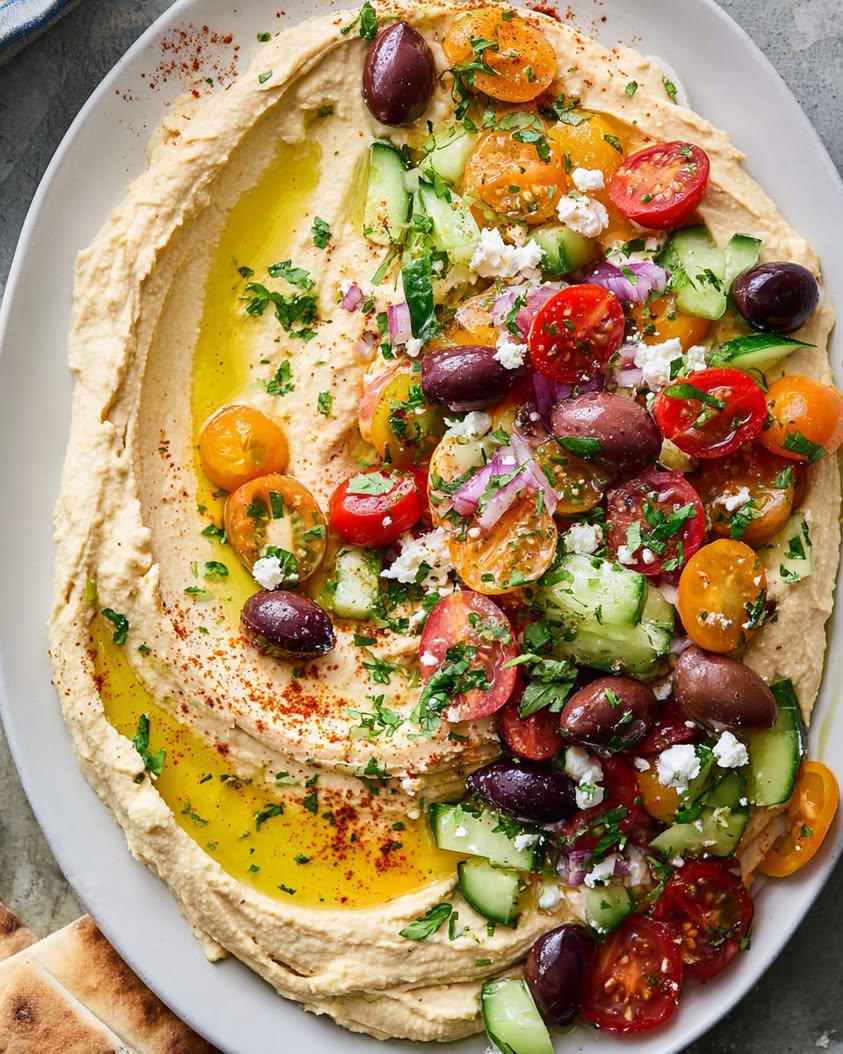
The Ultimate Greek Style Loaded Hummus Recipe for Healthy Snacking
This Greek Style Loaded Hummus recipe for healthy snacking is truly a game changer for your meal prep routine. Imagine a creamy base of chickpeas and tahini, then piled high with chunky feta cheese, briny kalamata olives, fresh cherry tomatoes, and crisp cucumbers. Every single bite offers a burst of Mediterranean flavor that feels both indulgent and completely nutritious. You get that rich, earthy hummus foundation, which then contrasts beautifully with the tangy, salty toppings. It is a dish that works as a hearty appetizer, a satisfying lunch component, or a crowd-pleasing party dip. The combination of smooth puree and crunchy vegetables creates a texture symphony that keeps you coming back for more. You will feel like you are eating something decadent, but your body will thank you for all the fiber, protein, and healthy fats.
When you are looking for a healthy snack that actually satisfies, this loaded hummus is where you should turn. Many dips can feel like a compromise, but not this one. It delivers bold flavor without any of the guilt. The preparation is incredibly straightforward, so you can whip it together on a busy weeknight or prepare it ahead for weekend gatherings. It also looks stunning on a platter. The bright red tomatoes, green cucumbers, and white feta create a visual feast that makes your table look absolutely inviting. You can serve it with warm pita, crunchy vegetable sticks, or even spread it on sandwiches. This is not just a recipe; it is a versatile staple for anyone who values both taste and wellness.
What really sets this Greek Style Loaded Hummus recipe for healthy snacking apart is the quality of the ingredients and the balance of flavors. The hummus itself should be silky smooth, and you can achieve that by blending the chickpeas while they are still warm and using good quality extra virgin olive oil. The toppings are strategically chosen to provide contrast. Feta brings a creamy, salty punch. Olives add a briny depth. Cucumbers introduce a refreshing crunch. Tomatoes contribute a pop of sweetness and acidity. A final drizzle of olive oil and a sprinkle of oregano ties everything together. This dish is a celebration of simple, wholesome ingredients that work together harmoniously. It is a perfect example of Mediterranean cooking, where fresh produce and pantry staples create something truly extraordinary.
Quick Recipe Highlights
- Flavor Profile: This loaded hummus delivers a complex taste that starts with the nutty, earthy base of chickpeas and tahini. The tang from lemon juice and garlic adds brightness. The toppings bring salty feta, briny olives, and sweet tomatoes into the mix. Each ingredient plays a role in creating a balanced, savory flavor profile that is both familiar and exciting.
- Texture: You get a wonderful contrast between the smooth, creamy hummus and the chunky, firm toppings. The feta crumbles softly, while cucumbers stay crisp. Tomatoes burst with juice, and olives offer a slightly chewy, meaty texture. This variety makes every spoonful interesting and highly satisfying.
- Aroma: The smell of fresh garlic and lemon is the first thing you notice. Then comes the warm, toasted scent of tahini and olive oil. As you add the toppings, the herbaceous aroma of oregano and the tangy fragrance of feta fill the air. It immediately makes you hungry and transports you to a Greek taverna.
- Visual Appeal: This dish is a feast for the eyes. The pale, creamy hummus base is an excellent canvas for the colorful toppings. Bright red cherry tomatoes, deep purple olives, bright green cucumber chunks, and white crumbled feta create a beautiful mosaic. A final drizzle of golden olive oil and a sprinkle of dried herbs completes the picture.
- Skill Level Needed: This is a very accessible recipe. Anyone who can operate a food processor can make the hummus. The chopping is basic, and the assembly is simply a matter of layering. There is no complicated technique involved. It is a perfect recipe for beginners in the kitchen.
- Special Equipment: You will need a food processor or a high-speed blender to achieve the smoothest hummus. You also need a good sharp knife for chopping vegetables. A small skillet is necessary for toasting pine nuts or seeds if you choose to include them. Aside from that, just bowls and a serving platter are required.
Recipe Overview
- Difficulty Level: I have rated this recipe as easy because it relies on straightforward mixing and assembly. There are no tricky cooking methods like tempering eggs or making a roux. The most demanding step is peeling the garlic and blending the chickpeas. Even a novice cook can produce excellent results on the very first try. The key is to taste as you go and adjust the seasoning.
- Category: This dish fits perfectly into several meal categories. It is a fantastic appetizer for a party. It works as a main course for a light lunch when paired with salad and pita. You can also use it as a hearty snack. It is a core component of a mezze platter. It even works as a filling wrap ingredient.
- Cuisine: The recipe is rooted in Greek cuisine, specifically the tradition of mezedes. These are small, shared plates that encourage social eating. Hummus itself is a staple throughout the Middle East and the Mediterranean. This loaded version incorporates classic Greek ingredients like feta, olives, and oregano. It reflects the culinary philosophy of using fresh, simple ingredients to create vibrant flavors.
- Cost: This is a budget-friendly dish. Canned chickpeas and tahini are affordable pantry items. Olive oil and lemons are common kitchen staples. The fresh toppings are also reasonably priced, especially in season. A block of feta cheese is the most expensive ingredient, but you use a modest amount. Overall, this is a very economical way to create a luxurious-tasting dish.
- Season: While you can make this year-round, it is at its absolute peak during the summer and early fall. This is when tomatoes and cucumbers are at their most flavorful and abundant. Using in-season produce dramatically improves the final dish. However, during winter, you can use high-quality canned tomatoes or sun-dried tomatoes for a different, but equally delicious, flavor profile.
- Occasion: This loaded hummus is perfect for almost any occasion. It is a hit at casual summer barbecues. It impresses guests at dinner parties. It is excellent for game day snacks. It also makes a wonderful addition to a picnic basket. You can also prepare it for a simple, healthy weekday lunch. It is versatile enough for any gathering.
Why You Will Love This Recipe
The taste and texture of this dip are simply irresistible. You get a cool, creamy base that melts on your tongue. Then you hit a salty, tangy feta crumble. The olives give a chewy, savory pop. The cucumbers provide a crisp, refreshing crunch. The tomatoes burst with sweet acidity. It is a multi-sensory experience that feels much more indulgent than it actually is. This combination of contrasting elements is what makes it so addictive. It satisfies every craving at once: creamy, salty, crunchy, and tangy. You will never want plain hummus again once you have tried it this way.
Convenience is a major reason to love this recipe. The active preparation time is only about 15 minutes. Most of that is just chopping vegetables and blending the hummus. You can make the hummus base days in advance and store it in the fridge. You can also chop your toppings ahead of time. Then, when you are ready to serve, you simply spoon the hummus onto a plate, top it with all the goodies, and drizzle on some oil. It is that simple. There is no cooking involved for the topping components. This makes it a lifesaver for busy evenings and unexpected guests.
From a nutritional standpoint, this dish is a powerhouse. The chickpeas are packed with plant-based protein and fiber, which keep you feeling full and satisfied. Tahini provides healthy fats and calcium. Olive oil offers antioxidants and anti-inflammatory properties. The vegetables add a wide array of vitamins, minerals, and hydration. Feta cheese provides protein and calcium while being lower in fat than many other cheeses. This combination makes for a well-rounded snack or light meal that supports your health goals. You are eating something delicious that also nourishes your body.
This recipe is also fantastic for social gatherings. It is a dish that encourages sharing and conversation. Placing a large platter of loaded hummus in the middle of the table invites everyone to dig in. It is a visual centerpiece that sparks interest. People love to customize their bites, picking which toppings to include on each chip or piece of pita. It creates an interactive dining experience. It is also a reliable dish for potlucks and parties because it travels well and can be served at room temperature. You will receive many compliments and requests for the recipe.
Finally, this recipe is highly cost-effective and accessible. The ingredients are all easy to find at any standard grocery store. You probably already have many of them in your pantry. Canned chickpeas, lemons, garlic, and olive oil are very affordable. The fresh produce is also inexpensive, especially when you buy what is in season. A block of feta cheese is a small investment that goes a long way in terms of flavor. For a very low cost per serving, you are creating a dish that tastes like it belongs in a fancy restaurant. This makes it a smart choice for anyone trying to eat well on a budget.
Historical Background and Cultural Significance
Hummus has a deep-rooted history that spans many centuries and cultures. Its exact origins are disputed between several countries in the Middle East and the Mediterranean. However, the earliest known recipes for a chickpea and tahini puree appear in 13th-century Egyptian cookbooks. The word “hummus” literally means “chickpea” in Arabic. Over time, this simple dish spread throughout the Levant, becoming a staple food for many communities. It was a practical source of protein and calories that did not require any cooking fire to prepare after the initial cooking of the chickpeas.
In Greek culture, mezedes are a cornerstone of social life. These small plates are designed to be shared among friends and family, often accompanied by wine or ouzo. Adding Greek-specific toppings to hummus transforms it from a simple dip into a more elaborate mezze. It reflects the Greek tradition of making the most of fresh, local ingredients. Feta cheese, olives, and tomatoes are iconic to Greek cuisine. This adaptation is a natural progression of the mezze concept. It represents a fusion of culinary traditions, honoring the hummus base while celebrating Greek flavors.
The evolution of this dish is a beautiful example of how food travels and changes. As hummus became popular in the West, chefs and home cooks began to experiment with toppings. The loaded hummus trend gained massive momentum on social media platforms. People loved the visual appeal and the ability to make a simple dip into a complete meal. This Greek style version is one of the most beloved variations. It takes the familiar and elevates it with premium ingredients. It bridges traditional Mediterranean cuisine with modern plating aesthetics.
Regional variations of loaded hummus are abundant. In Lebanon, you might find it topped with spiced ground lamb and pine nuts. In Israel, a favorite version includes whole chickpeas, paprika, and fresh herbs. Across the Mediterranean, different regions use their local cheeses and produce. Some variations use roasted red peppers, artichoke hearts, or sun-dried tomatoes. The Greek style remains a classic for its simplicity and balance. It does not try to do too much. It lets the high-quality ingredients speak for themselves. This is the hallmark of good Mediterranean home cooking.
Ingredient Deep Dive
Chickpeas are the star of the show. They have been cultivated for over 7,000 years in the Middle East. They are a brilliant source of plant-based protein and dietary fiber. This makes them excellent for heart health and blood sugar regulation. When selecting canned chickpeas, look for those with no added salt or preservatives, or buy the low-sodium variety. For the best texture, you can also cook dried chickpeas from scratch. To store them, keep canned chickpeas in a cool, dark pantry. Once opened, transfer them to a sealed container in the fridge. You can substitute chickpeas with white beans like cannellini for a different flavor profile. However, the texture will be slightly less nutty and more mild.
Tahini is a paste made from ground sesame seeds. It is a cornerstone of Middle Eastern cooking. Its nutty, slightly bitter flavor is essential for authentic hummus. Tahini is rich in healthy unsaturated fats and is a good source of calcium and iron. When buying tahini, check the label for ingredients that list only sesame seeds. Stir it well before using, as the oil naturally separates. Store unopened tahini in a pantry, and after opening, keep it in the refrigerator to prevent rancidity. If you do not have tahini, you can substitute it with an equal amount of natural peanut butter or almond butter, though the flavor will change significantly. For a seed-free option, you can use Greek yogurt for creaminess.
Extra virgin olive oil is more than just a fat in this recipe. It is a flavoring agent. Greek olive oil is especially prized for its peppery, fruity notes. It is packed with antioxidants and anti-inflammatory compounds. Always choose a bottle that is labeled “extra virgin” and dark to protect it from light. Store it away from heat and sunlight. For this recipe, use a high-quality olive oil for drizzling at the end. You can substitute it with avocado oil for a neutral flavor, but you will miss the distinct taste. If you are looking for a lower fat option, you can use a good quality vegetable stock, though the texture will be less luxurious.
Feta cheese is a brined curd cheese that is iconic to Greece. It has a tangy, salty flavor and a crumbly yet creamy texture. Traditional feta is made from sheep’s milk or a mixture of sheep and goat milk. It is a good source of calcium and protein. When shopping for feta, look for blocks stored in brine rather than pre-crumbled, as they are much more moist and flavorful. Store feta in its brine in the refrigerator and it will last for several weeks. You can substitute feta with goat cheese for a similar tangy, creamy texture. For a dairy-free option, use a block of firm tofu marinated in lemon juice, salt, and olive oil.
Kalamata olives are a specific variety of olive from Greece. They are almond-shaped and deep purple in color. They have a distinct, fruity, and slightly wine-like flavor. Olives are a good source of healthy fats and vitamin E. When buying olives, it is best to get them from the olive bar or a jar that lists simple ingredients like water, salt, and vinegar. Store opened olives in their brine in the refrigerator. If you cannot find Kalamata olives, you can use black olives or Castelvetrano olives for a milder, buttery flavor. For a low-sodium alternative, soak the olives in fresh water for 15 minutes before using.
Cherry tomatoes add a burst of sweetness and acidity. They are rich in vitamin C and lycopene, a powerful antioxidant. For the best flavor, always buy cherry tomatoes on the vine. Look for firm, bright red tomatoes that are free of blemishes. Store them at room temperature, out of direct sunlight, for the best flavor. Never refrigerate them, as that ruins their texture. You can substitute cherry tomatoes with chopped sun-dried tomatoes for a more intense, concentrated flavor. Grape tomatoes are also a good alternative. In the off-season, you can use roasted red peppers for a sweet and smoky element.
Cucumbers provide a cooling, crisp contrast. English cucumbers or Persian cucumbers are best because they have thin skins and fewer seeds. Cucumbers are mostly water, making them hydrating and low in calories. They also contain some vitamin K. When selecting cucumbers, look for ones that are firm and straight. Store them in the vegetable drawer of the refrigerator. Do not cut them until you are ready to use them. You can substitute cucumber with celery for a different kind of crunch, or use radishes for a peppery bite. For a more savory topping, you can use chopped green bell pepper.
Garlic is essential for seasoning the hummus. It adds a pungent, spicy kick that mellows in the blender. Garlic has been used for thousands of years for both culinary and medicinal purposes. It is known for its immune-boosting properties. Always buy firm, fresh bulbs of garlic. Store them in a cool, dark, well-ventilated place. Do not store them in the refrigerator. For a milder garlic flavor, you can roast the cloves before adding them to the hummus. You can substitute fresh garlic with roasted garlic paste or, in a pinch, garlic powder. However, fresh garlic provides the most vibrant flavor.
Lemon juice is vital for balancing the richness of the tahini and olive oil. It adds necessary acidity and brightness. Fresh lemon juice is always superior to bottled. Lemons are an excellent source of vitamin C. When buying lemons, look for ones that are heavy for their size, indicating they are juicy. Store them in the refrigerator for longer shelf life. You can substitute lemon juice with lime juice for a slightly different, more floral acidity. In a pinch, you can use a small amount of white wine vinegar, though the flavor will be less fresh.
Sumac and oregano are the finishing touches. Sumac is a ground spice made from dried sumac berries. It has a tangy, lemony flavor. Oregano is an earthy, slightly peppery herb that is central to Greek cooking. Both are rich in antioxidants. Spices should be stored in airtight containers away from heat and light. Use them within six months for the best flavor. If you cannot find sumac, you can substitute it with an extra pinch of lemon zest. For the oregano, you can use dried thyme or marjoram. These spices add the final aromatic and visual appeal to your loaded hummus.
Common Mistakes to Avoid
- Do not use cold chickpeas straight from the can. Cold chickpeas make for a grainy hummus. You should always warm them up. Drain and rinse them, then microwave them for about a minute or simmer them in water for a few minutes. This step makes them much easier to blend into a silky smooth puree.
- Avoid skipping the tahini stirring step. The oil and solids in tahini separate completely in the jar. If you do not stir it vigorously before measuring, you will end up with a very dry, bitter paste on top or a watery, oily mess at the bottom. Always stir it well until it is homogenous and creamy.
- Do not add too much liquid at once. When blending the hummus, you should drizzle in the water or oil slowly. If you add it all at once, you might end up with a very thin, runny puree that will not hold the toppings. Start with a little and blend for a long time, adding more only if needed.
- Do not peel the chickpeas unless you want an ultra-smooth texture. You can remove the skins for a very professional consistency. However, it is a time-consuming step. If you do not peel them, the hummus will still be very good, just slightly more textured. It is not a mistake for most home cooks.
- Avoid using low-quality olive oil for the drizzle. The final drizzle of olive oil is a key flavor component. Using an old or low-quality bottle will add a stale, unpleasant taste. Always use a fresh, good-tasting extra virgin olive oil for the finishing touch.
- Do not forget to season the hummus enough. Chickpeas and tahini need a good amount of salt and acid. Taste the hummus before you plate it. It should be well-seasoned and bright. If it tastes flat, add more salt, lemon juice, or even a pinch of cumin.
- Do not add the wet toppings too far in advance. If you chop the cucumbers and tomatoes and pile them on the hummus hours before serving, they will release their liquid. This will create a watery pool around the base of your dip and make the pita chips soggy. Add them just before serving.
- Avoid using pre-sliced or pre-crumbled feta cheese. It is often coated in anti-caking agents and is much drier and less flavorful than block feta stored in brine. The extra few minutes you spend crumbling a block of feta are completely worth it for the superior taste and creamy texture.
- Do not be shy with the garnishes. A loaded hummus should look abundant. People eat with their eyes first. If you skimp on the toppings, the dish will look sad. Use generous amounts of each component to make it look like a special treat.
- Do not serve the hummus straight from the fridge. Cold temperatures mute the flavors of the olive oil and feta. Let the hummus sit at room temperature for about 15 minutes before you assemble and serve it. This allows all the flavors to open up and taste their best.
Essential Techniques
Blending the hummus correctly is the most important technique. You need to start by processing the tahini with the lemon juice and garlic first. This creates a creamy emulsion before you even add the chickpeas. Process this mixture for a full minute. Then, add the warm chickpeas and blend for another two minutes. Use a spatula to scrape down the sides periodically. Add ice-cold water a tablespoon at a time while the processor is running. The water helps create a very light, airy texture. The total blending time should be around four to five minutes. The result should be almost as smooth as mayonnaise.
Toasting pine nuts or sesame seeds is a simple but impactful technique. Place them in a dry skillet over medium heat. Shake the pan constantly to ensure even toasting. You will see them turn a light golden brown and smell a nutty aroma. This should only take about two to three minutes. As soon as they are fragrant, transfer them to a plate immediately. If you leave them in the hot pan, they will continue to cook and burn. Toasted nuts add a wonderful layer of flavor and a satisfying crunch as a final garnish on your loaded hummus.
Cutting the vegetables into uniform pieces is a skill that improves the dish. You want the cucumber and tomato chunks to be roughly the same size, about half an inch. This ensures that every bite has a balanced mix of flavors. It also makes the platter look more intentional and professional. Take your time with the knife work. A sharp chef’s knife makes this task much easier and safer. Dull knives are more dangerous because they require more force and can slip. A clean, precise cut is a mark of good cooking.
Drizzling the olive oil properly is the final, crucial step. You should hold the bottle just above the surface of the hummus. Drizzle the oil in a slow, steady stream, moving your hand in a circular motion to create a pattern. You want to create a thin, even layer of oil across the top. This is not just for decoration. The oil seals the hummus surface and prevents it from drying out if it sits out for a while. It also adds a final layer of flavor and a beautiful, glossy sheen that makes the dish look incredibly appetizing.
Pro Tips for Perfect Greek Style Loaded Hummus
Always use warm chickpeas to get the smoothest hummus. The heat helps the fats emulsify and creates a much creamier puree. Just a quick minute in the microwave is enough.
Let the hummus sit after blending for a few minutes. This allows the flavors to meld together. Taste it after a short rest to adjust the seasoning before you load on the toppings.
Use a salad spinner or paper towels to dry the chopped cucumbers and tomatoes. Excessive moisture is the enemy of a good loaded hummus. Dry vegetables ensure the dish stays fresh and crisp.
Do not oversalt the hummus if you are using feta and olives. Both are quite salty. Season the base lightly, then rely on the toppings to provide the final salty punch.
Make your own pita chips for an extra special touch. Cut pita bread into triangles, brush them with olive oil and zaatar, and bake them until golden. They are far superior to store-bought chips.
Layer the toppings thoughtfully. Start with the cucumbers and tomatoes. Then add the feta and olives. Finish with a sprinkle of sumac and a drizzle of oil. This order prevents the wet ingredients from making the feta soggy.
Allow the hummus to come to room temperature before serving. Cold hummus has a very muted flavor. Taking the chill off will allow the nutty, earthy notes of the chickpeas and tahini to shine.
Use a wide, shallow bowl or a platter for serving. This increases the surface area for the toppings. It makes every bite easier to get and looks much more impressive than a deep, narrow bowl.
Garnish with fresh herbs just before serving. A sprinkle of fresh mint or parsley adds a bright, pop of color and a fresh flavor that contrasts beautifully with the rich hummus and salty toppings.
Reserve some of the liquid from the canned chickpeas. If your hummus is too thick, you can add a spoonful of the aquafaba to thin it out and add extra creaminess without altering the flavor.
Variations and Adaptations
There are several wonderful regional variations of loaded hummus to explore. In the Turkish style, you might find it topped with pastirma, which is cured beef, and a generous dusting of paprika. In the Egyptian version, the hummus is often topped with whole chickpeas, cumin, and a generous amount of olive oil. These variations show how different cultures have adopted the base and made it their own. You can travel the Mediterranean through your cooking by trying these different topping combinations. Each one provides a unique and delicious experience.
Seasonal adaptations make this recipe exciting year-round. In the summer, use heirloom tomatoes and fresh basil. In the fall, you can top the hummus with roasted butternut squash cubes, crispy sage leaves, and pomegranate seeds. In the spring, fresh asparagus tips and peas make a bright, green topping. In the winter, caramelized onions, roasted mushrooms, and a dollop of tahini sauce create a deeply savory, warming version. Using what is fresh and local ensures that your loaded hummus is always at its best.
Dietary modifications are easy to implement. For a vegan version, simply omit the feta and use a high-quality vegan feta alternative or a sprinkle of nutritional yeast. For a gluten-free version, ensure that your pita chips are labeled gluten-free or serve the hummus with raw vegetables and rice crackers. For a lower fat version, reduce the amount of olive oil in the hummus and use a non-stick cooking spray for toasting any nuts or seeds. You can also use a lighter feta cheese made from part-skim milk.
You can experiment with many different flavor variations. Add a tablespoon of harissa paste to the hummus for a spicy kick. Blend in some roasted red bell peppers for a smoky, sweet flavor. Stir in a handful of fresh spinach or basil leaves for a green version. Use sun-dried tomatoes in the hummus base for a concentrated umami taste. These variations keep the recipe from ever getting boring. You can completely change the character of the dish with just one simple addition to the base.
Texture modifications can also make the dish your own. For a chunky hummus, reserve a handful of whole chickpeas and fold them into the puree at the end. For an even creamier version, add a peeled, boiled potato to the blender with the chickpeas. You can also swap the traditional hummus base for a white bean dip or an eggplant baba ganoush. This changes the texture while keeping the loaded concept intact. Each base offers a different canvas for the toppings.
Presentation alternatives offer different serving occasions. Instead of using a platter, you can serve individual portions in small bowls or glasses for a fancy dinner party. You can also use the loaded hummus as a spread inside large tortillas to make wraps. For a deconstructed salad, you can mix the hummus with the toppings and serve it over a bed of greens. For a baked version, you can spread the hummus in a baking dish, top it with cheese and tomatoes, and bake it until warm and bubbly.
Serving and Presentation Guide
Plating techniques are crucial for the best presentation. Use a large, shallow bowl or a wooden board. Spread the hummus in an even layer with the back of a spoon. Create a slight well in the center to hold a pool of olive oil. Then, arrange the toppings in a pattern. You can place them in rows or piles. The goal is to create a sense of abundance and intention. Do not just dump them on. A thoughtful arrangement makes the dish look much more professional and appetizing.
Garnishing ideas can elevate the dish even further. A sprinkle of sumac adds a beautiful burgundy color and a tangy flavor. A few fresh mint leaves or parsley leaves add a vibrant green contrast. A pinch of smoked paprika adds a warm color and a smoky note. A scattering of toasted pine nuts or sesame seeds adds a nutty crunch. You can also add a few whole chickpeas for texture and visual interest. The final drizzle of olive oil should be glossy and generous.
Traditional accompaniments make this a complete meal. Warm pita bread is the classic choice for dipping. You can also serve it with pita chips, which are sturdier and easier for scooping. Fresh vegetable sticks like carrot sticks, celery, and bell pepper strips are a healthier option. For a heartier meal, serve it alongside a Greek salad and some grilled lamb or chicken skewers. The freshness of the salad and the charred flavor of the meat pair beautifully with the creamy hummus.
Modern serving suggestions are also popular. You can use the loaded hummus as a spread on artisan sandwiches or wraps. It is excellent on a grain bowl, served over quinoa or farro. You can also use it as a dip for roasted potatoes or sweet potato wedges. For a unique appetizer, spoon it onto small endive leaves and top with a crumble of feta and an olive. These creative uses show how versatile this dish truly is.
Temperature considerations are very important. The hummus should be served at room temperature or slightly warm. Cold hummus loses its flavor and becomes stiff. The toppings should also be at room temperature. The only exception is the cucumber, which is best served chilled for maximum crunch. A great strategy is to make the hummus and let it sit out for 30 minutes before serving. This allows it to reach the perfect texture and temperature for dipping.
Portion control tips help with serving. As an appetizer, you should plan for about one-quarter to one-third cup of hummus per person. With all the toppings, this is a very satisfying portion. As a main course for a light lunch, you can increase this to about one-half cup per person. The loaded toppings add volume and substance. It is a very filling dish despite being mostly plant-based. A little goes a long way, especially when you have the heavy feta and olives.
Wine and Beverage Pairing
Wine pairings for this dip are wonderful due to its Mediterranean character. A crisp, dry white wine is the best choice. An Assyrtiko from Greece is an excellent match with its high acidity and citrus notes. A Sauvignon Blanc from New Zealand or California also works well, as its herbal and grassy flavors complement the oregano and olive oil. For red wine lovers, a light, chilled red like a Pinot Noir or a Frappato from Sicily is a good option. The key is to choose wines with high acidity to cut through the richness of the hummus and feta.
Non-alcoholic alternatives are equally delightful. A classic Greek lemonade is a perfect match. The sourness of the lemonade contrasts with the creamy hummus. An iced tea infused with mint or hibiscus is another wonderful choice. The floral and herbal notes complement the toppings. For a more savory pairing, try sparkling water with a squeeze of lemon and a pinch of salt. This cleanses the palate and is very refreshing. You can also try a kombucha with a ginger or citrus flavor for a probiotic boost.
If you are serving this as a late night snack or appetizer, ouzo is the traditional Greek spirit to pair. Its strong anise flavor is an acquired taste, but it cuts through the rich fat beautifully. A shot of chilled vodka with a splash of olive brine is called a “Dirty Martini” and works unexpectedly well with the briny olives. For a lighter option, a cold beer, especially a light lager or a wheat beer, is very easy to drink and goes well with the salty, savory flavors of the dish.
Temperature for serving your beverage is crucial. Still or sparkling water should be served ice cold. Wine should be served at the appropriate temperature. White wine should be between 45 and 50 degrees Fahrenheit. Red wine should be slightly cooler than room temperature, around 55 to 60 degrees. Beer should be served very cold. Always have a pitcher of cold water on the table. This ensures your guests can hydrate between bites. Proper beverage service makes the entire eating experience much more enjoyable.
Serving suggestions for beverages are simple. Pour the wine into appropriate glasses. Provide small plates for the guests. Lay out the dipping chips or bread on a separate platter. This allows guests to help themselves. If you are serving individual portions, you can place a small cocktail napkin with each plate. For a large party, set up a self-serve bar with the hummus at the center and the drinks nearby. This encourages a relaxed, social atmosphere that is perfect for a mezze style meal.
Storage and Shelf Life
Proper storage methods are essential to keep your hummus fresh. The hummus base should be stored in an airtight Print
Greek Style Loaded Hummus
- Total Time: 15 minutes
- Yield: 4
Description
A vibrant and hearty hummus topped with classic Greek ingredients like olives, feta, cucumber, and tomato, perfect for sharing.
Ingredients
- 1 (15 oz) can chickpeas, drained and rinsed
- 1/4 cup tahini
- 1/4 cup lemon juice
- 2 tablespoons olive oil, plus more for drizzling
- 1 clove garlic, minced
- 1/2 teaspoon salt
- 1/4 teaspoon cumin
- 1-2 tablespoons ice water (optional, for creaminess)
- 1/3 cup crumbled feta cheese
- 1/3 cup diced cucumber
- 1/3 cup cherry tomatoes, halved
- 1/4 cup Kalamata olives, halved
- 2 tablespoons chopped fresh parsley
- 1 tablespoon chopped fresh dill
- 1/4 cup sliced red onion (optional)
- Paprika or sumac for garnish
Instructions
- In a food processor, combine chickpeas, tahini, lemon juice, 2 tablespoons olive oil, garlic, salt, and cumin. Process until smooth, scraping down sides. If too thick, add ice water 1 tablespoon at a time.
- Transfer hummus to a serving plate or shallow bowl and spread into an even layer.
- Top hummus with feta cheese, cucumber, tomatoes, olives, parsley, dill, and red onion (if using).
- Drizzle with additional olive oil and sprinkle with paprika or sumac.
- Serve immediately with pita chips or fresh vegetables.
Notes
You can customize the seasonings to taste. For a thicker hummus, use less water; for a thinner dip, add more. If preparing ahead, store base hummus and toppings separately until serving to maintain texture.
- Prep Time: 15 minutes
- Cook Time: 0 minutes
- Method: Appetizer
- Cuisine: Greek