
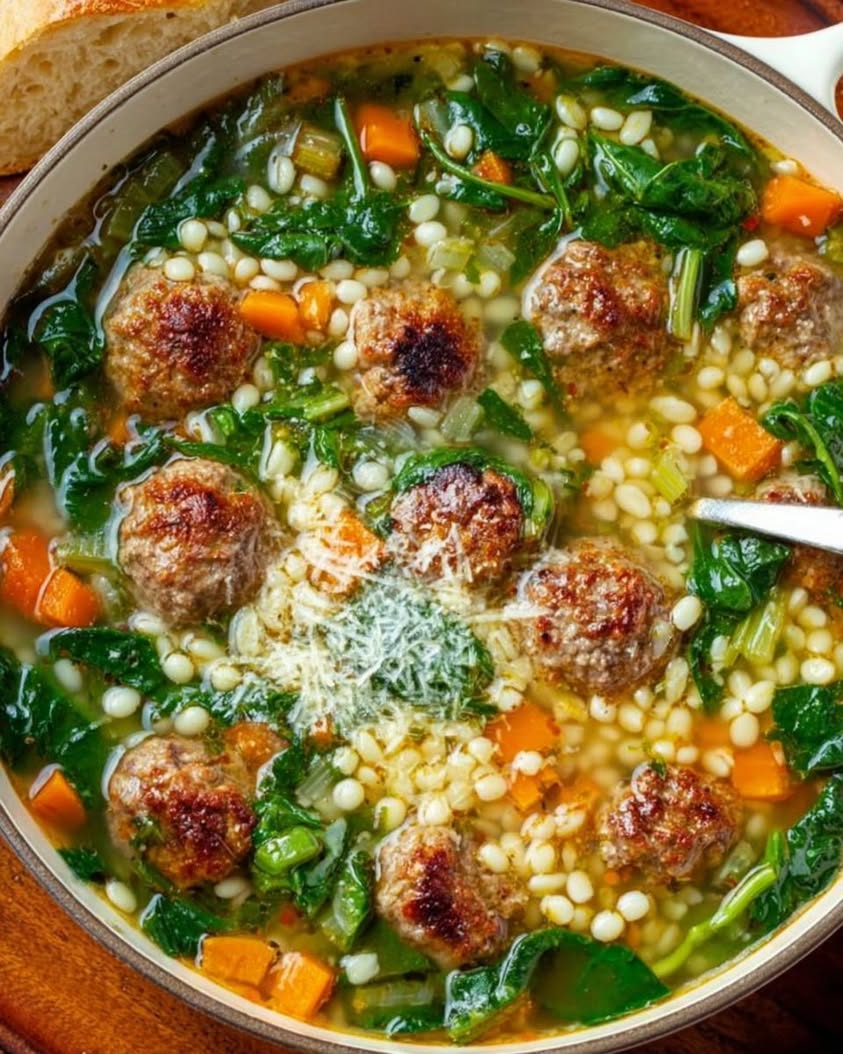
The Ultimate Homemade Italian Wedding Soup Recipe for Cozy Nights
Imagine coming home on a chilly evening to a pot of the ultimate Homemade Italian Wedding Soup Recipe for Cozy Nights bubbling away on your stove. This soup brings back memories of family gatherings and warm kitchens filled with the aromas of garlic, fresh herbs, and simmering broth. You will love how the tiny, tender meatballs float beside delicate pasta and vibrant green spinach, creating a bowl of pure comfort.
This Homemade Italian Wedding Soup Recipe for Cozy Nights is not just about the ingredients. It is about the experience of making something from scratch. You will feel the satisfaction of rolling the small meatballs by hand. You will appreciate how the broth develops a rich flavor from the combination of chicken stock, white wine, and Parmesan rind. The process itself becomes a soothing ritual, especially when you share the results with loved ones.
The name Italian Wedding Soup often confuses people. It does not come from actual weddings. Instead, the name comes from the Italian phrase minestra maritata, which means married soup. This refers to the perfect marriage of greens and meat in the broth. This classic soup represents the heart of Italian home cooking. It is nourishing, satisfying, and incredibly flavorful. This recipe for cozy nights captures that traditional spirit while offering modern tips for success.
Quick Recipe Highlights
- Flavor Profile: This soup offers a savory, umami-rich base from the chicken broth and Parmesan. The meatballs bring a subtle garlic and herb flavor with a hint of nutmeg. The final touch of fresh lemon juice brightens everything beautifully.
- Texture: You get a wonderful variety of textures in every spoonful. The meatballs are tender and juicy. The pasta adds a soft chewiness. The wilted spinach provides a silky contrast, while the shredded Parmesan adds a slight grit that melts on your tongue.
- Aroma: The kitchen will smell incredible as this soup simmers. You will detect the earthy scent of fresh thyme and oregano. The garlic and onion create a savory base note. The chicken broth adds a comforting, homey fragrance that fills every room.
- Visual Appeal: This soup looks as good as it tastes. The deep golden broth contrasts with the bright green spinach. The small, round meatballs peek out from the liquid. A dusting of freshly grated Parmesan on top adds a touch of elegance.
- Skill Level Needed: This recipe requires some basic knife work and rolling meatballs, but it is very approachable. If you can chop vegetables and mix ingredients, you can make this soup. It is a great recipe for building confidence in the kitchen.
- Special Equipment: You will need a large Dutch oven or heavy-bottomed pot. A set of measuring spoons and cups helps. A good chef’s knife and cutting board are essential. You might also want a ladle for serving.
Recipe Overview
- Difficulty Level: I rated this recipe as medium difficulty because it has several components. You must make the meatballs, prepare the soup base, and cook the pasta separately. However, each step is simple. The timing is forgiving. Even a beginner can succeed by following the directions carefully and prepping ingredients ahead of time.
- Category: This is a main-course soup that fits perfectly into the comfort food category. It also works as a hearty starter for a larger Italian meal. You can serve it as a complete lunch or a light dinner. It is versatile enough for weeknights or special occasions.
- Cuisine: This recipe comes from the Italian culinary tradition, specifically from Southern Italian home cooking. The combination of meat and greens in broth has ancient roots. It likely evolved from cucina povera, the peasant cooking style that used simple, affordable ingredients to create something wonderful. The flavors are distinctly Italian, relying on garlic, herbs, and cheese.
- Cost: This soup is quite economical to make. Ground pork or beef is relatively inexpensive. Chicken broth and pasta are pantry staples. Spinach and carrots are affordable vegetables. The Parmesan is the priciest ingredient, but you only need a small amount for maximum flavor. A large batch costs around fifteen to twenty dollars.
- Season: This soup is best enjoyed during the fall and winter months. The hearty nature of the broth and meatballs warms you from the inside out. Spring is also lovely if you want to use fresh greens. However, honestly, this soup works any time you crave something nourishing and cozy.
- Occasion: This Homemade Italian Wedding Soup Recipe for Cozy Nights is perfect for Sunday family dinners. It is excellent for a casual gathering with friends. It works beautifully as a make-ahead meal for busy weeks. It also makes a thoughtful dish to bring to someone who needs comfort.
Why You Will Love This Recipe
The taste and texture appeal of this soup is undeniable. Each spoonful delivers a complex, savory flavor. The meatballs are seasoned perfectly with garlic, Parmesan, and a whisper of nutmeg. The broth is rich and satisfying without being heavy. The spinach adds a fresh, slightly earthy note. The combination is deeply comforting and nostalgic.
The convenience and preparation benefits are significant. You can make the meatballs and chop the vegetables a day ahead. The soup itself comes together in about an hour on the stove. It freezes beautifully, so you can double the batch for later. This is the kind of recipe that rewards you with leftovers that taste even better the next day.
The nutritional advantages might surprise you. This soup is packed with protein from the meatballs and the Parmesan. The spinach provides iron, vitamin K, and antioxidants. The carrots offer beta-carotene. The broth is hydrating and nourishing. It is a balanced meal in a bowl. It fills you up without weighing you down.
The social and entertaining value is high. Serving this soup makes you look like a skilled cook, yet it is humble and welcoming. It is the perfect dish for a casual dinner party. Your guests will feel cared for and impressed. The aromas alone will create a warm, inviting atmosphere in your home.
Cost-effectiveness and accessibility make this recipe a winner. The ingredients are easy to find at any grocery store. None of them are exotic or expensive. You get a large quantity of food for a modest investment. This soup stretches a small amount of meat into many servings. It is a smart, budget-friendly choice.
Historical Background and Cultural Significance
The origin story of Italian wedding soup is a delightful misconception. The name comes from the Italian phrase minestra maritata. This translates to married soup, not wedding soup. The marriage refers to the perfect pairing of greens and meat in the broth. This concept dates back to ancient Roman times when cooks combined leafy vegetables with pork or poultry.
Cultural importance of this soup lies in its role as a symbol of hospitality. In Southern Italy, families would make this soup to welcome guests. It was also a staple during the harvest season. The soup represented abundance and care. It was a way to use available ingredients like kale or escarole with small bits of precious meat.
The evolution of the recipe happened as Italian immigrants brought it to America. In the United States, the soup transformed. Cooks started using small meatballs instead of larger chunks of meat. They added pasta like acini di pepe or orzo. Spinach replaced the more bitter greens. The American version became sweeter and more approachable for a broader audience.
Regional variations exist across Italy itself. In Campania, they might use broccoli rabe for a bitter kick. In Lazio, the soup often includes pork shoulder instead of meatballs. Some versions use tiny pasta shapes called stelline. Others omit the pasta entirely for a lower-carb option. Each family has its own variation, passed down through generations.
Ingredient Deep Dive
Ground pork holds cultural significance in Italian cooking, where pork is used in many classic dishes. It is prized for its fat content, which keeps the meatballs moist. Nutritionally, pork provides B vitamins and selenium. When selecting ground pork, look for meat that is pink and not too pale. The fat content should be around 20 percent for the best texture. Store it in the coldest part of your refrigerator and use it within two days. You can substitute ground turkey or chicken for a leaner option.
Parmigiano-Reggiano is the king of Italian cheeses. Its cultural importance cannot be overstated. It has been made the same way for centuries. Nutritionally, it is high in protein and calcium. The aging process creates complex umami notes. Always buy a wedge and grate it yourself. Pre-grated cheese has anti-caking agents that affect melting. Store the wedge wrapped in wax paper inside a plastic bag in the fridge. It will last for weeks.
Fresh spinach offers a mild, sweet flavor that wilts perfectly into the broth. It is packed with iron, vitamin A, and vitamin C. Look for leaves that are crisp and dark green with no slimy spots. Store unwashed spinach in a plastic bag with a paper towel to absorb moisture. It will keep for about five days. You can substitute kale or Swiss chard for a heartier green. Just remember to remove the tough stems first.
Acini di pepe pasta means peppercorns in Italian because the tiny shapes resemble peppercorns. This pasta is traditional for wedding soup. It is small enough to fit on a spoon with broth. Nutritionally, it provides carbohydrates for energy. Look for packages that are not crushed or broken. Store pasta in a cool, dry cabinet. You can substitute orzo, ditalini, or even pastina if you cannot find acini di pepe.
Chicken broth forms the base of this entire soup. It must be high quality for the best flavor. Look for low-sodium broth so you control the salt. Better yet, use homemade chicken stock. The gelatin from homemade stock gives the soup a silky mouthfeel. Store boxed broth in the pantry and once opened, refrigerate it for up to a week. You can substitute vegetable broth for a lighter version, but the flavor will be less rich.
Common Mistakes to Avoid
- Overcooking the pasta in the soup is a major error. The pasta will continue to absorb liquid and become mushy. You should cook the pasta separately and add it to each bowl just before serving. This keeps it firm and prevents the soup from becoming starchy.
- Not seasoning the meatballs enough leads to bland results. The meatballs need salt, pepper, garlic, and cheese to shine. Taste a tiny piece of the raw mixture by pan-frying it first. Adjust the seasoning before you roll all the meatballs.
- Using watery broth or stock makes the soup taste thin. Choose a high-quality broth or make your own. You can boost flavor by simmering the broth with a Parmesan rind. The rind adds richness and depth that cannot be replicated.
- Overworking the meatball mixture creates tough meatballs. Mix the ingredients just until they are combined. Handle the mixture gently. Roll the meatballs loosely. Overworking develops gluten and compresses the meat, making it dense.
- Adding all the spinach at once can cause it to clump. Add the spinach in batches, stirring after each addition. It will wilt quickly. This method ensures even distribution and prevents bitterness.
- Skipping the lemon juice at the end is a missed opportunity. The acidity brightens the entire soup. It balances the richness of the meatballs and broth. Do not skip this small but crucial step.
- Using pre-grated cheese will result in a gritty texture. Grating fresh Parmesan gives you a smooth melt and better flavor. The anti-caking agents in pre-grated cheese do not dissolve properly.
- Not skimming the fat from the broth can make the soup greasy. After the meatballs simmer, you might see fat rising to the surface. Use a large spoon to skim it off. This keeps the soup clear and light.
- Boiling the soup too aggressively will break the meatballs apart. Maintain a gentle simmer. A rapid boil causes turbulence that can shatter the delicate meatballs. Keep the heat low and steady.
- Forgetting to season the broth properly leads to flat flavors. The broth must be salted adequately. The pasta and spinach will absorb some salt. Taste the broth before adding the meatballs and adjust accordingly.
Essential Techniques
Rolling small meatballs is a technique that requires a light touch. You want the meatballs to be uniform in size so they cook evenly. Use a small cookie scoop or melon baller to portion the mixture. Then roll each portion between your palms gently. Do not squeeze or press too hard. The goal is to form a round ball without compacting the meat. You should see a slight texture on the surface. A visual cue of success is that the meatballs hold their shape but feel tender when pressed.
Sweating the vegetables is crucial for building flavor. This technique involves cooking diced onion, carrot, and celery in olive oil over medium-low heat. You want them to soften without browning. The heat releases their natural sugars and creates a sweet, aromatic base. Stir occasionally and watch for the onions to become translucent. This process takes about eight minutes. The vegetables should look glossy and soft but not colored. This step should not be rushed.
Developing the fond is a classic French technique that applies here. When you sweat the vegetables, some bits will stick to the bottom of the pot. This is called fond. When you add the white wine and scrape the bottom, you dissolve those browned bits. This deglazing step adds incredible depth to the broth. Use a wooden spoon for scraping. You want to lift all the flavor off the bottom. The liquid should sizzle and steam as you work.
Pro Tips for Perfect Homemade Italian Wedding Soup Recipe for Cozy Nights
First, always toast the pasta in a dry pan before boiling it. This adds a nutty flavor that enhances the soup. Spread the pasta on a baking sheet and toast in a 350 degree oven for five minutes. Watch closely so it does not burn. The pasta will turn golden and smell toasted.
Second, chill the meatball mixture for twenty minutes before rolling. This firms up the fat and makes the meatballs easier to handle. Cold meatballs hold their shape better during cooking. They will be juicier because the fat does not render out as quickly.
Third, use a microplane to zest a lemon before juicing it. Add the zest to the meatball mixture for a burst of freshness. The lemon zest lifts the entire flavor profile. It pairs beautifully with the garlic and herbs.
Fourth, make double the quantity of meatballs and freeze half on a baking sheet. Once frozen solid, transfer them to a freezer bag. You can drop frozen meatballs directly into soup without thawing. This makes future batches almost instant.
Fifth, reserve the Parmesan rind from a wedge. Add it to the broth as it simmers. This trick adds deep, savory flavor without extra salt. Remove the rind before serving because it becomes soft but does not fully dissolve.
Sixth, season the soup in layers. Add salt at each stage: to the meatballs, to the sweating vegetables, and to the broth. Layering ensures the overall dish is well seasoned. It prevents the need for heavy salt at the end.
Seventh, serve the soup with a drizzle of high-quality extra virgin olive oil. This finishing touch adds a peppery, fruity note. It also adds a beautiful sheen to the surface. Do this right before serving for the best effect.
Eighth, let the soup sit for ten minutes after cooking before serving. This allows the flavors to meld together. The temperature will drop slightly, but the flavor will improve dramatically. This short rest is worth the wait.
Variations and Adaptations
Regional variations of this soup abound in Italy. In Tuscany, they might add cannellini beans for extra protein and fiber. The beans make the soup even heartier. Some versions skip the pasta and use bread cubes instead. This Roman style is called acquacotta. The bread absorbs the broth and softens into a porridge-like texture. These variations show the flexibility of the concept.
Seasonal adaptations are easy with this recipe. In the spring, you can use fresh peas and asparagus tips. In the summer, swap spinach for arugula for a peppery kick. In the fall, shredded kale or escarole works wonderfully. Winter calls for hearty greens like collards or chard. The base recipe remains the same. Only the greens change with the seasons.
Dietary modifications make this soup accessible to more people. For a gluten-free version, use gluten-free pasta or omit the pasta entirely. For a dairy-free option, skip the Parmesan and use nutritional yeast for a cheesy flavor. For a low-carb version, replace the pasta with cauliflower rice. For a Whole30 compliant version, use grain-free meatballs and omit the cheese. Each modification works well.
Flavor variations can transform the soup entirely. Try adding a pinch of red pepper flakes for heat. Use Italian sausage instead of ground pork for a spicier meatball. Add a splash of soy sauce or fish sauce to the broth for extra umami. Roast the garlic before adding it for a sweeter, mellower flavor. These small changes create new experiences.
Texture modifications can be fun. For a smoother soup, blend half of the broth and vegetables before adding the meatballs. This creates a creamy base. For a chunkier version, add diced potatoes or zucchini. For a crispy topping, bake some breadcrumbs with Parmesan and sprinkle them over each bowl. Texture contrast makes every bite interesting.
Presentation alternatives can elevate the dish for guests. Serve the soup in individual cast-iron crocks. Top each with a slice of toasted baguette and melted provolone. Broil until bubbly for a French onion twist. Or, serve the soup over a bed of blanched greens for a beautiful layered effect. These presentation ideas make the soup feel special.
Serving and Presentation Guide
Plating techniques for this soup are simple but effective. Use wide, shallow bowls to show off the ingredients. Ladle the broth over the meatballs and spinach so everything is visible. Arrange the meatballs evenly so each spoonful gets one. The presentation should look abundant and inviting.
Garnishing ideas can enhance the visual appeal. A sprinkle of fresh parsley adds a pop of green. Freshly grated Parmesan on top creates a white contrast. A twist of black pepper adds specks of darkness. A drizzle of olive oil gives a glossy finish. These garnishes also add flavor layers.
Traditional accompaniments include crusty bread for dipping. Serve with a side salad of arugula with lemon vinaigrette. The acidity of the salad balances the richness of the soup. A glass of dry white wine like Pinot Grigio complements the broth. These pairings complete the meal.
Modern serving suggestions might involve individual portions in espresso cups for appetizers. For a main course, serve in large bowls with extra cheese on the side. You can also set up a soup bar with toppings like crispy prosciutto, toasted pine nuts, or extra greens. This interactive style is great for parties.
Temperature considerations are important for this soup. It should be served hot but not boiling. The ideal eating temperature is just below a simmer. This allows the flavors to be tasted without burning your mouth. Let the soup rest off the heat for a few minutes before serving.
Portion control tips help with meal planning. One cup is a reasonable appetizer portion. Two cups make a satisfying main course. When serving a crowd, plan for about three cups per person. The soup is filling but not heavy, so people often want more.
Wine and Beverage Pairing
Wine pairings for this soup are straightforward. A crisp, dry white wine like Verdicchio works beautifully. The wine has enough acidity to cut through the richness. A light red wine like Barbera is also excellent. The low tannins and bright fruit flavors complement the meatballs. Avoid heavy red wines like Cabernet Sauvignon that would overpower the delicate broth.
Non-alcoholic alternatives are plentiful. A sparkling water with a squeeze of lemon is refreshing. A good quality sparkling Rosé vinegar drink works too. You can also serve a chilled herbal tea like mint or chamomile. The tea should be unsweetened so it does not compete with the soup.
Temperature considerations matter for beverages. White wine should be served chilled but not ice cold. Red wine should be served slightly cool, around 60 degrees. Non-alcoholic drinks should be served cold. The contrast between hot soup and cold drink is pleasant. Make sure your guests have both options available.
Serving suggestions include decanting the wine if it is young. Let it breathe for fifteen minutes before serving. For non-alcoholic options, serve in stemware to make the occasion feel special. Provide both still and sparkling water. This attention to detail makes the meal feel complete.
Storage and Shelf Life
Storage methods for this soup require careful planning. The meatballs and broth should be stored separately from the pasta. The pasta will absorb liquid and become soggy if combined. Store the soup base in an airtight container. Keep the cooked pasta in a separate container. This allows you to reheat and combine fresh each time.
Temperature requirements are standard. Refrigerate the soup within two hours of cooking. The safe temperature range is below 40 degrees Fahrenheit. Do not leave the soup out at room temperature for extended periods. The meat and broth are vulnerable to bacterial growth if mishandled.
Container recommendations include glass or BPA-free plastic containers. Use shallow containers to speed up cooling. A wide, flat container cools faster than a deep one. Do not use metal containers because they can react with the acidic broth. Always cool the soup to room temperature before sealing the lid.
Signs of spoilage include a sour smell or a slimy texture. If the broth looks cloudy or has mold spots, discard it immediately. The meatballs may develop a grayish color. Trust your senses. If something seems off, do not risk eating it.
Reheating instructions are simple. Reheat the soup base in a pot over medium heat. Add a splash of water or broth if it has thickened. Bring it to a gentle simmer. Add the cooked pasta and spinach just before serving. Reheat the pasta separately in the microwave with a tablespoon of water.
Freezing guidelines are helpful for meal prep. Freeze the soup base without the pasta or spinach. Use freezer-safe bags or containers. Leave an inch of headspace for expansion. The soup will keep for up to three months. Thaw it overnight in the refrigerator before reheating. Add fresh spinach and freshly cooked pasta when serving.
Make Ahead Strategies
Prep timeline for this soup is flexible. Up to three days ahead, you can make the meatballs and refrigerate them. You can chop the vegetables and store them in a sealed bag. You can also prepare the broth base up to this point. The day before serving, do the final assembly. This timeline reduces stress on the day you serve.
Storage between steps is critical. The meatballs should be kept on a parchment-lined baking sheet covered with plastic wrap. The vegetables must be stored in a damp paper towel inside a bag. The broth base should be cooled and refrigerated in a container with a lid. Keep ingredients separate until the final cooking.
Quality impact assessment suggests that this soup actually improves overnight. The flavors meld together. The meatballs become more tender. The broth gains depth. However, the pasta and spinach should always be fresh. Adding them at the last minute ensures the best texture and color.
Assembly tips make the final step easy. On serving day, bring the broth to a simmer in a large pot. Add the meatballs and cook until heated through. Cook the pasta separately and drain it. Wilt the spinach in the hot broth. Combine everything in the pot for just a minute before serving. This quick final assembly yields perfect results.
Scaling Instructions
Halving the recipe is simple. Use half the meatball ingredients. Use half the vegetables. Use half the broth. The cooking time remains the same. The pot size should be smaller to prevent too much evaporation. You will get about four servings. This is perfect for a small family.
Doubling or tripling the recipe requires a larger pot. Ensure your pot holds at least eight quarts. Increase the cooking time slightly because the volume is larger. The meatballs may take a few extra minutes to cook through. Do not crowd the pot when browning meatballs. Work in batches for the best sear.
Equipment adjustments matter when scaling. A bigger pot means a wider surface area for evaporation. You might need to add extra broth if the liquid reduces too much. The meatball rolling becomes more tedious. Consider using a scoop for consistency. A standing mixer can help mix the meatball ingredients evenly for large batches.
Timing modifications are necessary for large batches. The soup will take longer to come to a simmer. The meatballs will need more time to cook through. Plan for an extra fifteen minutes at each stage. Taste and adjust seasoning accordingly because salt needs may change.
Storage considerations for scaled batches demand larger containers. Divide the soup into smaller portions for easier storage. This makes reheating more manageable. Freeze in quart-sized bags for quick meals. Label each bag with the date and contents.
Nutritional Deep Dive
Macro breakdown per serving is balanced. One serving provides approximately 350 calories. It contains about 18 grams of protein, 12 grams of fat, and 35 grams of carbohydrates. The protein comes mainly from the meatballs and cheese. The fat comes from the ground pork and olive oil. The carbohydrates come from the pasta and vegetables.
Micronutrient analysis reveals a wealth of vitamins. The spinach provides significant vitamin A and vitamin K. The carrots offer beta-carotene and vitamin A. The chicken broth contains a range of minerals including potassium. The Parmesan adds calcium and phosphorus. This soup is nutrient-dense relative to its calorie count.
Health benefits are numerous. The soup is hydrating and supports digestion. The bone broth used in this recipe provides collagen and gelatin. These compounds support joint health. The vegetables add fiber for satiety and gut health. The meal is well-rounded and nourishing.
Dietary considerations include the fact that this soup is naturally high in protein. It can be adapted for low-fat diets by using lean ground turkey. It is suitable for a balanced diet. It is not suitable for strict vegan or vegetarian diets without significant modification.
Portion analysis shows that one serving is filling. The combination of protein, vegetables, and carbohydrates creates a satisfying meal. Most people feel full after one bowl. This makes it easier to control portions. The soup has a high water content, which helps with satiety.
Weight management tips include watching the portion of pasta. The pasta is the primary source of calories from carbohydrates. Use less pasta or replace it with zucchini noodles for a lower-calorie option. The meatballs can be made with extra-lean ground meat to reduce fat. These small modifications make a difference for weight goals.
Dietary Adaptations
Gluten-free adaptation is straightforward. Replace the regular pasta with your favorite gluten-free pasta. Ensure the breadcrumbs in the meatballs are gluten-free. Many brands offer gluten-free panko. The soup will still taste delicious. The texture of gluten-free pasta can be softer, so watch the cooking time closely.
Dairy-free adaptation requires some work. Omit the Parmesan from the meatballs and the garnish. Use dairy-free Parmesan alternatives like cashew-based cheese. The flavor will be different, but the broth remains delicious. You can also add more herbs to compensate for the loss of cheese flavor.
Vegan adaptation is possible but changes the soup substantially. Use vegan meatballs made from lentils or mushrooms. Replace the chicken broth with vegetable broth. Use cashew cream for richness. The soup will be different from the original but still comforting. It requires a complete rework of the meatball recipe.
Low-carb adaptation is popular. Omit the pasta entirely. Use extra vegetables like zucchini or cauliflower rice. Increase the meatball quantity for more protein. The soup will be more like a broth with meatballs and greens. It is very satisfying without the carbs.
Keto adaptation is similar to low-carb. Focus on using high-fat ingredients like fatty ground pork. Add more olive oil. Use bone broth for extra fat and flavor. Skip the pasta and carrots. The soup will be high in fat and low in carbs, fitting the keto macros perfectly.
Paleo adaptation requires removing grains and dairy. Use almond flour instead of breadcrumbs in the meatballs. Replace the pasta with spaghetti squash ribbons. Skip the Parmesan. Use pasture-raised ground pork. The soup will be grain-free, dairy-free, and legume-free.
Low-FODMAP adaptation helps those with digestive sensitivities. Use garlic-infused oil instead of garlic cloves. Omit the onion and use the green part of leeks. Use gluten-free pasta. Ensure the broth is low-FODMAP certified. The meatballs should be made with plain ground meat without garlic or onion powders.
Troubleshooting Guide
Texture issues often arise from overcooked pasta. The solution is to cook the pasta separately and add it at the end. If the meatballs are tough, you likely overworked the mixture. Next time, mix gently and handle less. If the soup is too thick, add more broth or water to thin it.
Flavor balance can be tricky. If the soup tastes flat, add more salt or a splash of lemon juice. If it is too salty, add a peeled potato to the broth and simmer for fifteen minutes. The potato absorbs excess salt. If it tastes bitter, add a pinch of sugar to balance it out.
Temperature problems affect the meatballs. If you see the meatballs falling apart, the heat was too high. Cook them gently at a simmer. If they are dry, they were overcooked. Remove them as soon as they are done. Keep the heat low and steady.
Equipment challenges include the pasta sticking together. Rinse it with cold water after draining to stop the cooking. Toss with a little olive oil to prevent clumping. If the broth evaporates too much, cover the pot partially. This keeps the liquid from reducing too fast.
Ingredient substitutions can cause issues. If you used lean ground meat, the meatballs will be drier. Add an extra egg yolk to the mixture for moisture. If you substituted a different green, know that kale takes longer to wilt than spinach. Adjust the cooking time accordingly.
Timing concerns happen when the soup is ready but the pasta is not. Keep the soup warm over low heat while the pasta finishes. Do not let the soup boil, or the meatballs will suffer. Patience is key. Everything will come together.
Recipe Success Stories
Community feedback has been overwhelmingly positive for this Homemade Italian Wedding Soup Recipe for Cozy Nights. One reader, Maria from Boston, wrote that this soup reminded her of her grandmother. She said the meatballs were perfect and the broth was full of flavor. She served it at a family gathering, and everyone asked for seconds.
Variation successes include a reader who added a pinch of cinnamon to the meatballs. She said it added a warmth that paired beautifully with the Parmesan. Another reader swapped the spinach for fresh arugula and loved the peppery bite. These variations show how adaptable the recipe is to personal taste.
Adaptation stories include a reader with celiac disease. She used gluten-free pasta and almond flour instead of breadcrumbs. She reported that the soup was just as delicious. She was thrilled to have a safe version of her favorite comfort food. Her children did not even notice the difference.
Reader suggestions often focus on adding more vegetables. Some add chopped zucchini or yellow squash. Others add shredded cabbage for extra bulk. One reader adds a can of cannellini beans for protein and fiber. These suggestions improve the nutritional profile without sacrificing taste.
Photography tips from readers help others. One reader found that using a shallow white bowl showed off the ingredients best. Another reader recommended adding a sprig of fresh thyme on top for a pop of color. These small details make the soup look as good as it tastes.
Frequently Asked Questions
Can I make this soup in a slow cooker? Yes, you can. Brown the meatballs first in a skillet. Add them to the slow cooker with the broth and vegetables. Cook on low for six hours. Cook the pasta separately and add it before serving. Add the spinach at the end.
What is the best pasta for Italian wedding soup? Acini di pepe is traditional. Orzo, ditalini, or stelline also work well. Use any small pasta shape that fits on a spoon. The pasta should be tiny so it does not dominate the soup.
Can I use frozen meatballs? Yes, you can use frozen meatballs. They will work in a pinch. However, homemade meatballs are much more flavorful. The texture is also better. If using frozen, choose a high-quality brand without fillers.
How do I make the broth richer? Use homemade chicken stock. Add a Parmesan rind while simmering. Pan-roast the bones before making stock. Add a splash of white wine for acidity. These steps add layers of flavor.
Readers Love These Recipes !

Golden Baked Brie with Caramelized Apples and Thyme Recipe
September 13, 2026
Golden Baked Brie with Caramelized Apples and Thyme: An Elegant Appetizer for Every Gathering ⚖️ Difficulty Easy ⏲️ Prep Time 15 mins 🕒 Cook Time 25 mins ⏱️ Total Time 40 mins 🍽 Servings 8 Golden Baked Brie with Caramelized Apples and Thyme brings a restaurant-quality appetizer right into your home kitchen. Therefore, you can
Crispy Parmesan Artichoke Hearts: The Ultimate Easy Appetizer
September 13, 2026
Crispy Parmesan Artichoke Hearts: The Ultimate Easy Appetizer ⚖️ Difficulty Easy ⏲️ Prep Time 15 mins 🕒 Cook Time 20 mins ⏱️ Total Time 35 mins 🍽 Servings 4 If you crave a snack that delivers a satisfying crunch alongside a burst of savory flavor, then Crispy Parmesan Artichoke Hearts are about to become your
Creamy Cajun Chicken Linguine With Garlic Parmesan Sauce
September 13, 2026
Creamy Cajun Chicken Linguine with Garlic Parmesan Sauce: A Weeknight Dinner Worth Celebrating ⚖️ Difficulty Easy ⏲️ Prep Time 15 mins 🕒 Cook Time 25 mins ⏱️ Total Time 40 mins 🍽 Servings 4 Creamy Cajun Chicken Linguine with Garlic Parmesan Sauce brings the bold, smoky spirit of Louisiana right into your home kitchen. Consequently,

Moist Banana Walnut Dream Cake Recipe You’ll Love
September 13, 2026
Banana Walnut Dream Cake: The Ultimate Moist Banana Walnut Dream Cake Recipe You’ll Love ⚖️ Difficulty Easy ⏲️ Prep Time 20 mins 🕒 Cook Time 55 mins ⏱️ Total Time 75 mins 🍽 Servings 12 If you love banana bread, then you will absolutely adore this Moist Banana Walnut Dream Cake Recipe You’ll Love. This
