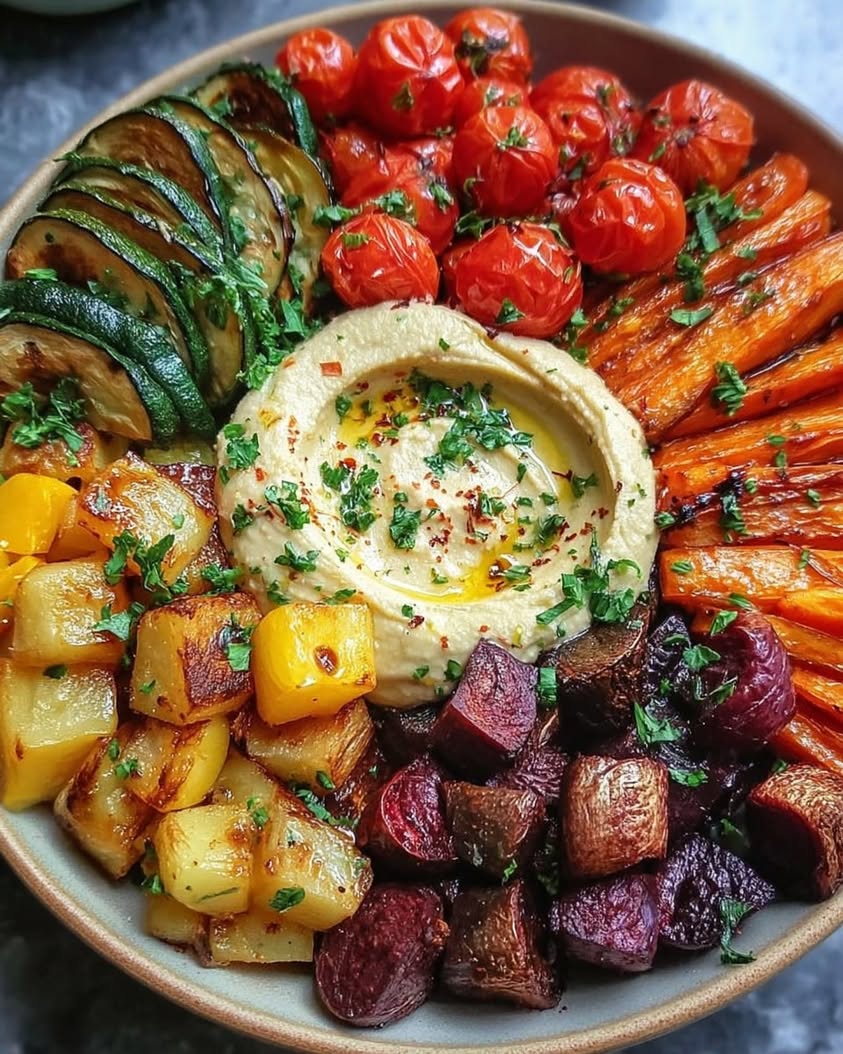
Cozy Roasted Veggie and Hummus Bowl: A Healthy Weeknight Dinner
Imagine coming home after a long day, and you want something warm, satisfying, and incredibly nourishing. That is exactly the feeling this Cozy Roasted Veggie and Hummus Bowl delivers. You get tender, caramelized vegetables resting on a bed of creamy hummus, with a drizzle of tangy tahini sauce that brings everything together. The contrast between the hot roasted squash and cool, smooth hummus creates a truly memorable eating experience, and it is surprisingly simple to assemble.
This bowl is packed with vibrant colors and bold flavors. Sweet red bell peppers, earthy sweet potatoes, and crisp chickpeas all roast together until they become irresistibly golden. You then spoon them over a generous layer of hummus, which adds a rich and savory base. A sprinkle of fresh parsley and a pinch of smoked paprika finish the dish, making it look as beautiful as it tastes. This is comfort food that also happens to be incredibly good for you.
What makes this roasted veggie and hummus bowl a true weeknight win is its flexibility. You can use whatever vegetables you have on hand, and you can adjust the spices to match your mood. It is a naturally vegan and gluten-free meal, so it fits a wide range of dietary needs. The best part is that the entire process, from chopping to serving, is straightforward and rewarding. You will feel accomplished and nourished after just a single sheet pan and a few minutes of assembly.
Quick Recipe Highlights
- Flavor Profile: This bowl delivers a fantastic balance of savory, sweet, and tangy. The roasted vegetables offer a deep, caramelized sweetness, while the hummus provides a creamy, garlicky base. The tahini sauce adds a nutty and slightly bitter note that cuts through the richness perfectly.
- Texture: You get a wonderful contrast in every bite. The roasted vegetables are tender on the inside with slightly crispy edges. The hummus is luxuriously smooth and creamy, and the crispy chickpeas add a delightful pop and crunch.
- Aroma: Your kitchen will fill with the warm, inviting scent of roasting vegetables and toasted cumin. The garlic in the hummus and the lemon in the tahini sauce add bright, zesty notes that are incredibly appetizing.
- Visual Appeal: The bowl is a true feast for the eyes. You see deep orange sweet potatoes, bright red peppers, golden chickpeas, and a creamy beige hummus base. A drizzle of white tahini sauce and a sprinkle of green parsley create an elegant and appetizing presentation.
- Skill Level Needed: This recipe is perfect for beginner cooks. The only advanced skill is knowing how to chop vegetables and operate an oven. There are no complicated techniques, no meat temperatures to watch, and the assembly is straightforward.
- Special Equipment: You only need a standard sheet pan, a small bowl for mixing the tahini sauce, and a chef’s knife. No food processor or blender is required, making cleanup incredibly simple.
Recipe Overview
- Difficulty Level: This recipe earns an easy rating because it relies on simple, hands-off cooking methods. The oven does most of the work, roasting the vegetables to perfection while you prepare the hummus and sauce. There are no finicky steps, no demanding techniques, and the final assembly is a simple matter of layering ingredients in a bowl.
- Category: This dish fits perfectly into the main course salad, bowl food, and healthy dinner categories. It is a satisfying one-bowl meal that is substantial enough to be the star of your dinner. It also works beautifully as a hearty lunch or a light, satisfying supper.
- Cuisine: While hummus and tahini hail from Middle Eastern cuisine, this roasted veggie bowl is a modern, fusion-style dish. It takes inspiration from Mediterranean cooking principles, focusing on fresh vegetables, healthy fats, and bold spices. The combination is a contemporary and accessible take on those timeless flavors.
- Cost: This is a very budget-friendly meal. The core ingredients, such as chickpeas, sweet potatoes, and carrots, are incredibly affordable. Hummus can be made from scratch with dried chickpeas or purchased pre-made for convenience. The total cost for four servings is typically under ten dollars, making it a fantastic option for feeding a family on a budget.
- Season: Autumn and winter are the ideal seasons for this dish. Root vegetables like sweet potatoes and carrots are at their peak during the colder months, offering the best flavor and texture. The warm, comforting nature of the bowl is a perfect antidote to chilly weather, though it can be enjoyed year-round with any seasonal produce.
- Occasion: This recipe is excellent for everyday weeknight dinners, but it also shines at casual gatherings. It makes a wonderful meal-prep option for the work week, and it is a beautiful dish to serve at a vegetarian dinner party. It is substantial enough to satisfy meat-eaters while being a clear win for plant-based guests.
Why You Will Love This Recipe
The absolute best thing about this roasted veggie and hummus bowl is the incredible taste and texture combination. You get that satisfying crunch from the roasted chickpeas, followed by the creamy, cool hummus. Each vegetable brings its own unique flavor profile, and they all work in harmony. It is the kind of meal that feels luxurious and decadent, even though it is packed with wholesome ingredients. You will find yourself craving this bowl on a regular basis.
Convenience is a major win here. This recipe requires only about fifteen minutes of active preparation time. While the vegetables roast, you can set the table, relax, or prep your lunch for the next day. The cleanup is minimal, requiring only one sheet pan and a few mixing bowls. This makes it an ideal choice for busy weeknights when you want a delicious, homemade meal without spending hours in the kitchen. It is a true lifesaver for anyone with a packed schedule.
Nutritionally, this bowl is a powerhouse. You get a fantastic dose of fiber from the chickpeas and vegetables, which helps keep you full and satisfied for hours. The sweet potatoes provide a healthy dose of vitamin A, while the hummus offers plant-based protein and healthy fats. This meal is naturally gluten-free, dairy-free, and vegan, making it a safe and delicious option for almost everyone. You can feel good about what you are putting into your body with every single bite.
This recipe is also fantastic for social occasions. You can set up a bowl bar where guests can customize their own meal. This interactive element makes dinner fun and ensures everyone gets exactly what they like. The vibrant colors and beautiful presentation of the finished bowl also make it incredibly photogenic, which is a great bonus for sharing on social media. It is a crowd-pleaser that looks as good as it tastes.
Finally, this dish is highly cost-effective. The ingredients are inexpensive and easy to find at any grocery store. You can buy in bulk to save even more money. Hummus can be made from dried chickpeas for pennies, or you can purchase a high-quality store-bought tub for a few dollars. This makes it a perfect recipe for students, young professionals, or anyone looking to eat well on a tight budget without sacrificing flavor or quality.
Historical Background and Cultural Significance
The foundation of this bowl, hummus, has a history that stretches back centuries. While its exact origin is debated among several countries in the Levant, including Lebanon, Israel, and Palestine, hummus has been a staple of Middle Eastern cuisine for generations. It is a dish built on simple, core ingredients, chickpeas, tahini, lemon, and garlic, that have been cultivated in the region for thousands of years. Hummus represents a deep connection to the land and a tradition of making nourishing food from humble resources.
In Middle Eastern culture, hummus is far more than just a dip. It is a communal food, often shared among family and friends as a central part of a meze spread. The act of scooping up hummus with warm pita bread is a social ritual that brings people together. It is served at breakfast, lunch, and dinner, and it is a staple during holidays and celebrations. This tradition of shared eating and hospitality is a core reason why hummus remains so beloved around the world today.
The modern roasted veggie bowl, however, is a more recent evolution of these classic flavors. It represents a fusion of Middle Eastern ingredients with a contemporary, health-conscious eating style popularized in the United States and Europe. This dish takes the traditional hummus and elevates it from a side dish to the star of a full meal. The addition of roasted vegetables turns it into a hearty, balanced, and visually stunning plate.
You can find similar bowls in restaurants from Portland to Paris, each with its own regional twist. In California, they might add avocado and sprouts. In the Mediterranean, they might top it with grilled halloumi or za’atar-spiced chicken. This recipe is a testament to how classic flavors can be adapted and reimagined for modern palates. It honors the tradition of hummus while creating a fresh, exciting, and incredibly satisfying new way to enjoy it.
Ingredient Deep Dive
Chickpeas, also known as garbanzo beans, are the star of both the hummus and the crispy topping. Cultivated for over 7,000 years, they are one of the oldest cultivated legumes in the world. They are a cornerstone of Middle Eastern, Indian, and Mediterranean cuisines, providing a reliable source of protein and fiber. Nutritionally, they are excellent for heart health and blood sugar regulation. When selecting chickpeas, look for uniform size and a firm texture. For the best flavor, you can soak and cook dried chickpeas, but high-quality canned chickpeas are perfectly acceptable. Store unopened cans in a cool, dark place. Once opened, transfer them to an airtight container and refrigerate for up to three days.
Tahini, a paste made from toasted sesame seeds, is essential for authentic hummus and the finishing sauce. Sesame seeds are one of the oldest oilseed crops, and tahini has been used in Middle Eastern cooking for millennia. It provides a rich, nutty depth of flavor and a creamy texture. Nutritionally, it is packed with healthy fats, calcium, and antioxidants. When buying tahini, look for a brand that is smooth and pourable, not thick and dry. You can make your own by blending toasted sesame seeds with a little oil, but it is often easier to purchase. Store tahini in the pantry and stir it well before using, as the oil tends to separate.
Sweet potatoes provide the sweet, earthy foundation of the roasted vegetables. They are native to Central and South America and are a fantastic source of beta-carotene, which the body converts into vitamin A. For roasting, choose firm, unblemished sweet potatoes with smooth skin. Their natural sugars caramelize beautifully in the oven, creating a rich flavor. You can use orange, purple, or white sweet potatoes for different colors and tastes. Store them in a cool, dark, well-ventilated place, but do not refrigerate them. If you cannot find sweet potatoes, regular potatoes or butternut squash make excellent substitutes.
Red bell peppers add a burst of sweetness and a vibrant red color to the bowl. They are an excellent source of vitamin C, providing more than an orange per serving. When selecting bell peppers, look for ones that are firm, glossy, and heavy for their size. Their sweet, mild flavor roasts beautifully, becoming even more tender and complex. Store them in the refrigerator crisper drawer for up to a week. If you need a substitute, use orange or yellow bell peppers for a similar sweetness, or use roasted red peppers from a jar for a deeper, more smoky flavor.
Common Mistakes to Avoid
- Do not overcrowd your sheet pan. If you pack too many vegetables together, they will steam instead of roast. This prevents them from getting those beautiful, caramelized brown edges. Use two sheet pans if necessary to give the veggies plenty of space.
- Do not forget to toss the vegetables with enough oil. A good coating of olive oil is crucial for even roasting and browning. If you skimp on the oil, the vegetables will be dry and may burn before they are tender. Use your hands to ensure every piece is well coated.
- Do not skip seasoning the vegetables. A simple sprinkle of salt, pepper, and cumin makes a huge difference. Salt draws out moisture and enhances the natural flavors, while cumin adds a warm, earthy note that complements the sweetness of the vegetables perfectly.
- Do not over-roast the chickpeas. They should be golden and slightly crispy, but if you leave them in too long, they will become hard and difficult to chew. Check them after 20 minutes and remove them as soon as they look toasty.
- Do not use cold hummus. Bringing the hummus to room temperature before serving makes it much creamier and easier to spread. Cold hummus can be thick and grainy, which does not create the same luscious base for your bowl.
- Do not oversaturate the bowl with sauce. The tahini sauce should be a drizzle, not a pool. Adding too much can overwhelm the other flavors and make the bowl soggy. Start with a light drizzle and add more to taste.
- Do not cut the vegetables into uneven sizes. Consistent sizes ensure that all the pieces cook at the same rate. If some pieces are much larger than others, they will be undercooked while the smaller ones burn.
- Do not skip the final garnish. A sprinkle of fresh parsley, a pinch of smoked paprika, and a few sesame seeds add a professional touch. This final step adds freshness, color, and a pop of flavor that elevates the entire dish.
Essential Techniques
Mastering the art of roasting vegetables is the most important skill for this recipe. The key is high heat, typically around 400 degrees Fahrenheit, which encourages caramelization. You want to toss the vegetables in oil and seasonings, then spread them in a single layer on a hot sheet pan. You should not flip them too often. Letting them sit undisturbed for at least 15 to 20 minutes allows a deep, golden crust to form. A visual cue for success is seeing distinct brown spots on the edges of the vegetables, which indicates that the natural sugars have caramelized beautifully.
Making a smooth and creamy hummus is a technique worth mastering. The secret to an ultra-smooth texture is to process the tahini and lemon juice first before adding the chickpeas. This creates an emulsion that makes the hummus incredibly fluffy. When you add the chickpeas, process them for a full three to four minutes, scraping down the sides as needed. A common pitfall is adding too much water or oil too quickly, which can make the hummus thin. Add liquid one tablespoon at a time until it reaches your desired consistency. The final hummus should be thick but still soft enough to create a nice swirl with a spoon.
Creating the perfect tahini sauce is all about the ratio of ingredients. You start by whisking the tahini with lemon juice and a little water. The mixture will seize up and thicken at first, which is completely normal. You must keep whisking and adding water a tablespoon at a time until it becomes a smooth, pourable consistency. If you add too much water at once, the sauce can become thin and break. A good visual cue is a sauce that flows like thick cream and leaves a faint ribbon trail when drizzled from a spoon.
Pro Tips for Perfect Roasted Veggie and Hummus Bowl
For the crispiest chickpeas, you must dry them thoroughly after draining and rinsing them. Pat them gently with a clean kitchen towel or paper towels until they are completely dry. Any excess moisture will cause them to steam instead of crisp up in the oven.
Season your hummus generously with salt and a pinch of cumin. This helps the base of the bowl stand up to the robust flavors of the roasted vegetables. A bland hummus can make the whole dish taste flat, so taste and adjust the seasoning before you assemble.
For the best flavor, roast your vegetables on the top rack of the oven. This position gets the most direct heat, which promotes faster browning and better caramelization. Keep a close eye on them to prevent burning.
Do not assemble the bowls until you are ready to serve them. If you let the hot vegetables sit on the cold hummus for too long, the hummus will become watery and separate. For best results, spoon the hummus into the bowls, then top it immediately with the hot vegetables.
Double the batch of tahini sauce. It stores well in the refrigerator for up to a week. You can use it on grain bowls, salads, and even as a dressing for chicken or fish. It is a fantastic all-purpose sauce to have on hand.
Add a squeeze of fresh lemon juice to the hot vegetables right before serving. This brightens the flavors and adds a welcome hint of acidity that cuts through the richness of the hummus and tahini. It is a small step that makes a big difference.
Variations and Adaptations
Regional variations of this bowl are fun and easy to explore. For a Mediterranean twist, you can add crumbled feta cheese, kalamata olives, and a sprinkle of dried oregano. For a North African influence, season the vegetables with harissa paste and top the bowl with a dollop of preserved lemon and olive relish. You can even try a Greek version with roasted eggplant, zucchini, and a side of warm pita bread for dipping.
Seasonal adaptations keep this recipe fresh year-round. In the spring, use asparagus, snap peas, and early radishes. In the summer, roast zucchini, cherry tomatoes, and bell peppers. Come fall, swap in butternut squash, Brussels sprouts, and red onion. Each season brings its own unique flavors and colors, ensuring the bowl never becomes boring.
Dietary modifications are simple to implement. To make it nut-free, this recipe is already nut-free, as long as you use a tahini that is produced in a nut-free facility. To make it oil-free, you can roast the vegetables on a silicone baking mat without oil, though they will not be as crispy. You can also use oil-free hummus. The bowl is naturally vegan, gluten-free, and dairy-free.
Flavor variations are endless. You can add a teaspoon of smoked paprika or chipotle powder to the vegetables for a smoky heat. Try adding a drizzle of pomegranate molasses for a sweet and tangy finish. A sprinkle of za’atar, a Middle Eastern spice blend, adds a wonderful herby and tangy note that pairs beautifully with the hummus.
Serving and Presentation Guide
Plating this bowl is about creating visual layers. Start by spreading a generous amount of hummus in the bottom of a wide, shallow bowl. Use the back of a spoon to create a swirl pattern, which catches the sauce and looks elegant. Then, pile the roasted vegetables and chickpeas directly in the center, leaving a border of hummus visible around the edges. This creates a beautiful, composed look.
Garnishing is a crucial final step that adds both beauty and flavor. A light drizzle of tahini sauce over the top of the vegetables is a must. A sprinkle of fresh, chopped parsley adds a pop of bright green. A pinch of smoked paprika or sumac adds a beautiful red hue and a subtle smoky or tangy flavor. A few sesame seeds or toasted pine nuts add a final touch of texture and sophistication.
Traditional accompaniments are simple but effective. Warm pita bread or pita chips are classic choices for scooping up the hummus and vegetables. A simple side salad of cucumbers, tomatoes, and red onion with a lemon vinaigrette would complement the bowl beautifully. For a heartier meal, serve it alongside a cup of lentil soup.
Wine and Beverage Pairing
A classic wine pairing for this bowl is a crisp, unoaked white wine. A Sauvignon Blanc from New Zealand or a dry Riesling from Germany works wonderfully. The high acidity in these wines cuts through the richness of the hummus and tahini, while the citrus notes complement the roasted vegetables. A light, fruity Pinot Noir would also work if you prefer red wine.
For non-alcoholic alternatives, a sparkling water with a squeeze of lemon or lime is a fantastic palate cleanser. A minty iced green tea is a refreshing choice that complements the earthy flavors. A simple cucumber and mint water is elegant and hydrating. For something warming, a cup of herbal tea like rooibos or chamomile pairs nicely.
Since this is a savory, earthy dish, a black tea with a hint of spice is a surprisingly good match. A chai latte, with its notes of cinnamon, cardamom, and ginger, can echo the warm spices used in the vegetables. Serve it hot or iced depending on the weather.
Storage and Shelf Life
Proper storage is essential for maintaining the quality of this dish. The hummus, roasted vegetables, and tahini sauce should be stored separately in airtight containers. The hummus will keep for up to five days in the refrigerator, while the sauce can last up to seven days. The roasted vegetables are best consumed within three to four days.
Temperature requirements are straightforward. All components should be stored in the refrigerator at a temperature below 40 degrees Fahrenheit. Do not leave the assembled bowl at room temperature for more than two hours. If you are meal-prepping, keep everything separate until you are ready to eat.
Signs of spoilage to watch for include a sour smell from the hummus, a slimy texture on the vegetables, or a separation of the tahini sauce that does not re-emulsify when stirred. Always trust your senses and discard any ingredient that looks or smells off. The chickpeas can become soft and lose their crunch after a day, so they are best enjoyed fresh.
Make Ahead Strategies
This recipe is fantastic for meal prep. You can roast the vegetables and chickpeas up to three days in advance. Store them in an airtight container in the refrigerator. The hummus and tahini sauce can also be made three to five days ahead of time. This allows you to simply assemble the bowls in a few minutes when you are ready to eat.
When storing between steps, it is best to store the components separately. The hummus should be stored in a bowl with a tight-fitting lid. The tahini sauce should be stored in a jar or a squeeze bottle for easy drizzling. The roasted vegetables should be stored in a single layer to prevent them from getting mushy. You can re-crisp them in a hot oven or toaster oven for a few minutes before serving.
Quality impact is minimal if you store the components correctly. The flavor of the roasted vegetables can actually deepen slightly over a day or two. The hummus will remain creamy if you stir it before serving. The only element that does not hold up well is the crispy texture of the chickpeas. They are best when fresh from the oven, but they will still be tasty if you reheat them.
Scaling Instructions
Halving the recipe is straightforward. Simply use half of each ingredient. The cooking time for the vegetables will remain roughly the same, but you should keep an eye on them since they may cook slightly faster in a smaller batch on the sheet pan. You can use a smaller sheet pan or just spread them out well.
Doubling or tripling the recipe is also easy. The main challenge is having enough oven space. You will likely need two oven racks and two or three sheet pans. Rotate the pans halfway through cooking to ensure even browning. The timing might increase slightly because the oven will be more crowded, so check for doneness with a fork.
Equipment adjustments for scaling are minimal. For a single batch, a standard half-sheet pan works perfectly. For two or three batches, you will need two or three pans. The food processor for the hummus can handle a double batch, but for a triple batch, it is best to make it in two rounds to avoid overfilling the processor.
Nutritional Deep Dive
This bowl offers a fantastic macronutrient profile. It is high in complex carbohydrates from the sweet potatoes and chickpeas, which provide sustained energy. It contains a good amount of plant-based protein from the chickpeas and hummus, helping to build and repair tissues. The healthy fats from the tahini and olive oil support brain health and help you feel full and satisfied. The fiber content is exceptionally high, promoting good digestion and blood sugar regulation.
Micronutrient analysis shows this is a vitamin and mineral powerhouse. Sweet potatoes are loaded with vitamin A, which is essential for vision and immune function. Red bell peppers provide a huge dose of vitamin C, a powerful antioxidant. Chickpeas are rich in iron, folate, and magnesium. Tahini is a great source of calcium and copper. This bowl provides a wide spectrum of nutrients in a single meal.
Health benefits are numerous. The high fiber content helps lower cholesterol and supports a healthy gut microbiome. The antioxidants from the vegetables fight inflammation and protect against chronic disease. The healthy fats from olive oil and tahini are excellent for heart health. This meal is a fantastic choice for anyone looking to increase their intake of plant-based foods.
Dietary Adaptations
For a gluten-free adaptation, this recipe is naturally gluten-free as written. Just make sure your tahini and any spices you use are certified gluten-free to avoid any cross-contamination. You can also serve it with gluten-free pita or crackers if desired.
For a low-carb version, you can reduce the amount of sweet potatoes and chickpeas. Sub in more low-carb vegetables like zucchini, cauliflower, and bell peppers. You can also increase the portion of hummus and add a side of leafy greens to keep the meal substantial without the carbs.
For a keto-friendly bowl, the high carbohydrate content of the sweet potatoes is a challenge. You can replace the sweet potatoes with roasted cauliflower and broccoli. Use a fattier hummus or add a generous drizzle of extra virgin olive oil. You can also top the bowl with avocado for extra healthy fats.
Troubleshooting Guide
If your vegetables are not browning, your oven might not be hot enough. Make sure it is preheated to 400 degrees Fahrenheit and that you are using the top rack. Also, check that you are not overcrowding the pan. If the vegetables are still pale after 20 minutes, increase the heat to 425 degrees for the last ten minutes.
If your hummus is too thick, you can thin it out with a little water, lemon juice, or olive oil. Add one tablespoon at a time while the food processor is running until it reaches your desired consistency. If it is too thin, you can add a few more chickpeas and process again.
If your tahini sauce is too bitter, try whisking in a little more lemon juice or a pinch of salt. The bitterness is often a sign that the tahini is slightly old or that it needs more liquid and acid to balance it out. You can also add a tiny pinch of sugar to cut the bitterness.
Recipe Success Stories
Community feedback on this roasted veggie and hummus bowl has been overwhelmingly positive. Home cooks consistently report that it is a family favorite, even among picky eaters. Many parents share stories of their children happily eating their vegetables for the first time after trying this bowl because of the creamy hummus and sweet, caramelized flavor.
Variation successes are common and inspiring. One reader reported adding leftover grilled chicken for her husband. Another reader made it with harissa-roasted cauliflower and sweet potatoes and said it was the best meal of her week. Many readers love using this recipe as a base for a weekly meal prep rotation, creating a different bowl each time.
Frequently Asked Questions
Q: Can I use pre-made hummus?
A: Absolutely. Using a high-quality store-bought hummus is a fantastic time-saver. Look for a brand that uses simple ingredients like chickpeas, tahini, lemon, and garlic. It is perfectly acceptable for this recipe, and you can still achieve great results.
Q: How do I get my chickpeas extra crispy?
A: The secret is to dry them very thoroughly after rinsing them. Pat them with a clean kitchen towel until they are bone dry. Then toss them with oil and seasonings and roast them on the top rack of a hot oven.
Q: Can I make this bowl oil-free?
A: Yes, you can. Roast the vegetables on a silicone baking mat without oil. They will be more steamed than caramelized, but they will still be delicious. You can also use an oil-free hummus and a simple lemon juice-based sauce instead of tahini.
Q: What other vegetables can I use?
A: The options are endless. Try broccoli, cauliflower, Brussels sprouts, zucchini, yellow squash, asparagus, or mushrooms. Just cut them into similar sizes to ensure even cooking. Root vegetables like parsnips or carrots also work beautifully.
Q: How do I store leftovers?
A: Store the hummus, roasted vegetables, and sauce separately in airtight containers in the refrigerator. The bowl should not be assembled until you are ready to eat, as the hot vegetables will make the hummus watery.
Q: Can I freeze this bowl?
A: Freezing is not recommended for the assembled bowl. The hummus and tahini sauce can separate and become grainy when thawed. The roasted vegetables will lose their texture and become mushy. It is best to enjoy this bowl fresh.
Q: Is this recipe suitable for meal prep?
A: Yes, it is excellent for meal prep. You can roast the vegetables and make the hummus and sauce up to three days in advance. Then, simply assemble the bowls when you are ready to eat. This saves a ton of time during the week.
Q: What can I use instead of tahini?
A: If you do not have tahini, you can make a simple sauce with Greek yogurt, lemon juice, and garlic. For a dairy-free option, use sunflower seed butter or almond butter as a substitute. The flavor will change slightly, but it will still be delicious.
Q: How can I add more protein to this bowl?
A: You can top the bowl with grilled chicken, flaked salmon, or a hard-boiled egg. For a plant-based boost, add some marinated tofu, tempeh, or a generous sprinkling of hemp seeds. The chickpeas already provide a good base of protein.
Q: What spices go well with this bowl?
A: Cumin, smoked paprika, coriander, garlic powder, and za’atar are all fantastic options. You can also use curry powder for a different flavor profile. Feel free to experiment with your favorite spice blends to make the bowl your own.
Additional Resources
If you loved this roasted veggie and hummus bowl, you will also enjoy our recipe for a warm quinoa bowl with roasted vegetables and lemon herb dressing. This related recipe uses the same roasting technique but substitutes a different grain and a bright, herbaceous sauce. It is another fantastic one-bowl meal for a healthy weeknight dinner.
For technique guides, you can learn how to perfectly roast any vegetable by checking out our blog post on roasting basics. It covers the ideal temperatures, the best oils to use, and how to avoid soggy vegetables. Mastering this skill will open up a world of simple, delicious meals.
Ingredient information is key to success. If you want to make your own hummus from scratch, we have a detailed guide that walks you through every step. It explains how to cook dried chickpeas, how to achieve the smoothest texture, and how to season it perfectly. Knowing how to make hummus from scratch is a valuable kitchen skill.
PrintRoasted Veggie and Hummus Bowl
- Total Time: 45 minutes
- Yield: 4
Description
A hearty and healthy bowl featuring roasted seasonal vegetables served over a bed of creamy hummus, drizzled with tahini and finished with fresh herbs.
Ingredients
- 200g hummus
- 1 large sweet potato, diced
- 1 red bell pepper, sliced
- 1 zucchini, sliced
- 1 red onion, cut into wedges
- 2 tbsp olive oil
- 1 tsp smoked paprika
- 1/2 tsp cumin
- Salt and pepper to taste
- 2 tbsp tahini
- 1 tbsp lemon juice
- Fresh parsley or cilantro for garnish
- Optional: pita bread or rice for serving
Instructions
- Preheat the oven to 425°F (220°C). Line a baking sheet with parchment paper.
- In a large bowl, toss the sweet potato, bell pepper, zucchini, and red onion with olive oil, smoked paprika, cumin, salt, and pepper until evenly coated.
- Spread the vegetables in a single layer on the prepared baking sheet. Roast for 25-30 minutes, stirring halfway through, until tender and slightly charred.
- While the vegetables roast, prepare the tahini dressing by whisking together tahini, lemon juice, and 2-3 tablespoons of water until smooth. Season with salt to taste.
- To assemble the bowl, spread a generous layer of hummus on the bottom of a serving bowl.
- Top the hummus with the roasted vegetables, then drizzle with the tahini dressing.
- Garnish with fresh parsley or cilantro. Serve warm with pita or rice if desired.
Notes
You can customize the seasonings to taste. Try adding garlic powder or za’atar for extra flavor. Any vegetables like broccoli, cauliflower, or carrots also work well.
- Prep Time: 15 minutes
- Cook Time: 30 minutes
- Method: Main
- Cuisine: American