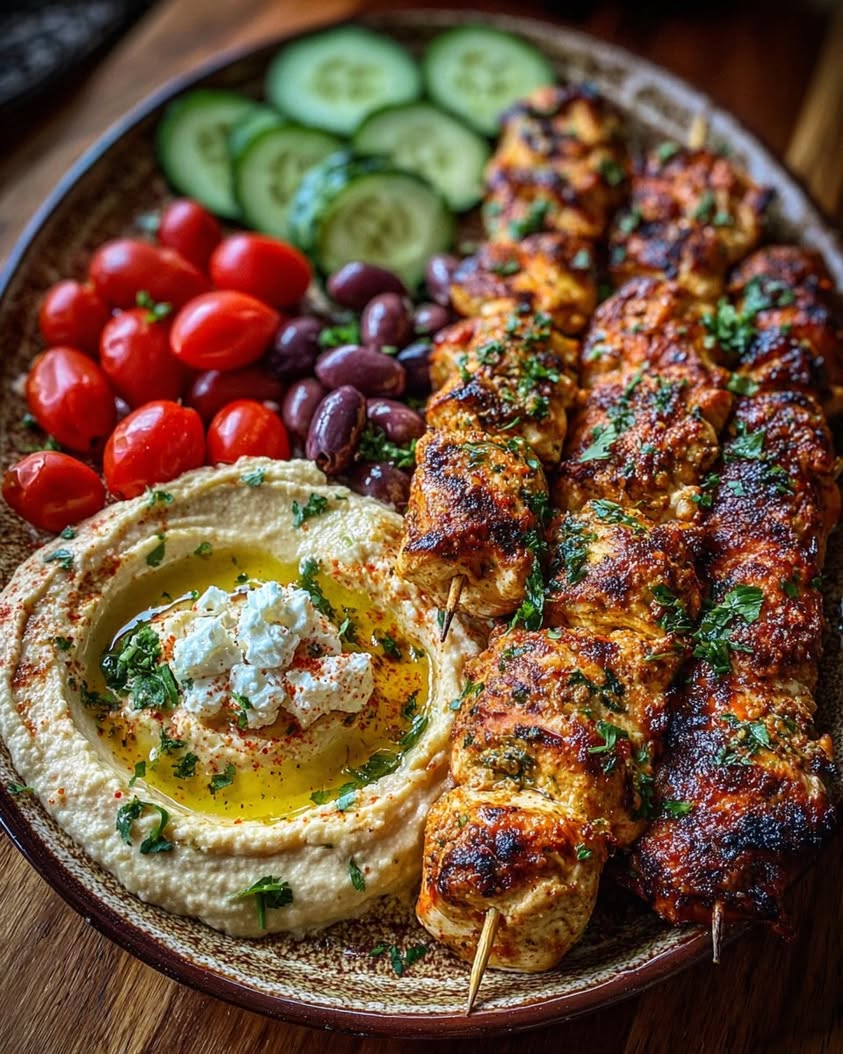
The Ultimate Mediterranean Chicken Skewers with Creamy Hummus Spread
Picture this: golden, juicy chicken skewers fresh off the grill, each bite bursting with Mediterranean flavors, paired with a velvety hummus spread that ties everything together. This recipe for Mediterranean chicken skewers with hummus spread brings the sunny coasts of Greece and Lebanon straight to your dinner table. The combination of tender marinated chicken and creamy chickpea dip creates a meal that feels both indulgent and wholesome, perfect for busy weeknights or laid-back weekend gatherings.
When you first sink your teeth into these chicken skewers, the smoky char from the grill gives way to a tender interior infused with garlic, lemon, and oregano. The hummus adds a cooling, nutty counterpoint that balances the savory meat beautifully. You will notice the bright acidity from fresh lemon juice cutting through the richness, while a hint of cumin and paprika lingers on your palate. This recipe transforms simple ingredients into a dish that tastes like a labor of love, even though it comes together in just forty minutes.
What makes this recipe truly special is its versatility. You can serve these chicken skewers with hummus spread as a main course alongside warm pita and a crisp Greek salad, or you can arrange them on a platter for a stunning appetizer at your next party. The vibrant colors of the grilled meat against the pale hummus create visual appeal that immediately draws people in. Whether you are cooking for your family or hosting friends, this dish promises to deliver satisfaction without requiring hours in the kitchen.
Let us dive into what makes these Mediterranean chicken skewers with hummus spread so memorable. The secret lies in the marinade, a simple blend of olive oil, lemon juice, garlic, and dried oregano that infuses the chicken with flavor while keeping it moist. The hummus, made from chickpeas, tahini, and lemon, provides a creamy foundation that complements the smoky meat. Together, they create a balanced meal that hits every note from tangy to savory to rich.
Quick Recipe Highlights
- Flavor Profile: Bright lemon and earthy oregano dominate the chicken, while the hummus adds nutty, savory depth with a hint of garlic. The combination is tangy, smoky, and satisfying.
- Texture: Juicy, charred chicken pieces contrast with the silky, smooth hummus. Each bite offers a satisfying chew from the meat and a luscious creaminess from the spread.
- Aroma: The grill releases a smoky, herby scent that mingles with garlic and lemon. The hummus adds a subtle nuttiness from tahini, creating an inviting fragrance.
- Visual Appeal: Golden-brown chicken skewers sit atop a swirl of pale hummus, garnished with fresh parsley and a drizzle of olive oil. The colors pop against each other beautifully.
- Skill Level Needed: This recipe requires basic knife skills and minimal cooking experience. You only need to thread meat onto skewers and monitor the grill for perfect results.
- Special Equipment: You will need metal or wooden skewers, a grill or grill pan, and a food processor for the hummus. These tools make the process smooth and efficient.
Recipe Overview
- Difficulty Level: I rate this recipe as easy because it uses straightforward techniques like marinating, grilling, and blending. Even a beginner can achieve excellent results with simple attention to timing and temperature. The steps are forgiving, and the ingredients are widely available. You will feel confident after your first attempt.
- Category: This dish works perfectly as a main course for dinner but also shines as an appetizer for parties. It fits into the grilled meats and dips category, offering a complete meal in one platter. You can easily pair it with sides for a fuller spread.
- Cuisine: The recipe draws from Greek and Middle Eastern culinary traditions. The marinade echoes Greek souvlaki, while the hummus spread has roots in Levantine cuisine. This fusion celebrates the shared love for fresh herbs, olive oil, and chickpeas across the Mediterranean region.
- Cost: The ingredients are budget-friendly, with chicken thighs or breasts being affordable protein options. Canned chickpeas and basic pantry staples keep costs low. A typical batch costs around fifteen dollars, making it an economical choice for feeding a crowd.
- Season: These skewers shine in summer when grilling is at its peak, but they work year-round with a grill pan or oven. Fresh herbs and lemons are available in all seasons, chickpeas are pantry staples, and the bright flavors bring warmth to any time of year. You can enjoy them during spring barbecues or cozy winter dinners.
- Occasion: This dish suits casual weeknight dinners, backyard barbecues, and festive gatherings like birthdays or holiday parties. Its vibrant presentation and crowd-pleasing taste make it a reliable choice for entertaining guests. You can also prepare components ahead to reduce stress on the day itself.
Why You Will Love This Recipe
The taste and texture of these Mediterranean chicken skewers with hummus spread are simply irresistible. The chicken marinated in lemon, garlic, and oregano develops a beautiful crust on the grill while staying juicy inside. Each bite offers a burst of tangy, herbaceous flavor that pairs perfectly with the cool, creamy hummus. The contrast between the warm, smoky meat and the smooth dip creates a sensory experience that keeps you coming back for more. You will find yourself reaching for that last skewer even when you are full.
Convenience is a major advantage of this recipe. You can prepare the marinade and hummus up to two days ahead, then simply grill the chicken when ready to eat. Active cooking time is minimal, with most of the work happening during marination or blending. Cleanup is straightforward since you only use a food processor, a bowl for marinating, and skewers. This makes it a perfect choice for busy professionals or parents who want a homemade meal without spending hours in the kitchen.
Nutritionally, these Mediterranean chicken skewers with hummus spread offer a balanced meal packed with protein, healthy fats, and fiber. Chicken provides lean protein that supports muscle health, while chickpeas in the hummus offer plant-based protein and fiber for digestion. Olive oil contributes heart-healthy monounsaturated fats, and garlic provides immune-boosting compounds. This dish aligns well with Mediterranean diet principles, which are known for promoting longevity and overall well-being. You can feel good about feeding this to your family.
Socially and entertainingly, this recipe is a showstopper. Arranging the skewers on a large platter over a bed of hummus creates a stunning centerpiece for any table. Guests can grab a skewer and a piece of pita, dipping and sharing as they chat. The interactive nature of the meal encourages conversation and makes everyone feel involved. You will receive compliments on both the presentation and the flavor, which adds to the enjoyment of hosting.
Cost-effectiveness and accessibility make this recipe a practical choice for regular rotation. Chicken thighs are inexpensive compared to other cuts, and canned chickpeas cost less than a dollar per can. Spices like oregano, cumin, and paprika are kitchen staples you likely already have. Fresh produce like lemons and parsley are affordable and available year-round. You can feed six people for under twenty dollars, which is a fantastic value for a meal that feels special.
Historical Background and Cultural Significance
The tradition of skewering and grilling meat dates back thousands of years across the Mediterranean region. Ancient Greeks and Romans cooked meat on spits over open fires, a technique that spread throughout the empire. In the Levant, similar methods evolved into dishes like shawarma and kebabs. These Mediterranean chicken skewers with hummus spread honor that ancient cooking heritage while incorporating modern convenience. The practice of threading meat onto sticks made it portable and easy to cook over flames, a necessity for nomadic and rural communities.
Hummus, the creamy spread that accompanies these skewers, has its own rich history in Middle Eastern cuisine. Recipes for chickpea-based dips appear in medieval cookbooks from Cairo and Baghdad. The combination of chickpeas, tahini, lemon, and garlic became a staple across Lebanon, Syria, Palestine, and Israel. Chickpeas have been cultivated in the region for over seven thousand years, making them one of the oldest cultivated legumes. Hummus represents a culinary tradition that has been passed down through generations, often prepared as a family ritual.
The evolution of this recipe reflects the increasing global appreciation for Mediterranean flavors. In the twentieth century, immigrants brought their culinary traditions to Europe and the Americas. Restaurants began serving souvlaki and hummus together as a platter, combining Greek and Middle Eastern elements. Home cooks adopted these combinations because they were both delicious and easy to replicate with accessible ingredients. This fusion recipe represents a modern interpretation of ancient practices, adapting traditional techniques for contemporary kitchens.
Regional variations of chicken skewers and hummus abound across the Mediterranean. In Greece, souvlaki often uses pork or chicken marinated in olive oil, lemon, and oregano, served with tzatziki. In Turkey, sis kofte uses minced lamb or beef spiced with cumin and sumac. The hummus spread itself varies, with some regions adding roasted red peppers or pine nuts as toppings. This recipe takes inspiration from multiple traditions, creating a harmonious blend that respects each contributing culture. You can explore these variations further as you become more comfortable with the basic technique.
Ingredient Deep Dive
Chicken thighs are the star of these skewers, chosen for their juiciness and flavor. Dark meat remains tender even after grilling, unlike leaner breasts that can dry out easily. Culturally, chicken has been a staple protein across the Mediterranean for centuries due to its versatility and availability. Nutritionally, chicken thighs provide high-quality protein, B vitamins, and selenium. When selecting chicken, look for plump, pink pieces with no odor. Choose boneless, skinless thighs for convenience, but bone-in work too if you adjust cooking time. Store raw chicken in the coldest part of your refrigerator and use within two days. If you prefer, you can substitute chicken breasts, turkey breast, or even firm tofu for a vegetarian option.
Chickpeas form the base of the hummus spread, offering a creamy texture and nutty flavor. These legumes, also known as garbanzo beans, have been cultivated in the Middle East for millennia. They symbolize sustenance and hospitality, often appearing in festive meals. Nutritionally, chickpeas are rich in fiber, protein, iron, and folate, supporting heart health and digestion. For the best hummus, use canned chickpeas drained and rinsed thoroughly to remove excess sodium. You can also cook dried chickpeas from scratch, soaking them overnight and simmering until tender. Store dried chickpeas in a cool, dark place for up to a year. Canned chickpeas last in your pantry for several months. Great northern beans or white beans can substitute, but they will alter the flavor slightly.
Olive oil appears in both the marinade and the hummus, adding richness and fruity notes. Extra-virgin olive oil is preferred for its robust flavor and high antioxidant content. This oil has been central to Mediterranean diets for thousands of years, prized for its health benefits and culinary versatility. When selecting olive oil, look for a dark bottle with a harvest date to ensure freshness. The color should be golden to green, and the aroma should smell grassy or peppery. Store olive oil away from heat and light to preserve its quality. If you need a substitute, avocado oil works well for high-heat cooking, though it lacks the distinct olive flavor.
Fresh lemons provide acidity that brightens both the chicken and the hummus. Lemon juice tenderizes the meat slightly while adding a fresh, tangy taste. In Mediterranean cooking, lemons are used generously to balance rich ingredients like olive oil and tahini. Choose lemons that are heavy for their size with smooth, thin skin. Roll them on the counter before juicing to extract maximum liquid. Store lemons at room temperature for up to a week or in the refrigerator for longer shelf life. Bottled lemon juice can work in a pinch, but fresh juice offers superior flavor. Lime juice is an acceptable alternative.
Tahini, made from ground sesame seeds, gives hummus its characteristic creaminess and nutty flavor. Sesame seeds have been cultivated in the Middle East and India for over four thousand years. Tahini is rich in healthy fats, calcium, and vitamin E. Good tahini should be pourable, not stiff or separated. Stir it well before use because the oil tends to settle. Store opened tahini in the refrigerator to prevent rancidity. If you cannot find tahini, you can substitute well-blended almond butter or sunflower seed butter, though the flavor will differ. Toasted sesame oil mixed with a neutral nut butter can approximate the taste.
Garlic is a non-negotiable ingredient that adds pungent depth to both the marinade and the hummus. Garlic was revered in ancient Egypt and Greece for its medicinal and culinary properties. It contains allicin, a sulfur compound with immune-boosting and anti-inflammatory benefits. Use fresh garlic cloves for the best flavor, avoiding pre-minced products that often taste bitter. Choose firm, unblemished bulbs with tight skin. Store garlic in a cool, dry, dark place with good air circulation. Roasted garlic offers a sweeter, milder alternative if raw garlic feels too sharp. Garlic powder can be used in a pinch, but reduce the quantity.
Common Mistakes to Avoid
- Over-marinating the chicken can break down the proteins too much, resulting in mushy texture. Aim for two to four hours for optimal flavor without compromising structure. If you go longer than eight hours, the acid in the lemon juice will start to denature the meat.
- Using dry, old spices will result in bland chicken. Spices lose potency over time, so check your oregano, cumin, and paprika. Replace any spices that have been sitting in your cabinet for over six months. Fresh spices make a noticeable difference in flavor.
- Not drying the chicken before marinating prevents proper absorption. Pat the chicken pieces dry with paper towels to remove excess moisture. This allows the marinade to cling to the meat and penetrate better, leading to more flavorful skewers.
- Skipping the hummus straining step can make it too watery. After blending, if your hummus looks thin, strain it through a fine-mesh sieve lined with cheesecloth. This removes excess liquid from the chickpeas, resulting in a thicker, creamier spread.
- Overcrowding the grill prevents proper searing and creates steamed meat. Leave space between each skewer so heat circulates evenly. Cook in batches if necessary. Crowding lowers the temperature and steams the chicken instead of achieving that desirable char.
- Using wooden skewers without soaking them leads to burning on the grill. Soak wooden skewers in water for at least thirty minutes before threading the chicken. This prevents them from catching fire during cooking. Metal skewers eliminate this issue entirely.
- Not letting the chicken rest after grilling causes juices to run out. Allow the skewers to rest for five minutes after removing them from the heat. This lets the juices redistribute throughout the meat, keeping each bite moist and tender.
- Adding too much liquid to the humpsum makes it runny. Start with minimal water or ice cubes and add gradually as you blend. A thick hummus is easier to spread and holds its shape better on the plate. Adjust consistency after tasting.
- Using cold ingredients for hummus results in a grainy texture. Let the chickpeas and tahini come to room temperature before blending. Cold ingredients cause the tahini to seize and create lumps. For extra smoothness, warm the chickpeas slightly in their liquid before draining.
- Grilling at too high a heat burns the outside before the inside cooks. Maintain a medium-high heat around 400 degrees Fahrenheit. If your grill is too hot, the sugar in the marinade will char quickly, leaving raw centers. Adjust the flame as needed during cooking.
Essential Techniques
Marinating the chicken properly is crucial for infusing flavor and ensuring tenderness. The marinade for these Mediterranean chicken skewers with hummus spread combines oil, acid, and seasonings. The oil helps carry fat-soluble flavors into the meat, while the acid from lemon juice tenderizes the proteins slightly. To master this, whisk olive oil, lemon juice, minced garlic, dried oregano, salt, and pepper together until emulsified. Submerge the chicken pieces completely and refrigerate for at least thirty minutes. A common pitfall is using too much acid, which can make the chicken mushy if left too long. Stick to two to four hours for the best balance. You will know the chicken is ready when the pieces feel slightly firmer and the marinade has penetrated the surface.
Threading chicken onto skewers requires attention to even spacing for uniform cooking. Cut the chicken into similar-sized pieces, about one and a half inches each, to ensure they cook at the same rate. To master this, slide the pieces onto the skewer without packing them tightly. Leave a small gap between each piece so heat circulates evenly. A common pitfall is overloading the skewer, which makes it hard to rotate and leads to uneven cooking. You will know you have done it correctly when the pieces are arranged loosely and the skewer feels balanced. Metal skewers heat up and cook the meat from the inside, so adjust timing if you use them instead of wood.
Grilling to achieve that perfect char requires temperature control and patience. Get your grill or grill pan preheated to medium-high heat, around 400 degrees Fahrenheit. Place the skewers directly on the grates and leave them untouched for four to five minutes. This allows a nice crust to form before you flip them. To master this, resist the urge to move the skewers around too much. A common pitfall is flipping too early, which tears the meat and prevents proper browning. You will know the skewers are ready to flip when they release easily from the grates without sticking. The internal temperature should reach 165 degrees Fahrenheit for safety.
Making smooth hummus involves blending ingredients in the right order for optimal creaminess. Start by processing the tahini with lemon juice and garlic until pale and fluffy. This step aerates the tahini and emulsifies the mixture. Then add the chickpeas and process until smooth. To master this, drizzle ice-cold water as you blend to create a light texture. A common pitfall is adding too much liquid at once, resulting in a thin, soupy hummus. Add water one tablespoon at a time and check the consistency. You will know the hummus is ready when it is smooth, thick, and holds a swirl mark on the surface. Taste and adjust salt and lemon as needed.
Assembling the final dish involves plating the hummus spread and arranging the chicken skewers artfully. Spread the hummus in an even layer on a large platter or individual plates using the back of a spoon. Create a swirl pattern for visual appeal. Place the grilled chicken skewers on top of the hummus, allowing them to overlap slightly. To master this, drizzle a little olive oil over the hummus and garnish with fresh parsley, smoked paprika, and a few whole chickpeas. A common pitfall is spreading the hummus too thin, which can make the dish look sparse. Use a generous layer so each bite of chicken has hummus to accompany it.
Pro Tips for Perfect Mediterranean Chicken Skewers with Hummus Spread
Use chicken thighs instead of breasts for superior juiciness and flavor. Thighs contain more fat, which keeps them moist during grilling and adds depth to the taste. Trim excess fat but leave some for richness.
Marinate the chicken in a resealable plastic bag for even coating and easy cleanup. Squeeze out the air before sealing to ensure all pieces are submerged. Flip the bag halfway through marination to distribute the flavors evenly.
Let the chicken come to room temperature for twenty minutes before grilling. Cold meat straight from the refrigerator cooks unevenly and takes longer to reach the center. Room temperature chicken grills more evenly and sears better.
Oil the grill grates thoroughly before cooking to prevent sticking. Use a paper towel dipped in vegetable oil and held with tongs to rub the grates. This creates a non-stick surface and promotes those beautiful grill marks.
Add a few ice cubes to your hummus while blending for extra creaminess. The cold temperature helps the tahini emulsify and creates a lighter, fluffier texture. This trick is used by professional chefs for restaurant-quality hummus.
Reserve some of the chicken marinade to drizzle over the finished skewers for extra flavor. Boil the reserved marinade for at least one minute to kill any bacteria before using. Drizzle it over the skewers just before serving for a burst of freshness.
Toast the cumin and paprika in a dry pan for thirty seconds before mixing them into the marinade. This step awakens the essential oils in the spices, intensifying their aroma and flavor. The difference is subtle but noticeable in the final dish.
Serve the hummus at room temperature rather than cold to enhance its flavor. Cold hummus tastes muted and has a firmer texture that doesnt spread as easily. Let it sit out for fifteen minutes before serving to reach its best consistency.
Variations and Adaptations
Regional variations of chicken skewers abound across the Mediterranean. For a Greek-inspired version, add dried mint and rosemary to the marinade, and serve the skewers with tzatziki instead of hummus. The mint adds a cool, fresh note that complements the grilled meat perfectly. You can also include cubes of halloumi cheese on the skewers for a salty, creamy contrast. This variation works beautifully for summer gatherings where you want to highlight classic Greek flavors.
Seasonal adaptations allow you to enjoy this dish throughout the year. In spring, add fresh asparagus spears and cherry tomatoes to the skewers for a burst of color and flavor. The asparagus grill quickly and adds a mild sweetness. In fall, substitute butternut squash chunks for some of the chicken, roasting them alongside the skewers for a hearty vegetarian option. These seasonal tweaks keep the recipe interesting and help you use produce at its peak.
Dietary modifications make this recipe accessible to a wide range of eaters. For a gluten-free version, ensure your spices and hummus ingredients are certified gluten-free, as some brands add wheat for thickening. For a dairy-free meal, the recipe is naturally dairy-free, but check store-bought pita if you serve it on the side. For a vegan adaptation, replace the chicken with extra-firm tofu or large portobello mushroom caps marinated in the same blend. The mushrooms become meaty and rich when grilled, satisfying even omnivores.
Flavor variations let you customize the dish to your preferences. Add a teaspoon of harissa paste to the marinade for a spicy North African twist. The chili heat pairs well with the cool hummus. You can also add a tablespoon of sumac for a tangy, lemony note that is popular in Turkish cooking. For a sweeter profile, include a tablespoon of pomegranate molasses in the hummus, which adds a fruity tang that goes beautifully with the grilled meat.
Texture modifications can change the entire eating experience. For extra crunch, toast pine nuts or slivered almonds and sprinkle them over the finished dish. The nuts add a nutty, crispy element that contrasts with the creamy hummus. You can also add a handful of chopped kalamata olives to the hummus for briny pops of flavor. Feel free to experiment with different textures until you find your favorite combination.
Presentation alternatives allow you to adapt this dish for different settings. For a casual dinner, serve the skewers family-style on a large platter with bowls of hummus, pita, and vegetables for dipping. For a more formal affair, plate individual servings with one skewer per plate, a generous dollop of hummus, and a side salad. You can also cut the chicken off the skewers after grilling and serve it over a bed of warm hummus for a deconstructed version that is easier to eat.
Serving and Presentation Guide
Plating techniques can elevate these Mediterranean chicken skewers with hummus spread from simple to stunning. Start by spreading a thick layer of hummus on a large, shallow platter. Use the back of a spoon to create decorative swirls that catch the light. Place the skewers on top of the hummus, overlapping them slightly for a dramatic effect. Scatter fresh parsley, a sprinkle of smoked paprika, and a few whole chickpeas over the top for color. This composition creates a beautiful contrast between the golden meat and the pale hummus.
Garnishing ideas add the finishing touches that make the dish photo-worthy. Drizzle a ribbon of high-quality olive oil over the hummus just before serving. The oil pools in the swirls and glistens under the light. Add a sprinkle of flaky sea salt and freshly cracked black pepper for texture and flavor. A few thin slices of preserved lemon or pickled turnip provide a bright pop of acidity that cuts through the richness. Fresh mint leaves or microgreens can add a touch of green elegance.
Traditional accompaniments complete the Mediterranean experience. Warm pita bread is essential for scooping up the hummus and chicken. You can also serve a simple Greek salad with cucumbers, tomatoes, red onion, and feta cheese. Tzatziki sauce adds another layer of coolness if you want extra dipping options. Grilled lemon halves make a beautiful garnish and can be squeezed over the skewers at the table for added brightness.
Modern serving suggestions can adapt this dish for contemporary tastes. For a grain bowl version, serve the chicken and hummus over a bed of quinoa or farro with roasted vegetables. You can also wrap the chicken in a whole-wheat tortilla with hummus, lettuce, and tomato for a quick lunch. Skewer-less versions work well for meal prep, where you keep the grilled chicken and hummus separate and assemble them during the week.
Temperature considerations are important for the best eating experience. Serve the chicken skewers hot off the grill for maximum juiciness. The hummus should be at room temperature, not cold from the refrigerator, because it tastes nuttier and smoother when slightly warm. If you are preparing ahead, grill the chicken and let it cool slightly, then reheat gently in a low oven before serving. Avoid microwaving the chicken because it will become rubbery.
Portion control tips help you serve the right amount for your guests. Plan one to two skewers per adult if serving as a main course, or one skewer per person as an appetizer. Each skewer typically holds about four to five pieces of chicken, roughly four ounces total. Adjust the amount of hummus based on how much dipping you expect. A half-cup of hummus per person is a good starting point, with more available for seconds.
Wine and Beverage Pairing
Wine pairings can enhance the flavors of these Mediterranean chicken skewers with hummus spread. A crisp, unoaked white wine like Assyrtiko from Greece or a Vermentino from Italy works beautifully. These wines have high acidity that cuts through the richness of the hummus and the char of the chicken. The citrus notes in the wine complement the lemon in the marinade, creating a harmonious sip with every bite. For a red option, choose a light-bodied wine like a Gamay or a young Barbera. These wines have low tannins and bright fruit that will not overpower the delicate herbs.
Non-alcoholic alternatives offer refreshing options for everyone. A sparkling water with a squeeze of lemon and a sprig of mint cleanses the palate between bites. You can also serve a chilled glass of green tea with honey and mint for a subtle, earthy pairing. Pomegranate juice mixed with sparkling water provides a tart, sweet contrast that echoes the fruit notes in the dish. For a traditional touch, offer a glass of cold ayran, a Turkish yogurt drink that is salty and tangy, which pairs surprisingly well with the hummus.
Beer pairings are another excellent choice for this casual dish. A crisp lager or pilsner offers a clean, refreshing contrast to the smoky chicken. The carbonation helps clear the palate of the rich hummus. A Belgian witbier with its hints of coriander and orange peel mirrors the spices in the marinade. For those who enjoy IPAs, choose a session IPA with lower alcohol and moderate bitterness, which will not clash with the herbs.
Coffee or tea pairings may not be traditional, but they work well for a lunch or brunch serving. A strong, cold-brewed coffee with a hint of cardamom can stand up to the spices. Mint tea, served hot or iced, is a classic digestif in many Mediterranean cultures and makes a lovely ending to the meal. The mint refreshes the palate and aids digestion after the rich meal.
Serving suggestions for beverages include offering them chilled and in appropriate glassware. White wine should be served at around 45 degrees Fahrenheit, while red wine is best slightly cooler than room temperature, around 55 degrees. For non-alcoholic drinks, serve them over ice in tall glasses with fresh herb garnishes. Keep a pitcher of water infused with cucumber and mint on the table to keep everyone hydrated.
Storage and Shelf Life
Proper storage methods will keep your Mediterranean chicken skewers with hummus spread fresh for days after cooking. Remove the chicken from the skewers before storing to prevent the meat from drying out. Place the chicken pieces in an airtight container and refrigerate them within two hours of cooking. The hummus should be stored separately in a sealed container with a thin layer of olive oil on top to prevent it from drying out. Stored this way, both components will stay fresh for three to four days.
Temperature requirements are critical for food safety. Keep the chicken and hummus refrigerated at or below 40 degrees Fahrenheit. If you plan to serve the leftovers later, do not let them sit at room temperature for more than two hours total. During hot summer days, reduce that time to one hour. Always use a thermometer to check your refrigerator temperature, especially if it is old or often opened.
Container recommendations can extend the shelf life of your leftovers. Glass containers with tight-fitting lids are best because they do not absorb odors and are non-reactive. For the hummus, a shallow container with minimal headspace reduces air exposure, which can cause discoloration. Avoid storing the hummus in a metal container because the acidity can react with the metal and impart a metallic taste. For the chicken, use containers that just fit the meat to minimize air space and prevent drying.
Signs of spoilage are easy to spot if you know what to look for. The chicken will develop a sour smell, slimy texture, or grayish color when it has gone bad. The hummus may develop a watery separation that does not reincorporate when stirred, or it may smell yeasty or alcoholic. Mold can appear on the surface of the hummus as fuzzy green or white spots. If you see any of these signs, discard the food immediately and do not taste it.
Reheating instructions help you enjoy leftovers without compromising quality. For the chicken, reheat it gently in a 350-degree Fahrenheit oven for about ten minutes, or in a skillet over medium heat with a splash of water or broth to add moisture. Avoid the microwave because it makes the chicken rubbery. The hummus should be brought to room temperature and stirred well before serving. If it has thickened in the fridge, add a tablespoon of warm water and stir until smooth.
Freezing guidelines allow you to extend the life of these components even further. The cooked chicken can be frozen for up to three months in a freezer-safe container or heavy-duty freezer bag. Remove as much air as possible before sealing. Thaw the chicken overnight in the refrigerator before reheating. The hummus freezes well but may lose some of its silky texture. To freeze hummus, place it in a freezer-safe container, cover the surface with plastic wrap, then seal the lid. Thaw it in the refrigerator and whisk vigorously before serving. Do not freeze the assembled dish because the textures will suffer.
Make Ahead Strategies
Prep timeline planning can save you significant stress on the day of serving. Up to two days ahead, prepare the hummus and store it in the refrigerator with a thin layer of olive oil on top. You can also cube the chicken and mix the marinade, then combine them in a resealable bag and refrigerate for up to twenty-four hours. On the day of serving, simply thread the skewers and grill. This approach reduces active cooking time to under twenty minutes and gives the flavors time to meld.
Storage between steps requires careful attention to maintain quality. Keep the marinating chicken in the coldest part of the refrigerator, ideally on a shelf away from raw vegetables to prevent cross-contamination. The hummus should be stored in an airtight container with plastic wrap pressed directly onto its surface to prevent a skin from forming. Keep the pita bread in a sealed bag at room temperature, or store it in the freezer if you want it to stay fresh longer.
Quality impact assessment shows that most components hold up well to advance preparation. The hummus actually improves after a day in the fridge as the flavors meld together. The chicken benefits from at least two hours of marination but does not degrade if left for up to twenty-four hours. The only part that suffers from advance preparation is the final assembly, which should be done just before serving to maintain the best presentation. Grilled chicken will lose its char if refrigerated and reheated, so grilling fresh is ideal.
Assembly tips make the final steps quick and easy. Have your platter or plates ready before you start grilling. Spread the hummus while the chicken rests after grilling. Thread the chicken onto skewers in advance and keep them covered in the refrigerator until it is time to cook. If you are using wooden skewers, soak them overnight and keep them damp in a plastic bag. This preparation means you can go from fridge to table in under twenty minutes.
Reheating guidelines for advance preparations ensure you do not lose quality. If you must grill the chicken a day ahead, reheat it on a hot grill for two minutes per side to re-crisp the exterior. Alternatively, reheat it in a 400-degree Fahrenheit oven for five to seven minutes. Do not reheat the hummus. Instead, let it come to room temperature for thirty minutes before serving. If it has firmed up in the fridge, whisk in a tablespoon of warm water and a drizzle of olive oil to restore its creamy texture.
Fresh element additions can rejuvenate leftovers or prepped components. When you are ready to serve, add fresh chopped parsley, a Print
Mediterranean Chicken Skewers with Hummus Spread
- Total Time: 1 hour 30 minutes
- Yield: 4
Description
Tender marinated chicken skewers grilled to perfection, served over a creamy hummus spread with fresh herbs and a drizzle of olive oil.
Ingredients
- 1 1/2 lbs chicken breast, cut into 1-inch cubes
- 1/4 cup olive oil
- 3 tablespoons lemon juice
- 2 cloves garlic, minced
- 1 teaspoon dried oregano
- 1 teaspoon ground cumin
- 1/2 teaspoon paprika
- Salt and pepper to taste
- 1 cup hummus
- 2 tablespoons plain Greek yogurt
- 1 tablespoon chopped fresh parsley
- 1 tablespoon chopped fresh mint
- 1/4 teaspoon red pepper flakes (optional)
- Wooden skewers, soaked in water for 30 minutes
Instructions
- In a bowl, whisk together olive oil, lemon juice, garlic, oregano, cumin, paprika, salt, and pepper. Add chicken cubes and toss to coat. Cover and refrigerate for at least 1 hour.
- In a small bowl, combine hummus, Greek yogurt, parsley, mint, and red pepper flakes if using. Set aside.
- Preheat grill or grill pan to medium-high heat. Thread chicken onto skewers.
- Grill skewers, turning occasionally, until chicken is cooked through and has nice grill marks, about 10-12 minutes.
- Spread hummus mixture onto a serving platter. Arrange chicken skewers on top. Drizzle with additional olive oil and garnish with extra herbs if desired.
Notes
You can customize the seasonings to taste. For extra flavor, add a pinch of sumac or smoked paprika. Serve with warm pita bread or a Greek salad.
- Prep Time: 15 minutes
- Cook Time: 15 minutes
- Method: Main
- Cuisine: Mediterranean