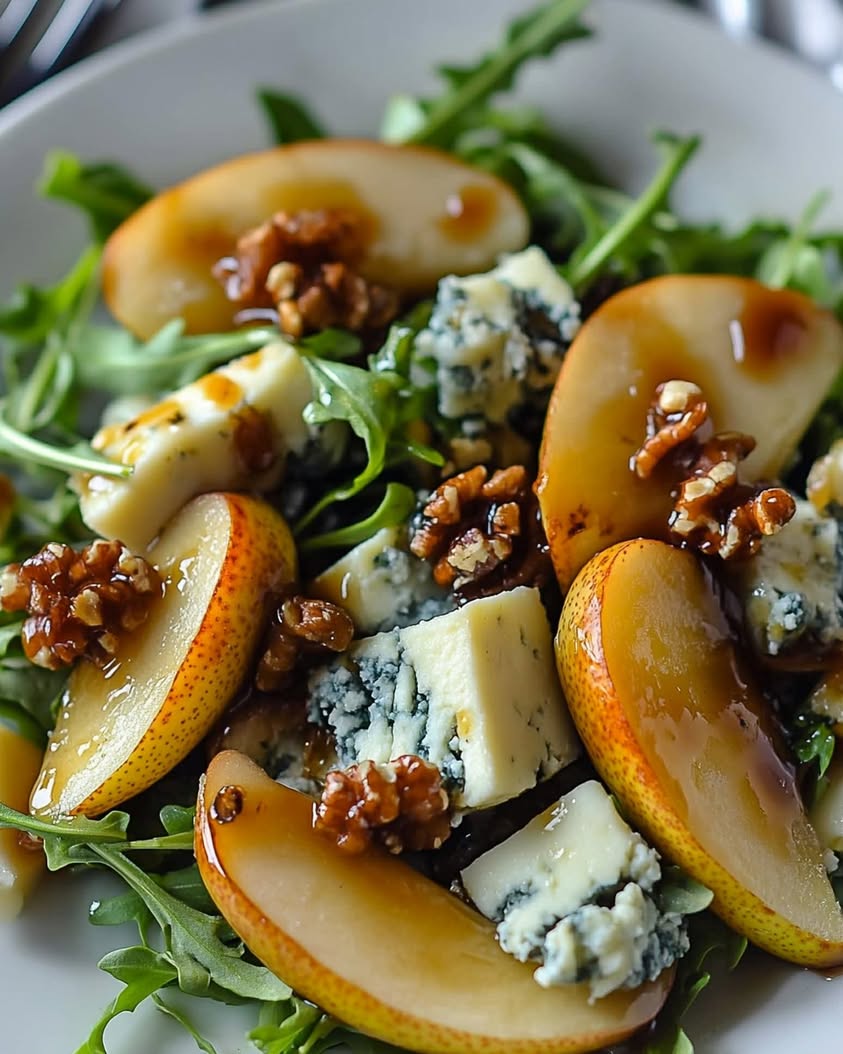
Caramelized Pear and Blue Cheese Salad: A Sweet and Savory Fall Favorite
This Caramelized Pear and Blue Cheese Salad is a perfect blend of sweet and savory flavors. It is the ideal dish for fall gatherings or a simple weeknight dinner. The caramelized pears provide a rich, buttery sweetness that pairs beautifully with the tangy, creamy blue cheese. You will find that each bite offers a delightful contrast between warm, soft fruit and crisp, cool greens. This salad is not just a side dish; it can easily become the star of your meal. The combination of textures and tastes makes it a memorable experience for anyone who tries it. Whether you are a seasoned cook or a beginner, you will appreciate how quickly this recipe comes together. The ingredients are straightforward, and the technique is simple to master. You will love how the maple syrup and balsamic glaze create a luscious coating on the pears. This Caramelized Pear and Blue Cheese Salad is a true celebration of seasonal produce.
When you prepare this Caramelized Pear and Blue Cheese Salad, you bring a touch of elegance to your table. The aroma of pears cooking with butter and maple syrup fills your kitchen with a warm, inviting scent. It reminds you of crisp autumn days and cozy dinners with loved ones. The blue cheese adds a sharp, pungent note that cuts through the sweetness. This balance is what makes the salad so addictive. You also get a satisfying crunch from toasted pecans or walnuts. The mixed greens provide a fresh, peppery base that holds everything together. Every forkful offers a new combination of flavors and sensations. You can serve it as a starter or pair it with grilled chicken for a heartier meal. The versatility of this salad ensures it will become a regular in your rotation. You will find that it is perfect for Thanksgiving dinner or a simple lunch. The preparation is straightforward, and the result is always impressive. This salad proves that simple ingredients can create something truly special.
I love how this recipe highlights the natural sweetness of pears. When you caramelize them, they become soft and jammy. The process is quick and easy. You only need a few minutes in a hot skillet. This technique transforms the fruit into something luxurious. The blue cheese crumbles add a salty, creamy contrast. You can use a variety like Gorgonzola or Roquefort for different intensities. The dressing is a simple vinaigrette that ties everything together. It usually includes olive oil, balsamic vinegar, and a touch of Dijon mustard. The result is a cohesive dish that feels both rustic and refined. This Caramelized Pear and Blue Cheese Salad is a crowd-pleaser every time. It is also adaptable to your taste preferences. You can add dried cranberries for extra chewiness or swap the nuts for seeds. The possibilities are endless, but the core combination remains unbeatable. You will find that this salad is a wonderful way to enjoy fall produce at its peak.
Quick Recipe Highlights
- Flavor Profile: This salad brings together sweet caramelized pears and tangy blue cheese. The maple syrup adds a rich, honeyed note. A balsamic vinaigrette provides acidity to balance the dish.
- Texture: You get a wonderful contrast between soft, warm pears and crisp, cool greens. The nuts add a satisfying crunch. The blue cheese crumbles melt slightly on the warm fruit.
- Aroma: The smell of butter and maple syrup caramelizing is intoxicating. You also get the earthy scent of toasted nuts. The fresh greens add a clean, green note to the mix.
- Visual Appeal: The golden pears sit atop a bed of vibrant greens. Blue cheese crumbles add white and blue flecks throughout. The nuts provide a warm brown color and visual interest.
- Skill Level Needed: This recipe is very beginner-friendly. You only need basic knife skills. The caramelization process is simple to master with a little practice.
- Special Equipment: You need a large skillet for caramelizing the pears. A sharp knife helps cut the fruit evenly. A salad spinner is useful for drying the greens.
Recipe Overview
- Difficulty Level: I rate this recipe as easy because it requires no advanced techniques. The steps are straightforward and easy to follow. You can complete the entire process in under thirty minutes. It is a great recipe for cooks of all skill levels.
- Category: This dish works as both a side salad and a light main course. It is perfect for lunch or a starter for dinner. You can also serve it as a festive holiday side dish.
- Cuisine: This salad draws inspiration from French and American culinary traditions. The use of blue cheese and pears is classic in French cooking. The addition of maple syrup gives it a distinctly American touch. It is a modern fusion that celebrates seasonal ingredients.
- Cost: The ingredients are generally affordable and widely available. Pears and mixed greens are inexpensive. Blue cheese can be pricier, but you only need a small amount. Nuts and maple syrup are pantry staples for many homes.
- Season: This salad is best in the fall when pears are at their peak. The flavors also work well in early winter. You can make it year-round, but the pears are sweetest in autumn.
- Occasion: This salad is wonderful for Thanksgiving or Christmas dinner. It is also great for casual dinner parties. You can serve it at a bridal shower or a family reunion. It always impresses guests with its beautiful presentation.
Why You’ll Love This Recipe
The taste and texture of this salad are simply irresistible. You get the sweet, sticky caramelized pears that burst with flavor. The blue cheese provides a sharp, tangy contrast that wakes up your palate. The crunchy nuts add a satisfying element. The greens stay fresh and crisp. This combination of flavors and textures makes every bite exciting. You will find yourself coming back for seconds. The balance of sweet and savory is perfectly calibrated. It is a dish that feels indulgent but is still light. You can enjoy it as a full meal or a starter. The flavors work together in harmony.
Convenience is another huge benefit of this recipe. You can prepare the entire salad in under thirty minutes. The caramelized pears take only ten minutes to cook. You can toast the nuts while the pears are cooking. The dressing comes together in a bowl with a whisk. This efficiency makes it perfect for busy weeknights. You do not need to spend hours in the kitchen. The cleanup is also minimal, with only a skillet and a bowl used. You can easily double the recipe for a crowd. The steps are simple and easy to manage. This salad proves that fast food can be gourmet.
This Caramelized Pear and Blue Cheese Salad also offers solid nutritional value. Pears are a good source of fiber and vitamin C. They provide natural sweetness without added sugar. Mixed greens are packed with vitamins and antioxidants. Blue cheese offers calcium and protein in small amounts. The nuts provide healthy fats that keep you full. The maple syrup is a natural sweetener with minerals. This salad is a healthier choice compared to creamy or heavy options. You can feel good about eating it. It fits into a balanced diet without sacrificing flavor. The portion size is easy to control as well.
The social and entertaining value of this salad is high. It looks beautiful on a platter or individual plates. The colors are vibrant and inviting. Your guests will be impressed by the presentation. It is a conversation starter about seasonal cooking. You can serve it alongside a roast chicken or grilled fish. It pairs well with many main courses. The salad is also easy to transport for potlucks. You can bring it to a friend’s house without hassle. The flavors hold up well for a short time. It is a reliable dish for any gathering.
Cost-effectiveness and accessibility make this recipe a winner. Pears are affordable when in season. You can buy them at any grocery store. Mixed greens are also inexpensive and widely available. Blue cheese can be purchased in small portions to save money. Nuts like pecans or walnuts are affordable when bought in bulk. Maple syrup is a pantry staple for many. The ingredients are not exotic or hard to find. You can make this salad on a budget. It feels luxurious without the high price tag. This value is hard to beat.
Historical Background and Cultural Significance
The combination of fruit and cheese is a classic pairing in European cuisine. This tradition dates back centuries. In France, pears and cheese are a common dessert course. The creamy texture of cheese complements the sweetness of ripe fruit. Blue cheese specifically has a long history in France. It was discovered accidentally in caves centuries ago. The mold gives it a distinctive flavor and appearance. This pairing evolved into savory dishes like salads. The idea of caramelizing pears adds a modern twist. It enhances the natural sugars in the fruit.
Blue cheese holds cultural importance in many European countries. In Italy, Gorgonzola is a staple. In France, Roquefort is protected by law. In England, Stilton is served at holiday meals. These cheeses are often paired with fruits and nuts. The tradition of serving cheese and fruit after a meal is old. It is a sign of hospitality and refinement. This salad brings that tradition to the forefront. it modernizes it for contemporary tastes. The addition of greens makes it a complete dish.
The evolution of this recipe reflects broader food trends. People now seek lighter, fresher meals. Salads have moved beyond simple lettuce and dressing. Chefs began incorporating warm elements into salads. This added a new dimension of texture and flavor. The caramelized pear salad became popular in the 1990s. It appeared on menus in upscale restaurants. Home cooks quickly adopted it. The recipe spread through cookbooks and magazines. Today, it is a classic fall preparation.
Regional variations of this salad exist around the world. In the American South, pecans are often used. In the Pacific Northwest, hazelnuts are a common substitute. Some versions use goat cheese instead of blue cheese. Others add bacon for a smoky element. In the Midwest, dried cherries are popular. In Europe, different types of blue cheese are used. The basic structure remains the same. The flexibility of the recipe allows for creativity. It adapts to local ingredients and tastes.
Ingredient Deep Dive
Pears are the star of this salad and have a rich history. They have been cultivated for thousands of years. The ancient Romans grew them for their sweet flavor. Pears arrived in America with European settlers. They thrived in the temperate climate. Today, there are many varieties like Bartlett, Bosc, and Anjou. Each type offers a different texture and sweetness. Bosc pears hold their shape well when cooked. They become tender without turning mushy. Nutritional benefits include fiber, vitamin C, and copper. The fiber aids digestion and keeps you full. Selecting the right pear is important. Look for pears that yield slightly to gentle pressure. They should be fragrant and free of bruises. Storage is easy. Keep them at room temperature until ripe. Then refrigerate them to slow further ripening. Substitution options include apples or firm peaches. They work well but offer a different flavor profile.
Blue cheese is another key ingredient with a storied past. It is made by introducing mold cultures into milk. The cheese is then aged for several months. This process creates a strong, pungent flavor. Blue cheese has been produced for centuries in Europe. It was often made in caves with natural mold. The nutritional profile includes protein, calcium, and vitamin B12. It is also high in sodium and fat. The flavor can be quite assertive. Selection tips involve checking the texture. It should be creamy and slightly crumbly. Avoid cheese that smells overly ammonia-like. Storage is important to preserve quality. Wrap it in wax paper and place it in the refrigerator. It will keep for several weeks. Substitution options include goat cheese or feta. These are milder and tangier. Gorgonzola dolce is a creamier alternative. Roquefort is more intense and salty.
Common Mistakes to Avoid
- Overcooking the pears is a common error. You want them caramelized but still tender. If you cook them too long, they turn mushy. Watch for a golden-brown color on each side.
- Using unripe pears will result in a hard, flavorless salad. The fruit needs to be soft and sweet. Test the pears before cooking. They should give slightly under pressure.
- Adding the dressing too early is a problem. The greens will become soggy quickly. Dress the salad just before serving. This keeps everything crisp and fresh.
- Using too much blue cheese can overpower the salad. The flavor is very strong. Use a light hand when crumbling it. You can always add more later.
- Forgetting to toast the nuts is a missed opportunity. Toasting enhances their flavor and crunch. It only takes a few minutes in a dry skillet. Do not skip this step.
- Cutting the pears unevenly leads to inconsistent cooking. Some pieces will be overdone while others are raw. Aim for uniform slices about half an inch thick. This ensures even caramelization.
- Using a cold pan for caramelizing prevents browning. The pan needs to be hot before adding the butter. This creates the proper sear. Let the butter foam before adding pears.
- Crowding the skillet is another mistake. The pears need space to brown properly. If they are too close, they will steam instead. Cook them in a single layer.
Essential Techniques
Caramelizing pears is the most important technique in this recipe. You start by heating butter in a heavy skillet. The butter should foam but not brown. Then you add the pear slices in a single layer. Let them cook undisturbed for several minutes. This allows the sugars to develop a golden crust. After a few minutes, you flip them. The second side should also become golden. The pears will soften slightly. The key is patience. If you move them too soon, they will not brown. The visual cue is a deep amber color. The aroma becomes sweet and buttery. This process concentrates the fruit’s flavor. It adds a complex, caramelized note. Mastering this gives you control over the final dish.
Making a proper vinaigrette is another essential skill. You combine vinegar, mustard, and maple syrup in a bowl. Then you slowly whisk in olive oil. This creates a temporary emulsion. The ingredients should be at room temperature. If the oil is added too quickly, the dressing breaks. A broken dressing is still edible but less cohesive. The visual cue is a smooth, thick consistency. You want the oil to be fully incorporated. The vinaigrette should coat the greens evenly. You can adjust the ratio to taste. More vinegar makes it tangier. More oil makes it richer. This technique is versatile for many salads.
Pro Tips for Perfect Caramelized Pear and Blue Cheese Salad
Use Bosc pears for the best results. They hold their shape well during cooking. They also have a wonderful floral flavor. Anjou pears are a good second choice. Avoid overly soft fruit that will fall apart. The pear should be ripe but still firm.
Toast your nuts in a dry skillet over medium heat. Stir them frequently to prevent burning. They are ready when they smell fragrant and look slightly darker. This takes about three to five minutes. Let them cool before adding to the salad.
Make the dressing in a small jar for easy storage. Combine all the ingredients and shake vigorously. This method works well for emulsifying. You can also whisk it in a bowl. The dressing keeps for a week in the fridge.
Assemble the salad just before serving. This ensures that the greens stay crisp. The warm pears will slightly wilt the greens if left too long. Serve immediately after plating. This gives you the best texture.
Use a microplane to add a little lemon zest over the salad. This brightens the flavors. It adds a fresh note that cuts through the richness. A small amount goes a long way.
Slice the pears just before caramelizing them. They will oxidize and turn brown if left too long. The lemon juice in the dressing helps prevent this. But it is best to work quickly.
Adjust the amount of blue cheese to your taste. Some people prefer a more assertive flavor. Others like it mild. Start with a small amount and add more as needed.
Variations and Adaptations
Regional variations of this salad are fun to explore. In the American South, you can use toasted pecans and a touch of bourbon in the dressing. This adds a warm, Southern flavor. In the Pacific Northwest, use hazelnuts and a light hazelnut oil. This complements the pears nicely. In the Midwest, add dried tart cherries for a pop of color and tang. In California, use avocados and a citrus vinaigrette. These variations reflect local ingredients and preferences.
Seasonal adaptations are easy to make. In the fall, stick with classic Bosc or Bartlett pears. In the winter, you can use apples instead of pears. They caramelize just as well. In the spring, add fresh herbs like mint or basil. In the summer, use grilled peaches or nectarines. The technique for caramelizing works with many fruits. You can also add seasonal greens like arugula in the spring. This keeps the salad fresh year-round.
Dietary modifications are simple to implement. To make it vegan, use coconut oil instead of butter for caramelizing. Use a vegan blue cheese or a tangy tofu feta. Agave nectar can replace honey. To make it gluten-free, the recipe is naturally so. Just ensure your vinegar is gluten-free. To reduce calories, use less oil and skip the nuts. The salad is highly adaptable to different diets.
Flavor variations can change the entire character of the dish. Add a pinch of cayenne pepper for heat. Include fresh thyme or rosemary for an herbaceous note. Drizzle with a balsamic reduction for extra sweetness. Use honey instead of maple syrup. Add crumbled bacon for a smoky, salty element. These tweaks create new versions of the salad.
Texture modifications offer different experiences. Instead of nuts, use seeds like pumpkin or sunflower. They add crunch without the strong flavor. You can also add croutons for more crunch. For a softer texture, omit the nuts entirely. Use mixed greens with different leaf sizes. This variety adds interest to each bite.
Presentation alternatives make this salad versatile. Serve it on a large platter for family style. You can also plate it individually for a formal dinner. Arrange the pears in a fan pattern for elegance. Crumble the blue cheese artfully. Drizzle the dressing in a zigzag pattern. This visual appeal enhances the dining experience.
Serving and Presentation Guide
Plating techniques can elevate this salad visually. Start by arranging the dressed greens on the plate. Then place the warm pears on top in a fan shape. This creates a focal point. Sprinkle the blue cheese crumbles around the pears. This distributes the flavor evenly. Add the toasted nuts last for a crunchy top layer. The layers create a beautiful composition. You can also place the pears in a stack for height. This adds drama to the plate. Use a ring mold for a tidy, restaurant-style presentation. This technique works well for individual servings.
Garnishing ideas add color and flavor. A few fresh herb leaves like parsley or thyme work well. Edible flowers are a lovely touch for special occasions. A light dusting of flaky sea salt enhances the flavors. A drizzle of balsamic glaze adds visual appeal. A crack of black pepper finishes the dish. Keep garnishes minimal to avoid overwhelming the salad. They should enhance rather than distract.
Traditional accompaniments are classic pairings. Serve this salad alongside a roast chicken or pork tenderloin. It also goes well with grilled fish like salmon. A crusty baguette is perfect for soaking up dressing. A glass of crisp white wine completes the meal. These pairings are time-tested for a reason.
Modern serving suggestions are more casual. Serve the salad in a large bowl for a buffet. You can also serve it as a wrap inside a tortilla. The warm pears and blue cheese work well in a sandwich. This is a creative twist. For a light lunch, add grilled chicken or shrimp.
Temperature considerations are important. The pears should be served warm. The greens should be chilled. This contrast is delightful. The dressing can be at room temperature. Serve the salad immediately after assembling. Do not let it sit too long. The greens will start to wilt.
Portion control tips help manage serving sizes. A standard portion is about two cups of greens. Use one pear per serving for the fruit. Use about one ounce of blue cheese per serving. Use a small handful of nuts. This provides a balanced dish. Adjust portions based on hunger levels.
Wine and Beverage Pairing
Wine pairings for this salad are delightful. A crisp Sauvignon Blanc is an excellent choice. Its acidity cuts through the richness of the blue cheese. The herbal notes complement the greens. A dry Riesling also works well. Its slight sweetness echoes the caramelized pears. A light Pinot Noir is a good red option. Its fruit-forward nature matches the pears. The low tannins do not clash with the cheese. A late-harvest Riesling brings extra sweetness. This pairs wonderfully with the cheese.
Non-alcoholic alternatives are also satisfying. A sparkling water with a splash of apple cider is refreshing. The acidity mirrors wine. A cold-brewed iced tea with a hint of lemon is good. Herbal teas like chamomile or mint work well. They are light and palate-cleansing. A ginger ale or ginger beer adds a spicy kick. This complements the flavors nicely.
Coffee and tea pairings are not typical for this salad. But a light black tea like Darjeeling works. Its floral notes match the pears. A green tea with jasmine is also a good choice. It is delicate and not overpowering. If serving as a starter, save coffee for later. It can overwhelm the delicate flavors.
Temperature considerations for beverages are key. Wines should be served chilled. White wines are best at forty-five degrees. Red wines are better at cool room temperature. Non-alcoholic drinks should be served cold. This contrasts with the warm pears. The temperature contrast is pleasing.
Serving suggestions involve the right glassware. Use white wine glasses for white wines. Use larger red wine glasses for Pinot Noir. For non-alcoholic drinks, use tall glasses with ice. This presentation is attractive. Pour the drink tableside for a special touch.
Storage and Shelf Life
Storage methods for this salad require some care. The components should be stored separately. Keep the greens in a sealed container with a paper towel. This absorbs excess moisture. The pears should be stored in a separate container. The dressing goes in a jar. The nuts can stay in a bag. This prevents sogginess.
Temperature requirements are specific. The greens must be kept cold. Store them at around thirty-five degrees. The pears can be kept at room temperature if served soon. But they are best refrigerated if made ahead. The dressing can be kept in the fridge. The nuts are fine at room temperature.
Container recommendations help preserve quality. Use airtight containers for everything. Glass containers are best for the dressing. Plastic is fine for greens. A zip-top bag works for nuts. Make sure the pears have a little space. They can release moisture.
Signs of spoilage are easy to spot. Greens become slimy when bad. Pears may turn brown or become mushy. The dressing may separate but that is normal. Blue cheese may develop a stronger smell. If any component smells off, discard it. Trust your senses.
Reheating instructions apply only to the pears. They can be reheated in a skillet over medium heat. Add a little butter to refresh them. This takes about a minute. Do not microwave them. They will become rubbery. The greens should never be reheated.
Freezing guidelines are not recommended for this salad. Greens will become limp and watery. Pears will lose their texture when thawed. The dressing may separate permanently. The nuts can be frozen, but they might lose crunch. It is best to make fresh.
Make Ahead Strategies
Prep timeline helps you plan ahead. You can wash and dry the greens up to two days in advance. Store them in the fridge. You can make the dressing up to a week ahead. Keep it in a sealed jar. You can toast the nuts a few days ahead. Store them in an airtight container. This saves time on serving day.
Storage between steps requires careful handling. Keep all components separate. Do not combine them until serving time. The pears are best made fresh. But you can caramelize them up to four hours ahead. Let them cool completely. Then store them in the fridge. Reheat them briefly in a skillet before serving.
Quality impact assessment is important. The greens will stay crisp if stored properly. The dressing retains its flavor. The nuts stay crunchy. The pears may lose some texture but are still good. The salad will not be as good as fresh, but it is acceptable. Plan to serve the day of making.
Assembly tips make the process smooth. Set out your ingredients before starting. Have a large bowl ready. Warm the pears while you dress the greens. This timing works well. Assemble the salad just before guests arrive. This ensures optimal quality.
Reheating guidelines focus on the pears. Use a low temperature to reheat them. You want them warm, not hot. A few seconds in a hot skillet works. Do not overheat them. They can become mushy. Add a fresh pat of butter for shine.
Fresh element additions are key. Add fresh greens at the last minute. Do not dress them until serving. Sprinkle fresh blue cheese just before serving. This ensures the best texture. The contrast of fresh and warm is what makes this salad special.
Scaling Instructions
Halving the recipe is straightforward. Use half the amount of each ingredient. This works for the dressing, nuts, and pears. Use one pear for two servings. Use a smaller skillet for caramelizing. The cooking time remains the same. The assembly is the same. This is perfect for a small meal.
Doubling or tripling the recipe requires planning. Use a larger skillet or work in batches. Do not crowd the pan when caramelizing. This is the most critical step. You may need to do multiple batches. Make a double batch of dressing. Toast the nuts in batches as well. Use a large bowl for assembly.
Equipment adjustments are necessary for larger batches. Use a stockpot for washing greens. Use a large salad bowl. Have multiple serving platters ready. A sheet pan can hold the warm pears. Keep them in a warm oven. This helps maintain temperature.
Timing modifications are important for large crowds. Read the pears ahead of time. Toast the nuts earlier in the day. Make the dressing two days before. Assemble just before serving. This takes the pressure off. Plan your workflow carefully.
Storage considerations change with scale. You may need multiple containers. Keep the greens in a large cooler. The pears can be stored in a baking dish. The dressing can be made in a large jar. The nuts can be stored in a large bag. This keeps everything organized.
Nutritional Deep Dive
Macro breakdown of this salad is balanced. A serving contains about twenty-five grams of fat. Most of this comes from the oil and nuts. It contains about ten grams of carbohydrates. The fiber content is around five grams. Protein is about eight grams from the cheese and nuts. The calorie count is around three hundred per serving. This makes it a moderate-calorie option.
Micronutrient analysis shows many benefits. Pears provide vitamin C and copper. Greens are rich in vitamin K and beta carotene. Blue cheese offers calcium and vitamin B12. Nuts provide vitamin E and magnesium. This salad is nutrient-dense. It contributes to your daily needs.
Health benefits are noteworthy. The fiber aids digestion and satiety. The antioxidants support immune health. The healthy fats from nuts support heart health. The vitamin K supports bone health. This salad is a wholesome choice. It fits into a healthy eating pattern.
Dietary considerations include the sodium content. Blue cheese and added salt can make it high in sodium. A serving has about three hundred milligrams. This is moderate. The fat content is high but mostly unsaturated. This is positive for health.
Portion analysis is helpful for weight management. A serving of two cups is satisfying. The high fiber and protein keep you full. The nuts add satiety. You can pair it with a lean protein for a meal. This salad helps with portion control.
Weight management tips involve the dressing. Use less oil to reduce calories. Use a light vinaigrette. Skip the nuts for fewer calories. The pears and greens are very low in calories. The blue cheese is moderate. Customize the portions to your needs.
Dietary Adaptations
Gluten-free adaptation is simple because this recipe is naturally gluten-free. No ingredients contain gluten. Double-check your vinegar and mustard. Some brands may have additives. Use certified gluten-free products if needed. This salad is safe for celiac disease.
Dairy-free adaptation requires substituting the blue cheese. Use a dairy-free blue cheese alternative. Many brands are now available. You can also use a tangy almond feta. The flavor will be different but good. Use dairy-free butter for caramelizing. This works well.
Vegan adaptation is similar to dairy-free. Use a plant-based blue cheese. Use coconut oil for caramelizing. Use agave nectar instead of honey. The dressing can use maple syrup. The nuts are already vegan. This version is fully plant-based.
Low-carb adaptation involves reducing the sweeteners. Use less maple syrup in the dressing. You can omit it entirely. The pears will still provide natural sugars. But they are high in carbs, so use them sparingly. Use more greens and nuts.
Keto adaptation requires careful ingredient choice. Pears are high in carbs, so use a small amount. Or substitute with low-carb vegetables like cucumber. Use a lot of olive oil in the dressing. Use full-fat blue cheese. This keeps the fat high and carbs low.
Paleo adaptation uses approved ingredients. Use maple syrup instead of sugar. Use raw nuts. Use grass-fed butter if tolerated. Blue cheese is not strictly paleo, but some versions are accepted. Alternatively, use a paleo-friendly cheese substitute.
Troubleshooting Guide
Texture issues often come from overcooked pears. They turn mushy and fall apart. To fix this, cook them for a shorter time. Check them after two minutes per side. They should be tender but hold their shape. Another issue is soggy greens from too much dressing. Use a light hand. Dress them gradually.
Flavor balance issues are common. If the salad is too sweet, add more vinegar to the dressing. This acidity cuts the sugar. If it is too tangy, add a little more maple syrup. If the blue cheese is too overpowering, use less. You can also use a milder cheese.
Temperature problems affect the experience. If the pears are cold, they lose their appeal. Reheat them gently in a skillet. If the greens are warm, they become limp. Keep them cold until serving. The dressing should be at room temperature.
Equipment challenges are usually about the skillet. If it is not hot enough, the pears will not brown. Use a heavy pan like cast iron. Heat it before adding the butter. If the pan is too small, cook in batches. Crowding prevents browning.
Ingredient substitutions can alter results. If you use apples, they may cook differently. Adjust the time accordingly. If you use a different nut, the flavor changes. Pecans are sweeter than walnuts. Adjust to your taste.
Timing concerns are about preparation. If you make the pears too early, they lose warmth. Reheat them just before serving. If the greens are dressed too early, they wilt. Dress them at the last second. Plan your steps carefully.
Recipe Success Stories
Community feedback on this salad is very positive. Many people say it is their new favorite fall dish. They appreciate how easy it is to make. One reader said it was a hit at her Thanksgiving dinner. Another said her kids loved it despite being picky. The feedback highlights the universal appeal of this recipe.
Variation successes show the recipe’s versatility. One home cook used pomegranate seeds for a fresh pop. She said it added a beautiful color. Another person used a balsamic reduction instead of vinaigrette. This made the salad more decadent. Both versions were successful.
Adaptation stories are inspiring. A vegan version used coconut bacon and cashew cheese. The maker said it was a crowd-pleaser at a potluck. A gluten-free variation was served at a wedding shower. The bride requested it specifically. These stories show how adaptable the recipe is.
Reader suggestions have improved the recipe. One person suggested adding a pinch of cinnamon to the pears. This adds warmth. Another recommended using pear slices instead of chunks. This makes for prettier presentation. These ideas are easy to implement.
Photography tips have been shared by readers. They suggest using natural light for photos. A dark background makes the colors pop. Adding a fork or napkin adds context. These tips help you share your beautiful creation.
Frequently Asked Questions
Can I use a different type of cheese? Yes, you can use goat cheese or feta for a milder flavor. Gorgonzola is also a good choice. Each cheese will change the taste slightly. Print
Caramelized Pear and Blue Cheese Salad
- Total Time: 25 minutes
- Yield: 4
Description
A delightful combination of sweet caramelized pears, tangy blue cheese, and crisp greens, all brought together with a tangy balsamic vinaigrette. This salad is perfect as a starter or a light main course.
Ingredients
- 4 ripe but firm pears
- 2 tablespoons butter
- 2 tablespoons brown sugar
- 6 cups mixed salad greens
- 4 ounces blue cheese, crumbled
- 1/2 cup walnuts, toasted
- 1/4 cup balsamic vinegar
- 1/2 cup extra-virgin olive oil
- 1 tablespoon Dijon mustard
- 1 clove garlic, minced
- Salt and pepper to taste
Instructions
- Core the pears and slice them into wedges or thick slices.
- In a large skillet over medium heat, melt the butter and brown sugar until bubbly. Add the pear slices and cook for about 3-4 minutes per side, until caramelized and golden. Remove from heat and let cool slightly.
- In a small bowl, whisk together the balsamic vinegar, olive oil, Dijon mustard, minced garlic, salt, and pepper to make the vinaigrette.
- In a large salad bowl, combine the mixed greens, toasted walnuts, and crumbled blue cheese.
- Add the caramelized pears on top of the salad.
- Drizzle the vinaigrette over the salad and toss gently to coat. Serve immediately.
Notes
You can customize the seasonings to taste. For a sweeter vinaigrette, add a teaspoon of honey or maple syrup.
- Prep Time: 15 minutes
- Cook Time: 10 minutes
- Method: Salad
- Cuisine: American