Quick French Onion Meatballs Recipe for a Fast Comfort Dinner
Imagine the deep, savory richness of classic French onion soup, but transformed into a hearty, satisfying main course that comes together in under an hour. This Quick French Onion Meatballs recipe delivers all the caramelized onion goodness, the rich beef broth, and the gooey melted Gruyere cheese you crave, but wrapped around tender, juicy meatballs. It is the ultimate comfort food for busy weeknights when you want something impressive without spending hours in the kitchen. The aroma of slowly caramelized onions mingling with thyme and garlic will fill your home, promising a meal that is both rustic and elegant.
This Quick French Onion Meatballs recipe is designed for the home cook who values flavor and efficiency. You get the deeply satisfying taste of a slow-simmered stew, but with a streamlined process that fits into your schedule. The meatballs are seared to a golden brown, then simmered in a rich onion broth until they soak up all that French onion flavor. Finally, a generous topping of melted cheese creates a bubbly, golden crust that is absolutely irresistible. It is a one-pan wonder that minimizes cleanup while maximizing taste, making it a perfect choice for families and busy professionals alike.
Therefore, if you are looking for a new weeknight hero, this recipe is your answer. It combines the beloved flavors of a classic French bistro dish with the simplicity and speed of modern cooking. Each bite offers a perfect balance of savory meat, sweet caramelized onions, and nutty cheese. As a result, you get a meal that feels both special and approachable. This Quick French Onion Meatballs recipe is more than just dinner; it is an experience that brings warmth and joy to your table, proving that you do not need hours of simmering to achieve restaurant-quality flavor.
Quick Recipe Highlights
- Flavor Profile: This dish features a deep, savory umami base from the caramelized onions and beef broth. It is balanced by the sweet notes of the onions and a subtle hint of thyme and garlic. The melted Gruyere adds a nutty, salty finish that ties everything together beautifully.
- Texture: The meatballs are incredibly tender and juicy on the inside with a nicely browned crust. The onions become meltingly soft and silky, creating a luscious sauce. The top layer of melted cheese provides a satisfying stretch and a slightly crispy edge when broiled.
- Aroma: The kitchen will smell of sweet, caramelizing onions, which is the heart of French onion soup. As the meatballs cook, you will also pick up the savory scent of seared beef and the herbal fragrance of fresh thyme. The final addition of melted cheese adds a rich, comforting dairy note.
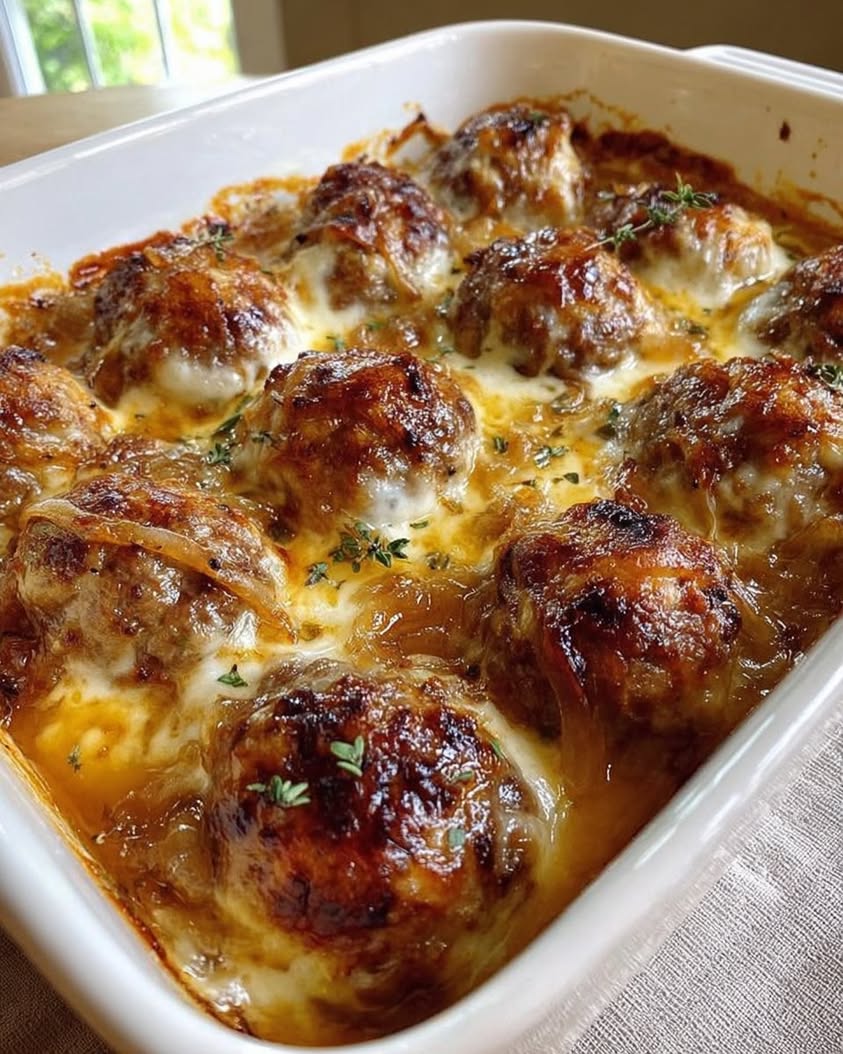
- Visual Appeal: You will see glossy, deep brown meatballs nestled in a rich, amber-colored broth. The surface is dotted with soft, translucent strands of onion. A cap of bubbly, golden-brown cheese makes for a stunning presentation that looks just like a classic onion soup.
- Skill Level Needed: This recipe is perfect for beginners and intermediate cooks alike. The techniques involved are straightforward, like browning meatballs and caramelizing onions. There are no complicated steps, making it an accessible way to build confidence in the kitchen.
- Special Equipment: You will need a large, oven-safe skillet or Dutch oven for this one-pan meal. A sharp knife is helpful for slicing the onions thinly and evenly. A microplane or grater is also useful for getting the perfect melt on your cheese.
Recipe Overview
- Difficulty Level: This recipe is clearly classified as Easy because the individual tasks are simple and well-defined. The process involves basic knife skills for slicing onions and straightforward stovetop cooking for searing and simmering. There is no need for advanced baking techniques or special equipment, so anyone can confidently master this Quick French Onion Meatballs recipe on their first try.
- Category: This dish fits perfectly into the main course category, specifically for dinner. It is hearty enough to stand alone but can be paired with a side salad or crusty bread. It also works well as a casual meal for family or a more impressive dish for entertaining, as it looks much more complex to make than it actually is.
- Cuisine: The recipe is an inspired fusion of classic French cuisine and American comfort food. The flavor profile is directly lifted from the iconic French onion soup, a bistro staple that originated in Paris. The use of meatballs, however, is a popular American twist, making the dish more substantial and easier to serve as a complete meal.
- Cost: This is a very budget-friendly meal. Ground beef is typically an affordable protein, while onions, broth, and garlic are pantry staples. The most expensive ingredient is likely the Gruyere cheese, but a little goes a long way for flavor, and you can use more common Swiss cheese as a substitute to keep costs even lower.
- Season: While delicious year-round, this recipe is especially perfect for fall and winter. The rich, warm, and hearty flavors are ideal for cold, cozy evenings. It is the kind of dish you crave when the weather turns chilly and you want something that will warm you from the inside out.
- Occasion: This dish is versatile enough for many occasions. It is a fantastic weeknight dinner that feels like a special treat. Moreover, it is a guaranteed crowd-pleaser for casual gatherings, game-day parties, or any time you need to bring a comforting and impressive dish to share.
Why You’ll Love This Recipe
First and foremost, you will love the incredible taste and texture of this dish. The meatballs are seasoned perfectly and browned to create a savory crust, which locks in their juices. Afterward, they simmer in the intensely flavorful onion broth, which infuses them with a deep, sweet, and savory umami taste. The finishing touch of melted, bubbly Gruyere cheese adds a creamy, nutty, and salty element that creates a perfect harmony of flavors in every single bite. The contrast between the tender meatballs, the soft onions, and the gooey cheese is pure comfort food heaven.
Furthermore, the convenience of this Quick French Onion Meatballs recipe is unmatched. You do not need a separate pot for the sauce or another pan for the meatballs; everything comes together in one skillet. This means less time scrubbing dishes and more time enjoying your meal. The active cooking time is minimal, with the oven doing most of the work for the final bake. As a result, you can have a dinner that tastes like it simmered all day on your table in just 45 minutes, which is a huge win for busy evenings.
From a nutritional standpoint, this recipe offers several benefits. It provides a good source of high-quality protein from the ground beef, which is essential for muscle building and satiety. Onions, the star ingredient, are packed with antioxidants and prebiotic fibers that support gut health. When you use a low-sodium beef broth, you can also control the salt content of the meal. Overall, this is a balanced dish that provides sustained energy without being overly heavy, making it a satisfying choice for your well-being.
In addition, this recipe has great social and entertaining value. It is the kind of meal that brings people together, filling the house with an irresistible aroma that makes everyone hungry. Serving it directly from the skillet creates a beautiful, rustic presentation that encourages sharing and conversation. Your guests will be impressed by the sophisticated flavor of French onion soup, but they will also find the meatball format familiar and fun. It is a guaranteed conversation starter and an easy way to make your dinner party feel special without stressing in the kitchen.
Finally, this dish is incredibly cost-effective and accessible. The core ingredients are inexpensive and very common, meaning you likely have many of them in your pantry and fridge. Onions are one of the most affordable vegetables, and ground beef is a budget-friendly protein choice. Even the cheese, while a splurge, is used only as a topping, so you do not need a huge amount. Therefore, you can create a meal that tastes luxurious and complex for a fraction of the cost of a restaurant meal, proving that you do not need to spend a lot of money to eat very well.
Historical Background and Cultural Significance
The origin of French onion soup, the inspiration for this recipe, is steeped in culinary legend. One popular story attributes its creation to King Louis XV of France. The story goes that late one night, he found himself hungry in his hunting lodge with only onions, butter, and champagne on hand. He combined them, creating what some believe was the first version of the soup. Another theory points to it being a simple peasant dish, made from humble ingredients that were readily available, such as onions, stale bread, and broth, which was then topped with cheese to make it more substantial.
Culturally, French onion soup holds a significant place in French bistro cuisine. For centuries, it was considered a poor person’s meal because onions were cheap and plentiful. However, over time, it evolved into a beloved classic found on menus across France and around the world. It represents the essence of French cooking: transforming simple, humble ingredients into something incredibly rich and flavorful through careful technique like slow caramelization. It is a dish that speaks to resourcefulness, patience, and an appreciation for deep, savory flavors.
The evolution of this recipe into a meatball dish is a perfect example of modern home cooking. The idea of combining the flavorful broth and cheese of the soup with a protein like meatballs is a practical adaptation for a main course. It solves the problem of how to serve the soup as a more filling meal. This fusion demonstrates how classic culinary traditions continue to inspire and adapt to contemporary tastes and lifestyles, making historical dishes accessible to a new generation of home cooks.
Regional variations of French onion soup exist, though the core remains the same. In some regions, the soup is made with a lighter chicken broth for a more delicate flavor. The type of cheese used also varies; while Gruyere is the most common, some recipes call for Emmental or Comte. Some versions include a splash of white wine or cognac for extra depth. The meatball adaptation itself is a regional variation born out of American creativity, showing how a traditional recipe can be reinvented to create a new, beloved classic like this Quick French Onion Meatballs recipe.
Ingredient Deep Dive
Yellow Onions: The humble yellow onion is the absolute star of this dish and the foundation of its flavor. Culturally, onions have been a staple in cuisines across the globe for thousands of years, valued for their ability to add depth and sweetness to any dish. Nutritionally, they are low in calories but rich in vitamin C, B vitamins, and powerful antioxidants called quercetin, which have anti-inflammatory properties. When you cook them low and slow, as in this recipe, their natural sugars caramelize, creating a sweet and savory taste that is completely unique. To select the best onions, look for ones that are firm, heavy for their size, and have dry, papery skins. Store them in a cool, dark, and well-ventilated area, away from potatoes, as they can cause each other to spoil faster. If you need a substitute, sweet onions like Vidalia or Maui can work, but they will produce a slightly sweeter result.
Ground Beef: The meatball base provides the hearty protein for this meal. While its history in meatball form is ancient and spans many cultures, from Italian polpette to Swedish kottbullar, it serves here as the perfect vehicle for the French onion flavor. Nutritionally, ground beef is an excellent source of high-quality protein, iron, zinc, and B vitamins, which are crucial for energy and immune function. For the best texture in your Quick French Onion Meatballs recipe, choose ground beef with an 80/20 ratio of lean meat to fat. The fat is essential for keeping the meatballs moist and flavorful during cooking. Look for meat that is bright red in color and has no off-putting smells. Store it in the coldest part of your refrigerator and use it within a day or two of purchase, or freeze it for up to three months. A great substitute is ground pork, which is also very fatty and juicy, or even a 50/50 mix of beef and pork for extra flavor.
Gruyere Cheese: The creamy, nutty, and slightly sweet Gruyere cheese is the classic topping for French onion soup and is equally crucial here. This cheese originates from Switzerland and is known for its excellent melting qualities, creating a perfectly smooth and stretchy crust when broiled. It adds a layer of rich, savory umami that balances the sweetness of the onions. While it is a rich source of calcium and protein, it is also high in fat and sodium, so it should be used in moderation. When buying Gruyere, look for a wheel with a firm but slightly springy texture and a pale yellow color. It should have a nutty, complex aroma. Store it wrapped in wax paper or cheese paper in your refrigerator to allow it to breathe. For a more budget-friendly substitute, you can use Swiss cheese or Emmental, which will melt similarly and offer a comparable, though slightly less complex, flavor.
Beef Broth: The beef broth forms the savory liquid base of the sauce, adding deep umami notes that are essential for mimicking the classic French onion soup experience. It is a fundamental building block in many cuisines, used to create stocks, soups, and stews. Nutritionally, it provides a range of minerals like calcium and magnesium, as well as collagen, which is beneficial for joint and skin health. For the best flavor, use a high-quality, low-sodium beef broth to control the saltiness of the final dish. Look for broths that list beef as the first ingredient and avoid those with a lot of artificial flavors or preservatives. You can store an opened carton of broth in the refrigerator for up to a week. A great substitute is chicken broth, which will give a lighter flavor, or you can use a mixture of beef broth and a splash of soy sauce or Worcestershire sauce to boost the umami.
Common Mistakes to Avoid
- Not caramelizing the onions long enough is a frequent error. Rushing this step means the onions will not develop their deep, sweet flavor. You need to cook them low and slow for at least 20 minutes until they are a deep golden brown and completely soft.
- Overcrowding the pan when browning the meatballs is another common pitfall. If you put too many meatballs in the skillet at once, they will steam instead of sear. This prevents the formation of a nice brown crust, which is crucial for flavor. You should work in batches if necessary.
- Using lean ground beef is a mistake that will lead to dry, tough meatballs. The fat in 80/20 beef is essential for moisture and flavor. If you use a very lean blend like 93/7, your meatballs will likely be crumbly and dry.
- Forgetting to season the onions and meatballs adequately can result in a bland dish. Both elements need salt and pepper to enhance their natural flavors. Under-seasoning is a common error that leaves the final dish tasting flat.
- Skipping the breadcrumb and egg binder in the meatball mixture is another issue. These ingredients are crucial for holding the meatballs together and keeping them tender. Without them, the meatballs can fall apart during cooking.
- Burning the cheese under the broiler is a quick way to ruin the dish. The broiler is very powerful, so you must watch it carefully. It only takes a minute or two for the cheese to melt and bubble, and a few seconds more to burn.
- Using pre-shredded cheese is a mistake because it often contains anti-caking agents that prevent it from melting smoothly. For the best, gooiest results, always grate your own Gruyere from a block just before using it.
- Not using an oven-safe skillet is a logistical error. If your skillet has a plastic handle, it cannot go under the broiler. Always use a cast-iron or other metal-handled oven-safe pan for this step.
Essential Techniques
Caramelizing Onions: This is the most critical technique for achieving the signature flavor of this Quick French Onion Meatballs recipe. The process involves cooking sliced onions over low to medium-low heat in a fat, like butter or oil, for an extended period. The goal is to coax out their natural sugars and turn them from crisp and pungent to soft, sweet, and deeply brown. To master it, you need patience and a watchful eye. Stir the onions every few minutes to prevent them from sticking and burning. If they start to brown too quickly, lower the heat or add a splash of water to deglaze the pan. A common pitfall is trying to hurry the process with high heat, which leads to burnt, bitter onions. The visual cue for success is a uniform, rich mahogany color across all the onions.
Forming and Searing Meatballs: Properly forming and searing meatballs is key to their texture and flavor. Start by mixing your ingredients gently; overmixing the meat can make it tough. Then, use slightly wet hands to roll the mixture into evenly sized balls, which ensures they cook at the same speed. Searing them over medium-high heat in a hot skillet creates the Maillard reaction, which produces that desirable brown crust and deep savory flavor. Do not move them for the first few minutes; let them develop a crust before turning. A common mistake is overcrowding the pan, which lowers the pan’s temperature and causes steaming. The visual cue for a perfect sear is a golden-brown crust on all sides of the meatball.
Pro Tips for Perfect Quick French Onion Meatballs
First, when caramelizing your onions, add a pinch of salt and a tiny bit of sugar. The salt draws out the onions’ moisture, and the sugar helps them brown faster and more evenly. This simple trick can significantly reduce the caramelization time without sacrificing flavor.
Second, do not rush the browning of your meatballs. A deep, dark crust is your best friend for flavor. Let them sear undisturbed for at least 3-4 minutes per side. You are building a layer of fond on the bottom of your pan that will later enrich your broth.
Third, always grate your own Gruyere cheese. The pre-shredded bags are coated in starch to prevent clumping, which also prevents the cheese from melting into a smooth, cohesive layer. Freshly grated cheese melts beautifully and creates that iconic stretch.
Fourth, for an extra layer of flavor, deglaze the pan with a splash of dry sherry or white wine after browning the meatballs. Let it cook down for a minute to burn off the alcohol before adding your broth. This adds a wonderful acidity that balances the richness of the dish.
Fifth, feel free to add fresh herbs to the broth while it simmers. A sprig of fresh thyme or a bay leaf will infuse the sauce with aromatic depth. Just remember to remove them before serving, as whole leaves can be unpleasant to bite into.
Variations and Adaptations
Regional Variations: While this Quick French Onion Meatballs recipe is already an adaptation, you can play with the cheese. In the Swiss region of Gruyere, they might use a combination of Gruyere and Emmental. In the United States, you might see Provolone or Mozzarella used for a milder flavor and a more affordable price point. Each cheese will bring a slightly different texture and nuttiness to the dish.
Seasonal Adaptations: In the fall, you can add a few peeled and quartered cored apples to the pan along with the broth. They will soften and add a lovely subtle sweetness that complements the onions. In the spring, a garnish of fresh chives or a sprinkle of lemon zest right before serving can add a bright, fresh note to cut through the richness.
Dietary Modifications: For a gluten-free version, use gluten-free breadcrumbs or rolled oats in your meatball mixture. Be sure to check your beef broth is also certified gluten-free. For a lower-carb option, replace the breadcrumbs with finely ground pork rinds or almond flour. The dish can easily be made dairy-free by using a dairy-free butter alternative for the onions and omitting the cheese, or by using a dairy-free cheese shred that melts well.
Flavor Variations: Add a tablespoon of Dijon mustard to the broth for an extra kick. You can also add a teaspoon of smoked paprika to the meatball mixture for a subtle smoky flavor. For a more herbaceous dish, incorporate fresh rosemary or sage along with the thyme.
Texture Modifications: For a chunky texture, chop the onions instead of slicing them. If you prefer a smoother sauce, you can puree a portion of the cooked onions and broth before adding it back to the meatballs. For a crispier top, you can sprinkle the cheese over panko breadcrumbs before broiling.
Presentation Alternatives: Instead of serving the meatballs in a skillet, you can portion them into individual oven-safe ramekins or small baking dishes. This makes for a beautiful individual presentation that is perfect for dinner parties. Simply divide the meatballs and sauce among the dishes, top with cheese, and broil.
Serving and Presentation Guide
For a beautiful plating technique, serve the meatballs directly from the oven-safe skillet. This rustic presentation is very appealing and keeps the dish hot. Place the skillet on a trivet or a wooden board in the center of the table. For individual plates, use a large spoon to create a bed of the saucy onions in a shallow bowl, then place 3-4 meatballs on top, making sure to get a generous amount of melted cheese over each one.
Garnishing ideas are simple but effective. A sprinkle of fresh, finely chopped parsley or chives adds a pop of green color that contrasts beautifully with the deep brown broth and golden cheese. A few cracks of fresh black pepper over the top just before serving can also elevate the visual appeal. You could also add a single, whole thyme sprig as a rustic garnish.
Traditional accompaniments for a dish inspired by French onion soup include crusty French bread or a baguette for dipping into the rich broth. A simple green salad with a light vinaigrette is the perfect side to cut through the richness of the meatballs and cheese. Roasted potatoes or mashed potatoes are also wonderful options for soaking up all that delicious sauce.
Modern serving suggestions include serving the meatballs over a bed of creamy polenta or buttery egg noodles. You can also stuff the meatballs and sauce into a toasted sub roll for an incredible French Onion Meatball Sub. For a low-carb option, serve them over a bed of sautéed spinach or zucchini noodles to keep it light and healthy while still being satisfying.
Temperature considerations are very important. This dish is best served hot, straight from the oven. The cheese should be bubbly and the broth should be steamy. If it sits too long, the cheese will begin to set and the broth will cool, losing its appeal. Make sure to preheat your plates or bowls if you are serving individually to keep everything warm as long as possible.
Portion control tips for this recipe are straightforward. Since it is a rich and hearty dish, a serving of about 3-4 meatballs per person is generally sufficient for a main course. If you are serving it as an appetizer for a party, you can make the meatballs smaller and serve them with toothpicks. You can also stretch the recipe by serving it over a larger bed of potatoes or grains.
Wine and Beverage Pairing
For a great wine pairing, choose a red wine that can stand up to the rich, savory flavors of this Quick French Onion Meatballs recipe. A classic choice is a Pinot Noir from Burgundy, which has earthy notes that complement the beef and mushrooms, plus a light body that will not overpower the dish. Another fantastic option is a Beaujolais, which is fruity, low in tannins, and wonderfully refreshing. A light-bodied Cotes du Rhone also works beautifully, offering a nice balance of fruit and savory spices.
If you prefer non-alcoholic alternatives, a tart and bubbly sparkling water with a squeeze of lemon or lime is a perfect palate cleanser. A rich, dark, and unsweetened iced tea can also work, its slight bitterness cutting through the cheese and meat. A high-quality, low-sugar apple cider is another great option, as its natural sweetness will highlight the caramelized onions in the dish.
For coffee and tea pairings, which are less common but intriguing, consider a dark roast coffee. Its bitter and smoky notes can actually be a wonderful match for the deep, caramelized flavors. For tea, a robust Lapsang Souchong, which is a black tea smoked over pine fires, has a unique smoky profile that echoes the savory elements of the recipe.
Pay close attention to temperature considerations for your beverage. Red wine should be served slightly below room temperature, around 60-65 degrees Fahrenheit, to be most refreshing. Sparkling water and iced tea should be served very cold. The key is that the beverage should not be too cold, as that can numb your palate and prevent you from tasting the full complexity of the dish.
For serving suggestions, pour the wine into large, wide-rimmed glasses to allow it to breathe. If you are serving beer, a brown ale, amber lager, or a Belgian dubbel are excellent choices, as their malty sweetness and moderate bitterness are a perfect match for the savory sauce and cheese.
Storage and Shelf Life
Proper storage is key to enjoying leftovers of this Quick French Onion Meatballs recipe. After the meal has cooled completely to room temperature, transfer the meatballs and sauce to an airtight container. It is important to not let food sit at room temperature for more than two hours to prevent bacterial growth. You can also store the dish directly in your covered skillet if you plan to eat it within a day, but a dedicated storage container is best for longer keep.
The ideal storage temperature is in the refrigerator, which should be set to 40 degrees Fahrenheit or below. The cool, stable temperature will keep the dish fresh and safe to eat for up to 3 to 4 days. The flavors will actually meld and deepen overnight, making leftovers taste even better the next day. Avoid storing it in the door of the refrigerator where temperature fluctuations are more common.
For container recommendations, a glass or BPA-free plastic container with a tight-fitting lid is ideal. Glass is great because it is non-porous and will not absorb any odors or stains. You can also use a heavy-duty, freezer-safe zip-top bag for storage. Make sure to remove as much air as possible from the bag before sealing it to prevent freezer burn and preserve quality.
Signs of spoilage to look for include a sour or off smell. If the sauce develops a strange, yeasty, or unpleasant odor, it is best to discard the dish. A slimy texture on the meatballs or the surface of the sauce is another clear sign of spoilage. If you see any mold growth, which can appear as fuzzy spots of green, white, or black, the entire dish should be thrown away immediately.
Reheating instructions are simple for best results. The best way to reheat is gently on the stovetop in a covered skillet over medium-low heat. Add a splash of beef broth or water to thin the sauce as it will thicken when chilled. Stir occasionally until the meatballs are heated through. You can also reheat individual portions in the microwave for 2-3 minutes, but the meatballs might not be as tender.
Freezing guidelines are straightforward. This dish freezes very well. Allow it to cool completely, then transfer it to a freezer-safe container or a heavy-duty zip-top bag. It can be frozen for up to 3 months. To thaw, place the container in the refrigerator overnight. Reheat as directed above, noting that the sauce may be a little thinner after freezing, so you can simmer it for a few extra minutes to reduce it.
Make Ahead Strategies
A great prep timeline for this Quick French Onion Meatballs recipe involves breaking it into stages. You can complete the most time-consuming tasks up to two days in advance. For example, you can caramelize the onions and let them cool. You can also form the meatballs, place them on a baking sheet, and keep them covered in the refrigerator. This means on the day you plan to serve, the meal comes together in just about 20 minutes of active work.
When storing between steps, make sure each component is properly cooled before covering. For the caramelized onions, store them in an airtight container in the refrigerator. For the formed meatballs, place them on a parchment-lined baking sheet, cover them tightly with plastic wrap, and refrigerate. This prevents them from sticking together and keeps them from drying out. Do not store the raw meatballs in a covered bowl, as they can release moisture and become denser.
The quality impact of making this dish ahead is generally positive. In fact, the flavors actually improve as they sit together. The meatballs will soak up even more of the onion and broth flavor overnight. The only thing you should not do ahead is add the cheese and broil it. That final step should always be done just before serving to ensure a perfectly bubbly, hot, and golden-brown crust.
For assembly tips, when you are ready to cook, simply take the meatballs and caramelized onions out of the refrigerator. In your oven-safe skillet, combine the cooked onions with the broth and bring to a simmer. Then, gently nestle the meatballs into the liquid. Proceed with the recipe as written. This streamlined assembly means you are only a short baking time away from a delicious dinner after a long day.
Reheating guidelines are the same as for leftovers. If you have fully cooked the dish, the best method is to reheat it in the oven. Place the skillet in a 350-degree oven for 15-20 minutes, or until the meatballs are hot and bubbly. You can then add a fresh layer of cheese and broil it for the final minute to get that perfect golden crust again.
Finally, fresh element additions are your friend. To brighten up the dish when serving, add a fresh garnish of chopped parsley or chives. A squeeze of fresh lemon juice over the top right before serving can also add a vibrant pop of acidity that cuts through the richness. These small fresh touches will make the reheated dish feel newly made and incredibly appetizing.
Scaling Instructions
Halving this Quick French Onion Meatballs recipe is very easy. Simply use half of the ground beef, half the onions, and half the broth. The cooking time for the meatballs will remain about the same, but you should check for doneness a few minutes early. The size of your pan matters; use a smaller skillet so that the meatballs and onions are still in a single layer. If your pan is too large, the sauce will evaporate too quickly and the meatballs may not be fully submerged.
Doubling or tripling the recipe is also straightforward, but requires some equipment adjustments. You will need a very large, oven-safe pot or a roasting pan to accommodate the larger volume. Alternatively, you can cook the recipe in two separate skillets. The cooking time might need to be increased slightly for the final bake, as a larger volume of food will take longer to heat through. Check that the meatballs reach an internal temperature of 165 degrees Fahrenheit.
Equipment adjustments are crucial when scaling. If you are doubling the recipe, a 12-inch cast-iron skillet will likely be too small. A 14-inch skillet or a large braiser will work much better. For tripling, you will almost certainly need a large roasting pan or two separate large skillets. The broiler step will also need attention, as you may have to broil in batches to ensure even melting and browning of the cheese on top.
Timing modifications are important. When you double the recipe, the time to bring the broth and onions to a simmer will increase. The baking time in the oven will also need to be extended by 5 to 10 minutes. Always use a meat thermometer to confirm the meatballs are fully cooked rather than strictly relying on visual cues or time. The final broiling step will remain very quick, only 1-3 minutes.
Storage considerations become more important when scaling. Leftovers from a doubled recipe can be stored in several smaller containers rather than one large one, as this will help them cool faster and prevent bacterial growth. You can also portion the doubled recipe into separate freezer-safe containers for future quick meals. Always label your containers with the date and the name of the dish for easy identification.
Nutritional Deep Dive
Each serving of this Quick French Onion Meatballs recipe offers a balanced macro breakdown. Assuming a serving of four meatballs with sauce and cheese, you can expect approximately 35-40 grams of protein, which is excellent for muscle maintenance and satiety. The fat content, around 25-30 grams, comes primarily from the ground beef and cheese, providing energy and helping the body absorb fat-soluble vitamins. Carbohydrates are relatively low, about 15-20 grams per serving, mainly from the onions and a small amount from the breadcrumbs in the meatballs.
Beyond the macros, this dish provides a solid micron Print
Quick French Onion Meatballs
- Total Time: 45 minutes
- Yield: 4
Description
A speedy twist on classic French onion soup, these juicy meatballs are simmered in a rich, savory onion gravy and topped with melted Gruyère cheese for a comforting meal.
Ingredients
- 1 lb ground beef
- 1/2 cup breadcrumbs
- 1 large egg
- 1 teaspoon salt
- 1/2 teaspoon black pepper
- 2 tablespoons olive oil
- 3 large yellow onions, thinly sliced
- 2 tablespoons butter
- 2 tablespoons all-purpose flour
- 2 cups beef broth
- 1 tablespoon Worcestershire sauce
- 1 teaspoon dried thyme
- 1 cup shredded Gruyère cheese
Instructions
- In a large bowl, combine ground beef, breadcrumbs, egg, salt, and pepper. Mix gently and form into 20 small meatballs.
- Heat olive oil in a large skillet over medium-high heat. Add meatballs and brown on all sides, about 5-7 minutes. Remove and set aside.
- In the same skillet, melt butter over medium heat. Add sliced onions and cook, stirring occasionally, until deeply caramelized, about 15 minutes.
- Sprinkle flour over the onions and stir for 1 minute. Gradually whisk in beef broth, Worcestershire sauce, and thyme. Bring to a simmer.
- Return meatballs to the skillet. Cover and simmer for 10 minutes, until meatballs are cooked through.
- Preheat broiler. Transfer meatballs and gravy to an oven-safe dish. Top with shredded Gruyère cheese. Broil until cheese is melted and bubbly, about 2-3 minutes.
Notes
You can customize the seasonings to taste. For extra richness, add a splash of white wine when deglazing the pan.
- Prep Time: 15 minutes
- Cook Time: 30 minutes
- Method: Main
- Cuisine: American