Greek Style Loaded Hummus Recipe: The Ultimate Healthy Appetizer
This Greek Style Loaded Hummus Recipe is the ultimate healthy appetizer. It transforms traditional hummus into a vibrant, flavorful dish. You get creamy chickpeas topped with fresh tomatoes, crisp cucumbers, tangy feta, and briny Kalamata olives. Every spoonful delivers a burst of Mediterranean sunshine. This is not your average dip. It is a hearty, satisfying meal that works perfectly for parties, weeknight dinners, or a quick lunch. The combination of smooth hummus and crunchy toppings creates an irresistible texture. The tangy lemon and garlic cut through the richness beautifully. You will find yourself reaching for this dish again and again.
Moreover, this loaded hummus offers incredible versatility. You can serve it as a starter, a main course, or a side dish. It pairs wonderfully with warm pita bread, crunchy vegetables, or crispy falafel. The fresh herbs and vibrant colors make it a showstopper on any table. Additionally, this recipe fits perfectly into a healthy Mediterranean diet. It is packed with protein, fiber, and healthy fats from olive oil. You feel full and satisfied without feeling heavy. This Greek Style Loaded Hummus Recipe genuinely brings the flavors of a Greek taverna right to your kitchen. It is simple to prepare but tastes like something from a five-star restaurant.
Finally, this dish is perfect for sharing. It creates a communal eating experience that brings people together. The act of scooping up hummus and toppings is inherently social. You can customize the toppings to suit everyone’s preferences. Therefore, this recipe is a fantastic choice for game days, potlucks, or family gatherings. It is naturally gluten-free and vegetarian. With a few simple swaps, it becomes vegan and dairy-free too. This Greek Style Loaded Hummus Recipe is more than just a recipe. It is a celebration of fresh, wholesome ingredients and bold Mediterranean flavors. Get ready to impress your guests and delight your taste buds.
Quick Recipe Highlights
- Flavor Profile: You taste creamy, nutty hummus first. Then, you get the bright acidity from lemon juice and tomatoes. The salty feta and olives provide a savory finish.
- Texture: The hummus is silky and smooth. In contrast, the cucumber and tomato topping adds a fresh, crunchy bite. The olives offer a pleasant chewy texture.
- Aroma: The primary aroma comes from fresh garlic and toasted cumin. You also smell the grassy notes of extra virgin olive oil. Fresh parsley adds a clean, herbal scent.
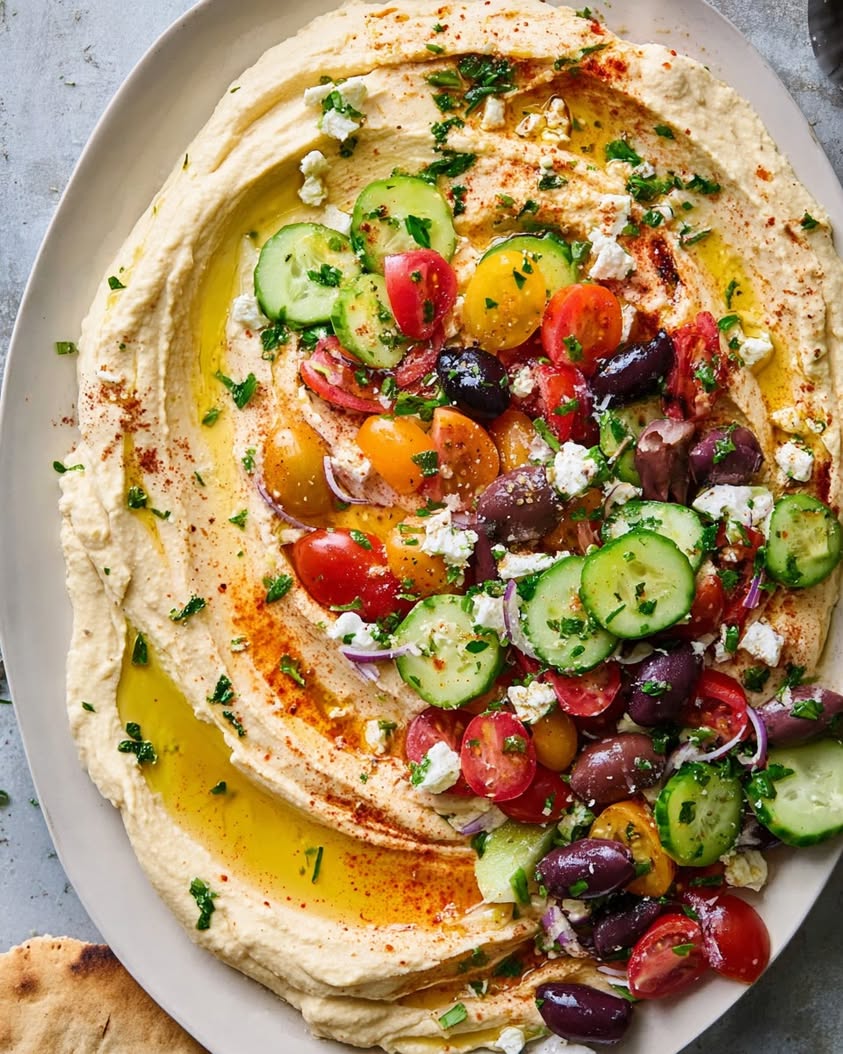
- Visual Appeal: A beautiful white swirl of hummus anchors the plate. Bright red cherry tomatoes, green cucumber, and black olives create a colorful mosaic. A sprinkle of red paprika and green parsley finishes the look.
- Skill Level Needed: This recipe is perfect for beginners. You only need basic knife skills and a food processor. The most complex step is layering the toppings.
- Special Equipment: You need a food processor or high-speed blender. A good chef’s knife helps for chopping vegetables. A small skillet is useful for toasting pine nuts.
Recipe Overview
- Difficulty Level: We rate this recipe as easy. The techniques are straightforward and simple. You do not need any specialized cooking skills. Anyone can make this dish successfully on their first try. The recipe relies on fresh ingredients, not complex methods.
- Category: This dish is an appetizer or meze. It also works wonderfully as a light lunch. You can even serve it as a main course with a side salad. It is incredibly flexible for any meal occasion.
- Cuisine: This recipe is firmly rooted in Greek cuisine. It draws from the tradition of meze, or small sharing plates. The ingredients like chickpeas, olive oil, and feta are classic Mediterranean staples. It also reflects the modern trend of loaded dips.
- Cost: This is a very budget-friendly recipe. Canned chickpeas and pantry spices are inexpensive. Bulk fresh vegetables like tomatoes and cucumbers are affordable. Feta cheese is the most pricey item, but you only need a small amount. Overall, you save money by making it from scratch.
- Season: This dish is best in the summer. This is when tomatoes and cucumbers are at their peak flavor. However, you can enjoy it year-round with good quality produce. In winter, you can use roasted cherry tomatoes for a different taste.
- Occasion: This loaded hummus is perfect for parties. It is great for backyard barbecues and holiday gatherings. It also makes a beautiful dish for a casual dinner with friends. It always gets positive reactions from guests.
Why You’ll Love This Recipe
First, you will love the incredible taste and texture combination. The smooth, creamy hummus acts as a perfect base. The fresh, crunchy vegetable topping provides a delightful contrast. The salty feta and olives add bursts of intense flavor. Every single bite is a new and exciting experience. The lemon juice brightens the entire dish. The garlic gives it a pleasant punch. This is a dip that keeps you coming back for more. It is simply addictive.
Second, the convenience of this recipe is unbeatable. You can prepare the hummus base up to three days in advance. Then, you just chop the veggies and assemble before serving. The entire active prep time is only about fifteen minutes. This makes it a perfect last-minute appetizer. You do not need to heat up the oven or stand over a stove. It is truly a no-fuss recipe that looks incredibly impressive. Your friends will think you spent hours in the kitchen. You know the secret is in the simple assembly.
Third, the nutritional advantages are significant. This dish is packed with plant-based protein from the chickpeas. You also get a generous amount of fiber. This helps you feel full and satisfied. The vegetables provide essential vitamins and antioxidants. The olive oil offers heart-healthy monounsaturated fats. Feta cheese adds calcium. Overall, this is a balanced and nourishing meal. It fits perfectly into a weight management plan. You can eat a large portion without any guilt. It is genuinely healthy food that tastes indulgent.
Fourth, this recipe has fantastic social and entertaining value. It is a shareable dish that encourages interaction. People love to gather around a beautiful board of food. The vibrant colors and inviting presentation start conversations. It also accommodates many dietary restrictions naturally. Vegetarians, vegans, and gluten-free guests can all enjoy it. You do not need to make separate dishes for different people. This one dish pleases almost everyone. It becomes the star of the party every time.
Finally, the cost-effectiveness and accessibility of ingredients are excellent. You can find all the ingredients at any standard grocery store. Nothing is exotic or hard to find. The ingredients are also very affordable. You can make a large, impressive dish for a small price. This recipe uses pantry staples like chickpeas and olive oil. It also uses common vegetables. Therefore, this Greek Style Loaded Hummus Recipe is accessible to everyone. It does not matter where you live or what your budget is. You can always make this delicious and healthy appetizer.
Historical Background and Cultural Significance
The origins of hummus are deeply contested. Several countries in the Middle East claim to be its birthplace. The earliest known recipes for pureed chickpeas appear in 13th-century Egyptian cookbooks. However, hummus as we know it today likely evolved in the Levant region. This area includes modern-day Syria, Lebanon, Palestine, and Jordan. For centuries, hummus has been a simple, nourishing food for working people. It provided cheap protein and energy. It was also a staple for religious fasting periods. Its popularity spread throughout the Ottoman Empire. Eventually, it reached Greece and the rest of the Mediterranean.
In Greek culture, hummus holds a special place in the tradition of meze. Meze are small, shared plates similar to Spanish tapas. They are an essential part of Greek social life. Friends and family gather around a table filled with meze. They share food, stories, and laughter for hours. Hummus is a classic meze dish. It represents the Greek concept of filoxenia, or hospitality. Offering a guest hummus and bread is a sign of welcome and generosity. The loaded version we make today is a modern evolution of this tradition. It combines classic hummus with a Greek salad topping.
The evolution of this recipe is a story of culinary creativity. Traditionally, hummus is served simply with a drizzle of olive oil and paprika. Chefs and home cooks began experimenting with toppings. They wanted to make the classic dish more exciting. They started adding sauteed mushrooms, roasted red peppers, and spiced meat. The Greek salad topping was a natural fusion. It combines two beloved Greek dishes into one. This loaded hummus quickly became a viral sensation on social media. Its photogenic appearance made it perfect for Instagram and Pinterest. Now, it is a staple in trendy restaurants and home kitchens alike.
Regional variations of this loaded hummus are fascinating. In some parts of Greece, people add capers and sun-dried tomatoes. In the Cyclades islands, they might top it with local feta and fresh mint. In mainland Greece, roasted red peppers are a popular addition. Outside of Greece, variations are even more diverse. In Turkey, cooks might top their hummus with spicy ezme salad. In Israel, they add a hard-boiled egg and pickled vegetables. In the Levant, they use a generous amount of sesame-rich tahini. This diversity shows the incredible versatility of hummus. It adapts to local tastes while staying true to its Mediterranean roots.
Ingredient Deep Dive
Chickpeas, also known as garbanzo beans, are the heart of this dish. They have a history stretching back over 7,500 years. They were first cultivated in the Middle East. Chickpeas are a symbol of sustenance in many cultures. In Italy, they are used in pasta and soup. In India, they are the base for curries and snacks. Nutritionally, chickpeas are a powerhouse. They are packed with plant-based protein and dietary fiber. This combination helps regulate blood sugar and promotes digestive health. They are also rich in iron, magnesium, and folate. For selection, use canned chickpeas for convenience. Look for BPA-free cans. Rinse and drain them thoroughly. For the best texture, you can peel the skins. This step makes the hummus incredibly smooth. Store unopened cans in a cool, dark place. Once opened, transfer to a glass container and refrigerate. Use them within three to four days. For substitution, you can use canned cannellini or Great Northern beans. However, the flavor and texture will be different. The result will be less nutty and earthy than chickpeas.
Extra virgin olive oil is another critical ingredient. In Greek culture, olive oil is often called “liquid gold.” It has been a cornerstone of the Mediterranean diet for thousands of years. Ancient Greeks used it for cooking, medicine, and even athletic competitions. Nutritionally, extra virgin olive oil is rich in monounsaturated fats. These fats are great for heart health. It also contains powerful antioxidants like polyphenols. These compounds fight inflammation and protect against chronic disease. For selection, always choose high-quality extra virgin olive oil. Look for a harvest date on the bottle. The oil should have a fresh, grassy, or peppery smell. Avoid any jar with a rancid odor. Store olive oil in a cool, dark place away from heat and light. A dark glass bottle is ideal. Do not refrigerate it, as condensation can affect the flavor. For substitution, you can use avocado oil. It has a mild flavor and high smoke point. However, the rich, fruity taste of olive oil is irreplaceable in this recipe.
Feta cheese is the signature salty element. This brined curd white cheese has a long history in Greece. It is protected by the European Union as a PDO product. This means true feta must be made in Greece from sheep’s milk or a mix with goat’s milk. Feta adds a salty, tangy, and creamy component to the dish. Nutritionally, feta is lower in fat and calories compared to many other cheeses. It is a good source of calcium and protein. It also contains probiotics that are beneficial for gut health. For selection, buy feta stored in brine. This keeps it moist and flavorful. Look for a block rather than pre-crumbled cheese. Pre-crumbled feta often contains anti-caking agents. These agents affect the texture and taste. Store feta in its brine in the refrigerator. It will last for several weeks. For substitution, you can use goat cheese for a tangier flavor. For a vegan option, use a high-quality plant-based feta. You can also use crumbled tofu marinated in lemon and salt.
Kalamata olives bring a distinctive briny and fruity flavor. These dark purple olives are named after the city of Kalamata in Greece. They are a hallmark of Greek cuisine. Nutritionally, olives are rich in healthy monounsaturated fats. They also contain vitamin E and antioxidants. These compounds help protect your cells from damage. For selection, buy Kalamata olives in brine or olive oil. Pitted olives save you time. However, whole olives often have a better texture. Look for olives that are deep purple and glossy. Avoid any that look wrinkled or have a sour smell. Store opened jars in the refrigerator. They will last for several months. For substitution, you can use Castelvetrano olives. They are milder and less salty. Black olives are also an option, though less authentic. For a lower sodium option, rinse the olives before using them.
Fresh vegetables like tomatoes and cucumber are essential for the topping. Roma tomatoes work well because they have fewer seeds. English cucumbers are ideal because they have thin skins and few seeds. These vegetables add fresh, juicy, and crisp elements. They provide essential vitamins like vitamin C and potassium. For selection, choose firm, fragrant tomatoes. They should feel heavy for their size. For cucumbers, look for ones that are firm and bright green. Avoid any that are soft or yellowed. Store vegetables at room temperature until they are fully ripe. Then, refrigerate them. Use them within a few days for the best flavor. For substitution, you can use roasted cherry tomatoes in the winter for a sweeter taste. For a different crunch, use diced bell peppers instead of cucumber.
Common Mistakes to Avoid
- Do not skip rinsing the canned chickpeas. This removes excess sodium and canned liquid taste. It also helps achieve a smoother texture. Always rinse and drain them thoroughly.
- Avoid using cold ingredients straight from the refrigerator. Cold hummus has a grainy, stiff texture. It also tastes muted. Always bring your chickpeas and other ingredients to room temperature before processing.
- Do not add too much tahini at once. Tahini can become bitter and overpowering if overused. Add it slowly and taste as you go. Start with two tablespoons and adjust.
- Avoid adding the garlic raw without balancing it. Raw garlic can be harsh and pungent. You can mellow it by soaking the cloves in lemon juice for ten minutes. This step is crucial for a smooth, pleasant flavor.
- Do not add the toppings too early before serving. The tomatoes and cucumbers release water. This water makes the hummus watery and unappetizing. Add the toppings right before you serve the dish.
- Avoid over-processing the hummus. This can make it gummy and pasty. Process only until it is very smooth. Use a food processor, not a blender, for the best control.
- Do not use low-quality olive oil. The flavor of olive oil is very prominent in this dish. A cheap, bitter oil will ruin the whole recipe. Always use a good extra virgin olive oil.
- Avoid serving the hummus too cold. Cold temperatures numb the flavors. Let the hummus sit at room temperature for at least twenty minutes before serving. This allows the flavors to develop fully.
- Do not forget to season the hummus well. Chickpeas are quite bland on their own. You need enough salt, acid, and spice. Taste your hummus and adjust the seasoning before assembling the topping.
- Avoid using a metal bowl for storing leftover hummus. Metal can react with the acid and give a metallic taste. Store leftovers in a glass or ceramic container with a tight lid.
Essential Techniques
Peeling the chickpeas is not strictly necessary, but it makes a huge difference. The outer skins of chickpeas are tough and fibrous. They create a grainy texture in the hummus. To master this technique, simply pinch each chickpea between your thumb and forefinger. The green skin will slip right off. Do this after rinsing them. It takes about five minutes. Some people find this task tedious. You can speed it up by rubbing the drained chickpeas vigorously in a clean kitchen towel. This loosens the skins. Then, you can pick them out easily. The visual cue for success is a completely smooth, silky puree without any flecks of skin. You will see a dramatic difference in the final texture.
Emulsifying the tahini and lemon juice is a critical step. This process creates a creamy base before you even add the chickpeas. It prevents the hummus from being separated or oily. To master this, first whisk or process the tahini with the lemon juice and a splash of ice water. The mixture will seize up and become thick and pale. Do not worry. This is normal. Continue to process for another minute. It will then loosen up and become smooth and creamy. This step takes about two minutes. A common pitfall is rushing this step. If you add all the ingredients at once, the hummus will not emulsify properly. The visual cue for success is a mixture that looks like creamy peanut butter. It should be pale in color and completely smooth.
Properly seasoning the cooking water (or using a flavorful substitute) is essential. If you use canned chickpeas, you can reserve the liquid, known as aquafaba. This liquid is a fantastic emulsifier. It helps create a very light and fluffy hummus. However, do not add the liquid from the can without tasting it first. It can be very salty. Alternatively, you can use a few tablespoons of ice water. The cold water helps create a lighter texture. The key is to add the liquid slowly while the food processor is running. You want the hummus to be very smooth but not runny. The visual cue for success is a hummus that slowly melts off a spoon. It should not be stiff or soupy.
Pro Tips for Perfect Greek Style Loaded Hummus Recipe
Always toast your cumin seeds before grinding them. Toasting releases the essential oils and deepens the flavor. This small step makes a big difference. You can do this in a dry skillet over medium heat for about a minute. Watch them carefully, as they burn easily.
Use a high-quality food processor for the creamiest hummus. A small, weak motor will struggle to break down the chickpeas completely. A 11-cup or larger food processor works best. You can even use a high-speed blender for an ultra-smooth texture, but you have to scrape down the sides often.
Let your hummus rest for at least 30 minutes after processing. This resting period allows the flavors to meld together. The taste improves dramatically. You can make the hummus base a day ahead of time. This is a fantastic make-ahead strategy for parties.
Dice your vegetables for the topping very finely. Small, uniform pieces look more elegant on the plate. They also distribute better with each scoop. Aim for pieces about 1/4 inch or smaller. This ensures you get a bit of everything in every bite.
Season the vegetable topping separately before adding it to the hummus. Toss the diced tomatoes, cucumber, and red onion with a pinch of salt, a drizzle of olive oil, and a splash of red wine vinegar. This simple step makes the topping much more flavorful. It prevents the hummus from tasting bland.
Use a combination of fresh and dried herbs. Fresh parsley is essential for a bright, clean finish. Dried oregano adds a classic Greek touch. You can also add a sprinkle of dried mint for a more complex flavor. Do not skip the fresh herbs. They are non-negotiable for the best taste.
Variations and Adaptations
Regional variations of this loaded hummus are quite diverse. In the Peloponnese region of Greece, cooks often add chopped sun-dried tomatoes and capers. This creates a more intense, umami-forward flavor. In the islands, they might add fresh dill and a squeeze of lemon juice to the topping. You can also find versions with roasted eggplant or bell peppers mixed into the topping. These variations reflect the local produce and culinary traditions of each area.
Seasonal adaptations are an excellent way to keep this recipe exciting. In the spring, top your hummus with fresh peas, fava beans, and mint. In the summer, use the classic tomatoes, cucumbers, and bell peppers. In the fall, try roasted butternut squash or sauteed mushrooms with thyme. In the winter, roasted root vegetables like beets or carrots make a beautiful and hearty topping. This seasonal approach keeps the dish fresh and aligned with the best produce.
Dietary modifications are straightforward for this recipe. To make it vegan, simply omit the feta cheese or use a high-quality plant-based feta. You can also use a tofu-based feta substitute. To make it lower in fat, reduce the amount of olive oil in the hummus base. You can use a little more aquafaba or water instead. For a gluten-free version, this recipe is naturally gluten-free. Just make sure you serve it with gluten-free pita bread or vegetables.
Flavor variations are where you can get creative. Add a roasted red pepper or sun-dried tomato to the hummus base for a different color and taste. You can also add a pinch of smoked paprika for a smoky flavor. For a spicy version, add a small serrano pepper or a pinch of cayenne pepper to the topping. The sweet and smoky notes of chipotle peppers are also incredible.
Texture modifications can completely change the dish. For a chunky hummus, pulse the chickpeas only a few times. Leave some larger pieces of chickpeas for more bite. For a very light and airy hummus, whip in a quarter cup of aquafaba using a whisk attachment on your mixer. For the topping, you can add toasted pine nuts or walnuts for an extra crunch. You can also use roasted chickpeas for a double-chickpea experience.
Presentation alternatives can make your dish look entirely different. Instead of a large platter, serve the hummus in individual small bowls. This makes for a beautiful, personalized appetizer. You can also use a ring mold to shape the hummus on a plate. Then, carefully fill the inside with the vegetable topping. Another idea is to serve the hummus in a hollowed-out bell pepper or a large tomato for a stunning edible bowl.
Serving and Presentation Guide
Plating techniques for this Greek Style Loaded Hummus Recipe should be bold and inviting. Start by spreading the hummus on a large, shallow plate or a wooden serving board. Use the back of a spoon to create a circular well in the center. This adds visual interest and creates a perfect place for the vegetable topping. Make sure the hummus layer is about one inch thick. This provides a good ratio of hummus to toppings. The spread should be even, with slightly raised edges to hold the toppings in place.
Garnishing ideas are crucial for the final presentation. Drizzle a generous amount of extra virgin olive oil over the entire dish. The oil adds a beautiful shimmer and rich flavor. Next, sprinkle a pinch of smoked paprika or Aleppo pepper for color and a mild heat. Add a few whole Kalamata olives strategically around the topping for visual balance. Finish with a generous amount of fresh, finely chopped parsley. A few whole chickpeas scattered on top add texture and visual interest.
Traditional accompaniments are a must for a complete experience. Warm pita bread is the classic choice. You can also serve it with crispy pita chips, sturdy crackers, or fresh bread. For a low-carb option, use fresh vegetable sticks like carrots, celery, bell peppers, and cucumber. The vegetables are also great for scooping. They keep the meal light and healthy. Do not forget to have extra olives and feta on the side for people to add.
Modern serving suggestions can make this dish feel new and exciting. Serve it as part of a larger grain bowl. Layer the hummus with quinoa, roasted vegetables, and a lemon tahini dressing. You can also use it as a spread for sandwiches and wraps. It works wonderfully in a Mediterranean wrap with chicken or falafel. Another modern idea is to serve it as a dip for roasted potatoes or sweet potato wedges. The creamy hummus is a fantastic contrast to the crispy potatoes.
Temperature considerations are important for the best flavor. The hummus should be served at room temperature. Cold hummus tastes heavier and the flavors are muted. If you made the hummus ahead, take it out of the refrigerator about 30 minutes before serving. The fresh vegetable topping should be chilled but not ice cold. The contrast between the cool, crisp vegetables and the room-temperature, creamy hummus is perfect. This temperature balance is what makes every bite so delightful.
Portion control tips help with serving a crowd. For an appetizer, plan for about one quarter cup of hummus per person. This is usually enough for two to three pita chips or vegetables per serving. For a main course, you can double the portion. A standard serving of this loaded hummus is about half a cup. It is quite filling, so even small portions are satisfying. For large parties, a single recipe serves about eight people as an appetizer.
Wine and Beverage Pairing
Wine pairings for this dish are delightful. The bright acidity and saltiness of the feta and olives call for a crisp, high-acid wine. A chilled Assyrtiko from Santorini is the perfect choice. This Greek wine has notes of citrus and minerality. It cuts through the richness of the hummus beautifully. Another excellent option is a dry, unoaked Sauvignon Blanc. Its herbaceous notes complement the fresh herbs and vegetables. For a red wine, a light, chilled Gamay or a fruity Pinot Noir works surprisingly well. The key is to avoid heavy, oaky wines that will overpower the dish.
Non-alcoholic alternatives are just as delicious. A classic Greek frappe is fantastic. This iced coffee is shaken to create a frothy topping. The bitterness of the coffee balances the tangy hummus. Another great option is a sparkling water with a squeeze of lemon and a sprig of mint. The bubbles cleanse your palate between bites. A fresh lemonade or iced herbal tea, like hibiscus or mint, also pairs wonderfully. The tartness and floral notes are a great match for the Mediterranean flavors.
Coffee and tea pairings are often overlooked but are excellent. A strong, dark Greek coffee served with a glass of cold water is a traditional way to end a meze meal. The rich, earthy notes of the coffee are a great contrast to the tangy hummus. For a tea pairing, a cup of strong chamomile or sage tea is a soothing option. It helps with digestion. The herbal notes also complement the fresh herbs in the topping.
Temperature considerations for beverages are important. All white wines, rosés, and sparkling wines should be served well-chilled. Red wines like a light Pinot Noir should be slightly chilled for about 15 minutes. Non-alcoholic drinks should be served over plenty of ice. The goal is to provide a refreshing contrast to the creamy, room-temperature hummus. A cold, crisp drink completes the experience perfectly.
Serving suggestions for beverages include presentation and glassware. For wine, use stemmed glasses for white wines and larger, tulip-shaped glasses for reds. For non-alcoholic drinks, tall glasses with ice are best for sparklers and lemonades. Greek coffee should be served in a small demitasse cup. The presentation adds to the overall enjoyment of the meal. Always offer a glass of water alongside any beverage. This helps guests cleanse their palates and stay hydrated.
Storage and Shelf Life
Storage methods for leftover hummus and toppings are different. The hummus base stores very well. The fresh vegetable topping does not. Therefore, you should store them separately. First, remove any leftover topping from the hummus. Place the hummus in an airtight container. The vegetable topping can be stored in a separate container. It will keep for about one day. After that, the vegetables become watery and limp.
Temperature requirements are straightforward. You must refrigerate all leftovers promptly. The hummus should be kept at or below 40 degrees Fahrenheit. Do not leave it at room temperature for more than two hours. This prevents the growth of harmful bacteria. The vegetable topping also needs refrigeration. However, it is more delicate. It does best when used within a day of preparing it.
Container recommendations help maintain quality. Use a glass or ceramic container for the hummus. These materials are non-reactive and do not transfer any flavors. A container with a tight-fitting lid is essential to prevent the hummus from absorbing other smells in the fridge. For the vegetable topping, a similar glass container is best. You can also store it in a bowl covered tightly with plastic wrap. The goal is to minimize exposure to air.
Signs of spoilage are easy to spot. The hummus is bad if it develops a sour, off smell. It should smell like chickpeas, lemon, and garlic. Any hint of yeast or alcohol means it is spoiled. Also, look for any mold growth on the surface. This is a clear sign to throw it away. The texture of spoiled hummus can become watery or develop a slimy layer on top. The vegetable topping spoils quickly. If the vegetables become slimy or have a strong, fermented smell, discard them.
Reheating instructions are simple, but you likely will not need them. Hummus is best served cold or at room temperature. You should not heat it, as it can separate and become grainy. If you want to warm it slightly, let it sit at room temperature for 30 minutes. You can also microwave it for 10-15 seconds at 50% power. Stir it well. Do not overheat it.
Freezing guidelines are very helpful for meal prep. Hummus freezes exceptionally well. Place it in a freezer-safe, airtight container. Leave about a half inch of headspace at the top, as the hummus will expand slightly. It will keep for up to three months. To thaw, move the container to the refrigerator for 24 hours. Then, stir it well to restore its creamy texture. You might need to add a splash of water or lemon juice to help reconstitute the texture. Do not freeze the fresh vegetable topping. It will become waterlogged and mushy.
Make Ahead Strategies
Your prep timeline starts three days before serving. You can make the hummus base up to three days in advance. This is the most time-consuming step. Once the hummus is made and stored, the rest is easy. On the day of serving, you simply need to chop the vegetables and assemble the dish. This timeline is very forgiving. You can also make the hummus a week ahead. The flavor actually improves after a day or two of rest.
Storage between steps is critical for freshness. After making the hummus, let it cool completely to room temperature. Then, cover it tightly and place it in the refrigerator. You can also prepare the vegetable components a few hours ahead. Dice the tomatoes, cucumber, and red onion. Store them in separate containers in the fridge. Do not mix them together until you are ready to serve. This prevents the vegetables from becoming too watery.
Quality impact assessment is positive for the hummus base. The flavor of the hummus actually deepens and becomes more complex after a day in the fridge. The garlic and lemon mellow out and meld with the other ingredients. The texture remains smooth and creamy. The fresh vegetable topping, however, is best made fresh. Its quality declines quickly. The tomatoes release water, and the cucumbers become soft. This is why you should only combine the hummus and toppings right before serving.
Assembly tips are crucial for the best presentation. When you are ready to serve, take the hummus out of the fridge. Let it sit at room temperature for 30 minutes. This is non-negotiable for the best texture and flavor. While the hummus is resting, chop the fresh vegetables and herbs. Toss them together with a little salt, olive oil, and lemon juice. Spread the hummus on your serving platter. Then, pile the vegetable topping in the center. Add the olives, feta, pine nuts, and final garnishes. Serve immediately.
Reheating guidelines for make-ahead hummus are simple. You do not need to reheat the hummus. Just let it come to room temperature. If it feels too stiff after being in the fridge, you can stir in a tablespoon of warm water or extra olive oil. This will loosen it up and restore its creamy texture. Do not microwave the hummus on high power, as it can separate. A gentle, low-power stir is all it needs.
Fresh element additions are the key to a vibrant dish. The fresh herbs, like parsley and mint, should be added at the very last second. They lose their bright color and flavor quickly after being chopped. The same goes for the lemon zest and paprika. Use these as a final flourish. The fresh, crisp flavor of these elements is what makes the dish so appealing. Do not compromise on this step.
Scaling Instructions
Halving the recipe is very straightforward. This version works perfectly for two people or a small appetizer. Simply divide all the ingredients by two. For the hummus base, use half a can of chickpeas. You can store the other half of the can for another use. The food processor will still work well, though you need to scrape the bowl more often. The cooking time is the same. The only adjustment is to use Print
Greek Style Loaded Hummus
- Total Time: 15 minutes
- Yield: 6
Description
A creamy, protein-packed hummus topped with classic Greek flavors like olives, feta, and fresh vegetables. Perfect as a shareable appetizer or a healthy snack.
Ingredients
- 1 can (15 oz) chickpeas, drained and rinsed
- 1/4 cup tahini
- 3 tablespoons olive oil, plus more for drizzling
- 2 tablespoons lemon juice
- 1 clove garlic, minced
- 1/2 teaspoon ground cumin
- Salt to taste
- 1/4 cup water (or as needed for consistency)
- 1/4 cup chopped Kalamata olives
- 1/4 cup crumbled feta cheese
- 1/4 cup diced cucumber
- 1/4 cup diced tomato
- 2 tablespoons chopped red onion
- 1 tablespoon chopped fresh parsley
- 1 tablespoon chopped fresh dill
- Paprika for garnish
Instructions
- In a food processor, combine chickpeas, tahini, 3 tablespoons olive oil, lemon juice, garlic, cumin, and salt. Process until smooth, adding water gradually until desired consistency is reached.
- Spread the hummus onto a serving plate, using a spoon to create a well in the center.
- Drizzle with additional olive oil and sprinkle with paprika.
- Top with Kalamata olives, feta cheese, cucumber, tomato, red onion, parsley, and dill.
- Serve immediately with pita bread, crackers, or fresh vegetables.
Notes
You can customize the seasonings to taste.
- Prep Time: 15 minutes
- Cook Time: 0 minutes
- Method: Appetizer
- Cuisine: Greek