Quick and Easy Ravioli with Tomatoes, Asparagus, and Herbs: A Springtime Pasta Delight
This Quick and Easy Ravioli with Tomatoes, Asparagus, and Herbs is the perfect weeknight pasta dish that feels like a special occasion. Imagine tender, cheese-filled ravioli swimming in a light, garlicky sauce with vibrant green asparagus and juicy cherry tomatoes. The flavors are bright and fresh, with a hint of earthiness from the herbs and a satisfying richness from the pasta.
The beauty of this recipe lies in its simplicity. You can have this restaurant-quality meal on the table in just 25 minutes, making it a lifesaver for busy evenings. It is a fantastic way to celebrate spring produce, as the asparagus and tomatoes are at their peak. This dish brings a sense of warmth and comfort, and the aroma of garlic and herbs sizzling in olive oil is incredibly inviting. It is a true crowd-pleaser that requires minimal effort for maximum reward. You will love how the simple ingredients come together to create something truly special.
Quick Recipe Highlights
- Flavor Profile: The flavor is a beautiful balance of savory, sweet, and fresh. The salty, creamy ravioli contrasts perfectly with the sweet burst of roasted tomatoes and the slightly bitter, earthy notes of the asparagus. A generous amount of garlic and a blend of fresh herbs like basil and parsley add an aromatic, peppery finish.
- Texture: This dish is a delightful study in textures. You have the soft, pillowy pockets of ravioli, the tender yet slightly crisp bite of the asparagus, and the juicy, pop-in-your-mouth texture of the cherry tomatoes. The whole thing is bound together by a light, garlic-infused olive oil sauce that coats every element beautifully.
- Aroma: The dominant aromas are garlic and fresh herbs. As the garlic gently sautees in olive oil, it releases a sweet, nutty fragrance that fills the kitchen. The addition of fresh basil and parsley introduces a bright, green, and peppery scent that signals a light and vibrant meal.
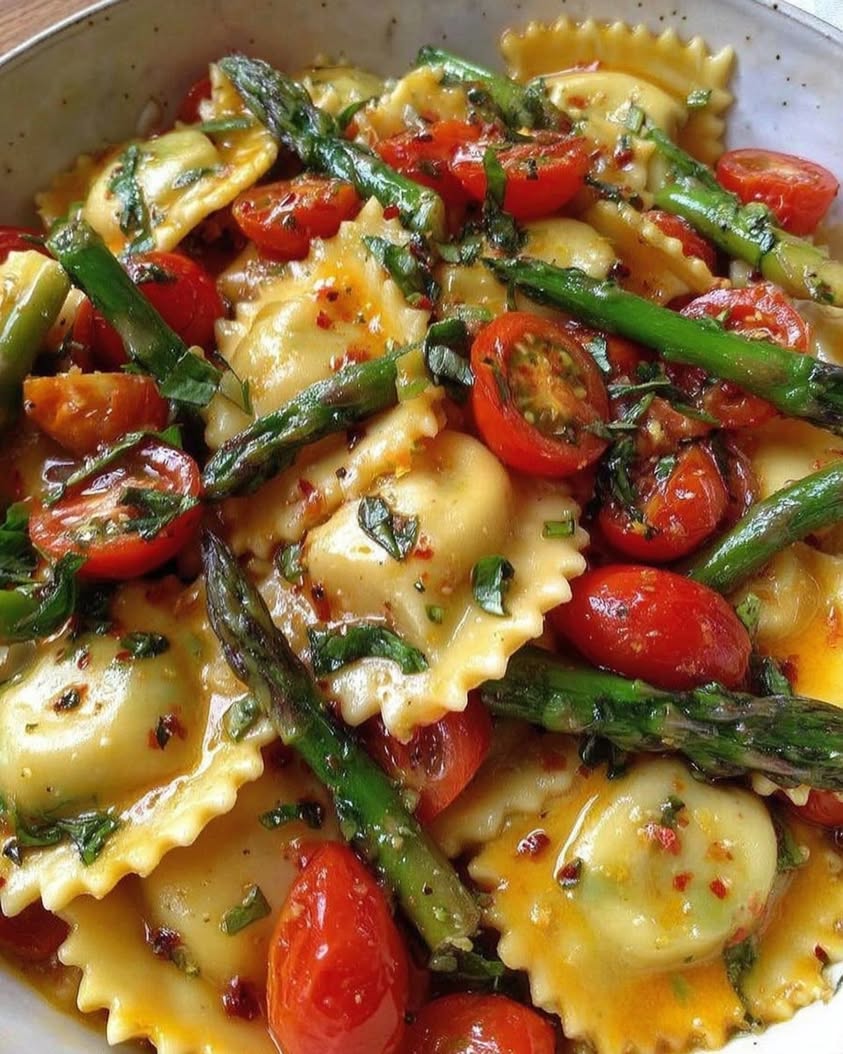
- Visual Appeal: The dish is a stunning composition of colors. The bright green asparagus spears are a beautiful contrast against the deep red of the cherry tomatoes and the pale, golden hue of the cheese ravioli. A scattering of fresh green herbs and a final shaving of Parmesan create an elegant, rustic presentation.
- Skill Level Needed: This recipe is exceptionally beginner-friendly. The steps are straightforward and require no advanced cooking techniques like making fresh pasta or a complex sauce. If you can boil water and saute vegetables, you can master this dish on your first try.
- Special Equipment: You need very little equipment. A large pot for boiling pasta, a large skillet or saute pan, a sharp knife, and a cutting board are all that is required. No special gadgets or kitchen tools are necessary for this simple preparation.
Recipe Overview
- Difficulty Level: We have classified this as an Easy recipe for several reasons. First, it uses store-bought ravioli, which eliminates the most time-consuming and technically challenging step of pasta making. Second, the sauce is a simple saute, not a complicated emulsion or reduction. Finally, the entire process is quick and involves minimal multitasking, making it perfect for a low-stress cooking experience.
- Category: This dish fits perfectly into the categories of a main course, a quick dinner, and a spring-inspired meal. It is substantial enough to serve as a complete entree but light and vegetable-forward, making it ideal for a weeknight meal when you want something satisfying but not heavy. It also works beautifully as a hearty lunch.
- Cuisine: While ravioli is a classic Italian staple, this particular preparation draws heavily on the principles of modern Italian-American cooking. The use of fresh, seasonal vegetables, high-quality olive oil, and aromatic herbs is a cornerstone of Italian culinary tradition. However, the quick, one-pan sauce approach has a more practical, American weeknight dinner feel.
- Cost: This dish is very economical. The primary costs come from the ravioli and the fresh produce. A good-quality, refrigerated or frozen cheese ravioli is very affordable. Seasonal asparagus and cherry tomatoes are typically inexpensive, especially in the spring and summer. Garlic, olive oil, and herbs are pantry staples that cost very little per serving. Overall, this meal costs a fraction of what you would pay at a restaurant.
- Season: The best season for this recipe is undoubtedly spring, from April through June. This is when asparagus is at its peak season, offering the most tender texture and robust flavor. Cherry tomatoes also start to become sweeter and more plentiful during the late spring. The dish embodies the fresh, bright flavors we crave after a long winter.
- Occasion: This dish is versatile enough for both casual and slightly more special occasions. It makes a wonderful, quick weeknight dinner that the whole family will enjoy. It is also elegant enough to serve to guests at a casual dinner party. Pair it with a glass of crisp white wine, and it instantly feels like a special meal without requiring hours in the kitchen.
Why You Will Love This Recipe
The taste and texture appeal of this Quick and Easy Ravioli with Tomatoes, Asparagus, and Herbs is undeniable. The combination of rich, cheese-filled pasta with the bright, fresh vegetables creates a perfect harmony of flavors. Each bite offers a different experience, from the creamy center of a ravioli to the tender snap of an asparagus spear. The simple garlic and herb sauce allows the quality of the ingredients to shine, making the meal feel light and clean despite its comforting nature. Consequently, this dish satisfies both the craving for a hearty pasta and a fresh, vegetable-forward meal.
The convenience and preparation benefits are a major part of this recipe’s appeal. This meal is ready from start to finish in under thirty minutes, making it an absolute champion for busy weeknights. There is very little active cooking time involved. While the water boils for the ravioli, you can chop the vegetables. Then, while the ravioli cooks, you can saute the vegetables in the same amount of time. This efficiency reduces stress and cleanup, allowing you to enjoy a delicious, homemade meal without spending your entire evening in the kitchen.
Nutritionally, this dish offers a fantastic balance. The cheese ravioli provides complex carbohydrates for energy and protein from the cheese and eggs. The asparagus is a powerhouse of vitamins K, A, C, and folate, along with fiber and antioxidants. Cherry tomatoes add additional vitamin C and the powerful antioxidant lycopene. The olive oil contributes healthy monounsaturated fats. Therefore, it is a well-rounded meal that provides sustained energy, supports immune function, and includes a generous serving of vegetables, making it a guilt-free indulgence.
This dish also has high social and entertaining value. It looks and tastes impressively gourmet, yet it is incredibly simple to prepare. This makes it a perfect option for hosting a small dinner party without being stuck in the kitchen. You can easily double the recipe to serve a larger group. The fact that it comes together so quickly means you can spend more time with your guests and less time fussing over the stove. Furthermore, it pairs beautifully with a simple salad and a good bottle of wine, creating an effortless but memorable meal.
Finally, the cost-effectiveness and accessibility of this recipe are key selling points. The ingredients are all readily available at any grocery store. There are no exotic items or expensive cuts of meat. The use of store-bought ravioli keeps the cost low while still delivering a high-quality result. This makes it a budget-friendly way to eat a delicious, satisfying, and nutritious meal. You are getting a meal that feels expensive and complex for a fraction of the price and effort, which is always a winning combination.
Historical Background and Cultural Significance
Ravioli is a type of stuffed pasta with a long and storied history that dates back to the Middle Ages. The name itself is believed to derive from the Italian word “riavvolgere,” meaning “to wrap.” The earliest known mentions of ravioli appear in 14th-century manuscripts from the Veneto region of Italy. Originally, these filled pasta parcels were a way to use up leftover meats and vegetables, encasing them in a simple dough to create a filling and economical meal. This tradition of resourcefulness and creativity is a core part of Italian peasant cooking.
The cultural importance of ravioli is immense, particularly in Italian cuisine. It is a dish that is deeply associated with family, tradition, and regional identity. Different regions of Italy have their own specific fillings and shapes, from the large, semicircular “ravioli di ricotta e spinaci” of Tuscany to the smaller, square “ravioli alla piemontese” of Piedmont. Many families pass down their own unique ravioli recipes for generations. It is a staple of Sunday dinners, festive holidays, and important celebrations, representing comfort, abundance, and the love of home cooking.
The evolution of this recipe from its traditional roots to the modern version is a story of adaptation and convenience. Classic ravioli making is a labor-intensive process involving making pasta dough from scratch, preparing a complex filling, and folding each individual piece by hand. However, with the advent of commercial pasta production, high-quality store-bought ravioli became widely available. This allowed home cooks to enjoy the essence of the dish without the hours of work. Subsequently, the sauce has also evolved, moving away from heavy, slow-simmered meat sauces to lighter, quicker preparations that showcase the fresh flavors of seasonal vegetables.
Regional variations of this dish are abundant. In Southern Italy, you might find ravioli served in a simple tomato sauce with fresh basil. In the north, a butter and sage sauce is a classic pairing. This specific recipe, with its focus on spring vegetables like asparagus and tomatoes, is a contemporary take that reflects a modern, health-conscious approach to Italian cooking. It is a variation that celebrates the seasonality of ingredients and the desire for a meal that is both quick and incredibly flavorful. This dish, therefore, is a testament to how traditional foods can be reimagined to fit a modern lifestyle.
Ingredient Deep Dive
Ravioli: The cultural significance of ravioli as a celebratory yet humble food is profound. It transforms simple pantry ingredients into a luxurious meal. Nutritionally, cheese ravioli offers a good source of protein and carbohydrates, providing a solid energy base. When selecting ravioli, look for options in the refrigerated section that have a short list of ingredients, preferably with whole milk ricotta and real eggs. Avoid those with a long list of preservatives. For storage, keep it refrigerated and use it by the sell-by date. A great substitution is using fresh tortellini or even small, filled pasta like agnolotti. For a gluten-free option, many stores now carry excellent gluten-free ravioli.
Asparagus: Asparagus has been cultivated for over 2,000 years, prized by the ancient Greeks and Romans for its unique flavor and medicinal properties. It is a nutritional powerhouse, packed with vitamins K, A, and C, as well as folate and fiber, which are great for bone health and digestion. For selection, choose spears that are firm, bright green, and have tightly closed tips. Thinner spears are more tender and cook faster. Store them upright in a glass of water in the refrigerator, like fresh flowers, to keep them crisp. If you cannot find asparagus, green beans or sugar snap peas make excellent substitutes that provide a similar fresh, crisp texture.
Cherry Tomatoes: Cherry tomatoes are a relatively modern variety, developed for their sweetness and uniform size. They are incredibly versatile and beloved for their ability to burst with flavor. Rich in lycopene, a powerful antioxidant, they also provide vitamins A and C. For selection, look for firm, plump tomatoes that are deeply colored and have a sweet, fruity smell. Store them at room temperature for the best flavor, as refrigeration can make them mealy. If you only have larger tomatoes, dice them into chunks. A can of good-quality diced tomatoes can also work in a pinch, though the texture will be different.
Garlic: Garlic is one of the oldest cultivated plants in the world and a cornerstone of countless cuisines. It has been revered for both its culinary and medicinal properties, including its ability to boost the immune system. When selecting garlic, choose heads that are firm and heavy for their size with tight, papery skin. Avoid any that are soft or sprouting. Store it in a cool, dark, and well-ventilated place. Do not refrigerate it, as that can cause it to sprout. For substitutions, a shallot or a small amount of asafoetida powder can provide a similar savory depth, though the flavor profile will be distinctly different.
Fresh Herbs (Basil and Parsley): Basil is a staple of Italian cooking, symbolizing love and good luck, while parsley is one of the most widely used herbs globally, known for its ability to freshen breath and add a bright, clean flavor. Both are rich in vitamins A, C, and K. For selection, look for vibrant, unwilted leaves with no signs of yellowing or black spots. Store them like a bouquet: trim the stems and place them in a glass of water, loosely covered with a plastic bag, in the refrigerator. dried herbs can be used in a pinch, but fresh herbs are non-negotiable for the best flavor in this recipe.
Common Mistakes to Avoid
- Overcooking the ravioli until it becomes mushy and falls apart. Follow the package directions and test for doneness a minute early, as it will continue to cook slightly in the hot sauce.
- Overcooking the asparagus until it is limp and lifeless. You want it to retain a vibrant green color and a tender-crisp bite, which usually takes just 3-4 minutes of sauteing.
- Not draining the ravioli well, which can make the sauce watery and dilute the flavors. Shake the colander well and let the pasta sit for a moment before adding it to the pan.
- Adding the garlic to the pan when the oil is too hot, causing it to burn and become bitter. Add the minced garlic to the pan after the oil is warm, not smoking, and cook it just until fragrant.
- Using low-quality olive oil. Since the sauce is so simple, the olive oil is a major flavor player. Use a good extra virgin olive oil for the best taste.
- Forgetting to salt the pasta water. This is your first and most important chance to season the pasta itself. The water should taste like the sea.
- Adding all the ravioli to the pan at once without stirring. This can cause them to stick together. Gently stir them immediately after adding them to the boiling water.
- Not having all your ingredients prepped before you start cooking. The cooking process is very fast, so you will not have time to chop vegetables once the water is boiling.
- Using dried herbs instead of fresh ones. Dried herbs can work, but they have a significantly different, more concentrated flavor that can be overpowering in this light dish.
- Underseasoning the final dish. Always taste the finished pasta and adjust the salt, pepper, and even a squeeze of lemon juice to brighten the flavors before serving.
Essential Techniques
How to Cook Ravioli Properly: This technique is the foundation of the dish. It is important because overcooked ravioli turns into a mushy mess, while undercooked ravioli is doughy and unappetizing. To master it, bring a large pot of generously salted water to a rolling boil. Gently slide the ravioli into the water, stirring immediately to prevent sticking. Cook according to package directions, but begin checking for doneness one to two minutes early. The ravioli should be tender but still firm to the bite, puffed up, and floating to the surface. A key visual cue is that the edges of the pasta will look translucent. Drain them gently in a colander, reserving a small cup of the starchy pasta water to help bind the sauce.
How to Saute Asparagus and Tomatoes: This technique builds the core of the sauce. It is important because it concentrates the flavors of the vegetables while maintaining their distinct textures. To master it, heat your olive oil in a large skillet over medium-high heat. Add the asparagus pieces first and cook for about 2 minutes, allowing them to get bright green and slightly charred. Then, add the cherry tomatoes. Cook for another 2-3 minutes, letting them soften and start to blister. The tomatoes should just begin to burst and release their juices. A common pitfall is overcrowding the pan, which steams the vegetables instead of sauteing them. The visual cue for success is the start of golden-brown spots on the asparagus and the tomatoes looking wrinkled and glossy.
How to Temper Garlic: Tempering garlic is a gentle cooking method that unlocks its sweet, nutty flavor rather than its harsh, raw bite. It is important because burnt garlic is one of the most unpleasant flavors in cooking. To master it, first, make sure your skillet is not too hot when you add the garlic. After the tomatoes and asparagus have cooked for a bit, push them to the side of the pan, reduce the heat to medium-low, and add a little more oil if needed. Add the minced garlic and stir it constantly for about 30 seconds. It should become fragrant and just barely start to color. The visual cue is a very light golden hue on the garlic pieces. Immediately toss the vegetables back in or add the pasta to stop the cooking process. This prevents any risk of burning.
How to Combine and Sauce the Pasta: This final technique is what brings all the elements together into a cohesive dish. It is important because a poorly combined dish will have uneven flavor distribution and a dry or runny texture. To master it, add the drained ravioli directly to the skillet with the sauteed vegetables and garlic. Toss everything together very gently using tongs or a large spoon to avoid breaking the delicate ravioli. Add a splash of the reserved starchy pasta water (about 1/4 cup) to help create a light sauce that clings to the pasta and vegetables. The starchy water emulsifies the olive oil and vegetable juices. A common pitfall is adding too much water, making the dish soupy. The visual cue for success is a glossy, lightly coated look where the sauce just clings to the pasta.
Pro Tips for Perfect Ravioli with Tomatoes, Asparagus, and Herbs
Use a large enough skillet to accommodate all the ravioli and vegetables without overcrowding them. A pan that is too small will cause the vegetables to steam instead of saute and will make it difficult to toss the pasta.
Do not skip the step of reserving the pasta water. This starchy water is the secret ingredient for creating a silky, cohesive sauce that binds the ravioli and vegetables together without needing a heavy cream or butter base.
Cut your asparagus spears on a sharp diagonal for both aesthetic appeal and more surface area to cook. This cut also makes them easier to pick up with your fork and creates a more elegant look on the plate.
Add the fresh herbs at the very end, after you have tossed everything together and taken the pan off the heat. This preserves their bright, fresh flavor and color. If you add them too early, they will wilt and lose their character.
If your cherry tomatoes are not bursting on their own, you can give them a gentle press with the back of a spatula to encourage them to release their juices. This helps create a more flavorful sauce.
For an extra layer of flavor, finish the dish with a generous grating of high-quality Parmesan cheese or a sprinkle of red pepper flakes for a touch of heat. This final touch adds a nutty, savory depth or a gentle kick of spice.
Use tongs to serve the ravioli. This allows you to grab a good mix of pasta and vegetables in each serving, ensuring every plate is perfectly balanced. A slotted spoon might leave the vegetables behind in the pan.
Variations and Adaptations
Regional variations can be a fun way to explore this dish. For a Southern Italian twist, add a handful of pitted black olives and a pinch of dried oregano along with the tomatoes. For a taste of the Pacific Northwest, substitute the cherry tomatoes for sun-dried tomatoes and add a teaspoon of fresh thyme. This changes the sweet acidity of the dish to a more intense, savory richness. These small substitutions instantly transport the flavor profile to a different culinary region.
Seasonal adaptations are essential for year-round enjoyment. In the summer, swap the asparagus for zucchini ribbons or yellow squash and use sweet corn kernels for a truly fresh, garden-inspired meal. In the fall, try using chopped butternut squash or pumpkin, roasted until tender, and finish the dish with a sprinkle of crispy sage leaves. For winter, saute sliced cremini mushrooms and a handful of baby spinach, adding a little more richness to the sauce to combat the cold weather blues.
Dietary modifications make this dish accessible to many. For a gluten-free version, simply use your favorite brand of gluten-free ravioli, available at most major grocery stores. To make it dairy-free, choose a dairy-free ravioli, which is often made with cashew cheese or tofu, and skip the Parmesan cheese garnish entirely. For a vegan adaptation, use a vegan ravioli and ensure your pasta water is the binding agent instead of any cheese. For a lower-carb option, use zucchini noodles or spaghetti squash in place of the ravioli, though the texture will be different.
Flavor variations are limited only by your imagination. Add a pinch of red pepper flakes for a spicy kick, or some fresh lemon zest for extra brightness. A tablespoon of capers or chopped anchovies will add a deep umami flavor. For a creamier sauce, stir in a splash of heavy cream or a dollop of creme fraiche at the very end. You can also experiment with different herb combinations, such as thyme, rosemary, or chives, to create unique flavor profiles.
Texture modifications can change the entire feel of the meal. For a crispy texture, you can pan-fry the ravioli in a little butter until golden brown before adding the sauce and vegetables. For a creamier texture, finish the sauce with a swirl of mascarpone cheese. For a crunchier element, toast some pine nuts or panko breadcrumbs in a dry pan and sprinkle them on top just before serving. These simple additions provide a wonderful contrast to the soft ravioli.
Presentation alternatives can make this dish feel brand new. Serve the ravioli and vegetables over a bed of fresh arugula for a peppery bite and a stunning color contrast. You can also serve it in a shallow bowl, creating a beautiful, rustic look. For an appetizer portion, use smaller ravioli and serve it in individual ramekins or small, colorful bowls. Drizzling a little basil oil or balsamic glaze on the plate just before serving adds an artistic touch.
Serving and Presentation Guide
Plating techniques for this dish should be focused on balance and simplicity. The best method is to use a pair of tongs to gently twist a portion of ravioli and vegetables, creating a small, elegant mound in the center of a shallow bowl. This technique ensures an even distribution of ingredients and creates height, which is visually appealing. Alternatively, you can use a large slotted spoon to create a more rustic, scattered arrangement. The goal is to show off the beautiful colors and textures of the components.
Garnishing ideas can elevate the dish from simple to spectacular. A generous, final shaving of high-quality Parmigiano-Reggiano cheese is a classic choice. A light drizzle of extra-virgin olive oil right before serving adds a fresh, peppery note. A few whole fresh basil leaves and a sprinkle of fresh parsley add a pop of vibrant green. For a more adventurous garnish, try crispy fried capers or a pinch of flaky sea salt, like Maldon, which adds a delightful crunch and burst of saltiness.
Traditional accompaniments for this dish are few but perfect. A crisp green salad with a simple lemon vinaigrette is the ideal side dish, cutting through the richness of the pasta. Crusty, warm bread is also a must-have to mop up any remaining delicious sauce from the plate. A glass of chilled Pinot Grigio or Sauvignon Blanc is the traditional wine pairing, as its high acidity and light body complement the fresh vegetables and light sauce beautifully.
Modern serving suggestions include pairing this dish with a side of roasted vegetables like broccoli rabe or bell peppers. You can also serve it as part of a larger Italian-themed meal, following an antipasto platter and preceding a light main course of chicken or fish. For a unique twist, use this ravioli as a filling for a larger, baked pasta dish, layering it with bechamel sauce and more cheese. This turns a simple meal into a decadent casserole.
Temperature considerations are important for optimal eating experience. This dish is best served hot, immediately after it is combined. The ravioli should be piping hot, and the vegetables should be just cooked through. As it sits, the sauce will be absorbed, and the pasta can become slightly sticky. If you are making it ahead of time, it is better to slightly undercook the ravioli and finish it in the sauce just before serving. Reheating leftovers can be done gently in a skillet with a splash of water or broth.
Portion control tips ensure everyone gets a satisfying meal. For a main course serving, plan for about 8 to 10 ounces of ravioli per person. This is usually about 12 to 15 individual pieces, depending on their size. For a smaller, lunch-sized portion, aim for about 6 to 8 ounces. When serving with a large salad or other sides, you can reduce the pasta portion slightly. The vegetable content of this dish helps fill you up, so you may find you need less pasta than you think.
Wine and Beverage Pairing
Wine pairings for this dish are a wonderful way to enhance the meal. A crisp, unoaked white wine is the classic choice. Sauvignon Blanc, with its high acidity and notes of grass and citrus, perfectly complements the fresh asparagus and herbs. Another great option is a Pinot Grigio, which is light-bodied and clean. For a slightly richer white, a Vermentino from Italy offers a pleasant minerality. If you prefer red wine, a light-bodied, high-acid red like a young Chianti or a Pinot Noir is excellent. Its lower tannins and red fruit flavors will not overpower the delicate pasta and vegetables.
Non-alcoholic alternatives offer a diverse range of flavors. A very dry, non-alcoholic sparkling wine or a high-quality Italian soda with a splash of lime juice is a fantastic choice. The bubbles and acidity provide the same palate-cleansing effect as wine. A crisp, unsweetened iced tea made with lemon and a sprig of fresh mint is another refreshing option. For a more savory non-alcoholic drink, try a shrub, which is a drinking vinegar made with fruit, herbs, and sugar, mixed with sparkling water. A strawberry-balsamic shrub would be a phenomenal pairing.
Coffee or tea pairings are less traditional but can work for certain occasions. A light, floral green tea, such as a jasmine or sencha, would be an excellent choice for a lunch serving. Its delicate flavors will not compete with the dish. A very mild, smooth white tea could also work. For dinner, a light-bodied coffee, like a single-origin Ethiopian with floral notes, can be served after the meal to finish the evening. Avoid heavily roasted or flavored coffees and teas, as they will clash with the dish’s subtle flavors.
Temperature considerations are key for any beverage pairing. White wines should be served well-chilled, between 45 and 50 degrees Fahrenheit. Red wines should be served slightly cool, around 55 to 60 degrees Fahrenheit, to keep their acidity bright. Non-alcoholic drinks should be served very cold or over ice, especially in warmer weather. Tea should be served hot or iced, depending on your preference. The goal is to have the beverage refresh your palate and not weigh down the experience of the light, fresh pasta dish.
Serving suggestions for beverages include pouring the wine into the correct glassware. Use a large-bowled white wine glass for Sauvignon Blanc to allow its aromas to open up. Use a smaller, tulip-shaped glass for Pinot Noir to concentrate its delicate fruit notes. For non-alcoholic options, serve in a highball glass with plenty of ice. Always present the wine bottle or drink pitcher at the table to make the experience feel more special and to allow guests to help themselves.
Storage and Shelf Life
Storage methods for leftover ravioli are crucial to maintain its quality. You should store the cooled leftovers in an airtight container. The key is to minimize air exposure, which causes the pasta to dry out and become tough. Separate the ravioli from any excess sauce if possible, though this is not always practical. You can also lightly coat the pasta in a little olive oil before storing to prevent it from sticking together, but this is not strictly necessary.
Temperature requirements for food safety are paramount. Any leftover cooked pasta must be refrigerated within two hours of cooking. The internal temperature of the food should drop to below 40 degrees Fahrenheit as quickly as possible. Do not leave the ravioli sitting out on the counter for more than two hours total. When storing in the refrigerator, place it on a shelf rather than in the door, as the door experiences more temperature fluctuations. A temperature-controlled drawer is ideal.
Container recommendations include using a glass or BPA-free plastic container with a tight-fitting lid. Glass is generally preferred because it does not absorb odors or stains and can be safely reheated in the microwave or oven. If using plastic, ensure it is microwave-safe if you plan to reheat it directly in the container. Avoid using metal containers for storage, as they can react with the acidic tomato sauce and affect the flavor. You can also use a reusable silicone food storage bag, pressing out as much air as possible before sealing.
Signs of spoilage are important to recognize for food safety. If the ravioli develops a sour or off-putting smell, this is the first sign of spoilage. Visually, look for any signs of mold, which can appear as fuzzy spots of green, white, or black. A slimy texture on the pasta or vegetables is also a clear indicator that the dish has gone bad. If the sauce has separated and looks watery or has an unusual color, it is best to discard the leftovers. When in doubt, always throw it out to avoid the risk of foodborne illness.
Reheating instructions are designed to restore the dish’s original texture and flavor as much as possible. The best method is in a skillet on the stovetop. Add a splash of water, broth, or a little olive oil to the pan and heat it over medium-low heat. Add the leftovers and toss gently until heated through. This method helps rehydrate the pasta and reabsorb the sauce. You can also reheat it in the microwave, but this often leads to a more rubbery texture. If using a microwave, cover the bowl with a damp paper towel and heat in 30-second intervals, stirring in between.
Freezing guidelines are not highly recommended for this particular dish. The texture of the cooked ravioli and the fresh vegetables will suffer significantly upon thawing. The ravioli can become mushy, and the asparagus will turn limp and watery. If you absolutely must freeze it, do so in a single layer on a baking sheet first, then transfer the frozen pieces to a freezer-safe bag. Freeze for up to one month. Thaw it overnight in the refrigerator and reheat it very gently in a skillet with extra liquid.
Make-Ahead Strategies
Prep timeline is a great way to expedite the cooking process. You can do all your vegetable prep up to 24 hours in advance. Wash and dry the asparagus and cherry tomatoes. Trim the woody ends from the asparagus and cut them into 1.5-inch pieces. Halve the cherry tomatoes. Mince the garlic. Store each prepared ingredient separately in airtight containers in the refrigerator. Chop the fresh herbs just before using, as they can wilt and lose their flavor if chopped too far in advance.
Storage between steps is critical for maintaining quality. You can also make the sauce base ahead of time. Saute the asparagus and tomatoes in olive oil with garlic, but do not cook them all the way through. They should be just slightly underdone. Let this mixture cool completely, then store it in an airtight container in the refrigerator for up to two days. When you are ready to serve, you will just need to reheat the sauce base and cook the ravioli fresh.
Quality impact assessment is important when planning ahead. Pre-cooking the ravioli is not recommended, as it will become overly soft and will break apart easily when reheated. The ravioli is best cooked fresh, just before serving. The sauce base, however, holds up quite well. The flavors actually meld together nicely overnight. The asparagus will lose some of its crispness but will still be very enjoyable. The tomatoes will release more of their juices, creating a slightly saucier dish.
Assembly tips for a make-ahead meal are straightforward. On the day of serving, bring a large pot of salted water to a boil. Cook the ravioli according to the package directions. While the ravioli is cooking, place your pre-made sauce base in a large skillet over medium heat to warm it through. Add a splash of the starchy pasta water to the sauce to loosen it up. Once the ravioli is done, drain it and toss it gently with the hot sauce. Finish with the fresh herbs and Parmesan cheese right before serving.
Reheating guidelines for a pre-made sauce are simple. The best way to reheat it is on the stovet Print
Ravioli with Tomatoes, Asparagus, Garlic, and Herbs
- Total Time: 25 minutes
- Yield: 4
Description
A light and flavorful pasta dish featuring cheese ravioli, fresh asparagus, cherry tomatoes, and aromatic herbs sautéed in garlic olive oil.
Ingredients
- 1 pound cheese ravioli (fresh or frozen)
- 1 bunch asparagus, trimmed and cut into 2-inch pieces
- 2 cups cherry tomatoes, halved
- 4 cloves garlic, minced
- 3 tablespoons olive oil
- 1/4 cup fresh basil, chopped
- 2 tablespoons fresh parsley, chopped
- 1/2 teaspoon dried oregano
- Salt and black pepper to taste
- 1/4 cup grated Parmesan cheese (optional)
Instructions
- Bring a large pot of salted water to a boil. Cook ravioli according to package directions until al dente. Drain, reserving 1/2 cup pasta water.
- While ravioli cooks, heat olive oil in a large skillet over medium heat. Add asparagus and cook for 3-4 minutes, until tender-crisp.
- Add cherry tomatoes and minced garlic to the skillet. Cook for 2-3 minutes, stirring occasionally, until tomatoes soften slightly.
- Stir in fresh basil, parsley, and dried oregano. Season with salt and pepper.
- Add cooked ravioli to the skillet along with a splash of reserved pasta water. Toss gently to combine and heat through, about 1 minute.
- Serve immediately, topped with grated Parmesan if desired.
Notes
You can customize the seasonings to taste. For extra richness, add a pat of butter when tossing the ravioli.
- Prep Time: 10 minutes
- Cook Time: 15 minutes
- Method: Main
- Cuisine: Italian-American