Vibrant Roasted Beets and Carrots with Creamy Burrata: A Perfect Salad
Imagine the scene: a cozy autumn dinner or a bright spring lunch where the table glows with gem-like colors. You place a platter of Vibrant Roasted Beets and Carrots with Creamy Burrata in the center, and everyone leans in. This salad is more than a side dish. It is a statement. The earthy sweetness of roasted roots meets the lush, milky decadence of burrata in every single bite. You get the caramelized edges from the oven, the tender interiors, and then that cold, creamy center that brings everything together.
I have made this Vibrant Roasted Beets and Carrots with Creamy Burrata salad for family gatherings and quiet weeknights alike. It never fails to impress. The process is wonderfully forgiving. You can prep the vegetables ahead, roast them until they are perfectly tender, and then assemble the dish in minutes. Because the burrata acts as a luxurious sauce, you do not need a heavy dressing. A simple vinaigrette with good olive oil and lemon juice is all you require. This recipe celebrates simplicity done right.
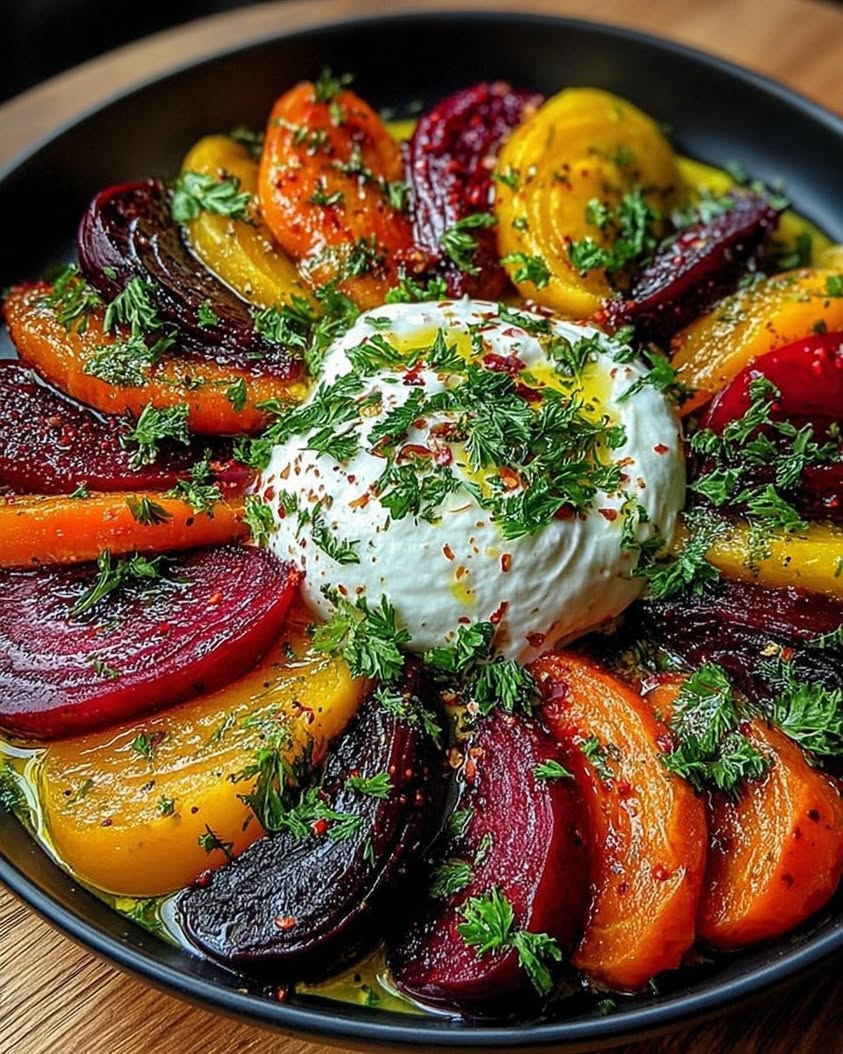
The visual appeal alone will win you over. The deep magenta of beets, the bright orange of carrots, and the stark white of burrata create a beautiful contrast. Fresh herbs like basil or parsley add green flecks, while toasted nuts or seeds provide a welcome crunch. Every forkful offers a different combination of flavors and textures. This Vibrant Roasted Beets and Carrots with Creamy Burrata salad is naturally gluten-free and easily adaptable for various dietary needs. It makes a perfect starter, a light main course, or a stunning side for roasted meats.
Quick Recipe Highlights
- Flavor Profile: You taste the sweet, earthy notes of the roasted roots first. Then the rich, mild, and milky burrata coats your palate. The tangy vinaigrette cuts through the richness, while a final sprinkle of sea salt and pepper brightens everything.
- Texture: You get the soft, tender, and slightly chewy texture of well-roasted beets and carrots. Silky, creamy burrata adds a luscious mouthfeel. Toasted walnuts or pepitas introduce a satisfying crunch, and fresh herbs bring a delicate, leafy element.
- Aroma: The roasting process fills your kitchen with a sweet and nutty fragrance. You smell the caramelizing natural sugars of the vegetables. The fresh basil or thyme adds a fragrant, herbal lift, and the balsamic vinegar provides a tangy, rich note.
- Visual Appeal: This salad is a feast for the eyes. The deep purple and red beets contrast beautifully with the orange carrots and the pure white burrata. A swirl of green pesto or a scattering of microgreens adds a final touch of elegance that looks professional.
- Skill Level Needed: This recipe is suitable for beginners. You only need basic vegetable peeling and chopping skills. The oven does most of the work. Assembling the final dish requires no special techniques, making it a confidence-building recipe for new cooks.
- Special Equipment: You need a sturdy baking sheet for roasting. Parchment paper makes cleanup easier. A sharp chef’s knife and a vegetable peeler are essential. A small whisk or a jar for shaking the vinaigrette is also helpful.
Recipe Overview
- Difficulty Level: I rate this recipe as Easy. Why? Because the steps are straightforward and forgiving. You do not need to monitor a complicated sauce or worry about precise timing for a delicate protein. The roasting process is hands-off, and the burrata requires no cooking. You just need to pay attention to cutting the vegetables into uniform sizes for even roasting.
- Category: This dish primarily fits into the salad category. However, it easily crosses over into side dishes, appetizers, or even a light vegetarian main course. You can serve it warm or at room temperature, which makes it incredibly versatile for different meal structures.
- Cuisine: While not tied to one specific cuisine, this recipe has strong roots in Italian-inspired cooking. Burrata is a classic Italian cheese, and the combination of roasted vegetables with fresh mozzarella is a staple in many Italian trattorias. The use of balsamic and olive oil further reinforces this Mediterranean influence.
- Cost: This recipe is relatively budget-friendly. Beets and carrots are some of the most affordable vegetables in the market. Burrata is slightly more expensive than regular mozzarella, but you only need one ball for four servings. The other ingredients like olive oil, vinegar, and herbs are pantry staples. You can expect to spend around 12 to 15 dollars for a full meal.
- Season: This Vibrant Roasted Beets and Carrots with Creamy Burrata salad is perfect for fall and winter. Root vegetables are at their peak during these cooler months, offering the sweetest flavor and best texture. That said, you can easily make it year-round with high-quality produce from the grocery store.
- Occasion: This dish shines at holiday dinners, such as Thanksgiving or Easter. It also works wonderfully for casual entertaining, potlucks, or a special weeknight treat. Because it looks so impressive, it is a great choice for date nights or dinner parties where you want to wow your guests without spending hours in the kitchen.
Why You’ll Love This Recipe
First, let us talk about taste and texture. The combination is simply irresistible. The roasting process concentrates the natural sugars in the beets and carrots, creating a deep, caramelized sweetness. This sweetness is perfectly balanced by the cool, rich, and slightly tangy burrata. You get a creamy mouthfeel that feels indulgent yet not heavy. The vinaigrette adds acidity, and the nuts provide a crunchy contrast. It is a symphony of flavors and textures that keeps you coming back for more.
Convenience is another major draw. This Vibrant Roasted Beets and Carrots with Creamy Burrata recipe requires only about 15 minutes of active prep time. The oven does the rest. While the vegetables roast, you can prepare the dressing, toast the nuts, or set the table. It is a perfect recipe for busy weeknights or for when you want to entertain without being trapped in the kitchen. You can also roast the vegetables a day ahead and store them in the refrigerator.
From a nutritional standpoint, this salad is a powerhouse. Beets are packed with fiber, folate, and manganese. They are also known for their high levels of nitrates, which can help improve blood flow and lower blood pressure. Carrots are an excellent source of beta-carotene, which your body converts to vitamin A for healthy vision and immune function. Burrata provides calcium and protein. This salad is a satisfying and well-balanced meal that nourishes your body.
Socially, this recipe is a winner. It is a beautiful dish that encourages sharing. You can place it in the center of the table and let everyone dig in. It is a conversation starter, as people are often impressed by how elegantly simple ingredients can come together. It works for casual family dinners and upscale gatherings alike. Because it is served at room temperature, you do not have to worry about timing everything perfectly.
Finally, this recipe is highly cost-effective. You are using inexpensive root vegetables that are available year-round. The burrata provides a luxurious feel without the high price tag of expensive cuts of meat or exotic seafood. Most of the ingredients, like olive oil and balsamic vinegar, are pantry staples you likely already have. This means you can create a restaurant-quality dish at home for a fraction of the cost. It is a smart and delicious investment in your next meal.
Historical Background and Cultural Significance
The origin story of the key ingredient, burrata, takes us to the Murgia region of southern Italy, specifically in the town of Andria, near Bari. It was first created in the early 20th century, around the 1920s. Local cheesemakers needed a way to use up the scraps of fresh mozzarella and cream that were leftover from production. They stretched the mozzarella curds into a pouch and filled it with soft stracciatella and fresh cream. Thus, burrata was born.
In Italian culture, dairy products hold a significant place. Mozzarella, ricotta, and provolone are staples, but burrata represents a special treat. It is often reserved for holidays, Sunday dinners, or special occasions. The word burrata actually means buttery in Italian, which perfectly describes its rich texture and flavor. It is a symbol of the resourcefulness and culinary creativity of the Italian people, turning simple ingredients into something extraordinarily luxurious.
The evolution of this specific recipe, combining roasted vegetables with creamy cheese, is a more modern invention. It draws from the Italian tradition of antipasti, where simple, high-quality ingredients are served together. The pairing of roasted beets and carrots with burrata gained popularity in upscale restaurants and food blogs in the late 2000s and early 2010s. Chefs and home cooks realized that the earthy sweetness of root vegetables perfectly complements the milky richness of the cheese.
Regional variations of this dish are fascinating. In the northern regions of Italy, you might find the roasted vegetables paired with richer, aged cheeses like Gorgonzola or taleggio. In the south, where burrata is from, the dish is often simpler, using olive oil, salt, and fresh herbs. In California, home cooks often add avocado for extra creaminess. In the Middle East, a similar combination uses roasted beets and labneh, a strained yogurt cheese. This demonstrates the universal appeal of creamy dairy paired with sweet, roasted roots.
Ingredient Deep Dive
Beets hold a special place in culinary history. They have been cultivated for thousands of years, originally for their greens, which were used as a leafy vegetable. The root we eat today was developed later, in the 16th century, in Germany and Italy. They are rich in folate, manganese, and potassium. When selecting beets, look for firm, smooth roots with no soft spots or wrinkles. The greens should be vibrant and not wilted. Store them in the refrigerator in a plastic bag for up to two weeks. Do not wash them until you are ready to use them.
Carrots are one of the most universally recognized vegetables. They were first cultivated in Persia, now Iran, over a thousand years ago. Originally, they were purple or white, and the orange carrot was developed much later by Dutch growers in the 16th century. Carrots are an excellent source of beta-carotene, fiber, and vitamin K1. Choose carrots that are firm, smooth, and bright in color. Avoid any that are cracked or have soft spots. Store them in the refrigerator in a plastic bag, separated from apples and bananas, which can make them bitter.
Burrata is the star of this dish. It is a fresh Italian cheese made from cow’s milk. The outer shell is solid mozzarella, while the inside contains stracciatella and cream. This gives it a unique, buttery texture. When buying burrata, look for it in the refrigerated section of well-stocked grocery stores or Italian markets. It is often sold in a container with liquid to keep it moist. Use it within a day or two of purchase for the best flavor and texture. It should be served at room temperature to maximize its creaminess.
High-quality extra virgin olive oil is crucial for the vinaigrette. It provides a fruity, peppery base that enhances all the other flavors. A good balsamic vinegar adds sweetness and acidity. Fresh herbs, like basil or thyme, bring a bright, aromatic note. Toasted nuts, such as walnuts or pine nuts, add a necessary crunch. Finally, a good flaky sea salt, like Maldon, is a wonderful finishing touch that adds texture and flavor bursts. Each component plays a specific role in building the perfect bite.
Common Mistakes to Avoid
- Not peeling the beets and carrots properly. If you leave the skin on, it can be tough and fibrous after roasting. Make sure to peel them completely for a tender texture.
- Cutting the vegetables into uneven sizes. This causes some pieces to burn while others remain undercooked. Aim for uniform 1-inch chunks for consistent roasting.
- Overcrowding the baking sheet. When the vegetables are too close together, they steam instead of roast. Use a large sheet pan and spread them in a single layer.
- Not using enough oil for roasting. The oil helps the vegetables caramelize and prevents them from drying out. Toss them well with at least two tablespoons of oil.
- Roasting the beets and carrots at too low a temperature. A lower temperature will make them mushy instead of caramelized. Roast at 400 degrees Fahrenheit for the best results.
- Adding the burrata to the salad while it is still cold. Cold burrata is firm and less creamy. Take it out of the refrigerator 30 minutes before serving.
- Overdressing the salad. You want just enough vinaigrette to coat the vegetables lightly. Too much dressing will make the burrata slide off and become soggy.
- Forgetting to season the burrata. A simple sprinkle of sea salt and black pepper on top of the cheese is essential. It elevates the flavor significantly.
- Skipping the final garnish of fresh herbs and nuts. These elements add color, flavor, and texture that complete the dish. Do not leave them out.
- Making the salad too far in advance. The vegetables will release moisture, and the burrata will become watery. Assemble the salad just before serving for the best presentation.
Essential Techniques
Roasting vegetables is the primary technique in this recipe. Mastering it is key to achieving that perfect caramelized exterior and tender interior. First, preheat your oven to 400 degrees Fahrenheit. This high temperature is crucial for browning. Then, cut your beets and carrots into uniform 1-inch chunks. Toss them thoroughly with olive oil, salt, and pepper. Spread them in a single layer on a parchment-lined baking sheet. Roast for 35 to 45 minutes, flipping them halfway through, until they are fork-tender and have golden-brown edges.
Making a simple vinaigrette is another important skill. A basic vinaigrette is a simple emulsion of oil and acid. In a small bowl, whisk together three parts olive oil with one part balsamic vinegar. Add a teaspoon of Dijon mustard to help emulsify the mixture and add flavor. Season with salt and pepper. The key is to whisk continuously as you slowly drizzle in the oil. This creates a stable, smooth dressing. Alternatively, you can shake all the ingredients in a jar with a tight-fitting lid.
Handling burrata correctly is crucial for the success of this dish. Burrata is delicate and should be treated with care. Remove it from the refrigerator about 30 minutes before serving to let it come to room temperature. This will make the interior creamy and spreadable. To serve, place the whole ball on top of the roasted vegetables. Alternatively, you can tear it gently into a few large pieces using your hands or two forks. This exposes the creamy center and makes it easier to eat.
Toasting nuts or seeds brings out their full flavor and adds a crucial crunchy texture. Place your chosen nuts, such as walnuts, pecans, or pumpkin seeds, in a dry skillet over medium-low heat. Watch them carefully and shake the pan frequently. They can burn very quickly. Toast for 3 to 5 minutes, until they become fragrant and slightly darker in color. Remove them from the pan immediately to stop the cooking process. Let them cool before using them as a garnish.
Pro Tips for Perfect Vibrant Roasted Beets and Carrots with Creamy Burrata
To prevent your hands from staining red when handling beets, wear disposable kitchen gloves. You can also rub your hands with a little bit of lemon juice before washing them. Another great tip is to use a silicone baking mat instead of parchment paper. It provides a non-stick surface and helps with even browning. For the best flavor, use a high-quality aged balsamic vinegar for the dressing. It has a thicker consistency and a sweeter, more complex taste.
Do not throw away the beet greens! They are edible and nutritious. You can sauté them with garlic and olive oil for a side dish, or add them to smoothies. You can also roast the beets and carrots on separate baking sheets if you want to cook them at different temperatures, though 400 degrees works well for both. For extra flavor, add a few sprigs of fresh thyme or rosemary to the baking sheet while the vegetables roast. The herbs infuse the oil and create a wonderful fragrance.
If you want a more intense flavor, you can finish the roasted vegetables with a drizzle of honey or maple syrup before serving. This adds a beautiful gloss and an extra layer of sweetness. You can also add a handful of arugula or baby spinach to the platter before adding the roasted vegetables. The greens will wilt slightly from the heat, adding a peppery contrast. When it comes to the burrata, do not be shy with the salt. A generous sprinkle of flaky sea salt on the cheese is essential.
For a more dramatic presentation, you can plate this salad on a large wooden board or a platter. Arrange the roasted vegetables in a single layer, then place the burrata in the center. Drizzle the vinaigrette over everything just before serving. You can also add a sprinkle of toasted pine nuts or pepitas for a nice crunch. Fresh basil leaves or microgreens make an excellent final touch. This method creates a visually stunning centerpiece that encourages sharing.
Variations and Adaptations
Regional variations of this dish are endless. In the Mediterranean, you might see the addition of marinated artichoke hearts, sun-dried tomatoes, and Kalamata olives. In the Middle East, roasted beets and carrots are often paired with tahini dressing and sumac. In the American South, you could add a touch of smoked paprika or cumin to the roasting vegetables for a smoky flavor. Each variation offers a new and exciting twist on the core concept of sweet roasted roots and creamy cheese.
Seasonal adaptations are also fun and practical. In the spring, you can substitute the carrots for roasted asparagus or fava beans. In the summer, you could use grilled zucchini, bell peppers, and cherry tomatoes instead of roasted root vegetables. In the fall, add cubes of roasted butternut squash or sweet potato alongside the beets and carrots. In the winter, roasted parsnips and turnips make excellent additions. This recipe is highly flexible and can be adapted to what is fresh and available.
Dietary modifications are easy to implement. For a dairy-free version, simply substitute the burrata with a high-quality vegan mozzarella or a creamy cashew cheese. The flavor and texture will be different, but still delicious. For a vegan version, you can also use a tahini-lemon dressing instead of the vinaigrette to add creaminess. To make it nut-free, simply omit the walnuts and use pumpkin seeds or sunflower seeds for crunch instead. This recipe is naturally gluten-free, so no changes are needed there.
Flavor variations are a wonderful way to keep the recipe exciting. Try roasting the vegetables with balsamic vinegar and honey for a glaze. Add a pinch of red pepper flakes for a subtle heat. Use smoked salt instead of regular salt for a deeper flavor. Swap the basil for fresh mint or dill, which pair beautifully with beets. You can also add a sprinkle of crumbled feta or goat cheese alongside the burrata for an extra tangy, salty kick. The possibilities are truly endless.
Serving and Presentation Guide
Plating this Vibrant Roasted Beets and Carrots with Creamy Burrata salad is an opportunity to be artistic. Start with a large, flat platter or a wide, shallow bowl. This provides a beautiful canvas. Spread the roasted vegetables in a single, even layer across the bottom. Do not pile them too high. Then, gently nestle the burrata in the center, or tear it into a few large pieces and place them on top of the vegetables. The creamy white cheese should be the visual focal point.
Garnishing is the final step that elevates the presentation. Drizzle the balsamic vinaigrette artfully over the entire dish. Be generous but not excessive. Then, sprinkle the toasted walnuts or pepitas over the top. Add a generous pinch of flaky sea salt and a few cracks of black pepper. Finish with fresh herbs, such as small basil leaves or a scattering of chopped chives. A few edible flowers, like nasturtiums or borage, can add an extra pop of color for special occasions.
Traditional accompaniments for this dish include crusty bread or crostini, which are perfect for soaking up the creamy burrata and the herby dressing. Grilled or roasted chicken, fish, or steak makes a wonderful addition for a heartier meal. The salad also pairs beautifully with a side of quinoa or farro for a complete vegetarian meal. In terms of temperature, serve the vegetables warm or at room temperature. The burrata should be at room temperature, and the vinaigrette should be at room temperature as well.
Modern serving suggestions are chic and simple. For a more casual meal, you can serve this salad in individual bowls or on small plates. It works wonderfully as a first course for a dinner party. For a buffet-style gathering, place the entire platter on the table. You can also deconstruct the dish for a more interactive experience. Serve the roasted vegetables, burrata, vinaigrette, and garnishes separately and let guests assemble their own plates. Portion control is easy, with about one cup of vegetables and a quarter of the burrata per person.
Wine and Beverage Pairing
Wine pairing for this dish is a delight. The earthy sweetness of the beets and carrots, combined with the rich creaminess of the burrata, calls for a wine that can complement both. A great choice is a dry rosé, especially one from Provence. It has enough acidity to cut through the richness and a subtle fruitiness that matches the vegetables. Another excellent option is a Pinot Grigio from Italy, which is light, crisp, and unoaked. It will not overpower the delicate flavors of the salad.
For red wine lovers, a light-bodied red is best. A Beaujolais from France, made from the Gamay grape, is a wonderful choice. It is fruity, low in tannins, and has a bright acidity. A Pinot Noir from Oregon or California also works well, especially a cooler-climate style. Stick to wines that are not too heavy or tannic, as these can clash with the creamy cheese. A sparkling wine, like a Prosecco, is also a fantastic option. Its bubbles and acidity cleanse the palate beautifully.
Non-alcoholic alternatives are equally satisfying. A good quality sparkling water with a splash of lemon or lime is refreshing and cleansing. A homemade iced tea, such as hibiscus or mint tea, has a floral and slightly tart flavor that complements the dish. You can also try a shrub, which is a drinking vinegar mixed with soda water. The tangy, fruity flavor is a perfect match for the roasted vegetables and creamy cheese. A simple apple cider is another great fall pairing.
Temperature considerations are important for beverages. White wines, rosés, and sparkling wines should be served well-chilled, around 45 to 50 degrees Fahrenheit. Red wines like Beaujolais should be served slightly cool, around 55 degrees Fahrenheit. Non-alcoholic drinks like iced tea or sparkling water should also be cold. Serving your beverage at the correct temperature ensures that it refreshes the palate and does not overwhelm the food. A well-chosen drink makes the entire dining experience more enjoyable.
Storage and Shelf Life
Proper storage is key to preserving the quality of this salad. The roasted vegetables can be stored separately from the burrata and vinaigrette for the best results. Place the cooled, roasted beets and carrots in an airtight container and store them in the refrigerator. They will last for 4 to 5 days. The burrata should be kept in its original liquid in the refrigerator and used within 1 to 2 days of opening. The vinaigrette can be stored in a sealed jar in the refrigerator for up to a week.
Temperature requirements are simple. All components should be refrigerated at 40 degrees Fahrenheit or below. Do not leave the assembled salad at room temperature for more than two hours, as the dairy can spoil quickly. If you are serving the salad outdoors on a warm day, keep it in the shade and consider using a chilled platter. For the best texture, allow the roasted vegetables to come back to room temperature before serving them again, or reheat them gently in the oven or microwave.
Container recommendations are straightforward. Use glass or BPA-free plastic containers with tight-fitting lids. For the burrata, keep it in its original plastic tub with the liquid to prevent it from drying out. For the vinaigrette, a glass jar with a lid is perfect. Avoid using metal containers for the dressing, as the acidity of the vinegar can react with the metal and create an off-flavor. Mason jars are excellent for storing both the vegetables and the dressing.
Signs of spoilage are easy to identify. For the roasted vegetables, look for a slimy texture, a sour smell, or visible mold. For the burrata, any discoloration, a sour or ammonia-like smell, or a change in texture from creamy to watery and grainy indicates spoilage. The vinaigrette will last a long time, but if it separates or develops a rancid smell, it is time to make a fresh batch. Freezing the vegetables is possible, but they will become softer upon thawing and are best used in soups or purees afterward.
Make Ahead Strategies
This recipe is perfect for make-ahead meal prep. The roasted vegetables are the primary component you can prepare in advance. You can roast the beets and carrots up to two days before you plan to serve the salad. Let them cool completely after roasting. Then, store them in an airtight container in the refrigerator. When you are ready to serve, you can either reheat them in a 350-degree oven for 10 minutes or let them come to room temperature. This flexibility makes it a fantastic option for busy schedules.
You can also prepare the vinaigrette and toast the nuts a day or two ahead. The vinaigrette can be made and stored in a jar in the refrigerator. Just be sure to let it come to room temperature and shake it well before using it. The toasted nuts can be stored in an airtight container at room temperature. This makes assembling the final dish incredibly quick. You simply need to arrange the vegetables on a platter, place the burrata on top, and dress the salad right before serving.
When it comes to the burrata, it is best to add it fresh. Do not cut or open it until you are ready to serve. The creamy interior will oxidize and lose its beautiful texture if exposed to air for too long. Keep the burrata in its original packaging in the refrigerator until the last minute. By preparing the other components ahead, you save significant time on the day of serving. The actual assembly takes less than five minutes, allowing you to focus on your guests or other dishes.
Quality impact assessment is important. The roasted vegetables will still be delicious after a day or two, though they will lose a bit of their initial crispness at the edges. They will still be tender and flavorful. The vinaigrette and nuts will be just as good. The only element that should be absolutely fresh is the burrata. By following this make-ahead strategy, you can enjoy a restaurant-quality salad with minimal last-minute effort. It is a smart way to entertain without stress.
Scaling Instructions
Halving this recipe is straightforward. For two servings, simply cut all the ingredient quantities in half. Use one medium beet, one large carrot, half a ball of burrata, and half the amounts for the vinaigrette and nuts. The roasting time will remain approximately the same, but you should check for doneness a few minutes earlier since there is less moisture in the oven. Use a smaller baking sheet to ensure the vegetables still have enough space to roast properly.
Doubling or tripling the recipe for a crowd requires a bit more planning. The most important adjustment is the baking sheet size. Do not overcrowd the pan. Use two or three large baking sheets instead of one. Rotate the pans halfway through roasting to ensure even cooking. The roasting time may increase slightly due to the larger volume of vegetables. The vinaigrette and nut quantities can be multiplied easily. For the burrata, you will need one ball for every two to three servings, so plan accordingly.
Equipment adjustments are necessary when scaling up. You may need to use your oven’s convection setting if it has one, which helps with even browning. If you do not have enough baking sheets, you can roast the vegetables in batches. Keep the first batch warm in a low oven while you roast the second. You will also need larger bowls for tossing the vegetables with oil and seasoning. A large platter or two medium platters will be needed for serving the final salad.
Timing modifications are crucial for success. When doubling the recipe, expect the roasting time to increase by about 5 to 10 minutes. Check the vegetables for doneness with a fork. They should be tender all the way through. The vinaigrette and nuts can be made in the same amount of time. The assembly time will increase slightly due to the larger volume, but it remains a quick process. Storage considerations for leftovers are the same. Store the vegetables and burrata separately for the best quality.
Nutritional Deep Dive
Macro breakdown of this salad is well-balanced. A single serving contains approximately 350 to 400 calories. It provides about 10 to 12 grams of protein from the burrata and nuts. The fat content is around 25 to 30 grams, mostly from the olive oil, burrata, and nuts. This is primarily healthy unsaturated fat. The carbohydrate content is around 25 to 30 grams, with 7 to 10 grams of fiber from the vegetables. This makes it a satisfying and satiating meal that provides steady energy.
Micronutrient analysis reveals a powerhouse of vitamins and minerals. Beets are rich in folate, which is essential for cell division and DNA synthesis. They also contain manganese and potassium. Carrots are famously high in beta-carotene, which the body converts to vitamin A. They also provide vitamin K1 and vitamin C. The burrata contributes calcium and phosphorus for bone health. The olive oil is a source of vitamin E, a powerful antioxidant. The nuts add magnesium and zinc.
Health benefits of this dish are significant. The high fiber content aids digestion and promotes gut health. The antioxidants in beets and carrots help fight inflammation and oxidative stress. The nitrates in beets can help lower blood pressure and improve athletic performance. The healthy fats from the olive oil and nuts support heart health. The protein from the burrata helps with muscle repair and satiety. This is a nutrient-dense meal that supports overall well-being.
Dietary considerations are important. This recipe is naturally gluten-free and vegetarian. It is low in added sugars and provides a good amount of fiber. For those watching their sodium intake, you can control the salt level by using a light hand with the seasoning. The portion size of one serving provides a good balance of nutrients without being excessive. For weight management, this salad can be a filling and healthy lunch or dinner option. It provides lasting energy without the crash.
Dietary Adaptations
Gluten-free adaptation is already built into this recipe. All the core ingredients, including beets, carrots, burrata, olive oil, vinegar, and nuts, are naturally gluten-free. Just make sure to check the labels on any pre-made ingredients, such as balsamic vinegar, to ensure no gluten-containing additives are present. For serving, pair the salad with gluten-free crackers or crusty gluten-free bread if you desire an additional element. This makes it a safe and delicious choice for those with celiac disease or gluten sensitivity.
Dairy-free adaptation requires replacing the burrata. A high-quality vegan mozzarella, such as those made from cashews or coconut oil, can provide a similar creamy texture. Another option is to use a creamy cashew ricotta. To make your own, soak cashews, then blend them with lemon juice, nutritional yeast, and water. For a completely different but delicious flavor, use a dollop of creamy hummus or a spoonful of vegan pesto. The key is to maintain that rich, creamy element that contrasts with the roasted vegetables.
Vegan adaptation involves more than just the cheese. You can make a creamy vegan sauce by blending soaked cashews with lemon juice, garlic, and a little water. You can also use a store-bought vegan mozzarella. To add a deeper flavor, you can include marinated tofu or tempeh. For the garnish, ensure your nuts are not roasted with butter. This adaptation changes the flavor profile slightly but results in a delicious, plant-based version of the classic dish that is still satisfying.
Low-carb and keto adaptations require some modifications. Beets are relatively high in carbohydrates for a strict keto diet. You can reduce the amount of beets and increase the carrots, or you can substitute the beets with roasted radishes or turnips. Radishes become surprisingly sweet and mild when roasted. Use a high-fat, low-carb vinaigrette with extra olive oil. The burrata is naturally low in carbs and high in fat, making it a great choice. Toasted pecans or macadamia nuts are excellent keto-friendly garnishes.
Troubleshooting Guide
Texture issues are the most common problem. If your vegetables are soggy instead of caramel Print
Vibrant Roasted Beets & Carrots with Creamy Burrata Salad
- Total Time: 45 minutes
- Yield: 4
Description
A colorful and elegant salad featuring oven-roasted beets and carrots, served over a bed of arugula with creamy burrata cheese and a tangy balsamic dressing.
Ingredients
- 3 medium beets, peeled and cut into wedges
- 3 large carrots, peeled and sliced diagonally
- 2 tablespoons olive oil
- 1 teaspoon salt
- 1/2 teaspoon black pepper
- 1 teaspoon dried thyme
- 4 cups fresh arugula
- 8 ounces burrata cheese, at room temperature
- 1/4 cup balsamic vinegar
- 2 tablespoons honey
- 1/3 cup extra-virgin olive oil
- 1 shallot, finely minced
- 1/4 cup toasted walnuts
- 2 tablespoons fresh parsley, chopped
Instructions
- Preheat oven to 400°F (200°C). Line a baking sheet with parchment paper.
- In a large bowl, toss beet wedges and carrot slices with olive oil, salt, pepper, and dried thyme until evenly coated.
- Spread vegetables in a single layer on the prepared baking sheet. Roast for 25-30 minutes, turning once halfway, until tender and slightly caramelized. Let cool slightly.
- Meanwhile, prepare the dressing: In a small bowl, whisk together balsamic vinegar, honey, minced shallot, and extra-virgin olive oil until emulsified. Season with salt and pepper to taste.
- To assemble: Arrange arugula on a serving platter or individual plates. Top with roasted vegetables. Tear or place burrata cheese over the salad.
- Drizzle the balsamic dressing over everything. Garnish with toasted walnuts and chopped parsley. Serve immediately.
Notes
You can customize the seasonings to taste.
- Prep Time: 15 minutes
- Cook Time: 30 minutes
- Method: Main
- Cuisine: American