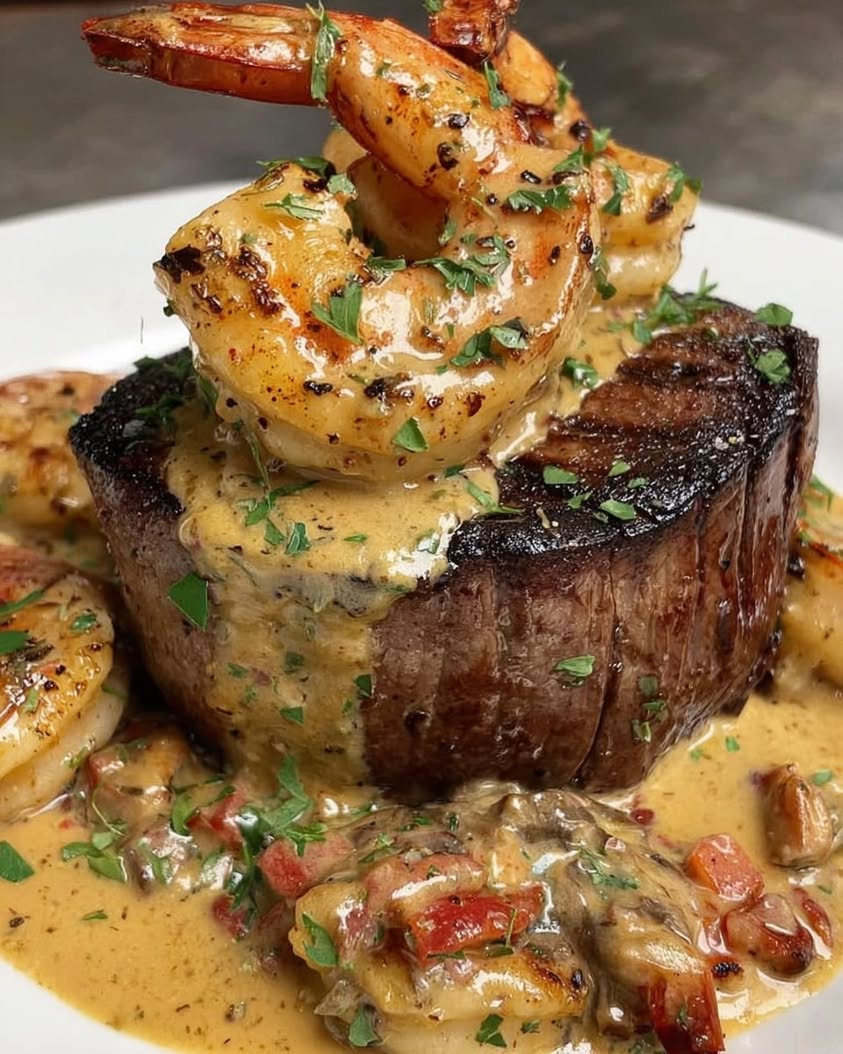
Filet Mignon with Grilled Shrimp and Lobster Sauce: The Ultimate Surf and Turf Experience
Have you ever craved a meal that feels both indulgent and perfectly balanced? Filet mignon with grilled shrimp and lobster sauce delivers exactly that. This dish combines the buttery tenderness of a premium steak with the sweet, smoky flavor of grilled shrimp, all crowned with a luxurious lobster sauce. It is a showstopper that transforms any dinner into a special occasion. The magic happens when the rich, beefy notes of the filet meet the briny sweetness of the seafood. Each bite offers a contrast in textures and tastes that keeps you coming back for more.
You do not need to be a professional chef to master this recipe. With a few key techniques and quality ingredients, you can recreate a restaurant-quality meal in your own kitchen. The process involves searing a thick filet mignon to perfection, grilling plump shrimp until they are charred and juicy, and simmering a velvety lobster sauce that ties everything together. The aroma that fills your kitchen will have everyone gathering around the stove. When you finally plate the dish, the visual appeal alone makes it a winner. This is the ultimate surf and turf experience, and it deserves a spot on your dinner table tonight.
Preparing filet mignon with grilled shrimp and lobster sauce requires some planning, but the payoff is enormous. You will learn how to balance flavors, control temperatures, and present a dish that looks as good as it tastes. Whether you are celebrating a milestone or simply treating yourself, this recipe delivers a memorable dining experience. Let us walk through every step so you can create this masterpiece with confidence. By the end of this post, you will have all the knowledge you need to impress your family or guests.
Quick Recipe Highlights
- Flavor Profile: The dish combines the deep, savory richness of beef with the sweet, briny taste of shrimp and lobster. The sauce adds a creamy, buttery finish with a hint of shallot and white wine. Every component complements the others without overpowering them.
- Texture: You get a crispy, caramelized crust on the filet mignon with a tender, melt-in-your-mouth interior. The grilled shrimp offer a firm, slightly charred bite. The lobster sauce is silky and smooth, coating each piece of meat and seafood beautifully.
- Aroma: The initial scent of searing beef fills the kitchen with a hearty, savory smell. As you grill the shrimp, a smoky, sweet aroma develops. Simmering the lobster sauce releases notes of butter, garlic, and herbs that make your mouth water instantly.
- Visual Appeal: The deep brown crust of the filet contrasts with the bright pink center when sliced. Grilled shrimp display beautiful grill marks and a vibrant orange hue. The pale, creamy lobster sauce drapes over the steak and shrimp, creating an elegant presentation.
- Skill Level Needed: This recipe requires intermediate cooking skills. You need to manage multiple cooking processes simultaneously, including searing, grilling, and sauce making. Temperature control for the steak and shrimp is critical, but with practice, you can achieve great results.
- Special Equipment: You need a heavy-bottomed skillet for searing the steak, a grill or grill pan for the shrimp, and a saucepan for the lobster sauce. A meat thermometer ensures perfect doneness for the filet mignon. Tongs and a whisk are also essential tools.
Recipe Overview
- Difficulty Level: I rate this recipe as advanced because it involves several components that require precise timing and technique. Searing a filet mignon to a perfect medium-rare while grilling shrimp without overcooking them demands attention. Making the lobster sauce from scratch adds another layer of complexity. However, the detailed instructions here make it manageable for confident home cooks.
- Category: This dish falls under the main course category for dinner. It serves wonderfully as a special occasion meal for holidays, anniversaries, or date nights. It also works beautifully for celebratory gatherings where you want to impress guests with a sophisticated surf and turf option.
- Cuisine: The recipe draws inspiration from classic French and American steakhouse traditions. The lobster sauce technique originates from French cuisine, where butter and cream create rich, elegant sauces. The surf and turf concept, however, is distinctly American, celebrating the combination of land and sea proteins on one plate.
- Cost: This is a high-cost recipe due to the premium ingredients involved. A high-quality filet mignon can cost between 15 and 25 dollars per serving. Fresh shrimp and lobster meat add another 10 to 15 dollars. The dairy, wine, and aromatics are relatively inexpensive. Overall, you can expect to spend around 40 to 50 dollars for two servings.
- Season: While you can enjoy this dish year-round, it shines best during the summer months. Grilling the shrimp outdoors adds a smoky flavor that pairs perfectly with warm weather. Fresh lobster is also more readily available and affordable in late spring and summer. Winter holidays also work well for this decadent meal.
- Occasion: This meal is perfect for romantic date nights, anniversaries, and Valentine’s Day. It also makes a stunning centerpiece for birthday dinners, New Year’s Eve celebrations, or any milestone event. When you want to show someone how much you care, serving filet mignon with grilled shrimp and lobster sauce says it all.
Why You Will Love This Recipe
The taste and texture combination in this dish is truly unmatched. You get the luxurious, buttery tenderness of a perfectly cooked filet mignon. Then you add the sweet, smoky char of grilled shrimp that provides a delightful contrast. The lobster sauce brings everything together with its rich, velvety consistency and deep seafood flavor. Every forkful offers a symphony of tastes that makes you feel like you are dining at a five-star restaurant. It is a meal that satisfies every craving for something indulgent and memorable.
Despite its elegant appearance, this recipe is surprisingly convenient to prepare. You can prep the ingredients ahead of time, including cleaning the shrimp and making the lobster base. The actual cooking process takes under thirty minutes, so you are not stuck in the kitchen for hours. With a clear plan and organized workflow, you can serve a gourmet dinner without the stress. It is a great way to build your cooking confidence while treating yourself to something special.
Nutritionally, this dish offers a balanced mix of high-quality protein and healthy fats. Filet mignon is one of the leaner cuts of beef, providing plenty of iron and B vitamins. Shrimp and lobster are low in calories but packed with protein, zinc, and omega-3 fatty acids. When you pair these proteins with a moderate amount of butter and cream in the sauce, you get a satisfying meal that keeps you full and energized. You can also adjust the sauce to reduce calories if needed.
Serving this dish to guests creates an unforgettable social experience. The presentation alone will draw gasps of admiration when you bring it to the table. It encourages conversation and shared enjoyment as everyone savors the complex flavors. Cooking this meal for someone shows a level of care and effort that truly impresses. It turns a simple dinner into a celebration of good food and good company.
Cost-effectiveness might seem counterintuitive for a premium ingredients, but this recipe actually saves money compared to eating out. A similar surf and turf plate at a high-end steakhouse costs seventy dollars or more per person. By making it at home, you control the quality of every component and spend significantly less. You also get the satisfaction of mastering a challenging dish that you can recreate anytime. Investing in this recipe pays off in both savings and culinary skills.
Historical Background and Cultural Significance
The concept of surf and turf first appeared in American dining culture during the mid-twentieth century. The term itself became popular in the 1960s and 1970s as a way to describe a meal that combines seafood and meat on one plate. This idea appealed to diners who wanted the best of both worlds. Chefs started pairing rich steaks with lobster tails, crab legs, or shrimp to create a luxurious experience. The combination symbolized abundance and indulgence, reflecting the economic prosperity of the era.
Filet mignon has its own prestigious history rooted in French cuisine. The term filet mignon translates to cute or dainty fillet, referring to the tender cut from the small end of the beef tenderloin. French chefs have revered this cut for centuries because of its exceptional tenderness and mild flavor. It became a staple in fine dining establishments around the world. Pairing it with seafood elevated its status even further, creating a dish that feels both classic and innovative.
The lobster sauce component draws from classic French sauce-making techniques. French cuisine emphasizes sauces as the soul of a dish, and lobster sauce showcases that philosophy perfectly. The method involves simmering lobster shells with aromatics to extract maximum flavor. Then you add cream and butter to create a smooth, rich emulsion. This technique traveled to America through influential chefs like Julia Child and continued to evolve in steakhouse kitchens everywhere.
Regional variations of surf and turf exist across the United States and beyond. In coastal areas, cooks often use local catches like crab or crawfish instead of shrimp. Inland versions might substitute lobster with langoustines or prawns. Some chefs add a spicy Cajun twist to the sauce, while others keep it classic with a beurre blanc base. Regardless of the variation, the core idea remains the same: celebrate the harmony between land and sea on one plate.
Ingredient Deep Dive
Filet mignon is the star of this dish, and understanding its qualities helps you choose the best cut. This muscle comes from the tenderloin, which does very little work during the animals life. As a result, it is incredibly tender and lean, with a fine grain that melts in your mouth. Nutritionally, it provides a good source of iron, zinc, and vitamin B12. When selecting filet mignon, look for steaks that are at least one and a half inches thick for even cooking. The meat should be bright red with creamy white fat marbling, though filet has minimal fat compared to other cuts. Store it in the coldest part of your refrigerator and cook it within two days of purchase. If you need a substitution, a ribeye steak offers more fat and flavor, while a sirloin steak is a leaner but tougher option.
Shrimp bring a sweet, briny element that balances the richness of the beef. Shrimp are low in calories and high in protein, making them a healthy addition to the meal. They also contain selenium, an important antioxidant that supports thyroid function. When choosing shrimp for this recipe, look for large or jumbo sizes, around 16 to 20 count per pound. Fresh or frozen shrimp work equally well, but avoid pre-cooked shrimp because they become rubbery when grilled. Thaw frozen shrimp in the refrigerator overnight for the best texture. If you cannot use shrimp, scallops or lobster tails make excellent alternatives that still provide that seafood sweetness.
Lobster sauce relies on fresh or frozen lobster meat and shells for its deep flavor. Lobster is rich in protein, omega-3 fatty acids, and vitamin B12. It also contains copper, which supports red blood cell production and immune function. For the most flavorful sauce, use lobster shells to create a stock base. You can purchase whole lobsters or ask your fishmonger for shells separately. Store fresh lobster in the coldest part of the fridge and use it within two days. If lobster is unavailable, crab shells or langoustine shells can substitute, though the flavor will be slightly different.
Butter and cream form the backbone of the sauce, providing richness and body. Use unsalted butter so you can control the salt level in the final dish. Heavy cream with at least thirty six percent fat content creates the smoothest sauce. The dairy adds calcium and fat-soluble vitamins like vitamin A. For a lighter version, you can reduce the butter by half, but the sauce will be thinner. Vegan alternatives like coconut cream exist but will change the flavor profile significantly.
White wine adds acidity and depth to the lobster sauce. Use a dry white wine like Sauvignon Blanc or Chardonnay for the best balance. The alcohol cooks off during simmering, leaving behind fruity and floral notes. If you prefer not to use wine, you can substitute with seafood stock or chicken broth mixed with a splash of lemon juice. The acidity helps cut through the richness of the butter and cream, creating a more well-rounded sauce.
Common Mistakes to Avoid- Overcooking the filet mignon is the most common error. Filet is lean and dries out quickly past medium-rare. Always use a meat thermometer and remove the steak from heat at 130 degrees Fahrenheit for medium-rare.
- Grilling shrimp too long makes them tough and rubbery. Shrimp cook in just two to three minutes per side. Watch for them to turn opaque and curl slightly, then remove them immediately.
- Skipping the step of resting the steak after cooking forces juices onto the plate instead of locking them inside the meat. Let the filet rest for at least five minutes before slicing to ensure every bite is juicy.
- Making the lobster sauce too thin by adding too much liquid at once ruins the consistency. Add stock gradually and simmer until it reduces and thickens naturally.
- Using cold cream or butter directly into the sauce causes it to break or separate. Bring dairy ingredients to room temperature before adding them to the hot liquid.
- Overloading the pan when searing the steak causes the meat to steam instead of forming a proper crust. Leave enough space between the steaks for even browning.
- Forgetting to season the shrimp before grilling leaves them bland. Toss the shrimp with salt, pepper, and a little olive oil at least ten minutes before cooking.
- Cooking the lobster sauce over high heat burns the butter and creates a bitter taste. Simmer the sauce gently on low heat to preserve the delicate flavors.
- Not tasting the sauce before serving leads to underseasoned results. Adjust salt and pepper at the end, and add a squeeze of lemon juice to brighten the flavor.
- Cutting the filet immediately after cooking without resting releases all the juices. Resist the temptation and let the steak rest under a loose foil tent for five to seven minutes.
Essential Techniques
Searing the filet mignon is critical for developing a deep, caramelized crust. The Maillard reaction occurs when high heat interacts with the proteins on the meat surface, creating complex flavors and a beautiful brown color. To master this technique, pat the steak dry with paper towels before cooking to remove surface moisture. Then season generously with salt and pepper. Heat a heavy skillet, preferably cast iron, over high heat until it smokes slightly. Add a tablespoon of oil and place the steak in the pan. Do not move it for at least three minutes to allow the crust to form. Flip once and cook the other side for another three minutes. Use a meat thermometer to check doneness internally. Visual cues include a rich brown color on the surface and the steak releasing easily from the pan when the crust is ready.
Grilling shrimp requires careful attention to avoid overcooking. Shrimp cook very quickly because they are small and have low fat content. The key is to use high heat and a short cooking time. Preheat your grill or grill pan to medium-high heat. Skewer the shrimp to make flipping easier and prevent them from falling through the grates. Season them lightly and place them on the grill. Cook for two to three minutes per side until they are pink with slight char marks. Visual cues include the shrimp turning opaque and curling into a C shape. If the shrimp curl into an O shape, they are overcooked. Remove them from heat immediately and set them aside.
Making the lobster sauce involves creating a flavorful base and then enriching it with dairy. Start by sauteing finely chopped shallots and garlic in butter until translucent. Add the lobster shells and cook for a few minutes to extract flavor. Deglaze the pan with white wine and let it reduce by half. Then add seafood stock and let it simmer for fifteen minutes to concentrate the flavor. Strain the liquid through a fine mesh sieve to remove the shells and solids. Return the liquid to the pan and add heavy cream. Simmer gently until the sauce thickens enough to coat the back of a spoon. Finish with cold butter cubes whisking in off the heat to create a silky emulsion. The final sauce should be smooth, glossy, and rich.
Pro Tips for Perfect Filet Mignon with Grilled Shrimp and Lobster Sauce
Bring your filet mignon to room temperature for thirty minutes before cooking. This ensures the steak cooks evenly from edge to center and prevents a cold interior.
Use a cast iron skillet for searing the steak because it retains high heat better than nonstick pans. The result is a superior crust that locks in juices.
Season the shrimp with a pinch of smoked paprika for extra depth. The smoky spice complements the char from the grill and the sweetness of the shrimp beautifully.
Make the lobster sauce ahead of time and reheat it gently. The flavors meld together and improve over time. Just add a splash of cream to loosen it when reheating.
Do not overcrowd the grill when cooking the shrimp. Give each shrimp space so the heat circulates and creates those desirable grill marks. Cook in batches if necessary.
Rest the filet mignon on a wire rack set over a baking sheet instead of a plate. This prevents the bottom from steaming and keeps the crust intact.
Finish the lobster sauce with a squeeze of fresh lemon juice right before serving. The acidity brightens the rich sauce and balances the buttery notes.
Warm your serving plates in the oven at 200 degrees Fahrenheit for five minutes. This keeps the steak hot longer and prevents the sauce from cooling too quickly.
Variations and Adaptations
Regional variations offer exciting ways to personalize this dish. In the Gulf Coast, cooks often add Cajun seasoning to the shrimp and replace the lobster sauce with a creamy remoulade. This gives the dish a spicy, tangy kick that pairs well with the beef. In the Northeast, some versions use a white wine and herb butter sauce instead of the traditional lobster cream. The herbs like tarragon and dill add a fresh, garden-like quality that lightens the meal. Coastal regions in California sometimes substitute the shrimp with local spot prawns and add roasted vegetables to the plate.
Seasonal adaptations let you take advantage of fresh produce throughout the year. In spring, serve the dish with sauteed asparagus or fresh peas that add color and crunch. Summer calls for grilled corn on the cob or a light tomato and basil salad. Fall brings roasted root vegetables like carrots and parsnips that add sweetness and earthiness. Winter is perfect for creamy mashed potatoes or roasted Brussels sprouts that soak up the lobster sauce beautifully.
Dietary modifications make this dish accessible for various eating plans. For a gluten-free version, simply omit any flour thickeners in the sauce and rely on reduction. The recipe is naturally gluten-free when prepared as written. For a dairy-free adaptation, replace the butter with a high-quality plant-based butter and use coconut cream instead of heavy cream. The flavor will change slightly but still remains rich and satisfying. For a lower calorie version, reduce the butter and cream by half and use a seafood stock base for the sauce.
Flavor variations allow you to customize the dish to your preferences. Add a pinch of cayenne pepper or red pepper flakes to the shrimp seasoning for heat. Infuse the lobster sauce with a sprig of thyme or rosemary for an herbal note. Use a splash of brandy instead of white wine for a deeper, more decadent sauce. You can also add a tablespoon of tomato paste to the sauce for a subtle umami boost.
Texture modifications offer creative possibilities. For extra crunch, top the dish with fried shallots or toasted breadcrumbs. You can also add a layer of crispy prosciutto or pancetta under the steak for a salty, crispy contrast. If you prefer a smoother sauce, blend it with an immersion blender for a velvety consistency. For a thicker sauce, simmer it longer or add a slurry of cornstarch and water.
Presentation alternatives let you style the dish in different ways. Instead of stacking, plate the filet and shrimp side by side with the sauce drizzled between them. Fan the sliced filet in a line and arrange the shrimp along the side. Use a squeeze bottle for the sauce to create artistic swirls on the plate. Garnish with micro greens or edible flowers for a restaurant-quality finish.
Serving and Presentation Guide
Plating techniques can elevate your dish from home cooked to gourmet. Start by placing a generous spoonful of lobster sauce in the center of the plate. Use the back of the spoon to create a swoosh or circular motion. Slice the rested filet mignon into thick medallions and arrange them slightly overlapping on one side of the plate. Place the grilled shrimp on the other side, fanning them out for visual appeal. Drizzle a little extra sauce over the steak and shrimp. Finally, add a small garnish like fresh chives or parsley for a pop of green.
Garnishing ideas add the finishing touch that makes the dish memorable. Thinly sliced scallions or chives provide a mild onion flavor and elegant appearance. Edible flowers like nasturtiums or pansies add color and a subtle peppery taste. A sprinkle of flaky sea salt like Maldon on the steak right before serving enhances the crust. Lemon zest adds a bright, citrusy note that cuts through the richness of the sauce.
Traditional accompaniments complement this surf and turf perfectly. Creamy mashed potatoes are a classic choice that absorbs the lobster sauce wonderfully. Steamed asparagus or green beans add color and a crisp texture. A simple mixed green salad with a light vinaigrette provides a fresh contrast. Crusty bread is essential for sopping up every last drop of the delicious sauce.
Modern serving suggestions add a contemporary twist. Serve the dish on a wooden board for a rustic, shareable presentation. Use a slate plate for an elegant, modern aesthetic. Consider serving the lobster sauce in a separate small pitcher so each person can add as much as they like. Pair the meal with a side of truffle fries or cauliflower gratin for an indulgent touch.
Temperature considerations ensure the best eating experience. Serve the steak immediately after resting while it is still warm. The shrimp should also be served hot off the grill. The lobster sauce should be kept warm in a saucepan over low heat until ready to serve. If you need to hold the components, keep the steak and shrimp on a wire rack in a low oven at 200 degrees Fahrenheit for no more than ten minutes.
Portion control tips help you serve the right amount for your guests. Each person should get a six to eight ounce filet mignon, approximately eight to ten large shrimp, and about one third cup of lobster sauce. Adjust based on appetites and whether you are serving side dishes. For a lighter meal, reduce the steak to four ounces and increase the vegetable portion.
Wine and Beverage Pairing
Wine pairing for this dish requires a red that can stand up to the beef but not overpower the seafood. A medium bodied Pinot Noir is an excellent choice because it has bright acidity and red fruit flavors that complement both proteins. Its earthy undertones match the savory notes of the filet mignon without clashing with the lobster sauce. Another great option is a well structured Cabernet Franc, which offers herbal notes and soft tannins. If you prefer white wine, a rich Chardonnay with oak influence pairs beautifully because its buttery character mirrors the sauce. For a special treat, a vintage Champagne works remarkably well, as the bubbles cut through the richness and elevate the entire meal.
Non alcoholic alternatives provide options for everyone at the table. A nonalcoholic sparkling wine like Gruvi bubbly gives the same celebratory feel without the alcohol. A chilled glass of sparkling water with a splash of cranberry juice and a lime wedge offers a festive alternative. Herbal teas like hibiscus or chamomile iced make nice options for a lighter pairing. For a more sophisticated choice, a nonalcoholic red wine substitute from brands like Surely or Leitz offers depth and complexity.
Coffee or tea pairings work well after the meal. A dark roast coffee with chocolate notes complements the richness of the dish. An espresso with a twist of lemon zest provides a palate cleansing finish. For tea, a bold black tea like Assam or Earl Grey stands up to the flavors. A smoky Lapsang Souchong tea mirrors the grilled elements of the shrimp perfectly.
Temperature considerations matter for beverage service. Serve red wine at slightly cool room temperature, around 60 to 65 degrees Fahrenheit. White wine and Champagne should be well chilled at 45 to 50 degrees Fahrenheit. Non alcoholic drinks should also be served cold, ideally over ice. Coffee and tea should be served hot or iced based on preference and season.
Serving suggestions enhance the dining experience. Offer a wine decanter or aerator for red wine to open up the flavors. Provide glassware that matches the beverage choice, such as stemmed glasses for wine and teacups for hot drinks. Always have a pitcher of water with lemon on the table for guests to refresh their palates between courses.
Storage and Shelf Life
Storage methods for leftover filet mignon and shrimp require careful handling to maintain quality. Place any leftover steak in an airtight container and store it in the refrigerator within two hours of cooking. The shrimp should be stored separately in a different container to prevent cross contamination. The lobster sauce can be stored in a glass jar with a tight fitting lid. Always label containers with the date to track freshness.
Temperature requirements are crucial for food safety. Keep the refrigerator at or below 40 degrees Fahrenheit to slow bacterial growth. If you plan to store the leftovers for more than a few days, freeze them instead. The freezer should be set at 0 degrees Fahrenheit or lower for optimal preservation. Thaw frozen items in the refrigerator overnight rather than at room temperature.
Container recommendations help extend shelf life. Use glass or BPA free plastic containers with airtight seals. Avoid using metal containers for the sauce because the acidity can react with the material. Vacuum sealing is ideal for the steak and shrimp because it removes air that causes freezer burn. Portion the leftovers into smaller containers to make reheating easier and reduce waste.
Signs of spoilage indicate when to discard leftovers. If the steak develops a sour smell, slimy texture, or discoloration, throw it away. Shrimp that smell overly fishy or ammonia like are no longer safe to eat. The sauce may separate slightly but should not have an off smell or mold growth. When in doubt, always discard suspicious food to avoid foodborne illness.
Reheating instructions ensure the leftovers taste as good as the original. For the filet mignon, reheat it gently in a skillet over medium low heat with a splash of beef broth or butter. Avoid the microwave because it dries out the meat and makes it tough. The shrimp can be reheated in the same skillet for about one minute per side, just until warm. The sauce should be reheated in a saucepan over low heat, stirring occasionally. Add a splash of cream or milk to restore its smooth consistency if needed.
Freezing guidelines allow you to extend the life of the components. You can freeze the cooked filet mignon for up to three months if wrapped tightly in plastic wrap and foil. The shrimp freezes well for two months, but the texture becomes slightly softer upon thawing. The lobster sauce freezes beautifully for up to three months in a freezer safe container. Thaw all items in the refrigerator before reheating for the best results.
Make Ahead Strategies
Prep timeline planning saves time on cooking day. Two days before serving, make the lobster stock by simmering the shells with aromatics, then strain and refrigerate. One day before serving, season the filet mignon with salt and pepper and store it uncovered in the refrigerator to dry age slightly. The shrimp can be peeled, deveined, and seasoned a day ahead as well. On the day of serving, make the sauce base and have all side dishes prepped and ready to go.
Storage between steps keeps components fresh. Keep the lobster stock in an airtight container in the refrigerator for up to three days. The seasoned steak should rest on a wire rack in the fridge, uncovered, to maintain a dry surface for searing. The shrimp should be kept in a covered bowl in the coldest part of the refrigerator. Bring all ingredients to room temperature thirty minutes before cooking for even results.
Quality impact assessment helps you decide what to make ahead. The lobster sauce actually improves after a day because the flavors deepen and meld together. The steak benefits from dry aging overnight, which enhances its flavor and tenderness. The shrimp should be cooked fresh to maintain their best texture, but they can be seasoned ahead. Overall, making the sauce and prepping the ingredients ahead does not compromise quality.
Assembly tips streamline the final cooking process. Set up your work station with all tools and ingredients organized before you start. Have the sauce base in a saucepan ready to finish. Preheat your skillet and grill simultaneously to save time. Cook the steak first, then rest it while you grill the shrimp and finish the sauce. This sequencing ensures everything is hot and ready to serve at the same time.
Reheating guidelines for make ahead components ensure success. Reheat the lobster sauce gently over low heat, whisking occasionally to prevent a skin from forming. If the sauce thickens too much, add a splash of stock or cream. The steak and shrimp are best cooked fresh, but if you do cook them ahead, reheat the steak in a hot skillet with butter and the shrimp in the same skillet for a quick warm up.
Fresh element additions should happen right before serving. Garnish the plated dish with fresh herbs, lemon zest, or flaky salt. Add a squeeze of fresh lemon juice to the sauce at the last minute. If serving with vegetables, cook them just before plating to ensure they are crisp and vibrant. These small touches make the dish feel freshly prepared even if the components were made ahead.
Scaling Instructions
Halving the recipe works well for a single serving or smaller appetites. Reduce all ingredient quantities by half, including the steak, shrimp, and sauce components. Use a smaller skillet for searing the steak to maintain high heat. The cooking times remain the same for the steak and shrimp, but the sauce reduction time may be slightly shorter because there is less liquid. Store any leftover sauce in a small jar for up to three days.
Doubling or tripling the recipe requires careful adjustments. Use a larger skillet or sear the steaks in batches to avoid overcrowding. For the shrimp, grill them in batches on a larger grill surface or use two grill pans. The sauce quantity increases proportionally, but simmering time may extend by five to ten minutes because of the larger volume. Ensure your equipment can handle the increased quantity, especially for the sauce pan which needs room for reduction.
Equipment adjustments become necessary when scaling up. For four servings, you need a twelve inch skillet for searing two steaks at once. For six or eight servings, use two skillets or a large griddle. The grill should accommodate all the shrimp without overlapping. A large saucepan, around four quarts, holds the sauce for larger batches without boiling over. Have extra bowls and platters ready for the increased amounts.
Timing modifications help maintain quality when cooking for a crowd. Sear the steaks in batches and keep them warm on a wire rack in a low oven while finishing the rest. Grill the shrimp in two batches to keep each batch hot and well charred. The sauce can be made completely ahead of time and reheated just before serving. Plan for about five extra minutes per batch for each component.
Storage considerations for scaled recipes involve proper portioning. If you make double the recipe but only serve half, store the cooked components separately. The steak and shrimp should be stored in different containers to prevent texture transfer. The sauce can be frozen in ice cube trays for easy portioning later. Label everything clearly with the date and quantity.
Nutritional Deep Dive
Macro breakdown for a standard serving of this dish provides substantial protein and moderate fats. A six ounce filet mignon contains approximately 44 grams of protein and 15 grams of fat. The shrimp add another 20 grams of protein with only 2 grams of fat. The lobster sauce contributes about 10 grams of fat, mostly from butter and cream. Total carbohydrates are minimal, around 5 grams from the sauce ingredients and seasonings. This meal is naturally low in carbs and high in protein, making it suitable for many dietary preferences.
Micronutrient analysis reveals impressive nutritional density. Filet mignon is an excellent source of iron, providing about 3 milligrams per serving, which supports healthy blood cell production. The steak also delivers significant amounts of zinc, which boosts immune function. Shrimp and lobster contribute selenium, a powerful antioxidant that protects cells from damage. The dairy in the sauce offers calcium and vitamin A for bone health and vision. B vitamins including B12 and niacin are abundant across all components.
Health benefits extend beyond basic nutrition. The high protein content promotes muscle repair and growth, especially beneficial after exercise. The omega-3 fatty acids in shrimp and lobster support heart and brain health. The iron in the steak helps prevent anemia and improves energy levels. The selenium from seafood acts as an antioxidant, reducing inflammation in the body. When eaten in moderation, this meal fits well into a balanced diet.
Dietary considerations vary based on individual health needs. This recipe is naturally gluten free and grain free, making it suitable for people with celiac disease or gluten sensitivity. It contains dairy from the butter and cream, but you can substitute with dairy free alternatives. The dish is low in carbohydrates, which fits well with low carb and ketogenic diets. However, the fat content is relatively high, so those watching saturated fat should moderate portion sizes.
Portion analysis helps with weight management. A serving of this dish provides around 600 to 700 calories depending on the exact quantities and sauce richness. This fits well into a standard 2000 calorie diet as a main meal. To reduce calories, use less butter and cream in the sauce or opt for a smaller steak. Pairing the dish with a large vegetable side can increase satiety without adding many calories.
Weight management tips focus on balance and portion control. Serve the steak on Print
Filet Mignon with Grilled Shrimp & Lobster Sauce
- Total Time: 35 minutes
- Yield: 2
Description
A luxurious surf and turf dish featuring perfectly seared filet mignon, grilled shrimp, and a rich lobster sauce. Perfect for a special occasion or a romantic dinner.
Ingredients
- 2 (8-ounce) filet mignon steaks
- 8 large shrimp, peeled and deveined
- 2 tablespoons olive oil, divided
- 1 teaspoon salt
- 1/2 teaspoon black pepper
- 1/2 cup dry white wine
- 1/2 cup lobster stock (or fish stock)
- 1/2 cup heavy cream
- 2 tablespoons unsalted butter
- 2 cloves garlic, minced
- 1 shallot, minced
- 1 tablespoon fresh parsley, chopped
Instructions
- Preheat grill to medium-high heat. Brush shrimp and steaks with 1 tablespoon olive oil, then season with salt and pepper.
- Grill steaks for 4-5 minutes per side for medium-rare, or to desired doneness. Grill shrimp for 2-3 minutes per side until pink. Remove and keep warm.
- In a saucepan, heat remaining 1 tablespoon olive oil over medium heat. Add shallot and garlic, cook until softened, about 2 minutes.
- Pour in white wine and lobster stock, bring to a simmer. Let reduce by half, about 3-4 minutes.
- Stir in heavy cream and butter until melted and sauce thickens slightly, about 2 minutes. Season with salt and pepper.
- Plate the filet mignon and arranged grilled shrimp on top. Drizzle with lobster sauce and garnish with fresh parsley.
Notes
You can customize the seasonings to taste. For extra decadence, add a splash of brandy to the sauce. Substitute lobster stock with clam juice if unavailable.
- Prep Time: 15 minutes
- Cook Time: 20 minutes
- Method: Main
- Cuisine: American