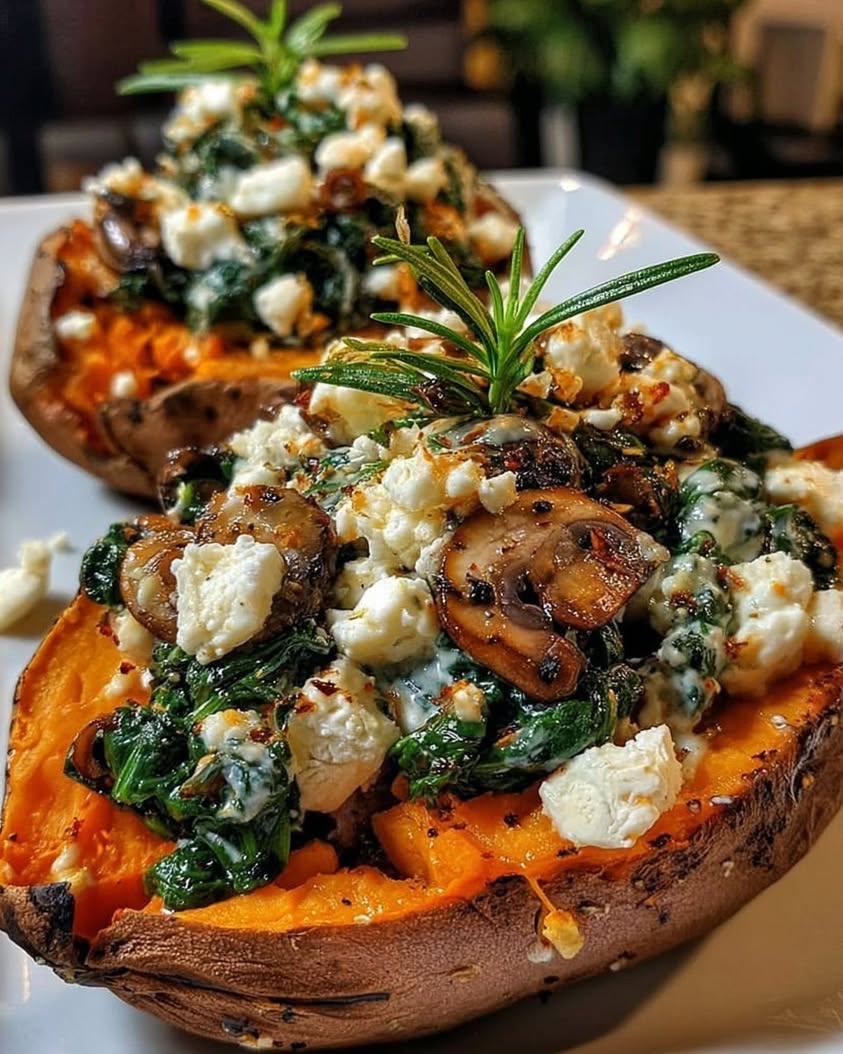
Stuffed Sweet Potatoes with Spinach, Mushroom, Feta and Lemon Garlic Yogurt: A Wholesome Dinner
Imagine cutting into a perfectly roasted sweet potato, its flesh tender and caramelized, ready to cradle a savory filling of earthy mushrooms and wilted spinach. This is the magic of Stuffed Sweet Potatoes with Spinach, Mushroom, Feta and Rosemary Drizzled with Lemon Garlic Yogurt Sauce. This recipe transforms humble ingredients into a satisfying meal that feels both rustic and refined. The combination of natural sweetness from the potato, the savory depth of the mushrooms, and the tangy, creamy sauce creates a dish that is remarkably balanced.
You will find that this recipe is incredibly forgiving and adaptable to what you have on hand. It works beautifully as a hearty weeknight dinner or as an impressive vegetarian entree for guests. The process is straightforward, involving a simple roast for the potatoes while you prepare the filling on the stovetop. Furthermore, the Stuffed Sweet Potatoes with Spinach, Mushroom, Feta and Rosemary Drizzled with Lemon Garlic Yogurt Sauce delivers a powerful punch of flavor and nutrition without demanding hours in the kitchen. It is a dish that invites you to slow down, enjoy the cooking process, and savor a meal that is as good for your body as it is for your spirit.
The aroma that fills your kitchen as these sweet potatoes bake is the first sign of something special. It mingles with the scent of fresh rosemary and sizzling garlic, creating an anticipation that is deeply satisfying. Each component plays a specific role, from the creamy feta that adds a salty bite to the bright lemon yogurt sauce that cuts through the richness. This is not just a recipe. It is an experience, a celebration of simple, high-quality ingredients coming together in perfect harmony. Let us walk through the steps to create this comforting and delicious meal.
Quick Recipe Highlights
- Flavor Profile: This dish delivers a wonderful balance of sweet, savory, and tangy notes. The natural sweetness of the roasted potato contrasts beautifully with the earthy, umami-rich mushrooms and the salty, creamy feta cheese. A final drizzle of bright lemon garlic yogurt sauce adds a cool, tangy finish that brings everything together.
- Texture: You will experience a delightful contrast of textures in every bite. The sweet potato skin becomes slightly chewy while the inside turns incredibly soft and fluffy. The sauteed mushrooms offer a meaty, tender bite, and the spinach adds a tender, slight wilt. The creamy yogurt sauce provides a smooth, cooling element.
- Aroma: The dominant aromatic notes are woodsy rosemary and pungent, sauteed garlic. As the sweet potatoes roast, their natural sugars caramelize, filling the kitchen with a sweet, earthy fragrance. The lemon zest in the yogurt sauce adds a bright, fresh, and clean aroma that offsets the savory richness.
- Visual Appeal: This dish is a feast for the eyes, featuring vibrant colors and rustic presentation. The deep orange of the sweet potato contrasts with the dark, rich mushrooms and the bright green spinach. Crumbled white feta and a drizzle of creamy, pale yellow sauce make for an elegant and appetizing plate.
- Skill Level Needed: This recipe is ideal for beginner to intermediate home cooks because it uses fundamental techniques. You will need to roast a vegetable, saute a filling on the stovetop, and whisk a simple sauce. The steps are sequential and forgiving, making it an excellent confidence-building meal.
- Special Equipment: You will need basic kitchen equipment for this recipe. A baking sheet is essential for roasting the sweet potatoes. A large skillet is needed for sauteing the mushroom and spinach filling. A small bowl and whisk are all that is required to combine the lemon garlic yogurt sauce.
Recipe Overview
- Difficulty Level: We rate this recipe as Easy because the techniques are simple and the timing is forgiving. Roasting sweet potatoes is a hands-off process, and the filling comes together in one pan in under ten minutes. The only challenge might be timing the components to finish at the same time, but a few minutes of flexibility means it is stress-free.
- Category: This recipe falls into the main dish and vegetarian dinner categories. It is substantial enough to be the star of a meal, yet it is also a fantastic option for a hearty lunch or brunch. It works beautifully as a plant-based centerpiece for a holiday table or a simple weeknight staple.
- Cuisine: This dish draws inspiration from modern American and Mediterranean cooking traditions. The use of sweet potatoes is a familiar American ingredient, while the combination of spinach, feta, rosemary, and a lemon-garlic yogurt sauce pays homage to classic Mediterranean and Greek flavor profiles. It is a fusion that feels both familiar and exciting.
- Cost: The cost to make this recipe is relatively low, especially when you consider the yield. Sweet potatoes are one of the most affordable produce items. Mushrooms and spinach are also budget-friendly, and a block of feta cheese provides a lot of flavor for the price. The core ingredients like yogurt, lemon, and garlic are pantry staples for many.
- Season: While sweet potatoes are available year-round, this dish is particularly perfect for the fall and winter seasons. The hearty, warming nature of the roasted potatoes and the savory filling is deeply comforting on cool evenings. However, the bright, fresh flavors of the lemon and spinach make it a welcome meal any time of the year.
- Occasion: This dish is incredibly versatile for many occasions. It is an excellent choice for a nutritious weeknight dinner for the family. Additionally, it presents beautifully enough to serve to guests at a casual dinner party or a holiday gathering. It also works wonderfully as a make-ahead meal for weekly meal prep.
Why You Will Love This Recipe
First and foremost, the taste and texture appeal of Stuffed Sweet Potatoes with Spinach, Mushroom, Feta and Rosemary Drizzled with Lemon Garlic Yogurt Sauce is what truly wins people over. Each forkful delivers a perfect harmony of sweet, savory, creamy, and tangy flavors. The roasted sweet potato provides a naturally sweet, soft canvas, while the earthy mushrooms and salty feta add depth and richness. The creamy, zesty yogurt sauce ties it all together, making this a deeply satisfying and crave-worthy meal.
Another major reason to love this recipe is its incredible convenience and preparation benefits. With about 15 minutes of active prep time, the oven does most of the heavy lifting. You can roast the sweet potatoes and prepare the filling simultaneously. This means a wholesome, impressive dinner is on the table in under an hour with minimal cleanup. It is a perfect solution for busy weeknights when you want a healthy meal without spending hours cooking.
From a nutritional standpoint, this recipe is a powerhouse. Sweet potatoes are loaded with vitamin A, fiber, and antioxidants. Spinach provides iron and other essential vitamins, and mushrooms offer immune-supporting properties. The Greek yogurt in the sauce adds protein and probiotics. This meal is naturally gluten-free and can be easily adapted to be vegetarian or even vegan, making it a smart choice for health-conscious eaters.
This recipe also excels in social and entertaining value. A stuffed sweet potato looks incredibly impressive on a plate. It feels like a special, individually plated meal, which is perfect for guests. You can set up a topping bar with the filling, sauce, and extra feta, allowing everyone to customize their own potatoes. It turns a simple dinner into an interactive, fun experience that your guests will love and remember.
Finally, the cost-effectiveness and accessibility of this dish cannot be overstated. You can create a delicious, nutritious, and filling meal without breaking the bank. All of the main ingredients are readily available at any grocery store, often for a very reasonable price. This recipe proves that you do not need expensive or exotic ingredients to cook something truly special. It is a wonderful example of how simple, affordable food can be the most rewarding.
Historical Background and Cultural Significance
The sweet potato itself has a rich history, originating in Central and South America over 5,000 years ago. It was a staple food for ancient civilizations like the Incas and Aztecs. After European contact, sweet potatoes spread across the globe, becoming a crucial crop in many cultures, particularly in the southern United States, Asia, and the Pacific Islands. Its natural sweetness, hardiness, and nutritional value made it a vital food source.
The combination of spinach, feta, and lemon yogurt sauce draws clear inspiration from Greek and broader Mediterranean cuisines. In Greek cooking, spanakopita (spinach and feta pie) is a beloved classic, showcasing this very flavor pairing for centuries. The tangy, herbaceous nature of Greek cuisine often uses yogurt as a sauce, like in tzatziki, to balance roasted meats or vegetables. This recipe borrows that brilliant culinary logic.
The evolution of this particular recipe, the stuffed sweet potato, is a more modern creation. It represents the global nature of contemporary cooking, where a New World vegetable like the sweet potato is paired with Old World Mediterranean ingredients. This fusion became popular as home cooks and chefs alike began looking for healthier, more flavorful ways to enjoy classic comfort foods. It is a testament to how culinary traditions adapt and merge over time.
Regional variations of this dish are abundant. In the American South, you might find sweet potatoes stuffed with black beans, corn, and barbecue sauce. In parts of the Middle East, a similar dish might use lentils, tahini, and pomegranate molasses. The version presented here, with its specific combination of spinach, mushroom, feta, and rosemary, is a delightful example of a Mediterranean-inspired variation that has become a modern classic for its balanced and wholesome appeal.
Ingredient Deep Dive
Sweet Potatoes: Sweet potatoes have a long history as a global staple, cherished for their natural sweetness and versatility. They are packed with beta-carotene, vitamin C, and fiber. When selecting sweet potatoes, look for firm, smooth-skinned specimens without any soft spots or cracks. Store them in a cool, dark, well-ventilated place, but do not refrigerate them as this can alter their flavor. For this recipe, medium-sized, uniform potatoes are best for even cooking. You can substitute with yams or even regular potatoes, though the flavor profile will change significantly.
Cremini Mushrooms: These are simply young Portobello mushrooms, offering a deeper, earthier flavor than white button mushrooms. In many cultures, mushrooms are considered a delicacy and a source of protein for those avoiding meat. Nutritionally, they are low in calories and a good source of B vitamins and minerals like selenium. Select mushrooms that are firm, plump, and dry with closed caps. Store them in a paper bag in the refrigerator to absorb excess moisture. If you cannot find cremini, white button mushrooms or shiitake mushrooms are excellent substitutes that will provide a similar texture.
Fresh Spinach: Spinach is a leafy green from Persia, now a staple in cuisines worldwide for its mild flavor and impressive nutritional profile. It is an excellent source of iron, calcium, and vitamins A and K. For the best quality, choose spinach leaves that are vibrant green, crisp, and free from yellowing or wilting. Store it unwashed in a sealed bag with a paper towel inside the refrigerator to keep it fresh longer. If you need a substitute, kale, Swiss chard, or arugula can be used, but note that they require slightly longer cooking times and have a stronger flavor.
Feta Cheese: Feta is a brined curd white cheese from Greece, known for its salty, tangy flavor and crumbly texture. It is a central component in Mediterranean cuisine, adding a rich, savory element to many dishes. Nutritionally, feta is lower in fat than many other cheeses but still high in protein and calcium. Always buy feta in a block or stored in brine for the best taste and texture. Store it in the brine in the refrigerator and use it within a week of opening. For a dairy-free option, you can use a high-quality vegan feta or skip it altogether and add more nutritional yeast to the filling.
Fresh Rosemary: Rosemary is an aromatic herb native to the Mediterranean region, often associated with memory and remembrance in folklore. Its pine-like, woodsy flavor pairs beautifully with roasted vegetables and lamb. In this recipe, it adds a fragrant, savory depth to the mushroom filling. Choose rosemary sprigs that are bright green and fragrant, avoiding any that look brown or dried. Store fresh rosemary by wrapping it in a damp paper towel and placing it in a plastic bag in the refrigerator. If you must substitute, dried rosemary is an option, but use half the amount, or try fresh thyme for a similar herbal note.
Greek Yogurt: The base of our sauce is plain Greek yogurt, which is thicker and creamier than regular yogurt due to the straining process. It is a staple in Mediterranean and Middle Eastern cuisines, used in both savory and sweet applications. It is packed with protein and probiotics, making it a very healthy choice. For the best results, use full-fat or 2% Greek yogurt for richness. Stir it well before measuring. Store it in the refrigerator and always check the expiration date. If you need a vegan alternative, a thick cashew cream or a plain, unsweetened coconut yogurt would work well, though the flavor will be slightly different.
Lemon and Garlic: These two ingredients are the backbone of the tangy sauce. Lemon juice and zest provide bright, acidic notes that cut through the richness of the potato and cheese, while raw minced garlic adds a pungent, aromatic kick. Both have long histories as essential flavorings and preservatives in many global cuisines. When selecting lemons, choose ones that are heavy for their size with smooth, thin skin. Store garlic in a cool, dark, dry place. The freshness of these ingredients is crucial, as they are not cooked, so their vibrant flavor directly impacts the final dish.
Common Mistakes to Avoid
- Not piercing the sweet potatoes before roasting. This can cause steam to build up inside, potentially causing them to burst in the oven. Always use a fork to poke several holes all over each potato before baking.
- Overcrowding the potatoes on the baking sheet. This traps steam and prevents the natural sugars from caramelizing properly, resulting in soft, not fluffy, potatoes. Give them enough space to roast evenly.
- Undercooking the sweet potatoes. They need to be fork-tender, as the inside will be the base for the filling. A slightly undercooked potato will be hard and unpleasant. Test them by piercing the thickest part with a knife.
- Adding the spinach all at once to the skillet. This can steam the spinach instead of wilting it properly. Add it in handfuls, allowing each batch to wilt before adding the next for the best texture.
- Overcooking the mushrooms. A common mistake is overcrowding the pan, which steams the mushrooms instead of browning them. Cook them in a single layer over medium-high heat until they release their liquid and start to brown.
- Using pre-shredded feta cheese. Pre-shredded cheese often contains anti-caking agents that prevent it from melting and blending well. Buy a block of feta and crumble it yourself for superior flavor and texture.
- Making the yogurt sauce too far in advance. While the flavors meld nicely, the garlic can become very pungent and overpowering over time. Make the sauce no more than 30 minutes before serving for the best balance.
- Not seasoning the mushroom filling adequately. Mushrooms are very absorbent and need a good amount of salt and pepper to taste their best. Season each layer as you cook for the most flavorful filling.
Essential Techniques
Roasting Vegetables: This is a cornerstone technique for developing deep, natural sweetness in vegetables. You will master it by ensuring your oven is fully preheated to 400 degrees Fahrenheit. Tossing the sweet potatoes with oil and salt is crucial, as the oil helps conduct heat and the salt enhances flavor. Roasting directly on the baking sheet allows for maximum air circulation, which helps the outside caramelize while the inside becomes fluffy. A key visual cue is when the skin tightens and the flesh yields easily to a fork with no resistance.
Sautéing Aromatics: This foundational technique involves cooking ingredients like garlic and onion in a small amount of fat over medium heat. The goal is to soften them and release their flavors without burning them. You must master the heat level; it is a gentle sizzle, not a violent fry. Common pitfalls include cooking at too high a heat, which will burn the garlic and make it bitter. The visual cue for success is when the garlic becomes fragrant and turns a pale, translucent gold, which usually only takes about 30 to 60 seconds.
Deglazing the Pan: After sautéing, you often have browned bits stuck to the bottom of the pan, which are full of flavor. Deglazing involves adding a small amount of liquid (like water, broth, or wine) to the hot pan and scraping those bits up. This is a critical technique for building a rich, savory base for your sauce or filling. To do it successfully, add the liquid immediately after removing the cooked solid ingredients, then stir vigorously with a wooden spoon or spatula. You will know you have succeeded when the bits release and the liquid becomes a thin, flavorful sauce.
Pro Tips for Perfect Stuffed Sweet Potatoes
First, choose sweet potatoes that are similar in size to ensure they cook in the same amount of time. This is one of the most common points of failure. A large potato will be undercooked when the small one is perfectly tender.
Second, do not skip the step of rubbing the sweet potato skins with oil and salt. This helps the skin become deliciously crispy and edible, adding another layer of texture and flavor to the final dish.
Third, when preparing the mushroom filling, cook the mushrooms in batches if necessary. Overcrowding the pan is the enemy of browning. A well-browned mushroom has a much richer, meatier, and more complex flavor.
Fourth, taste the filling before stuffing the potatoes. The flavors should be bold because they will be balanced by the mild potato and creamy sauce. Adjust salt, pepper, and rosemary to your liking at this stage.
Fifth, let the roasted sweet potatoes cool for about five minutes before trying to stuff them. They will be extremely hot straight from the oven. This short rest makes them easier to handle and also allows them to set slightly.
Sixth, crumble the feta cheese into large, chunky pieces rather than a fine powder. Larger chunks provide a more satisfying, salty burst of flavor in each bite, rather than just melting quietly into the background.
Seventh, for an even more flavorful yogurt sauce, use a microplane or fine zester to add lemon zest directly to the yogurt along with the juice. The zest contains fragrant essential oils that add a bright, floral note.
Eighth, garnish with a final touch of fresh cracked black pepper and a few extra leaves of fresh rosemary. This adds visual appeal and a last burst of aromatic freshness right before you serve the dish.
Variations and Adaptations
Regional Variations: Across the United States, you will find many unique takes on stuffed sweet potatoes. In the Southwest, a popular version includes black beans, corn, roasted green chiles, and a sprinkle of cheddar cheese. In California, you may see them filled with quinoa, avocado, black beans, and a lime-cilantro dressing. This recipe’s Mediterranean spin is just one delicious interpretation among many.
Seasonal Adaptations: You can easily adapt this dish to the seasons. In the fall, add roasted butternut squash chunks or dried cranberries to the filling for a sweeter, more festive flavor. In the spring, swap the spinach for fresh asparagus spears and peas, and use a mint-yogurt sauce instead. During the summer, mix in some fire-roasted corn, chopped tomatoes, and fresh basil.
Dietary Modifications: This recipe is naturally gluten-free, which is wonderful. To make it dairy-free and vegan, simply omit the feta cheese or use a high-quality vegan feta. Replace the Greek yogurt in the sauce with a thick, unsweetened cashew cream or a coconut yogurt. This change will still provide a creamy, tangy element to the dish.
Flavor Variations: If you enjoy a bit of heat, add a pinch of red pepper flakes to the mushroom and spinach filling while it is cooking. You could also add a teaspoon of smoked paprika for a deeper, smokier flavor profile. For a more aromatic twist, replace the rosemary with fresh thyme and a pinch of dried oregano.
Texture Modifications: For a crunchier texture, you can top the stuffed potatoes with a handful of toasted pumpkin seeds or walnuts before serving. Another idea is to mix a few breadcrumbs into the filling for a more substantial, almost meatloaf-like texture. If you prefer a smoother filling, you can roughly chop the cooked mushrooms and spinach in a food processor until finely minced.
Presentation Alternatives: Instead of serving the potatoes whole, you can scoop out the roasted flesh after baking and mash it. You can then mix this mashed potato directly into the mushroom and spinach filling. After stuffing this mixture back into the skins or a baking dish, you can bake it again for a more cohesive, casserole-style presentation.
Serving and Presentation Guide
When it is time to serve, present each sweet potato on a small plate or a shallow bowl to catch any filling or sauce that spills over. Use a sharp knife to split the top of each potato lengthwise, then gently push the ends together to open it like a book. This creates a perfect pocket to hold the generous filling.
For garnishing ideas, a final drizzle of the lemon garlic yogurt sauce is essential for both flavor and visual appeal. Follow that with a generous sprinkle of crumbled feta and a few fresh rosemary leaves. A light dusting of smoked paprika or a crack of black pepper adds a final, elegant flourish.
Traditional accompaniments for this dish are a simple green salad with a lemon vinaigrette. The fresh, crisp salad balances the richness of the potatoes perfectly. You could also serve it alongside some roasted broccoli or a side of steamed green beans for a complete, nutritious plate.
Modern serving suggestions include serving the potatoes as a main course for a dinner party. You can also cut the roasted potatoes into thick rounds, top them with the filling, and serve them as a hearty appetizer or a delicious passed hors d’oeuvres. They also hold up well for meal prep lunches.
Temperature considerations are key for the best experience. The sweet potatoes should be served warm, straight from the oven. The yogurt sauce should be served cold or at room temperature to provide that wonderful contrasting temperature element. If you are preparing ahead, reheat the potatoes gently and add the sauce just before serving.
For portion control tips, one medium sweet potato is a very satisfying serving for most adults. If you are serving a crowd with many other sides, a half potato per person might be sufficient. For meal prep, you can double the recipe and store the components separately to enjoy throughout the week.
Wine and Beverage Pairing
A great wine pairing for Stuffed Sweet Potatoes with Spinach, Mushroom, Feta and Rosemary Drizzled with Lemon Garlic Yogurt Sauce is a dry, aromatic white wine. A Sauvignon Blanc from New Zealand, with its notes of citrus and grass, will mirror the lemon in the sauce. Alternatively, a slightly oaked Chardonnay can stand up to the richness of the feta and roasted potatoes. A light-bodied, unoaked white like a Pinot Grigio is also a fantastic, crisp choice.
If you prefer red wine, look for a lighter, fruit-forward option. A Pinot Noir with its earthy notes and soft tannins will complement the mushrooms beautifully without overpowering the dish. A Beaujolais, made from Gamay grapes, is another excellent choice with its bright fruit and low tannins. Serve these wines slightly chilled for the best effect.
For non-alcoholic alternatives, a sparkling water with a squeeze of fresh lemon and a sprig of rosemary is a sophisticated and refreshing choice. A tall glass of iced green tea with a spoonful of honey also pairs well, as the herbal notes match the rosemary. A tart, unsweetened cranberry juice or a minty limeade will also cut through the richness of the cheese.
If you are enjoying this meal for brunch, a crisp glass of Prosecco or a classic Mimosa would be fantastic. For a cozy dinner, a cup of warm chai tea with its blend of aromatic spices provides a lovely, warming counterpoint. The key is to choose a beverage with enough acidity or brightness to complement the tangy, savory flavors.
Storage and Shelf Life
Storing your leftovers properly is essential for maintaining quality. You should store the components separately for the best results. Place the cooled, unstuffed potatoes in an airtight container. Store the cooked filling in a separate container. The yogurt sauce should always be kept in its own sealed container in the refrigerator.
The temperature requirements are simple. Everything needs to be refrigerated. The sweet potatoes and filling will last for 3 to 4 days in the fridge. The yogurt sauce will also last for about 3 days, although the garlic flavor will intensify over time, so it is best used sooner rather than later.
For container recommendations, glass containers with tight-fitting lids are ideal. They do not absorb odors and allow you to see the contents. Plastic containers are also fine. For the sauce, a small glass jar or a ramekin covered with plastic wrap works perfectly.
Signs of spoilage are easy to identify. If the sweet potatoes develop a slimy film or an off smell, discard them. If the filling smells sour or has any mold, it must go. The yogurt sauce will separate slightly, which is normal, but if it develops an unpleasant odor or a watery, separated appearance that does not reincorporate when stirred, it is time to throw it out.
For reheating instructions, the best method for sweet potatoes is the oven. Preheat it to 350 degrees Fahrenheit and reheat the potatoes on a baking sheet for about 10 to 15 minutes. Reheat the filling in a skillet on the stovetop over medium-low heat, adding a splash of water if it seems dry. Microwave the potato and filling together but expect a slightly softer texture.
Freezing guidelines are possible but not ideal. You can freeze the fully assembled, unstuffed sweet potatoes and the filling separately. They will last for up to 2 months in the freezer. Defrost them in the refrigerator overnight before reheating. The texture of the potatoes will be a bit softer after freezing, but the flavor will still be delicious.
Make Ahead Strategies
Planning ahead makes this recipe even easier. You can establish a prep timeline that starts the night before or the morning of your meal. Roast the sweet potatoes and cook the mushroom filling completely up to one day in advance. Store them separately in the refrigerator. Make the yogurt sauce up to 6 hours before serving, but keep it chilled.
For storage between steps, ensure everything is completely cooled before refrigerating. A common mistake is storing hot food in the fridge, which raises the internal temperature and can cause other foods to spoil. Let the potatoes and filling cool on the counter for about 30 minutes before transferring them to the fridge.
The quality impact of making ahead is minimal. In fact, the filling often becomes even more flavorful as the herbs and spices have time to meld together. The sweet potatoes may lose a bit of their initial fluffy texture upon reheating, but they will still be delicious. The sauce is best fresh, but it will still taste good the next day.
Assembly tips for reheating are simple. When you are ready to eat, stuff the cold filling into the cold potatoes. Place them on a baking sheet and reheat everything together in a 350-degree Fahrenheit oven for about 15 to 20 minutes, or until fully warmed through. This ensures the filling is hot and the potato is tender.
Reheating guidelines are key for optimal texture. The oven method is always best to restore some crispiness to the potato skin. A microwave will work in a pinch, but the skin will become very soft. If using a microwave, cover the plate with a damp paper towel to add moisture and prevent the potato from drying out.
Fresh element additions should be made right before serving. Always add the final drizzle of yogurt sauce, a fresh sprinkle of feta, and any fresh herbs at the very end. This restores the vibrant, fresh flavors that can fade during storage and makes the dish feel like it was just made.
Scaling Instructions
Halving the recipe is very straightforward. Simply use one sweet potato per person instead of two. Use half the amount of mushrooms, spinach, and feta. The cooking time for the sweet potato remains the same. For the filling, you will likely use the same size skillet, so the cooking time will be slightly shorter.
Doubling or tripling the recipe for a crowd requires some adjustments. Use two baking sheets instead of one to avoid overcrowding the potatoes. You will need a very large skillet or a large Dutch oven to cook the full amount of filling. You should cook the mushrooms in batches to ensure proper browning, then combine them before adding the spinach.
Equipment adjustments are necessary when scaling up. If you do not have a very large skillet, use a large pot or wok. For the yogurt sauce, simply triple the ingredients in a larger bowl. You may need to use more than one baking sheet. Rotate the sheets halfway through the roasting time for even cooking.
Timing modifications are important to consider. The sweet potatoes will take about the same amount of time because the heat is set to a steady 400 degrees. However, the filling will take longer to cook when you double it because there is more moisture to evaporate. Plan for an extra 5 to 10 minutes of sauteing time.
Storage considerations for a doubled batch are about space. You will need a lot of storage containers. Store the filling in two separate shallow containers to cool it down quickly and safely. The potatoes are best stored in a single layer in a large container or on a sheet tray covered with plastic wrap.
Nutritional Deep Dive
This meal provides an excellent macronutrient profile for a balanced dinner. A serving offers a healthy complex carbohydrate from the sweet potato for sustained energy. The mushrooms and Greek yogurt provide a good amount of protein, which is essential for muscle repair and satiety. The olive oil and feta contribute healthy fats that help your body absorb fat-soluble vitamins.
From a micronutrient analysis, this dish is a powerhouse. Sweet potatoes are one of the best natural sources of beta-carotene, which your body converts to vitamin A for vision and immune function. Spinach is rich in iron, calcium, and vitamin K. Mushrooms are one of the few natural food sources of vitamin D, and they also provide selenium, a powerful antioxidant.
The health benefits are significant. The high fiber content from the sweet potato and spinach aids digestion and promotes a feeling of fullness. The antioxidants in the sweet potato and mushrooms help reduce inflammation in the body. The probiotics in the yogurt support a healthy gut microbiome. This dish supports overall wellness.
Dietary considerations are important to note. This recipe is naturally gluten-free and vegetarian. It is also relatively low in added sugars, as the sweetness comes naturally from the potato. The sodium level is moderate, mostly coming from the feta and added salt. You can easily control the salt content by adjusting how much you use.
Portion analysis shows that one medium sweet potato is a very reasonable serving size. It provides a good balance of nutrients without being overly large. If you are following a calorie-conscious diet, this dish is filling and satisfying, which can help prevent overeating later in the day or snacking on less healthy options.
For weight management tips, this recipe is an excellent choice. The combination of fiber, protein, and healthy fat promotes satiety. Eating a meal like this can help you feel satisfied for hours, reducing the urge to snack. It is a perfect example of how a whole-foods-based meal can support your health and weight goals.
Dietary Adaptations
Gluten-Free: This recipe is naturally gluten-free as written. There are no wheat-based ingredients involved. Just ensure that your feta cheese and yogurt are verified gluten-free, as cross-contamination is rare but possible in some brands. This makes it a perfect, safe option for anyone with celiac disease or gluten sensitivity.
Dairy-Free: To make this dairy-free, you simply need to swap two ingredients. Replace the feta cheese with a high-quality, plant-based feta alternative. For the yogurt sauce, use a thick, plain, unsweetened coconut yogurt or a cashew-based yogurt. The flavor will shift slightly, but the dish will remain creamy and delicious.
Vegan: For a fully vegan version, follow the dairy-free instructions above. The result will be a fantastic, hearty plant-based meal. The mushrooms provide an excellent umami element that mimics the richness of meat, and the cashew or coconut yogurt sauce provides the necessary tang to balance the sweetness of the potato.