Craft a Stunning Greek Feta Salad Tower for Impressive Dining
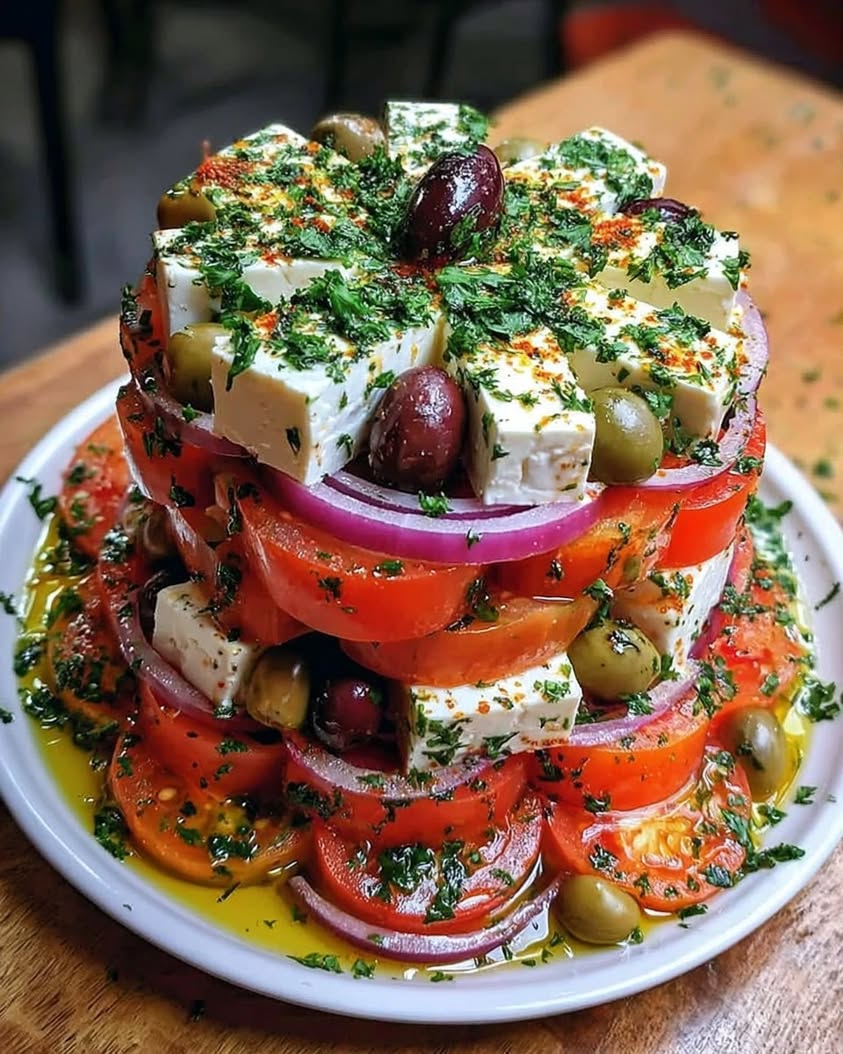
Imagine presenting a salad that looks like a masterpiece from a fine dining restaurant. This Greek Feta Salad Tower does exactly that, transforming the familiar, vibrant flavors of a classic Greek salad into an elegant, layered centerpiece. Consequently, every bite delivers a perfect harmony of crisp vegetables, briny olives, creamy cheese, and zesty dressing. Moreover, this dish is not just about taste; it is a visual celebration of Mediterranean colors and textures stacked high on your plate.
Furthermore, this impressive Greek Feta Salad Tower is deceptively simple to assemble. It requires no cooking, just fresh ingredients and a few minutes of your time. The magic lies in the presentation. By layering the components in a mold, you create a stunning vertical presentation that wows guests at dinner parties, potlucks, or even a special weeknight meal. Ultimately, it proves that healthy, fresh food can be the most beautiful and exciting part of any table.
Additionally, the experience of eating this tower is uniquely satisfying. As you press your fork through the layers, you get a little bit of everything in each mouthful: the crunch of cucumber, the juicy burst of tomato, the sharp bite of red onion, the creamy saltiness of feta, and the herbal notes of oregano. This Greek Feta Salad Tower is more than a recipe; it is an upgrade to your culinary repertoire that makes eating your vegetables an absolute delight.
Quick Recipe Highlights
- Flavor Profile: This Greek Feta Salad Tower bursts with the classic, sun-drenched flavors of the Mediterranean. Expect a bright, tangy punch from the lemon-oregano vinaigrette, perfectly balanced by the creamy, salty feta cheese. Simultaneously, the sweet tomatoes and crisp vegetables provide a fresh, clean base that makes every bite refreshing.
- Texture: The texture profile is wonderfully complex and satisfying. You get a delightful crunch from the diced cucumbers and bell peppers, contrasted by the juicy softness of ripe tomatoes. Meanwhile, the firm, crumbly texture of the feta cheese adds a creamy richness that ties all the elements together beautifully.
- Aroma: The aroma is instantly evocative of a Greek seaside taverna. Fresh oregano and dried oregano release their earthy, slightly peppery scent. Furthermore, the bright acidity of fresh lemon zest and juice cuts through, complemented by the subtle, fruity fragrance of extra virgin olive oil.
- Visual Appeal: This dish is a feast for the eyes. The layers create a striking vertical presentation of red tomatoes, green cucumbers and peppers, white feta, and purple onions. Garnished with Kalamata olives and a sprinkle of oregano, the colors mirror the Greek flag, making it incredibly photogenic.
- Skill Level Needed: Absolutely beginner-friendly. This Greek Feta Salad Tower requires no cooking skills whatsoever. The only techniques needed are simple knife work for chopping and the ability to whisk a dressing. Assembly is straightforward, especially with the help of a mold like a ring cutter or clean can.
- Special Equipment: You need a forming ring to create the tower structure. A 3-inch wide metal ring mold or pastry cutter works perfectly. Alternatively, you can use the top or bottom from a large, clean tin can with both ends removed. A good chef’s knife and cutting board are also essential for prepping the vegetables uniformly.
Recipe Overview
- Difficulty Level: We rate this Greek Feta Salad Tower as “Easy” for several compelling reasons. First, there is zero cooking involved, eliminating any stress about doneness or heat control. Second, the assembly process is logical and forgiving. Finally, the ingredient list consists of simple, fresh items that require minimal preparation beyond washing and chopping, making it accessible for cooks of all levels.
- Category: This versatile dish fits multiple categories beautifully. It is a standout salad, an impressive appetizer, and a stunning side dish. For a lighter meal, you can serve it as a main course, perhaps with some grilled pita bread or protein on the side. Its flexibility makes it perfect for any part of your menu.
- Cuisine: This recipe is firmly rooted in Greek and broader Mediterranean cuisine. It draws directly from the classic Horiatiki, or Greek village salad, celebrated for its emphasis on fresh, high-quality ingredients. The flavors—oregano, lemon, olive oil, feta, and olives—are iconic to the region’s culinary identity, offering a true taste of the Aegean.
- Cost: Preparing this Greek Feta Salad Tower is very cost-effective. The base vegetables (cucumber, tomato, bell pepper) are typically affordable, especially in season. The main cost drivers are the block feta cheese and Kalamata olives, but a little goes a long way. Overall, you can create this impressive dish for a fraction of the cost of a restaurant appetizer.
- Season: This salad shines brightest in the summer and early fall. That is when tomatoes and cucumbers are at their peak of flavor, sweetness, and juiciness. However, with good greenhouse vegetables, you can make a delicious version year-round. The bright flavors are particularly welcome in warmer months as a refreshing, cool meal.
- Occasion: This tower is perfect for occasions where presentation matters. It is ideal for dinner parties, holiday gatherings, bridal or baby showers, and romantic meals. Conversely, it also makes a special weeknight dinner feel celebratory. Its elegant look belies its simplicity, making you look like a culinary pro with minimal effort.
Why You’ll Love This Recipe
First and foremost, you will adore the explosive taste and satisfying texture of this Greek Feta Salad Tower. Each forkful delivers a perfectly balanced combination of flavors and crunch. The creamy, salty feta melds with the acidic dressing and sweet vegetables, creating a party in your mouth. Furthermore, the vertical eating experience is fun and different, ensuring you get every component in each bite instead of them separating on a flat plate.
Next, consider the sheer convenience and preparation benefits. This is a no-cook recipe, meaning you can avoid heating up your kitchen—a major bonus in the summer. Additionally, most of the components can be prepped ahead of time. You can chop the vegetables and make the dressing hours in advance, then assemble the towers just before serving for maximum freshness and structural integrity.
From a nutritional standpoint, this Greek Feta Salad Tower is a powerhouse. It is packed with vitamins, minerals, and antioxidants from the colorful array of vegetables. The olive oil provides heart-healthy monounsaturated fats, while the feta offers a good dose of calcium and protein. It is a meal that makes you feel nourished and energized, not weighed down, aligning perfectly with the celebrated health benefits of the Mediterranean diet.
Moreover, the social and entertaining value of this dish is immense. It is a guaranteed conversation starter. Guests are always impressed by its restaurant-quality presentation. Serving individual towers makes people feel special and considered. It demonstrates care and effort, elevating a simple gathering into a more memorable dining experience. You will love the compliments and the joy it brings to your table.
Finally, its cost-effectiveness and accessibility are huge wins. You can create a stunning, impressive dish with humble, easy-to-find ingredients. There is no need for expensive or exotic items. This Greek Feta Salad Tower proves that eating well does not have to be complicated or costly. It is an accessible recipe that delivers maximum flavor and style on a reasonable budget, making it a staple you will return to again and again.
Historical Background and Cultural Significance
The inspiration for this Greek Feta Salad Tower comes directly from the Horiatiki Salata, or Greek village salad. This iconic dish originated in the rural villages of Greece, where farmers and families would use what was fresh and available from their gardens: tomatoes, cucumbers, onions, and olives. They would top it with a slab of feta cheese and a drizzle of their own olive oil. Consequently, it was a practical, nourishing meal that celebrated the land’s bounty, embodying the simplicity and freshness at the heart of Greek cuisine.
This salad holds deep cultural significance in Greece. It is more than just food; it is a symbol of hospitality, community, and the Mediterranean way of life. It is commonly shared family-style at tavernas, with everyone digging in from a large central platter. The combination of ingredients is so beloved that it is considered a national dish. The flavors represent the Greek terroir—the sun, the sea, and the rocky soil that produces such aromatic oregano and olive trees.
The evolution from a rustic platter to an elegant Greek Feta Salad Tower is a modern twist on tradition. Contemporary chefs and home cooks began playing with presentation, using ring molds to create vertical salads that showcase each ingredient layer. This evolution respects the original flavor profile while introducing a new visual drama. It bridges the gap between humble home cooking and sophisticated plating, making the classic salad suitable for upscale occasions without altering its soul.
Regional variations of the base salad exist throughout Greece and the Mediterranean. For instance, on some islands, you might find capers added. In Crete, they might use barley rusks (dakos) as a base. The tower format allows for incorporating these variations creatively. You could layer in different cheeses, herbs, or even a base of seasoned couscous or quinoa. Ultimately, this Greek Feta Salad Tower is a versatile canvas that honors its rich history while encouraging personal expression.
Ingredient Deep Dive
Let us start with Feta Cheese, the star of this Greek Feta Salad Tower. Authentic Greek feta is a Protected Designation of Origin (PDO) product, meaning it must be made in specific regions of Greece from at least 70% sheep’s milk, often blended with goat’s milk. This process gives it a distinctive tangy, salty flavor and crumbly yet creamy texture. Nutritionally, it is a good source of calcium, protein, and probiotics. Always look for “Made in Greece” on the block, stored in brine, for the best quality and flavor. Avoid pre-crumbled feta, as it often contains anti-caking agents and lacks moisture.
Next, consider the Tomatoes. Ripe, in-season tomatoes are non-negotiable for the best flavor. They provide juicy sweetness and umami that form the foundation of the salad. Historically, tomatoes came to the Mediterranean from the Americas and were embraced wholeheartedly into Greek cuisine. They are rich in lycopene, an antioxidant linked to numerous health benefits. Choose vine-ripened or heirloom varieties for superior taste. If off-season, cherry or grape tomatoes often have more flavor than large, pale winter tomatoes. Store them at room temperature until ripe to preserve their aroma and texture.
Now, examine the Extra Virgin Olive Oil. This is the liquid gold of Greek cooking and your dressing base. High-quality EVOO has a fruity, peppery flavor that elevates the entire dish. It is central to the Mediterranean diet, renowned for its heart-healthy monounsaturated fats and anti-inflammatory properties. For this Greek Feta Salad Tower, use the best you can afford for the dressing. Look for cold-pressed oil in a dark glass bottle. Store it in a cool, dark place to prevent rancidity. Its quality directly impacts the salad’s final taste.
Finally, the Fresh Oregano. This herb is the quintessential Greek seasoning, offering an earthy, slightly bitter aroma that is unmistakable. Dried oregano is more potent and traditional in many Greek salads, but fresh leaves provide a brighter, more nuanced note. Oregano has a long history of use in the region for both culinary and medicinal purposes. It contains antioxidants and has antimicrobial properties. To store fresh oregano, wrap the stems in a damp paper towel and place in a plastic bag in the refrigerator. For the most authentic flavor, use Greek oregano if you can find it.
Common Mistakes to Avoid
- Using Watery Vegetables: Adding wet ingredients is a major mistake. If you do not seed your cucumbers and pat your tomatoes dry, excess water will pool at the bottom of your tower, making it soggy and causing it to collapse when you lift the mold. Always take this crucial step for structural integrity.
- Choosing Pre-Crumbled Feta: Pre-crumbled feta is often drier, coated in anti-caking agents, and lacks the creamy, moist texture of a block stored in brine. For the best flavor and proper layering in your Greek Feta Salad Tower, always buy a block of feta and crumble it yourself just before assembly.
- Overloading the Mold: Packing the vegetables too tightly into the ring mold is a common error. This compresses the ingredients, squeezing out their natural juices and making the tower dense and watery. Instead, gently place each layer without pressing down, allowing the ingredients to rest loosely together.
- Assembling Too Far in Advance: Building the towers hours before serving leads to a sad, wilted salad. The salt in the dressing and feta will draw moisture from the vegetables. For the crispest texture and tallest structure, assemble your Greek Feta Salad Tower immediately before you plan to serve it.
- Skipping the Seasoning Layers: Forgetting to season each vegetable layer as you build is a missed opportunity. A tiny pinch of salt and pepper between layers ensures every component is perfectly seasoned from the inside out, not just on the surface where the dressing hits.
- Using a Dull Knife: Chopping vegetables with a dull knife bruises them and causes them to leak juice prematurely. A sharp chef’s knife creates clean cuts that help the vegetables retain their moisture and crunch until you are ready to assemble and eat.
- Neglecting the Plate: Placing your finished tower on a flat, empty plate looks unfinished. Always drizzle a little extra dressing on the plate first and scatter a few extra olives or herbs around the base. This frames the tower and makes the presentation look professional and intentional.
- Lifting the Mold Incorrectly: Jerking the ring mold straight up can disturb the tower. The proper technique is to gently slide a small knife or offset spatula around the inner edge to release any suction, then slowly and steadily lift the mold straight upward.
Essential Techniques
Mastering the Vegetable Prep is crucial for a stable Greek Feta Salad Tower. The goal is uniform, small dice—about 1/4 to 1/2 inch pieces. This ensures they stack neatly and compactly. More importantly, you must remove excess moisture. For cucumbers, cut them in half lengthwise and use a spoon to scrape out the watery seed core before dicing. For tomatoes, similarly remove the jelly-like seed pockets. After dicing, place the vegetables on a paper towel-lined tray and gently pat them dry. This step is the foundation of a tower that stands tall without becoming a puddle.
Next, perfecting the Vinaigrette is key. A proper emulsion creates a cohesive dressing that clings to the vegetables. Start by whisking the lemon juice, vinegar, dried oregano, salt, and pepper in a bowl. Then, while whisking constantly, slowly drizzle in the extra virgin olive oil. This gradual incorporation allows the oil to suspend in the acidic liquid, creating a slightly thickened dressing. An alternative, easier method is to combine all ingredients in a small jar with a tight lid and shake vigorously until emulsified. A well-made dressing should lightly coat the back of a spoon.
The Layering and Assembly technique is where the magic happens. Place your ring mold in the center of the serving plate. Start with the sturdiest, least-moist ingredient at the bottom—often the diced cucumber or bell pepper. Add a layer, then sprinkle lightly with a pinch of salt. Drizzle a teaspoon of dressing over it. Repeat with the next vegetable, seasoning lightly each time. The feta layer should be in the middle or near the top. The key is to handle the ingredients gently, using a spoon to add them and not packing or pressing down, which compresses the layers and traps moisture.
Finally, the Unmolding Technique determines your final presentation. Before lifting, use a small paring knife or a thin offset spatula to run around the very inner edge of the mold. This breaks any suction created by the feta or juicy tomatoes. Place one hand gently on top of the ingredients to steady them. With your other hand, slowly and vertically lift the ring mold straight up. If it resists, do not force it; run the knife around again. A clean lift reveals a beautiful, defined tower. Immediately garnish the top and plate before serving.
Pro Tips for Perfect Greek Feta Salad Tower
Chill your ring mold in the freezer for 10 minutes before using it. A cold metal mold helps keep the ingredients firm and crisp during assembly, especially on a warm day. This simple trick adds extra stability to your structure.
Season each layer individually as you build the tower. A tiny pinch of flaky sea salt and a crack of black pepper between the vegetable layers ensures the seasoning is distributed throughout, not just on the outside where the dressing lands.
Use the back of a spoon to gently create an even, flat surface after each layer. This helps the next layer sit evenly and promotes a straight, professional-looking tower. Do not press down, just level the ingredients.
If your feta is very moist, pat the crumbles gently with a paper towel before adding them to the tower. You want creamy feta, but excess surface moisture can make the layer slippery and cause the tower to slide.
For an extra flavor boost, rub the inside of your empty salad bowl with a cut clove of garlic before adding your chopped vegetables to toss with dressing. The subtle garlic essence will perfume the entire salad.
Let the dressed vegetables sit for exactly 5 minutes before assembling. This brief marinating time allows the flavors to begin melding without drawing out so much water that the vegetables lose their crunch.
Have all your components—chopped veggies, crumbled feta, dressing, garnish—lined up in separate bowls before you start assembling. This “mise en place” makes the layering process quick, smooth, and stress-free.
If serving a crowd, prepare multiple ring molds. You can assemble two or three towers at once on a large tray, streamlining the process and ensuring all your guests get a fresh, beautiful presentation at the same time.
Variations and Adaptations
Explore regional variations to customize your Greek Feta Salad Tower. For a Cretan twist, add a tablespoon of rinsed capers to the vegetable mix for a briny pop. You could also place a small, crisp barley rusk (dako) at the very bottom of the mold before adding vegetables, creating an edible base that soaks up the delicious juices. Alternatively, incorporate some chopped fresh mint or dill along with the oregano for a more aromatic, island-inspired flavor profile.
Consider seasonal adaptations to keep your tower fresh year-round. In summer, use heirloom tomatoes and fresh basil. For fall, incorporate roasted cubes of butternut squash and toasted pumpkin seeds. During winter, use hearty kale (massaged with a little dressing) and segments of citrus like blood orange. In spring, add shaved asparagus and fresh peas. The basic formula remains, but the seasonal produce keeps the dish exciting and aligned with what is freshest at the market.
Dietary modifications are straightforward. For a vegan Greek Feta Salad Tower, substitute the feta with a firm, marinated tofu crumble or a commercial vegan feta alternative. To make it gluten-free, simply ensure all ingredients are certified GF—this recipe is naturally compliant. For a lower-carb or keto version, increase the ratio of cucumbers and bell peppers while slightly reducing the tomato, and be mindful of the carb count in any added onions.
Experiment with flavor variations by changing the cheese or dressing. Instead of feta, try creamy goat cheese or salty halloumi (grilled and diced). For the dressing, swap lemon for red wine vinegar or a splash of balsamic glaze drizzled over the top. Add a teaspoon of honey or maple syrup to the dressing for a touch of sweetness to balance acidity. A pinch of crushed red pepper flakes can also introduce a subtle heat that contrasts the creamy feta beautifully.
Modify the texture for a different experience. For more crunch, add a layer of toasted pine nuts or chopped walnuts within the tower. For creaminess, add a thin spread of hummus or tzatziki at the base before the first vegetable layer. You could also finely dice the vegetables for a more refined, delicate texture, or chop them more roughly for a rustic, hearty feel. The tower format adapts to all these textural changes.
Presentation alternatives offer endless creativity. Instead of one large tower, make several mini towers on a shared platter for appetizer portions. Deconstruct the tower into a layered parfait in a clear glass. Alternatively, skip the mold and use a small bowl lined with plastic wrap: pack the salad in, invert it onto a plate, and lift the wrap for a perfect dome shape. Each method provides the elegant layered effect with a slightly different visual appeal.
Serving and Presentation Guide
Plating techniques begin with the canvas. Choose a plain, white plate to make the vibrant colors of your Greek Feta Salad Tower truly pop. Alternatively, a rustic wooden board or a slate slab can provide beautiful contrast. Before placing the ring mold, drizzle a small pool of the lemon-oregano vinaigrette in the center of the plate. This creates a flavorful “moat” and prevents the first vegetable layer from sticking. After unmolding, you can drizzle a little more dressing in a circular motion around the base for a professional finish.
Garnishing is the final touch that elevates the presentation. Always place garnishes on top of the unmolded tower, not around it beforehand. A final sprinkle of fresh oregano or dill leaves adds color and fragrance. Place 2-3 whole Kalamata olives on the peak. A light dusting of dried oregano or a twist of black pepper over the top looks elegant. For a glossy sheen, you can lightly brush the top layer with a tiny bit of extra virgin olive oil using a pastry brush.
Traditional accompaniments complete the Mediterranean experience. Serve your Greek Feta Salad Tower with warm, grilled pita bread or pita chips on the side for scooping. A small bowl of creamy tzatziki or hummus makes a perfect dipping companion. For a more substantial meal, consider adding grilled chicken souvlaki, lamb meatballs, or a piece of simply grilled fish like salmon or sea bass alongside the tower.
Modern serving suggestions can streamline entertaining. Present individual towers as a chic starter at a seated dinner. For a buffet, assemble towers on a large tray and let guests admire them before serving. You can also create a “deconstructed” station where guests build their own towers using the ring mold and pre-prepared ingredients—a fun and interactive option for casual gatherings. This approach puts the impressive presentation in your guests’ hands.
Temperature considerations are simple but important. All components should be cold and crisp. Chill your serving plates in the refrigerator for 15-20 minutes before assembling, especially in warm weather. This keeps the tower cool longer after serving. Conversely, do not assemble the tower directly on a freezing-cold plate, as condensation can form and create a watery base. A cool plate is the ideal middle ground.
Portion control is built into the tower format. One 3-inch wide by 2-inch tall tower is a perfect appetizer or side portion. For a main course, consider making a wider tower (using a 4-inch ring) or serving two smaller towers per person. The structured nature of the dish naturally limits portion size in an elegant way, helping to prevent over-serving while ensuring a satisfying and visually substantial presentation.
Wine and Beverage Pairing
Wine pairings should complement the bright acidity and salty creaminess of the Greek Feta Salad Tower. A crisp, dry white wine is the classic choice. Assyrtiko from Santorini, with its high acidity and mineral notes, cuts through the richness of the feta and mirrors the lemon in the dressing. Alternatively, a Sauvignon Blanc with its grassy, citrusy profile works wonderfully. For a red option, choose a light-bodied, low-tannin wine like a Greek Xinomavro rosé or a Beaujolais. The key is to avoid heavily oaked or tannic wines that will clash with the salad’s freshness.
Non-alcoholic alternatives can be just as sophisticated. A sparkling lemonade or limeade mimics the citrus notes beautifully. For an herbal pairing, brew a strong, chilled mint tea with a squeeze of lemon. A cucumber-infused water or spa water with lemon slices and oregano sprigs is refreshing and thematically perfect. Kombucha, particularly a ginger-lemon flavor, offers a probiotic tang that pairs well with the fermented notes of the feta and the salad’s acidity.
While not traditional, coffee or tea can work if serving this tower as part of a brunch or lunch. A light, bright coffee like a washed Ethiopian with citrusy notes would not overpower the salad. For tea, consider a green tea with lemon verbena or a subtle jasmine green tea. Serve these beverages after the meal rather than alongside, as their stronger flavors are better suited as a palate-cleansing finish than a concurrent pairing.
Temperature considerations for beverages are straightforward. Everything should be served well-chilled, except for hot tea or coffee if chosen. The salad is cool and refreshing, so warm or room-temperature drinks would feel out of place. Keep white wines and rosés at 45-50°F, and non-alcoholic sparklers ice-cold. This ensures every sip enhances the cool, crisp experience of eating the tower.
Serving suggestions for beverages should be as elegant as the food. Pour wines into appropriate stemware to appreciate their aroma. Serve sparkling non-alcoholic drinks in champagne flutes for a festive feel. Herbal iced teas look beautiful in tall glasses with a garnish that echoes the salad, like a lemon wheel or an oregano sprig. Presentation of the drinks completes the sophisticated dining experience you’ve created with your Greek Feta Salad Tower.
Storage and Shelf Life
Storage methods for leftovers require disassembly. The assembled Greek Feta Salad Tower does not store well; the layers will compress and become watery. If you have leftovers, carefully deconstruct them. Place the vegetable components (without the feta) in a separate airtight container. Store the crumbled feta in its own small container. Keep the remaining dressing separate. This three-container system preserves the texture of each component for the next day.
Temperature requirements are simple: everything must be refrigerated. Store all components at or below 40°F (4°C). The cold temperature slows down the enzymatic breakdown of the vegetables and keeps the dairy safe. Do not leave the assembled tower or its separated components at room temperature for more than two hours, as per standard food safety guidelines for perishable items containing dairy and fresh produce.
Container recommendations focus on airtightness. Use glass containers with tight-sealing lids if possible, as they do not retain odors and allow you to see the contents. For the dressed vegetables, a container with a small colander insert is ideal to let any excess liquid drain away from the veggies, keeping them crisper. For the feta, a small container covered with a bit of brine or a splash of water will prevent it from drying out.
Recognizing signs of spoilage is important for food safety. Discard any components that develop an off smell, particularly a sour or fermented odor beyond the natural tang of the feta and dressing. Visible mold, of course, means immediate disposal. If the vegetables become excessively slimy or mushy, they have degraded and should not be consumed. The dressing may separate, which is normal, but if it smells rancid, the oil has likely spoiled.
Reheating instructions are not applicable, as this is a cold salad. The goal is to refresh the components. When ready to eat leftover components, drain any accumulated liquid from the vegetables. Give them a quick toss. Re-crumble the feta if it has clumped together. Re-whisk or shake the dressing to re-emulsify it. Then, you can either assemble a new, smaller tower or simply toss everything together in a bowl for a delicious, though less structured, salad.
Freezing is not recommended for any component of this Greek Feta Salad Tower. Freezing will utterly destroy the texture of the fresh vegetables, turning them into a mushy, watery mess upon thawing. The feta will become grainy and crumbly in an unpleasant way. The dressing may separate irreparably. This is a dish meant to be enjoyed fresh; freezing offers no viable preservation method.
Make Ahead Strategies
Creating a prep timeline is the key to stress-free entertaining. The day before, you can make the dressing. Combine all dressing ingredients in a jar, shake well, and refrigerate. The flavors will meld and improve. You can also wash and dry your vegetables. On the day of serving, up to 3-4 hours ahead, dice the cucumbers and bell peppers. Store them in separate airtight containers lined with a paper towel in the fridge. Wait to dice the tomatoes and red onion until 1-2 hours before assembly to preserve their crispness and prevent excessive weeping.
Storage between steps is crucial for maintaining quality. Keep all pre-chopped vegetables in their own containers. Do not mix them until you are ready to dress and assemble. The feta should remain as a whole block in its brine until just before assembly; crumble it then. Keeping components separate prevents cross-moisture and flavor transfer, ensuring each ingredient stays at its best for the final construction of your Greek Feta Salad Tower.
Assessing the quality impact of make-ahead steps is important. Dressing made ahead is a positive—it gets better. Sturdy vegetables like cucumbers and bell peppers hold up well for several hours when diced and chilled. Delicate tomatoes and onions suffer in texture if diced too early; their quality declines noticeably after about 2 hours. The feta block stores perfectly for days, but once crumbled, it dries out. Therefore, the optimal strategy is partial prep, saving the most delicate tasks for the last hour.
Assembly tips for make-ahead success involve a cool kitchen. Before you start layering, ensure all your components are cold and your work surface is not warm. Have your chilled ring molds ready. Follow the standard layering process, but work efficiently. If you must assemble more than 30 minutes before serving, place the completed towers (still in their molds) on their plates in the refrigerator. Cover them loosely with plastic wrap to prevent drying. This short chill helps set the layers without significant wilting.
Regarding reheating, there is none needed. The goal is to serve the towers cool and crisp straight from the refrigerator. If they have been chilling assembled, let them sit at room temperature for no more than 5 minutes before serving to take the extreme edge off the cold. This allows the flavors to express themselves more fully while maintaining the essential crisp texture.
Fresh element additions are your secret weapon. Even if you pre-assemble the towers, always add the final garnishes immediately before serving. Place the whole Kalamata olives, the sprinkle of fresh herbs, and the final drizzle of oil or dressing at the last moment. This ensures the garnishes look vibrant and fresh, not wilted or absorbed, providing that perfect final touch of color and flavor that makes the presentation sing.
Scaling Instructions
Halving the recipe is simple for a smaller meal. Use a 2.5-inch ring mold for a more petite tower. Reduce all ingredient quantities by exactly half. The preparation method remains identical. The only timing consideration is that assembly will be slightly faster due to fewer components to layer. Storage considerations are the same, though you will have less leftover, which is ideal for one or two people. This scaling works perfectly for a romantic dinner or a solo treat.
Doubling or tripling the recipe for a crowd requires a bit more planning. Do not try to mix all the vegetables in one enormous bowl, as they will get bruised. Instead, prepare multiple batches of the dressed vegetable mix in separate large bowls to ensure even coating. You will need multiple ring molds to assemble several towers simultaneously. Consider setting up an assembly line: a tray of molds, bowls of each component, and a row of serving plates. This organization keeps the process efficient.
Equipment adjustments are necessary when scaling up. You will need a larger whisk or a small food processor to make a bigger batch of dressing. Ensure you have enough sharp knives and cutting boards to prep the increased volume of vegetables without cross-contamination. Most importantly, have enough ring molds. If you are short, you can assemble towers in stages, cleaning the mold between uses, but having several molds saves significant time and stress when serving a group.
Timing modifications are minimal when scaling. The prep time will increase linearly with the volume—chopping twice the vegetables takes roughly twice as long. However, the assembly time per tower remains constant. Factor this in when planning your schedule. For a party, you can assemble towers about 20-30 minutes before guests arrive and refrigerate them (in their molds) on their serving plates. Add garnishes just as you bring them to the table.
Storage considerations for large batches focus on pre-assembly. If you have prepped a huge quantity of diced vegetables, store them in a large, shallow container (not a deep bowl) lined with paper towels. This maximizes surface area for moisture absorption and prevents the bottom layers from getting crushed. For the dressing, store it in a large jar or pitcher. Keep the feta in its original brine until the moment you need to crumble it. Keeping components separate until the last possible moment is even more critical when scaling up.
Nutritional Deep Dive
A macro breakdown of this Greek Feta Salad Tower reveals a balanced profile. It is relatively low in carbohydrates, with the primary carbs coming from the vegetables, providing fiber and natural sugars. The fats are predominantly healthy monounsaturated fats from the olive oil, with some saturated fat from the feta cheese. The protein content is moderate, supplied by the feta. This makes the dish a well-rounded option that provides sustained energy without a heavy calorie load, fitting into various dietary approaches.
The micronutrient analysis is Print
Greek Feta Salad Tower
- Total Time: 15 minutes
- Yield: 4
Description
A visually stunning layered salad featuring classic Greek ingredients, stacked high with creamy feta, crisp vegetables, and a zesty lemon-oregano dressing.
Ingredients
- 2 large ripe tomatoes, diced
- 1 English cucumber, diced
- 1 red onion, thinly sliced
- 1 green bell pepper, diced
- 200g feta cheese, crumbled
- 1/2 cup Kalamata olives, pitted
- 2 tbsp extra virgin olive oil
- 1 tbsp fresh lemon juice
- 1 tsp dried oregano
- Salt and black pepper to taste
- Fresh parsley for garnish
Instructions
- In a bowl, combine tomatoes, cucumber, red onion, and bell pepper. Toss gently.
- In a separate small bowl, whisk together olive oil, lemon juice, oregano, salt, and pepper to make the dressing.
- Using a ring mold or tall glass, layer the vegetable mixture at the bottom, followed by a layer of crumbled feta and olives. Repeat until the mold is full, pressing lightly.
- Drizzle the dressing over the top and carefully remove the mold to reveal the tower shape.
- Garnish with fresh parsley and serve immediately.
Notes
You can customize the seasonings to taste.
- Prep Time: 15 minutes
- Cook Time: 0 minutes
- Method: Appetizer
- Cuisine: Greek