Homemade Italian Wedding Soup: A Classic Comfort Food Recipe
Nothing warms the soul quite like a bowl of classic homemade Italian wedding soup. This beloved recipe, brimming with savory meatballs, tender vegetables, and delicate pasta, offers a perfect harmony of flavors and textures in every spoonful. Furthermore, it transforms simple, wholesome ingredients into a deeply satisfying meal that feels both celebratory and comforting. Consequently, learning to make this soup from scratch is a rewarding kitchen project that yields incredible results.
This particular version of homemade Italian wedding soup stays true to its rustic roots while ensuring a clear, flavorful broth. The process begins with forming perfectly seasoned mini meatballs, which then simmer gently in a fragrant base of carrots, celery, and onion. Finally, the addition of leafy escarole and tiny acini di pepe pasta completes the dish, creating a beautiful balance between the rich, savory elements and the bright, green vegetables. Ultimately, the aroma alone will have your family gathered around the kitchen table in anticipation.
Moreover, this soup is incredibly versatile. For instance, you can easily adapt it to suit dietary needs or personal preferences without losing its essential character. Whether you serve it as a hearty starter for a special dinner or as the main event for a cozy weeknight meal, this homemade Italian wedding soup delivers on every promise of comfort and flavor. Let’s dive into the details of creating this timeless classic in your own kitchen.
Quick Recipe Highlights
- Flavor Profile: This homemade Italian wedding soup delivers a deeply savory and well-rounded taste. The meatballs contribute a rich, herby depth, while the vegetables add a sweet, aromatic foundation. Additionally, the Parmesan rind infuses the broth with a subtle, nutty umami that ties everything together beautifully.
- Texture: You will enjoy a delightful contrast of textures in every bite. The tender, juicy meatballs play against the slight bite of the acini di pepe pasta. Meanwhile, the escarole offers a pleasant, silky wilt, and the carrots and celery provide a gentle crunch.
- Aroma: As the soup simmers, your kitchen will fill with an irresistible fragrance. The primary notes are of sautéed garlic and onion, followed by the earthy scent of herbs like parsley and oregano. Ultimately, the savory smell of the simmering meatballs and broth is utterly mouthwatering.
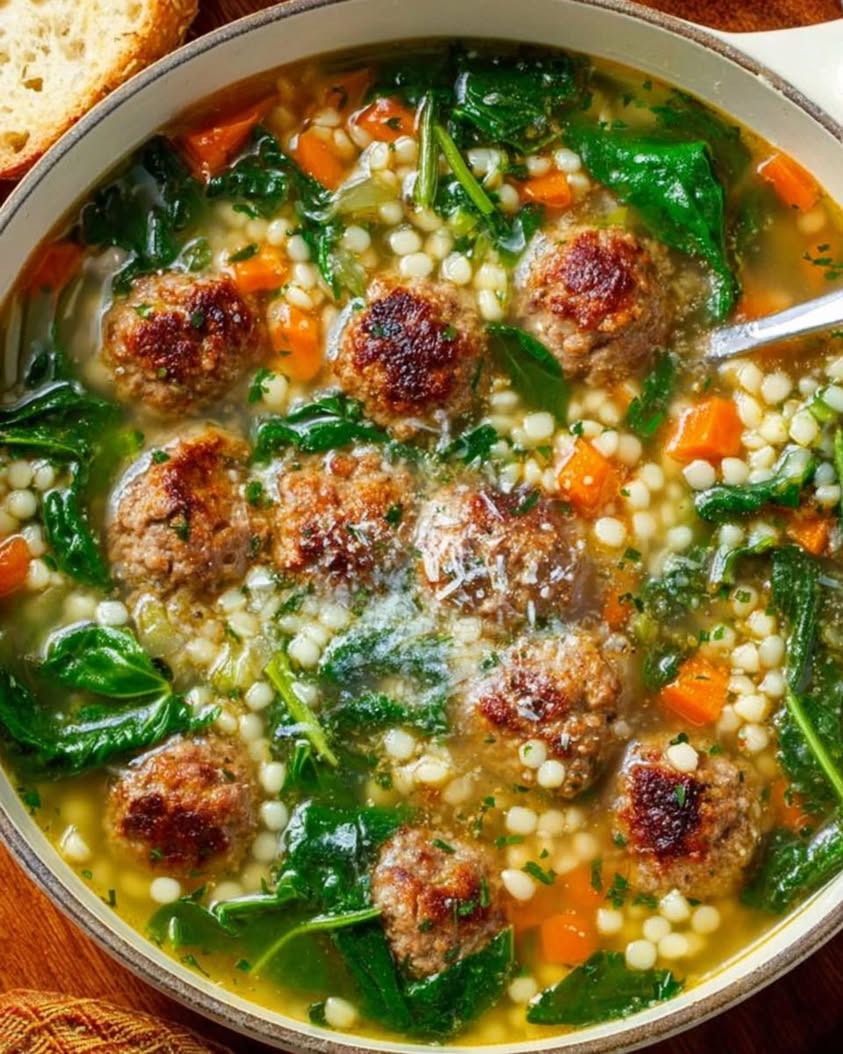
- Visual Appeal: This soup is a feast for the eyes with its vibrant colors. The emerald green escarole and orange carrots float in a golden, clear broth dotted with pearl-like pasta and miniature, golden-brown meatballs. A final sprinkle of fresh parsley and grated cheese adds the perfect finishing touch.
- Skill Level Needed: This recipe is very approachable for cooks of all levels. Basically, it involves straightforward techniques like mixing, rolling, sautéing, and simmering. Therefore, even a beginner can achieve fantastic results by following the clear steps outlined below.
- Special Equipment: You need only basic kitchen tools. A large pot or Dutch oven is essential for building the soup. Additionally, a rimmed baking sheet is helpful for browning the meatballs efficiently. Otherwise, standard mixing bowls, measuring spoons, and a wooden spoon are all you require.
Recipe Overview
- Difficulty Level: We rate this homemade Italian wedding soup as “Easy.” The steps are sequential and logical, requiring no advanced culinary skills. While there is some hands-on work forming the meatballs, the process is simple and even therapeutic. Consequently, the entire recipe comes together with minimal stress for maximum reward.
- Category: This dish perfectly straddles multiple categories. Primarily, it is a hearty soup or stew ideal for a main course. It also functions wonderfully as a substantial starter for an Italian-inspired feast. Furthermore, it fits into the category of comforting, one-pot meals that are perfect for family dinners.
- Cuisine: This is a quintessential Italian-American recipe. Its roots are in Southern Italian peasant cooking, where resourceful home cooks combined inexpensive meats and greens. Over time, Italian immigrants in America refined the dish, leading to the beloved version we know today with its characteristic small meatballs and pasta.
- Cost: This is a remarkably cost-effective meal to prepare at home. The ingredients are humble and affordable, especially when compared to dining out. Ground meat, vegetables, broth, and pasta are pantry staples for many. Therefore, you can create a restaurant-quality pot of soup for a fraction of the price.
- Season: While truly a year-round comfort food, homemade Italian wedding soup shines brightest in the cooler months. It is the ultimate antidote to crisp fall days and cold winter nights. That said, its light broth and fresh greens also make it suitable for a comforting meal during a chilly spring evening.
- Occasion: This soup is incredibly versatile for different events. It is perfect for a casual family supper, a comforting meal for someone under the weather, or a rustic first course for a dinner party. Additionally, it makes excellent leftovers, so it’s a fantastic make-ahead option for busy weeks.
Why You’ll Love This Recipe
First and foremost, the taste and texture of this homemade Italian wedding soup are utterly irresistible. Each component builds upon the next, creating layers of flavor that are both complex and comforting. The savory, herby meatballs melt in your mouth, while the slight bitterness of the escarole cuts through the richness perfectly. Meanwhile, the tiny pasta adds a delightful substance, making every spoonful a complete experience. The clear, flavorful broth is the star that brings it all together, seasoned just right with garlic, herbs, and a hint of Parmesan.
Beyond flavor, the convenience of this recipe is a major win. Essentially, you create a complete, balanced meal in a single pot. There is no need for elaborate side dishes, although a slice of crusty bread is always welcome. The preparation is straightforward, and much of the cook time is hands-off simmering. Consequently, you can attend to other tasks or simply relax while the magical aromas fill your home. This makes it an ideal choice for a stress-free weeknight dinner that feels special.
Nutritionally, this soup is a powerhouse disguised as comfort food. It provides a excellent balance of protein from the meatballs and eggs, vitamins from the array of vegetables, and carbohydrates from the pasta. The escarole, in particular, is a nutrient-dense green rich in vitamins A, C, and K. Using a low-sodium broth allows you to control the salt level, making this a healthier choice than canned or restaurant versions. Therefore, you can feel good about serving this nourishing meal to your loved ones.
From a social perspective, this homemade Italian wedding soup has immense entertaining value. It is a crowd-pleaser that appeals to both adults and children. Serving a steaming pot at the table fosters a sense of warmth and sharing. It is also easy to scale up for a larger gathering without complicating the cooking process. The soup’s rustic, homemade appearance is inherently inviting, making guests feel cared for and welcomed.
Finally, the cost-effectiveness and accessibility of this dish cannot be overstated. You likely have many of the core ingredients already in your refrigerator or pantry. The recipe is forgiving and allows for substitutions based on what you have available. By preparing it yourself, you avoid the premium prices of pre-made soups or restaurant takeout. Ultimately, this recipe empowers you to create a restaurant-quality, deeply satisfying meal on a sensible budget, which is a victory for any home cook.
Historical Background and Cultural Significance
The name “Italian wedding soup” is a bit of a misnomer that often leads to confusion. Contrary to popular belief, the soup is not traditionally served at weddings. The name is a translation of the Italian phrase “minestra maritata,” which means “married soup.” This marriage refers not to nuptials, but to the perfect, harmonious union of its ingredients—specifically, the rich, savory meat with the bitter, leafy greens. The flavors “marry” together beautifully during the long, slow cooking process, creating a cohesive and delicious whole.
This dish has deep roots in the resourceful “cucina povera” (poor kitchen) tradition of Southern Italy, particularly in the regions of Campania and Lazio. Historically, it was a way for families to make a little meat stretch a long way by forming it into many small meatballs and simmering them in a broth with foraged or garden-grown greens. The addition of pasta or grains helped to fill bellies economically. Therefore, the soup symbolizes ingenuity and the ability to create something nourishing and celebratory from humble, accessible ingredients.
As Italian immigrants brought their culinary traditions to America in the late 19th and early 20th centuries, the recipe evolved. Ingredients that were more readily available in the New World were incorporated. For example, escarole became a common green, and tiny pasta like acini di pepe or orzo replaced older grain additions. The soup gained immense popularity in Italian-American communities and eventually entered the mainstream American culinary landscape through restaurants and cookbooks. It became a staple on diner menus and in home kitchens across the country.
Today, homemade Italian wedding soup holds a special place as a comfort food classic. It represents a bridge between the old world and the new, carrying the history of immigrant families within its pot. While regional variations exist—some using endive or spinach instead of escarole, or adding cheese directly into the meatball mix—the core principle of “married” flavors remains. Consequently, preparing this soup is not just about making a meal; it is about participating in a rich, ongoing culinary story that celebrates simplicity, balance, and communal nourishment.
Ingredient Deep Dive
For the Meatballs: The combination of ground beef and pork is traditional for achieving optimal flavor and tenderness. The beef provides a robust, savory base, while the pork adds fat and sweetness, ensuring the meatballs stay juicy. Using fresh breadcrumbs soaked in milk (a panade) is a crucial technique; it binds the meatballs gently without making them dense, resulting in a tender texture. Fresh parsley and grated Parmesan cheese are non-negotiable for authentic Italian-American flavor, offering herbal brightness and salty, umami depth. Always use fresh garlic for the best aromatic punch.
Escarole: This slightly bitter, sturdy green is the classic choice for homemade Italian wedding soup. It holds up well to simmering without turning to mush, maintaining a pleasant texture and a flavor that balances the richness of the meatballs. Nutritionally, it is a powerhouse of vitamins A, C, and K, as well as folate and fiber. Look for heads with crisp, bright green leaves and avoid any with brown spots. If unavailable, curly endive or Swiss chard are acceptable substitutes, though spinach can be used if added at the very last minute to prevent overcooking.
Acini di Pepe Pasta: These tiny, round pieces of pasta resemble peppercorns, which is what their name means in Italian. They are the perfect size for this soup, providing substance without overwhelming the other components. Their small shape ensures they cook quickly and evenly in the broth. If you cannot find acini di pepe, other small pastas like orzo, pastina, or even ditalini are excellent alternatives. Be sure to cook them just until al dente, as they will continue to soften in the hot soup, especially if leftovers are stored.
Chicken Broth: A good-quality broth forms the foundation of your soup. Using a low-sodium variety is highly recommended, as it allows you to control the final seasoning level precisely. For the deepest flavor, consider using homemade chicken stock. The Parmesan rind is a pro secret; adding it to the simmering broth infuses it with a subtle, nutty cheesiness that elevates the entire dish. Remember to remove it before serving. Vegetable broth can be used for a lighter version, though the flavor profile will shift slightly.
The Aromatics (Carrot, Celery, Onion): This classic trio, known as a “soffritto” in Italian cooking, is the flavor base for countless soups and stewes. The onion provides sweetness and depth, the celery offers a subtle earthy flavor, and the carrot adds a touch of sweetness and color. Dicing them finely ensures they cook evenly and integrate seamlessly into the soup, providing flavor in every spoonful. Sautéing them until softened but not browned is key to developing a sweet, aromatic foundation without any bitter notes.
Common Mistakes to Avoid
- Overworking the Meatball Mixture: Mixing the meatball ingredients too vigorously is a common error. This activates the proteins in the meat, leading to tough, dense meatballs. Instead, use a light hand and mix just until the ingredients are combined. A fork or your fingertips work better than a heavy spoon for this delicate task.
- Making the Meatballs Too Large: The charm of this soup lies in its petite, bite-sized meatballs. Forming them too large disrupts the balance of the soup and can lead to uneven cooking. Aim for meatballs about 1/2 to 3/4-inch in diameter. Using a small cookie scoop can help ensure consistent size and speed up the process significantly.
- Skipping the Browning Step: While you can poach the meatballs directly in the broth, taking a few minutes to brown them in the pot first is highly recommended. This step creates a flavorful fond (the browned bits) on the bottom of the pot and adds a deeper, richer flavor to both the meatballs and the final soup. Do not skip this flavor-building opportunity.
- Overcooking the Greens: Escarole should be wilted and tender but still retain some texture and its vibrant green color. Adding it too early and letting it simmer for too long will result in mushy, dull, and overly bitter greens. Stir it in during the last 5-10 minutes of cooking to preserve its best qualities.
- Overcooking the Pasta: The pasta will continue to absorb liquid and soften even after the soup is taken off the heat. Therefore, you must cook it only until it is just al dente, or even a minute shy of al dente. If you plan to have leftovers, consider cooking the pasta separately and adding it to individual bowls to prevent it from becoming bloated and soggy in the stored soup.
- Using Pre-Grated Parmesan Cheese: The cellulose in pre-grated cheese can make it clumpy and less flavorful in both the meatballs and as a garnish. For the best melting quality and robust flavor, always buy a block of Parmigiano-Reggiano or Grana Padano and grate it fresh yourself. The difference in taste and texture is remarkable.
- Neglecting to Season in Layers: Seasoning only at the end results in a flat-tasting soup. Instead, season the meatball mixture adequately, then season the sautéed vegetables, and finally, taste and adjust the broth before adding the final components. Building seasoning in layers ensures every element is flavorful and the final product is perfectly balanced.
- Crowding the Pot When Browning Meatballs: If you add all the meatballs to the pot at once, they will steam instead of brown. Work in batches if necessary, giving each meatball a little space. This ensures they develop a nice golden-brown crust, which is essential for flavor and visual appeal.
Essential Techniques
Creating a Panade: A panade is a mixture of starch and liquid used to bind and moisten meatballs or meatloaf. For this recipe, combining fresh breadcrumbs with milk is the key to tender meatballs. The breadcrumbs absorb the milk, creating a paste that distributes moisture throughout the meat during cooking. This prevents the protein fibers from tightening too much and squeezing out their juices, which is what causes toughness. Let the panade sit for a few minutes to fully hydrate before mixing it with the meat.
Forming Consistent Meatballs: Uniform size is critical for even cooking. The best method is to portion the mixture using a small cookie scoop or a teaspoon. Then, lightly roll each portion between damp palms to form a smooth ball. Do not compact them tightly; a gentle roll is sufficient. Dampening your hands prevents the sticky mixture from adhering to your skin and makes the process much cleaner and faster.
Building Flavor with a Soffritto: The slow sauté of diced onion, carrot, and celery in olive oil is the first and most important step in building the soup’s flavor base. This process, called “sweating,” gently softens the vegetables and releases their natural sugars and aromas without browning them. The goal is a sweet, fragrant foundation. Stir them frequently over medium heat until they are translucent and soft, which usually takes about 8-10 minutes. Rushing this step means missing out on deep, developed flavors.
Developing Fond and Deglazing: After browning the meatballs, you will notice browned bits stuck to the bottom of the pot. This “fond” is packed with concentrated flavor. Deglazing is the technique of adding a liquid (in this case, the chicken broth) to the hot pot and using a wooden spoon to scrape up all those browned bits. This action dissolves the fond into the broth, instantly enriching it with a deep, savory complexity that you cannot achieve any other way. Never waste this flavor gold!
Pro Tips for Perfect Homemade Italian Wedding Soup
First, for the most flavorful meatballs, let the mixed meatball rest in the refrigerator for 15-30 minutes before forming. This allows the breadcrumbs to fully absorb the moisture and the flavors to meld, resulting in a more cohesive and tasty meatball.
Second, if your soup seems a bit thin after adding all ingredients, you can create a quick slurry. Mix one tablespoon of cornstarch with two tablespoons of cold water and stir it into the simmering soup. This will gently thicken the broth without making it gloopy.
Third, always add the pasta uncooked directly to the simmering broth. This allows the starch from the pasta to release into the soup, giving the broth a slightly richer body and better integration of flavors.
Fourth, for a brighter, fresher herb flavor, stir in half of your chopped parsley with the escarole at the end of cooking. Reserve the other half for a vibrant garnish on top of each served bowl.
Fifth, if you have time, make the meatballs a day ahead. Arrange them on a parchment-lined baking sheet, cover, and refrigerate. This breaks up the work and allows you to simply brown and simmer them when you’re ready to make the soup.
Sixth, taste your broth after the meatballs have simmered but before adding the escarole and pasta. This is your last easy chance to adjust salt, pepper, or even add a splash of fresh lemon juice to brighten the overall flavor profile.
Seventh, use the best Parmesan cheese you can afford for garnishing. The complex, salty, nutty flavor of real Parmigiano-Reggiano adds a final layer of sophistication that pre-grated cheese simply cannot match.
Eighth, allow the finished soup to rest off the heat for 5-10 minutes before serving. This lets the flavors settle and marry further, and it also brings the temperature to a perfect, spoon-ready warmth.
Variations and Adaptations
Regional Variations: Across Italy and its diaspora, you will find fascinating twists on this soup. In some parts of Southern Italy, bitter greens like cicoria (dandelion greens) are used instead of escarole. Some versions include a beaten egg stirred in at the very end to create stracciatella-like ribbons. Other recipes use tiny veal meatballs or a mix that includes ground turkey for a lighter touch. Exploring these variations can be a delightful culinary adventure.
Seasonal Adaptations: While escarole is a cool-weather green, you can adapt the soup year-round. In spring, try fresh spinach or pea shoots added at the last minute. For summer, a lighter version with zucchini and fresh basil makes a lovely meal. In the heart of winter, hearty kale or collard greens, simmered a bit longer, provide robust warmth and nutrition.
Dietary Modifications: This soup is wonderfully adaptable. For a gluten-free version, use certified gluten-free breadcrumbs or rolled oats in the meatballs and a gluten-free pasta like quinoa orzo or rice pasta. To make it dairy-free, omit the Parmesan from the meatballs and garnish, using a nutritional yeast alternative if desired. For a lower-carb option, increase the meatball quantity slightly and replace the pasta with diced cauliflower or simply omit it altogether.
Flavor Variations: Feel free to experiment with the herb profile. Adding a pinch of red pepper flakes to the soffritto will give the soup a gentle heat. A teaspoon of dried oregano or a sprig of fresh rosemary simmered with the broth can add another dimension. For a richer broth, use half chicken and half beef broth, or add a tablespoon of tomato paste when sautéing the vegetables.
Texture Modifications: If you prefer a heartier, stew-like consistency, you can add a rinsed can of white beans (cannellini or great northern) along with the escarole. For a creamier texture, stir in a quarter cup of heavy cream or a slurry of mascarpone cheese at the very end of cooking, just before serving.
Presentation Alternatives: For an elegant dinner party presentation, consider serving the soup in shallow, wide bowls. Place a few meatballs and a mound of cooked pasta in the center of each bowl, then ladle the hot broth and vegetables around them. Garnish with a drizzle of high-quality olive oil, microgreens, and a generous shaving of Parmesan.
Serving and Presentation Guide
Plating this soup is part of its appeal. Use wide, shallow bowls rather than deep ones; this showcases all the beautiful ingredients—the green escarole, orange carrots, and golden meatballs—floating in the clear broth. Ladle the soup carefully, ensuring each bowl gets a generous portion of meatballs, vegetables, pasta, and broth. Avoid overfilling the bowls to prevent spills and to make it easier for your guests to eat comfortably.
Garnishing is the final, crucial step for both flavor and visual pop. A sprinkle of freshly chopped Italian parsley adds a burst of color and fresh flavor. A generous dusting of freshly grated Parmesan cheese is non-negotiable. For a restaurant-quality finish, add a light drizzle of your best extra-virgin olive oil over the top just before serving. A twist of freshly cracked black pepper completes the picture.
Traditional accompaniments are simple and effective. A basket of warm, crusty bread like a baguette or ciabatta is perfect for sopping up every last drop of broth. For a more substantial meal, serve with a side salad of bitter greens with a lemon vinaigrette to complement the soup’s richness. These pairings keep the focus on the soup while rounding out the dining experience.
Modern serving suggestions might include offering small bowls of additional garnishes for a DIY touch. Set out dishes of extra Parmesan, red pepper flakes, a lemon wedge for squeezing, and a small pitcher of olive oil. This allows each person to customize their bowl to their taste. For a fun twist, serve the soup in a hollowed-out bread bowl for a truly rustic and immersive experience.
Temperature is paramount. Homemade Italian wedding soup should be served piping hot. Ensure your bowls are warmed beforehand—you can run them under hot water or place them in a warm oven for a few minutes. A cold bowl will quickly cool down the soup, diminishing its comforting appeal. Similarly, serve the bread warm to maintain the cozy, welcoming atmosphere.
Portion control is easy with this soup. As a main course, plan for about 1.5 to 2 cups per person. As a starter, a 1-cup portion is sufficient. Remember, the soup is quite filling due to the protein and pasta. If serving to a large group, you can keep the soup warm in a slow cooker on the “low” setting, allowing guests to serve themselves throughout the meal.
Wine and Beverage Pairing
Choosing the right wine enhances the comforting experience of homemade Italian wedding soup. A medium-bodied white wine with good acidity is an excellent choice. For instance, a Pinot Grigio from Alto Adige or a Vermentino from Sardinia complements the savory broth and herbs without overpowering the dish. Their crisp acidity cuts through the richness of the meatballs beautifully. Alternatively, a light-bodied red like a Chianti Classico or a Barbera can also pair well, especially if you appreciate red wine. Their bright cherry notes and subtle earthiness harmonize with the tomatoes and herbs in the soup’s flavor profile.
For non-alcoholic alternatives, consider beverages that cleanse the palate. Sparkling water with a squeeze of lemon or lime is always refreshing. A lightly sweetened iced tea, perhaps infused with herbs like mint or basil, can be a lovely match. For a warmer option, a simple cup of vegetable broth or a mild ginger tea can extend the cozy, savory experience of the meal without competing with its flavors.
While not traditional, certain coffees and teas can work as after-dinner pairings if you’ve enjoyed the soup for lunch. A medium-roast coffee with low acidity can be a pleasant follow-up. An herbal tea, such as chamomile or lemon verbena, offers a gentle, soothing finish to the meal. The key is to choose beverages that are not too bold or bitter, allowing the memory of the soup’s balanced flavors to linger.
Temperature considerations are straightforward: serve white wines well-chilled (45-50°F) and light reds slightly cool (55-60°F). Your non-alcoholic sparkling drinks should be icy cold. These cooler temperatures provide a refreshing contrast to the hot soup, making each spoonful and sip a delightful experience. Avoid serving any beverage too warm, as it will diminish the refreshing contrast.
Finally, presentation matters for your beverage pairings just as it does for the food. Serve wine in appropriate glassware to appreciate its aroma. Present iced tea in a tall glass with fresh herbs as garnish. These small touches elevate the entire meal from a simple supper to a considered dining occasion, making your homemade Italian wedding soup feast feel even more special.
Storage and Shelf Life
Proper storage is key to enjoying your homemade Italian wedding soup beyond the initial meal. First, allow the soup to cool completely before storing; placing hot soup directly in the refrigerator can raise the internal temperature of your fridge and potentially spoil other foods. Transfer the cooled soup to airtight containers. Glass containers are ideal as they don’t retain odors and allow you to see the contents. Leave about an inch of headspace to account for expansion if you plan to freeze it.
For refrigeration, the soup will keep well for 3 to 4 days. Store it in the coldest part of your refrigerator, usually the back of a shelf, not in the door. The pasta will continue to absorb broth over time, so the soup will thicken. This is normal. If the soup separates, a quick stir will recombine it. Always use a clean spoon each time you serve from the container to prevent bacterial introduction.
Signs of spoilage are important to recognize. If you notice an off or sour smell, visible mold, or if the texture becomes unusually slimy, discard the soup immediately. When in doubt, it is always safer to throw it out. Soups containing meat and dairy (from the cheese) are particularly perishable and should not be left at room temperature for more than two hours.
Reheating instructions are simple. Gently reheat the soup in a saucepan over medium-low heat, stirring occasionally, until it reaches a simmer. You may need to add a splash of water or broth to loosen it if the pasta has absorbed too much liquid. You can also reheat individual portions in the microwave. Use a microwave-safe bowl, cover it loosely, and heat in 60-second intervals, stirring in between, until hot throughout.
Freezing is an excellent option for longer storage. Homemade Italian wedding soup freezes reasonably well for up to 3 months. For best results, consider freezing the soup without the pasta, as pasta can become mushy upon thawing and reheating. Portion the soup into freezer-safe bags or containers, label with the date, and lay flat to freeze. To serve, thaw overnight in the refrigerator and then reheat on the stovetop, cooking fresh pasta separately to add at the end.
Make Ahead Strategies
This soup is a meal-prepper’s dream due to its excellent make-ahead potential. You can break down the preparation over two days to make weeknight cooking effortless. On your prep day, focus on the components that benefit from advance work. Chop all your vegetables—the onion, carrot, celery, and garlic—and store them together in an airtight container in the refrigerator. Wash and chop the escarole, drying it thoroughly before storing it in a separate bag with a paper towel to absorb moisture.
The meatballs are ideal for making ahead. Mix and form them completely, then arrange them in a single layer on a parchment-lined baking sheet. Cover the sheet tightly with plastic wrap and refrigerate for up to 24 hours. You can also freeze the uncooked meatballs on the sheet until solid, then transfer them to a freezer bag for up to 3 months. Cook directly from frozen, adding a few extra minutes to the browning time.
Assessing the quality impact of make-ahead steps is important. Pre-chopped vegetables will save significant time with no loss in flavor. Pre-formed meatballs actually benefit from a rest in the fridge, as the flavors meld and they hold their shape better during cooking. The only component best added fresh is the pasta, to prevent it from becoming bloated. Therefore, your final assembly on serving day will be quick and stress-free.
For assembly, your timeline is streamlined. On the day you plan to serve, simply pull your prepped vegetables and meatballs from the fridge. Start by sautéing the vegetables as directed. Then, brown your pre-formed meatballs. Because your mise en place is complete, the active cooking time feels minimal. You can have the soup simmering on the stove in under 15 minutes, freeing you up to set the table or prepare a simple salad.
Reheating guidelines for fully made soup are straightforward. If you’ve made the entire soup a day ahead, gently reheat it on the stovetop. You will likely need to add a bit of extra broth or water to adjust the consistency, as the pasta will have absorbed liquid. Taste and adjust the seasoning before serving, as flavors can mellow overnight. A fresh squeeze of lemon juice or a sprinkle of fresh herbs can brighten it up perfectly.
Remember to add any fresh elements just before serving. If you held back the pasta, cook it fresh and add it to the reheated soup. Garnish with freshly grated Parmesan and chopped parsley that you reserved from your prep day. This ensures the final presentation has the vibrant colors, textures, and bright flavors that make this homemade Italian wedding soup so special.
Scaling Instructions
Scaling this recipe up or down is straightforward due to its simple ratios. To halve the recipe, simply divide all ingredient quantities by two. Use a medium-sized pot instead of a large Dutch oven. The cooking times will remain largely the same, though you may need to reduce the simmering time for the meatballs by a minute or two, as a smaller volume of broth will come to temperature faster. This is perfect for a cozy dinner for two with minimal leftovers.
Doubling or tripling the recipe is excellent for feeding a crowd or for bulk meal prep. Multiply all ingredients accordingly. You will need a very large stockpot or to cook in batches. When browning the meatballs, it is even more crucial to work in batches to avoid steaming. The simmering time for the meatballs may need to be extended by 2-3 minutes to ensure they are cooked through in the center, due to the increased volume of cold ingredients lowering the broth temperature.
Equipment adjustments are necessary when scaling. A larger pot is obvious, but also ensure you have a large enough mixing bowl for the meatball mixture if doubling. You may need two rimmed baking sheets for browning meatballs in the oven if that’s your preferred method. For very large batches, consider using a roasting pan on the stovetop over two burners to brown vegetables and meatballs evenly.
Timing modifications are minimal but important. While the active prep time will increase when making more meatballs, the simmering time on the stove should not increase dramatically. However, allow extra time for the larger volume of broth to come to a boil initially. Also, when adding the escarole to a huge pot, it will take a minute longer to wilt down and become submerged in the broth. Stir more frequently to distribute the heat evenly.
Storage considerations change with scale. If you make a large batch, plan your storage strategy in advance. Portion the soup into family-sized or individual containers before refrigerating or freezing. This makes reheating for future meals much more convenient. Label all containers with the contents and date. Remember, a large pot of soup will take longer to cool down to a safe refrigeration temperature; consider dividing it into several shallow containers to speed up the cooling process.
Nutritional Deep Dive
A serving of this homemade Italian wedding soup provides a well-rounded macronutrient profile. It offers a substantial amount of high-quality protein from the beef, pork, and eggs in the meatballs, which is essential for muscle repair and satiety. The carbohydrates come primarily from the vegetables and the small pasta, providing energy. The fat content is moderate, coming from the olive oil, meat, and Parmesan cheese, contributing to flavor and helping absorb fat-soluble vitamins from the greens. This balance makes it a satisfying meal that fuels the body effectively.
The micronutrient analysis is impressive, largely due to the variety of vegetables. The carrots are rich in beta-carotene (vitamin A), which supports vision and immune health. The escarole provides vitamins K, C, and A, along with folate. The celery offers antioxidants and anti-inflammatory compounds. The garlic and onions contain allicin, which has noted health benefits. Using a low-sodium broth and controlling added salt makes this a heart-healthier choice compared to many canned soups.
Specific health benefits of this soup include supporting immune function through its array of vitamins and minerals. Print
Homemade Italian Wedding Soup
- Total Time: 45 minutes
- Yield: 4
Description
A comforting and hearty soup featuring tender meatballs, fresh vegetables, and acini di pepe pasta, all simmered in a savory chicken broth.
Ingredients
- 1 lb ground beef
- 1/2 lb ground pork
- 1/2 cup breadcrumbs
- 1/4 cup grated Parmesan cheese
- 1 egg
- 2 cloves garlic, minced
- 1 tbsp chopped fresh parsley
- 8 cups chicken broth
- 2 carrots, diced
- 2 celery stalks, diced
- 1 small onion, diced
- 1 cup acini di pepe pasta
- 4 cups fresh spinach
- Salt and pepper to taste
Instructions
- In a bowl, combine ground beef, ground pork, breadcrumbs, Parmesan, egg, garlic, parsley, salt, and pepper. Form into small meatballs (about 1 inch in diameter).
- In a large pot, bring chicken broth to a simmer. Add carrots, celery, and onion, and cook for 10 minutes until vegetables are tender.
- Gently add meatballs to the simmering broth and cook for 10 minutes, until cooked through.
- Stir in acini di pepe pasta and cook for an additional 8-10 minutes until pasta is al dente.
- Add fresh spinach and cook for 2-3 minutes until wilted. Season with salt and pepper as needed.
Notes
You can customize the seasonings to taste.
- Prep Time: 15 minutes
- Cook Time: 30 minutes
- Method: Main
- Cuisine: Italian