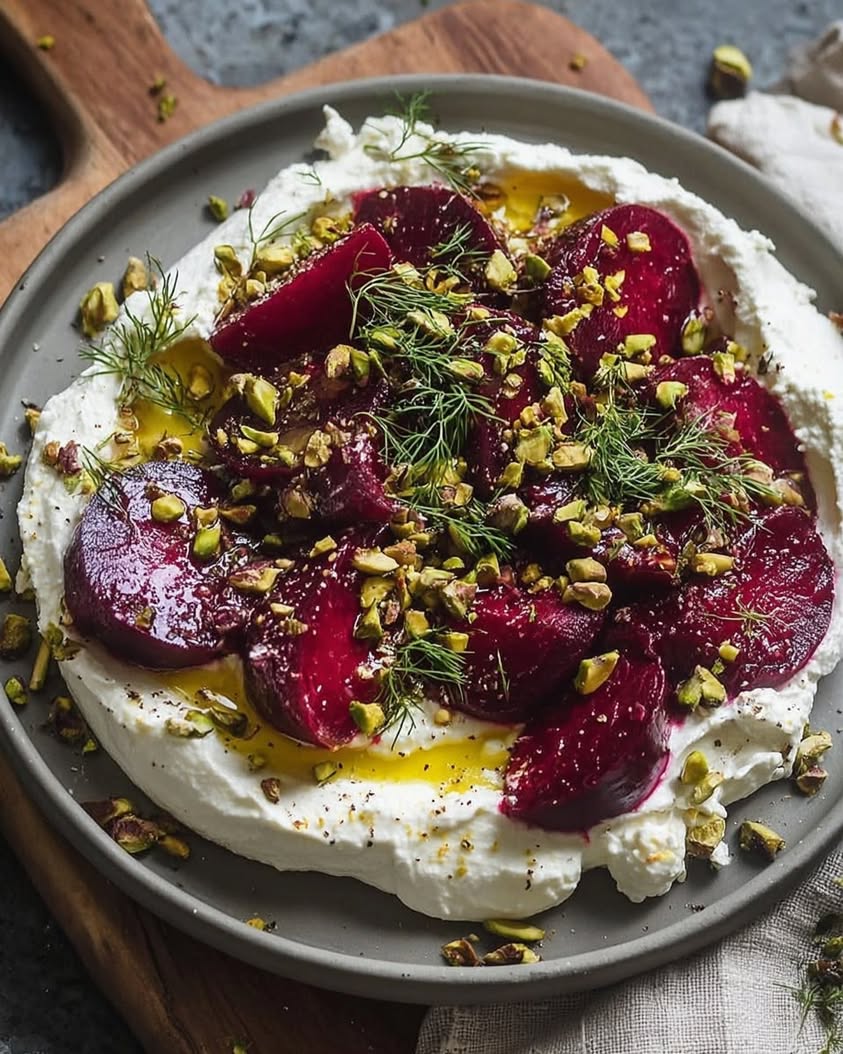
Creamy Whipped Feta with Marinated Beets & Pistachio Crunch: Your New Favorite Appetizer
Imagine a dip so stunningly beautiful and deliciously complex that it stops conversation the moment it hits the table. This Creamy Whipped Feta with Marinated Beets and Pistachio Crunch is exactly that showstopper. Fundamentally, it transforms humble ingredients into an elegant, shareable masterpiece. The visual appeal alone, with its vibrant magenta beets against a cloud of white feta, is undeniable. Moreover, every bite delivers a symphony of textures and flavors that will have your guests begging for the recipe.
This recipe masterfully balances salty, creamy, tangy, earthy, and sweet notes. Consequently, it feels both rustic and refined, perfect for everything from a casual weeknight treat to a sophisticated dinner party starter. The process is surprisingly simple, requiring no cooking and just a food processor. Ultimately, you will create a dish that looks like it came from a high-end restaurant but is achievable in your own kitchen. Let’s explore how to make this unforgettable Creamy Whipped Feta with Marinated Beets and Pistachio Crunch.
Quick Recipe Highlights
- Flavor Profile: This dish features the bold, salty tang of feta cheese perfectly balanced by the earthy sweetness of marinated beets. Additionally, a bright lemon vinaigrette and fresh herbs cut through the richness, while the pistachios add a final savory, buttery note.
- Texture: Experience a luxurious contrast between the impossibly smooth and airy whipped feta dip and the tender, jewel-like pieces of beet. Furthermore, the crunchy pistachio topping provides a satisfying finish that makes every bite exciting.
- Aroma: The scent of fresh dill and mint mingles with the sharp aroma of the feta and the bright zest of lemon. As a result, the aroma is herbaceous and inviting, promising a fresh and vibrant eating experience.
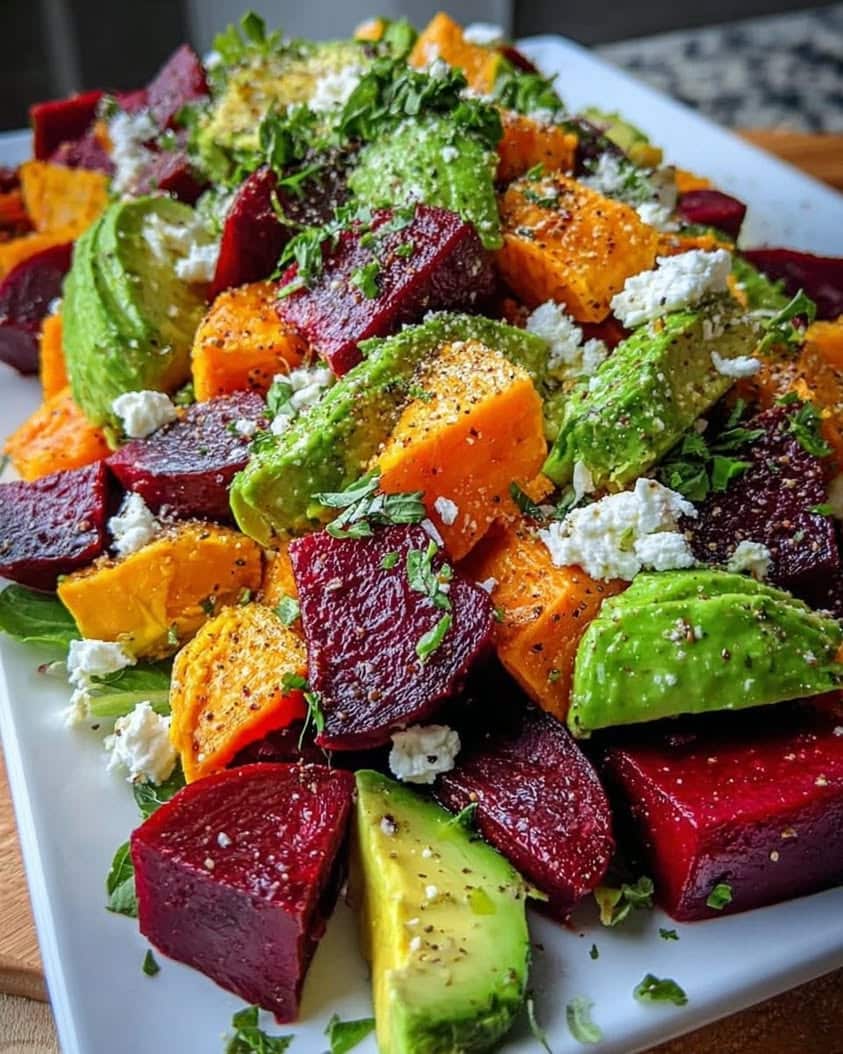
- Visual Appeal: The presentation is a true feast for the eyes. The stark white canvas of the whipped feta showcases the deep ruby red of the beets beautifully. Finally, the green herbs and golden pistachios create a stunning confetti of color.
- Skill Level Needed: This is a beginner-friendly recipe. Basically, if you can operate a food processor and do some simple chopping, you can make it. No advanced techniques or precise temperatures are required.
- Special Equipment: You will need a food processor or a high-powered blender to achieve the signature silky texture of the whipped feta. Other than that, just basic kitchen bowls and utensils are necessary.
Recipe Overview
- Difficulty Level: We rate this recipe as “Easy” because it involves assembly and simple processing rather than complex cooking techniques. There is no heat application or tricky timing. The most important step is properly draining the feta to ensure a thick, spreadable consistency. Anyone can achieve fantastic results with minimal effort.
- Category: This dish fits perfectly into the appetizer or mezze category. It is ideal for sharing with crackers, bread, or crudités. Alternatively, you can serve it as a vibrant side salad or a stunning component on a grazing board.
- Cuisine: While feta cheese is famously Greek, this preparation is a modern, fusion-style take. It draws inspiration from Mediterranean and Middle Eastern mezze traditions, where dips, marinated vegetables, and nuts are central to communal dining. The use of pistachios and fresh herbs reinforces this global influence.
- Cost: This is a moderately priced appetizer. Good-quality feta and fresh beets are the primary costs. Pre-cooked beets from the produce section save time. Ultimately, the impressive presentation offers a high perceived value that far exceeds the actual cost per serving.
- Season: This recipe shines year-round but is particularly wonderful in spring and summer. The bright, fresh flavors complement warmer weather dining. Additionally, it is a fantastic addition to holiday tables for a pop of non-traditional color.
- Occasion: It is incredibly versatile. Serve it at casual gatherings, potlucks, book clubs, or elegant cocktail parties. It also makes a wonderful light lunch when paired with a hearty grain salad. Truly, it is a dish for any event where good food is celebrated.
Why You’ll Love This Recipe
First and foremost, the taste and texture combination is utterly addictive. The creamy whipped feta with marinated beets and pistachio crunch delivers a party in your mouth with every single bite. The salty, tangy feta base is rich and satisfying. Meanwhile, the sweet, vinegary beets provide a bright counterpoint. Finally, the crunchy, salty pistachios tie everything together with their unique flavor and satisfying snap. This layering of flavors and textures ensures that no single bite is boring or monotonous.
From a convenience standpoint, this recipe is a dream. It requires absolutely zero cooking, which is a major win for hot days or busy schedules. You can prepare every component ahead of time. Consequently, assembly takes just minutes before serving. This make-ahead flexibility makes it a stress-free choice for entertaining. You get to be a relaxed host with a stunning dish that looks like you spent hours in the kitchen.
Nutritionally, this appetizer packs a beneficial punch. Beets are a fantastic source of fiber, folate, and immune-boosting vitamins. Feta cheese provides protein and calcium, though it is lower in fat than many creamy cheeses. Furthermore, the olive oil and pistachios contribute heart-healthy monounsaturated fats. Compared to many heavy, cheese-based dips, this option feels lighter and more vibrant while still being deeply satisfying.
For social and entertaining value, this dish is a true conversation starter. Its dramatic appearance immediately draws people in. It encourages communal eating and sharing, fostering a warm, connected atmosphere. Guests will be impressed by your culinary flair. Moreover, it caters to a variety of tastes, appealing to those who love bold flavors, creamy textures, and fresh ingredients alike. It is a guaranteed crowd-pleaser.
Finally, it is cost-effective and accessible. The ingredients are readily available at most standard grocery stores. You do not need to hunt for exotic items. While high-quality feta makes a difference, the recipe is forgiving. Pre-cooked beets save immense time. Ultimately, you create a restaurant-quality appetizer for a fraction of the price you would pay dining out. This creamy whipped feta with marinated beets and pistachio crunch offers incredible bang for your buck.
Historical Background and Cultural Significance
The story of this dish begins with its individual components, each with a deep history. Feta cheese, of course, is a protected designation of origin product from Greece, with a history stretching back thousands of years. Traditionally, feta was a way to preserve sheep and goat milk. The salty, briny cheese was a staple protein source. Whipping feta into a spreadable dip is a more modern interpretation, often seen in contemporary Greek and Mediterranean restaurants as a way to elevate the humble cheese.
Beets also have an ancient lineage, cultivated since at least the second millennium BC. Initially, people prized the beet greens, with the root being used medicinally. The modern sweet, red table beet we know today was developed much later. Pickling or marinating beets was a crucial preservation method before refrigeration. This technique not only extended their shelf life but also created the vibrant, tangy flavor profile we adore. Combining marinated beets with dairy is a tradition in Eastern European cuisines, like in Polish ćwikła.
The evolution of this specific recipe is a testament to modern fusion cooking. It takes the Greek tradition of whipped feta dips, like kopanisti, and marries it with the Eastern European practice of serving beets with dairy. The addition of pistachios, a prized nut from the Middle East, adds another cultural layer. This global fusion reflects today’s interconnected food landscape, where chefs and home cooks freely blend traditions to create exciting new dishes that honor their ingredients’ origins.
Regional variations of this concept abound. In Greece, you might find a similar whipped feta topped with roasted red peppers or olives. In the Middle East, a labneh (strained yogurt) base might be used instead of feta, topped with za’atar and olive oil. Some modern variations might use golden beets for a different color, add orange zest to the marinade, or substitute walnuts or hazelnuts for the pistachios. The core idea of a creamy, tangy base with a sweet-and-sour vegetable topping and crunchy nut garnish is wonderfully adaptable across cultures.
Ingredient Deep Dive
Feta Cheese: Authentic Greek feta is made from at least 70% sheep’s milk, often blended with goat’s milk. This gives it a tangy, slightly gamey complexity that cow’s milk feta lacks. Nutritionally, it is a good source of calcium, protein, and probiotics due to its fermentation. When selecting feta, opt for a block packed in brine rather than pre-crumbled, as it will be creamier and less dry. For the best whipped texture, let it come to room temperature and pat it dry to remove excess moisture. If you need a substitute, a firm ricotta salata or a drained goat cheese can work, though the flavor profile will change.
Beets: Beets have been cultivated since ancient times, originally for their greens. The vibrant red pigment, betalain, is a powerful antioxidant with anti-inflammatory properties. They are also rich in folate, manganese, and fiber. For this recipe, using pre-cooked vacuum-sealed beets is a huge time-saver and avoids staining your kitchen. If roasting fresh, wrap them in foil and bake until tender. Choose beets that are firm and smooth. To store fresh beets, remove the greens and keep the roots in a plastic bag in the fridge for weeks. Golden beets make a beautiful, less-staining alternative.
Pistachios: Pistachios are one of the oldest flowering nut trees, native to Central Asia and the Middle East. They are a nutritional powerhouse, packed with protein, fiber, and healthy fats. They also contain antioxidants like lutein. For the best crunch and flavor, buy raw or roasted unsalted pistachios. You can lightly toast them in a dry pan to enhance their nuttiness. Chop them just before serving to maintain freshness. Store pistachios in an airtight container in the fridge or freezer to prevent their oils from going rancid. In a pinch, almonds or walnuts can be used.
Fresh Herbs (Dill & Mint): Dill and mint are classic partners for both beets and feta across Mediterranean and Eastern European cuisines. Dill offers a grassy, anise-like flavor, while mint provides a bright, cooling note. Both herbs contain beneficial volatile oils and antioxidants. Always choose bunches with vibrant, perky leaves and no wilting or yellowing. To store, wrap stems in a damp paper towel and place in a plastic bag in the fridge. For a different twist, try using fresh oregano, chives, or parsley. Dried herbs are not a suitable substitute here, as the fresh flavor is crucial.
Extra Virgin Olive Oil & Lemon: High-quality extra virgin olive oil is non-negotiable. It provides the lush base for the whipped feta and the marinade, carrying flavor and contributing a fruity, peppery note. It’s rich in monounsaturated fats. Fresh lemon juice, not bottled, is essential for its bright, clean acidity that balances the fat and salt. The zest adds aromatic citrus oils that elevate the entire dish. Use a microplane for the finest zest. For a variation, a good quality red wine vinegar or a dash of orange juice can complement the lemon.
Common Mistakes to Avoid
- Using Pre-Crumbled Feta: Pre-crumbled feta contains anti-caking agents and is often drier. Consequently, it will not whip up as smoothly or creamy as a block of feta in brine. Always start with a solid block for the best texture.
- Not Draining the Feta Enough: Excess brine or water in the feta will make your dip runny. After removing it from the package, pat the block thoroughly with paper towels. This step is crucial for achieving a thick, spreadable consistency.
- Overprocessing the Feta: Once the feta and cream cheese are smooth, stop processing. Over-whipping can sometimes cause the fats to separate slightly, making the dip greasy rather than light and fluffy.
- Skipping the Beet Marination Time: Tossing the beets in the lemon-olive oil mixture and letting them sit is key. This allows the flavors to penetrate and the beets to become slightly pickled. Serving them immediately means they won’t have developed the full sweet-tangy flavor.
- Using Stale Nuts: Pistachios (or any nut) can go rancid. Always taste one before using. Rancid nuts have a bitter, unpleasant flavor that will ruin the entire dish. Store nuts properly and buy from stores with high turnover.
- Chopping the Pistachios Too Fine: The pistachios are meant to provide a distinct crunch. If you chop them into a dust, you lose that essential textural contrast. Aim for small, coarse pieces.
- Adding Salt Without Tasting: Feta is already very salty. Always taste your whipped feta mixture before adding any additional salt. You will likely find that none is needed, preventing an overly salty dip.
- Assembling Too Far in Advance: You can prep all components ahead, but assemble the dish just before serving. If the whipped feta sits under the wet beets for hours, it can become watery and lose its fluffy texture.
Essential Techniques
Whipping the Feta: This technique transforms a crumbly cheese into a silky, luxurious dip. The key is using room-temperature dairy and a powerful food processor. The blade creates an emulsion between the feta, cream cheese, and olive oil, trapping tiny air bubbles. This aeration is what gives it a light, fluffy texture. A common pitfall is using cold cheese, which won’t blend smoothly. Visual cues for success are a completely homogeneous, pale, and creamy mixture with no visible chunks of feta. It should mound easily on a spoon.
Marinating the Beets: Marinating is a quick-pickling process that uses acid (lemon juice) and fat (olive oil) to flavor and slightly soften the beets. The acid brightens the earthy flavor, while the oil helps carry the herb flavors. This technique is important because raw beets can be bland and firm. The marinade time allows the flavors to penetrate. The beets are ready when they have glistened and absorbed the dressing, usually in 10-15 minutes. They should taste balanced—earthy, sweet, and tangy.
Toasting and Chopping Nuts: Toasting nuts unlocks their essential oils, deepening their flavor and improving crunch. Do this in a dry pan over medium-low heat, shaking frequently, until fragrant. Watch closely, as they burn easily. Chopping is best done with a sharp chef’s knife on a cutting board. Pulse-chop in a food processor only if you are careful not to turn them into powder. The goal is irregular pieces for maximum textural interest in your creamy whipped feta with marinated beets and pistachio crunch.
Pro Tips for Perfect Creamy Whipped Feta with Marinated Beets and Pistachio Crunch
For the smoothest texture, let your feta and cream cheese sit on the counter for 20-30 minutes before blending. Room-temperature ingredients emulsify much more easily in the food processor.
Use the pulse function when starting to blend the feta and cream cheese. This prevents the mixture from flying up the sides and ensures even processing from the beginning.
Drizzle the olive oil into the food processor feed tube while it’s running. This slow incorporation helps create a stable, creamy emulsion, similar to making mayonnaise.
If your beets are very wet from the package, gently pat them dry with a paper towel before marinating. This prevents the marinade from becoming too diluted and watery.
Toast your pistachios just before assembling the dish. Warm nuts are more fragrant and provide a wonderful contrast to the cool, creamy dip.
Garnish with a final drizzle of high-quality olive oil and a sprinkle of flaky sea salt just before serving. This adds a professional finish and highlights the flavors.
Serve with a variety of dippers: sturdy pita chips, sliced baguette, crisp endive leaves, and thick cucumber rounds offer different textures and experiences.
If making ahead, store the whipped feta, marinated beets, and chopped pistachios in separate airtight containers in the fridge. Combine them no more than 30 minutes before your guests arrive.
Variations and Adaptations
For regional variations, consider a Middle Eastern twist by swapping the feta for labneh and adding a sprinkle of za’atar over the top. A French-inspired version could use goat cheese (chèvre) instead of feta and top with roasted grapes and thyme. For a Nordic feel, use a base of whipped Danish feta (which is milder) and top with quick-pickled cucumbers and dill.
Seasonal adaptations are easy. In spring, use tender baby beets and garnish with pea shoots. For summer, add fresh corn kernels to the beet mixture. In fall, roast cubed butternut squash with the beets for a sweeter, heartier topping. Winter calls for adding a hint of warming spice, like a pinch of cinnamon or allspice, to the beet marinade.
Dietary modifications are straightforward. For a vegan version, use a firm, brine-packed tofu or a commercial vegan feta alternative blended with vegan cream cheese and nutritional yeast for tang. For a dairy-free option, a base of soaked and blended cashews with lemon juice can mimic the creaminess.
Flavor variations can keep this recipe exciting. Add a roasted garlic clove to the food processor with the feta. Mix a teaspoon of harissa or smoked paprika into the whipped feta for a smoky kick. Incorporate orange zest instead of lemon for a sweeter citrus note. Stir a tablespoon of prepared horseradish into the beet mixture for a pungent bite.
Texture modifications can cater to different preferences. For extra creaminess, add an extra tablespoon of cream cheese or a splash of Greek yogurt to the feta blend. For a chunkier dip, fold in some crumbled feta after whipping the base. For a completely smooth beet layer, puree the marinated beets before topping.
Presentation alternatives are endless. Instead of one large bowl, serve individual portions in small glasses or mason jars for a chic look. Spread the whipped feta on a large platter, create swirls with the back of a spoon, and artfully arrange the beets and pistachios on top. Use it as a filling for roasted baby potatoes or as a topping for grilled flank steak.
Serving and Presentation Guide
Plating techniques matter for this visually stunning dish. Choose a wide, shallow bowl or a rimmed plate to showcase the layers. First, spread the whipped feta in an even layer, using the back of a spoon to create attractive swoops and swirls that will catch the toppings. This creates texture and visual interest before you even add the beets.
Garnishing is the final artistic touch. After spooning the marinated beets over the feta, sprinkle the chopped pistachios generously. Then, scatter the fresh dill and mint leaves. A final drizzle of your best olive oil over everything adds a beautiful sheen. For extra color, add edible flowers or microgreens.
Traditional accompaniments include warm, grilled pita bread cut into wedges. Crusty baguette slices are also perfect for scooping. For a lighter option, offer a platter of fresh vegetable crudités like Persian cucumbers, radishes, and bell pepper strips. These allow the flavors of the dip to truly shine.
Modern serving suggestions include using it as a sophisticated sandwich spread or a bagel schmear. You can also dollop it on top of a grain bowl with quinoa and roasted vegetables. For a party, present it as part of an elaborate mezze platter with olives, hummus, and stuffed grape leaves.
Temperature considerations are simple. The whipped feta and beets should be served cool, not ice-cold. Taking them out of the fridge 15-20 minutes before serving allows the flavors to bloom and the texture of the feta to be perfectly spreadable. Avoid leaving it out in direct sun or heat.
Portion control tips are helpful for planning. This recipe yields about 2 cups of dip, serving 6 as a generous appetizer. If it’s one of many dishes on a grazing table, it can easily serve 8-10 people. Remember, a little goes a long way due to its rich and flavorful nature.
Wine and Beverage Pairing
Wine pairings should complement the dish’s salty, tangy, and earthy notes. A crisp, high-acid white wine like a Greek Assyrtiko or a Sauvignon Blanc cuts through the richness of the feta beautifully. A dry Rosé with hints of red fruit is another excellent choice, as it bridges the gap between the red beets and white cheese. For a surprising and perfect match, try a light-bodied, low-tannin red like a Pinot Noir or a chilled Beaujolais, which can handle the earthiness of the beets.
Non-alcoholic alternatives are just as important. A sparkling water with a squeeze of lemon or lime cleanses the palate between bites. For something more special, a tart pomegranate spritzer or a ginger beer mocktail with muddled mint complements the dish’s flavors wonderfully. Iced herbal tea, like mint or lemon verbena, is also a refreshing choice.
Coffee and tea pairings work if serving this as part of a brunch. A bright, citrusy pour-over coffee or a light roast can stand up to the bold flavors. For tea, consider a Moroccan mint green tea or a floral Earl Grey. The key is to avoid anything too heavy or overly bitter that might clash with the dip’s acidity.
Temperature considerations are key for beverages. White wines, rosés, and non-alcoholic spritzers should be well-chilled. Red wines should be served slightly cooler than room temperature. Iced beverages should be cold but not diluted; use large ice cubes to prevent watering them down as your guests enjoy the creamy whipped feta with marinated beets and pistachio crunch.
Serving suggestions include offering a couple of options to cater to different preferences. Place bottles of chilled water and a carafe of a signature non-alcoholic drink on the table alongside the wine. This ensures all your guests have a delicious beverage to enjoy with this flavorful appetizer.
Storage and Shelf Life
Storage methods are straightforward but require separation for best results. Store the whipped feta base in an airtight container. Keep the marinated beets in a separate container with their liquid. Store the chopped pistachios at room temperature in a sealed bag or jar. This prevents the nuts from getting soggy and the feta from becoming watery.
Temperature requirements are strictly refrigeration for the feta and beets. Both components must be kept at or below 40°F (4°C). The pistachios can be stored in a cool, dark pantry. Never leave the assembled dip at room temperature for more than two hours to prevent bacterial growth.
Container recommendations include glass containers with tight-fitting lids for the feta and beets, as they won’t absorb odors. For the feta, press a piece of plastic wrap directly onto the surface before sealing the lid to prevent it from drying out or forming a skin.
Signs of spoilage include an off or sour smell, significant separation of liquids, or visible mold. The whipped feta may darken slightly on the surface due to oxidation; you can scrape this thin layer off if it occurs. If in doubt, it is always safest to discard the product.
Reheating instructions are not applicable, as this is a cold dish meant to be served cool. If the dip is too cold and firm straight from the fridge, simply let it sit on the counter for 15-20 minutes to soften slightly before serving.
Freezing guidelines are not recommended. Freezing will completely destroy the delicate, creamy texture of the whipped feta, causing it to become grainy and separate upon thawing. The beets will also become mushy. This dish is best enjoyed fresh or refrigerated for a few days.
Make Ahead Strategies
Your prep timeline can be spread over two days for stress-free entertaining. Day 1: Cook or purchase your beets, chop them, and place them in the marinade. Store covered in the fridge. Also, chop your pistachios and store them at room temperature. Day 2 (2-3 hours before serving): Whip the feta mixture and store it in its serving dish, covered. About 30 minutes before guests arrive, top the feta with the drained beets (reserve a little marinade) and garnish with pistachios and herbs.
Storage between steps is simple. The marinated beets will actually improve in flavor overnight. The whipped feta can be made up to 24 hours in advance. Keep both components tightly sealed in the refrigerator. The nuts and herbs should be prepped but kept separate until the final assembly.
Quality impact assessment shows that making components ahead is beneficial. The beets marinate more deeply, and the flavors in the feta meld. The only potential downside is the feta may firm up in the fridge. Letting it warm slightly before serving solves this. The overall taste is often better when made a day ahead.
Assembly tips for last-minute perfection: Use a slotted spoon to lift the beets out of their marinade, allowing excess liquid to drain. This prevents a puddle from forming on your beautiful dip. Gently fold the herbs into the beets just before topping to keep them vibrant.
Reheating guidelines are not needed, but “tempering” is. If the dip is rock-hard from the fridge, it won’t be spreadable. Plan for that 15-20 minute rest on the counter before serving. Do not microwave it, as this will break the emulsion and ruin the texture.
Fresh element additions are key for brightness. Always add the final garnish of fresh herbs and pistachios right before serving. You can also add a last-minute drizzle of fresh olive oil and a squeeze of lemon juice to wake up all the flavors just as you bring the dish to the table.
Scaling Instructions
Halving the recipe is simple for smaller gatherings. Use half of all listed ingredients. The food processor method still works perfectly with a smaller quantity. The marination time for the beets remains the same. Your yield will be about 1 cup of dip, perfectly serving 2-3 people as a generous appetizer.
Doubling or tripling for a crowd is easy, but requires attention to equipment. You may need to process the feta in batches if your food processor is small. Combine batches in a large bowl and stir to ensure uniformity. For the beets, use a large mixing bowl for marinating. A triple batch will serve 18 as an appetizer, ideal for large parties.
Equipment adjustments may be necessary when scaling up. For a double batch, a standard 7-cup food processor is usually sufficient. For a triple batch, you might use a large stand mixer with the paddle attachment to blend the feta and cream cheese, then slowly stream in the olive oil.
Timing modifications are minimal. The whipping time in the processor remains about the same regardless of batch size, as long as you don’t overfill the bowl. The beet marination time is also constant. The only added time is for the extra chopping and prep of larger quantities of ingredients.
Storage considerations become more important with larger batches. You will have more containers in the fridge. Clearly label them “Feta Base,” “Beets,” and “Nuts.” For a party, consider assembling the dip in two separate serving dishes rather than one enormous one, which can be awkward to serve from and may not fit on your table.
Nutritional Deep Dive
Macro breakdown for a serving is favorable. This dish provides a balance of healthy fats from olive oil, pistachios, and cheese, along with moderate protein from the feta and nuts, and carbohydrates primarily from the beets. The fiber content from the beets and pistachios is significant, aiding in satiety and digestion. It is not a low-calorie food, but it is nutrient-dense, meaning you get vitamins and minerals along with the calories.
Micronutrient analysis reveals a powerhouse of nutrients. Beets are rich in folate, manganese, and potassium. Feta provides calcium, phosphorus, and vitamin B12. Pistachios contribute vitamin B6, thiamine, and copper. The olive oil and fresh herbs add various antioxidants and anti-inflammatory compounds. Together, they create a dish that supports bone health, energy metabolism, and cellular function.
Health benefits are linked to its individual components. The betalains in beets have been studied for their potential to support blood pressure and exercise performance. The monounsaturated fats in olive oil and pistachios are heart-healthy. The probiotics in feta can support gut health. The combination offers anti-inflammatory and antioxidant properties.
Dietary considerations include its suitability for vegetarians. It is naturally gluten-free. However, it is not suitable for those with dairy allergies or lactose intolerance unless modified. It is also high in sodium due to the feta, so those on sodium-restricted diets should consume a smaller portion or seek lower-sodium feta.
Portion analysis shows that a typical serving (about 1/3 cup of the assembled dip) is satisfying without being excessive. Because it is rich and flavorful, a little goes a long way. Pairing it with fresh vegetable dippers instead of only bread can increase the volume of your snack without drastically increasing calories from the dip itself.
Weight management tips include being mindful of what you dip into it. Choosing cucumber slices, endive, and bell pepper strips over pita chips can create a lower-calorie, higher-fiber snack. You can also slightly increase the ratio of beets to feta on your plate for a less calorie-dense bite while still enjoying all the flavors.
Dietary Adaptations
Gluten-free: This recipe is naturally gluten-free as written. Simply ensure that any dippers you serve alongside, such as crackers or bread, are certified gluten-free. Many store-bought pita chips contain wheat, so read labels carefully or opt for veggie dippers.
Dairy-free/Vegan: For a vegan creamy whipped feta, use a block of firm, brine-packed tofu (pressed well) or a store-bought vegan feta. Blend it with vegan cream cheese, nutritional yeast for tang, lemon juice, and garlic. The beet topping remains the same. The result is surprisingly similar in texture and flavor profile.
Low-carb/Keto: This dish is already relatively low in net carbs, as beets are one of the lower-carb root vegetables. To make it strictly keto, reduce the amount of beet slightly and increase the feta and pistachio portions. Serve with keto-friendly dippers like cheese crisps, pork rinds, or celery sticks.
Paleo: A paleo adaptation requires replacing the dairy. Use a base of soaked and blended cashews with lemon juice and a pinch of salt to mimic the tangy creaminess. Ensure the pistachios are raw, as some roasted nuts use non-paleo oils. The beets and herbs are perfectly paleo-friendly.
Low-FODMAP: Feta cheese is typically low in lactose and is often tolerated on a low-FODMAP diet in moderate servings (about 40g). Use only the green tops of spring onions (scallions) instead of shallots in the beet marinade. Limit the pistachio portion to a small sprinkle, as nuts can be high in FODMAPs in larger quantities.
Nut-Free: For a nut-free version, simply omit the pistachios. You can replace the crunch with toasted sunflower seeds or pumpkin seeds (pepitas). Another option is to use a sprinkle of crispy fried onions or chickpeas for a different kind of texture contrast on top of your creamy dip.
Troubleshooting Guide
Dip is too runny: This is almost always due to excess moisture. Solution: Ensure your feta is thoroughly patted dry before blending. If using canned beets, pat them dry as well. If the dip is already made, you can try chilling it firmly to help it set, or fold in a tablespoon of extra crumbled feta to thicken it.
Dip is too thick or grainy: This happens if the feta was too cold or under-processed. Solution: Let the mixture come to room temperature and process it again, scraping down the sides. You can also add a teaspoon of milk, water, or extra olive oil while processing to help it smooth out.
Beets are bland: They need more time or more seasoning. Solution: Let them marinate longer, up to several hours or overnight. Taste and adjust the marinade with a pinch more salt, a squeeze of lemon, or a dash of vinegar until the flavor pops.
Pistachios are not crunchy: They may be stale or have gotten soggy from being added too early. Solution: Always store nuts properly and taste before using. Add the pistachio crunch garnish at the very last second before serving to maintain their signature snap.
Flavor is flat or one-dimensional: This often needs more acid or fresh herbs. Solution: Brighten the entire dish with an extra squeeze of fresh lemon juice over the top just before serving. Don’t be shy with the fresh dill and mint; their aromatic oils are essential.
Dip
Print A vibrant, elegant appetizer featuring smooth whipped feta topped with tangy marinated beets and a crunchy pistachio garnish. You can customize the seasonings to taste.Creamy Whipped Feta with Marinated Beets & Pistachio Crunch
Description
Ingredients
Instructions
Notes