Greek Chicken Meatballs with Homemade Tzatziki: A Flavorful Feast
Imagine the sun-drenched flavors of the Mediterranean, conveniently packed into a tender, juicy bite. This recipe for Greek Chicken Meatballs with Homemade Tzatziki brings that exact experience straight to your dinner table. Furthermore, it transforms simple, wholesome ingredients into a meal that feels both celebratory and comforting. The combination of aromatic herbs, tangy feta, and cool, creamy tzatziki creates a symphony of taste that is simply irresistible.
Consequently, this dish is a fantastic gateway to exploring Greek cuisine at home. It requires no special skills, just a love for good food. The process of making these Greek Chicken Meatballs is surprisingly therapeutic, from mixing the fragrant herbs into the ground chicken to shaping the perfect little orbs. Ultimately, the reward is a platter of golden-brown meatballs, their enticing aroma filling your kitchen, ready to be dipped into that fresh, homemade sauce.
Moreover, this meal is incredibly versatile. You can serve these Greek Chicken Meatballs as a hearty main course with rice or roasted vegetables, pile them into a pita for a fantastic sandwich, or even offer them as a crowd-pleasing appetizer at your next gathering. The homemade tzatziki sauce, with its crisp cucumber and garlic kick, is the perfect cooling counterpart to the warmly spiced meat. In short, this recipe is a guaranteed winner for busy weeknights and special occasions alike.
Quick Recipe Highlights
- Flavor Profile: These Greek Chicken Meatballs deliver a bright, herbaceous punch from fresh oregano and mint, balanced by the salty tang of feta cheese. The homemade tzatziki adds a layer of cool, garlicky creaminess, creating a perfect harmony of Mediterranean flavors in every single bite.
- Texture: Expect a wonderfully tender and juicy interior within each meatball, thanks to the lean ground chicken and careful mixing. Conversely, the exterior achieves a delightful, lightly crisped crust when baked or pan-seared. The tzatziki sauce contributes a refreshing, creamy, and slightly crunchy texture from the grated cucumber.
- Aroma: As the meatballs cook, your kitchen will fill with the unmistakable, inviting scent of garlic, onion, and earthy Mediterranean herbs. The aroma of the fresh tzatziki—a blend of cucumber, dill, and lemon—adds a final, bright note that promises a fresh and satisfying meal.
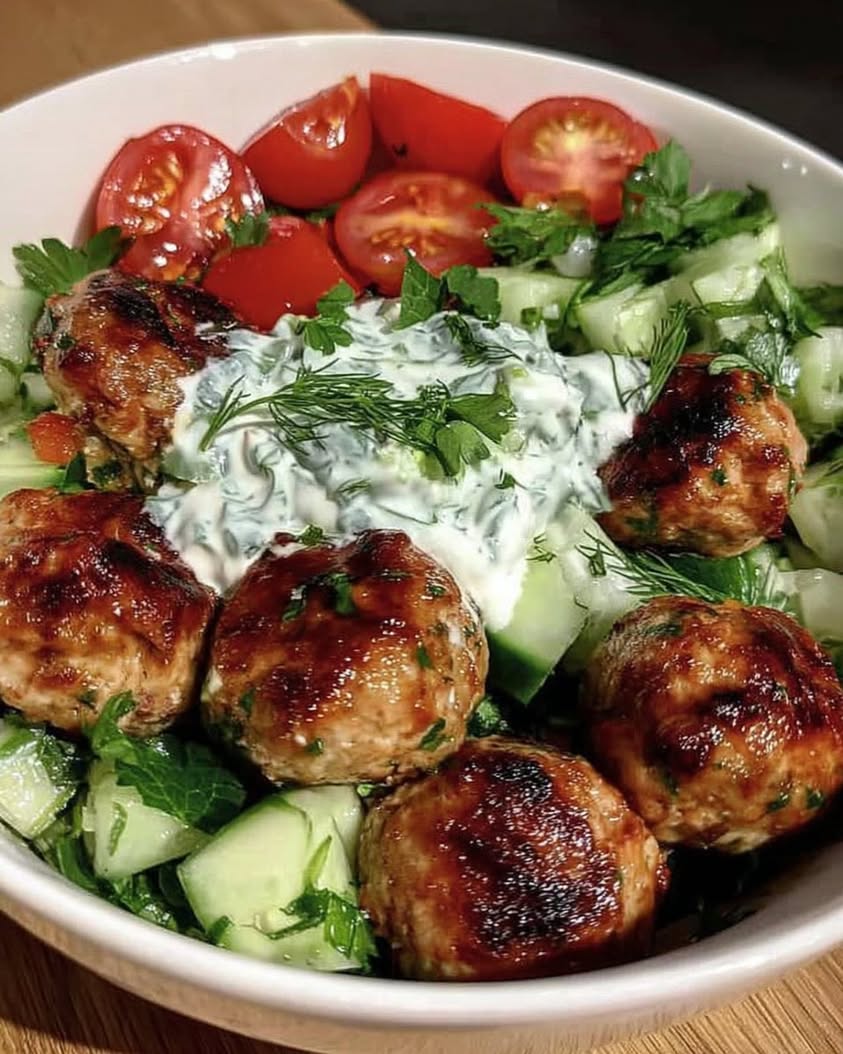
- Visual Appeal: The golden-brown meatballs look incredibly appetizing against the stark white of the tzatziki sauce. A final garnish of fresh dill or a sprinkle of paprika provides a beautiful color contrast, making the dish perfect for photographing or impressing guests straight from the oven.
- Skill Level Needed: This recipe is ideal for beginner and intermediate cooks. The techniques are straightforward, involving simple mixing, shaping, and either baking or pan-frying. No advanced culinary skills are required to achieve a delicious and impressive result with these Greek Chicken Meatballs.
- Special Equipment: You need only basic kitchen tools: a mixing bowl, a baking sheet (if baking), or a skillet (if pan-frying). A box grater for the cucumber and a fine mesh strainer or cheesecloth for draining the yogurt are helpful for the perfect tzatziki consistency.
Recipe Overview
- Difficulty Level: We classify these Greek Chicken Meatballs as “Easy” for several important reasons. First, the ingredient list is simple and the steps are logical and sequential. Second, the shaping process is forgiving, and the cooking methods (bake or pan-fry) are very accessible. Finally, the tzatziki sauce comes together quickly while the meatballs cook, maximizing efficiency.
- Category: This dish wonderfully straddles multiple categories. Primarily, it’s a fantastic main course protein. Simultaneously, it serves as an excellent appetizer or party food when served on toothpicks. Additionally, the components make for a stellar meal prep option, as both meatballs and sauce keep and reheat beautifully throughout the week.
- Cuisine: This recipe is firmly rooted in the vibrant traditions of Greek and broader Mediterranean cuisine. It utilizes hallmark ingredients like oregano, mint, lemon, olive oil, feta, and yogurt. The flavor profile is authentic and designed to transport your taste buds to a seaside taverna, celebrating fresh, bright, and wholesome ingredients.
- Cost: Preparing these Greek Chicken Meatballs with Homemade Tzatziki is remarkably cost-effective. Ground chicken is typically an affordable protein, and the herbs, spices, and vegetables are pantry staples or low-cost fresh items. Making your own tzatziki is significantly cheaper than buying pre-made versions, allowing you to control quality and flavor.
- Season: This is truly a year-round recipe. In summer, the fresh herbs and cool tzatziki feel light and refreshing. During colder months, the warm, baked meatballs provide comforting sustenance. The bright flavors are a welcome antidote to winter heaviness, making it a versatile seasonal choice for any time of year.
- Occasion: These meatballs are perfect for casual family dinners, easy yet impressive date nights at home, or as a shareable centerpiece for gatherings and potlucks. They are also ideal for weekly meal prep, providing ready-to-eat protein that can be used in salads, bowls, and wraps for days.
Why You’ll Love This Recipe
First and foremost, the taste and texture are utterly irresistible. Each bite of these Greek Chicken Meatballs offers a burst of Mediterranean flavor—savory garlic, earthy oregano, bright mint, and salty feta—all wrapped in a tender, juicy package. The homemade tzatziki sauce is the perfect partner, its cool, creamy, and garlicky profile cutting through the richness and elevating every mouthful. This combination creates a dining experience that is both satisfying and exciting, far surpassing anything you could find in a freezer aisle.
From a convenience standpoint, this recipe is a true weeknight hero. The prep is straightforward, and the cooking time is under 30 minutes. You can easily double the batch for leftovers or future meals. Furthermore, the ingredients are simple to find at any standard grocery store. The process is also wonderfully adaptable; you can choose to bake the meatballs for a hands-off approach or pan-fry them for a quicker, crispier finish. Ultimately, it delivers restaurant-quality flavor with minimal fuss and maximum reward.
Nutritionally, this dish is a smart choice. Lean ground chicken provides high-quality protein without excessive fat. The herbs and vegetables contribute vitamins, antioxidants, and fiber. By making your own tzatziki, you control the ingredients, avoiding the added sugars and preservatives common in store-bought versions. Using Greek yogurt adds a probiotic boost. This meal proves that eating well can be incredibly delicious and deeply satisfying, supporting your health goals without any sense of deprivation.
For social and entertaining value, these Greek Chicken Meatballs are a guaranteed crowd-pleaser. They are easy to eat, whether plated for dinner or served as finger food. The vibrant presentation and incredible aroma make them a talking point. You can set up a DIY “meatball bowl” or pita bar with various toppings, allowing guests to customize their plates. This interactive element makes any meal feel more festive and engaging, taking the pressure off the host.
Finally, the cost-effectiveness and accessibility of this recipe cannot be overstated. You can feed a family of four a gourmet-tasting meal for a fraction of the cost of takeout or dining out. The ingredients are pantry-friendly and often on sale. This approach to cooking empowers you to create wholesome, flavorful food at home, building your culinary confidence while stretching your grocery budget. It’s a recipe that gives back far more than it requires, in terms of flavor, nutrition, and pure enjoyment.
Historical Background and Cultural Significance
The concept of meatballs, or “keftedes,” is ancient and spans countless cultures, but the Greek version holds a special place in Mediterranean culinary history. In Greece, keftedes are traditionally made with ground beef, lamb, or pork, and are a staple of meze platters—those delightful assortments of small dishes meant for sharing. The addition of herbs like oregano and mint, along with onions and breadcrumbs, creates a distinctive flavor profile that has been passed down through generations. These dishes were born from a tradition of resourcefulness, using available ingredients to create maximum flavor and sustenance.
Culturally, food in Greece is synonymous with community, celebration, and “philoxenia” (love for strangers/hospitality). Serving keftedes to guests is a gesture of warmth and generosity. They are ubiquitous at family gatherings, religious festivals, and tavernas across the country. The act of sharing small plates encourages conversation and connection, making the meal a social event rather than just a means to eat. Consequently, these Greek Chicken Meatballs carry with them the spirit of Greek hospitality, inviting everyone to the table to share in a joyful, communal eating experience.
The recipe has naturally evolved over time, adapting to modern tastes and dietary preferences. The use of chicken instead of red meat is a contemporary twist that reflects a global shift towards leaner proteins. Similarly, while tzatziki has ancient roots possibly tracing back to Indian raita, the Greek version using strained yogurt, cucumber, garlic, and olive oil was perfected over centuries. Today’s home cooks continue this evolution, experimenting with baking instead of frying for a healthier result, or adding personal touches like different herb combinations, while still honoring the core flavors of the tradition.
Regional variations within Greece itself are fascinating. On some islands, you might find keftedes with a hint of cinnamon or allspice. In other regions, they might include grated potato for binding instead of bread. The tzatziki might be made with different types of mint or include a splash of vinegar. This recipe for Greek Chicken Meatballs with Homemade Tzatziki embraces the most classic and beloved flavor profile—the one you’d likely find in a central Athens taverna—while providing a accessible, reliable foundation. From there, you are encouraged to make it your own, just as generations of Greek cooks have done before.
Ingredient Deep Dive
Ground Chicken: Choosing the right ground chicken is crucial. Opt for a mix of white and dark meat (often labeled “ground chicken”) for the best balance of flavor and moisture. Pure breast meat can become dry. From a nutritional standpoint, chicken is an excellent source of lean protein, B vitamins, and selenium. For storage, use it within 1-2 days of purchase or freeze it immediately. If you need a substitution, ground turkey is the closest alternative, though ground lamb or beef will take the recipe in a more traditional keftede direction.
Fresh Oregano & Mint: These herbs are the soul of the dish. Oregano, especially the Greek variety, is robust and slightly peppery. Mint adds a bright, cooling note that is signature to Greek cuisine. Historically, these herbs grow abundantly in the Mediterranean climate and have been used for both culinary and medicinal purposes for millennia. They are rich in antioxidants. Always choose fresh herbs for this recipe; their flavor is incomparable to dried. Store them stem-down in a glass of water in the fridge, like a bouquet. If you must substitute, use 1/3 the amount of dried oregano and omit dried mint, as it lacks the necessary freshness.
Feta Cheese: Authentic Greek feta is made from at least 70% sheep’s milk, often blended with goat’s milk, and boasts a tangy, salty, crumbly character. It adds essential moisture and flavor bursts within the meatballs. Nutritionally, it provides calcium and protein. For the best results, buy a block of feta in brine and crumble it yourself; pre-crumbled feta is often drier. Store leftover feta submerged in its brine in the refrigerator. For a dairy-free version, a firm, brined vegan “feta” can work, or you can simply omit it and add a pinch more salt.
Greek Yogurt (for Tzatziki): The foundation of great tzatziki is thick, strained Greek yogurt. Its high protein and probiotic content make it a nutritional powerhouse. The straining process removes whey, resulting in a creamy, tangy base that won’t water down your sauce. For authenticity, use full-fat yogurt, though low-fat works too. To make your own strained yogurt, line a sieve with cheesecloth, add regular plain yogurt, and let it drain over a bowl in the fridge for several hours. This step is key for a dip that’s thick enough to cling to a meatball.
Cucumber (for Tzatziki): The cucumber must be prepared correctly to prevent a watery sauce. English or Persian cucumbers are ideal because they have fewer seeds and thinner skin. After grating, salting and draining the cucumber is a non-negotiable technique. This draws out excess moisture, concentrating the cucumber’s flavor and ensuring your tzatziki is creamy, not runny. Cucumbers are hydrating and provide vitamin K. Always pat them very dry after draining. This attention to detail separates a good sauce from a truly exceptional one.
Common Mistakes to Avoid
- Overmixing the Meatball Mixture: This is the top mistake. Overworking the ground chicken activates the proteins, leading to tough, dense, rubbery meatballs. Mix the ingredients just until they are combined. A light hand is your best friend for ensuring a tender texture.
- Not Draining the Grated Cucumber: Skipping the salting and draining step for the tzatziki cucumber will doom your sauce to be a watery, diluted mess. The excess liquid will seep out and thin the yogurt, ruining the perfect creamy consistency. Take the extra five minutes to do this properly.
- Using Dried Herbs in the Tzatziki: The tzatziki sauce relies on the bright, fresh flavor of dill (or mint). Dried dill tastes dusty and muted in this context. Always use fresh herbs for the sauce to achieve that vibrant, garden-fresh taste that defines great tzatziki.
- Forming Meatballs That Are Too Large: Oversized meatballs will not cook evenly; the outside may burn before the inside is done. Aim for meatballs about 1 to 1.5 inches in diameter. This size ensures quick, even cooking and a perfect meat-to-crust ratio.
- Not Letting the Tzatziki Rest: Serving the tzatziki immediately after making it misses a key opportunity. Letting it rest in the refrigerator for at least 30 minutes (ideally an hour) allows the garlic flavor to mellow and permeate the sauce, and lets all the flavors marry beautifully.
- Crowding the Pan or Baking Sheet: Whether baking or pan-frying, give the meatballs space. Crowding them causes them to steam instead of brown, preventing that desirable caramelized crust. Cook in batches if necessary to ensure each meatball has room to breathe.
- Using Pre-Crumbled, Dry Feta: The moist, briny crumbles from a block of feta melt into the meatball beautifully. Pre-crumbled feta is often coated in anti-caking agents and is much drier, resulting in less flavor and moisture distribution. The extra minute to crumble your own is worth it.
- Not Testing for Seasoning: Before shaping all the meatballs, cook a small tester patty in a skillet. This allows you to taste and adjust the salt, pepper, or herbs in the mixture. It’s a simple step that guarantees your final batch will be perfectly seasoned.
Essential Techniques
Proper Meatball Mixing: The technique for mixing is paramount for texture. Combine all your dry ingredients and aromatics first in a large bowl. Then, add the ground chicken and wet ingredients. Using your hands or a fork, gently fold everything together until just incorporated. Stop the moment you no longer see streaks of individual components. Overmixing is the enemy of tenderness, as it compacts the meat and develops the proteins too much, leading to a tough result. The mixture should be cohesive but not pasty.
Draining Grated Cucumber: This is the make-or-break technique for perfect tzatziki. After grating the cucumber (using the large holes of a box grater), place it in a fine mesh strainer or a clean kitchen towel. Sprinkle with about 1/2 teaspoon of salt, which helps draw out water. Let it sit for 10-15 minutes. Then, using your hands or the towel, squeeze out as much liquid as humanly possible. You will be amazed at how much water releases. This step ensures your sauce is thick, creamy, and won’t separate.
Shaping Consistent Meatballs: For even cooking, consistency in size is key. A small cookie scoop (about 1.5 tablespoons) is a fantastic tool for portioning. If shaping by hand, lightly wet your palms with water or a bit of olive oil to prevent the mixture from sticking. Gently roll each portion into a smooth ball without applying too much pressure. Placing them on a parchment-lined tray before cooking helps them hold their shape and makes transferring to the pan or oven easier.
Achieving the Perfect Sear or Bake: For pan-frying, ensure your skillet is hot with a thin layer of oil before adding the meatballs. Do not move them for the first 2-3 minutes, allowing a golden crust to form. Then, gently turn to brown all sides. For baking, preheat your baking sheet in the oven so the meatballs start sizzling immediately upon contact, promoting better browning. In both methods, the visual cue for doneness is a golden-brown exterior and an internal temperature of 165°F when checked with an instant-read thermometer.
Pro Tips for Perfect Greek Chicken Meatballs
Chill the Meatball Mixture: After mixing, cover the bowl and refrigerate the mixture for 20-30 minutes. This firms up the fat and makes the mixture much easier to handle and shape, resulting in neater, rounder meatballs that hold together better during cooking.
Use Panko Breadcrumbs: For a lighter, airier texture, use Panko breadcrumbs instead of traditional fine breadcrumbs. Panko creates a more delicate bind and absorbs moisture without becoming dense, contributing to a tender interior.
Roast Your Garlic: For a deeper, sweeter, and less harsh garlic flavor in your tzatziki, roast a whole head of garlic until soft and caramelized. Squeeze out the cloves and mash them into the yogurt. This adds a complex, mellow garlic note.
Add a Flavorful Pan Sauce: After pan-frying the meatballs, deglaze the skillet with a splash of white wine or chicken broth, scraping up the browned bits. Add a squeeze of lemon and a pat of butter for a simple, delicious sauce to drizzle over the finished dish.
Grate the Onion: Instead of finely dicing the onion, grate it on a microplane or box grater. This distributes the onion flavor more evenly throughout the meatball mixture and ensures no large, crunchy pieces remain after cooking.
Let Meatballs Rest: After cooking, let the Greek Chicken Meatballs rest for 5 minutes on a plate or tray. This allows the juices to redistribute throughout the meat, so they don’t all run out when you cut into one, ensuring maximum juiciness.
Toast Your Spices: If using any dried spices like a pinch of cumin or dried oregano in the meatball mix, toast them in a dry pan for 30 seconds before adding. This wakes up their essential oils and dramatically intensifies their flavor.
Variations and Adaptations
Regional Variations: To explore different Greek regional styles, try adding a pinch of ground cinnamon or allspice to the meatball mixture for a hint of warmth common in some island recipes. Alternatively, substitute the mint with fresh marjoram for a different herbal profile. For a Cretan twist, add a tablespoon of soaked and chopped raisins to the mix for a subtle sweetness.
Seasonal Adaptations: In summer, serve the Greek Chicken Meatballs at room temperature over a giant Greek salad. In fall, incorporate finely chopped roasted red peppers or spinach into the meatball mix. During winter, serve them in a warm, brothy soup with lemon and orzo. For spring, add a handful of fresh chopped parsley and chives to both the meatballs and tzatziki.
Dietary Modifications: For a gluten-free version, use gluten-free Panko breadcrumbs or 1/4 cup of almond flour as the binder. To make it dairy-free, omit the feta from the meatballs and use a thick, plain vegan yogurt (like coconut or almond-based) for the tzatziki. For a lower-carb or keto adaptation, replace the breadcrumbs with crushed pork rinds or extra grated Parmesan cheese.
Flavor Variations: Introduce a smoky element by adding a teaspoon of smoked paprika to the meatball mix. For a spicy kick, incorporate a finely chopped jalapeño or a teaspoon of red pepper flakes. A “Greek Lemon” version can include the zest of a whole lemon in the meatballs and extra lemon juice in the tzatziki for a super-bright profile.
Texture Modifications: For a crispier exterior, roll the shaped meatballs in a light coating of extra Panko breadcrumbs before baking or frying. For an ultra-tender, almost melt-in-your-mouth texture, add 2-3 tablespoons of ricotta cheese to the ground chicken mixture along with the other ingredients.
Presentation Alternatives: Skewer the cooked meatballs with cherry tomatoes, red onion, and bell peppers for festive kebabs. Alternatively, flatten the mixture into small patties and serve as Greek chicken sliders on mini buns with tzatziki and lettuce. For a deconstructed approach, crumble cooked meatballs over a grain bowl with quinoa, tomatoes, olives, and tzatziki drizzled on top.
Serving and Presentation Guide
Plating Techniques: For a family-style presentation, pile the warm Greek Chicken Meatballs in the center of a large, rustic platter. Spoon the homemade tzatziki generously into a well in the center or serve it in a separate bowl for dipping. Scatter Kalamata olives, lemon wedges, and fresh dill sprigs around the edges. This creates an inviting, abundant look that encourages sharing.
Garnishing Ideas: A final flourish elevates the dish visually and adds fresh flavor. A drizzle of high-quality extra virgin olive oil over the meatballs and tzatziki adds sheen. A sprinkle of sweet paprika or sumac provides a pop of color. Fresh herb leaves (dill, mint, or oregano), a few crumbles of extra feta, or even a scattering of toasted pine nuts are all excellent finishing touches.
Traditional Accompaniments: In Greece, these would be part of a larger meze spread. Classic partners include warm, fluffy pita bread for dipping, a Horiatiki (village) salad with tomatoes, cucumber, and red onion, a bowl of gigantes plaki (giant baked beans), or some crispy fried potatoes. A simple rice pilaf with lemon and herbs also makes a perfect, comforting base.
Modern Serving Suggestions: For a contemporary meal, serve the meatballs over a base of cauliflower rice or zucchini noodles for a low-carb option. Stuff them into whole-wheat pita pockets with shredded lettuce, tomato, and red onion for a fantastic lunch. Alternatively, add them to a vibrant grain bowl with farro, roasted vegetables, and a lemon vinaigrette.
Temperature Considerations: These Greek Chicken Meatballs are delicious served hot, warm, or even at room temperature, making them ideal for buffets or picnics. The tzatziki, however, must always be served cold. Keep it chilled until the last possible moment to maintain its refreshing quality and thick consistency.
Portion Control Tips: As a main course, plan for 4-5 meatballs per person alongside substantial sides. As an appetizer, 2-3 meatballs per guest is sufficient. If serving as part of a meze spread with 4-5 other dishes, 1-2 meatballs per person allows everyone to sample a variety of flavors without overfilling.
Wine and Beverage Pairing
Wine Pairings: The bright, herbal notes of these Greek Chicken Meatballs pair beautifully with crisp, acidic white wines. A Greek Assyrtiko from Santorini is the ultimate match, with its citrus and mineral flavors cutting through the richness. A New Zealand Sauvignon Blanc or a dry Spanish Albariño also work wonderfully. For red wine lovers, choose a light-bodied, low-tannin red like a Greek Xinomavro or a Beaujolais Villages, served slightly chilled.
Non-Alcoholic Alternatives: Craft a refreshing homemade lemonade infused with fresh mint or basil. Sparkling water with a squeeze of lemon and a cucumber ribbon is a light, cleansing choice. For something more complex, try a chilled herbal iced tea, such as mint or lemon verbena, which echoes the herbal themes in the dish.
Beer and Cocktail Pairings: A crisp, clean lager or pilsner is a classic and excellent pairing. A Greek Mythos beer is a natural fit. For cocktails, a simple gin and tonic with a cucumber garnish complements the tzatziki beautifully. A classic Mojito, with its mint and lime, also harmonizes with the meatball’s flavor profile.
Temperature Considerations: White wines and non-alcoholic beverages should be served well-chilled, between 45-50°F. Light reds should be served at a “cellar temperature,” around 55-60°F, or even slightly cooler. The contrast between the cool drink and the warm, savory meatballs is a key part of the enjoyable experience.
Serving Suggestions: Always offer water on the table to cleanse the palate between bites, especially given the garlic in the tzatziki. If serving wine, consider decanting lighter reds for a short time to let them breathe. Present beverages in appropriate glassware to enhance the overall dining aesthetic and enjoyment.
Storage and Shelf Life
Storage Methods: Allow both the Greek Chicken Meatballs and the tzatziki sauce to cool completely before storing. Place meatballs in a single layer in a shallow airtight container, or separate layers with parchment paper. Store tzatziki in a separate, sealed container. This prevents the meatballs from becoming soggy and keeps the sauce fresh.
Temperature Requirements: Both components must be refrigerated promptly. The safe storage temperature is below 40°F. Do not leave them at room temperature for more than two hours. For longer storage, freezing is an excellent option for the meatballs, though the tzatziki is best kept fresh.
Container Recommendations: Use glass containers with tight-fitting lids for the tzatziki, as plastic can sometimes absorb garlic odors. For the meatballs, any airtight container is fine. If freezing, use heavy-duty freezer bags, pressing out as much air as possible, or vacuum-seal for best results.
Signs of Spoilage: Discard meatballs if they develop an off odor, a slimy texture, or visible mold. Tzatziki may separate slightly, which is normal, but if it smells overly sour (beyond typical yogurt tang), develops an unusual color, or shows signs of mold, it should be thrown away.
Reheating Instructions: Reheat meatballs gently to retain moisture. The best methods are in a covered skillet with a splash of water or broth over low heat, or in a 300°F oven until warmed through. You can also microwave them in 30-second intervals. Do not reheat tzatziki; serve it cold straight from the fridge.
Freezing Guidelines: Freeze cooked, cooled meatballs on a parchment-lined baking sheet until solid, then transfer to a freezer bag. They will keep for 2-3 months. Thaw overnight in the refrigerator before reheating. We do not recommend freezing the tzatziki, as the yogurt and cucumber will separate and become watery upon thawing.
Make Ahead Strategies
Prep Timeline: You can prepare the entire dish up to 24 hours in advance. Mix the meatball mixture, cover tightly, and refrigerate. Prepare the tzatziki sauce and store it separately. This allows the flavors in both components to develop and meld, often resulting in an even better-tasting final product.
Storage Between Steps: The shaped, uncooked meatballs can be arranged on a parchment-lined tray, covered with plastic wrap, and refrigerated for up to a day before cooking. This is perfect for dinner parties. For longer storage, freeze the raw meatballs on the tray, then bag them once solid; cook from frozen, adding a few extra minutes to the cooking time.
Quality Impact Assessment: Making ahead typically improves flavor as the herbs and garlic permeate the meat. The texture of the meatballs remains excellent. The tzatziki benefits immensely from resting, as the garlic flavor mellows and integrates. There is no downside to preparing this recipe in stages.
Assembly Tips: If prepping for a party, cook the meatballs and keep them warm in a low oven (200°F) on a tray. Keep the tzatziki chilled until serving. Assemble the platter just before guests arrive to maintain optimal temperatures and textures—warm meatballs and cool, crisp sauce.
Reheating Guidelines: For pre-cooked meatballs, reheat gently as described in the storage section. Avoid high heat, which can dry them out. If you pre-shaped raw meatballs, cook them according to the recipe directions when ready. The sauce requires no reheating.
Fresh Element Additions: If making the tzatziki a day ahead, you may want to wait to add the fresh dill until just before serving to preserve its bright green color and most vibrant flavor. A final garnish of fresh herbs on the platter also adds a last-minute touch of freshness.
Scaling Instructions
Halving the Recipe: Halving is straightforward for smaller households. Use half of every ingredient. The cooking time may reduce slightly, so start checking for doneness a few minutes early. A half-batch is perfect for a skillet, making pan-frying easy. The tzatziki can also be halved, though a full batch of sauce is rarely a problem to use up!
Doubling or Tripling: For a crowd, doubling or tripling works perfectly. Use a very large bowl for mixing the meatball ingredients, or mix in batches to ensure even distribution. You will likely need to cook the meatballs in multiple batches in the oven or on the stovetop to avoid overcrowding. Scale the tzatziki accordingly, using a large bowl to mix.
Equipment Adjustments: When scaling up, you may need additional baking sheets or skillets. If baking multiple trays at once, rotate the sheets halfway through cooking for even browning. For very large batches, consider using a stand mixer with the paddle attachment on low speed to mix the meatball ingredients, but be vigilant to stop the moment it’s combined.
Timing Modifications: The prep time will increase linearly when you scale up. However, the cook time per batch remains the same. Factor in the time needed to cook in successive batches. Making the tzatziki in a large batch takes no extra time, making it an efficient component to scale.
Storage Considerations: Scaling up is excellent for meal prep. Ensure you have enough airtight containers to store the cooked meatballs and sauce. If freezing, label bags with the date and quantity. Portion them into meal-sized amounts before freezing for convenient thawing.
Nutritional Deep Dive
Macro Breakdown: A serving of these Greek Chicken Meatballs with Tzatziki provides a balanced macronutrient profile. The ground chicken and Greek yogurt offer high-quality, complete protein essential for muscle repair and satiety. The olive oil and yogurt provide healthy fats. The breadcrumbs and small amount of natural sugars from the onion and cucumber contribute complex carbohydrates for energy. This balance helps keep blood sugar stable and provides lasting fullness.
Micronutrient Analysis: This dish is rich in important vitamins and minerals. The herbs, cucumber, and onion provide vitamin K, vitamin C, and various antioxidants. Greek yogurt and feta are excellent sources of calcium and phosphorus for bone health. Chicken contributes B vitamins, particularly B6 and niacin, which are crucial for energy metabolism. Garlic offers allicin, a compound studied for its potential immune-boosting properties.
Health Benefits: The Mediterranean diet principles embodied in this recipe are linked to numerous health benefits, including improved heart health, better weight management, and reduced inflammation. The lean protein supports metabolism and muscle maintenance. The probiotics in Greek yogurt promote gut health. The herbs and vegetables are packed with phytonutrients that combat oxidative stress in the body.
Dietary Considerations: This recipe can fit into many eating patterns. It’s naturally high in protein, moderate in fat, and can be made lower in carbs by adjusting sides. It contains dairy (yogurt and feta). For those monitoring sodium, you can reduce the salt added to the meatballs and use a low-sodium feta, as the olives and other accompaniments often add salty flavors.
Portion Analysis: A standard serving of 4-5 meatballs with a generous 1/4 cup of tzatziki makes a satisfying meal. This portion provides substantial protein to curb hunger without excessive calories. Pairing it with Print
Greek Chicken Meatballs with Homemade Tzatziki
- Total Time: 45 minutes
- Yield: 4
Description
Juicy, herb-infused chicken meatballs served with a creamy, refreshing homemade tzatziki sauce, perfect for a light and flavorful Mediterranean-inspired meal.
Ingredients
- 1 lb ground chicken
- 1/4 cup finely chopped red onion
- 2 cloves garlic, minced
- 1/4 cup fresh parsley, chopped
- 1 tsp dried oregano
- 1/2 tsp ground cumin
- 1/4 cup breadcrumbs
- 1 large egg
- Salt and black pepper to taste
- 1 tbsp olive oil
- For the Tzatziki: 1 cup Greek yogurt
- 1/2 cucumber, grated and squeezed dry
- 1 tbsp fresh dill, chopped
- 1 clove garlic, minced
- 1 tbsp lemon juice
- Salt to taste
Instructions
- In a large bowl, combine ground chicken, red onion, garlic, parsley, oregano, cumin, breadcrumbs, egg, salt, and pepper. Mix gently until just combined.
- Shape the mixture into 1-inch meatballs, placing them on a plate or baking sheet.
- Heat olive oil in a large skillet over medium heat. Add meatballs and cook for 10-12 minutes, turning occasionally, until browned and cooked through.
- While meatballs cook, prepare tzatziki by mixing Greek yogurt, cucumber, dill, garlic, lemon juice, and salt in a bowl. Chill until ready to serve.
- Serve meatballs warm with tzatziki sauce on the side, optionally with pita bread or a Greek salad.
Notes
You can customize the seasonings to taste.
- Prep Time: 15 minutes
- Cook Time: 30 minutes
- Method: Main
- Cuisine: Greek