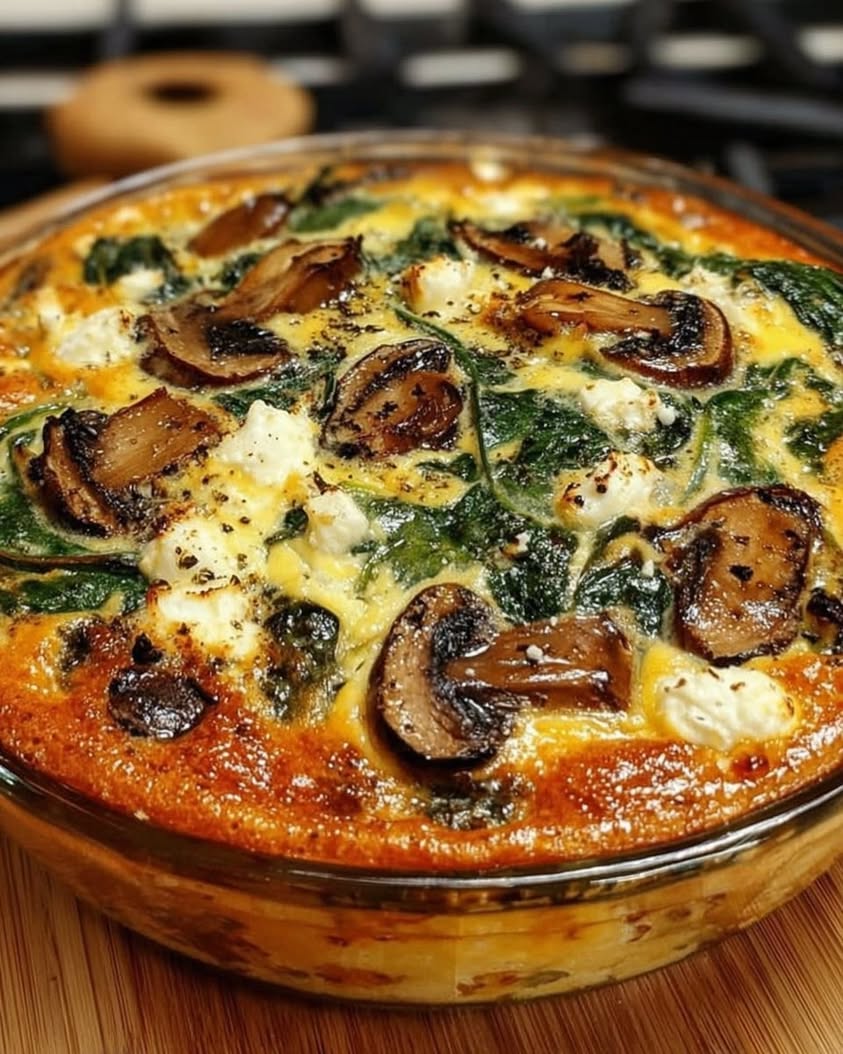
Classic Spinach & Feta Crustless Mushroom Quiche: A Flavorful Low-Carb Breakfast
Imagine waking up to the savory aroma of garlic and mushrooms gently sautéing, followed by the rich, comforting scent of eggs and cheese baking to golden perfection. This Classic Spinach & Feta Crustless Mushroom Quiche delivers exactly that experience, transforming simple ingredients into a spectacular meal. Moreover, it’s a versatile dish that works beautifully for a leisurely weekend brunch, a quick make-ahead breakfast, or even a simple dinner. The combination of earthy mushrooms, vibrant spinach, and tangy feta cheese creates a symphony of flavors that feels both indulgent and wholesome.
This recipe is a game-changer for anyone seeking a delicious, satisfying meal without the fuss of making a pastry crust. Consequently, it’s naturally lower in carbohydrates and comes together with minimal effort. The custard base, made with eggs and milk, bakes into a tender, sliceable filling that holds the generous amount of vegetables and cheese perfectly. Every bite offers a delightful contrast: the creamy egg custard, the juicy mushrooms, the tender spinach, and the salty pops of feta. Ultimately, this crustless quiche proves that you don’t need a complicated recipe to create something truly special and crowd-pleasing.
Quick Recipe Highlights
- Flavor Profile: This quiche boasts a savory, umami-rich taste from the sautéed mushrooms, balanced by the salty tang of feta cheese and the subtle earthiness of fresh spinach. A hint of garlic and onion powder deepens the overall savoriness, creating a perfectly seasoned dish.
- Texture: The texture is wonderfully creamy and tender from the baked egg custard, punctuated by meaty bites of mushroom and soft, wilted spinach. The feta cheese adds delightful creamy pockets that slightly firm up when baked.
- Aroma: While baking, the quiche fills your kitchen with an irresistible aroma of roasting garlic, earthy mushrooms, and baked eggs. The scent is comforting and savory, promising a hearty and delicious meal.
- Visual Appeal: The baked quiche presents a beautiful golden-brown top speckled with green spinach and white feta. When sliced, the interior reveals a marbled landscape of creamy yellow egg, dark green spinach, and brown mushrooms.
- Skill Level Needed: This is a beginner-friendly recipe. The steps involve basic sautéing and simple mixing. No advanced pastry skills are required, making it an excellent project for novice cooks.
- Special Equipment: You only need a standard 9-inch pie dish or a quiche pan, a skillet for sautéing, and a mixing bowl. A whisk and a spatula are the only essential tools.
Recipe Overview
- Difficulty Level: This recipe is rated easy because it uses straightforward techniques like sautéing and mixing. There’s no finicky crust to roll out or blind bake. The process is forgiving; for instance, even if you slightly overcook the vegetables, the final quiche will still be delicious. It’s an ideal recipe for building kitchen confidence.
- Category: This dish fits perfectly into several meal categories: Breakfast, Brunch, Lunch, and even a Light Dinner. It’s also excellent for Meal Prep, as it reheats beautifully throughout the week. Furthermore, it’s a fantastic option for Entertaining and Holiday meals like Easter or Mother’s Day.
- Cuisine: While quiche has its roots in French cuisine, this crustless version is a modern, health-conscious adaptation popular in American home cooking. The combination of spinach and feta nods to Mediterranean flavors, making it a versatile fusion dish enjoyed globally.
- Cost: This is a very cost-effective recipe. Eggs and milk form the inexpensive base. Spinach and mushrooms are affordable vegetables, especially when in season. Feta cheese is the primary splurge, but a little goes a long way. Overall, it’s a budget-friendly way to feed a family or have leftovers.
- Season: This quiche is truly a year-round recipe. However, it shines in spring with fresh spinach and mushrooms. It’s also comforting in fall and winter. During summer, you can serve it at room temperature for a lovely light lunch.
- Occasion: It’s perfect for casual weekend brunches, elegant bridal or baby showers, holiday breakfast buffets, and weekly meal prep. It’s also a thoughtful dish to bring to a potluck or to a friend in need of a ready-made meal.
Why You’ll Love This Recipe
First and foremost, the taste and texture of this Classic Spinach & Feta Crustless Mushroom Quiche are utterly irresistible. The savory depth from the mushrooms melds seamlessly with the creamy, salty feta. Each forkful delivers a satisfying contrast between the soft custard and the substantive vegetable fillings. It’s a flavor profile that feels gourmet yet familiar, pleasing both adventurous and picky eaters alike. You’ll find yourself craving this harmonious blend of earthy, salty, and creamy notes long after the last slice is gone.
From a convenience standpoint, this recipe is a true winner. Eliminating the crust cuts down on prep time and complexity significantly. You can have the vegetables prepped and the egg mixture whisked in about 15 minutes. After that, the oven does the rest of the work. This makes it an ideal choice for busy mornings or relaxed evenings when you want a nourishing meal without spending hours in the kitchen. Additionally, the cleanup is minimal, especially if you use a single skillet for sautéing and mixing.
Nutritionally, this crustless quiche packs a powerful punch. It’s high in protein from the eggs, which helps keep you full and satisfied. Spinach provides a wealth of vitamins A, C, and K, along with iron and folate. Mushrooms contribute B vitamins and antioxidants. By skipping the traditional buttery pastry crust, you naturally reduce the dish’s calorie and carbohydrate count. Therefore, it aligns well with low-carb, gluten-free, or simply healthier eating patterns without sacrificing an ounce of flavor or satisfaction.
For social and entertaining value, this quiche is a superstar. It can be prepared entirely in advance and served warm or at room temperature, freeing you to enjoy your guests. It slices neatly and presents beautifully on a brunch buffet. Whether you’re hosting a holiday gathering, a baby shower, or a casual book club meeting, this dish consistently receives rave reviews. It’s a reliable recipe that makes you look like a culinary pro with surprisingly little effort.
Finally, its cost-effectiveness and accessibility are major benefits. The ingredients are pantry staples and common grocery store finds. You can easily adapt it based on what’s in your refrigerator—swap the mushrooms for bell peppers or the feta for cheddar. This flexibility makes it a practical recipe for reducing food waste. Ultimately, it delivers restaurant-quality flavor for a fraction of the price, proving that eating well doesn’t have to be expensive or complicated.
Historical Background and Cultural Significance
The story of quiche begins in the Lorraine region of France. The word “quiche” itself is derived from the German “Kuchen,” meaning cake. Originally, the classic Quiche Lorraine was a simple custard baked in bread dough, containing only eggs, cream, and smoked bacon. It was a hearty meal for laborers. Over centuries, as the dish traveled and evolved, the bread dough was replaced by a shortcrust or puff pastry. The addition of cheese, notably Gruyère, became standard. This evolution from peasant food to a refined brunch item showcases its incredible versatility and enduring appeal.
Culturally, quiche became a symbol of French provincial cuisine. However, its international popularity soared in the 1970s, particularly in the United States. It became a staple of casual entertaining and the “quiche craze” was born. The dish represented a shift towards lighter, egg-based meals and was often featured in ladies’ luncheons and brunch gatherings. Its adaptability allowed for endless variations, reflecting local ingredients and tastes, which cemented its place in global home cooking.
The evolution towards crustless quiches is a more modern development, largely driven by dietary trends like low-carb and gluten-free eating. Removing the pastry simplifies preparation and alters the nutritional profile, but the soul of the dish—the savory custard filling—remains intact. This crustless spinach and mushroom quiche is a direct descendant of that evolution, prioritizing the flavorful filling and making the recipe more accessible to home cooks of all skill levels and dietary needs.
Regional variations of the quiche are endless. In the Mediterranean, additions like spinach, feta, and sun-dried tomatoes are common. In America, broccoli and cheddar became a classic combination. The crustless version itself has become a category of its own, often called a “frittata quiche” or a “crustless pie.” This particular recipe with spinach, mushroom, and feta borrows from Greek flavor profiles, demonstrating how culinary traditions beautifully intersect and inspire new family favorites across the world.
Ingredient Deep Dive
Fresh Spinach: Spinach has a rich history, cultivated for over 2,000 years in Persia before spreading to Europe and Asia. It’s nutritionally dense, packed with iron, calcium, magnesium, and vitamins A, C, and K. For this recipe, always select vibrant, dark green leaves without signs of yellowing or wilting. You can use pre-washed bags for convenience. To store, keep it dry in the original bag or a container lined with a paper towel in the refrigerator’s crisper drawer. If you need a substitute, kale or Swiss chard can be used, but be sure to remove tough stems and chop finely.
White Mushrooms (Button Mushrooms): These are the most cultivated mushroom worldwide, valued for their mild flavor and meaty texture. They are a good source of B vitamins, selenium, and antioxidants. Choose mushrooms that are firm, smooth, and creamy-white with tightly closed caps. Avoid any that are slimy or have dark spots. Store them unwashed in a paper bag in the refrigerator. For a deeper flavor, you can substitute with cremini or baby bella mushrooms. Notably, sautéing them properly is key to driving off moisture and concentrating their savory umami taste.
Feta Cheese: This brined curd cheese originates from Greece and is traditionally made from sheep’s milk or a sheep-goat milk blend. It’s tangy, salty, and crumbly. Feta is a good source of calcium and protein. For the best flavor in your quiche, seek out authentic Greek feta in brine. The pre-crumbled variety is convenient but can contain anti-caking agents. Store feta in its brine in the refrigerator. If you need a substitute, goat cheese (chèvre) offers a similar tang, or a firm ricotta salata can provide a salty element, though the texture will differ.
Large Eggs: Eggs are the structural and culinary foundation of any quiche, creating the custard that binds everything together. They are a complete protein and contain essential vitamins and minerals. For the richest flavor and color, consider using pasture-raised eggs. Always bring eggs to room temperature before mixing for a smoother, more voluminous custard. There is no direct substitute for eggs in a traditional quiche, as they are essential for setting the filling. However, for a vegan version, silken tofu blended with turmeric and black salt can mimic the texture and color.
Whole Milk & Heavy Cream: The dairy component enriches the custard, making it tender and creamy. Whole milk provides body, while heavy cream adds luxurious richness and ensures a smooth set. For a lighter version, you can use all whole milk or a mix of milk and half-and-half. Avoid using skim milk, as the custard may become rubbery. For dairy-free adaptations, full-fat canned coconut milk or unsweetened almond milk blended with a tablespoon of olive oil can work, though the flavor profile will change slightly.
Common Mistakes to Avoid
- Not Sautéing Vegetables First: Adding raw mushrooms and spinach directly to the egg mix will release too much water during baking. This results in a soggy, watery quiche that doesn’t set properly. Always sauté to evaporate excess moisture.
- Using Cold Eggs and Dairy: Combining cold ingredients can make the fat in the cream solidify and lead to a lumpy custard. Furthermore, it can increase baking time. Always let your eggs, milk, and cream sit out for 15-20 minutes before mixing.
- Overmixing the Egg Custard: Whisk the eggs and dairy just until combined. Over-whipping incorporates too much air, which can cause the quiche to puff up dramatically in the oven and then collapse into a dense texture as it cools.
- Skipping the Seasoning Between Layers: Season your sautéed vegetables lightly with salt and pepper. If you only season the egg mixture, the vegetables themselves can taste bland. Layering seasoning ensures every component is flavorful.
- Overfilling the Pie Dish: The egg mixture will rise slightly as it bakes. Filling the dish to the very brim risks overflow in the oven. Leave about 1/4-inch of space at the top to allow for expansion.
- Underbaking or Overbaking: An underbaked quiche will be jiggly and loose in the center. An overbaked quiche becomes dry and rubbery. The perfect doneness is a set center with a slight jiggle—it will continue to set as it cools.
- Cutting Immediately After Baking: Slicing into a hot quiche will cause it to fall apart. Let it rest on a cooling rack for at least 15-20 minutes. This allows the custard to fully set, ensuring clean, beautiful slices.
- Using a Thin Metal Pie Pan: Thin pans can cause the bottom to overcook or burn before the center sets. Use a ceramic, glass, or heavy-duty metal pie dish for even, gentle heat distribution.
Essential Techniques
Sautéing to Remove Moisture: This is the most critical technique for a non-watery quiche. Sauté the mushrooms over medium-high heat until they release their liquid and it evaporates, leaving them browned and flavorful. Then, wilt the spinach just until it collapses. This step concentrates flavors and prevents a soggy final product. The visual cue for success is a dry skillet with vegetables that have reduced in volume significantly.
Creating a Smooth Custard: The custard is simply eggs and dairy whisked together. The goal is homogeneity without over-aeration. Crack eggs into a bowl and whisk gently until the yolks and whites are just broken. Then, slowly stream in the room-temperature milk and cream while continuing to whisk. The mixture should be smooth and evenly colored. A common pitfall is whisking too vigorously, which traps air bubbles.
Blending Fillings and Custard: Before combining, ensure your sautéed vegetable mixture has cooled slightly. Adding hot vegetables to the eggs could start cooking them prematurely, creating flecks of cooked egg. Gently fold the vegetables and cheese into the custard base until evenly distributed. This gentle folding preserves the air structure you do want and ensures an even distribution of fillings in every slice.
The “Jiggle Test” for Doneness: Determining when the quiche is perfectly baked is easier than you think. At the end of the bake time, gently shake the oven rack. The edges should look fully set and puffed, but the very center (about the size of a quarter) should have a slight, gentle jiggle—like Jell-O. It will solidify from residual heat as it cools. If the whole surface jiggles wildly, it needs more time. If no part jiggles, it may be overdone.
Pro Tips for Perfect Classic Spinach & Feta Crustless Mushroom Quiche
For the most flavorful mushrooms, avoid crowding them in the skillet. Cook them in a single layer so they brown instead of steam. You might need to do this in two batches.
Press the wilted spinach between paper towels or in a clean kitchen towel to remove every last bit of green liquid. This extra step guarantees a firm set.
Grate a small amount of onion directly into the egg mixture if you love onion flavor but don’t want visible pieces. The juice and micro-pieces distribute flavor evenly.
Place your pie dish on a preheated baking sheet in the oven. This helps conduct heat to the bottom of the dish, ensuring the custard sets from the bottom up and preventing a soggy base.
For a beautifully golden top, brush the surface with a little cream or melted butter during the last 10 minutes of baking. This creates a professional-looking finish.
Let the quiche cool almost completely before attempting to remove it from the pan for serving. A fully set quiche will release cleanly from a well-greased dish.
Season the custard mixture generously. Eggs and dairy need ample salt to taste their best. Do a quick taste test of the raw custard (it’s safe) to check seasoning before baking.
Variations and Adaptations
Regional Variations: For a French twist, use Gruyère cheese and add lardons or ham. For an Italian version, incorporate sun-dried tomatoes, basil, and mozzarella. A Spanish-inspired take could include chorizo, manchego cheese, and roasted red peppers. Each variation travels the core concept of a savory custard pie to a different culinary destination.
Seasonal Adaptations: In spring, add asparagus tips and fresh peas. Summer calls for zucchini, cherry tomatoes, and fresh herbs like dill. Fall welcomes roasted butternut squash or sweet potato cubes. In winter, use hearty kale and caramelized onions. Adapting the vegetables keeps the recipe exciting all year long.
Dietary Modifications: For a keto quiche, ensure you use full-fat dairy and increase the ratio of cream to milk. For a paleo version, use coconut milk and omit the cheese, perhaps adding nutritional yeast for a cheesy flavor. A Whole30 adaptation would use compliant sausage and omit dairy, using coconut cream instead.
Flavor Variations: Introduce different cheeses like sharp cheddar, goat cheese, or Swiss. Add cooked, crumbled bacon, sausage, or diced ham for a meatier version. Incorporate a teaspoon of Dijon mustard or a dash of hot sauce into the egg mixture for a flavor boost. Fresh herbs like thyme, chives, or tarragon can dramatically change the profile.
Texture Modifications: For a denser, firmer quiche, reduce the milk by 1/4 cup. For a lighter, fluffier texture, separate two of the eggs, whip the whites to soft peaks, and fold them in at the very end before baking. Adding a tablespoon of flour or baking powder to the custard can also create a slightly cakier texture.
Presentation Alternatives: Bake individual portions in a greased muffin tin for crustless mini quiches—perfect for grab-and-go breakfasts. For a deeper-dish style, use a square 8×8 baking dish and cut into squares. You can also layer the ingredients artfully in the pan before pouring the custard over for a patterned cross-section.
Serving and Presentation Guide
Plating Techniques: For a clean presentation, run a thin, sharp knife under hot water, wipe it dry, and then slice the quiche. Use a pie server or a thin spatula to lift each slice onto a plate. For brunch buffets, present the whole quiche on a decorative pedestal or a simple wooden board, allowing guests to serve themselves.
Garnishing Ideas: A simple sprinkle of fresh chopped herbs like parsley, chives, or dill adds color and freshness. A light drizzle of high-quality olive oil or a balsamic glaze can enhance richness. A few extra crumbles of feta cheese or a twist of freshly cracked black pepper just before serving elevates the visual appeal instantly.
Traditional Accompaniments: A simple mixed green salad with a bright vinaigrette is the classic partner, cutting through the richness of the eggs and cheese. Fresh fruit salad, roasted potatoes, or crispy breakfast potatoes also make excellent sides. For a true brunch spread, include bacon, sausage links, and pastries.
Modern Serving Suggestions: Serve a wedge atop a pool of herbed yogurt or a simple tomato coulis. For a lunchbox, pack a cold slice with a side of marinated olives and crackers. Crumble a slice over a bed of arugula for a hearty salad. These modern twists make the quiche feel new and exciting.
Temperature Considerations: This quiche is delicious served warm, at room temperature, or even cold from the refrigerator. For the best texture and flavor, let it cool to just warm or room temperature after baking. If serving cold, let it sit out for 10-15 minutes to take the chill off the edges.
Portion Control Tips: A standard 9-inch quiche typically yields 6 generous wedges. For a larger crowd or as part of a bigger buffet, you can cut it into 8 smaller, dainter slices. When serving as a main course with hearty sides, stick to 6 servings. As an appetizer or part of a tasting menu, you can cut it into 12 small squares.
Wine and Beverage Pairing
Wine Pairings: The earthy mushrooms and salty feta in this quiche pair beautifully with crisp, acidic white wines. A Sauvignon Blanc, especially from New Zealand, offers herbal notes that complement the spinach. A dry Rosé with its berry hints and acidity is another versatile choice. For red wine lovers, a light-bodied Pinot Noir with its earthy undertones can work well without overpowering the dish.
Non-Alcoholic Alternatives: Sparkling water with a squeeze of lemon or lime provides a clean, palate-cleansing effervescence. A tart cherry or pomegranate juice spritzer mimics the acidity of wine. For a creamy option, a chilled tomato juice or a Virgin Mary with its savory spices can be a delightful match.
Coffee/Tea Pairings: For a brunch setting, a medium-roast coffee with low acidity pairs nicely, as it won’t clash with the savory notes. A robust English Breakfast tea can stand up to the richness. An herbal tea, like peppermint or lemon ginger, served after the meal, can aid digestion and provide a refreshing finish.
Temperature Considerations: Always serve white wines and rosés well-chilled, between 45-50°F. Red wines should be slightly cooler than room temperature, around 55°F, for a lighter style like Pinot Noir. Non-alcoholic sparkling drinks should be served ice-cold to maximize refreshment.
Serving Suggestions: Offer a choice of beverages to cater to different preferences. Set up a small beverage station with a carafe of iced tea, a bottle of chilled sparkling water, and a option for coffee. For wine, one white and one red option is usually sufficient for a gathering.
Storage and Shelf Life
Storage Methods: Once completely cooled to room temperature, cover the quiche tightly with plastic wrap or aluminum foil. Alternatively, transfer individual slices to an airtight container. Proper covering is essential to prevent the quiche from absorbing other refrigerator odors and from drying out.
Temperature Requirements: Always store quiche in the refrigerator at 40°F or below. Do not leave it at room temperature for more than two hours, as the dairy and eggs are perishable. For longer storage, freezing is an excellent option.
Container Recommendations: For storing the whole quiche, the baking dish itself covered with foil is fine if you have space. For slices, stack them with parchment paper between layers in a sealed container to prevent sticking. Glass containers are ideal as they don’t retain odors.
Signs of Spoilage: Discard the quiche if you notice an off or sour smell, significant discoloration (like green or pink mold), or a slimy texture on the surface. When in doubt, it is safest to throw it out.
Reheating Instructions: To reheat a whole quiche, cover it with foil and warm in a 325°F oven for 15-20 minutes. For a single slice, the microwave works in 30-45 second bursts, but the texture is best when reheated in a toaster oven or conventional oven at 350°F for 8-10 minutes until warmed through.
Freezing Guidelines: This quiche freezes exceptionally well. Cool completely, then wrap the whole quiche or individual slices tightly in plastic wrap, followed by a layer of heavy-duty foil. Label with the date. Freeze for up to 2-3 months. Thaw overnight in the refrigerator before reheating.
Make Ahead Strategies
Prep Timeline: You can prepare this quiche up to 24 hours in advance. Sauté the vegetables and let them cool completely. Whisk the egg custard mixture and store it separately in the refrigerator. Grate or crumble the cheese. Keep all components in sealed containers. About 1 hour before baking, combine the cold fillings with the custard, pour into the dish, and bake as directed—you may need to add 5-10 minutes to the bake time.
Storage Between Steps: Store the cooled vegetable mixture in an airtight container in the fridge. The egg custard mix can be kept in a pitcher or a bowl with a lid. It’s crucial to combine them only when you’re ready to bake, as the salt in the custard can draw moisture out of the vegetables over time, creating unwanted liquid.
Quality Impact Assessment: Making the components ahead has minimal impact on final quality. In fact, allowing the custard mixture to rest can help any air bubbles settle, potentially leading to a smoother texture. The key is ensuring everything is well-chilled and combined just before baking.
Assembly Tips: When ready to assemble, give the custard mixture a quick re-whisk. Scatter the cold vegetables and cheese in the greased pie dish first. Then, slowly pour the custard over the top. This method helps distribute the fillings more evenly than mixing them in a bowl.
Reheating Guidelines: If you bake the quiche fully ahead of time, cool, cover, and refrigerate. Reheat covered with foil in a 325°F oven until warmed through, about 20-25 minutes for a whole quiche. This gentle reheating prevents the edges from becoming tough.
Fresh Element Additions: For the best presentation when serving a make-ahead quiche, add fresh garnishes after reheating. A sprinkle of chopped fresh herbs, a drizzle of oil, or a few extra cheese crumbles added just before serving will make it look and taste freshly made.
Scaling Instructions
Halving the Recipe: To make a smaller quiche, simply divide all ingredient quantities by two. Use a 7-inch pie dish or a standard loaf pan. The bake time will be shorter—start checking for doneness at around 25-30 minutes. This is perfect for a couple or a small family.
Doubling or Tripling: For a crowd, double or triple the ingredients. Use two or three separate 9-inch pie dishes rather than one gigantic dish, as the center may not cook evenly in an overly deep pan. You may need to rotate the dishes in the oven for even browning. Increase the bake time slightly, checking the doneness of each dish individually.
Equipment Adjustments: When scaling up, ensure you have a large enough skillet to sauté the increased volume of vegetables, possibly working in batches. Use a larger mixing bowl for the custard. Having the right-sized bakeware is crucial for success; a dish that’s too small will overflow, and one that’s too large will result in a thin, overcooked quiche.
Timing Modifications: When baking multiple quiches, expect the total oven time to be longer because the oven’s temperature drops each time you open the door. Add an extra 5-10 minutes to the bake time and rely on the visual and jiggle tests for doneness rather than the timer alone.
Storage Considerations: A larger batch means more leftovers. Plan your storage containers in advance. Consider freezing portions of a double batch immediately after cooling for future easy meals. Label everything clearly with the contents and date.
Nutritional Deep Dive
Macro Breakdown: A typical slice of this crustless quiche is high in protein and healthy fats, with low carbohydrates. The eggs and cheese provide the protein and fat, which promote satiety and steady energy. The vegetables add minimal carbs, mostly in the form of fiber. This macro profile makes it an excellent choice for those following low-carb, keto, or high-protein diets.
Micronutrient Analysis: This dish is a micronutrient powerhouse. Spinach delivers vitamins A, C, K, iron, and folate. Mushrooms provide B vitamins like riboflavin and niacin, plus selenium. Eggs are a source of choline, vital for brain health, and vitamin D. Feta cheese contributes calcium and phosphorus for bone health. Together, they create a well-rounded nutritional package.
Health Benefits: The combination of protein, healthy fats, and fiber supports blood sugar stability. The antioxidants in spinach and mushrooms combat oxidative stress. The choline in eggs supports liver and brain function. The calcium from dairy aids in bone density. Eating a meal like this can help manage hunger and reduce cravings for less healthy snacks later in the day.
Dietary Considerations: This recipe is naturally gluten-free. It can be modified to be dairy-free or vegetarian (it already is). For those with egg allergies, it is not suitable in its standard form. The sodium content is moderate, primarily from the feta cheese, so those on strict low-sodium diets can reduce the cheese or seek out a low-sodium variety.
Portion Analysis: One-sixth of the quiche is a satisfying serving that provides a balance of nutrients. For those with higher calorie needs, pair it with a side of whole-grain toast or avocado. For lower calorie needs, a single slice with a large side salad is perfectly filling. The portion is inherently controlled by the slicing.
Weight Management Tips: Due to its high protein and moderate fat content, this quiche is excellent for weight management. Protein increases thermogenesis (calories burned during digestion) and promotes feelings of fullness. The lack of a refined flour crust removes empty calories. Preparing it as part of weekly meal prep can prevent less healthy, impulsive food choices.
Dietary Adaptations
Gluten-free: This recipe is naturally gluten-free as written, containing no flour or grain-based crust. Always double-check that your spices and other additives are certified gluten-free if you have celiac disease or a severe sensitivity.
Dairy-free: Substitute the whole milk and heavy cream with full-fat canned coconut milk. For the feta cheese, use a store-bought vegan feta alternative made from tofu or almonds, or simply omit it and add nutritional yeast for a cheesy flavor. The result will be different but still delicious.
Vegan: Replace the eggs with a blend of 1 block (14-16 oz) of silken tofu, 1/4 cup nutritional yeast, 1 tbsp olive oil, and 1/2 tsp black salt (kala namak) for an eggy flavor. Use the dairy-free substitutions above. Sauté the vegetables in oil. The baking time may be slightly shorter.
Low-carb & Keto: This recipe is already excellent for low-carb and keto diets. To make it strictly keto, ensure you use full-fat dairy and consider adding an extra tablespoon of butter or cream to increase the fat ratio. Verify that any pre-packaged ingredients contain no added sugars.
Paleo: Omit the dairy. Use coconut milk for the liquid. Omit the cheese. Add compliant protein like cooked, crumbled sausage or bacon. Increase the amount of vegetables to compensate for the volume lost from the cheese.
Low-FODMAP: Use only the green tops of scallions instead of onion powder. Replace mushrooms with a low-FODMAP vegetable like bell peppers or zucchini. Ensure the garlic powder is eliminated or use a garlic-infused oil (with solids removed) to sauté the vegetables. Use lactose-free milk or a small amount of cream, as lactose is a FODMAP.
Troubleshooting Guide
Watery or Soggy Quiche: This is almost always due to excess moisture from the vegetables. Solution: Ensure you sauté the mushrooms until all released liquid has evaporated and the pan is dry. Thoroughly squeeze the wilted spinach in a towel. Also, let the cooked vegetables cool completely before adding to the egg mix. If it happens, you can drain liquid off after baking and pat the top dry.
Rubbery or Tough Texture: Overbaking is the primary culprit. Eggs coagulate and tighten with too much heat. Solution: Use the jiggle test and remove the quiche while the center is still slightly wobbly. Also, avoid overmixing the custard, as this can incorporate too much air that then deflates into density. Using only egg whites or too much dairy can also cause rubberiness.
Qu
Print A light and savory quiche packed with spinach, mushrooms, and tangy feta cheese, baked without a crust for a simple, low-carb meal perfect for brunch or dinner. You can customize the seasonings to taste.Classic Spinach & Feta Crustless Mushroom Quiche
Description
Ingredients
Instructions
Notes