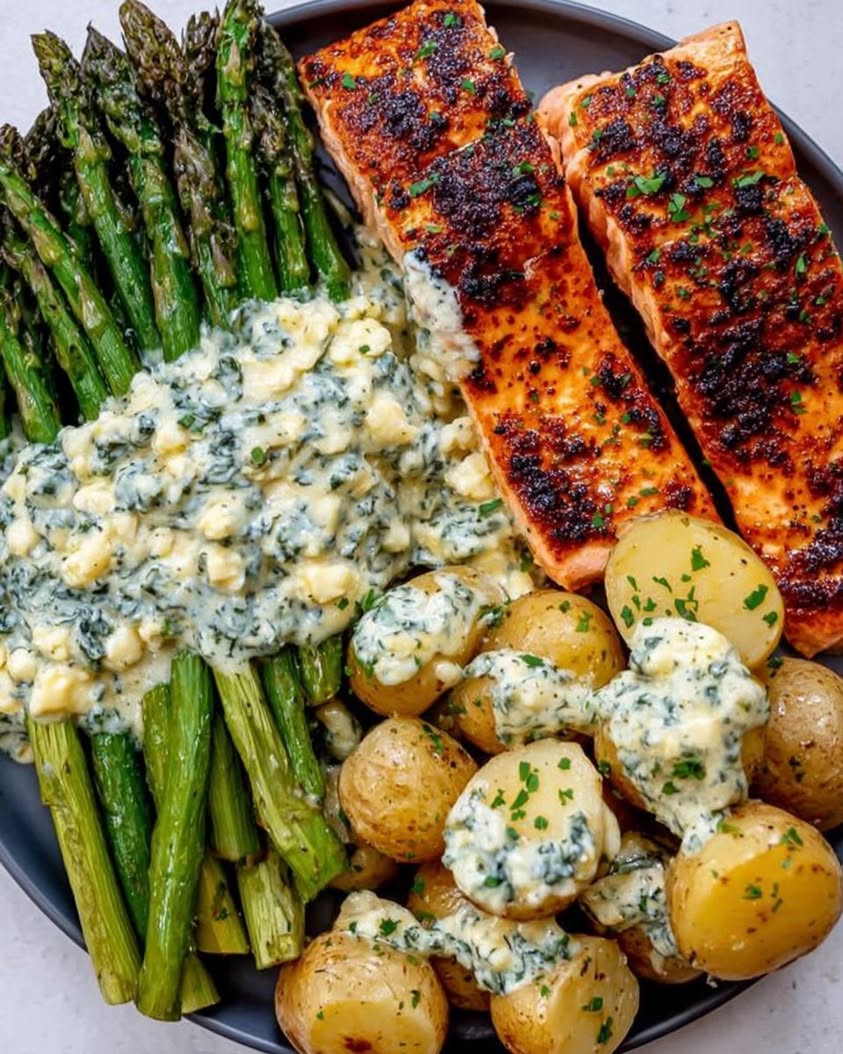
Grilled Salmon with Creamy Asparagus and Roasted Baby Potatoes: A Restaurant-Quality Meal at Home
Imagine a meal that feels like a special occasion but comes together in under an hour. This recipe for Grilled Salmon with Creamy Asparagus and Roasted Baby Potatoes delivers exactly that. It combines flaky, perfectly seasoned fish with tender-crisp asparagus and golden, buttery potatoes. Ultimately, the entire dish is unified by a simple, luxurious cream sauce. The result is a balanced plate that is both elegant and deeply satisfying.
This Grilled Salmon with Creamy Asparagus and Roasted Baby Potatoes is a masterclass in simple, high-quality ingredients. The salmon’s natural richness pairs beautifully with the earthy asparagus and the sweet, starchy potatoes. Meanwhile, the creamy sauce adds a touch of indulgence without overwhelming the delicate flavors. It is a versatile recipe perfect for a weeknight dinner or for impressing weekend guests. You will find the process straightforward and the results consistently impressive.
Furthermore, this meal is a nutritional powerhouse. Salmon provides essential omega-3 fatty acids, asparagus is packed with fiber and vitamins, and potatoes offer energy-sustaining complex carbohydrates. Consequently, you can feel good about serving this dish to your family. The combination of protein, healthy fats, and vegetables makes it a complete and wholesome dinner. Let us dive into how to create this stunning meal.
Quick Recipe Highlights
- Flavor Profile: This dish offers a beautiful harmony of savory, rich, and earthy notes. The salmon is mildly briny and buttery, while the roasted potatoes provide a caramelized sweetness. The creamy sauce, often infused with garlic and herbs, adds a luxurious, tangy element that ties everything together.
- Texture: You will experience a wonderful contrast of textures. The salmon should be flaky and moist on the inside with a slightly crisp exterior from grilling. The asparagus remains tender yet crisp, and the baby potatoes are creamy inside with a perfectly roasted, golden-brown skin.
- Aroma: As it cooks, the kitchen fills with the inviting scent of garlic and herbs mingling with the smoky notes from the grill. The roasting potatoes release a warm, comforting aroma, while the fresh asparagus adds a light, green fragrance.
- Visual Appeal: The plate is a feast for the eyes with vibrant colors. The pink-orange salmon, bright green asparagus, and golden-brown potatoes create a stunning, restaurant-worthy presentation that is sure to impress.
- Skill Level Needed: This is an accessible recipe for most home cooks. It requires basic skills like seasoning, grilling or pan-searing, and making a simple pan sauce. Timing the components to finish together is the main skill to master.
- Special Equipment: A reliable grill or grill pan is ideal for the salmon. Additionally, you will need a baking sheet for roasting the potatoes and a skillet for the creamy asparagus sauce. A good set of tongs and a spatula are also helpful.
Recipe Overview
- Difficulty Level: We rate this recipe as “Easy.” The steps are simple and sequential. Most of the work involves prepping vegetables and managing cook times. Even novice cooks can achieve excellent results by following the clear instructions. The key is organization and not overcooking the salmon.
- Category: This dish falls squarely into the “Main Course” category. It is a complete, protein-centered dinner. You can also consider it a “Healthy Dinner” or “Weeknight Gourmet” recipe due to its balance and relatively quick preparation time.
- Cuisine: While not tied to one specific tradition, this recipe draws from modern American and European bistro cuisine. It utilizes classic techniques like grilling and roasting, combined with a French-inspired creamy pan sauce. The focus is on highlighting high-quality, fresh ingredients.
- Cost: The cost is moderate, primarily driven by the price of fresh salmon. Asparagus and baby potatoes are generally affordable, especially in season. The cream, butter, and aromatics are pantry staples. Overall, it is far more cost-effective than ordering a similar dish at a restaurant.
- Season: This recipe shines in spring and early summer when asparagus is at its peak. However, it works year-round thanks to the consistent availability of salmon and potatoes. It is a wonderful way to bring a taste of spring to your table any time.
- Occasion: It is perfect for a date night at home, a family Sunday dinner, or a small gathering with friends. The dish feels special enough for celebrations but is simple enough for a relaxed, delicious weeknight meal.
Why You’ll Love This Recipe
First and foremost, the taste and texture are utterly irresistible. The flaky, moist salmon practically melts in your mouth, providing a rich, savory base. Then, the crisp-tender asparagus offers a fresh, green counterpoint that cuts through the richness. Finally, the creamy, buttery sauce and soft, roasted potatoes round out every bite with comforting depth. Each component complements the others, creating a symphony of flavors that is both sophisticated and deeply satisfying. You will find yourself savoring every single forkful.
From a practical standpoint, the convenience of this recipe is a major win. Despite its elegant appearance, the preparation is straightforward and the cook time is efficient. You can have everything prepped in about fifteen minutes. Subsequently, the potatoes roast while you cook the salmon and asparagus, making excellent use of your time. The entire meal comes together in one seamless flow. Consequently, you spend less time in the kitchen and more time enjoying a fantastic dinner with your loved ones.
Nutritionally, this meal is a powerhouse. Salmon is renowned for its high-quality protein and omega-3 fatty acids, which support heart and brain health. Asparagus is a fantastic source of fiber, folate, and vitamins A, C, and K. Baby potatoes provide energy-sustaining complex carbohydrates and potassium. Together, they form a balanced plate that fuels your body beautifully. You can indulge in a creamy sauce guilt-free, knowing the foundation of the meal is packed with nutrients.
For entertaining, this Grilled Salmon with Creamy Asparagus and Roasted Baby Potatoes is a true star. It looks impressive on the plate, making guests feel special. Importantly, much of the work can be done ahead of time, so you are not stuck in the kitchen while everyone socializes. You can prep the vegetables and sauce ingredients beforehand. Then, simply cook the salmon and assemble the dish just before serving. It is a surefire way to host a memorable dinner without stress.
Finally, this recipe is cost-effective and accessible. While salmon can be an investment, creating this restaurant-quality meal at home saves significant money compared to dining out. The side ingredients are humble and affordable. Moreover, the recipe is forgiving and adaptable. You can easily swap herbs, use a different type of potato, or adjust the sauce to your liking. It empowers you to create a luxurious dining experience in your own kitchen, anytime the craving strikes.
Historical Background and Cultural Significance
The individual components of this dish have deep and varied historical roots. Salmon has been a vital food source for coastal communities around the world for millennia, particularly for Indigenous peoples of the Pacific Northwest. They perfected methods of grilling and smoking salmon over open fires. In Europe, especially in Scotland and Scandinavia, salmon was often poached or baked. The concept of grilling salmon fillets as a centerpiece protein is a more modern, global interpretation of these ancient traditions.
Culturally, the combination of fish with potatoes and a green vegetable is a classic Western European plate structure. Think of the British “fish and chips” or a French “filet de saumon avec légumes.” The creamy sauce, often a beurre blanc or dill sauce, is a hallmark of French cuisine, emphasizing the enhancement of natural flavors with butter, cream, and herbs. This recipe represents a fusion of these cultural touchpoints—the hearty, satisfying potato from Northern Europe, the elegant sauce from France, and the prized salmon from both Atlantic and Pacific traditions.
The recipe has evolved significantly with modern cooking techniques and ingredient availability. Historically, cream sauces were labor-intensive. Today, we can create a luxurious sauce in minutes using reduced cream or a touch of crème fraîche. The popularity of home grilling has also transformed how we cook salmon, moving it from the oven to the grill for added smoky flavor. Baby potatoes, once a seasonal specialty, are now available year-round, making this combination possible anytime. This evolution reflects our desire for both tradition and convenience.
Regional variations of this concept are endless. In the American Pacific Northwest, you might find the salmon grilled over alder wood and served with a hazelnut gremolata. In the Mediterranean, the asparagus could be dressed with lemon and olive oil instead of cream. In Asia, the salmon might be marinated in miso or soy. Our version sits comfortably in the middle—a globally inspired, accessible take that highlights the best qualities of each ingredient without requiring specialized techniques or hard-to-find items. It is a testament to the universal appeal of simple, well-prepared food.
Ingredient Deep Dive
Salmon Fillets: Salmon is a fatty fish rich in omega-3 fatty acids EPA and DHA, which are crucial for reducing inflammation and supporting cognitive function. It is also an excellent source of high-quality protein, B vitamins, and potassium. When selecting salmon, look for firm, bright flesh with a pleasant, ocean-fresh smell. The color can range from pink to deep orange, depending on the species and diet. For best results, choose skin-on fillets of even thickness to ensure even cooking. Store salmon in the coldest part of your refrigerator and use within 1-2 days of purchase. For a substitution, arctic char or steelhead trout offer a similar texture and flavor profile.
Asparagus: This spring vegetable has been prized since ancient Roman times for its unique flavor and purported medicinal qualities. Nutritionally, asparagus is low in calories but high in fiber, folate, and vitamins A, C, E, and K. It also contains asparagine, an amino acid that acts as a natural diuretic. Select spears that are bright green, firm, and have tightly closed tips. The ends should not be overly woody or dried out. Store asparagus upright in a jar with an inch of water in the refrigerator, loosely covered with a bag. For a variation, green beans, broccolini, or snap peas can be used in the creamy sauce.
Baby Potatoes: Baby potatoes are simply young potatoes harvested before they reach full size. They have thin, tender skins and a creamy, dense interior. They are a good source of vitamin C, potassium, and vitamin B6. Their small size means they cook quickly and evenly. Look for potatoes that are firm, smooth, and free of sprouts or green spots. Store them in a cool, dark, well-ventilated place—not in the refrigerator, as cold temperatures can convert their starch to sugar. Yukon Gold or fingerling potatoes make excellent substitutes. Their natural buttery flavor enhances the roasted result.
Heavy Cream & Parmesan: Heavy cream (or whipping cream) provides the base for the luxurious sauce, adding richness and body. When reduced, it thickens naturally without the need for flour. Parmesan cheese, specifically the real Parmigiano-Reggiano, adds a salty, nutty, umami depth that elevates the sauce from simple to spectacular. It melts beautifully into the cream. For a lighter version, half-and-half can be used, though the sauce will be thinner. For a dairy-free alternative, full-fat coconut cream and nutritional yeast can create a surprisingly similar rich and savory profile.
Garlic, Herbs, and Lemon: This aromatic trifecta is the soul of the dish’s flavor. Fresh garlic provides a pungent base note, while herbs like dill, chives, or parsley add freshness and complexity. Lemon zest and juice are non-negotiable; they cut through the richness of the salmon and cream, brightening the entire dish. Always use fresh herbs and garlic for the most vibrant flavor. If you must substitute dried herbs, use one-third the amount. Bottled lemon juice lacks the bright, floral notes of fresh lemon, so it is worth using the real thing here.
Common Mistakes to Avoid
- Overcooking the Salmon: This is the most common error. Salmon continues to cook after being removed from heat. Therefore, you should aim for it to be just opaque in the center and still slightly translucent when you take it off the grill or pan. It will finish cooking during resting. Overcooked salmon becomes dry and chalky.
- Not Drying the Salmon Skin: If you are cooking the salmon skin-on, pat it extremely dry with paper towels first. Otherwise, the skin will steam instead of crisp. A crisp skin provides wonderful texture and flavor. Similarly, ensure your grill grates or pan are very hot before adding the fish.
- Crowding the Baking Sheet with Potatoes: When roasting the baby potatoes, spread them out in a single layer with space between each piece. If they are crowded, they will steam instead of roast. You will miss out on the desirable caramelized, crispy exterior that makes roasted potatoes so delicious.
- Overcooking the Asparagus: Asparagus cooks very quickly, especially when sliced. It should remain bright green and tender-crisp, not mushy and dull. Add it to the creamy sauce just to heat through and wilt slightly. Its fresh texture is a vital contrast to the other soft components.
- Using Pre-Grated Parmesan: Pre-grated cheese often contains anti-caking agents like cellulose, which can prevent it from melting smoothly into your sauce. For the silkiest, most flavorful result, always grate a block of Parmigiano-Reggiano or high-quality Parmesan cheese fresh yourself.
- Not Seasoning in Layers: Season every component individually. Season the salmon before grilling. Toss the potatoes with oil, salt, and pepper before roasting. Season the cream sauce to taste. This builds depth of flavor throughout the entire dish, rather than having one seasoned element and two bland ones.
- Skipping the Resting Time for Salmon: Let the grilled salmon rest for 5 minutes before serving. This allows the juices, which have been driven to the center by the heat, to redistribute throughout the fillet. Consequently, each bite will be moist and flavorful instead of dry.
- Adding Lemon Juice Too Early: If you add fresh lemon juice to the cream sauce too far in advance of serving, the acid can cause the cream to curdle or separate slightly. Add the lemon zest and juice at the very end, off the heat, for the brightest flavor and best texture.
Essential Techniques
Perfectly Grilling Salmon: The key to grilling salmon is managing heat and patience. Start with a clean, well-oiled, hot grill. Place the salmon skin-side down (if skin-on) at a 45-degree angle to the grates for attractive grill marks. Do not move it for at least 3-4 minutes to allow a crust to form. Then, gently flip it using a wide spatula. For fillets about 1-inch thick, cook for another 3-5 minutes on the flesh side. The salmon is done when it flakes easily with a fork but is still moist in the center. A common pitfall is flipping too early, causing the skin or flesh to stick and tear.
Roasting Baby Potatoes: Roasting transforms potatoes through the Maillard reaction, creating complex flavors and textures. First, halve or quarter the potatoes so they are roughly uniform in size for even cooking. Toss them generously with oil, salt, and pepper—the oil conducts heat and promotes browning. Spread them in a single layer on a preheated baking sheet. Roast at a high temperature (400-425°F) until they are golden brown and fork-tender, shaking the pan once halfway through. The visual cue for success is a crispy, browned exterior and a fluffy, steaming interior.
Building a Simple Cream Sauce: A pan sauce amplifies flavor by deglazing the fond (the browned bits) left from cooking. After sautéing garlic, add the heavy cream to the same pan. Let it simmer gently to reduce and thicken slightly, which concentrates its flavor. Off the heat, stir in the grated Parmesan until melted. Finally, stir in the fresh herbs and lemon juice. The sauce should coat the back of a spoon. A common mistake is boiling the cream too vigorously, which can cause it to break or become greasy. Gentle heat is your friend here.
Blanching vs. Sautéing Asparagus: For this recipe, we sauté the asparagus directly in the pan before making the sauce. This method preserves nutrients and integrates the asparagus flavor into the sauce base. The technique involves cooking the asparagus briefly over medium-high heat until it turns bright green but is still crisp. The goal is to take off the raw edge while retaining texture. Alternatively, blanching (briefly boiling then shocking in ice water) is excellent for prepping asparagus ahead of time, but for a one-pan flow, sautéing is more efficient and flavorful.
Pro Tips for Perfect Grilled Salmon with Creamy Asparagus and Roasted Baby Potatoes
Bring your salmon to room temperature for 15-20 minutes before grilling. This simple step promotes even cooking from edge to center, preventing a raw middle and overcooked edges.
Score the salmon skin lightly with a sharp knife before cooking. Make a few shallow cuts crosswise on the skin side. This helps prevent the fillet from curling dramatically as the skin contracts and renders fat.
Use an instant-read thermometer for foolproof salmon. Aim for an internal temperature of 125°F (52°C) in the thickest part for medium-rare, or 135°F (57°C) for medium. Remember, carryover cooking will raise the temp about 5 degrees.
Par-cook your baby potatoes if they are larger. If your potatoes are more than 1.5 inches in diameter, boil them for 5-7 minutes until just tender before roasting. This ensures the insides are fully cooked by the time the outside is perfectly browned.
Reserve a tablespoon of fresh herbs for garnish. Adding most of the herbs to the sauce infuses flavor, but sprinkling a few bright, fresh leaves on top of the finished dish adds visual appeal and a burst of fresh aroma.
Warm your serving plates. This is a restaurant trick that makes a big difference, especially for a dish with a creamy sauce. Warm plates keep the food at an ideal temperature longer, allowing everyone to enjoy it fully.
If your cream sauce seems too thin, let it simmer a minute or two longer to reduce. If it seems too thick, whisk in a splash of the pasta cooking water (if you boiled potatoes) or a little chicken broth to reach the desired consistency.
For extra flavor, toss the halved baby potatoes with a minced garlic clove and rosemary sprigs before roasting. The garlic will toast and flavor the oil, creating incredibly fragrant potatoes.
Variations and Adaptations
Regional Variations: For a Pacific Northwest twist, grill the salmon over cedar planks and add toasted hazelnuts to the asparagus. A Mediterranean version could feature a sauce of lemon, capers, and olives instead of cream, with oregano as the primary herb. In an Asian-inspired adaptation, marinate the salmon in a mix of soy, ginger, and sesame oil, and serve the vegetables with a miso-ginger glaze.
Seasonal Adaptations: In spring, use the first tender asparagus and fresh dill. In summer, swap asparagus for grilled zucchini or yellow squash. For fall, use roasted Brussels sprouts or cubed butternut squash in place of asparagus, and incorporate sage into the cream sauce. In winter, hearty kale can be sautéed and added to the creamy base.
Dietary Modifications: For a dairy-free version, use full-fat coconut milk and a vegan Parmesan alternative for the sauce. To make it Whole30 or Paleo, omit the dairy and potatoes; serve the salmon and creamy asparagus (made with coconut cream) over cauliflower mash or a bed of greens. For a lower-carb option, simply increase the asparagus portion and reduce or omit the potatoes.
Flavor Variations: Change the profile of the dish by altering the herbs and aromatics. Try tarragon and shallot for a more French profile. Use smoked paprika and a pinch of cayenne in the potato seasoning for a smoky kick. Stir a teaspoon of Dijon mustard or a tablespoon of prepared horseradish into the cream sauce for added tang and complexity.
Texture Modifications: For extra crispy potatoes, toss the par-boiled and halved potatoes in a tablespoon of semolina or cornstarch with the oil before roasting. For a smoother sauce, blend it briefly with an immersion blender after adding the Parmesan. To add crunch, top the finished dish with toasted panko breadcrumbs or chopped almonds.
Presentation Alternatives: Instead of plating separately, serve family-style on a large platter with the creamy asparagus as a bed, topped with the salmon fillets, and the potatoes scattered around. For individual servings, use a ring mold to create a neat stack of potatoes, topped with asparagus and salmon. You can also flake the salmon and toss everything together in a large bowl for a rustic, deconstructed salad.
Serving and Presentation Guide
Plating is key to making this meal feel special. Start by spooning a generous pool of the creamy asparagus onto the center of a warm plate. Arrange a portion of the roasted baby potatoes artfully over or beside the asparagus. Place the grilled salmon fillet, skin-side up if crispy, leaning against the vegetables. The vibrant colors will naturally create an appealing composition. Drizzle a little extra sauce around the plate if desired, but avoid drowning the components.
Garnishing adds the final touch of freshness and professionalism. A sprinkle of the reserved fresh herbs (dill, chives, or parsley) is essential. A few thin slices of lemon or a twist of lemon zest over the salmon brightens the dish visually and aromatically. A final crack of black pepper or a tiny drizzle of high-quality olive oil can also enhance the presentation. For a touch of color, add edible flowers like nasturtiums or chive blossoms in the spring.
Traditional accompaniments for a dish like this are simple to let the main components shine. A crusty baguette or sourdough is perfect for sopping up the extra creamy sauce. A light, crisp salad with a simple vinaigrette provides a refreshing contrast to the rich salmon and potatoes. For a more substantial meal, consider adding a side of buttered orzo or rice pilaf.
Modern serving suggestions might include a grain bowl approach. Flake the salmon and serve everything over a base of quinoa or farro for a hearty lunch the next day. For a dinner party, consider serving the components on individual small boards or slate tiles for a trendy, shareable presentation. You can also serve the creamy asparagus and potatoes in a shallow bowl with the salmon perched on top.
Temperature is crucial. Serve the dish immediately after assembling. The salmon should be warm but not scalding hot, the asparagus creamy and warm, and the potatoes piping hot. If the plates are cold, the sauce will congeal and the food will cool too quickly. This is why warming your plates is such a valuable pro tip for this specific recipe.
Portion control is straightforward. Plan for one salmon fillet (6-8 ounces) per person, a generous handful of asparagus spears, and about ½ pound of baby potatoes per four people. The creamy sauce is rich, so a few tablespoons per plate is sufficient. This balance ensures a satisfying meal without being overly heavy, leaving room for dessert if you choose.
Wine and Beverage Pairing
Wine pairing for this dish is delightful due to the salmon’s richness and the creamy sauce. A classic choice is a white Burgundy (Chardonnay) with good acidity and a touch of oak, which complements the butter and cream. An Oregon Pinot Noir, with its lighter body and red fruit notes, is a fantastic red wine option that won’t overpower the fish. For a more aromatic white, a dry Riesling or a Grüner Veltliner cuts through the richness beautifully with their crisp minerality and citrus notes.
For non-alcoholic alternatives, consider a sparkling water with a twist of lemon or cucumber to cleanse the palate. A high-quality ginger beer provides a spicy kick that contrasts nicely with the creamy sauce. Iced herbal tea, such as lemongrass or mint, offers a refreshing and fragrant companion to the meal. Even a simple glass of chilled, fresh apple cider can work well with the savory and sweet elements on the plate.
While not typical for the main course, a light roast coffee or an herbal tea can be a lovely way to finish the meal. A cup of peppermint or chamomile tea aids digestion after a rich dinner. If serving this for a brunch or lunch, a dry sparkling wine like Prosecco or Cava makes a celebratory pairing. The bubbles contrast the creamy texture wonderfully.
Temperature considerations are standard: serve white wines chilled (45-50°F) and light reds like Pinot Noir slightly cool (55-60°F). Non-alcoholic sparkling drinks should be well-chilled. The goal is for the beverage to refresh the palate between bites of the rich salmon and sauce, not to be served so cold it numbs the taste buds.
General serving suggestions include pouring the wine just before sitting down to eat. Have water glasses full as well. If offering multiple beverage options, place them on the table so guests can choose. Remember, the best pairing is one that you and your guests enjoy, so do not be afraid to experiment with your favorite crisp white or light red wine with this versatile dish.
Storage and Shelf Life
Proper storage is essential for maintaining quality and safety. Store all components separately if possible. Place leftover salmon in an airtight container in the refrigerator for up to 2 days. The creamy asparagus and potatoes can be stored together in another container for 3-4 days. The sauce may thicken and separate slightly when chilled; this is normal. Do not leave the assembled dish at room temperature for more than two hours.
Reheating requires care to avoid overcooking. For the salmon, reheat gently in a covered skillet with a splash of water or broth over low heat, or in a 275°F oven until just warmed through. Microwave reheating will almost certainly overcook it. Reheat the potatoes and asparagus in a skillet over medium heat, stirring often. You may need to add a splash of cream or milk to the sauce to bring it back to a creamy consistency.
Freezing is not recommended for the complete assembled dish. The creamy sauce is likely to separate and become grainy upon thawing. Cooked salmon can be frozen for up to 2 months, but the texture will suffer, becoming drier. The roasted potatoes can be frozen, but they will lose their crispy texture and become best suited for soups or mashes after thawing. For best results, enjoy this meal fresh.
Signs of spoilage are important to recognize. Discard any salmon that has a strong, fishy, or ammonia-like odor. If the asparagus becomes slimy or develops an off smell, it should be thrown away. Mold or an sour smell on the potatoes or sauce indicates bacterial growth. When in doubt, follow the golden rule: if you are unsure, it is safer to discard the food.
For optimal food safety, cool leftovers quickly before refrigerating. Do not pack piping hot food directly into the refrigerator, as it can raise the internal temperature of the appliance. Instead, let the components cool on the counter for no more than 30 minutes before transferring them to shallow, airtight containers and placing them in the fridge.
Make Ahead Strategies
You can significantly streamline dinner time with smart make-ahead prep. The day before, wash and trim the asparagus, then store it wrapped in a damp paper towel in a resealable bag. Scrub and halve the baby potatoes; store them submerged in water in the refrigerator to prevent browning. Grate the Parmesan cheese and measure out your cream and herbs. Even the garlic can be minced ahead. This leaves only cooking and assembly for the dinner hour.
For a complete do-ahead meal, you can roast the potatoes and cook the creamy asparagus sauce 1-2 hours in advance. Keep the potatoes warm in a turned-off oven with the door slightly ajar. Hold the sauce in its pan, covered, at the very back of the stove (off heat). Then, simply grill the salmon just before serving. This strategy is perfect for entertaining, as it minimizes last-minute chaos.
Understand the quality impact of each step. Pre-chopping herbs may cause them to wilt slightly, but the flavor remains. Pre-minced garlic can develop a sharper bite. Potatoes held in water may lose a tiny amount of starch, but they will still roast well. The salmon itself should always be cooked fresh for the best texture. The goal is to balance convenience with the peak quality of the final dish.
Assembly tips for a make-ahead meal: Warm the plates. Reheat the sauce gently, adding a splash of cream if it has thickened too much. Re-crisp the potatoes in a hot oven for 5 minutes if needed. Cook the salmon. To serve, quickly re-warm the asparagus in the sauce, then plate as usual. The entire assembly from cold components to plated dinner should take less than 15 minutes.
If you must cook the salmon ahead, do so with caution. Cook it to about 125°F, let it cool, and refrigerate. To serve, bring it to room temperature for 20 minutes, then place it skin-side down on a baking sheet and warm it in a 300°F oven for 5-8 minutes until just heated through. This method is better than microwaving but will still result in a less moist texture than fresh-off-the-grill salmon.
Fresh element additions are key to reviving a make-ahead dish. Always add the final squeeze of lemon juice and the fresh herbs after reheating, just before serving. This injects a burst of bright, fresh flavor that makes the dish taste newly made. A final drizzle of good olive oil or a sprinkle of flaky sea salt on the plated dish can also refresh the flavors beautifully.
Scaling Instructions
Halving the recipe is straightforward for a dinner for two. Use two salmon fillets, half a pound of asparagus, and ¾ pound of baby potatoes. Reduce all other ingredients by half. Cooking times will remain largely the same, though the potatoes may cook a minute or two faster due to less crowding on the baking sheet. Use a smaller skillet for the sauce to ensure proper reduction.
Doubling or tripling for a crowd requires some adjustments. Use multiple baking sheets for the potatoes, rotating them in the oven halfway through for even roasting. Cook the salmon in batches to avoid overcrowding the grill or pan, and keep cooked batches warm on a platter in a 200°F oven. For the sauce, use a large sauté pan or Dutch oven. You may need to increase the reduction time slightly for a doubled sauce to reach the proper thickness.
Equipment adjustments are necessary when scaling. For a large group, a sheet pan may not be enough for potatoes; consider using a roasting pan. Ensure your grill has enough space to cook multiple salmon fillets without them touching. If using the oven’s broiler for the salmon, you may need to use the top and middle racks and swap the pans. Having a second skillet ready for sauce or asparagus can speed up the process.
Timing modifications are minimal but important. The potatoes will take the longest, so get them in the oven first, regardless of scale. When doubling, you might need to add 5-10 minutes to the potato roasting time due to the increased volume. The salmon cook time per batch remains constant. Stagger your cooking so the sauce and last batch of salmon finish just as the potatoes are done.
Storage considerations for leftovers change with scale. If you are intentionally cooking for leftovers, slightly undercook the salmon by a minute, as it will cook more upon reheating. Store components separately as advised. For a large batch, dividing leftovers into single-serving containers makes for easy, grab-and-go lunches for the next few days.
Nutritional Deep Dive
This meal provides a excellent macronutrient balance. A typical serving offers approximately 35-40 grams of high-quality protein from the salmon, essential for muscle repair and satiety. The healthy fats, primarily omega-3s from the salmon and monounsaturated fats from olive oil, support heart health and nutrient absorption. Complex carbohydrates from the potatoes and fiber from the asparagus provide sustained energy. The cream sauce adds saturated fat and calories, so portion awareness is key, but it also contributes to the feeling of satisfaction and fullness.
The micronutrient profile is impressive. Salmon is a top source of vitamin B12, selenium, and vitamin D. Asparagus provides folate, vitamins A, C, and K, and is a natural prebiotic that supports gut health. Potatoes are richer in vitamin C and potassium than many people realize, especially when eaten with their skin on. The garlic and herbs contribute antioxidants and anti-inflammatory compounds. Together, they create a meal that supports immune function, bone health, and overall cellular repair.
Specific health benefits are numerous. The omega-3 fatty acids in salmon are proven to reduce triglycerides, lower blood pressure, and decrease the risk of heart disease. The anti-inflammatory properties of the entire meal can help manage chronic inflammation. The fiber from the vegetables promotes healthy digestion and stable blood sugar levels. The combination of protein, fat, and fiber also promotes stable energy levels and can aid in weight management by keeping you full for longer periods.
For dietary considerations, this meal is naturally gluten-free. It can be adapted to be dairy-free or lower in carbohydrates as previously discussed. For those monitoring sodium, be mindful of the salt added during seasoning and from the Parmesan cheese; you can reduce these amounts to suit your needs. The dish is not suitable for a strict vegan or vegetarian diet without significant protein substitution, such as using grilled tofu or cauliflower steaks in place of the salmon.
Portion analysis shows that a balanced plate, as described in the serving guide, creates a satisfying 500-700 calorie meal, depending on the size of the salmon Print
Grilled Salmon with Creamy Asparagus & Baby Potatoes
- Total Time: 45 minutes
- Yield: 4
Description
A light and flavorful dish featuring perfectly grilled salmon fillets served over a bed of creamy asparagus and tender baby potatoes, seasoned with herbs and lemon for a fresh finish.
Ingredients
- 4 salmon fillets (6 oz each), skin-on
- 1 lb baby potatoes, halved
- 1 lb asparagus, trimmed
- 1/2 cup heavy cream
- 2 tbsp olive oil
- 2 cloves garlic, minced
- 1 lemon, zested and juiced
- 1 tsp dried dill
- Salt and black pepper to taste
- 2 tbsp fresh parsley, chopped
Instructions
- Preheat grill to medium-high heat. Toss baby potatoes with 1 tbsp olive oil, salt, and pepper, then roast in a 400°F oven for 20-25 minutes until tender.
- Season salmon fillets with salt, pepper, and dried dill. Grill skin-side down for 5-6 minutes, then flip and cook for another 3-4 minutes until flaky.
- In a skillet, heat remaining olive oil over medium. Sauté asparagus and garlic for 5-7 minutes until crisp-tender. Add heavy cream, lemon juice, and zest, simmering until slightly thickened.
- Combine roasted potatoes with the creamy asparagus mixture. Serve salmon over the asparagus and potatoes, garnished with fresh parsley.
Notes
You can customize the seasonings to taste.
- Prep Time: 15 minutes
- Cook Time: 30 minutes
- Method: Main
- Cuisine: American