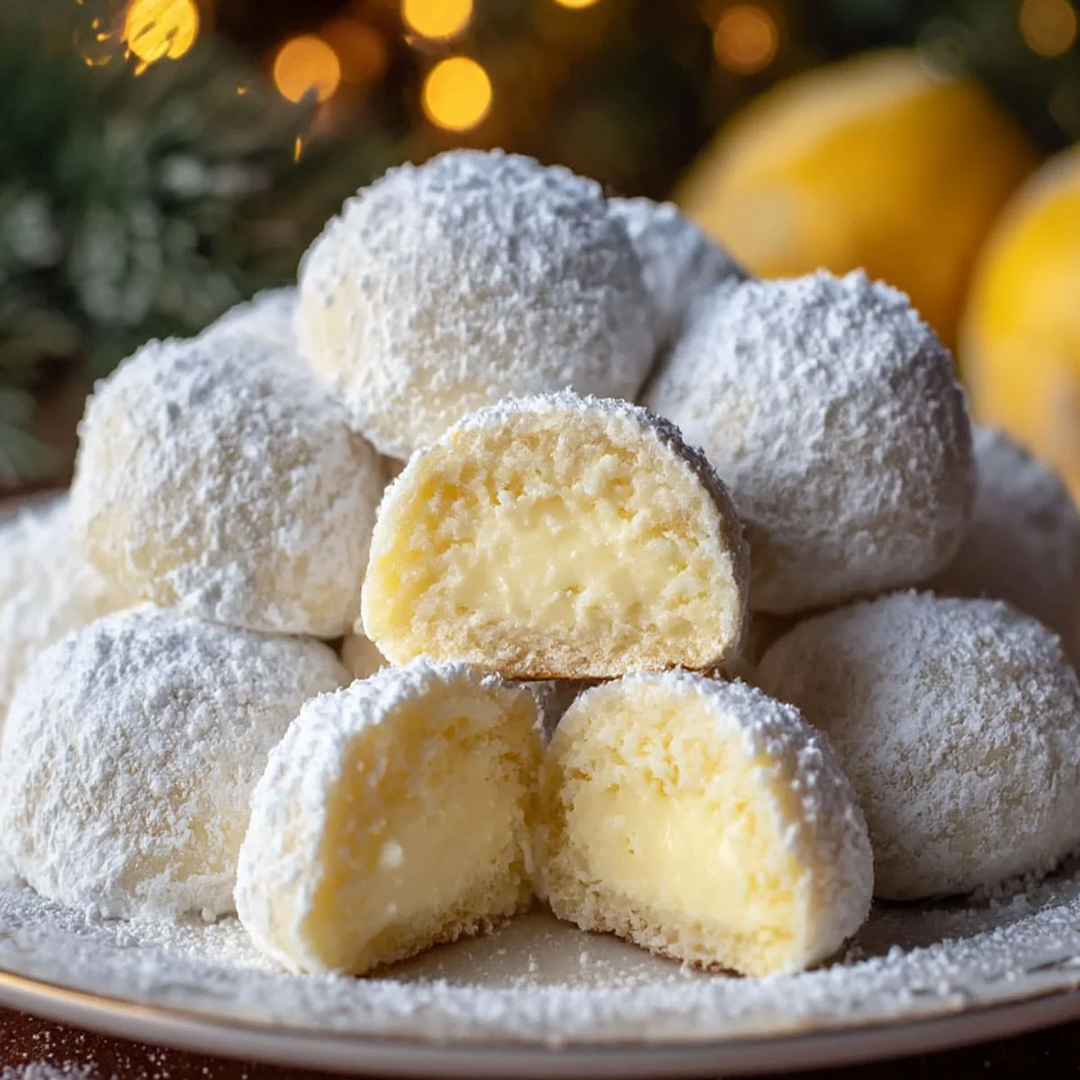
Melt-in-Your-Mouth Lemony Shortbread Snowballs: A Burst of Sunshine in Every Bite
Imagine a cookie that literally dissolves on your tongue, releasing a bright, sunny burst of lemon flavor. These melt-in-your-mouth lemony shortbread snowballs are exactly that. They combine a supremely tender, buttery shortbread with a surprisingly tangy and cool lemon cream center. Finally, a generous roll in powdered sugar creates that iconic snowy appearance. Consequently, every bite is a perfect harmony of texture and taste. These cookies are not just a treat; they are a little moment of pure, citrusy joy.
Furthermore, these lemony shortbread snowballs are deceptively simple to make. The process is a relaxing, almost therapeutic kitchen activity. You will cream butter and sugar, mix in flour, and shape little dough balls. Meanwhile, the filling comes together in minutes. After a quick bake, you transform warm, golden cookies into wintery confections with a cloud of powdered sugar. Ultimately, the result is a cookie that looks impressive and tastes even better. They are perfect for gifting, for parties, or for a special afternoon treat with tea.
Additionally, the magic of these cookies lies in their contrast. The exterior is delicate and crumbly, giving way to a soft, creamy heart. The powdered sugar coating adds a subtle sweetness that balances the zesty lemon filling perfectly. Moreover, the aroma that fills your kitchen while baking is absolutely heavenly. It is a scent of butter, citrus, and warmth that promises something wonderful. These lemony shortbread snowballs are a guaranteed crowd-pleaser that will have everyone asking for the recipe.
Quick Recipe Highlights
- Flavor Profile: These cookies deliver a powerful one-two punch of flavor. First, you taste the rich, buttery shortbread. Then, immediately, a bright and tangy lemon cream center cuts through, creating a perfectly balanced and refreshing experience.
- Texture: The texture is a masterclass in contrast. The shortbread exterior is incredibly tender and literally melts in your mouth. Conversely, the lemon cream filling is smooth, cool, and slightly soft, providing a delightful surprise in the center.
- Aroma: As they bake, the kitchen fills with the comforting scent of sweet butter and toasted flour. Simultaneously, the bright, zesty notes of fresh lemon zest perfume the air, creating an irresistible and inviting fragrance.
- Visual Appeal: These cookies are simply charming. They look like little snow-dusted orbs, rustic and inviting. The pure white powdered sugar coating makes them look festive and elegant, perfect for a cookie tray or holiday gift box.
- Skill Level Needed: This is a fantastic recipe for bakers of all levels. The techniques are fundamental: creaming butter and sugar, shaping dough, and making a simple filling. Therefore, even a beginner can achieve spectacular results with careful attention to the instructions.
- Special Equipment: You need only basic kitchen tools. A stand mixer or hand mixer is helpful for creaming, but a sturdy spoon and elbow grease will work. Otherwise, you just need mixing bowls, a baking sheet, parchment paper, and a small scoop or spoon for the filling.
Recipe Overview
- Difficulty Level: We rate this recipe as “Easy.” The steps are straightforward and involve no complex techniques like laminating dough or tempering eggs. However, success depends on properly creaming the butter and not overworking the shortbread dough. Following the chilling instructions is also key for the perfect texture.
- Category: This recipe falls squarely into the dessert category, specifically cookies and baked goods. They are a type of filled shortbread or butter cookie, offering a more sophisticated twist on the classic snowball or Russian tea cake cookie.
- Cuisine: While snowball cookies have roots in various European traditions like Mexican Wedding Cookies and Russian Tea Cakes, this version is a modern American fusion. It takes that classic butter cookie base and injects it with a vibrant, citrus-forward American sensibility.
- Cost: This is a very cost-effective recipe. The main ingredients are pantry staples: butter, flour, sugar, and cornstarch. Fresh lemons and cream cheese for the filling are also inexpensive. Overall, you can make two dozen impressive cookies for just a few dollars.
- Season: These lemony shortbread snowballs are truly a year-round delight. They feel bright and fresh for spring and summer. Conversely, their snowy appearance makes them a natural fit for winter holidays. Essentially, they bring a burst of sunshine to any season.
- Occasion: These cookies are incredibly versatile for occasions. They are elegant enough for a bridal shower or afternoon tea. They are also festive for Christmas cookie exchanges. Furthermore, they make a wonderful homemade gift packaged in a pretty tin or box.
Why You’ll Love This Recipe
First and foremost, you will adore the incredible taste and texture of these lemony shortbread snowballs. The shortbread base is the epitome of buttery, tender perfection. It crumbles delicately at the slightest pressure. Then, you discover the hidden treasure: a vibrant, tangy lemon cream that bursts with flavor. This contrast is utterly addictive. Moreover, the powdered sugar coating adds a final layer of gentle sweetness and a beautiful, festive look. Every element works in harmony to create a cookie that is far greater than the sum of its parts.
Next, consider the sheer convenience of this recipe. From start to finish, you can have these cookies ready in under an hour. The dough comes together quickly, and the filling is a simple mix of a few ingredients. There is no need for rolling pins, cookie cutters, or intricate decorating skills. Simply shape, bake, and dust. This makes it an ideal recipe for a last-minute bake sale contribution, an unexpected guest, or when you simply need a baking project that delivers maximum reward for minimal effort.
Furthermore, while these are certainly a treat, they offer some subtle advantages. For instance, you control the quality of ingredients. You can use real butter, fresh lemon zest, and pure vanilla extract. Additionally, a single cookie is quite satisfying due to its rich flavor and texture, which can help with portion control. Compared to store-bought cookies loaded with preservatives, these homemade lemony shortbread snowballs are a more wholesome indulgence.
Another compelling reason to love this recipe is its social and entertaining value. These cookies are absolute showstoppers on a dessert table. People are always delighted by the surprise filling. They spark conversation and requests for the recipe. Making a batch to give as gifts fosters connection and shows you care. Baking them with family, especially children, is a joyful activity; kids love rolling the dough balls and coating the warm cookies in sugar.
Finally, the cost-effectiveness and accessibility seal the deal. You likely have most ingredients in your kitchen right now. The recipe uses common, affordable items. Consequently, you can create a gourmet-tasting cookie without a gourmet budget. This accessibility means you can make them often, perfecting your technique and sharing the joy freely. Essentially, this recipe proves that spectacular baking doesn’t require exotic ingredients or complicated procedures.
Historical Background and Cultural Significance
The journey to these lemony shortbread snowballs begins with the ancient history of shortbread itself. Shortbread originated in Scotland, with its roots tracing back to medieval “biscuit bread.” Initially, it was a expensive luxury due to the cost of butter. Over time, it evolved into the rich, crumbly cookie we know, traditionally shaped into rounds, fingers, or petticoat tails. The high butter content is what “shortens” the gluten strands, creating that tender, melt-in-your-mouth texture. This Scottish foundation is the essential canvas for our modern lemon twist.
Meanwhile, the “snowball” cookie has its own rich cultural tapestry. Known variously as Russian Tea Cakes, Mexican Wedding Cookies, or Italian Butterballs, these powdered sugar-dusted treats appear in countless culinary traditions. Typically, they are nut-based butter cookies. Their spherical shape and snowy coating symbolize celebration, purity, and festivity across many cultures. They are staples at holidays, weddings, and festive gatherings. Our recipe borrows this iconic form but replaces the nut interior with a bright citrus cream, creating a delightful fusion.
The evolution of this specific recipe is a testament to modern baking creativity. Bakers are constantly innovating, taking classic forms and injecting new flavors. The addition of a lemon cream filling is a relatively contemporary innovation. It transforms the cookie from a simple, nutty treat into a complex flavor experience. This evolution reflects our current culinary love for bold, contrasting flavors and textures. It also showcases the versatility of the basic shortbread formula, which welcomes endless experimentation.
Regarding regional variations, the concept is wonderfully adaptable. In different areas, you might find similar cookies with lime or orange filling instead of lemon. Some bakers might add a hint of thyme or lavender to the shortbread for an herbal note. Others might roll the finished cookies in lemon-scented powdered sugar. The basic framework invites personalization. Consequently, this recipe for lemony shortbread snowballs is part of a living, global tradition of butter cookies that continues to inspire new interpretations in home kitchens everywhere.
Ingredient Deep Dive
Let’s start with the star: Unsalted Butter. Butter is the soul of shortbread, responsible for its rich flavor and tender crumb. Culturally, the quality of butter has always dictated the quality of shortbread. For nutrition, butter provides fat-soluble vitamins like A and E. When selecting butter for these lemony shortbread snowballs, use high-quality, real unsalted butter. This allows you to control the salt level precisely. Store butter tightly wrapped in the fridge, and for baking, let it soften to a cool room temperature for perfect creaming. There is no true substitute for the flavor in classic shortbread.
Next, consider All-Purpose Flour. Flour provides the structure for our cookies. It’s a pantry staple with a history of being the foundation of baking. Nutritionally, it offers carbohydrates and some protein. For this recipe, spoon the flour into your measuring cup and level it off. Do not scoop directly from the bag, as this packs too much flour and leads to dry cookies. Store flour in a cool, dry place. For a gluten-free adaptation, a 1:1 gluten-free flour blend can work, though the texture may be slightly more delicate.
Now, examine the Cornstarch. This ingredient is the secret weapon for the melt-in-your-mouth texture. It tenderizes the dough by diluting the gluten-forming proteins in the flour. Cornstarch is a pure starch derived from corn. It has little nutritional value but is crucial for texture. Ensure your cornstarch is fresh and lump-free. Store it alongside your flour. If you don’t have cornstarch, you can substitute an equal amount of additional all-purpose flour, but the texture will be slightly less tender and more crumbly.
Finally, the Lemon elements: zest and juice. Lemon zest contains potent essential oils that deliver the true, bright lemon flavor without excess liquid. Lemon juice in the filling provides the necessary tang. Lemons have a long history in Mediterranean cuisine and are valued for their vitamin C content. Always use fresh lemons for both zest and juice; bottled juice lacks vibrancy. Choose organic lemons if possible, as you are using the zest. Store whole lemons in the refrigerator. For the filling, fresh juice is non-negotiable for the best flavor in your lemony shortbread snowballs.
Common Mistakes to Avoid
- Using melted or too-warm butter: This is the most common error. Your butter must be softened but still cool to the touch. If it’s melty or oily, your dough will be greasy and spread too much, losing the delicate shortbread texture.
- Over-measuring the flour: Scooping flour directly from the bag packs it down, adding up to 25% more flour. Always spoon flour into your measuring cup and level it off with a knife for accurate, light cups.
- Skipping the dough chill time: Chilling the shaped dough balls firms up the butter. This prevents excessive spreading in the oven, ensuring your lemony shortbread snowballs keep their round shape and tender interior.
- Overbaking the cookies: Shortbread should not brown significantly. Bake just until the bottoms are lightly golden and the tops look dry. Overbaking makes them hard and crumbly instead of melt-in-your-mouth.
- Filling the cookies too much: A teaspoon of filling is perfect. Overfilling can cause the cookies to burst open during baking or make the dough too difficult to seal properly.
- Rolling in powdered sugar while cookies are too hot: If the cookies are piping hot, the powdered sugar will melt and create a glaze. Let them cool for 5-10 minutes until just warm, so the sugar creates a dry, snowy coating.
- Not using fresh lemon zest: The zest holds the true lemon essence. Dried lemon zest or relying solely on juice will result in a flat, one-dimensional lemon flavor in your cream filling.
- Storing in a non-airtight container: These cookies will quickly absorb moisture from the air and become soft. Always store them in an airtight container at room temperature to preserve their texture.
Essential Techniques
Creaming Butter and Sugar: This is the foundational technique for tender cookies. Creaming incorporates tiny air bubbles into the butter, which expand during baking and create lift. To master it, use softened, cool butter and beat with the sugar on medium speed for 2-3 minutes until the mixture is noticeably lighter in color and fluffy. A common pitfall is under-creaming, which results in dense cookies. The visual cue for success is a pale, whipped consistency.
Proper Dough Handling: Shortbread dough is delicate. After adding the dry ingredients, mix only until the flour disappears. Overmixing develops gluten, leading to tough cookies. When shaping, handle the dough as little as possible. Use a light touch to flatten the disc, add filling, and seal. The dough should feel soft and pliable, not elastic. If it becomes sticky, chill it for 10 minutes. This gentle handling ensures the final texture is crumbly and tender.
Sealing the Filling: This technique ensures the lemon cream stays inside. Take a portion of dough, flatten it into a small disc in your palm. Place a teaspoon of filling in the center. Carefully bring the edges of the dough up and over the filling, pinching them together to seal completely. Then, gently roll between your palms to form a smooth ball. The key is to ensure no filling is visible and the seam is fully closed to prevent leaks during baking.
The Double Sugar Coat: For the perfect snowy look, roll the warm cookies in powdered sugar twice. First, roll them when they are just warm to the touch. This layer will melt slightly and adhere. Then, after they are completely cool, roll them a second time. This final coat gives them that thick, pristine, snowy appearance. It also adds an extra layer of sweetness that complements the tangy lemon filling perfectly in your finished lemony shortbread snowballs.
Pro Tips for Perfect Lemony Shortbread Snowballs
For the brightest lemon flavor, zest your lemons directly into the bowl with your sugar before creaming. The sugar granules will help extract the essential oils from the zest, infusing the entire shortbread dough with lemon aroma.
If your dough feels too soft to shape after mixing, don’t add more flour. Simply cover the bowl and refrigerate it for 15-20 minutes. This chills the butter and makes the dough much easier to handle without compromising the tender texture.
Use a small cookie scoop or a measuring teaspoon to ensure your dough portions are even. This guarantees uniform baking and a professional look. Similarly, use a small spoon or a piping bag to portion the lemon cream filling consistently.
Line your baking sheet with parchment paper. Not only does this prevent sticking, but it also makes cleanup effortless. It also promotes even browning on the bottom of the cookies.
Give your cookies space on the baking sheet. They will spread slightly. Baking too many at once can cause them to run into each other and bake unevenly. Typically, bake 12 per standard sheet.
Let the baking sheet cool completely between batches. Placing dough balls on a warm sheet will cause the butter to start melting prematurely, leading to flat cookies.
Sift your powdered sugar before rolling the cookies. This removes any lumps and ensures a perfectly smooth, snowy coating on your lemony shortbread snowballs.
For an extra flavor boost, add a tiny pinch of fine sea salt to the powdered sugar used for rolling. This enhances all the other flavors and balances the sweetness beautifully.
Variations and Adaptations
For regional variations, consider inspired twists. A Mediterranean version could use orange blossom water in the filling and roll the cookies in crushed pistachios mixed with sugar. A tropical take might feature a lime and coconut cream filling, with the cookies rolled in toasted coconut flakes. These adaptations show how the basic snowball form can travel the globe.
Seasonal adaptations are endless. In spring, add a teaspoon of finely chopped lavender to the shortbread dough. For summer, use a mixed berry cream cheese filling. In fall, incorporate a teaspoon of pumpkin pie spice into the dough. Winter holidays are perfect for adding a hint of peppermint extract to the filling. Consequently, you can enjoy these cookies year-round with a seasonal flair.
Dietary modifications are straightforward. For gluten-free lemony shortbread snowballs, use a reputable 1:1 gluten-free flour blend. For dairy-free, use a high-quality vegan butter and dairy-free cream cheese. A vegan version would also require an egg-free dough binder, like a flax egg, though the texture may vary slightly. Always test a single cookie first when making significant substitutions.
Flavor variations can personalize your batch. Instead of lemon, try a key lime or blood orange filling. For the dough, substitute a quarter of the flour with almond flour for a nutty note. You could also add a tablespoon of poppy seeds to the dough for visual and textural interest. The basic recipe is a wonderful canvas for your creativity.
Texture modifications can cater to different preferences. For a crunchier exterior, bake the cookies a minute or two longer. For an even more delicate melt, add an extra tablespoon of cornstarch. If you prefer a firmer filling, add an extra tablespoon of powdered sugar to the cream cheese mixture to stiffen it.
Presentation alternatives offer fun ways to serve. Instead of a full snowball coating, you can dust them lightly with powdered sugar for a “snow-dusted” look. Or, dip half of the cooled cookie in white chocolate and then in sprinkles. Serving them in mini paper liners on a platter also adds a charming, polished touch.
Serving and Presentation Guide
Plating techniques can elevate these humble cookies. Arrange them on a simple white platter for a clean, modern look that highlights their snowy coating. Alternatively, use a tiered cake stand for a dramatic display at a party. For a rustic feel, present them in a woven basket lined with a linen napkin. The key is to let their beautiful, round shape and white dusting be the star of the show.
Garnishing ideas are subtle but effective. Place a few thin curls of lemon zest or a single fresh mint leaf on the platter around the cookies. You can also sprinkle a little extra powdered sugar over the arranged platter just before serving. For a holiday touch, add a few edible gold stars or silver dragees sparingly among the lemony shortbread snowballs.
Traditional accompaniments are all about beverage pairings. These cookies are classic with tea, especially Earl Grey or a herbal citrus blend. They are also perfect with coffee, as the bright lemon cuts through the bitterness. For a festive touch, serve them alongside a glass of cold milk, dessert wine like Moscato, or even a glass of champagne for a special brunch.
Modern serving suggestions think outside the box. Crumble a cookie over a bowl of lemon sorbet or vanilla ice cream for an incredible dessert. Use them as a base for a mini cheesecake by crushing them mixed with a little butter to form a crust. You can also serve them deconstructed: offer the shortbread balls, lemon cream in a bowl, and powdered sugar for guests to assemble their own bite.
Temperature considerations are simple. These cookies are best served at room temperature. This allows the butter in the shortbread to be soft and the filling to be spreadable. Avoid serving them cold from the refrigerator, as it mutes the flavors and hardens the texture. If you’ve stored them chilled, let them sit out for 30 minutes before serving.
Portion control tips are helpful because these cookies are rich. Their small size is intentional. One or two cookies with a cup of tea is a perfectly satisfying treat. When serving at a party, consider offering them alongside lighter fruit options. Because they are so flavorful, people often feel satisfied after just one, making them an elegant and not overly indulgent choice.
Wine and Beverage Pairing
Wine pairings for these cookies should complement the citrus and cut through the butter. A late-harvest Riesling with its honeyed sweetness and acidity is a phenomenal match. Alternatively, a French Sauternes or a Moscato d’Asti provides a sparkling, sweet contrast. For a more adventurous pairing, try a glass of limoncello; the intense lemon liqueur echoes the cookie’s flavor and creates a delightful synergy. The goal is to choose a wine that is at least as sweet as the dessert.
Non-alcoholic alternatives are just as exciting. Sparkling water with a twist of lemon or lime keeps the palate fresh. A homemade lavender lemonade complements the floral and citrus notes beautifully. For a warm option, a cup of mint tea or a honey-lemon ginger tea is incredibly cozy and harmonious. These pairings ensure everyone can enjoy the full experience of the lemony shortbread snowballs.
Coffee and tea pairings are a natural fit. A medium-roast coffee with low acidity won’t compete with the lemon. For tea, the choices are wonderful. Earl Grey’s bergamot orange flavor is a classic companion. A simple black tea allows the cookie to shine. Herbal teas like chamomile or lemon verbena enhance the citrus theme. Serving a selection allows guests to find their perfect match.
Temperature considerations for beverages depend on the setting. Iced tea or cold brew coffee is perfect for a summer gathering. Hot tea or coffee is ideal for a cozy winter afternoon. Always offer both hot and cold options if possible. The cookies themselves are room temperature, so they bridge the gap between hot and cold drinks seamlessly.
Serving suggestions for beverages should be thoughtful. Present tea in a proper pot with cups and saucers for an afternoon tea vibe. For wine, use small dessert wine glasses. For non-alcoholic options, pretty glasses with garnishes make the experience special. Ultimately, the beverage should feel like part of the treat, enhancing the enjoyment of every bite of your homemade cookies.
Storage and Shelf Life
Storage methods are crucial for preserving texture. Always store your completely cooled lemony shortbread snowballs in a single layer in an airtight container. If you need to stack them, place a sheet of parchment paper between layers to prevent sticking and protect the powdered sugar coating. A cookie tin or a glass container with a tight-sealing lid works perfectly.
Temperature requirements are straightforward. Room temperature is ideal. Store the container in a cool, dry part of your kitchen, away from the stove or direct sunlight. Do not refrigerate them, as the cold environment can cause condensation inside the container when opened, making the cookies soggy and causing the sugar coating to dissolve.
Container recommendations focus on airtightness. Metal tins are traditional and excellent. Plastic containers with locking lids are also fine. If using a plate covered with plastic wrap, ensure the wrap is sealed tightly all around. The enemy is air, which can stale the cookies, and moisture, which ruins the texture and coating.
Signs of spoilage are rare but good to know. Because of the high sugar and fat content, these cookies are shelf-stable. However, if they develop an off smell, a change in color (like dark spots), or an unusual texture (excessively hard or oily), they should be discarded. Properly stored, this is unlikely to happen within their normal shelf life.
Reheating instructions are generally not needed, as these cookies are best at room temperature. If they have become slightly soft, you can refresh them in a 300°F (150°C) oven for 3-4 minutes. Let them cool completely, then re-roll in powdered sugar. This can crisp them up slightly and revive the flavor.
Freezing guidelines are excellent for make-ahead plans. Freeze the baked, completely cooled cookies (before the final sugar coating) in a single layer on a baking sheet. Once solid, transfer to a freezer bag or airtight container. They will keep for up to 2 months. Thaw at room temperature, then roll in powdered sugar before serving. You can also freeze the shaped, unbaked dough balls; bake from frozen, adding 1-2 minutes to the bake time.
Make Ahead Strategies
Prep timeline can be stretched over days. You can make the lemon cream filling up to 3 days in advance; store it covered in the refrigerator. The shortbread dough can be mixed, shaped into balls, and frozen on a baking sheet. Once frozen solid, transfer the dough balls to a bag. They can be stored frozen for up to a month. This allows you to bake fresh cookies with minimal effort whenever the mood strikes.
Storage between steps is simple. If preparing components ahead, keep the filling chilled and the dough (if not baking immediately) chilled or frozen. Do not fill the dough balls until you are ready to bake. The filled, unbaked balls can be refrigerated on a tray for up to 24 hours, covered, if your schedule requires it.
Quality impact assessment is positive. The flavor of the lemon filling actually improves after a day in the fridge, as the flavors meld. The frozen dough bakes up nearly identically to fresh dough. The only minor difference might be a slightly less “puffy” look from frozen, but the taste and texture of the final lemony shortbread snowballs will be impeccable.
Assembly tips for make-ahead are key. When ready to bake, take your frozen dough balls and let them sit at room temperature for 10-15 minutes while your oven preheats. This prevents the outside from baking too fast before the inside thaws. Fill them while still firm. Bake as directed, watching closely. The bake time may need a slight extension.
Reheating guidelines for fully made cookies are not typically recommended, as the powdered sugar will melt. The best make-ahead strategy is to bake and do the first sugar coating. Store them airtight. Then, just before serving, give them a second roll in fresh powdered sugar to refresh their snowy appearance. This ensures they look pristine.
Fresh element additions are minimal. If you’ve made the filling ahead, give it a quick stir before using. If the powdered sugar for coating has gotten lumpy, sift it again. Other than that, the components are stable. This makes these cookies an incredibly reliable and stress-free choice for entertaining.
Scaling Instructions
Halving the recipe is simple for smaller batches. Precisely divide all ingredients in half. Use a medium egg yolk for the filling if the recipe calls for one large, or whisk a whole egg and use half. The bake time may be slightly shorter by a minute or two, so start checking early. This yields about 12 perfect lemony shortbread snowballs, ideal for a small household.
Doubling or tripling the recipe is easy for a crowd. Simply multiply all ingredients accurately. Use a large mixing bowl or mix in batches for the dough. You will need to bake in multiple batches; do not overcrowd the oven. Rotate baking sheets halfway through for even baking. Allow sheets to cool between batches. Scaling up works beautifully with this recipe.
Equipment adjustments may be needed when scaling. For a double batch, ensure your mixer bowl is large enough. You may need additional baking sheets. If you only have two sheets, have a wire rack ready to transfer hot cookies to, so you can reuse the sheets. Planning your baking sequence prevents bottlenecks and ensures efficiency.
Timing modifications are minor. When baking multiple sheets at once, the total oven time increases, but the per-batch time remains similar. Position racks in the upper and lower thirds of the oven and swap the sheets top-to-bottom and front-to-back halfway through baking. This promotes even browning on all your cookies.
Storage considerations change with volume. A large batch will fill multiple containers. Label them if storing for different occasions. Remember, the powdered sugar coating is best applied fresh. For a big batch meant for gifting, you might store the baked, uncoated cookies, then coat them right before packaging to ensure a perfect snowy look.
Nutritional Deep Dive
Macro breakdown for one cookie is typical for a rich butter cookie. It will be higher in fat and carbohydrates, with minimal protein. The fat comes primarily from the butter and cream cheese, providing energy and aiding in the absorption of fat-soluble vitamins. The carbs come from the flour and sugars, offering quick energy. This is a dessert meant for enjoyment in moderation as part of a balanced diet.
Micronutrient analysis reveals some benefits. Butter provides vitamins A and E. Lemon zest and juice offer a small amount of vitamin C and antioxidants. Using whole, real ingredients means you avoid artificial additives and preservatives found in many commercial cookies. However, the primary nutritional value is in the enjoyment and the homemade quality, not in significant vitamin content.
Health benefits are more about the experience than physical nutrition. Baking at home can reduce stress and provide a creative outlet. Sharing food fosters social connection. Choosing a homemade treat over a highly processed one gives you control over ingredient quality. These psychological and social benefits are valuable aspects of your overall well-being.
Dietary considerations are important to note. This recipe contains gluten, dairy, and eggs. It is not suitable for those with allergies to these items without modification. The high butter content also means it is high in saturated fat. As with any rich dessert, those monitoring specific dietary conditions should consume mindfully and consult the adaptation section for alternative versions.
Portion analysis is built into the recipe. The cookies are intentionally petite. One cookie provides a complete taste experience, which can help prevent overindulgence. Serving them on a small plate with a beverage encourages mindful eating. This portion control is a helpful tool for enjoying decadent treats without excess.
Weight management tips involve integration. If you love these cookies, you can absolutely enjoy them. The key is planning. Account for the treat in your daily intake. Savor one slowly with a cup of tea instead of eating several mindlessly. Bake them for occasions to share, so they don’t linger in your kitchen. This balanced approach allows you to enjoy food without guilt.
Dietary Adaptations
For a gluten-free version, replace the all-purpose flour with a 1:1 gluten-free baking blend that contains xanthan gum. Brands like Bob’s Red Mill or King Arthur work well. The texture will be very similar, perhaps slightly more delicate. Ensure your cornstarch is certified gluten-free. All other ingredients are naturally gluten-free, making this a straightforward swap for your lemony shortbread snowballs.
A dairy-free adaptation requires vegan butter and dairy-free cream cheese. Look for brands that bake well, like Miyoko’s or Kite Hill. The flavor profile will be slightly different but still delicious. For the filling, ensure your powdered sugar is also dairy-free (some contain anti-caking agents derived from dairy). With quality substitutes, you can achieve a wonderful cookie that everyone can enjoy.
Creating a vegan version builds on the dairy-free changes. In addition to vegan butter and cream cheese, the shortbread dough may need a binder since it lacks eggs. A “flax egg” (1 tbsp ground flax mixed with 3 tbsp water, rested for 5 minutes) can help bind the dough. The texture will be more crumbly but still tasty. This adaptation requires the most testing to perfect.
For low-carb or keto diets, significant changes are needed. Replace the flour with a fine almond flour and coconut flour blend. Use a powdered erythritol or monk fruit sweetener in place of both the granulated and powdered sugars. The filling would use a keto-friendly sweetener as well. This creates a completely different cookie but can satisfy a craving while adhering to dietary goals.
Other specific diets like Paleo would follow a similar grain-free, refined sugar-free path. A Low-FODMAP version would require careful sourcing of ingredients, using a gluten-free flour without problematic gums and ensuring the lemon cream uses a lactose-free cream cheese. Always consult specific dietary guidelines and test a small batch first when making significant ingredient substitutions.
Troubleshooting Guide
If your cookies spread too much and became flat, the butter was likely too warm. Next time, ensure your butter is cool and your dough is properly chilled before baking. Also, check your oven temperature with a thermometer; an oven that runs cool can cause spreading. For the current batch, they will still taste great, even if they are more like lemon shortbread discs than snowballs.
If the lemon filling leaked out during baking, the seal was not complete. Ensure you pinch the dough firmly over the filling and roll it into a smooth ball with no visible seams. Also, avoid overfilling; a level teaspoon is enough. Leaked filling can caramelize on the pan, but you can gently peel the cookie off the parchment after it cools.
If the cookies are too hard or crumbly, they were likely overbaked or the dough was overmixed. Shortbread bakes quickly. Look for just-set tops and lightly golden bottoms. Also, mix the dry ingredients only until combined. For future batches, reduce bake time by a minute and handle the dough more gently. Unfortunately, overbaked cookies cannot be fixed, but you can crumble them as a topping for yogurt or ice cream.
If the powdered sugar coating melted into a glaze, the cookies were too hot when rolled. Let them cool on the sheet for a full 10 minutes until just warm to the touch. For this batch, you can let them cool completely and then give them a second roll in fresh powdered sugar. The double layer will help achieve the snowy look Print
Melt-in-your-mouth Lemony Shortbread Snowballs
- Total Time: 45 minutes
- Yield: 24 cookies
Description
Delicate, buttery shortbread cookies with a zesty lemon cream filling, rolled in powdered sugar for a snowy finish.
Ingredients
- 1 cup unsalted butter, softened
- 1/2 cup powdered sugar, plus extra for coating
- 2 cups all-purpose flour
- 1/4 teaspoon salt
- 1 tablespoon lemon zest
- 1 teaspoon vanilla extract
- 4 ounces cream cheese, softened
- 1/4 cup granulated sugar
- 1 tablespoon fresh lemon juice
Instructions
- Preheat oven to 325°F (165°C). Line a baking sheet with parchment paper.
- In a bowl, beat butter and powdered sugar until creamy. Mix in flour, salt, lemon zest, and vanilla until dough forms.
- In another bowl, combine cream cheese, granulated sugar, and lemon juice for the filling.
- Take a tablespoon of dough, flatten slightly, add a teaspoon of filling, and wrap dough around to form a ball. Place on baking sheet.
- Bake for 18-20 minutes until lightly golden. Let cool slightly, then roll in powdered sugar while warm. Cool completely and roll again in powdered sugar.
Notes
You can customize the seasonings to taste.
- Prep Time: 15 minutes
- Cook Time: 30 minutes
- Method: Dessert
- Cuisine: American