Mediterranean Chicken Gyros with Creamy Feta Tzatziki: A Flavorful Weeknight Dinner
Imagine sinking your teeth into a warm, soft pita filled with juicy, spiced chicken, cool and creamy feta tzatziki, and crisp, fresh vegetables. This is the magic of homemade Mediterranean Chicken Gyros with Creamy Feta Tzatziki. This recipe brings the vibrant flavors of a Greek street market right into your own kitchen, offering a meal that is both satisfying and surprisingly simple to prepare. The combination of tangy yogurt, briny feta, and fragrant herbs creates a symphony of tastes that will transport your taste buds to the sunny Mediterranean coast.
The beauty of these Mediterranean Chicken Gyros with Creamy Feta Tzatziki lies in their balance of textures and temperatures. You have the warm, savory chicken that has been marinated in a blend of lemon, garlic, and oregano. Then, you get the cool, refreshing crunch of cucumber and tomato. Finally, the star of the show is the rich, herby tzatziki sauce that ties everything together with its luxurious creaminess. It is a handheld meal that feels like a celebration, perfect for a busy weeknight when you crave something special but have limited time.
We have taken the classic Greek gyro and given it a slight twist by incorporating feta cheese directly into the tzatziki. This adds an extra layer of salty, tangy goodness that elevates the sauce to new heights. This recipe is designed for success, using straightforward techniques and readily available ingredients. You will learn how to perfectly season and cook your chicken, how to create a restaurant-quality tzatziki in minutes, and how to assemble everything for the perfect bite every single time. Get ready to make your new favorite dinner.
Quick Recipe Highlights
- Flavor Profile: This dish delivers a bright and zesty flavor profile. The lemon and oregano marinade infuses the chicken with herbal notes, while the creamy feta tzatziki provides a cool, tangy, and salty counterpoint. The fresh vegetables add a clean, crisp finish that balances the rich components.
- Texture: You will experience a wonderful contrast of textures. The chicken is tender and juicy with slightly charred edges. The pita is soft and warm. The tzatziki is luxuriously smooth and creamy. The cucumber, tomato, and red onion provide a refreshing crunch that makes every bite exciting.
- Aroma: The aroma coming from your kitchen will be irresistible. As the chicken cooks, the scents of garlic, oregano, and lemon fill the air with a warm, savory fragrance. The fresh dill and mint in the tzatziki add a cool, herbaceous note that promises freshness.
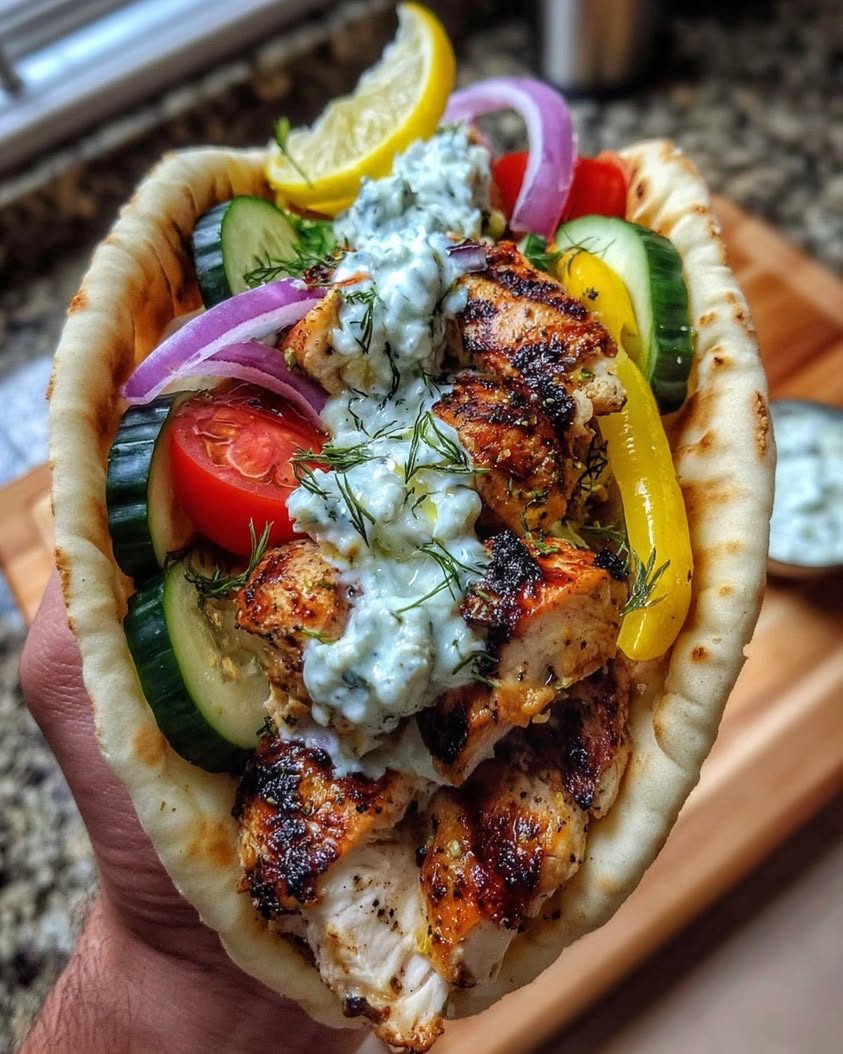
- Visual Appeal: These gyros are a feast for the eyes. The golden-brown chicken is nestled in a bed of vibrant red tomatoes, green cucumber, and purple red onion. The white, creamy tzatziki is drizzled artfully on top, creating a beautiful and appetizing presentation that looks as good as it tastes.
- Skill Level Needed: This recipe is perfect for beginners and experienced home cooks alike. The techniques are straightforward, involving simple chopping, mixing, and pan-searing. There are no complex steps or advanced skills required, making it an accessible and rewarding dish to prepare.
- Special Equipment: You will need a few basic kitchen tools. A large skillet or grill pan is ideal for cooking the chicken. A box grater or food processor will help you quickly shred the cucumber for the tzatziki. A mixing bowl and a good chef’s knife are the other essentials you will need to have on hand.
Recipe Overview
- Difficulty Level: We have rated this recipe as Easy. The marinade comes together in a bowl, and the chicken cooks quickly in a hot pan. The tzatziki is simply a matter of mixing ingredients together. There are no complicated techniques like kneading dough or making a complicated sauce from scratch, so you can confidently make this on any night of the week.
- Category: This dish fits perfectly into several meal categories. It is a fantastic main course for dinner. It also works wonderfully as a hearty lunch. You can serve the components separately for a fun and interactive dinner party. It is also a great candidate for meal prep because you can prepare the components ahead of time.
- Cuisine: This recipe is firmly rooted in Greek and broader Mediterranean culinary traditions. It draws from the classic Greek gyros, which typically features meat cooked on a vertical rotisserie. Our version adapts the flavors for the home kitchen, using chicken and a simplified cooking method while staying true to the core ingredients of oregano, lemon, garlic, and yogurt.
- Cost: This is a very cost-effective meal. Boneless, skinless chicken breasts or thighs are generally affordable. The other main ingredients like pita bread, yogurt, cucumber, and tomatoes are also budget-friendly. Feta cheese is a slightly more premium ingredient, but a little goes a long way in the tzatziki, making it a worthwhile and economical choice.
- Season: Mediterranean Chicken Gyros with Creamy Feta Tzatziki is a fantastic dish for warmer months. The fresh, bright flavors and cool yogurt sauce are incredibly refreshing on a hot summer day. However, the quick cooking time and vibrant taste make it a welcome meal any time of the year when you need a taste of sunshine.
- Occasion: This recipe is versatile enough for many occasions. It is perfect for a casual weeknight family dinner because it comes together quickly. It also shines at a summer barbecue or potluck where you can set up a gyro bar. It is a fun and impressive dish for a game-day gathering or a relaxed weekend lunch with friends.
Why You Will Love This Recipe
The taste of these gyros is nothing short of spectacular. The chicken is infused with a bold Mediterranean marinade that is both savory and bright. You will taste the warmth of the oregano, the pungency of the garlic, and the citrusy zing of the lemon. When you add the creamy feta tzatziki, the flavors meld into a perfect harmony of tangy, salty, and cool. The fresh vegetables add a necessary crunch and sweetness that prevents the dish from feeling heavy. It is a complete sensory experience that will leave you feeling fully satisfied.
Convenience is a major selling point for this recipe. The entire meal can be on the table in about 35 minutes, making it a true weeknight hero. The marinade only needs a few minutes to come together, and the chicken cooks while you prepare the toppings. The tzatziki is a no-cook sauce that you can whip up in under five minutes. This means you can enjoy a complex and flavorful meal without spending hours in the kitchen. It is efficient cooking at its finest.
Nutritionally, this meal is a winner. The chicken provides a lean source of high-quality protein, which helps you feel full and energized. The Greek yogurt and feta cheese are packed with calcium and probiotics, which are great for bone and gut health. The fresh vegetables add essential vitamins, minerals, and fiber. Finally, the olive oil in the marinade provides healthy monounsaturated fats. This is a balanced meal that supports your health goals while delivering incredible flavor.
This recipe is also fantastic for social gatherings. The interactive nature of building your own gyro makes it a fun and engaging meal for guests. You can set out all the components in separate bowls and let everyone customize their own pita. This is a great way to accommodate different tastes and dietary preferences. It creates a relaxed, communal dining experience that encourages conversation and sharing. Your guests will be impressed by the restaurant-quality results.
Cost-effectiveness is another reason to love this dish. The ingredients are all commonly found in most grocery stores and are reasonably priced. You are using simple, whole ingredients to create something that tastes far more expensive than it is. By making your own marinade and tzatziki, you are avoiding the cost and preservatives found in store-bought versions. This allows you to feed your family a high-quality, delicious meal without stretching your budget.
Historical Background and Cultural Significance
The gyro, as we know it today, has a relatively modern history despite its ancient Greek roots. The concept of cooking meat on a vertical spit can be traced back to the Ottoman Empire, where dishes like doner kebab were popular. Greek immigrants in the 19th and 20th centuries brought this cooking method back to Greece and adapted it to local tastes. They started using pork or chicken, and they seasoned it with classic Greek herbs like oregano, thyme, and marjoram. The modern gyro was born in the bustling streets of Athens in the 1950s and 1960s.
The cultural importance of the gyro in Greece cannot be overstated. It is a staple of street food culture, sold from countless small shops and food carts in every city and town. For Greeks, the gyro is more than just a quick meal; it is a source of national pride and a symbol of their culinary heritage. It represents the ability to create something delicious and satisfying from simple, fresh ingredients. Sharing a gyro with friends and family is a common and beloved social activity, often enjoyed late at night after socializing.
The evolution of the gyro has continued as it has spread globally. In its journey to the United States and other countries, the gyro has been adapted to suit local palates and available ingredients. The classic Greek version often uses pork or lamb, but in North America, a mixture of lamb and beef, or simply chicken, has become incredibly popular. The toppings have also evolved, with the addition of lettuce, tomato, and onion becoming standard. Our version with Creamy Feta Tzatziki is a natural progression of this evolution, adding another layer of creamy, tangy flavor.
Regional variations of the gyro are fascinating. In Greece itself, the preparation of the meat can vary from region to region, with some areas favoring more heavily spiced meat. The type of pita bread also differs; some regions use a thicker, softer pita while others prefer a thinner, crispier one. In Mexico, a similar dish known as tacos al pastor was inspired by Lebanese immigrants and uses a vertical spit with pork and pineapple. This shows how the core concept of cooking meat on a vertical spit has traveled the world and been endlessly reimagined by different cultures.
Ingredient Deep Dive
Chicken is the heart of this recipe, and choosing the right cut is important. Boneless, skinless chicken thighs are our top recommendation because they are more flavorful and stay juicier than chicken breasts. Thighs have a higher fat content, which prevents them from drying out during cooking. If you prefer white meat, boneless, skinless chicken breasts will work well, but be careful not to overcook them. Nutritionally, chicken is an excellent source of lean protein, B vitamins, and selenium. It is a versatile and healthy protein that forms the base of countless meals. When selecting chicken, look for pieces that are plump and pink with no off-odor. Store it in the coldest part of your refrigerator and use it within a day or two of purchase.
Greek yogurt is the critical base for our Creamy Feta Tzatziki. It provides the signature tangy flavor and thick, creamy texture that defines a great tzatziki. Full-fat Greek yogurt is preferred because it is richer and less likely to separate, but 2% will also work. Greek yogurt is strained to remove the whey, making it much thicker and more protein-rich than regular yogurt. It is packed with protein, calcium, and probiotics that support digestive health. When buying, look for yogurt with a clean ingredient list, ideally just milk and live active cultures. Store it in the refrigerator and check the expiration date. Do not use low-fat or non-fat varieties for this sauce, as they can be watery and lack flavor.
Feta cheese is the special ingredient that elevates our tzatziki from traditional to extraordinary. Feta is a brined curd white cheese made from sheep’s milk or a mixture of sheep and goat’s milk. Its origins are Greek, and it has a protected designation of origin status there. Feta has a tangy, salty flavor and a crumbly yet creamy texture. It adds a fantastic savory depth to the sauce. Nutritionally, feta is a good source of calcium and protein. For the best flavor, buy a block of feta stored in brine rather than pre-crumbled feta, which can be dry and less flavorful. Store it in its brine in the refrigerator, where it will keep for several weeks.
English cucumber is the preferred cucumber for tzatziki. It has a thin, edible skin and fewer seeds than standard garden cucumbers, which means less water and no need to peel it. The key to a good tzatziki is removing as much water from the cucumber as possible to prevent the sauce from becoming thin and watery. Cucumbers are hydrating and low in calories, providing a refreshing crunch. When selecting one, look for a cucumber that is firm and dark green without any soft spots. Store it in the refrigerator’s crisper drawer. A standard garden cucumber can be used, but you should peel it, seed it, and grate it before salting and draining.
Dill and mint are the classic fresh herbs that give tzatziki its distinctive flavor profile. Dill has a slightly sweet, grassy, and anise-like flavor that pairs perfectly with yogurt and cucumber. Mint adds a cool, bright, and refreshing note that balances the rich chicken and tangy feta. Fresh herbs are always preferred for their superior flavor and aroma. Dried herbs can be used in a pinch, but you will need to use less and rehydrate them slightly before using. Fresh dill should have feathery, dark green fronds. Fresh mint should have vibrant green leaves with no wilting. Store both herbs in the refrigerator with their stems in a glass of water, loosely covered with a plastic bag.
Pita bread is the vessel that holds everything together. For the best results, use a thicker, softer style of pita or naan that can hold the fillings without tearing. Traditional Greek pita is often softer and less pocket-like than the type commonly found in US supermarkets. Look for “Greek-style” pita or “pocketless pita.” You can also use warm flatbreads, lavash, or even large flour tortillas. To make the pita more pliable and warm, heat it in a dry skillet for about 30 seconds per side or wrap it in foil and warm it in a low oven. This step is crucial for preventing the bread from cracking when you fold it.
Common Mistakes to Avoid
- Not draining the cucumber for the tzatziki is a major mistake. If you skip this step, your sauce will be watery and thin. Grate the cucumber, sprinkle it with salt, and let it sit in a mesh strainer for at least 15 minutes. Then, squeeze it firmly with your hands to remove the excess liquid.
- Overcooking the chicken will result in dry, tough gyros. Chicken breasts, in particular, cook very quickly. Use a meat thermometer to ensure the internal temperature reaches 165 degrees Fahrenheit. For thighs, you can cook them to 175 degrees for the most tender result.
- Skipping the marinade time can lead to bland chicken. Even 15 minutes of marinating makes a difference. The acid in the lemon juice and the salt in the marinade help to tenderize the meat and infuse it with flavor. For the best results, aim for at least 30 minutes.
- Using cold pita bread will cause it to crack and break when you try to fold it. Always warm your pita bread before assembling the gyros. A quick 30-second toast in a hot skillet or a few minutes in the oven will make it soft and pliable.
- Adding the tzatziki to the pita first will make the bottom of the bread soggy. Instead, place the lettuce or other greens down first to create a barrier. Then, add the chicken, vegetables, and finally the tzatziki on top.
- Not seasoning the tzatziki properly will result in a bland sauce. The sauce needs a good amount of salt, pepper, and acid. Taste it after mixing and adjust the seasoning. The feta adds saltiness, but you may still need a pinch of salt and a squeeze of fresh lemon juice.
- Forgetting to pat the chicken dry before marinating can prevent the marinade from adhering. Use paper towels to pat the chicken dry on all sides. This step ensures the marinade sticks to the meat rather than sliding off into the bowl.
- Overcrowding the pan will steam the chicken instead of searing it. Cook the chicken in a single layer with a little space between each piece. If you have a lot of chicken, cook it in batches to get a beautiful golden-brown crust.
Essential Techniques
Mastering the technique for draining the cucumber is essential for a perfect tzatziki. The goal is to remove as much water as possible so your sauce stays thick and creamy. Start by grating the cucumber on the large holes of a box grater. Then, toss the shreds with a generous pinch of salt. The salt draws out the moisture through osmosis. Let the salted cucumber sit in a fine-mesh strainer set over a bowl for at least 15 minutes. Finally, gather the shreds in a clean kitchen towel or cheesecloth and squeeze them firmly over the sink. You will be amazed at how much liquid comes out. This step ensures a thick, luscious sauce.
Getting a good sear on the chicken is what gives it that delicious, savory flavor. To achieve this, you need a hot pan and dry meat. After patting the chicken dry, heat a large cast-iron or stainless-steel skillet over medium-high heat. Add a thin layer of olive oil and wait for it to shimmer. Place the chicken in the pan in a single layer. Do not move it for at least 4-5 minutes. You want it to develop a deep, golden-brown crust. When it releases easily from the pan, it is ready to flip. This crust is pure flavor. The Maillard reaction that creates this browning is what makes the chicken taste incredibly savory.
Slicing the chicken against the grain is a small step that makes a big difference in tenderness. Chicken breasts and thighs have muscle fibers that run in a specific direction. When you cut the meat, it is important to slice perpendicular to those lines. This shortens the muscle fibers, making each bite easier to chew. If you slice with the grain, you will end up with long, stringy pieces of meat that are tough. After the chicken has rested for five minutes after cooking, place it on a cutting board. Look for the direction of the fibers and cut across them into thin strips. This simple technique ensures your gyros are perfectly tender.
Toasting the pita bread is a final step that elevates your entire meal. Cold, raw pita can be stiff and bland. Toasting it adds warmth, a slight crispness on the outside, and a nutty flavor. You can do this in several ways. The quickest method is to place the pitas directly over the flame of a gas stove for a few seconds per side, being careful not to burn them. Alternatively, you can heat them in a dry cast-iron skillet over medium-high heat for about 30-45 seconds per side. Another great option is to wrap them in foil and warm them in a 350-degree oven for 5-7 minutes. The warmth makes them pliable and ready to wrap around your fillings.
Pro Tips for Perfect Mediterranean Chicken Gyros with Creamy Feta Tzatziki
For the most flavorful chicken, let it marinate in the refrigerator for at least two hours, or even overnight. The extended time allows the flavors of lemon, oregano, and garlic to penetrate deep into the meat. This step transforms the chicken from simply seasoned to profoundly flavorful.
When making the tzatziki, always use a microplane or the smallest holes on a box grater to grate the garlic. This creates a paste that will distribute evenly throughout the sauce, preventing you from getting a sharp, unexpected bite of raw garlic. It smooths out the flavor beautifully.
After you make the tzatziki, let it rest in the refrigerator for at least 30 minutes before serving. This allows the flavors of the dill, mint, garlic, and lemon to meld together. A little bit of resting time makes a noticeable difference in the depth of flavor.
Do not skip the step of resting the cooked chicken. After you take it out of the pan, let it rest on a cutting board for five minutes. This allows the juices to redistribute throughout the meat. If you cut into it immediately, those juices will run out onto the board, leaving your chicken dry.
If you want a smoky flavor without a grill, add a smoked paprika to the chicken marinade. This simple addition will give your gyros a wonderful, subtle smokiness that mimics the flavor of an outdoor grill or a traditional vertical rotisserie.
To prevent your pita from getting soggy, use a sturdy lettuce like romaine or iceberg to line the bottom. This creates a barrier between the moist fillings and the bread, keeping your pita intact and enjoyable until the very last bite.
When assembling, do not overstuff the pita. It is better to use a moderate amount of filling than to try to cram everything in. An overstuffed gyro is difficult to eat and will likely fall apart. A well-balanced gyro with a good ratio of each component is much more satisfying.
Variations and Adaptations
Regional variations of this recipe are a fun way to explore different flavor profiles. For a taste of the Middle East, try adding a pinch of sumac to the chicken marinade and a dollop of hummus inside the pita. For a more Italian-inspired version, swap the tzatziki for a creamy basil pesto and add some roasted red peppers. You could also try using lamb instead of chicken for a more traditional Greek gyro experience. Each variation brings a new and exciting twist to the base recipe.
Seasonal adaptations are a great way to use fresh, local produce. In the summer, add fresh, ripe heirloom tomatoes and thinly sliced peaches or nectarines for a sweet contrast. In the fall, roast some butternut squash or sweet potatoes to add a warm, earthy element. You can also add some arugula or spinach in the spring for a peppery bite. Adapting the vegetables to the season keeps the dish exciting and allows you to take advantage of the best produce available.
Dietary modifications are easy to make with this recipe. To make it gluten-free, simply use certified gluten-free pita bread or serve the fillings over a bed of lettuce as a gyro salad. For a dairy-free version, use a dairy-free yogurt and a vegan feta alternative in the tzatziki. You can also make the tzatziki with a creamy tahini sauce as a delicious and nutty alternative. These substitutions allow everyone to enjoy the flavors of a gyro.
Flavor variations can completely transform the dish. For a spicy kick, add a pinch of cayenne pepper or red pepper flakes to the chicken marinade. You can also drizzle the assembled gyros with a spicy harissa or a sriracha yogurt sauce. For a smokier flavor, cook the chicken on a charcoal grill or add a teaspoon of smoked paprika to the marinade. You can also add a spoonful of chopped Kalamata olives or capers for a briny, salty punch.
Texture modifications can make the dish more interesting. For extra crunch, add some toasted pine nuts or walnuts to the filling. You can also pickle some red onions in red wine vinegar for a tangy, crisp element. If you prefer a softer texture, you can warm the tomatoes and shredded lettuce gently in a pan before assembling. For a charred flavor, grill the pita bread directly over the flames until it has some black spots.
Presentation alternatives can make this dish suitable for different occasions. For a formal dinner party, plate the components separately. Fan out the sliced chicken, place a dollop of tzatziki on the side, and arrange the vegetables and pita bread neatly on the plate. For a casual buffet, set up a gyro bar with all the components in separate bowls. For an appetizer, cut the pitas into small wedges, top them with a small piece of chicken, a spoonful of tzatziki, and a sliver of tomato.
Serving and Presentation Guide
For the most visually appealing plating, start by warming the pita bread and placing it on a plate. Add a layer of shredded lettuce to create a base. Arrange the sliced chicken down the center of the pita. Then, artfully arrange the diced tomatoes, cucumber, and red onion on top of the chicken. Finally, drizzle the creamy feta tzatziki over the top in a zigzag pattern. This layering technique ensures every bite has a little bit of everything and looks stunning.
Garnishing is a wonderful way to add a final touch of freshness and color. A sprinkle of fresh dill or mint on top of the tzatziki adds a beautiful green accent and a burst of flavor. A few crumbles of extra feta cheese on top provide a visual and textural contrast. A light squeeze of lemon juice over the finished gyro just before serving adds a final bright, acidic note that wakes up all the flavors. A sprinkle of sumac also adds a beautiful red hue and a tangy finish.
Traditional accompaniments for gyros are simple but perfect. A side of crispy, golden-brown Greek fries is a classic pairing. These are thick-cut fries tossed in oregano and lemon juice after frying. A light and refreshing Greek salad with crisp cucumbers, tomatoes, olives, and a simple vinaigrette is another excellent choice. You can also serve it with a side of roasted vegetables, like lemon-herb potatoes or roasted bell peppers.
Modern serving suggestions offer a fresh take on the classic. For a low-carb option, serve the filling over a bed of mixed greens with a side of tzatziki as a dressing. You can also serve the components in a grain bowl with quinoa or farro. For a fun and shareable appetizer, cut the pita into wedges and toast them. Then, top each wedge with a spoonful of the filling and a drizzle of tzatziki.
Temperature considerations are important for the best eating experience. The chicken should be served warm, ideally fresh from the pan or reheated gently. The pita should also be warm and pliable. The tzatziki and the fresh vegetables, however, should be served cold and crisp. This contrast of temperatures is one of the best parts of a gyro. The hot, savory filling against the cool, creamy sauce is a truly delightful experience.
Portion control tips can help you build the perfect gyro every time. For a standard pita, aim for about 4-5 ounces of cooked chicken, which is roughly the size of a deck of cards. Use about two tablespoons of tzatziki and a generous handful of vegetables. This ratio provides a balanced and satisfying meal without being overwhelming. If you are serving a crowd, it is better to offer smaller components and let people build their own, which allows for individual portion control.
Wine and Beverage Pairing
When it comes to wine pairings, a crisp, dry white wine is an excellent choice for these gyros. The bright acidity in a Sauvignon Blanc or a Pinot Grigio will cut through the richness of the chicken and the creamy tzatziki, cleansing your palate with each sip. A Greek Assyrtiko is a fantastic option, as its mineral notes and citrus flavors complement the lemon and oregano in the marinade perfectly. For a red wine, a light-bodied, chilled red like a Beaujolais or a Pinot Noir will work well.
Non-alcoholic alternatives are just as satisfying. A sparkling water with a squeeze of fresh lemon or lime is a simple and refreshing choice that cleanses the palate. A glass of iced mint tea is a wonderful herbal pairing that echoes the fresh mint in the tzatziki. You can also try a traditional Greek sour cherry juice called Vyssinada, which offers a balanced sweet-tart flavor profile. A simple lemonade or a cucumber-infused water also makes a beautifully cooling drink.
A traditional Greek frappe coffee makes a surprisingly good after-dinner pairing. The strong, icy, and slightly bitter coffee provides a wonderful contrast to the rich and tangy flavors of the meal. The cold temperature is also very refreshing. If you prefer a hot coffee, a medium-roast Greek coffee is a great choice. The robust flavor of the coffee stands up well to the garlic and herbs in the dish without overwhelming them.
Temperature considerations for your beverage are just as important as for the food. For white wines and non-alcoholic drinks, they should be served ice-cold. The cold temperature provides a refreshing contrast to the warm gyro. Red wines, if you choose one, should be slightly chilled, around 55 degrees Fahrenheit, to keep them light and refreshing. Overly warm red wine will taste heavy and can clash with the freshness of the dish.
Serving suggestions for beverages can enhance the overall experience. For a party, set up a self-serve beverage station with a pitcher of infused water, some bottles of wine, and a selection of sodas. Offer some small cups of sliced lemon and lime for guests to add to their drinks. If you are serving the gyros as a plated meal, consider a wine pairing where you serve a glass of wine with the meal and a coffee or digestif afterward. This creates a more structured and sophisticated dining experience.
Storage and Shelf Life
Proper storage is key to enjoying your leftovers. Store the cooked chicken, tzatziki, and fresh vegetables in separate airtight containers. This prevents the different components from making each other soggy or absorbing unwanted flavors. The chicken will stay fresh in the refrigerator for up to three to four days. The tzatziki will also last for about three to four days. The chopped vegetables are best used within one to two days, as they will start to lose their crunch.
Temperature requirements are straightforward. All components should be refrigerated at a temperature of 40 degrees Fahrenheit or below. The tzatziki should not be left at room temperature for more than two hours because it contains dairy. The cooked chicken also needs to be cooled quickly and then refrigerated. Do not leave the assembled gyros sitting out. Always store the components separately and reheat only the chicken and pita.
Container recommendations are simple but important. Use airtight glass or plastic containers for all components. Glass containers are excellent because they do not absorb odors or stains. For the tzatziki, a container with a tight-fitting lid is crucial to prevent it from absorbing flavors from other foods in the refrigerator. For the fresh vegetables, a container lined with a paper towel will help absorb excess moisture and keep them crisp for longer.
Signs of spoilage are important to recognize. For the chicken, look for a change in color, a slimy texture, or an off-odor. If any of these are present, discard it immediately. For the tzatziki, look for separation of the liquid or any mold on the surface. An off-smell is also a sign of spoilage. For the vegetables, they will become wilted, slimy, or discolored. When in doubt, it is always safer to throw it out.
Reheating instructions are critical for maintaining quality. The chicken is best reheated in a hot skillet over medium-high heat with a splash of water or chicken broth to add moisture. You can also reheat it in the microwave, but it will be less crispy. The pita bread should be reheated separately in a dry skillet or toaster. Never microwave the tzatziki or the fresh vegetables. Always add them cold to the reheated chicken and pita.
Freezing guidelines are helpful for longer-term storage. Cooked chicken can be frozen for up to three months. Let it cool completely, then place it in a freezer-safe bag or container. To thaw, transfer it to the refrigerator overnight. The tzatziki does not freeze well because the yogurt will separate and become grainy upon thawing. The fresh vegetables are also not suitable for freezing. It is best to freeze only the chicken and make fresh tzatziki and vegetables when you are ready to eat the leftovers.
Make Ahead Strategies
A well-planned prep timeline is the secret to a stress-free dinner. You can make the tzatziki up to two days in advance. The flavors will actually meld and improve. You can also chop all the fresh vegetables, including the tomatoes, cucumber, and red onion, and store them in a single container in the refrigerator. You can make the chicken marinade up to 24 hours in advance. Simply mix the ingredients, add the chicken, and let it marinate in the refrigerator until you are ready to cook.
Storage between steps is critical for maintaining freshness. The tzatziki should be stored in an airtight container in the refrigerator. The chopped vegetables should also be stored in an airtight container, lined with a paper towel to absorb excess moisture. The marinating chicken should be kept in its bowl or a zipper-lock bag in the refrigerator. Keep all these components separate until you are ready to assemble the gyros, which prevents cross-contamination and sogginess.
A quality impact assessment is important to understand. Making the tzatziki a day ahead actually improves its flavor as the herbs and garlic meld with the yogurt. The marinated chicken will be more flavorful if it sits for several hours or overnight. The chopped vegetables will remain crisp for about a day, but after that, they will start to lose their crunch. The pita is best when warmed fresh, but it can be purchased ahead of time and stored at room temperature.
Assembly tips for make-ahead success are simple. Do not assemble the gyros until you are ready to serve them. If you put them together too early, the pita will become soggy from the tzatziki and the moisture from the vegetables. The best strategy is to have all the components prepped and ready to go. Then, when it is time to eat, you can quickly warm the chicken and pita, and let everyone build their own gyro. This ensures the perfect texture.
Reheating guidelines for make-ahead components are straightforward. The chicken should be reheated in a hot skillet with a little water or broth to keep it moist. The pita should be warmed in a dry skillet or in the oven. Never reheat the tzatz Print
Mediterranean Chicken Gyros with Creamy Feta Tzatziki
- Total Time: 30 minutes
- Yield: 4
Description
Tender marinated chicken, fresh veggies, and a tangy feta tzatziki sauce wrapped in warm pita bread. A deliciously fresh Mediterranean meal.
Ingredients
- 1 lb boneless skinless chicken breasts
- 3 tablespoons olive oil
- 2 tablespoons lemon juice
- 3 cloves garlic, minced
- 1 teaspoon dried oregano
- 1/2 teaspoon salt
- 1/4 teaspoon black pepper
- 4 large pita breads
- 1 cup cherry tomatoes, halved
- 1/2 red onion, thinly sliced
- 1/2 cucumber, sliced
- 1/2 cup crumbled feta cheese
- 1/2 cup plain Greek yogurt
- 1/4 cup sour cream
- 1 tablespoon fresh dill, chopped
- 1 tablespoon lemon juice (for tzatziki)
- Salt and pepper to taste
Instructions
- In a bowl, whisk together olive oil, 2 tablespoons lemon juice, garlic, oregano, salt, and pepper. Add chicken and marinate for at least 30 minutes.
- Grill or pan-sear chicken over medium-high heat until cooked through, about 6-7 minutes per side. Let rest, then slice thinly.
- For the tzatziki: combine Greek yogurt, sour cream, crumbled feta, dill, and 1 tablespoon lemon juice. Mix well, season with salt and pepper.
- Warm pita bread in a dry skillet or oven.
- Assemble gyros: place sliced chicken on pita, top with tomatoes, onion, cucumber, and a generous dollop of feta tzatziki.
- Fold and serve immediately.
Notes
You can customize the seasonings to taste. Add a pinch of cayenne for heat or swap chicken for lamb.
- Prep Time: 15 minutes
- Cook Time: 15 minutes
- Method: Main
- Cuisine: Mediterranean