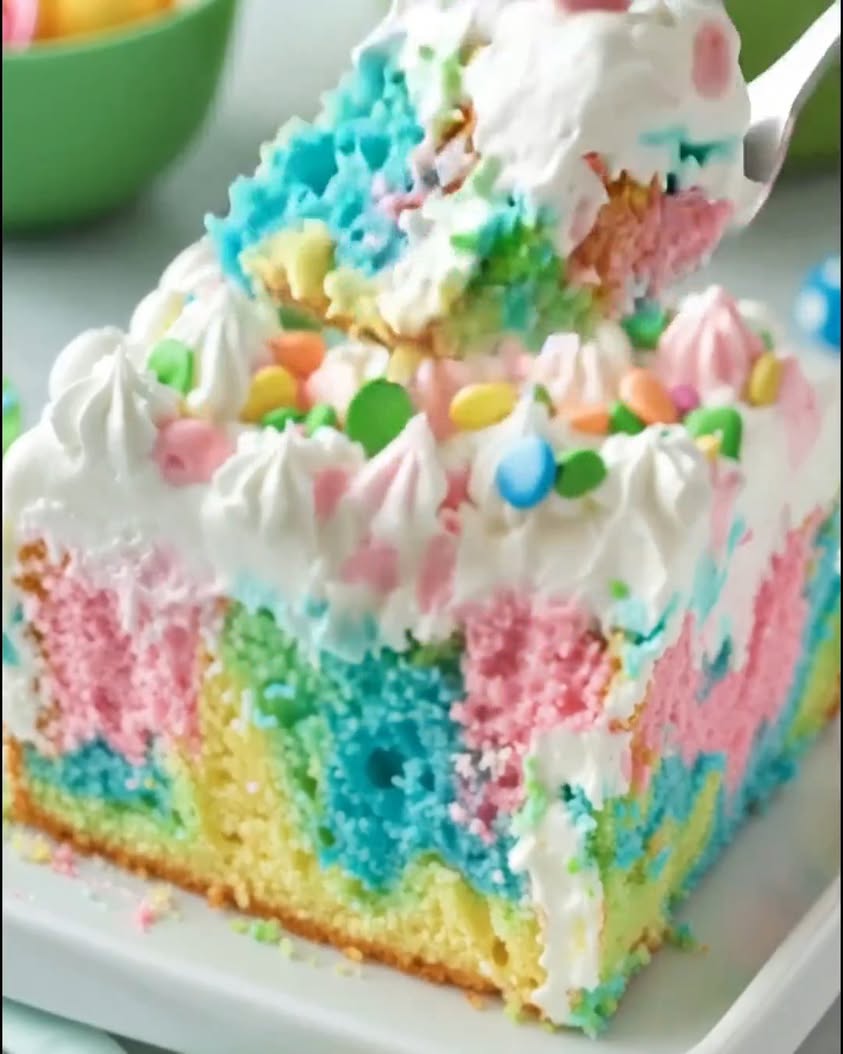
Pastel Poke Cake Recipe: A Moist and Colorful Celebration Dessert
Welcome to a world of vibrant flavor and irresistible texture with this stunning Pastel Poke Cake Recipe. This moist and colorful celebration dessert is a true showstopper, guaranteed to steal the spotlight at any gathering. Moreover, it combines a super moist vanilla cake base with a fun, interactive technique that fills it with pretty pastel “pokes” of sweetened condensed milk and gelatin. Consequently, every slice reveals a beautiful, marbled interior that tastes as incredible as it looks.
This Pastel Poke Cake Recipe is more than just a treat; it’s an experience. The process of creating the colorful pockets is surprisingly simple, yet the result feels magically professional. Topped with an impossibly fluffy whipped frosting, this cake delivers a perfect balance of sweetness and creaminess in every single bite. Ultimately, it’s the ideal dessert for birthdays, baby showers, spring celebrations, or any day that needs a bright, fun, and delicious pick-me-up.
Quick Recipe Highlights
- Flavor Profile: This cake features a classic, buttery vanilla foundation. The sweetened condensed milk pokes add a rich, caramel-like depth, while the pastel gelatin infuses subtle fruity notes. Finally, the light whipped frosting provides a creamy, cloud-like finish that perfectly balances the sweetness.
- Texture: The cake itself is incredibly tender and moist, almost melting in your mouth. The pokes create delightful pockets of a soft, slightly jiggly filling that contrasts beautifully with the cake’s crumb. Furthermore, the airy frosting adds a luxurious, pillowy top layer that completes the sensory experience.
- Aroma: As it bakes, your kitchen will fill with the warm, comforting scent of vanilla and butter. After adding the gelatin, a hint of bright, fruity fragrance emerges. This delightful aroma promises a dessert that is both nostalgic and exciting.
- Visual Appeal: The true magic lies in the presentation. The pastel pokes create a stunning, confetti-like pattern inside the cake. When sliced, each piece is a unique work of art. The snowy white frosting on top makes the colors underneath pop even more.
- Skill Level Needed: This is a wonderfully beginner-friendly project. You use a simple box cake mix as a reliable base, so no advanced baking skills are required. The “poke” technique is easy and forgiving, making it a fantastic first decorated cake.
- Special Equipment: You only need very basic kitchen tools: a 9×13 inch baking pan, a wooden spoon handle or similar round tool for poking, a mixing bowl, and a hand mixer for the frosting. No stand mixer or fancy piping tips are necessary for success.
Recipe Overview
- Difficulty Level: We rate this Pastel Poke Cake Recipe as “Easy.” The steps are straightforward and sequential. You begin with a simple cake mix, then perform the fun poking step, and finally whip up a no-cook frosting. There is no complex decorating or precise tempering required, making it accessible for all.
- Category: This dessert falls squarely into the celebration cake category. It’s perfect for parties, potlucks, and special occasions. Additionally, it can serve as a fantastic homemade dessert for family dinners when you want something extra special without excessive effort.
- Cuisine: While the “poke cake” concept has strong roots in American mid-century home baking, this pastel version is a modern, playful twist. It draws on the convenience food culture of the 1950s and 60s but updates it with contemporary visual appeal and flavor.
- Cost: This is a very budget-friendly dessert. Using a boxed cake mix and common pantry staples keeps costs low. The gelatin and food coloring are inexpensive, and the whipped frosting uses simple ingredients like cream cheese and whipped topping. You get a spectacular result for a very small investment.
- Season: This Pastel Poke Cake Recipe shines brightest in the spring and summer. Its light, bright colors and flavors evoke sunshine and celebration. However, its cheerful appearance makes it a welcome treat during gloomy winter months, effectively bringing a splash of color to any season.
- Occasion: It’s incredibly versatile. Think Easter brunch, baby or bridal showers, birthday parties, graduation celebrations, or Mother’s Day. Essentially, it’s perfect for any event where a beautiful, shareable, and conversation-starting dessert is needed.
Why You’ll Love This Pastel Poke Cake Recipe
First and foremost, the taste and texture combination is utterly divine. The cake stays supremely moist because the sweetened condensed milk seeps into every nook created by the pokes. This process prevents dryness and ensures every forkful is tender. The gelatin layers add a fun, flavorful surprise that contrasts with the soft cake and fluffy frosting. Consequently, you get a multi-textural experience that is both satisfying and exciting with each bite. The flavor is a harmonious blend of sweet, creamy, and vanilla, with subtle fruity highlights from the pastel colors.
From a convenience standpoint, this Pastel Poke Cake Recipe is a dream. It starts with a reliable box mix, eliminating the stress of measuring flour and leaveners. The assembly is more about fun technique than precision. You can easily prepare it the night before an event, as it actually benefits from chilling. This make-ahead quality is a huge win for busy hosts. Furthermore, it requires no intricate decorating skills; the beauty comes from the inside, and a simple swoop of frosting looks effortlessly elegant.
While not a health food, this moist and colorful celebration dessert does offer some practical advantages. Using a box mix often means portion-controlled dry ingredients, reducing waste. You can also easily adapt the recipe to use sugar-free gelatin and low-fat dairy products if desired. The visual appeal itself provides a psychological boost, as colorful food can enhance a celebratory mood. Serving a beautiful homemade dessert often feels more special and personal than a store-bought option, adding value to your gathering.
The social and entertaining value of this cake is immense. It is a guaranteed conversation starter. When you slice into it and reveal the stunning pastel interior, guests will be delighted and impressed. It looks like you spent hours in a professional bakery. This wow factor makes you feel like a superstar host with minimal effort. It’s also served right from the pan, making cleanup a breeze after the party. Sharing this beautiful, tasty creation fosters connection and joy, which is the ultimate goal of any gathering.
Finally, its cost-effectiveness and accessibility are major benefits. You likely have many of the ingredients already. The technique requires no special training or expensive tools. This accessibility means anyone can create a stunning dessert, regardless of their baking experience or budget. It democratizes beautiful baking. You get a spectacular, crowd-pleasing result for the price of a basic grocery run, making it one of the most rewarding recipes in your repertoire.
Historical Background and Cultural Significance
The origin story of the poke cake is deeply intertwined with American culinary innovation in the mid-20th century. Food historians often trace its popularity to the 1970s, coinciding with the rise of convenience foods and the publication of community cookbooks. The concept is brilliantly simple: bake a cake, poke holes in it, and pour a liquid filling (like Jell-O, pudding, or sweetened condensed milk) to create moisture and flavor pockets. This method was a clever way to transform a basic cake into a moist, flavorful dessert with minimal extra effort, perfectly fitting the era’s fascination with time-saving kitchen hacks.
Culturally, the poke cake represents a specific chapter in home baking. It moved away from the elaborate, from-scratch layer cakes of earlier decades toward more approachable, reliable, and fun desserts. Recipes for poke cakes were frequently shared among friends, typed on index cards, and featured in magazines like “Better Homes and Gardens.” They became a staple at potlucks, church socials, and family reunions. Their significance lies in their community-building nature; they were meant to be shared, easily transported in a 9×13 pan, and enjoyed by a crowd.
The evolution of the poke cake recipe is a story of adaptation. The earliest versions likely used Jell-O gelatin, which was wildly popular. Over time, bakers experimented with different “poke” mediums: sweetened condensed milk for a richer, tres leches-style cake, fruit purees, pudding mixes, and even liqueurs. The pastel version featured here is a natural evolution, playing on the visual appeal of colorful gelatin while often combining it with the richer texture of condensed milk. This evolution shows how home cooks continuously refine and beautify classic concepts.
Regional variations of the poke cake are less about geography and more about ingredient preference. In the South, you might find a strawberry poke cake made with pureed fresh berries. In the Midwest, a chocolate pudding poke cake is a classic. Some versions incorporate coconut or crushed pineapple for a tropical twist. The pastel version has become particularly associated with spring holidays and baby showers across the country. Its flexibility is its strength, allowing it to be customized for any local flavor or seasonal ingredient, ensuring its enduring place in American dessert culture.
Ingredient Deep Dive
Boxed White Cake Mix: This is the convenient foundation of our Pastel Poke Cake Recipe. Modern cake mixes are engineered for consistent results, containing pre-mixed dry ingredients like flour, sugar, leavening, and stabilizers. Historically, they revolutionized home baking after WWII, offering speed and reliability. For best results, choose a mix that calls for oil, not butter, as oil often yields a moister crumb that better absorbs the poke filling. You can easily find gluten-free versions to adapt this recipe. Store an unused mix in a cool, dry place for several months.
Sweetened Condensed Milk: This is the secret to the incredible moisture in this moist and colorful celebration dessert. Invented in the 19th century as a way to preserve milk, it’s milk that has had water removed and sugar added. It creates a rich, creamy, and caramel-like infusion that soaks into the cake. Nutritionally, it’s high in sugar and calcium. For a lighter version, you can use a low-fat or fat-free condensed milk. Do not substitute evaporated milk, as it is unsweetened and will not provide the same flavor or texture.
Gelatin (Various Pastel Colors): Gelatin, derived from animal collagen, provides the fun color and slight jiggle in the pokes. For this recipe, using small boxes of flavored gelatin like strawberry, lime, orange, and berry blue is easiest. They contain sugar, flavor, and color all in one. If you prefer natural coloring, you can use unflavored gelatin powder mixed with fruit juice and a drop of natural food coloring. Gelatin needs hot water to dissolve completely; otherwise, it can become lumpy. It sets as it cools, creating the distinct pockets within the cake.
Whipped Topping & Cream Cheese: This duo creates the stable, fluffy frosting that crowns the cake. Whipped topping (like Cool Whip) is a non-dairy whipped product that holds its shape beautifully for days. Cream cheese adds tanginess and body, cutting the overall sweetness. For a from-scratch version, you can use freshly whipped heavy cream stabilized with a little powdered sugar. Ensure your cream cheese is fully softened to avoid lumps in the frosting. This combination is a classic for a reason: it’s easy, delicious, and perfectly suited for a chilled cake.
Common Mistakes to Avoid
- Poking Holes That Are Too Small: Using a tool that is too thin, like a toothpick, is a common error. The holes will close up and not allow enough filling to penetrate. Instead, always use the end of a wooden spoon or a similar round object about 1/4 to 1/2 inch in diameter to create adequately sized channels.
- Pouring Filling While the Cake is Too Hot: If you add the sweetened condensed milk or gelatin to a steaming hot cake, it can make the cake gummy or cause it to absorb unevenly. You must let the cake cool for at least 15-20 minutes after baking. It should be warm to the touch, not scalding hot.
- Not Dissolving Gelatin Completely: When preparing the colored gelatin for the pokes, you must stir it vigorously into the boiling water until no granules remain. Undissolved gelatin will create unpleasant, rubbery bits in your beautiful pastel pockets. Take the extra minute to ensure it’s fully liquid.
- Overmixing the Cake Batter: When combining the cake mix with its required wet ingredients, mix just until the ingredients are incorporated and no dry streaks remain. Overmixing develops the gluten in the flour, which can lead to a tough, dense cake instead of a tender, moist one.
- Skimping on Chilling Time: The chilling step is non-negotiable. After adding the fillings, the cake needs at least 4 hours in the refrigerator, preferably overnight. This allows the fillings to fully set and the flavors to meld. Serving it too soon will result in a runny, messy slice.
- Using Cold Cream Cheese for Frosting: Attempting to mix cold, hard cream cheese into whipped topping will yield a lumpy frosting. Plan ahead and let the cream cheese sit on the counter for 30-60 minutes until it is very soft and spreadable. This ensures a smooth, fluffy consistency.
- Applying Frosting to a Warm Cake: Just like with the fillings, the cake must be completely chilled before frosting. If the cake base is even slightly warm, the whipped frosting will melt, slide off, and become a soupy mess. Patience is key for perfect layers.
- Not Spreading Fillings Evenly: When spooning the different colored gelatins into the holes, try to distribute them somewhat evenly across the cake surface. This ensures every slice gets a mix of the pretty pastel colors, rather than one slice being all one color.
Essential Techniques
The “Poke”: This is the defining technique of the Pastel Poke Cake Recipe. After the cake has cooled slightly, use the round handle of a wooden spoon to poke holes all over the surface, about 1 inch apart. Press down until you feel the bottom of the pan, but avoid tearing the cake. The goal is to create clear channels for the fillings. This technique is important because it allows the moistening agents to penetrate deep into the cake’s structure. The visual cue for success is a uniform grid of holes across the entire cake.
Layering the Liquid Fillings: First, slowly pour the sweetened condensed milk over the warm cake, aiming to fill the holes. Use a spatula to gently spread it and encourage seepage. After this sets for a few minutes, carefully spoon the different colored, slightly thickened gelatins into the holes. This sequence is crucial. The thicker condensed milk needs to go first to sink in, while the gelatin is spooned on top to sit in the holes. Mastering this two-step filling process ensures distinct, colorful pockets and maximum moisture.
Creating Fluffy Frosting: The frosting technique is all about achieving a light, spreadable consistency. Start with fully softened cream cheese, beating it alone first until completely smooth. This eliminates any lumps. Then, gently fold in the thawed whipped topping. “Folding” means using a spatula to cut down through the center, sweep across the bottom, and fold over the top. This incorporates air and maintains fluffiness. Do not use a mixer at this stage, as overbeating can deflate the whipped topping. The result should be cloud-like and hold soft peaks.
Pro Tips for Perfect Pastel Poke Cake
For the most vibrant colors, use gel food coloring instead of liquid if you are making your own gelatin flavors with unflavored gelatin. Gel colors are more concentrated and won’t dilute the mixture.
Line your baking pan with parchment paper, leaving an overhang on two sides. After the cake is completely chilled, you can use the parchment as handles to lift the entire cake out for cleaner slicing and serving.
If you want a stronger gelatin flavor in each bite, use 1 cup of boiling water per small box instead of the 1/2 cup recommended on the box for the “poke” mixture. This creates a more liquid solution that soaks in deeper.
To prevent the sweetened condensed milk from pooling too much on the surface, pour about 2/3 of it over the warm cake, wait 5 minutes, then add the rest. This gives the first layer time to absorb.
For a neater presentation when serving, dip your knife in hot water and wipe it dry between each slice. This creates clean cuts through the creamy frosting and colorful interior.
Add a teaspoon of clear vanilla extract to your cake batter. It enhances the vanilla flavor without tinting the white cake, keeping your pastel colors pure and bright.
If your kitchen is very warm, consider chilling your mixing bowl and beaters before making the frosting. This helps the whipped topping and cream cheese combination stay stable.
For a festive touch, sprinkle matching pastel sprinkles, sanding sugar, or even edible glitter on top of the frosting just before serving for extra sparkle and crunch.
Variations and Adaptations
Regional Variations: Embrace local flavors by adapting the gelatin colors and flavors. For a tropical twist, use pineapple, coconut, and mango gelatins. A “berries and cream” version could use strawberry, raspberry, and blueberry. In the fall, try using orange gelatin mixed with a bit of pumpkin pie spice for a seasonal poke cake.
Seasonal Adaptations: Match your cake to the calendar. For Valentine’s Day, use pink and red gelatins. For the Fourth of July, use red (cherry) and blue (berry) stripes. At Christmas, use green (lime) and red (strawberry) for a festive look. You can also tint the frosting lightly with seasonal colors.
Dietary Modifications: This Pastel Poke Cake Recipe is highly adaptable. Use a gluten-free cake mix for a gluten-free version. For dairy-free, ensure your cake mix is dairy-free, use a dairy-free sweetened condensed milk alternative (often made from coconut), and use a dairy-free whipped topping. Always check gelatin labels, as some contain allergens.
Flavor Variations: Change the entire profile by starting with a different cake base. A lemon cake mix with pastel gelatins is wonderfully bright. A chocolate cake with different pudding poke fillings (like vanilla, butterscotch, and chocolate) creates a stunning marbled effect. The possibilities are nearly endless.
Texture Modifications: For more textural contrast, sprinkle a layer of toasted coconut or chopped nuts over the condensed milk before adding the gelatin. You can also fold mini chocolate chips or sprinkles into the cake batter before baking for a funfetti-style interior.
Presentation Alternatives: Instead of a 9×13 sheet cake, bake the batter in two 9-inch round pans to create a layer cake. Poke and fill each layer individually, then stack them with frosting in between. You can also cut the sheet cake into shapes like stars or hearts after chilling for a themed party.
Serving and Presentation Guide
Plating this moist and colorful celebration dessert is part of the fun. For a casual gathering, serve it right from the pan. Use a clean, sharp spatula to cut neat squares. For a more formal presentation, lift the entire chilled cake onto a serving platter using parchment paper handles. Wipe the platter edges clean before bringing it to the table. The reveal of the interior pattern is the main event, so consider slicing the first piece in front of your guests.
Garnishing is simple but effective. A light dusting of powdered sugar adds a frosty look. Fresh berries like raspberries, blueberries, or sliced strawberries arranged on top complement the pastel colors beautifully. Mint leaves add a touch of green elegance. For a birthday, add a few candles right into the fluffy frosting. Remember, the cake itself is the star, so garnishes should be minimal and complementary.
Traditional accompaniments are light. A scoop of vanilla ice cream or a dollop of freshly whipped cream alongside each slice is classic. For a contrast in temperature, serve with a berry coulis or a warm chocolate sauce on the side for dipping. Beverages like cold milk, coffee, or a sparkling Moscato pair wonderfully, cutting the sweetness and cleansing the palate.
Modern serving suggestions might include deconstructing the cake. Crumble a slice into a glass, layer it with extra frosting and fresh fruit to create a poke cake parfait. For a party, you can cut the cake into small, bite-sized squares and serve them on a tiered stand as part of a dessert buffet. This encourages guests to try a taste without committing to a large slice.
Temperature considerations are vital. This cake must be served chilled. The frosting is dairy-based and will soften if left out too long. Serve it directly from the refrigerator, and return any leftovers promptly. The cool temperature also makes the texture of the gelatin pockets perfect. If the cake feels too hard right out of the fridge, let it sit at room temperature for just 5-10 minutes before serving.
Portion control is easy with a sheet cake. A 9×13 inch cake typically yields 12 generous servings. For larger crowds, you can cut it into 15 or 20 smaller pieces. Because it is rich and sweet, smaller portions are often appreciated, especially when served alongside other desserts. Use a ruler or a bench scraper to score the frosting lightly before cutting to ensure even pieces.
Wine and Beverage Pairing
Wine pairings for this sweet dessert should focus on wines that are equally sweet or sweeter to avoid a bitter contrast. A Moscato d’Asti, with its light bubbles and notes of peach and orange blossom, is a fantastic match. A German Riesling (Spätlese or Auslese level) offers honeyed sweetness and acidity that cuts through the richness. For a rosé option, choose a sweeter White Zinfandel with its berry flavors that echo the pastel gelatin notes. Serve these wines well-chilled to mirror the cake’s temperature.
Non-alcoholic alternatives are plentiful. Sparkling apple cider or grape juice provides a festive, bubbly feel. A homemade strawberry or peach lemonade complements the fruity elements. For a creamy option, a vanilla chai latte or an iced coffee with a splash of cream works beautifully. The key is to offer a beverage with some acidity or effervescence to balance the cake’s creamy sweetness.
Coffee and tea are classic dessert partners. A medium-roast coffee with notes of caramel or nut pairs well with the sweetened condensed milk flavors. For tea, consider a fruity herbal blend like passionfruit or berry. A black tea with a touch of milk and sugar, such as an Earl Grey, also creates a lovely contrast. Serving these warm provides a nice temperature difference to the cold cake.
Temperature considerations are straightforward: keep cold drinks cold and warm drinks warm. Iced beverages should be served in chilled glasses. Warm coffee or tea should be freshly brewed and hot. This attention to the serving temperature of the drinks enhances the overall dining experience, making each element of your dessert course feel intentional and refreshing.
General serving suggestions include offering a choice. Set up a small beverage station with a carafe of iced tea, a pot of coffee, and a chilled bottle of Moscato. This allows guests to choose their perfect pairing. Always provide water as well. Place the cake at the center of the table, slice it, and then let guests help themselves to their preferred drink alongside their slice of this stunning Pastel Poke Cake.
Storage and Shelf Life
Proper storage is key to maintaining the quality of this moist and colorful celebration dessert. Always store the cake in the refrigerator, covered tightly with plastic wrap or in an airtight container. The whipped frosting and dairy-based fillings are perishable and must be kept cold. At a consistent refrigerator temperature of 40°F or below, the cake will remain fresh and safe to eat for 3-4 days.
Container recommendations include the original baking pan covered tightly with foil, a dedicated cake carrier with a lid, or a large, shallow storage container. If you’ve transferred the cake to a serving platter, tent it loosely with plastic wrap, being careful not to smash the frosting. For the best texture, avoid stacking anything on top of the cake.
Recognizing signs of spoilage is important for food safety. Discard the cake if you notice an off or sour smell, significant separation of liquids, or the presence of mold (which can look like fuzzy spots). The frosting may deflate slightly over time, but that is a texture issue, not a safety one. If in doubt, it’s always safer to throw it out.
Reheating instructions are simple: do not reheat this cake. It is designed to be served chilled. Microwaving or warming it will melt the frosting, liquefy the gelatin fillings, and create a soggy, unappetizing mess. Enjoy it straight from the fridge for the intended texture and flavor experience.
Freezing guidelines are possible but with caveats. You can freeze the unfrosted, filled cake tightly wrapped for up to 1 month. However, the whipped frosting does not freeze well and will become grainy and separate upon thawing. Therefore, freeze the cake base only, then thaw overnight in the refrigerator and frost it fresh on the day you plan to serve. This ensures the best possible quality.
Make Ahead Strategies
A detailed prep timeline makes this Pastel Poke Cake Recipe a stress-free choice for entertaining. Day 1: Bake the cake, let it cool, perform the poke and fill steps, then refrigerate overnight. Day 2 (day of serving): Prepare the fluffy frosting and spread it over the fully chilled cake. Return it to the fridge for at least one more hour to set the frosting before serving. This schedule breaks the work into manageable chunks and allows the flavors to develop fully.
Storage between steps is straightforward. After poking and filling, the cake must be covered and refrigerated. Do not leave it at room temperature for more than 2 hours total during this assembly phase. The frosting can be made up to a day in advance and stored separately in an airtight container in the fridge. Let it soften slightly at room temperature for 10 minutes before spreading if it has firmed up.
Assessing the quality impact of make-ahead steps is positive. The overnight chilling is actually beneficial. It allows the sweetened condensed milk and gelatin to fully set and permeate the cake, resulting in a more uniform moisture and cleaner slices. The flavors also have time to meld. The only potential downside is the cake base can become slightly denser from the refrigeration, but in this context, that contributes to the desirable moist, tender texture.
Assembly tips for a make-ahead cake focus on the frosting step. Ensure the cake is completely cold before you frost it. If you frost a cake that hasn’t chilled long enough, the warmth will cause the frosting to slide and melt. Use an offset spatula or the back of a spoon to create pretty swirls or smooth waves in the frosting. For the cleanest look, you can run a bench scraper or the flat side of a knife along the edges of the pan after frosting.
Reheating guidelines are not applicable, as discussed. The final addition is the frosting itself, which is added cold. Any fresh garnishes, like berries or mint, should be added just before serving, not during the make-ahead phase. This prevents the berries from bleeding into the frosting and keeps the mint from wilting. This final touch of fresh elements elevates the presentation at the last minute.
Scaling Instructions
Halving this Pastel Poke Cake Recipe is simple for smaller households. Use an 8×8 inch square baking pan. Prepare a single box of cake mix according to package directions, but only pour half the batter into the pan (you can bake the other half as cupcakes). Reduce the sweetened condensed milk to 1/2 can (about 2/3 cup). Prepare two colors of gelatin instead of four, using 1/2 cup boiling water and half a small box of gelatin powder for each. The baking time may be slightly less, so start checking for doneness at 20 minutes.
Doubling or tripling the recipe is perfect for large events. For a double batch, use two 9×13 inch pans. You will need two boxes of cake mix, two cans of sweetened condensed milk, and 8 small boxes of gelatin (two of each color). Mix and bake the cakes separately to ensure even cooking. The frosting can be doubled by using 16 oz of cream cheese and 16 oz of whipped topping. Be sure your refrigerator has space for both pans to chill.
Equipment adjustments are necessary when scaling. For a half batch, a smaller pan is essential. For a double batch, ensure you have enough mixing bowls for the different gelatin colors and a large enough bowl to mix the doubled frosting. You may also need a second wire rack for cooling. Timing modifications are minimal for scaling up; each cake still needs its standard bake time. However, your oven may heat less evenly with two pans, so rotate them halfway through baking.
Storage considerations change with scale. A half batch will be consumed more quickly. A double batch means you’ll have more leftovers, so ensure you have adequate refrigerator space in large containers or are prepared to share with guests to take home. Label and date any portions you freeze. Remember, the frosting does not freeze well, so only freeze the filled cake base if you plan to store extras for longer than a few days.
Nutritional Deep Dive
A macro breakdown for a typical serving of this Pastel Poke Cake Recipe shows it is a carbohydrate-rich dessert due to the cake mix, sugar in the condensed milk, and gelatin. A slice provides a significant amount of sugars and fats from the oil in the cake, condensed milk, and frosting. The protein content is modest, coming primarily from the eggs in the cake mix, milk solids, and cream cheese. It is an energy-dense food, best enjoyed as an occasional treat within a balanced diet.
The micronutrient analysis reveals some benefits amidst the indulgence. Sweetened condensed milk provides calcium and phosphorus, important for bone health. Eggs in the cake mix contribute vitamins like B12 and selenium. However, the vitamin and mineral profile is not the primary reason to enjoy this cake. Its value lies in celebration and joy. You can boost nutrition slightly by using a cake mix fortified with vitamins or by adding a sprinkle of nuts on top for healthy fats and fiber.
Health benefits are more about mental and social well-being than physical nutrition. Sharing a beautiful, homemade dessert can reduce stress and strengthen social bonds. The act of baking can be therapeutic. The visual appeal of the pastel colors can uplift mood. Enjoying treats mindfully and in moderation is a key part of a healthy relationship with food. This cake fits perfectly into that philosophy as a special occasion centerpiece.
Dietary considerations are important for those with restrictions. As noted, the recipe contains gluten (cake mix), dairy (condensed milk, cream cheese), and may contain allergens from the gelatin and processed ingredients. Always check labels. For those managing sugar intake, this is a high-sugar dessert. Portion control is the easiest strategy—enjoy a smaller slice. For specific dietary needs, refer to the dedicated adaptations section for gluten-free, dairy-free, and other modifications.
Portion analysis shows that a standard 1/12th slice is satisfying. Because the cake is so moist and rich, you may find that a smaller portion, such as a 1/16th slice, is equally enjoyable. Cutting smaller squares is an easy way to manage calorie and sugar intake while still allowing everyone to have a taste. Serving it with fresh fruit can also help fill the plate with more nutrient-dense options alongside the treat.
Weight management tips for enjoying this dessert include planning for it. If you know you’ll be having this cake, you might choose lighter meals earlier in the day. Focus on lean proteins and vegetables. Practice mindful eating: savor each bite, eat slowly, and stop when you feel satisfied. Remember, one indulgent dessert does not derail a healthy lifestyle. Balance and moderation over time are what matter most.
Dietary Adaptations
Gluten-Free: To make a gluten-free Pastel Poke Cake, simply replace the standard boxed cake mix with a gluten-free white or yellow cake mix. Brands like King Arthur Flour and Betty Crocker offer reliable options. Ensure all other ingredients, like the gelatin, are certified gluten-free, as some additives may contain gluten. The method remains exactly the same. The result will be just as moist, colorful, and delicious.
Dairy-Free: Creating a dairy-free version requires a few swaps. Use a dairy-free cake mix (check for whey or milk solids). For the condensed milk, use a canned coconut milk-based sweetened condensed coconut milk. For the frosting, use dairy-free cream cheese and a dairy-free whipped topping (available in the frozen section). Again, verify all ingredient labels. The coconut milk will impart a slight coconut flavor, which can be a delightful addition.
Vegan: A vegan adaptation builds on the dairy-free steps. Use a vegan cake mix or make a from-scratch vanilla cake using plant-based milk and egg replacer. Use sweetened condensed coconut milk. For the gelatin pokes, you must use agar-agar powder, a plant-based gelling agent, mixed with fruit juice and sugar, as traditional gelatin is animal-derived. For the frosting, blend vegan cream cheese with vegan whipped cream or a thick coconut cream base.
Low-Carb/Keto: This is a significant adaptation. Use a keto-friendly vanilla cake recipe made with almond or coconut flour. For the “condensed milk,” make a syrup from a low-carb sweetener like erythritol or allulose mixed with heavy cream and reduced slightly. For the “gelatin,” use sugar-free Jell-O brands. The frosting can be made from whipped heavy cream sweetened with a keto sweetener and stabilized with a little cream cheese. Portions will need to be small to fit macros.