Luscious Walnut Banana Caramel Cake: An Irresistible Dessert Recipe
Imagine a dessert that perfectly marries the comforting sweetness of ripe bananas with the rich, buttery depth of homemade caramel, all punctuated by the satisfying crunch of toasted walnuts. This Luscious Walnut Banana Caramel Cake is precisely that dream come to life. Consequently, it is a show-stopping centerpiece for any gathering, yet it feels wonderfully familiar and cozy. Moreover, the aroma that fills your kitchen as it bakes is nothing short of intoxicating, promising a treat that tastes even better than it smells.
This Luscious Walnut Banana Caramel Cake recipe elevates the classic banana bread into a decadent layer cake experience. For instance, it features moist banana cake layers swirled with a ribbon of caramel and studded with walnuts. Furthermore, the entire creation is then enveloped in a silky caramel frosting, creating a symphony of textures and flavors in every single bite. Ultimately, it is the ultimate dessert for using up overripe bananas in the most spectacular way possible.
Creating this masterpiece might seem ambitious, but the process is broken down into manageable, rewarding steps. Therefore, even intermediate bakers can achieve fantastic results. Additionally, the payoff is immense: a stunning, professional-looking cake that will earn you rave reviews. In essence, this Luscious Walnut Banana Caramel Cake is more than just a recipe; it is a baking project that delivers immense satisfaction and an unforgettable dessert.
Quick Recipe Highlights
- Flavor Profile: This cake delivers a complex harmony of sweet, buttery, and nutty notes. The deep, almost toffee-like caramel perfectly complements the natural fruity sweetness of the bananas. Meanwhile, the toasted walnuts add a crucial savory counterpoint that prevents the dessert from being cloying.
- Texture: Expect an incredibly moist and tender crumb from the banana-infused cake layers. The caramel swirl within the batter creates pockets of gooey richness. Finally, the crunchy walnut pieces and the smooth, spreadable frosting provide a delightful contrast that makes each bite interesting.
- Aroma: As it bakes, your kitchen will be filled with the warm, comforting scent of caramelizing sugar and baking bananas. Hints of vanilla and toasted nuts round out the olfactory experience, creating an anticipation that makes waiting for the cake to cool a true test of willpower.
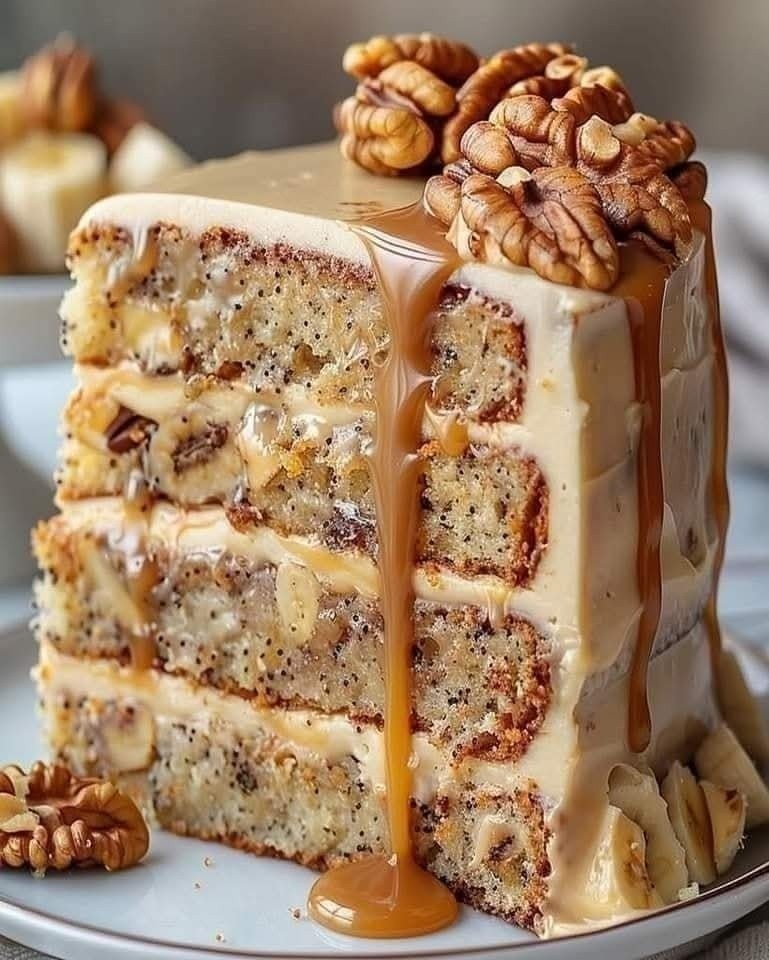
- Visual Appeal: This cake is a beauty, with its golden-brown layers visible in each slice. The caramel frosting has a lovely, creamy hue, and the garnish of whole walnuts and a drizzle of extra caramel makes it look bakery-worthy. It is a dessert that promises indulgence before the first forkful.
- Skill Level Needed: This recipe is ideal for bakers who are comfortable with multi-step processes like making caramel from scratch and assembling a layer cake. However, clear instructions guide you through each stage. Consequently, a confident beginner ready for a challenge could certainly succeed with careful attention.
- Special Equipment: You will need basic cake pans and a mixer, but a candy thermometer is highly recommended for perfect caramel. Additionally, an offset spatula will make frosting the cake much easier. A good-quality saucepan for caramel is also essential to prevent burning.
Recipe Overview
- Difficulty Level: We rate this Luscious Walnut Banana Caramel Cake as intermediate due to its multi-component nature. Making a stable caramel requires precise temperature control, a skill that improves with practice. Furthermore, assembling and frosting a layer cake neatly demands a bit of patience and technique. However, each step is thoroughly explained to ensure your success.
- Category: This dessert falls squarely into the celebratory cake category, perfect for birthdays, holidays, and special dinners. It also fits as a spectacular weekend baking project or a treat for a potluck where you want to impress. Ultimately, it is a baked good that feels special and indulgent.
- Cuisine: While banana-based cakes have roots in American home baking, the inclusion of a homemade caramel sauce and walnuts gives it a timeless, classic feel. It draws inspiration from Southern hospitality and general Western dessert traditions, resulting in a universally beloved treat.
- Cost: This cake is relatively cost-effective, especially if you use overripe bananas that might otherwise be discarded. Staples like flour, sugar, and eggs form the base. Meanwhile, the walnuts and butter for the caramel are the primary splurges, making it an affordable luxury for a special occasion.
- Season: This cake is fantastic year-round but feels particularly apt in autumn and winter. The warm flavors of caramel and toasted nuts are incredibly comforting in cooler weather. Conversely, it is also a wonderful use for abundant summer bananas, making it a versatile seasonal recipe.
- Occasion: It is perfect for festive occasions like Thanksgiving, Christmas, or a birthday dinner. Moreover, it makes an impressive contribution to a brunch spread or a thoughtful gift for a neighbor. Essentially, any time calls for a show-stopping homemade dessert, this cake delivers.
Why You’ll Love This Recipe
First and foremost, the taste and texture of this Luscious Walnut Banana Caramel Cake are utterly divine. The moist banana cake provides a familiar, comforting base. Simultaneously, the rich caramel weaves through every layer, adding a deep, sophisticated sweetness. The toasted walnuts introduce a necessary crunch and earthy flavor that cuts through the richness, creating a perfectly balanced dessert that is impossible to stop eating after just one slice.
From a convenience standpoint, this recipe is a brilliant way to use up those spotty, overripe bananas languishing on your counter. Instead of simple banana bread, you transform them into something extraordinary. Additionally, while the recipe has several steps, many components can be prepared in advance. For example, you can make the caramel sauce a day ahead, streamlining the baking process and making the final assembly much less stressful.
Nutritionally, this cake does offer some benefits from its whole-food ingredients. Bananas provide potassium and dietary fiber. Walnuts contribute healthy fats, protein, and antioxidants. Of course, this is a celebratory dessert meant to be enjoyed in moderation. However, knowing it contains real, recognizable ingredients makes indulging feel a bit more wholesome compared to store-bought alternatives loaded with preservatives.
The social and entertaining value of this Luscious Walnut Banana Caramel Cake cannot be overstated. Presenting a beautifully layered, homemade cake instantly elevates any gathering. It becomes a conversation piece and a gesture of care that guests truly appreciate. Baking it for someone is a tangible expression of love and celebration, often creating a more memorable impact than any purchased gift could.
Finally, this cake is remarkably cost-effective and accessible. The ingredients are common pantry staples for most bakers. By making the caramel from scratch with just sugar and cream, you avoid the expense of high-quality store-bought sauces. Consequently, you create a luxurious, impressive dessert for a fraction of the cost of a bakery cake, proving that spectacular baking doesn’t require a huge budget, just a little time and passion.
Historical Background and Cultural Significance
The origin of banana-based cakes is deeply intertwined with the history of the banana itself in North America. Initially, bananas were an exotic luxury in the late 19th century. As they became more affordable and widespread, home cooks began experimenting, leading to the creation of banana bread during the Great Depression as a way to use overripe fruit without waste. This Luscious Walnut Banana Caramel Cake is a direct descendant of that resourceful, comforting tradition, elevated with more indulgent ingredients.
Culturally, banana cakes and breads hold a significant place in American home baking. They symbolize warmth, hospitality, and kitchen economy. The addition of caramel and nuts, however, moves it from everyday quick bread to special-occasion dessert. This evolution reflects mid-20th century trends where home bakers, inspired by community cookbooks and women’s magazines, began dressing up simple recipes for company, creating richer, more complex versions of family favorites.
The recipe has evolved significantly from its humble beginnings. Early versions were simple, one-bowl affairs. The modern iteration, like this Luscious Walnut Banana Caramel Cake, incorporates techniques from professional patisserie, such as making a cooked caramel sauce and assembling layered cakes. This evolution mirrors the broader trend of home bakers seeking greater challenges and more impressive results, fueled by cooking shows and online food communities that demystify advanced techniques.
Regional variations of this concept abound. In the South, you might find a banana pudding cake or one with pecans instead of walnuts. In other areas, chocolate chips might be added. Some versions forgo frosting for a simple caramel glaze. This particular recipe with its walnut and caramel focus has a timeless, classic feel that doesn’t anchor it to one specific region but rather celebrates a fusion of beloved American dessert elements into one spectacular showpiece.
Ingredient Deep Dive
Ripe Bananas: The star of the show, ripe bananas with black spots are non-negotiable. They have converted more starch into sugar, providing intense sweetness and moisture without needing excessive added sugar. Historically, their use in baking is a testament to culinary frugality. Nutritionally, they offer potassium, vitamin B6, and fiber. For best results, mash them until just smooth with small lumps okay; over-mashing can make the cake gummy. Freeze peeled, overripe bananas for future cakes.
Granulated Sugar (for Caramel): White granulated sugar is caramelized to create the deep, complex flavor foundation. The process of heating sugar until it melts and browns creates hundreds of new flavor compounds. When selecting sugar, standard cane sugar works perfectly. The key technique is patience—allowing the sugar to melt slowly without stirring to avoid crystallization. A light-colored saucepan helps you monitor the color change accurately, preventing a bitter, burnt taste.
Walnuts: Walnuts add essential texture and a bitter, earthy note that balances the sweetness. They have a long history in baking across Europe and North America. They are a fantastic source of omega-3 fatty acids and antioxidants. Always toast your walnuts before adding them to the batter; this step intensifies their flavor and improves their crunch. For storage, keep walnuts in the freezer to prevent their oils from turning rancid, ensuring your cake always tastes fresh.
All-Purpose Flour: This is the structural backbone of the cake. It provides the gluten network that traps air and gives the cake its tender crumb. For a lighter texture, you can substitute a portion with cake flour. When measuring, spoon the flour into the cup and level it off; scooping directly packs the flour and can lead to a dense cake. Gluten-free blends designed for 1:1 substitution can work well for dietary adaptations.
Heavy Cream & Butter (for Caramel): These dairy ingredients transform melted sugar into a luscious, pourable caramel sauce. The cream stops the cooking process and adds richness, while butter contributes flavor and a silky mouthfeel. Use full-fat products for the best texture and stability in your frosting. The cream should be at room temperature or slightly warmed before adding to the hot sugar to prevent dangerous splattering and seizing.
Common Mistakes to Avoid
- Using Underripe Bananas: Yellow bananas lack the concentrated sweetness and moistness of spotted, ripe ones. Your cake will be less flavorful and potentially dry. Always wait for bananas to develop plenty of brown speckles for the best results.
- Stirring the Melting Sugar: Agitating the sugar as it melts encourages crystallization, resulting in a grainy caramel. Instead, gently swirl the pan to ensure even heating. Patience is the most important ingredient in this step.
- Adding Cold Cream to Hot Caramel: Pouring cold liquid into searing hot sugar causes violent bubbling and splattering, which is dangerous. It can also cause the caramel to seize into a hard lump. Warm your cream slightly before incorporating it.
- Overmixing the Cake Batter: Once the dry ingredients are added, mix only until just combined. Overmixing develops the gluten in the flour, leading to a tough, chewy cake texture instead of a tender crumb.
- Frosting a Warm Cake: Applying caramel frosting to warm layers will cause it to melt, slide off, and soak into the cake. Ensure your cake layers are completely cool to the touch, and consider chilling them briefly for easier handling.
- Skipping the Walnut Toasting: Raw walnuts can taste bland and slightly bitter. Toasting them unlocks their aromatic oils and deep, nutty flavor. It only takes a few minutes in the oven or a dry pan and makes a significant difference.
- Not Greasing and Lining Pans: This moist cake can stick if you simply grease the pans. For foolproof release, grease the pans, then line the bottoms with parchment paper rounds. This guarantees your beautiful layers come out intact.
- Rushing the Caramel Color: Taking the caramel off the heat too early results in a light, mild sauce. Let it reach a deep amber color for a more complex, toffee-like flavor. Use a candy thermometer aiming for 350°F for precision.
Essential Techniques
Making Dry Caramel: This technique involves melting sugar alone in a pan without water. It requires vigilance. First, ensure your saucepan is perfectly clean. Then, heat the sugar over medium heat, resisting the urge to stir. Instead, gently swirl the pan as the sugar melts and begins to color. The goal is an even, deep amber hue. The common pitfall is stirring, which causes crystallization. A successful caramel will smell nutty, not burnt, and will smoothly incorporate the cream.
Creaming Butter and Sugar: This foundational baking step incorporates air into your batter, contributing to a light cake texture. Use room-temperature butter and beat it with the sugars for a full 3-5 minutes until the mixture is pale, fluffy, and increased in volume. Rushing this step means less aeration, resulting in a denser cake. The visual cue for success is a noticeably lighter color and a creamy, almost whipped consistency.
Folding in Ingredients: When adding dry ingredients or mashed bananas to the creamed mixture, use a folding motion with a spatula. This technique preserves the air bubbles you worked hard to create. Cut through the center of the batter, scrape along the bottom, and fold over the top. Rotate the bowl and repeat just until no streaks of flour remain. Overmixing at this stage is the primary cause of tough cakes.
Assembling a Layer Cake: For a professional look, use a serrated knife to level the domed tops of your cooled cakes. Place a small dollop of frosting on your cake stand to anchor the first layer. Spread an even amount of frosting, then sprinkle with some chopped walnuts. Gently place the second layer on top. Apply a thin “crumb coat” of frosting over the entire cake and chill it briefly before adding the final, smooth layer of frosting.
Pro Tips for Perfect Luscious Walnut Banana Caramel Cake
For the deepest banana flavor, let your mashed bananas sit in a bowl for 15-20 minutes before adding them to the batter. This oxidation slightly darkens them and intensifies their taste.
When making caramel, have all your ingredients measured and ready next to the stove. This “mise en place” is crucial because the caramel can go from perfect to burnt in seconds, leaving no time to search for the cream or butter.
To ensure even baking and flat layers, use cake strips. Simply soak fabric strips in water, wrap them around the outside of your cake pans, and secure them with a pin. This insulates the edges, allowing the cake to rise evenly without doming.
If your caramel sauce seems too thin for frosting after cooling, you can gently reheat it and simmer for a few minutes to thicken it. Conversely, if it becomes too thick, whisk in a teaspoon of warm cream at a time to loosen it.
For clean slices, dip your knife in hot water and wipe it dry between each cut. The heat helps the knife glide smoothly through the frosting and layers, creating beautiful, presentation-ready pieces.
Add a pinch of flaky sea salt to the caramel frosting or as a final garnish. The salt crystals provide tiny bursts of flavor that elevate the sweetness and make the other components taste even more vibrant.
If your walnuts are already toasted and chopped, toss them with a tablespoon of the cake flour before folding them into the batter. This light coating helps prevent them from sinking to the bottom of the pan during baking.
Variations and Adaptations
Regional Variations: For a Southern twist, replace the walnuts with toasted pecans. In a nod to tropical flavors, add a cup of shredded coconut to the batter or toast it for garnish. A New England-inspired version might include a handful of wild blueberries folded in, adding juicy bursts of flavor that pair wonderfully with banana and caramel.
Seasonal Adaptations: In autumn, incorporate warm spices like a teaspoon of cinnamon or a pinch of nutmeg into the cake batter. For a winter holiday version, add a tablespoon of rum or bourbon to the caramel sauce. In spring, serve the cake with a side of fresh strawberry compote or a dollop of lemon curd for a brighter note.
Dietary Modifications: For a gluten-free cake, use a reliable 1:1 gluten-free flour blend. To make it dairy-free, use plant-based butter and a full-fat coconut milk for the caramel. A vegan adaptation would also require flax eggs and ensuring your sugar is vegan-certified, as some white sugar is processed with bone char.
Flavor Variations: Introduce chocolate by folding a cup of chocolate chips into the batter or adding a layer of chocolate ganache between the cake layers. For a coffee accent, dissolve a tablespoon of instant espresso powder into the caramel sauce. A teaspoon of pure almond extract in the cake batter can also complement the walnuts beautifully.
Texture Modifications: For extra crunch, make a praline by stirring toasted walnuts into a thin layer of hardening caramel, then breaking it into pieces to use as a garnish. For a smoother cake, simply omit the walnuts from the batter and use them only as a garnish, creating a more uniform crumb.
Presentation Alternatives: Bake the batter in a Bundt pan for a stunning shape, then drizzle generously with caramel glaze. Alternatively, make cupcakes for easy individual servings, filling each liner halfway, adding a teaspoon of caramel, then topping with more batter. For a rustic look, bake it in a skillet and serve directly from the pan.
Serving and Presentation Guide
Plating Techniques: For individual servings, place a slice on a neutral-colored plate. Use a squirt bottle to create artistic dots or swirls of extra caramel sauce around the plate. Wipe the edge of the plate clean for a professional finish. You can also add a quenelle of lightly sweetened whipped cream or a scoop of vanilla ice cream beside the cake slice.
Garnishing Ideas: Beyond whole walnuts, consider garnishing with banana chips for texture contrast. A light dusting of cocoa powder or cinnamon over the frosted cake adds visual interest. Fresh mint leaves provide a pop of color. For a festive touch, edible gold leaf flakes make the cake look exceptionally luxurious.
Traditional Accompaniments: A glass of cold milk is a classic pairing that never fails. A simple cup of black coffee or espresso helps cut through the sweetness and cleanses the palate. In the Southern tradition, a cup of strong, sweet iced tea would be a perfect companion to this rich cake.
Modern Serving Suggestions: Serve the cake as part of a dessert board with cheese, fresh fruit, and nuts. For a dinner party, pre-slice the cake and arrange the slices on a cake stand before guests arrive for easy serving. Miniature versions, baked in small jars or as cupcake bites, are great for larger gatherings.
Temperature Considerations: This cake is best served at room temperature. If refrigerated, remove it at least 30-60 minutes before serving to allow the frosting to soften and the flavors to bloom. The texture and flavor are most pronounced when it’s not ice-cold.
Portion Control Tips: Given its richness, a standard 9-inch cake easily serves 12-16 people when sliced modestly. Use a sharp knife to mark even portions before cutting. For larger groups, consider making a double-layer cake but slicing it thinner; the flavors are so intense that a smaller slice is still deeply satisfying.
Wine and Beverage Pairing
Wine Pairings: The sweet, nutty profile of this cake pairs wonderfully with dessert wines. A rich, aged Tawny Port is an excellent choice, as its nutty characteristics mirror the walnuts. A Cream Sherry also complements the caramel notes beautifully. For a less sweet option, a late-harvest Riesling with its honeyed apricot flavors can stand up to the cake’s intensity without overpowering it.
Non-Alcoholic Alternatives: A chai tea latte provides warm spices that echo autumnal flavors. Sparkling apple cider offers a crisp, effervescent contrast to the dense cake. For a creamy option, a steamer made with warm milk and a dash of vanilla or caramel syrup is comforting and family-friendly.
Coffee and Tea Pairings: A medium-roast coffee with low acidity balances the sweetness without bitterness. For tea drinkers, a strong black tea like Assam or English Breakfast is ideal. An oolong tea with its inherent caramel and stone fruit notes can create a particularly harmonious pairing, enhancing the dessert’s complexity.
Temperature Considerations: Serve dessert wines slightly chilled, around 55-60°F. Coffee should be hot and freshly brewed. Iced coffee or cold brew is a fantastic choice for warm-weather servings. Always offer beverages alongside the cake, not poured over it, to allow guests to control the flavor interaction with each bite.
Storage and Shelf Life
Storage Methods: Store the fully assembled cake in an airtight cake carrier at room temperature for up to 2 days. For longer storage, refrigerate it for up to 5 days. The cold will firm up the frosting and slightly dry the cake, so it’s best enjoyed within 3 days for optimal texture. Always cover the cut sides with plastic wrap pressed directly against the cake to prevent drying.
Temperature Requirements: If your kitchen is very warm or humid, refrigeration is necessary from the start to prevent spoilage. In cooler, drier climates, room temperature storage is fine. Never leave the cake, especially with its dairy-based frosting, out for more than a few hours in a warm environment.
Container Recommendations: A dedicated cake carrier with a domed lid is ideal. Alternatively, use a large, inverted bowl over a plate. For refrigerated storage, you can loosely tent the cake with aluminum foil, but ensure it doesn’t touch the frosting to avoid sticking and marring the surface.
Signs of Spoilage: Discard the cake if you notice any off smells, such as sourness or fermentation. Visible mold, especially on the cut surfaces, is a clear sign it has gone bad. If the frosting develops an unusual texture or separates, it’s best to err on the side of caution and not consume it.
Reheating Instructions: This cake is best served at room temperature, not reheated. However, if you prefer a slightly warm slice, microwave a single portion for only 8-10 seconds. Overheating will melt the frosting and potentially make the cake rubbery. A warm slice with a scoop of cold ice cream is a delightful contrast.
Freezing Guidelines: You can freeze the unfrosted cake layers tightly wrapped in plastic and then foil for up to 3 months. Thaw overnight in the refrigerator. The caramel frosting can also be frozen separately. It is not recommended to freeze the fully assembled frosted cake, as the texture of the frosting can become grainy upon thawing.
Make Ahead Strategies
Prep Timeline: You can break this recipe into a two-day project with ease. On day one, make the caramel sauce and let it cool completely before refrigerating. You can also bake the cake layers, let them cool, wrap them tightly in plastic, and store at room temperature overnight. On day two, bring the caramel to room temperature, rewhip it if needed for frosting, and assemble the cake. This spreads the work and reduces stress.
Storage Between Steps: Cooled cake layers can be wrapped in plastic and stored at room temperature for one day or frozen for longer. The caramel sauce should be stored in an airtight container in the refrigerator. Toasted walnuts can be stored in an airtight container at room temperature for several days. Having components ready makes final assembly a quick and enjoyable process.
Quality Impact Assessment: Making components ahead often improves flavor. The caramel sauce’s flavor deepens as it sits. The cake layers, when wrapped well, retain their moisture. The only element best done fresh is the final frosting and assembly, as the texture of the whipped caramel frosting is best when recently made and applied.
Assembly Tips for Make-Ahead: If assembling a day before serving, apply the crumb coat and final coat of frosting, then store the cake, uncovered, in the refrigerator to set. About an hour before serving, take it out to come to room temperature. Add any fresh garnishes, like a final caramel drizzle or whole walnuts, right before presenting to keep them looking pristine.
Scaling Instructions
Halving the Recipe: To make a smaller cake, halve all ingredients precisely. Use 6-inch round cake pans and reduce the baking time to 25-30 minutes. Keep a close eye on the caramel, as a smaller quantity will cook faster. The frosting yield will be sufficient for a thin layer on a two-layer 6-inch cake, creating a more modest but equally delicious dessert.
Doubling or Tripling: For a larger crowd, you can double the recipe to make a tall four-layer 9-inch cake or a sheet cake. Use a stand mixer for the large volume of batter. When making a large batch of caramel, do it in two separate batches rather than one huge pot to ensure even heating and control. Baking times may increase slightly for thicker layers; use a toothpick to test for doneness.
Equipment Adjustments: Scaling up requires matching pan sizes. For a double batch, you’ll need four 9-inch pans or two half-sheet pans. Ensure your oven can accommodate multiple pans with proper air circulation; you may need to bake in batches. For frosting, a larger batch is easier to handle in a stand mixer rather than a hand mixer.
Timing Modifications: When baking multiple layers at once, rotate the pans halfway through the baking time to ensure even browning. The total active prep time does not double when you double the recipe, as tasks like making caramel are done once per batch. However, assembly time will increase proportionally with the number of layers.
Nutritional Deep Dive
Macro Breakdown: A typical slice of this rich cake is high in carbohydrates from the flour, sugar, and bananas, providing quick energy. It contains a moderate amount of fat, primarily from the butter, walnuts, and cream, contributing to satiety and mouthfeel. The protein content is relatively low, coming mainly from the eggs and walnuts. It is a dessert meant for enjoyment in moderation as part of a balanced diet.
Micronutrient Analysis: Bananas contribute a significant amount of potassium, which is vital for heart and muscle function. Walnuts provide magnesium and vitamin E, powerful antioxidants. Eggs in the batter offer B vitamins and choline. While not a health food, the cake does deliver more micronutrients than a dessert made solely with refined ingredients, thanks to its whole food components.
Health Benefits: The walnuts offer heart-healthy omega-3 fatty acids. The bananas provide dietary fiber, which aids digestion. Using overripe fruit reduces food waste. The mental health benefit of the joy derived from baking and sharing a homemade treat with loved ones is also a valuable, though intangible, aspect of its appeal.
Dietary Considerations: This cake contains gluten, dairy, eggs, and tree nuts. It is not suitable for individuals with allergies to these ingredients without modification. The high sugar content means those monitoring blood sugar should be mindful of portion size. The richness also means it is high in calories per serving, so it’s best enjoyed as an occasional treat.
Dietary Adaptations
Gluten-Free: Substitute the all-purpose flour with a high-quality 1:1 gluten-free flour blend that contains xanthan gum. Brands like Bob’s Red Mill or King Arthur Measure for Measure work well. Be careful not to overmix the batter, as GF blends can sometimes become gummy. The texture may be slightly more dense but still delicious.
Dairy-Free: Use a plant-based butter stick (not spread) and a full-fat canned coconut milk for the caramel. Ensure the butter substitute is suitable for baking. The coconut milk will impart a subtle coconut flavor that actually pairs wonderfully with the banana. For the cake batter, use a neutral-flavored non-dairy milk like oat or soy.
Vegan: Follow the dairy-free guidelines and replace the eggs with flax eggs (1 tbsp ground flaxseed mixed with 2.5 tbsp water per egg). Use a vegan-certified sugar, as some white sugar is processed with bone char. The caramel made with coconut milk and vegan butter will set up slightly softer but is still luscious.
Lower-Sugar: You cannot drastically reduce the sugar in the caramel without affecting its chemistry, but you can reduce the sugar in the cake batter by up to 25%. The ripe bananas will compensate with their natural sweetness. Alternatively, use a sugar substitute like monk fruit or erythritol that measures 1:1 like sugar, but note it may change the texture slightly.
Troubleshooting Guide
Grainy Caramel: If your caramel crystallizes and becomes grainy, it’s usually because the sugar was stirred or a sugar crystal stuck to the side of the pan. To salvage it, add a few tablespoons of water, return to heat, and stir until the crystals dissolve. Then, proceed without stirring until it reaches the correct color again. Prevention is key: start with a clean pan and avoid stirring.
Dense, Heavy Cake: A dense cake results from overmixing the batter after adding the flour, which develops gluten. Using cold ingredients can also prevent proper aeration during creaming. Ensure your butter, eggs, and bananas are at room temperature. Mix the dry ingredients in just until the last streaks of flour disappear for a tender crumb.
Caramel Frosting Too Runny: If your caramel sauce doesn’t thicken enough to frost with, it may not have been cooked to a high enough temperature. You can pour it back into a clean saucepan and cook it for a few more minutes until it reaches 235-240°F (soft-ball stage) on a candy thermometer. Let it cool completely before whipping with butter.
Walnuts Sinking to the Bottom: To prevent nuts from sinking, toss them in a light coating of the measured flour before folding them into the batter. This gives them a slightly rougher surface that grips the batter better. Also, ensure your batter is not too thin; if it seems runny, add an extra tablespoon of flour to thicken it slightly.
Recipe Success Stories
Community feedback on this Luscious Walnut Banana Caramel Cake has been overwhelmingly positive. Many home bakers report it becoming their go-to special occasion dessert, with several mentioning it was the star of their Thanksgiving table. One baker shared that her family now requests it instead of a traditional birthday cake. Another found that making the caramel from scratch, though initially intimidating, gave her a huge sense of accomplishment and has boosted her overall baking confidence.
Readers have shared fantastic variation successes. One added a layer of salted caramel between the cake layers for an extra punch. Another successfully made it gluten-free for a family member, reporting that the texture was still fantastic. A creative baker turned it into a trifle, crumbling the cake and layering it with the caramel frosting and whipped cream in a glass bowl, which was a hit at a summer potluck.
Photography tips from successful bakers emphasize natural light. Shooting a slice to show the beautiful layers and the caramel swirl is key. A drizzle of extra caramel and a strategically placed walnut on the plate adds visual interest. Many note that this cake photographs so well it looks like it came from a professional bakery, which is incredibly rewarding for a home cook.
Frequently Asked Questions
Can I use store-bought caramel sauce? Yes, for a shortcut, you can use a high-quality, thick store-bought caramel sauce. However, the flavor depth and satisfaction from homemade caramel are superior. If using store-bought, you may need to reduce it slightly on the stove to thicken it enough for frosting.
My bananas aren’t very ripe. Can I ripen them quickly? Absolutely. Place yellow bananas on a baking sheet and bake in a 300°F oven for 15-20 minutes, until the skins turn black. Alternatively, place them in a paper bag with an apple for a day or two to speed up the natural ethylene gas ripening process.
Can I make this cake in a different pan, like a
Print A moist and decadent cake packed with ripe bananas, crunchy walnuts, and a rich caramel drizzle, perfect for dessert or a sweet treat. You can customize the seasonings to taste.Luscious Walnut Banana Caramel Cake
Description
Ingredients
Instructions
Notes