Roasted Beet & Pear Salad with Goat Cheese and Walnuts: A Vibrant Fall Feast
This stunning Roasted Beet and Pear Salad with Goat Cheese and Walnuts is a celebration of autumn on a plate. Furthermore, it masterfully balances earthy sweetness with creamy tang and satisfying crunch. Consequently, it transforms simple, seasonal ingredients into an elegant and nutritious meal. This recipe is perfect for anyone seeking a healthy salad that feels special enough for a holiday table yet simple enough for a weeknight dinner.
Imagine tender, jewel-toned beets roasted to caramelized perfection. Then, pair them with slices of juicy, ripe pear. Next, add crumbles of creamy, tangy goat cheese and a handful of toasted walnuts for crunch. Finally, drizzle everything with a bright, maple-kissed vinaigrette. The resulting Roasted Beet and Pear Salad is a symphony of flavors and textures. Ultimately, it is a dish that delights the senses and nourishes the body.
This Roasted Beet and Pear Salad recipe is incredibly versatile. For instance, you can serve it as a hearty main course for a light lunch. Alternatively, present it as a beautiful starter for a dinner party. The vibrant colors make it a showstopper. Meanwhile, the make-ahead components ensure stress-free entertaining. Let’s explore how to create this perfect fall salad.
Quick Recipe Highlights
- Flavor Profile: This Roasted Beet and Pear Salad delivers a complex taste experience. Earthy sweetness from the roasted beets meets the bright, fresh flavor of pear. Meanwhile, tangy goat cheese and a slightly sweet maple vinaigrette create a perfect balance.
- Texture: Enjoy a delightful contrast in every bite. You get the tender, dense flesh of the beets against the crisp, juicy bite of fresh pear. Additionally, creamy goat cheese and crunchy toasted walnuts provide the final textural layers.
- Aroma: The salad fills the kitchen with warm, comforting scents. Roasting beets releases their deep, earthy sweetness. Toasting walnuts adds a nutty, rich fragrance. Finally, the fresh pears and herbs contribute a light, bright top note.
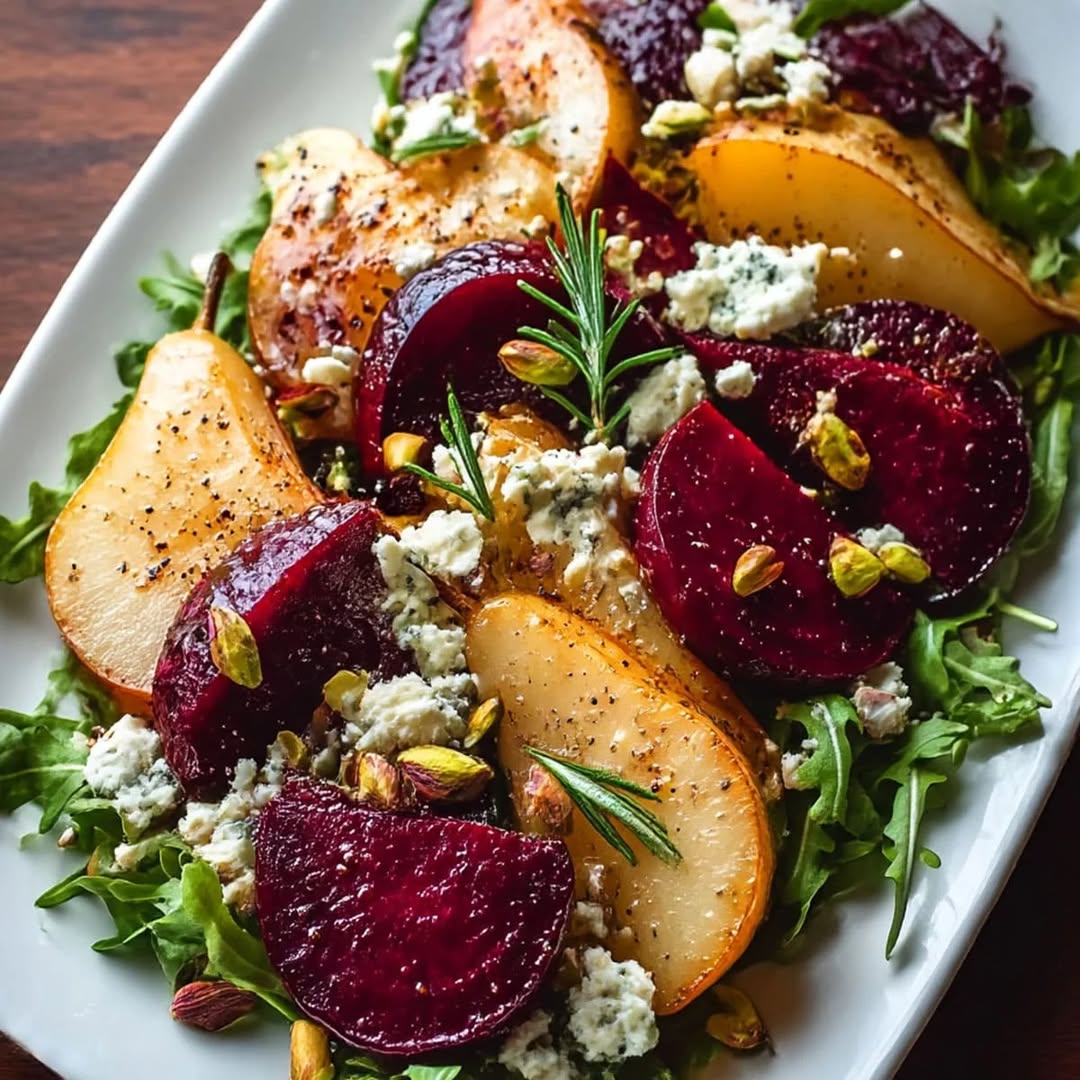
- Visual Appeal: This dish is a masterpiece of color. Deep ruby and golden beets create a stunning base. Then, pale green or red pear slices add contrast. Snow-white goat cheese crumbles and golden-brown walnuts complete the visually striking plate.
- Skill Level Needed: This is an accessible recipe for all cooks. Basic knife skills for peeling and slicing are required. Additionally, you need the patience to roast beets. Otherwise, the process involves simple assembly and whisking a dressing.
- Special Equipment: You only need standard kitchen tools. A baking sheet, parchment paper, a small skillet for toasting nuts, and a mixing bowl are essential. A good chef’s knife and a vegetable peeler will make prep easier and faster.
Recipe Overview
- Difficulty Level: We rate this Roasted Beet and Pear Salad as easy. The steps are straightforward and sequential. Most of the hands-on time involves prepping vegetables. The roasting process is largely hands-off. Consequently, even novice cooks can achieve impressive results with this recipe.
- Category: This recipe fits multiple categories beautifully. It is primarily a hearty, main-dish salad. It also works perfectly as an elegant starter or side dish. The combination of roasted vegetables, fruit, cheese, and nuts makes it a complete and satisfying meal.
- Cuisine: This salad draws inspiration from modern American and European farm-to-table traditions. It emphasizes seasonal, whole ingredients. The combination of fruit, cheese, and nuts is classic in French and Italian salads. Ultimately, it is a contemporary, fusion-style dish.
- Cost: This Roasted Beet and Pear Salad is moderately priced. Beets and pears are affordable, especially in season. Goat cheese and walnuts are the premium ingredients. You can control cost by buying walnuts in bulk and choosing a domestic goat cheese.
- Season: This is the ultimate fall and winter salad. Beets and pears are at their peak sweetness during these cooler months. The hearty, roasted components are comforting when the weather turns cold. You can, however, find good ingredients year-round in most supermarkets.
- Occasion: This salad is incredibly versatile for different events. It is perfect for a festive Thanksgiving or Christmas side. It also makes an elegant lunch for guests. Furthermore, it is a wonderful way to elevate a simple family dinner at home.
Why You’ll Love This Recipe
You will adore the incredible taste and texture of this Roasted Beet and Pear Salad. Each forkful is a journey from earthy and sweet to tangy and crunchy. The roasted beets develop a deep, concentrated flavor that is incomparable to their raw or boiled counterparts. Meanwhile, the fresh pear adds a burst of juicy brightness that cuts through the richness. The creamy goat cheese melts slightly on the warm beets, creating a luxurious sauce. Finally, the walnuts provide the essential crunchy contrast that makes the salad truly satisfying. This combination is not just delicious; it is genuinely addictive.
You will appreciate the convenience and straightforward preparation of this healthy salad. Although roasting beets takes time, it requires minimal active effort. You can roast the beets and toast the walnuts a day or two in advance. Consequently, assembling the final dish takes mere minutes before serving. The vinaigrette comes together in a simple whisking motion. This make-ahead flexibility makes the Roasted Beet and Pear Salad a superstar for meal prep and entertaining. You get a stunning, restaurant-quality result without last-minute kitchen chaos.
You will benefit from the outstanding nutritional profile of this dish. Beets are packed with fiber, folate, and immune-boosting vitamins. They also contain unique compounds like betalains, which have anti-inflammatory properties. Pears add more fiber and vitamin C. Goat cheese offers protein and calcium in a form that some find easier to digest than cow’s milk cheese. Walnuts contribute heart-healthy omega-3 fatty acids and plant-based protein. This Roasted Beet and Pear Salad is a powerhouse of nutrients that supports overall wellness.
You will value the social and entertaining potential of this beautiful recipe. This salad is a guaranteed conversation starter at any gathering. Its vibrant, jewel-toned presentation is instantly impressive. Guests are always delighted by the sophisticated flavor pairing. Serving a Roasted Beet and Pear Salad shows thoughtfulness and culinary skill. It pairs wonderfully with a variety of main courses, from roasted chicken to holiday ham. It elevates a simple meal into a special occasion.
You will enjoy the cost-effectiveness and accessibility of the ingredients. This recipe uses whole, minimally processed foods that are easy to find. While gourmet in appearance, the components are humble. You can often find beets and pears at local farmers’ markets for great prices. The recipe is also forgiving; you can substitute different nuts or cheeses based on what you have. This Roasted Beet and Pear Salad delivers maximum flavor and visual impact without a luxury grocery bill.
Historical Background and Cultural Significance
The combination of root vegetables and fruit in salads has deep historical roots across many cultures. Ancient Romans enjoyed salads with cooked vegetables. Furthermore, medieval European cooks often paired sweet and savory elements, a tradition that continued through the Renaissance. The modern concept of a composed salad with roasted vegetables, cheese, and nuts gained popularity in the late 20th century. Chefs in California and France began highlighting seasonal, local produce in simple, elegant preparations. The Roasted Beet and Pear Salad is a direct descendant of this farm-to-table movement, emphasizing purity of flavor and ingredient quality.
Beets themselves have a rich cultural history spanning thousands of years. Initially, people cultivated them for their greens in the Mediterranean region. The root itself became popular later. In Eastern European cuisines, beets are a cornerstone, appearing in iconic dishes like borscht. Meanwhile, pears have been prized since ancient times in Asia and Europe for their sweetness and texture. Combining these two historically significant ingredients in a salad is a relatively modern innovation. It reflects a global pantry and a contemporary desire for healthful, visually appealing food.
The recipe evolved from simpler beet salads. Originally, cooks often boiled or pickled beets. The roasting technique became widespread as home ovens improved and culinary trends shifted. Roasting concentrates the beet’s natural sugars, creating a deeper, more complex flavor profile that pairs beautifully with fruit. Adding goat cheese and nuts followed the rise of artisan cheese producers and the nutritional focus on healthy fats. The current version of the Roasted Beet and Pear Salad represents the culmination of these trends. It is a dish that feels both timeless and of-the-moment.
Regional variations of this salad abound, showcasing local ingredients. In the American South, you might find pecans instead of walnuts. In Australia, creamy feta is often a substitute for goat cheese. Some Mediterranean versions add orange segments or pomegranate arils for extra acidity. A French twist might include a handful of bitter greens like frisée. The core formula of sweet roasted vegetable, fresh fruit, creamy cheese, and crunchy nut is endlessly adaptable. This versatility is a key reason for the Roasted Beet and Pear Salad’s enduring and widespread popularity.
Ingredient Deep Dive
Beets are the earthy heart of this salad. Historically, they were used medicinally before becoming a food staple. Nutritionally, they are a superb source of folate, manganese, and potassium. The vibrant pigments, betalains, are powerful antioxidants. When selecting beets, choose firm, smooth globes with vibrant greens attached if possible. Store them unwashed in the refrigerator’s crisper drawer. You can substitute golden beets for a less messy, equally sweet option. For a quicker version, high-quality pre-cooked vacuum-packed beets work in a pinch, though roasting is preferred for flavor.
Pears provide the essential juicy, sweet contrast. They belong to the rose family and have been cultivated for over three thousand years. They offer a good amount of fiber, vitamin C, and copper. For this Roasted Beet and Pear Salad, choose a firm, ripe variety like Bosc or Anjou that will hold its shape when sliced. A ripe pear yields slightly at the stem. Store pears at room temperature to ripen, then refrigerate to slow the process. If pears are out of season, crisp apple slices make an excellent substitute. You could also use very thinly sliced fennel for a different kind of crunch.
Goat cheese, or chèvre, brings the creamy, tangy element. Its production dates back thousands of years to the earliest domestication of goats. It is often easier to digest than cow’s milk cheese due to different protein structures. Goat cheese provides protein, calcium, and healthy fats. Select a fresh, soft log of plain goat cheese for easy crumbling. For a stronger flavor, try an aged variety. Store it tightly wrapped in the refrigerator. If you’re not a fan of goat cheese, feta or blue cheese offer a similar salty tang. For a vegan Roasted Beet and Pear Salad, use a creamy almond-based cheese or avocado.
Walnuts are the ancient, brain-shaped nut that adds crucial crunch and richness. They are one of the oldest tree foods, revered in Persian and Roman cultures. They are an exceptional plant-based source of omega-3 fatty acids, which support heart and brain health. Always toast walnuts to unlock their full, nutty flavor and improve texture. Store them in an airtight container in the freezer to prevent rancidity. For a different flavor profile, pecans, hazelnuts, or pistachios are wonderful alternatives. To make the salad nut-free, try toasted pumpkin seeds (pepitas) for a similar crunchy element.
Common Mistakes to Avoid
- Using under-ripe or over-ripe pears. An under-ripe pear will be hard and flavorless. Conversely, an over-ripe pear will be mushy and brown. Aim for a pear that yields slightly to gentle pressure near the stem for the perfect juicy crunch in your Roasted Beet and Pear Salad.
- Skipping the step of toasting the walnuts. Raw walnuts can taste bitter and have a soft, sometimes rubbery texture. Toasting them in a dry pan for a few minutes transforms them. It brings out a deep, nutty aroma and creates a satisfying, crisp crunch that elevates the entire salad.
- Dressing the salad too early. If you toss the entire Roasted Beet and Pear Salad with vinaigrette ahead of time, the greens will wilt. The beets will stain everything a uniform pink. Instead, dress the base components lightly and add delicate greens just before serving for the best texture and appearance.
- Not roasting the beets properly. Wrapping beets tightly in foil traps steam and essentially steams them. For the best caramelized flavor, roast them uncovered on a parchment-lined sheet. This method allows moisture to evaporate, concentrating the sugars and creating a superior texture for your salad.
- Neglecting to balance the vinaigrette. A good dressing should have a balance of fat, acid, and sweetness. Taste your vinaigrette before adding it. If it’s too sharp, add a touch more oil or maple syrup. If it’s too flat, add another squeeze of lemon or a pinch of salt.
- Using pre-crumbled goat cheese. While convenient, pre-crumbled cheese contains anti-caking agents that can make it dry and less creamy. For the best texture and flavor in your Roasted Beet and Pear Salad, buy a log of fresh goat cheese and crumble it yourself with your fingers.
- Cutting the beets and pears in inconsistent sizes. Uneven pieces roast unevenly and create a messy presentation. Take time to cut the beets into uniform wedges or cubes. Similarly, slice the pears evenly. This ensures every bite has a harmonious mix of flavors and textures.
- Forgetting to account for beet stains. Beet juice can stain hands, clothes, and cutting boards. Wear an apron and use a dedicated cutting board. You can also wear disposable gloves when peeling and cutting. Rubbing stained hands with lemon juice or salt can help remove the color.
Essential Techniques
Roasting beets is the foundational technique for this salad. Proper roasting concentrates the natural sugars, creating a tender, caramelized interior. To master it, toss peeled and cut beets lightly in oil, spread them in a single layer, and roast at a high heat (400°F) until fork-tender. The common pitfall is overcrowding the pan, which steams the beets instead of roasting them. Visual cues for success are crispy, slightly shrunken edges and a deep, vibrant color. A knife or fork should slide in with little resistance when they are perfectly roasted.
Toasting nuts is a simple but transformative step. Toasting removes raw bitterness and enhances the nutty, rich flavor of the walnuts. Heat a dry skillet over medium heat, add the nuts, and stir constantly for 3-5 minutes until fragrant and slightly darkened. The common pitfall is walking away, as nuts can burn in seconds. Listen for a light crackling sound and watch for a golden-brown color and a strong, toasted aroma. Immediately transfer them to a plate to stop the cooking process for your Roasted Beet and Pear Salad.
Emulsifying the vinaigrette ensures a smooth, cohesive dressing. An emulsion is a stable mixture of oil and vinegar that doesn’t separate immediately. To achieve this, start with your acids (lemon juice, vinegar) and flavorings (mustard, maple syrup, salt) in a bowl. Then, whisk vigorously while slowly drizzling in the oil. The mustard acts as an emulsifier. The pitfall is adding the oil too quickly, which breaks the emulsion. The visual cue for success is a slightly thickened, homogeneous mixture. If it separates, simply re-whisk before using.
Pro Tips for Perfect Roasted Beet and Pear Salad
Use a mix of red and golden beets for a stunning visual presentation. Keep them separate on the roasting pan to prevent the red beets from staining the golden ones. This creates a beautiful two-tone effect in your final Roasted Beet and Pear Salad that is sure to impress guests.
Chill your serving plates or platter before assembling. A cool plate helps keep the salad crisp, especially if the roasted beets are still slightly warm. This is a simple restaurant trick that makes a noticeable difference in the eating experience.
Add a handful of robust greens for structure. While the salad is beautiful on its own, a base of baby arugula, kale, or spinach adds volume, color contrast, and extra nutrients. The slight bitterness of arugula pairs particularly well with the sweet components.
Season each component individually. Lightly salt the roasted beets when they come out of the oven. Season the pear slices with a tiny squeeze of lemon to prevent browning. This layered seasoning builds depth of flavor in every bite of the salad.
Warm the goat cheese slightly. Taking the cheese out of the refrigerator 20-30 minutes before serving allows it to soften. It will crumble more easily and have a creamier texture that melds wonderfully with the warm beets.
Finish with flaky sea salt. Just before serving, sprinkle a small pinch of high-quality flaky sea salt like Maldon over the top. The delicate crystals provide little bursts of salinity that elevate all the other flavors in the Roasted Beet and Pear Salad.
Make extra roasted beets. They keep well in the fridge for up to 4 days. You can use them in grain bowls, on toast with cheese, or blended into a vibrant hummus. It’s a fantastic way to maximize your kitchen time.
Variations and Adaptations
Explore regional variations to customize your salad. A French-inspired version might include toasted hazelnuts and a tarragon-infused vinaigrette. A Mediterranean twist could add crumbled feta, Kalamata olives, and oregano. For an American South feel, use candied pecans and a bourbon-spiked dressing. An Asian-fusion adaptation might feature a ginger-sesame vinaigrette and sprinkle of black sesame seeds. These changes keep the core structure of the Roasted Beet and Pear Salad while taking your taste buds on a global journey.
Consider seasonal adaptations throughout the year. In spring, substitute roasted asparagus or fresh strawberries for the pears. During summer, use roasted peaches or nectarines and fresh basil. For a deep winter version, try roasted squash or sweet potatoes and dried cranberries. The formula of roasted vegetable + fresh/cooked fruit + cheese + nut is endlessly flexible. This allows you to enjoy a version of this healthy salad with the best produce every season.
Implement dietary modifications easily. For a vegan Roasted Beet and Pear Salad, omit the goat cheese or use a vegan alternative like cashew cheese. Add avocado for creaminess. For a nut-free version, use toasted sunflower or pumpkin seeds. To make it gluten-free, ensure your vinegar is gluten-free (most are). For a lower-carb option, reduce the amount of pear and maple syrup, focusing on the beets, greens, cheese, and nuts.
Experiment with flavor variations by changing the cheese and dressing. Instead of goat cheese, try tangy feta, creamy burrata, or sharp blue cheese. For the vinaigrette, swap maple syrup for honey or pomegranate molasses. Use different vinegars like sherry, balsamic, or apple cider. Add fresh herbs to the dressing—thyme, dill, or chives work beautifully. A spoonful of grain mustard or a minced shallot can add another layer of complexity to your salad.
Serving and Presentation Guide
Master plating techniques for maximum visual impact. For individual servings, start with a bed of greens on a wide, shallow bowl. Artfully arrange the roasted beet wedges and pear slices in a circular or linear pattern. Scatter the goat cheese crumbles and toasted walnuts over the top. Finally, use a spoon to drizzle the vinaigrette in a zig-zag pattern. This controlled approach creates a restaurant-quality Roasted Beet and Pear Salad.
Explore garnishing ideas for the final touch. Fresh herb sprigs like dill, parsley, or microgreens add a pop of green and fresh flavor. Edible flowers like nasturtiums or pansies make the salad exceptionally elegant for a special occasion. A final grind of black pepper or a sprinkle of sumac adds color and a flavor note. A few pomegranate arils scattered over a winter version provide jewel-like color and a tart burst.
Choose traditional accompaniments to complete the meal. This salad pairs wonderfully with crusty bread or breadsticks to soak up the extra vinaigrette. For a heartier meal, serve it alongside a simple roast chicken, seared salmon, or a savory tart. On a holiday table, it complements rich mains like turkey or glazed ham beautifully. The acidity and freshness of the Roasted Beet and Pear Salad cut through heavier dishes perfectly.
Consider modern serving suggestions for a casual feel. Serve the salad deconstructed on a large wooden board or platter, allowing guests to build their own bites. Pack it in a mason jar for a stunning portable lunch—layer dressing at the bottom, then beets, pears, cheese, nuts, and greens on top. Toss everything together in a large, family-style bowl for a more rustic, shareable presentation.
Wine and Beverage Pairing
Select wine pairings that complement the salad’s sweet and earthy notes. A dry Rosé from Provence is a classic and perfect choice. Its bright acidity and berry notes harmonize with the beets and pears. A crisp, unoaked Chardonnay or Pinot Gris also works well. For red wine lovers, a light-bodied Pinot Noir with low tannins won’t overpower the dish. The earthy character of the Pinot Noir mirrors the beets beautifully. Avoid heavy, oaky, or highly tannic wines that will clash with the salad’s delicate balance.
Offer non-alcoholic alternatives for all guests. Sparkling water with a twist of lemon or a few muddled raspberries is always refreshing. A homemade ginger-lemonade provides a spicy-sweet counterpoint. For an autumn-themed drink, try warm spiced apple cider. Iced herbal tea, like hibiscus or mint, can also be a lovely companion to the Roasted Beet and Pear Salad. These options ensure everyone has a delightful beverage to enjoy.
Consider coffee or tea pairings for a brunch setting. A light roast coffee with bright, fruity notes can complement the salad’s flavors without bitterness. A cup of Earl Grey tea, with its bergamot citrus aroma, pairs surprisingly well with the earthy beets and creamy cheese. Avoid overly robust or smoky brews that might dominate the palate. The goal is a beverage that cleanses the palate between bites of the flavorful salad.
Storage and Shelf Life
Store components separately for the best results. Keep roasted beets in an airtight container in the refrigerator for up to 4 days. Store toasted walnuts at room temperature in a sealed container for up to a week, or in the freezer for longer. The maple vinaigrette can be refrigerated in a jar for up to 5 days. Slice pears and crumble cheese only when ready to assemble. This method preserves the individual textures and flavors of your Roasted Beet and Pear Salad.
Understand the signs of spoilage. Discard roasted beets if they develop a slimy texture or an off odor. Walnuts that smell like paint or have a bitter taste are rancid. The vinaigrette is fine as long as the oil hasn’t solidified strangely or developed an odor. Fresh pears will brown and become mushy. Goat cheese may develop blue or green mold; always cut away a generous margin if this occurs or discard it.
Reheating is not typically needed. This salad is best served with beets at room temperature or slightly warm. If you refrigerate assembled salad, the greens will wilt. It’s better to assemble fresh portions from your prepped components. If you must store an assembled salad, expect the beets to stain everything and the textures to soften. It will still be edible but not at its peak.
Make Ahead Strategies
Create a prep timeline for stress-free assembly. Up to 3 days ahead: roast the beets and let them cool; store them chilled. Toast the walnuts; store at room temperature. Make the vinaigrette; refrigerate. The day of serving: remove beets and vinaigrette from fridge to take the chill off. Up to 1 hour before serving: slice pears, crumble cheese, and wash greens. Right before serving: assemble the Roasted Beet and Pear Salad on plates and drizzle with dressing.
Assess the quality impact of each make-ahead step. Roasting beets ahead actually improves their flavor as it allows the sugars to settle. Toasted nuts stay crunchy for days if stored properly. The vinaigrette’s flavors meld and improve overnight. The only elements that must be absolutely fresh are the pear slices (to prevent browning) and delicate greens (to prevent wilting). This strategy guarantees a perfect salad with minimal last-minute work.
Add fresh elements just before serving for optimal texture. This is the golden rule for a crisp Roasted Beet and Pear Salad. Combine the beets, pears, cheese, and nuts first. Then, add the greens. Finally, dress the salad. If you’re transporting the salad, pack the components in separate containers and assemble on-site. Carry the vinaigrette in a small jar for a final shake and drizzle. This ensures your salad is vibrant and crisp upon serving.
Scaling Instructions
Halve the recipe easily for a smaller yield. Use one medium beet and one pear. Reduce all other ingredients proportionally. Use a smaller baking sheet for roasting. The cook time may be slightly less, so check the beets for tenderness early. This is perfect for a romantic dinner for two. The assembly process remains identical. You’ll have a perfectly portioned Roasted Beet and Pear Salad without leftovers.
Double or triple the recipe for a crowd. Use multiple baking sheets, rotating them in the oven halfway through for even roasting. Consider mixing red and golden beets for a more dramatic presentation on a large platter. Toast the walnuts in batches to avoid steaming. Make the vinaigrette in a larger jar for easy shaking. When assembling, build the salad on a very large platter or in a big, wide bowl for a stunning centerpiece.
Adjust equipment and timing for larger batches. You will need more oven space and likely need to roast beets in consecutive batches. Plan for this extra time. For a very large event, you can roast beets a day or two in advance. Increase the toasting time for walnuts slightly when doing a big batch, as a crowded pan takes longer. Allow the vinaigrette to come to room temperature and give it a vigorous shake before dressing a large quantity of salad.
Nutritional Deep Dive
Analyze the macro breakdown of this hearty salad. One serving provides a balanced mix: complex carbohydrates from the beets and pear for sustained energy, healthy fats from the olive oil, walnuts, and goat cheese, and a moderate amount of protein from the cheese and nuts. It is a fiber-rich meal, thanks to the beets and pear skin. This combination promotes satiety and stable blood sugar levels, making the Roasted Beet and Pear Salad an excellent choice for a fulfilling lunch or light dinner.
Examine the micronutrient profile for significant health benefits. Beets are exceptionally high in folate, essential for cell function and tissue growth. They also provide manganese for bone health and potassium for blood pressure regulation. Pears contribute vitamin C and copper. Goat cheese offers calcium, phosphorus, and vitamin B2. Walnuts are a top source of alpha-linolenic acid, a plant-based omega-3. Together, these ingredients support cardiovascular health, reduce inflammation, and contribute to overall nutrient density.
Consider the salad in the context of weight management. This dish is volumous and satisfying due to its high fiber and water content from the vegetables and fruit. The healthy fats and protein promote a feeling of fullness. It is nutrient-dense rather than calorie-dense, meaning you get a high amount of vitamins and minerals for the calories consumed. Enjoying this Roasted Beet and Pear Salad as a main course can be an effective part of a balanced diet focused on whole foods.
Dietary Adaptations
Create a gluten-free version effortlessly. This Roasted Beet and Pear Salad is naturally gluten-free as written. Simply ensure that any pre-made ingredients, like mustard or vinegar, are certified gluten-free, which most are. Serve it with gluten-free bread or crackers on the side if desired. This adaptation requires no special substitutions, making it a safe and delicious option for those with celiac disease or gluten sensitivity.
Make a dairy-free or vegan adaptation. Omit the goat cheese entirely, or use a high-quality vegan cheese alternative made from nuts or coconut. To replicate the creamy, tangy element, add ripe avocado slices or a dollop of vegan cashew cream seasoned with lemon juice. Ensure the maple syrup in the dressing is pure and not processed with animal-derived filters. This creates a plant-powered Roasted Beet and Pear Salad that is still rich and satisfying.
Adjust for a low-carb or keto diet. Reduce the amount of pear significantly, using just a few thin slices for flavor. Omit the maple syrup from the vinaigrette, using a keto-friendly sweetener like monk fruit or simply relying on the natural sweetness of the roasted beets. Increase the proportion of walnuts and goat cheese to up the fat and protein content. This transforms the salad into a more keto-friendly side dish.
Adapt for a Paleo or Low-FODMAP diet. For Paleo, omit the goat cheese (dairy is excluded) and ensure the mustard is Paleo-approved. The rest of the ingredients are compliant. For a Low-FODMAP version, limit the beet portion to about ½ cup per serving (beets contain moderate FODMAPs). Use a firm, ripe pear in a small quantity. Omit the honey or maple syrup in the dressing or use a tiny amount of maple syrup, which is low-FODMAP in small serves.
Troubleshooting Guide
Solve texture issues with beets. If your roasted beets are tough, they are undercooked. Return them to the oven for another 10-15 minutes. If they are mushy, they are overcooked or were steamed in foil. Next time, roast uncovered at a slightly higher temperature. For a salad, aim for a tender-but-not-falling-apart texture. You can also try cutting them into smaller, more uniform pieces to ensure even cooking throughout the batch.
Balance flavors if the salad tastes flat. First, ensure you salted each component adequately. If the salad still lacks depth, add a splash of acid—a squeeze of fresh lemon juice over the top. If it’s too acidic, drizzle a tiny bit more olive oil or maple syrup. Sometimes, the solution is as simple as adding another pinch of flaky salt and a crack of black pepper just before serving your Roasted Beet and Pear Salad.
Address dressing separation problems. If your vinaigrette has separated in the fridge, this is normal. Simply let it come to room temperature and shake or whisk it vigorously again. If it won’t re-emulsify, add a tiny dab of mustard to a clean bowl and slowly whisk the separated dressing into it. To prevent future separation, ensure you are adding the oil in a very slow, steady stream while whisking constantly during the initial preparation.
Recipe Success Stories
Community feedback highlights the recipe’s versatility. One reader shared how she served this Roasted Beet and Pear Salad at her fall wedding as a passed appetizer on endive spears, and it was a huge hit. Another home cook reported that her children, who typically avoid beets, devoured this version because of the sweet pears and crunchy walnuts. These stories underscore how the recipe’s balance of flavors wins over even the most skeptical eaters.
Variation successes from readers are inspiring. A follower created a stunning holiday version by adding pomegranate arils and substituting blue cheese, sharing a beautiful photo that went viral in a food group. Another successfully made it vegan for a potluck by using almond cheese and agave, receiving rave reviews from omnivore guests. These adaptations prove the core recipe is a fantastic template for culinary creativity and personal expression.
Frequently Asked Questions
Can I use canned beets for this salad? You can, but the flavor and texture will be different. Canned beets are often softer and have a more muted, sometimes tinny flavor compared to the deep, sweet, caramelized taste of roasted beets. For the best Roasted Beet and Pear Salad, fresh roasted beets are highly recommended. If you must use canned, drain and rinse them well, and pat them very dry.
How do I prevent the pears from browning? Slice the pears just before assembling the salad. If you need to slice them a bit ahead, toss the slices lightly with a squeeze of lemon juice. The acid in the lemon juice slows down the oxidation process that causes browning. This little trick keeps your pears looking fresh and appetizing in the salad.
Can I make this salad ahead of time? You can prep all the components ahead, but assemble it just before serving. Roast the beets, toast the nuts, and make the dressing up to 3 days in advance. Store them separately. Slice the pears and crumble the cheese no more than an hour before serving. This keeps the textures perfect.
What can I use instead of goat cheese? Feta cheese is a fantastic salty, tangy substitute. Blue cheese or gorgonzola offer a stronger flavor. For a milder option, try fresh mozzarella pearls or ricotta salata. For a vegan version, use a Print
Roasted Beet & Pear Salad
- Total Time: 45 minutes
- Yield: 4
Description
A vibrant and earthy salad featuring sweet roasted beets, crisp pears, and a tangy balsamic vinaigrette, perfect for a light lunch or elegant side dish.
Ingredients
- 3 medium beets, peeled and cubed
- 2 ripe pears, thinly sliced
- 4 cups mixed greens
- 1/2 cup crumbled goat cheese
- 1/4 cup chopped walnuts
- 3 tablespoons olive oil
- 2 tablespoons balsamic vinegar
- 1 teaspoon honey
- Salt and black pepper to taste
Instructions
- Preheat oven to 400°F (200°C). Toss cubed beets with 1 tablespoon olive oil, salt, and pepper, then roast on a baking sheet for 25-30 minutes until tender. Let cool.
- In a small bowl, whisk together remaining olive oil, balsamic vinegar, honey, salt, and pepper to make the vinaigrette.
- Arrange mixed greens on a platter, top with roasted beets, pear slices, goat cheese, and walnuts. Drizzle with vinaigrette and serve immediately.
Notes
You can customize the seasonings to taste.
- Prep Time: 15 minutes
- Cook Time: 30 minutes
- Method: Main
- Cuisine: American