Greek Loaded Hummus: A Vibrant Mediterranean Appetizer Recipe
Imagine a creamy, dreamy canvas of hummus transformed into a stunning, edible landscape. This Greek loaded hummus recipe does exactly that. It elevates the classic chickpea dip into a show-stopping centerpiece for any gathering. Consequently, you get a perfect harmony of textures and flavors in every single bite. Moreover, this dish is as beautiful as it is delicious, making it ideal for impressing guests with minimal effort.
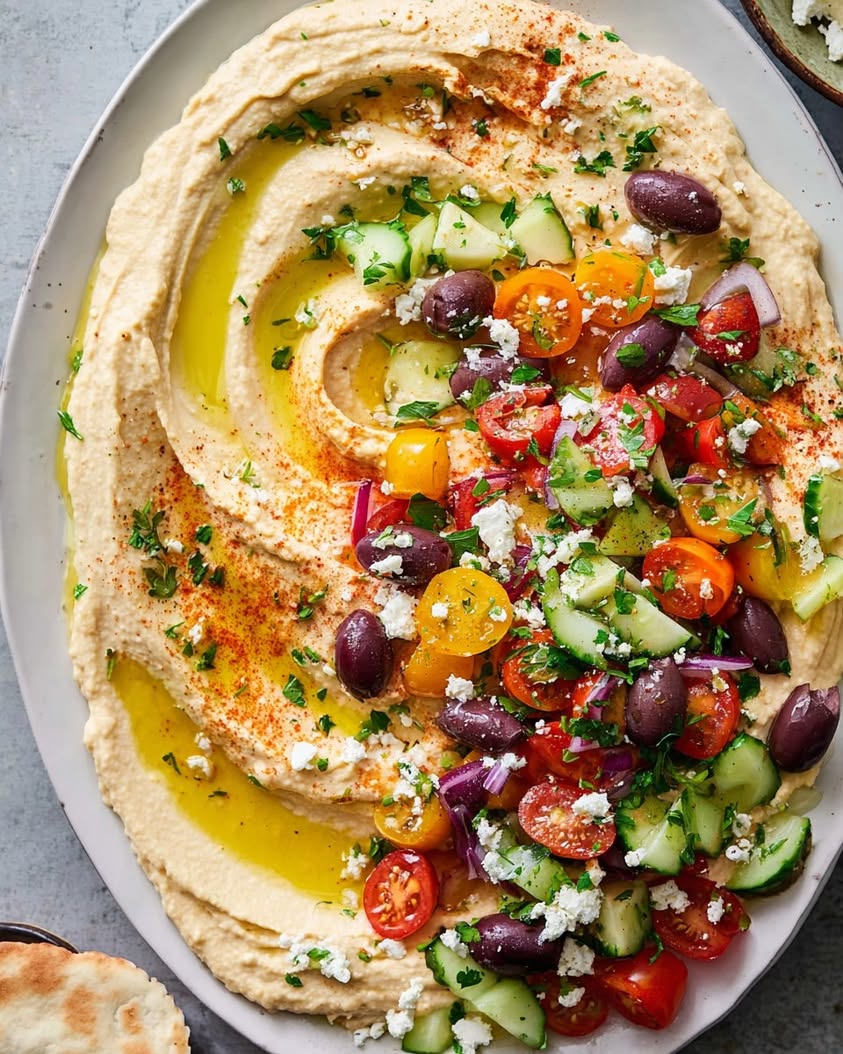
The vibrant colors of this loaded hummus platter are a feast for the eyes before you even take a taste. Think of ruby-red cherry tomatoes, crisp cucumber, briny Kalamata olives, and creamy feta cheese all artfully arranged. Ultimately, this recipe captures the bright, fresh essence of the Mediterranean in a shareable appetizer. Furthermore, it is incredibly versatile, serving as a perfect snack, party food, or even a light lunch when paired with pita bread or fresh vegetables.
Creating this Greek loaded hummus is a joyful, simple process. First, you start with a smooth and flavorful homemade or high-quality store-bought hummus base. Then, you simply chop your fresh toppings and arrange them in colorful sections. The result is a customizable dish that celebrates fresh ingredients. Therefore, whether you are a seasoned cook or a beginner, this recipe guarantees success and delicious results every single time.
Quick Recipe Highlights
- Flavor Profile: This Greek loaded hummus delivers a bright, tangy, and savory taste. The creamy hummus base provides a rich, garlicky foundation, while the toppings add bursts of salty feta, briny olives, and sweet tomato. Finally, a drizzle of olive oil and a sprinkle of oregano tie all the Mediterranean flavors together perfectly.
- Texture: You experience a delightful contrast of textures in this loaded hummus dip. The base is luxuriously smooth and creamy, while the toppings offer juicy crunch from cucumbers and tomatoes, a creamy crumble from feta, and a pleasant chew from the olives. This combination makes every scoop interesting and satisfying.
- Aroma: The aroma is instantly inviting and reminiscent of a Greek taverna. Fresh lemon juice and garlic provide a sharp, clean scent. Meanwhile, the extra virgin olive oil and dried oregano release their warm, earthy fragrances. As a result, the smell alone will have everyone gathering around the table.
- Visual Appeal: This dish is a masterpiece of color and composition. The stark white of the feta and hummus contrasts beautifully with the deep purple of the olives, the red of the tomatoes, and the green of the cucumber. Arranged in neat sections or a colorful pile, it looks professionally crafted and utterly irresistible.
- Skill Level Needed: Absolutely no advanced cooking skills are required for this easy hummus recipe. The process involves simple chopping, arranging, and drizzling. Consequently, it is a fantastic recipe for beginners, last-minute hosts, or anyone wanting a stunning dish without stress.
- Special Equipment: You need only basic kitchen tools. A good chef’s knife and cutting board are essential for prepping the fresh vegetables. Additionally, a serving platter or wide, shallow bowl is necessary to create the beautiful layered presentation that makes this loaded hummus so special.
Recipe Overview
- Difficulty Level: This recipe is confidently rated as easy. It involves no cooking, only assembly, making it accessible to everyone. The steps are straightforward: spread, chop, and arrange. Therefore, even on your busiest days, you can create something extraordinary with this simple Greek loaded hummus.
- Category: This dish falls perfectly into the appetizer and snack categories. It is ideal for parties, potlucks, and casual gatherings. Furthermore, it can easily serve as a light vegetarian meal or a component of a larger mezze platter, showcasing its wonderful versatility.
- Cuisine: This is a celebration of modern Greek and broader Mediterranean cuisine. It takes the traditional concept of hummus, which has Middle Eastern roots, and tops it with classic Greek salad ingredients. The fusion creates a cross-cultural dish that is fresh, healthy, and deeply flavorful.
- Cost: This Greek loaded hummus is remarkably cost-effective. Chickpeas, the main ingredient, are an affordable pantry staple. The fresh vegetables and block feta are also budget-friendly, especially when in season. Ultimately, you create a restaurant-quality appetizer for a fraction of the price you would pay dining out.
- Season: This recipe shines brightest in the spring and summer months. That is when tomatoes, cucumbers, and fresh herbs are at their peak flavor and most affordable. However, it is a welcome burst of freshness and color during the colder months, making it a suitable year-round choice.
- Occasion: It is perfect for virtually any occasion. Serve it at casual game-day gatherings, elegant dinner parties, holiday appetizer spreads, or simple family snacks. Its crowd-pleasing nature and beautiful presentation make it a reliable choice for any event where good food is shared.
Why You’ll Love This Recipe
You will adore the incredible taste and texture of this Greek loaded hummus. Each component brings its own unique character to create a symphony in your mouth. The creamy, garlicky hummus base is the perfect backdrop for the juicy, crunchy vegetables and salty, tangy feta. Every single bite offers a new combination of flavors and textures, ensuring you never get bored. This is not just a dip; it is a full sensory experience that will have you reaching for more pita bread again and again.
The convenience factor of this loaded hummus recipe is a major win. Since there is zero cooking involved, you can have an impressive appetizer ready in about fifteen minutes. This makes it a lifesaver for unexpected guests or when you need a last-minute dish to bring to a party. Furthermore, you can easily prepare components ahead of time. Simply store the chopped veggies in containers and assemble everything on your platter just before serving for maximum freshness and visual impact.
From a nutritional standpoint, this dish is a powerhouse. Chickpeas are loaded with plant-based protein and fiber, which help keep you full and satisfied. The fresh vegetables add a wealth of vitamins, minerals, and antioxidants. Additionally, olive oil provides heart-healthy monounsaturated fats. Choosing this loaded hummus dip means you are indulging in a treat that is as good for your body as it is for your taste buds.
The social and entertaining value of this platter is immense. It is designed for sharing, encouraging conversation and interaction as people gather around to dig in. Its stunning presentation is a guaranteed conversation starter and makes you look like a culinary pro. Whether it is the centerpiece of a casual get-together or part of an elaborate feast, this Greek loaded hummus fosters a sense of community and celebration.
Finally, this recipe is wonderfully cost-effective and accessible. You do not need any rare or expensive ingredients. Most components are pantry staples or readily available at any grocery store. This accessibility means you can enjoy a taste of the Mediterranean anytime without breaking the bank. It proves that eating well does not have to be complicated or costly, making it a recipe you will return to time and time again.
Historical Background and Cultural Significance
The story of hummus is ancient and spans cultures. While its exact origin is hotly debated among food historians, evidence points to its existence in the Middle East centuries ago. Chickpeas, the primary ingredient, have been cultivated in the Mediterranean region for over 7,000 years. Early versions likely involved mashing cooked chickpeas with sesame paste (tahini), lemon, and garlic. This simple, nutritious paste became a dietary staple, providing sustained energy. Consequently, hummus traveled along trade routes, evolving with each culture it touched.
In Greek cuisine, dips and spreads, known as “mezedes,” hold a place of great cultural importance. They are the heart of social dining, meant to be shared slowly with friends and family over conversation and drinks. While tzatziki and melitzanosalata (eggplant dip) are classics, the concept of “loading” a base dip with fresh, local ingredients is a natural progression. This Greek loaded hummus recipe reflects the Greek philosophy of “philoxenia,” or love for strangers, by creating a generous, beautiful dish meant for sharing and hospitality.
The evolution of this specific recipe is a modern tale of culinary fusion. Traditional hummus from the Levant is typically served smooth, drizzled with oil, and perhaps sprinkled with paprika or parsley. The “loaded” trend, however, likely has more recent roots in contemporary restaurant and food presentation culture. It takes the familiar and elevates it into a complete, visually striking meal component. This Greek variation specifically marries the beloved chickpea dip with the iconic flavors of a Greek salad, creating a fusion that is instantly recognizable and universally appealing.
Regional variations of loaded hummus are now endless, reflecting local tastes and ingredients. In the American South, you might find a version with corn, black beans, and jalapeños. A Californian twist could include avocado and sun-dried tomatoes. The Greek style, however, remains one of the most popular due to its bright, balanced flavors. This adaptability is a testament to hummus’s perfect base nature. It welcomes innovation while still honoring its rich, cross-cultural history as a food of sustenance and community.
Ingredient Deep Dive
Chickpeas (Garbanzo Beans): Chickpeas are the ancient, nutritional foundation of this loaded hummus recipe. Cultivated for millennia in the Mediterranean and Middle East, they are a cornerstone of many global cuisines. Nutritionally, they are a superstar, packed with plant-based protein, dietary fiber, and essential minerals like iron and folate. For the best texture, use canned chickpeas for convenience, but be sure to rinse them thoroughly. For an ultra-smooth result, some cooks recommend peeling the chickpeas by rubbing them in a towel. You can substitute with great northern beans for a slightly different flavor profile, though the classic taste will change.
Tahini: Tahini, a paste made from ground sesame seeds, is what gives hummus its distinctive, rich, and slightly bitter depth. It has been used in cooking from the Levant to North Africa for centuries. It is an excellent source of healthy fats, calcium, and copper. When selecting tahini, look for a brand with a runny consistency and stir the oil back in if it has separated. A good tahini should taste nutty, not unpleasantly bitter. In a pinch, you can use a smooth, natural almond butter, but the flavor will be notably different and sweeter.
Extra Virgin Olive Oil: This is the liquid gold of the Mediterranean, central to both the hummus base and the final garnish. Its history is intertwined with the culture and cuisine of Greece and Italy. High-quality olive oil provides monounsaturated fats and antioxidants. For the hummus base, a standard extra virgin olive oil is fine. For the final drizzle, however, use your best, fruitiest, most aromatic oil to make a real impact. Store it in a cool, dark place to prevent rancidity. There is no true substitute for its unique flavor in this Greek loaded hummus.
Feta Cheese: Feta is Greece’s famous brined cheese, made traditionally from sheep’s milk or a sheep-goat blend. Its tangy, salty flavor is irreplaceable in this recipe. Feta provides protein and calcium, though it is also higher in sodium. For the best quality and flavor, buy a block of feta packed in brine, not pre-crumbled. The pre-crumbled variety often contains anti-caking agents and lacks the creamy texture of a freshly broken block. For a dairy-free version, a firm, marinated tofu or a salty vegan cheese alternative can be used, though the authentic Greek character will be altered.
Kalamata Olives: These dark purple, almond-shaped olives hail specifically from the Kalamata region of Greece. They are known for their rich, fruity, and wine-like flavor, distinct from standard black olives. They contain healthy fats and antioxidants. Look for olives sold with their pits in brine for the best flavor; pitting them is simple with a knife or olive pitter. Do not substitute with canned black olives, as they lack the depth and character. If unavailable, other Greek varieties like Halkidiki olives are a good alternative for your loaded hummus platter.
Common Mistakes to Avoid
- Using Low-Quality Canned Chickpeas: Not all canned chickpeas are created equal. Some brands can have a metallic taste or be overly mushy. Always rinse them thoroughly under cold water to remove the canning liquid, which can affect flavor. For the smoothest hummus base in your Greek loaded hummus, this simple step is non-negotiable.
- Skipping the Tahini: Some recipes suggest omitting tahini to cut calories or due to allergies. However, tahini is essential for authentic flavor and creamy texture. Without it, your hummus will taste flat and be more pasty. If you must avoid sesame, try substituting with a mild sunflower seed butter, but expect a different final taste.
- Overprocessing the Hummus: While you want a smooth base, blending the hummus for too long can actually warm it up and make it gluey. Pulse the ingredients until just smooth and creamy. If the mixture is too thick, thin it with ice water, not more oil, to keep it light and spreadable for your loaded creation.
- Using Pre-Crumbled Feta: Pre-crumbled feta is coated in powder to prevent clumping, which dries it out and dulls its flavor. For the creamiest texture and brightest taste in your loaded hummus dip, always buy a block of feta in brine and crumble it yourself with your fingers just before serving.
- Adding Toppings Too Early: If you assemble the entire platter hours in advance, the vegetables will release water and make the hummus base soggy. The salt from the feta and olives can also begin to draw out moisture. For perfect texture, prepare components separately and assemble your Greek loaded hummus no more than 30 minutes before serving.
- Forgetting to Season the Hummus Base: Even with flavorful toppings, the hummus itself needs proper seasoning. Taste it after blending and adjust the salt, lemon, and garlic. Remember, the cold hummus will mute flavors slightly, so it should taste a bit bold on its own before the toppings are added.
- Using Stale Spices: That bottle of dried oregano in the back of your cupboard from years ago has lost its potency. Dried herbs and spices fade over time. For the best aromatic finish on your loaded hummus, use fresh, high-quality dried oregano or, even better, fresh chopped oregano or dill.
- Neglecting the Final Drizzle: That last swirl of extra virgin olive oil is not just for looks. It adds a luxurious mouthfeel and carries the flavors of the herbs. Using a bland or old oil here is a missed opportunity. Always finish your masterpiece with your best, fruitiest olive oil.
Essential Techniques
Creating a Smooth Hummus Base: The key to a luxurious hummus is achieving a perfectly smooth, creamy texture, not a grainy paste. The technique starts with well-rinsed chickpeas. Many pros recommend taking an extra minute to rub the chickpeas in a clean kitchen towel to pop off the skins; discarding these skins eliminates graininess. Furthermore, blending with ice-cold water, not just the listed liquids, is crucial. The cold water helps emulsify the tahini and olive oil into the chickpeas, creating a light, whipped consistency. Blend patiently, scraping down the sides, until it is utterly smooth.
Balancing Flavors by Taste: Hummus is a recipe that demands tasting and adjusting. The amounts of garlic, lemon, and salt are guidelines, as the potency of each ingredient varies. The essential technique is to blend your base, then taste it critically. Is it bright enough? Add lemon juice, a teaspoon at a time. Does it need more savory depth? Add a pinch more salt or a small extra clove of garlic. The hummus should have a balanced, pronounced flavor on its own, as the cold temperature and toppings will mellow it slightly on the finished platter.
Artful Arrangement for Presentation: The visual appeal of this loaded hummus is half its charm. The technique involves thinking of your platter as a canvas. First, spread the hummus in a thick, even layer, creating swoops with the back of a spoon. Then, arrange your toppings in distinct, colorful sections or piles rather than haphazardly scattering them. This organized chaos looks intentional and beautiful. Place larger, chunkier items like cucumber and tomato around the edges, and sprinkle smaller items like feta and olives in the center. Finally, use fresh herbs and a deliberate drizzle of oil as your final artistic strokes.
Pro Tips for Perfect Greek Loaded Hummus
Chill Your Base: After making your hummus, cover it and let it chill in the refrigerator for at least an hour before assembling. This allows the flavors to meld beautifully and firms up the texture, making it easier to spread cleanly on your platter without sticking to your spoon.
Dry Your Veggies: After chopping the cucumber and tomatoes, pat them gently with a paper towel to remove excess surface moisture. This simple step helps prevent a watery hummus platter and keeps your vegetables tasting crisp and fresh for longer.
Use Ice Water: When blending your hummus, have a glass of ice water nearby. If the mixture seems too thick or is not getting smooth, add a tablespoon of ice-cold water at a time while the processor is running. This cools the mixture and helps achieve a light, airy texture.
Garnish with Fresh Herbs: While dried oregano is traditional, adding a handful of freshly chopped dill, parsley, or mint along with it introduces a vibrant, green flavor and aroma that elevates the entire dish from great to exceptional.
Warm Your Pita: Do not serve your masterpiece with cold, stiff pita bread. Lightly warm pita wedges in the oven or toaster oven until just pliable. You can even brush them with a little olive oil and sprinkle with za’atar before warming for an extra flavor dimension.
Layer for Leftovers: If you have leftovers, store them strategically. Scoop the leftover toppings off the hummus and store them separately in containers. This way, the hummus base stays fresh and you can re-assemble a smaller portion later without sogginess.
Variations and Adaptations
Regional Variations: Explore the Mediterranean by changing your toppings. For a Lebanese twist, add spiced ground lamb (lahmajoun-style), toasted pine nuts, and a drizzle of pomegranate molasses. An Italian-inspired version could feature sun-dried tomatoes, fresh basil, mozzarella pearls, and a balsamic glaze. These adaptations show how the loaded hummus concept can travel while keeping its shareable, festive spirit.
Seasonal Adaptations: Make this recipe work year-round with seasonal produce. In fall, top with roasted butternut squash cubes, crispy sage, and toasted pepitas. For winter, use roasted Brussels sprout leaves, pomegranate arils, and crumbled goat cheese. Spring welcomes blanched peas, asparagus tips, and fresh mint. This approach keeps your loaded hummus dip exciting and aligned with the freshest ingredients available.
Dietary Modifications: This recipe is easily adaptable. For a vegan Greek loaded hummus, simply omit the feta cheese or use a high-quality vegan feta alternative. To make it gluten-free, ensure your tahini is certified GF and serve with gluten-free crackers or vegetable crudités instead of pita. The base is naturally plant-based and full of protein, making it friendly for many dietary needs.
Flavor Variations: Infuse the hummus base itself with different flavors before loading it. Try adding a roasted red pepper or a handful of fresh spinach to the food processor. For a spicy kick, blend in a spoonful of harissa paste. You can also stir in chopped fresh herbs like dill or parsley directly into the hummus for a green-hued, herbaceous base.
Texture Modifications: Play with textures for fun. Instead of spreading the hummus smoothly, leave it slightly chunky for a more rustic feel. Add a layer of creamy tzatziki sauce under the hummus for a double-dip experience. Or, sprinkle the entire platter with crunchy homemade pita chips or toasted walnuts for an added crunch element.
Presentation Alternatives: Think beyond the large platter. Serve individual portions in small bowls or mason jars for a cute, portion-controlled appetizer. You can also create a “hummus bar” where guests build their own loaded hummus dip with a variety of toppings in separate bowls. This interactive style is perfect for parties and allows for personal preference.
Serving and Presentation Guide
Plating Techniques: Choose a wide, shallow bowl or a large, rimmed platter as your canvas. Use the back of a large spoon or an offset spatula to spread the hummus, creating decorative swirls and waves. These textures catch the olive oil and herbs beautifully. Avoid spreading it too thin; a generous, mound-like appearance is more inviting. Leave a small border of the platter visible for a clean, composed look.
Garnishing Ideas: Garnishes are the final flourish. Beyond the classic drizzle of olive oil and sprinkle of oregano, consider adding a zigzag of tangy Greek yogurt or tzatziki. A few whole Kalamata olives and a wedge of lemon on the side add functionality and beauty. For a pop of color and slight sweetness, a small sprinkle of paprika or a few pomegranate arils works wonderfully.
Traditional Accompaniments: Warm, soft pita bread, cut into wedges, is the classic and perfect vehicle for scooping. For a more substantial offering, include other mezze items like dolmades (stuffed grape leaves), spanakopita triangles, or grilled octopus on the side. A small bowl of extra virgin olive oil for dipping adds a luxurious touch.
Modern Serving Suggestions: For a contemporary twist, serve the loaded hummus with an array of dippers beyond pita. Think endive leaves, blanched sugar snap peas, rainbow carrot sticks, and crispy lavash crackers. You can also use it as a vibrant and flavorful spread in wraps or on sandwiches, taking it from appetizer to main component.
Temperature Considerations: Hummus is best served cool, not ice-cold. Taking it out of the refrigerator 15-20 minutes before serving allows the flavors to bloom. The vegetable toppings, however, should be crisp and cold. This slight temperature contrast between the cool base and the fresh, cold toppings is part of the enjoyable experience.
Portion Control Tips: As a shared appetizer, this recipe generously serves 6-8 people. If serving as part of a larger mezze spread with many other dishes, it can easily stretch to 10-12. To estimate, plan for about 1/3 to 1/2 cup of the final loaded hummus per person when it is the primary dip, adjusting based on the rest of your menu.
Wine and Beverage Pairing
Wine Pairings: The bright, acidic, and salty flavors of this Greek loaded hummus call for wines that are equally vibrant and refreshing. A crisp, dry Greek white like Assyrtiko from Santorini is a perfect match, with its citrus notes and mineral edge cutting through the richness. Alternatively, a New Zealand Sauvignon Blanc with its grassy, grapefruit character complements the fresh herbs and vegetables beautifully. For a red option, choose a light-bodied, low-tannin wine like a Beaujolais or a Greek Xinomavro rosé, which won’t overpower the dish.
Non-Alcoholic Alternatives: Sparkling water with a squeeze of lemon or lime is a classic, cleansing choice. For more flavor, try a homemade mint lemonade or a cucumber-infused sparkling water to echo the ingredients on the platter. Iced herbal teas, like hibiscus or chamomile with a touch of honey, offer a sophisticated, refreshing pairing that won’t compete with the food.
Coffee/Tea Pairing: While not a typical pairing for an appetizer, if serving this as a light lunch, a cup of strong Greek coffee would be an authentic cultural companion. Its bold, unfiltered texture and intense flavor stand up to the garlic and salt. A pot of mint tea, served hot or cold, is also a delightful, digestif-style finish to a meal featuring this loaded hummus.
Temperature Considerations: Always serve white and rosé wines well-chilled, between 45-55°F. Sparkling waters and non-alcoholic drinks should be ice-cold to provide a refreshing contrast. The goal is for the beverages to cleanse the palate between rich, flavorful bites of the hummus and toppings, enhancing the overall dining experience.
Serving Suggestions: Offer a variety of beverages to cater to all guests. Place a chilled bottle of Assyrtiko and a pitcher of mint-infused water on the table alongside your stunning loaded hummus platter. Use clear glassware to showcase the colors of the drinks, continuing the theme of fresh, vibrant presentation that the food itself embodies.
Storage and Shelf Life
Storage Methods: Store any leftover assembled Greek loaded hummus with great care. Ideally, scoop the vegetable and feta toppings off the hummus base and store them separately in airtight containers. The hummus base alone can be kept in a sealed container in the refrigerator. If the platter is already mixed, it is best consumed within 24 hours, as the vegetables will continue to release moisture.
Temperature Requirements: All components must be refrigerated at or below 40°F. Never leave the assembled platter at room temperature for more than two hours, as the dairy and fresh produce can enter the temperature danger zone where bacteria grow rapidly. Always refrigerate leftovers promptly.
Container Recommendations: Use glass or BPA-free plastic containers with tight-fitting lids. For the hummus base, pressing a piece of plastic wrap directly onto the surface before sealing the lid will help prevent it from drying out and forming a skin.
Signs of Spoilage: Discard the hummus if you notice an off or sour smell, significant discoloration, or mold growth. The vegetables will wilt and become slimy when they spoil. The hummus base may also develop a slightly fermented smell if kept too long. When in doubt, throw it out.
Reheating Instructions: Hummus is not typically reheated. It is meant to be served cool. If you have stored the base and it is too cold, simply let it sit at room temperature for 15-20 minutes before re-assembling to take the chill off and allow the flavors to express themselves again.
Freezing Guidelines: You can freeze the plain hummus base (without toppings) for up to 3 months. Store it in a freezer-safe container, leaving some headspace for expansion. Thaw overnight in the refrigerator and stir well before using, as separation may occur. The texture may be slightly less creamy but will still be delicious for your loaded hummus recipe.
Make Ahead Strategies
Prep Timeline: You can prepare almost every component 1-2 days in advance. Make the hummus base up to 3 days ahead; its flavor actually improves. Chop the cucumber, tomatoes, and red onion the day before. Crumble the feta and pit the olives a day ahead as well. Store everything in separate, sealed containers in the refrigerator. This makes party day assembly a quick, stress-free process.
Storage Between Steps: Keep all prepped ingredients chilled and separate. Store chopped vegetables in containers lined with a paper towel to absorb excess moisture. Keep the feta in a separate container, and store olives in their brine. The hummus base should be in its own airtight container. This compartmentalization is key to maintaining freshness and texture.
Quality Impact Assessment: Making the hummus base ahead has a positive impact, allowing garlic and lemon flavors to mellow and marry. Chopped vegetables, however, will lose a small amount of crispness overnight but are still perfectly acceptable. The key is to avoid assembling the final platter more than 30 minutes before serving to prevent sogginess.
Assembly Tips: On the day of serving, take your chilled hummus base out about 20 minutes early to soften slightly for easy spreading. Pat your pre-chopped veggies dry one more time. Spread the hummus on your platter, then artfully arrange all your cold, crisp toppings. This final, quick assembly ensures peak texture and visual appeal for your loaded hummus dip.
Fresh Element Additions: Even with advance prep, add certain elements at the very last second. Drizzle the high-quality olive oil, sprinkle the dried oregano and any fresh herbs, and add a final grind of black pepper just before presenting the platter. These last-minute additions provide the brightest aroma and freshest taste.
Scaling Instructions
Halving the Recipe: Halving this Greek loaded hummus recipe is straightforward for smaller gatherings. Simply divide all ingredient quantities by two. Use a smaller food processor or make the hummus base in a bowl with a sturdy fork or potato masher. Choose a medium-sized plate or shallow bowl for serving. The assembly technique remains identical, just on a more intimate scale.
Doubling or Tripling: For a large crowd, you can easily double or triple the recipe. Use a standard-sized food processor and make the hummus in batches to avoid overfilling and ensure smooth blending. For assembly, consider using an extra-large platter or even a rimmed baking sheet lined with parchment for a dramatic, party-sized presentation. You can also create multiple smaller platters and place them around your serving area.
Equipment Adjustments: Scaling up requires thought about equipment. A 7-cup or larger food processor is ideal for big batches of hummus base. Ensure you have a large enough serving platter; a baking sheet can be a clever substitute. Have plenty of small bowls for extra pita bread and utensils so guests can access the loaded hummus from all sides without crowding.
Timing Modifications: While prep time scales linearly, assembly time for a giant platter will take a few extra minutes to arrange everything beautifully. Factor this in. Also, if making multiple batches of hummus base, allow time for the processor bowl to cool between batches to keep the texture light.
Storage Considerations: When scaling up, you may have more leftovers. Remember the storage rule: deconstruct leftovers by separating the wet toppings from the hummus base. The base alone stores beautifully, allowing you to create a fresh, smaller loaded hummus platter another day with newly chopped vegetables.
Nutritional Deep Dive
Macro Breakdown: This Greek loaded hummus is a well-balanced dish. The chickpea base provides a substantial amount of plant-based protein and complex carbohydrates in the form of dietary fiber. The olive oil and tahini contribute healthy monounsaturated and polyunsaturated fats. The feta cheese adds additional protein and fat. As a result, this appetizer is surprisingly satiating and can provide sustained energy, making it more than just a light snack.
Micronutrient Analysis: This dish is a micronutrient powerhouse. Chickpeas are rich in iron, folate, and phosphorus. Tahini offers a significant amount of calcium, copper, and magnesium. The fresh vegetables provide vitamins A, C, and K, along with potassium. Olive oil is a source of vitamin E and antioxidants. Together, they create a nutrient-dense food that supports various bodily functions from bone health to immune support.
Health Benefits: Regular consumption of the core ingredients in this loaded hummus recipe is linked to numerous health benefits. The fiber aids digestion and helps maintain healthy cholesterol levels. The healthy fats support heart health. The antioxidants from vegetables and olive oil combat inflammation. Furthermore, the plant-based protein makes it an excellent meatless option that supports muscle maintenance and overall satiety.
Dietary Considerations: This recipe is naturally vegetarian and can be made vegan with an easy cheese substitution. It is also naturally gluten-free if served with appropriate dippers. However, those on a low-sodium diet should be mindful of the feta, olives, and added salt. For a lower-carb version, focus on using vegetable crudités for dipping instead of pita bread.
Portion Analysis: A standard serving (about 1/2 cup of the loaded mixture) provides a satisfying snack or appetizer portion. It is energy-dense, so while healthy, mindful eating is still beneficial. Using it as a dip with fresh vegetables increases the volume and nutrients without adding many calories, helping you feel full and nourished.
Weight Management Tips: This loaded hummus can be a great ally in weight management due to its high protein and fiber content, which promote fullness. To keep it figure-friendly, be mindful of the amount of olive oil and feta used. Also, choose whole-grain pita or, better yet, use sliced bell peppers, cucumber rounds, and celery sticks as your primary dippers to increase vegetable intake and reduce refined carbohydrates.
Dietary Adaptations
Gluten-Free: This Greek loaded hummus is naturally gluten-free. The primary concern is the accompaniment. Simply serve it with gluten-free crackers, gluten-free pita bread, or a large array of fresh vegetable crudités. Always double-check that your tahini is certified gluten-free, as cross-contamination is possible in processing facilities.
D
Print A creamy and flavorful hummus topped with fresh Greek-inspired vegetables, feta cheese, and herbs for a vibrant appetizer or snack. You can customize the seasonings to taste.Greek Style Loaded Hummus
Description
Ingredients
Instructions
Notes