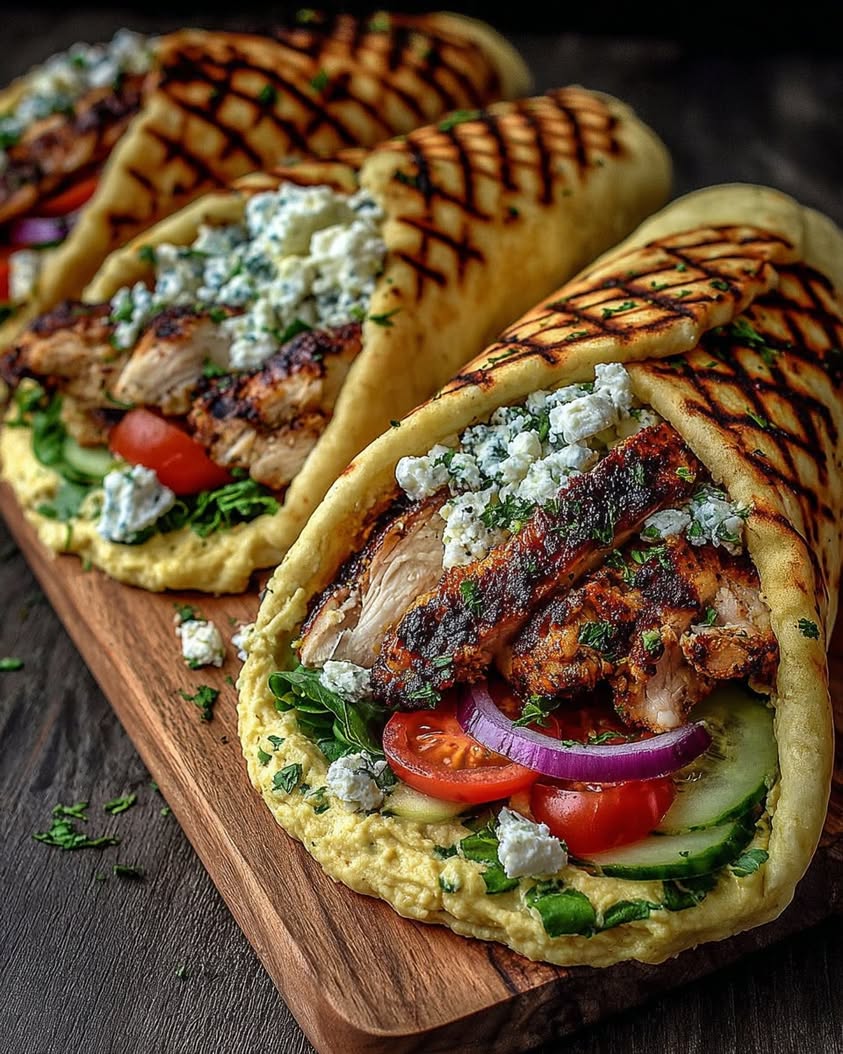
Easy Greek Chicken Wraps with Creamy Hummus: Your New Go-To Lunch
Craving a lunch that’s both incredibly satisfying and refreshingly light? Look no further than these Easy Greek Chicken Wraps with Creamy Hummus. This recipe delivers a vibrant explosion of Mediterranean flavors wrapped up in a convenient, handheld package. Imagine tender, lemon-herb marinated chicken nestled against a generous smear of smooth hummus, all topped with crisp vegetables and tangy feta. Ultimately, it’s a meal that feels indulgent yet is packed with wholesome ingredients.
Furthermore, these Greek Chicken Wraps are the ultimate solution for busy weekdays, effortless meal prep, or a casual weekend lunch. They come together in about thirty minutes, using simple techniques and fresh ingredients you can find at any grocery store. The combination of warm, savory chicken and cool, crunchy veggies creates a perfect textural harmony. As a result, every bite is a delightful contrast that will keep you coming back for more.
Additionally, this dish is incredibly versatile. You can easily customize the fillings based on what you have on hand or your dietary preferences. Serve them as a quick family dinner, pack them for a picnic, or slice them into pinwheels for a party appetizer. In essence, mastering these Easy Greek Chicken Wraps with Creamy Hummus means you have a foolproof, crowd-pleasing recipe in your back pocket for any occasion.
Quick Recipe Highlights
- Flavor Profile: These wraps offer a bright and zesty taste from fresh lemon juice and oregano, balanced by the earthy, savory depth of hummus and briny feta cheese. The garlicky marinade infuses the chicken with authentic Greek character.
- Texture: You’ll enjoy a wonderful contrast between the juicy, tender grilled chicken, the creamy smoothness of the hummus spread, and the satisfying crunch of fresh cucumber, red onion, and lettuce. The soft tortilla wraps everything together perfectly.
- Aroma: While cooking, the kitchen fills with the irresistible scent of garlic, lemon, and herbs sizzling on the chicken. Afterwards, the fresh aroma of diced tomatoes and herbs completes the sensory experience.
- Visual Appeal: These wraps are a feast for the eyes with their colorful fillings of green lettuce, red tomatoes, and purple onion peeking out from the tortilla. A cross-section reveals beautiful layers, making them highly Instagram-worthy.
- Skill Level Needed: This is a beginner-friendly recipe requiring basic skills like chopping vegetables, mixing a simple marinade, and cooking chicken in a skillet or on a grill. No advanced techniques are necessary.
- Special Equipment: You only need a sharp knife, a cutting board, a mixing bowl, and a large skillet or grill pan. A pair of tongs for flipping the chicken is helpful but not essential.
Recipe Overview
- Difficulty Level: We rate this recipe as “Easy” because it involves straightforward, sequential steps with minimal room for error. The marinade is a simple mix, the chicken cooks quickly, and assembly is intuitive. Even novice cooks can achieve fantastic results on their first try.
- Category: This dish fits perfectly into multiple categories: a quick and healthy lunch, a simple dinner, or a make-ahead meal prep option. It’s also excellent for picnics and casual gatherings.
- Cuisine: This recipe draws direct inspiration from the vibrant flavors of the Eastern Mediterranean, specifically Greek cuisine. Key hallmarks include the use of lemon, oregano, garlic, olive oil, feta, and fresh vegetables.
- Cost: Making these Greek Chicken Wraps at home is very cost-effective, especially compared to buying a similar wrap from a restaurant. Chicken breast, vegetables, and tortillas are budget-friendly staples. The hummus can be store-bought or homemade for even greater savings.
- Season: These wraps are truly a year-round favorite. They are light and refreshing for spring and summer lunches but also substantial enough for a fall or winter meal. Using the best seasonal produce will always elevate the final result.
- Occasion: They are ideal for busy weeknight dinners, weekend lunch prep, school or work lunches, picnics, potlucks, and casual game-day gatherings. Their handheld nature makes them exceptionally convenient for eating on the go.
Why You’ll Love This Recipe
First and foremost, the taste and texture combination is absolutely unbeatable. Each component plays a crucial role: the hummus provides a creamy, savory base that keeps the wrap moist, while the marinated chicken delivers a punch of herby, garlicky flavor. Meanwhile, the fresh vegetables add a necessary crunch and brightness that cuts through the richness. Consequently, every single bite is a perfectly balanced medley of creamy, juicy, and crisp textures that will satisfy your cravings completely.
From a convenience standpoint, this recipe is a true lifesaver. It requires minimal active cooking time and uses one main pan for the chicken. Moreover, you can prepare the components ahead of time for effortless assembly later. This makes it an outstanding choice for meal prepping a week’s worth of healthy lunches. Simply store the chopped veggies, cooked chicken, and wraps separately, then assemble each morning for a fresh-tasting meal that beats any sad desk salad.
Nutritionally, these Greek Chicken Wraps are a powerhouse. They offer a complete meal with lean protein from the chicken, healthy fats from the olive oil and hummus, and a wealth of vitamins and fiber from the colorful array of vegetables. Using whole wheat or spinach tortillas can further boost the fiber content. Therefore, you get a meal that is both delicious and nourishing, fueling your body without weighing you down.
For entertaining, these wraps are a fantastic option. They are easy to scale up for a crowd and allow guests to customize their own wraps with a variety of toppings. You can set up a “wrap bar” with bowls of chicken, different hummus flavors, assorted veggies, olives, and sauces. This interactive element makes for a fun, relaxed, and memorable meal with friends and family, without requiring you to be stuck in the kitchen all night.
Finally, the cost-effectiveness and accessibility of this recipe cannot be overstated. The ingredients are common, affordable, and available at any standard supermarket. You likely have many of the pantry staples like olive oil, lemon juice, and dried oregano already on hand. By preparing this meal at home, you save a significant amount of money compared to takeout or restaurant versions, all while controlling the quality and freshness of every ingredient that goes into your body.
Historical Background and Cultural Significance
The concept of wrapping food in flatbread has ancient roots across many cultures, from Mexican tacos to Middle Eastern shawarma. In Greece, the tradition of savory pies and wraps, or “souvlaki in pita,” is a cornerstone of street food culture. Historically, grilled meats seasoned with local herbs like oregano and marinated in lemon and oil have been a staple of the Greek diet for centuries. These flavors developed from the region’s abundant resources—citrus trees, olive groves, and wild herbs growing in the Mediterranean sun.
Culturally, the combination of ingredients in these Greek Chicken Wraps reflects the core principles of the Mediterranean diet, which is celebrated worldwide for its health benefits. This diet emphasizes fresh vegetables, lean proteins, healthy fats, and whole grains. The wrap format itself is a modern, portable interpretation of these timeless principles. It represents a fusion of traditional Greek flavors with the contemporary need for quick, handheld meals, making the cuisine’s virtues accessible to busy modern lives everywhere.
The evolution of this specific recipe is a story of global fusion. While the flavors are authentically Greek, the use of a large flour tortilla as the vessel is a nod to Western convenience. Traditional Greek gyros or souvlaki are served in thicker, smaller pita breads. The inclusion of hummus, while common throughout the Eastern Mediterranean, adds a creamy element that might not be in every traditional street vendor’s wrap. This evolution shows how recipes naturally adapt to incorporate new, beloved ingredients and formats while staying true to their flavorful heart.
Regional variations of this concept abound throughout the Mediterranean. In Turkey, you might find a similar wrap with chicken doner and a yogurt-based sauce. In Lebanon, the chicken would likely be seasoned with baharat and paired with toum (garlic sauce). The beauty of the Greek Chicken Wraps recipe is that it provides a delicious and approachable template. From there, you can explore these regional twists by simply adjusting the spice blend, the protein, or the signature sauce, taking your taste buds on a culinary tour from your own kitchen.
Ingredient Deep Dive
Let’s start with the star: the chicken breast. This lean protein is a fantastic blank canvas for the vibrant Greek marinade. Opt for boneless, skinless breasts of even thickness to ensure they cook uniformly. To guarantee juicy results, avoid overcooking; use a meat thermometer and pull the chicken off the heat at 165°F. If you prefer darker meat, chicken thighs are an excellent, more flavorful substitute. For storage, keep raw chicken in the coldest part of your refrigerator and use within 1-2 days, or freeze for longer storage.
The hummus is the creamy glue that holds everything together. While store-bought hummus is perfectly convenient, making your own allows for complete control over flavor and texture. Traditionally, hummus is made from chickpeas, tahini (sesame seed paste), lemon juice, garlic, and olive oil. It’s rich in plant-based protein, fiber, and healthy fats. For a twist, try roasted red pepper hummus or a lemon-dill variety. Always give store-bought hummus a good stir before using to reincorporate any separated oils.
Fresh vegetables are non-negotiable for texture and freshness. Crisp romaine or green leaf lettuce provides a sturdy base. Juicy tomatoes (Roma or cherry are best as they’re less watery) and crunchy English cucumber add moisture and brightness. Thinly sliced red onion offers a sharp, pungent kick that balances the other flavors. For the best results, chop your vegetables just before assembling to maintain their crispness. You can also add other classics like Kalamata olives or pepperoncini for an extra layer of Greek flavor.
The marinade ingredients are simple but powerful. Extra virgin olive oil carries the flavors and helps the chicken brown beautifully. Fresh lemon juice tenderizes the meat and provides essential acidity. Dried oregano is a hallmark of Greek cooking, but you can use fresh if you have it (use triple the amount). Fresh garlic is irreplaceable for its pungent aroma. Finally, don’t forget salt and pepper—they are crucial for seasoning the chicken throughout, not just on the surface.
Common Mistakes to Avoid
- Skipping the Marinade Time: Rushing the marinating step is a common error. The chicken needs at least 15-20 minutes to absorb the lemon, garlic, and herb flavors. For even better results, marinate for up to 4 hours in the refrigerator. This step is what transforms plain chicken into the star of your Greek Chicken Wraps.
- Overcooking the Chicken: Chicken breast dries out quickly when overcooked. Use a meat thermometer and remove the chicken from the heat as soon as it reaches 165°F internally. Remember, it will continue to cook slightly from residual heat while resting. Slicing it against the grain also ensures tenderness.
- Using Soggy Vegetables: Wet vegetables will make your wrap soggy and difficult to eat. Always pat chopped tomatoes and cucumber dry with a paper towel after washing. Furthermore, assemble the wraps just before eating if possible, especially if you plan to pack them for later.
- Spreading Hummus Incorrectly: Don’t just dollop hummus in the center. Spread it evenly over the entire surface of the tortilla, leaving a small border. This creates a flavorful barrier that helps prevent juices from the chicken and veggies from soaking into the tortilla and causing sogginess.
- Overfilling the Wrap: It’s tempting to pack in all the delicious fillings, but overfilling makes the wrap impossible to roll and eat neatly. Use a moderate amount of each ingredient. The key is balance, not volume. You can always make a second wrap if you’re still hungry.
- Choosing the Wrong Tortilla: A thin, flimsy tortilla will tear under the weight of the fillings. Look for large burrito-size tortillas that are pliable. For best results, you can briefly warm each tortilla in a dry skillet for about 10 seconds per side to make it more flexible and less likely to crack.
- Not Letting the Chicken Rest: Slicing the chicken immediately after cooking causes all the precious juices to run out onto the cutting board, leaving the meat dry. Always let the cooked chicken rest for 5-10 minutes before slicing. This allows the juices to redistribute throughout the meat.
- Forgetting to Season Layers: Seasoning shouldn’t stop at the marinade. Lightly season your chopped vegetables with a pinch of salt and pepper. Even a tiny sprinkle on the tomatoes can elevate their natural sweetness and make the entire wrap taste more cohesive and well-balanced.
Essential Techniques
Marinating for Maximum Flavor: Marinating is crucial for infusing the chicken with the zesty Greek flavors. The acid in the lemon juice gently breaks down surface proteins, allowing the oil, garlic, and herbs to penetrate. To master it, ensure your chicken is in a single layer in a shallow dish or zip-top bag, fully coated with the marinade. A common pitfall is marinating for too long in strong acid, which can make the texture mushy; 4 hours is ample. Success is visible when the chicken has taken on a slightly opaque, seasoned look even before cooking.
Searing and Cooking Chicken to Perfection: Achieving a golden-brown sear on the chicken locks in juices and creates delicious caramelized flavor. Heat your skillet or grill pan over medium-high heat before adding the chicken. Don’t move it for the first few minutes to allow a crust to form. The visual cue for flipping is when the edges look cooked and the chicken releases easily from the pan. Cooking to the correct internal temperature (165°F) is non-negotiable for both safety and juiciness. Letting it rest afterwards is the final, essential step for a tender result.
The Art of the Tight Wrap: A neatly rolled wrap is key to a mess-free eating experience. Start by placing your fillings in the lower third of the tortilla, not the center. Fold the bottom edge up and over the fillings, tucking it under them snugly. Then, fold in the left and right sides. Finally, roll the bundle tightly away from you, keeping tension to create a compact cylinder. The hummus spread acts as a “glue” to help seal the final edge. Practice makes perfect, and a tight roll ensures every bite contains all the delicious components.
Pro Tips for Perfect Greek Chicken Wraps
For the most flavorful chicken, consider marinating it overnight. The longer soak allows the lemon and herbs to penetrate deeper. Just be sure to use a non-reactive container like glass or plastic, as the acid can react with metal.
Warm your tortillas before assembling. A quick 10-second pass in a dry, hot skillet makes them pliable and prevents cracking. Alternatively, wrap them in a damp paper towel and microwave for 15-20 seconds.
Create a moisture barrier with the hummus. Spread it evenly across the entire tortilla surface before adding other ingredients. This layer helps protect the tortilla from becoming soggy from juicy tomatoes and chicken.
Slice all your vegetables uniformly. Consistent chopping ensures every bite has a balanced mix of flavors and textures. It also makes the wrap easier to roll and more visually appealing when cut.
Don’t neglect the resting time for the cooked chicken. Letting it sit for 5-10 minutes before slicing allows the juices to redistribute, guaranteeing every piece is moist and tender, not dry.
If meal prepping, store components separately. Keep the chopped veggies, sliced chicken, and tortillas in their own containers. Assemble your wrap just before eating to maintain the perfect texture contrast.
Experiment with different hummus flavors. While classic is great, roasted garlic, sun-dried tomato, or spicy red pepper hummus can add an exciting new dimension to your Greek Chicken Wraps.
Add a final drizzle. Before taking your first bite, consider a light drizzle of extra virgin olive oil or a squeeze of fresh lemon juice over the fillings. This brightens all the flavors instantly.
Variations and Adaptations
For regional variations, explore the flavors of neighboring cuisines. Try a Turkish twist by seasoning the chicken with paprika, cumin, and sumac, and using a garlic-yogurt sauce instead of hummus. For a Lebanese-inspired version, add a sprinkle of za’atar to the chicken and include pickled turnips. A Cypriot adaptation might include halloumi cheese grilled alongside the chicken. These simple swaps can transport your taste buds across the Mediterranean without changing the core method of the recipe.
Seasonal adaptations are easy and rewarding. In summer, use heirloom tomatoes and fresh basil. For fall, add roasted red peppers or a spoonful of tangy pumpkin seed pesto. In winter, incorporate hearty greens like kale (massaged with lemon to soften). Spring invites the addition of fresh dill, mint, or sliced radishes. Using produce at its peak ensures the brightest flavors and best nutritional value in your Greek Chicken Wraps.
Dietary modifications are straightforward. For a gluten-free version, use your favorite gluten-free wrap or large lettuce leaves like romaine hearts as the vessel. To make it dairy-free, simply omit the feta cheese or use a vegan alternative. For a vegetarian option, replace the chicken with grilled portobello mushrooms, marinated tofu, or chickpea patties. A vegan wrap can combine all these changes, using a plant-based protein and vegan feta.
Flavor variations can keep this recipe exciting. Add a spicy kick with sliced jalapeños or a dash of cayenne in the marinade. For a sweeter note, include a few raisins or chopped dates. Introduce an herby freshness with a handful of chopped mint or dill mixed in with the vegetables. You can also swap the hummus for other Mediterranean spreads like tzatziki, baba ganoush, or muhammara for a completely different profile.
Serving and Presentation Guide
Plating techniques can elevate this casual dish. For a neat presentation, wrap each finished wrap tightly in parchment paper or foil, then slice it in half on a sharp diagonal. Arrange the halves on a plate with the cut side facing up to showcase the colorful layers inside. Alternatively, for a deconstructed presentation, serve all the components in separate bowls or on a large platter, allowing everyone to build their own perfect Greek Chicken Wrap at the table.
Garnishing adds the final touch of professionalism. A light sprinkle of chopped fresh parsley, dill, or oregano over the plated wraps adds color and a burst of fresh aroma. A few extra crumbles of feta cheese or a scattering of Kalamata olives on the plate looks inviting. A small lemon wedge on the side is both functional and decorative, allowing for a last-minute squeeze of brightness.
Traditional accompaniments are simple and complementary. Serve your wraps with a side of crispy Greek-style lemon potatoes, a simple horiatiki (Greek village salad), or a bowl of olives. For a lighter meal, a cup of avgolemono (lemon-egg soup) makes a wonderful starter. These sides round out the meal and deepen the Greek culinary experience.
Modern serving suggestions include turning the wraps into a shareable appetizer. After rolling, slice them into 1-inch thick pinwheels and secure each with a toothpick. Arrange them on a platter for a perfect party snack. For a lunch box, pack the wrap whole or halved alongside some fresh fruit, a handful of pita chips, and a small container of extra hummus for dipping.
Wine and Beverage Pairing
Wine pairings should complement the bright, herbal, and tangy flavors of the wraps. A crisp, dry white wine like Assyrtiko from Santorini is a classic Greek choice that mirrors the lemon notes beautifully. Alternatively, a Sauvignon Blanc with its herbaceous character pairs wonderfully with the oregano and fresh vegetables. For red wine lovers, a light-bodied, low-tannin red like a Beaujolais or a Greek Xinomavro can work if served slightly chilled. The key is to avoid overly oaky or heavy wines that would overwhelm the dish’s freshness.
Non-alcoholic alternatives are equally important. A sparkling lemonade or limeade echoes the citrus in the marinade. Iced herbal teas, such as mint or chamomile, are refreshing and palate-cleansing. For a truly Greek experience, try a glass of chilled sour cherry juice or a fizzy glass of homemade ginger beer. These drinks provide complexity and refreshment without alcohol.
While not traditional post-wrap beverages, coffee and tea can cap off the meal. A strong Greek coffee, served in a small cup, is a digestif that follows the meal’s Mediterranean theme. For tea, a light peppermint or lemon verbena tea would be soothing and complementary. Serve these warm beverages after the meal to aid digestion and provide a relaxing finish.
Storage and Shelf Life
Storage methods are critical for food safety and quality. Store fully assembled wraps tightly wrapped in plastic wrap or aluminum foil in the refrigerator for up to 1 day. However, for best texture, it’s superior to store the components separately. Cooked chicken can be refrigerated in an airtight container for 3-4 days. Chopped vegetables (except tomatoes, which are best chopped fresh) can be stored in separate containers for 2-3 days. Hummus should be kept in its sealed container.
Temperature requirements are strict. All perishable components must be kept refrigerated at 40°F or below. If transporting the wraps, use an insulated lunch bag with a cold pack, especially if they will be unrefrigerated for more than 2 hours. Never leave assembled wraps containing chicken and dairy at room temperature for extended periods.
Signs of spoilage include an off or sour smell, a slimy texture on the chicken or vegetables, or visible mold. If the tortilla becomes unpleasantly soggy or the fillings taste fermented, discard the wrap immediately. When in doubt, it is always safer to throw it out.
Reheating instructions apply only to the chicken component. Reheat sliced chicken gently in a skillet over medium-low heat with a splash of water or chicken broth to prevent drying out, or microwave in 30-second intervals. Do not reheat an entire assembled wrap, as the vegetables will become wilted and the tortilla gummy.
Make Ahead Strategies
Prep timeline can turn this into a 5-minute assembly job. Up to 2 days ahead, mix the chicken marinade and store it in a bag in the fridge. Chop vegetables (except tomatoes) and store them in airtight containers. You can even cook the chicken 1-2 days in advance. On the day of serving, simply slice the chicken, chop the tomatoes, warm the tortillas, and assemble. This strategy is perfect for busy weekdays or entertaining.
Storage between steps is simple with proper containers. Use glass or BPA-free plastic containers with tight-fitting lids. Keep wetter ingredients like tomatoes and cucumbers separate from drier ones like lettuce. Store the chicken in its own container with any accumulated juices to help keep it moist. Label containers with dates to track freshness.
Quality impact assessment is important. Pre-chopped vegetables may lose a slight amount of crispness but are still excellent. Cooked and refrigerated chicken retains its flavor well. The only component that must be absolutely fresh is the tomato, as pre-chopped tomatoes become watery and can spoil faster. Assembling just before eating guarantees the ideal textural experience for your Greek Chicken Wraps.
Scaling Instructions
Halving the recipe is simple for smaller households. Use one chicken breast, half the marinade ingredients, and reduce vegetables proportionally. Cooking time will be slightly less due to less crowding in the pan. All other steps remain identical. This is a great way to avoid leftovers if you’re cooking for one or two.
Doubling or tripling the recipe for a crowd is easy. Use a larger bowl for marinating or multiple bags. Cook the chicken in batches to avoid steaming it; do not overcrowd the pan. Keep cooked batches warm in a low oven (200°F) on a sheet pan while you finish the rest. Set up an assembly line for wrapping to streamline the process when feeding a group.
Nutritional Deep Dive
A typical Greek Chicken Wrap provides a balanced macronutrient profile. The chicken offers high-quality, lean protein essential for muscle repair and satiety. The hummus and olive oil contribute healthy monounsaturated fats, which support heart health. The whole wheat tortilla and vegetables provide complex carbohydrates and fiber for sustained energy. This combination helps regulate blood sugar levels and keeps you feeling full and satisfied for hours after your meal.
The micronutrient analysis is impressive. Tomatoes and red peppers are rich in vitamin C and lycopene, a powerful antioxidant. Cucumbers provide hydration and silica. Red onions contain quercetin, which has anti-inflammatory properties. Olive oil is a source of vitamin E. Together, these ingredients make the wrap not just a meal, but a nutrient-dense contribution to your overall health, supporting everything from skin health to immune function.
Dietary Adaptations
For a gluten-free version, simply replace the standard flour tortilla with a certified gluten-free wrap, a large lettuce leaf like romaine or butter lettuce, or even a gluten-free pita if you can find one. Ensure all other packaged ingredients, like hummus, are labeled gluten-free, as cross-contamination can occur.
To make it dairy-free, omit the feta cheese entirely. The wrap is still incredibly flavorful without it. For a creamy, tangy element in place of feta, add a dollop of dairy-free tzatziki made with coconut yogurt, or include a few sliced Kalamata olives for that briny punch.
A vegan adaptation is very achievable. Replace the chicken with marinated and grilled extra-firm tofu, tempeh, or a chickpea salad. Use a vegan feta alternative or omit it. Ensure your hummus and tortillas are vegan (check for dairy or honey in ingredients). The result is a completely plant-based wrap that’s just as satisfying and flavorful.
Troubleshooting Guide
If your wrap is soggy, you likely assembled it too far in advance or used vegetables that weren’t patted dry. For next time, ensure tomatoes and cucumbers are thoroughly dried after washing. Assemble closer to eating time, and use the hummus as a moisture barrier by spreading it edge-to-edge on the tortilla. If packing for lunch, pack the dry components and wet components separately.
If the chicken is dry, it was likely overcooked. Invest in an instant-read meat thermometer and pull the chicken at 165°F. Letting it rest before slicing is non-negotiable. If you’ve already cooked it, try shredding the dry chicken and mixing it with a tablespoon of Greek yogurt or extra hummus to add moisture back before using it in the wrap.
If the flavors taste bland, the issue is likely underseasoning. Remember to season every layer: the marinade should be well-salted, and the vegetables can benefit from a tiny pinch of salt and pepper. Don’t be shy with the fresh herbs. Finally, a final squeeze of lemon juice over the assembled fillings just before rolling can brighten all the flavors instantly.
Frequently Asked Questions
Q: Can I use chicken thighs instead of breasts?
A: Absolutely. Chicken thighs are more forgiving and flavorful due to their higher fat content. They may require a slightly longer cooking time. Ensure they reach an internal temperature of 165°F. Their richer flavor pairs wonderfully with the bright Greek marinade.
Q: How long can I store the marinated chicken in the fridge?
A: You can safely marinate the chicken in the refrigerator for up to 24 hours. For the best texture, we recommend a minimum of 20 minutes and a maximum of 4-6 hours, as the lemon juice can start to break down the proteins and make the texture slightly mushy if left too long.
Q: What’s the best way to warm the tortillas?
A: The best method is a dry skillet over medium heat for about 10-15 seconds per side. This gives them a slight toast and makes them pliable. You can also wrap a stack in a damp paper towel and microwave for 20-30 seconds. Avoid overheating, as they can become tough.
Q: Can I make these wraps ahead for meal prep?
A: Yes, but for the best texture, prep the components separately. Store cooked sliced chicken, chopped veggies (keep tomatoes separate), and tortillas in their own containers. Assemble your wrap just before eating to prevent a soggy tortilla. Pre-assembled wraps are best eaten within 24 hours.
Q: What can I use instead of hummus?
A: Tzatziki sauce is a classic Greek alternative that adds a cool, creamy tang. Baba ganoush (roasted eggplant dip) would also be delicious. For a lighter option, try mashed avocado with a squeeze of lemon. Any spread you enjoy will work as the flavorful base.
Q: Is there a way to make this recipe lower in carbs?
A: For a lower-carb version, skip the tortilla altogether and serve the chicken and vegetable mixture as a salad over a bed of lettuce. You can also use large, sturdy lettuce leaves like romaine hearts or butter lettuce as your wrap “vessel.” This creates a fresh, crunchy, and carb-conscious meal.
Additional Resources
If you loved these Greek Chicken Wraps, explore other Mediterranean-inspired recipes on our site. Try our classic Greek Lemon Potatoes, a simple Horiatiki Salad, or a creamy homemade Tzatziki sauce recipe. For another wrap idea, our Mediterranean Veggie Wrap with Lemon Tahini Dressing is a fantastic vegetarian option. These recipes share the same philosophy of fresh, vibrant ingredients and simple preparation.
For technique guides that will help you master this and other recipes, check out our posts on “How to Cook Juicy Chicken Breast Every Time,” “Knife Skills 101: Chopping Vegetables Efficiently,” and “The Ultimate Guide to Marinades.” Building these foundational skills will make your time in the kitchen more enjoyable and your results consistently delicious.
PrintGreek Chicken Wraps with Hummus
- Total Time: 30 minutes
- Yield: 4
Description
A fresh and flavorful wrap featuring grilled chicken, creamy hummus, and crisp vegetables, all wrapped in a warm tortilla for a quick and healthy meal.
Ingredients
- 1 lb boneless, skinless chicken breasts, sliced into strips
- 2 tbsp olive oil
- 1 tsp dried oregano
- 1/2 tsp garlic powder
- Salt and black pepper to taste
- 4 large flour tortillas
- 1 cup hummus
- 1 cup cherry tomatoes, halved
- 1 cucumber, diced
- 1/2 red onion, thinly sliced
- 1/2 cup Kalamata olives, pitted and halved
- 1/2 cup crumbled feta cheese
- Fresh parsley for garnish
Instructions
- Season the chicken strips with olive oil, oregano, garlic powder, salt, and pepper. Grill or pan-sear over medium-high heat for 5-7 minutes per side until cooked through and golden.
- Warm the tortillas in a dry skillet or microwave for 20-30 seconds until pliable.
- Spread a generous layer of hummus evenly over each tortilla.
- Divide the cooked chicken, cherry tomatoes, cucumber, red onion, Kalamata olives, and feta cheese among the tortillas.
- Garnish with fresh parsley, then tightly roll each tortilla into a wrap, tucking in the sides as you go.
- Serve immediately, or wrap in foil for easy handling and storage.
Notes
You can customize the seasonings to taste.
- Prep Time: 15 minutes
- Cook Time: 15 minutes
- Method: Main
- Cuisine: Greek