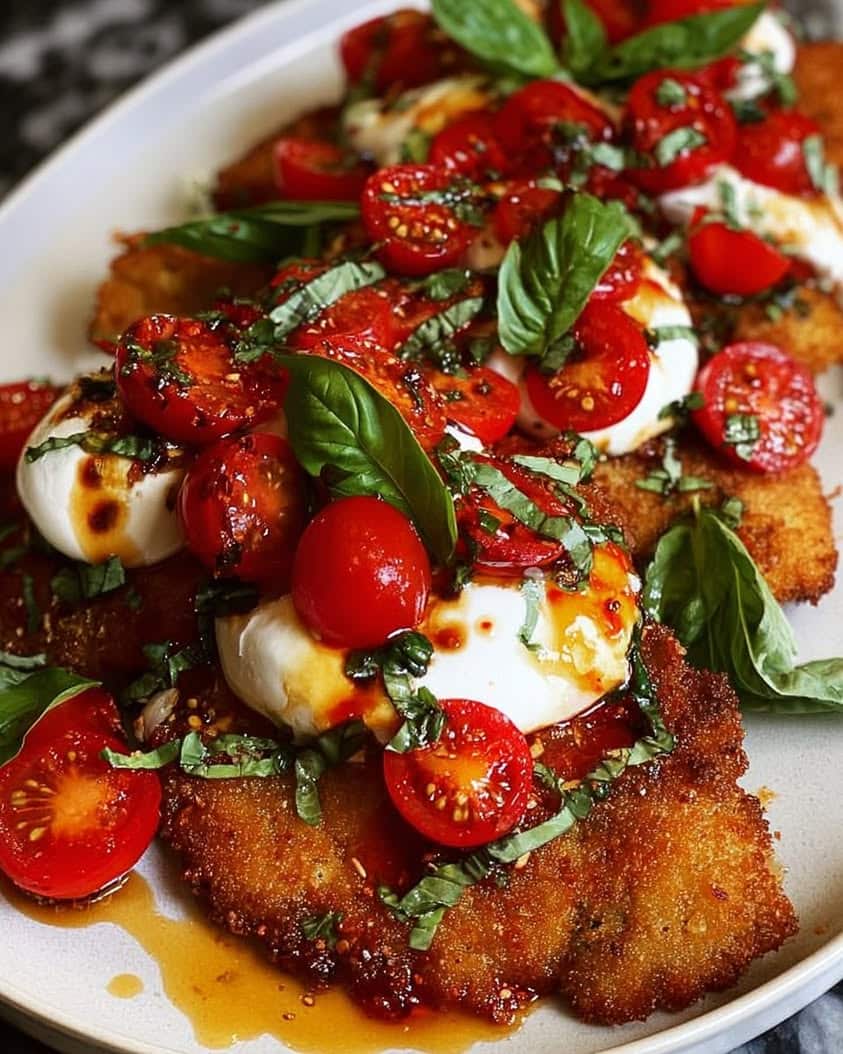
Italian Basil Chicken Cutlets with Tomato and Burrata Topping: A Restaurant-Quality Dinner in 30 Minutes
Imagine a dish that brings the vibrant soul of an Italian summer directly to your dinner table, even on the busiest weeknight. This recipe for Italian Basil Chicken Cutlets with Tomato and Burrata Topping delivers exactly that. It masterfully combines juicy, pan-seared chicken with a bright, fresh tomato salad and the luxurious creaminess of burrata cheese. Consequently, you get a meal that feels both indulgent and surprisingly simple to prepare. The key lies in the harmony of textures and flavors, from the crisp, golden exterior of the chicken to the cool, milky center of the cheese.
This Italian Basil Chicken Cutlets with Tomato and Burrata Topping recipe is a celebration of high-quality, simple ingredients. Each component plays a vital role. For instance, the chicken cutlets are pounded thin for quick, even cooking and coated in a fragrant basil-parmesan crust. Meanwhile, the tomato topping is a quick, no-cook mixture that bursts with the flavors of ripe tomatoes, garlic, and fresh herbs. Finally, the crowning glory is a ball of fresh burrata, its creamy stracciatella interior spilling out over the warm chicken to create a dreamy, restaurant-worthy sauce. Ultimately, this dish proves that impressive meals don’t require hours in the kitchen.
Furthermore, this recipe is incredibly versatile. You can easily serve it for a casual family dinner or plate it elegantly for guests. Pair it with a simple arugula salad, some crusty bread to soak up the juices, or a side of roasted potatoes. The beauty of these Italian Basil Chicken Cutlets with Tomato and Burrata Topping is their ability to adapt to any occasion. They are a guaranteed crowd-pleaser that will have everyone asking for seconds. Let’s dive into how you can create this stunning dish at home.
Quick Recipe Highlights
- Flavor Profile: This dish offers a beautiful balance of savory, fresh, and creamy notes. The chicken is savory and herbaceous from the basil and parmesan, while the tomato topping is bright and acidic. The burrata adds a rich, milky creaminess that ties everything together perfectly.
- Texture: You’ll experience a wonderful contrast of textures. The chicken cutlets have a delightfully crisp, golden crust that gives way to tender, juicy meat. The tomatoes are juicy and fresh, and the burrata provides an irresistibly soft, creamy element that melts on the tongue.
- Aroma: As the chicken cooks, your kitchen will fill with the irresistible scent of garlic, toasted parmesan, and fresh basil. The aroma is distinctly Italian and incredibly inviting, promising a delicious meal to come.
- Visual Appeal: This plate is a feast for the eyes with its vibrant colors. The golden-brown chicken is topped with the bright red of the tomatoes and the snowy white of the burrata, all accented by green flecks of fresh basil. It looks professionally plated with minimal effort.
- Skill Level Needed: This is a fantastic recipe for cooks of all levels. The techniques involved—pounding chicken, making a simple breading, and preparing a fresh salad—are fundamental. With clear instructions, even a beginner can achieve fantastic results.
- Special Equipment: You need only basic kitchen tools: a meat mallet or rolling pin to pound the chicken, a large skillet for frying, and a few mixing bowls. A sharp knife for chopping tomatoes and herbs is also essential for prep work.
Recipe Overview
- Difficulty Level: We rate this recipe as “Easy” because it uses straightforward techniques. Pounding chicken thin is simple, and the breading process is a standard dredge in flour, egg, and a parmesan-basil mixture. The tomato topping requires no cooking, just chopping and mixing. Overall, the steps are logical and manageable for a weeknight.
- Category: This dish fits perfectly into several categories. It is a fantastic main course protein for dinner. Additionally, it can be considered a quick and easy weeknight meal. For entertaining, it serves as an impressive yet simple entrée for guests.
- Cuisine: The recipe is firmly rooted in Italian cuisine, drawing inspiration from the classic combination of tomato, basil, and fresh cheese seen in dishes like Caprese salad. The use of burrata, a cheese from the Puglia region, and the focus on fresh, high-quality ingredients are hallmarks of Italian cooking.
- Cost: This is a moderately priced meal that feels luxurious. Chicken cutlets are an affordable protein. While burrata can be more expensive than other cheeses, a little goes a long way. Fresh tomatoes and basil are seasonal and cost-effective. You can create a restaurant-quality dish for a fraction of the price of dining out.
- Season: This recipe shines brightest in late summer when tomatoes and basil are at their peak flavor and most affordable. However, thanks to year-round availability of decent greenhouse tomatoes and herbs, you can successfully make this comforting dish any time of year.
- Occasion: It’s incredibly versatile for different occasions. It’s quick enough for a Tuesday family dinner yet elegant enough for a date night at home or a small dinner party with friends. The presentation is always a winner.
Why You’ll Love This Recipe
First and foremost, the taste and texture combination is absolutely divine. Each bite of these Italian Basil Chicken Cutlets with Tomato and Burrata Topping delivers a symphony of sensations. You get the savory, crispy chicken, the juicy burst of tomato, and the unbelievably creamy, cool burrata. This contrast keeps every mouthful interesting and deeply satisfying. The flavors are clean, bright, and balanced, making you feel like you’re eating something both wholesome and indulgent. It’s a dish that appeals to a wide range of palates, from kids to gourmet food lovers.
From a practical standpoint, the convenience factor is a major win. This entire meal comes together in about 30 minutes from start to finish. The prep work is simple and mostly involves chopping and mixing. Because the chicken cutlets are pounded thin, they cook in just a few minutes per side. Consequently, you can have a spectacular dinner on the table in the time it would take to order and wait for delivery. The recipe also uses mostly pantry staples, with only a few fresh items to pick up.
Nutritionally, this dish offers a well-rounded profile. Chicken breast is a fantastic source of lean protein, essential for muscle repair and keeping you full. Tomatoes are packed with vitamins, antioxidants like lycopene, and fiber. Fresh basil adds not just flavor but also beneficial plant compounds. While burrata is richer, it provides calcium and protein. When served with a side of vegetables or a salad, this meal is a balanced and satisfying choice for any health-conscious eater.
For social and entertaining value, this recipe is a true gem. It looks incredibly impressive when plated, giving the appearance of a chef-crafted meal. Guests will be wowed by the presentation and flavors. Moreover, because it’s not overly complicated, you can spend less time stressing in the kitchen and more time enjoying your company. You can even do much of the prep ahead of time, making the final assembly a breeze when your guests arrive.
Finally, it’s cost-effective and accessible. Creating this Italian Basil Chicken Cutlets with Tomato and Burrata Topping at home is significantly cheaper than ordering a similar dish at a restaurant. The ingredients are easy to find at any standard grocery store. You have full control over the quality of everything you use, from organic chicken to heirloom tomatoes. This recipe empowers you to create a luxurious dining experience in your own home without breaking the bank.
Historical Background and Cultural Significance
The story of this dish is a beautiful fusion of Italian culinary traditions. It doesn’t have a single, ancient origin story but rather evolves from classic pairings deeply embedded in Italian food culture. The combination of tomato, basil, and fresh cheese is iconic, most famously showcased in the Insalata Caprese from the island of Capri. That salad, representing the colors of the Italian flag with red tomato, white mozzarella, and green basil, is a testament to the Italian philosophy of celebrating fresh, local ingredients in their simplest, most perfect form.
Culturally, the use of chicken as a protein in this context reflects a more modern, global interpretation of Italian cooking. Traditionally, Italian cuisine features a wide variety of proteins, but chicken has always been a staple in home cooking due to its versatility and affordability. Dishes like chicken piccata or saltimbocca showcase how Italians prepare poultry with bright, acidic flavors and herbs. This recipe takes that approach and combines it with the beloved Caprese elements, creating a hearty main course.
The evolution of the recipe is also tied to the rise in popularity of burrata. While mozzarella has been made for centuries, burrata is a relatively newer invention from the early 20th century in the Puglia region. It was created as a way to use up the scraps (stracciatella) from mozzarella production, encasing them in a fresh mozzarella pouch. Its luxurious, creamy texture has made it a darling of the culinary world in recent decades. Using burrata instead of standard mozzarella in a dish like this is a contemporary twist that elevates the eating experience.
Regional variations of this concept abound throughout Italy. In the north, you might find a similar dish using veal instead of chicken. In coastal regions, fresh seafood could be substituted. The tomato salad topping might include olives or capers in Sicily, or a drizzle of aged balsamic in Modena. This adaptability is a hallmark of Italian cuisine—respecting the foundation of flavor while allowing local ingredients and preferences to shine. Our version is a accessible, week-friendly take on this beautiful culinary tradition.
Ingredient Deep Dive
Chicken Breast Cutlets: Chicken breast is a lean, versatile canvas that absorbs flavors beautifully. For this recipe, pounding them into cutlets is crucial. This technique ensures quick, even cooking and prevents the outside from burning before the inside is done. It also tenderizes the meat. Look for plump, evenly-sized breasts. To save time, you can often find pre-sliced or pre-pounded chicken cutlets at the meat counter. Nutritionally, they are an excellent source of high-quality protein and B vitamins. For storage, keep raw chicken in the coldest part of your refrigerator and use within 1-2 days, or freeze for longer storage.
Fresh Basil: More than just a garnish, basil is the soul of this dish. Its name derives from the Greek word for “king,” and it has been revered for centuries for its aroma and purported medicinal properties. In Italian cuisine, it’s inseparable from tomato. The volatile oils that give basil its incredible scent are most potent when the leaves are fresh and torn, not cut with a knife. For the best flavor, choose vibrant green bunches without black spots. Store basil like a bouquet of flowers—stems in water at room temperature, not in the cold fridge where it turns black.
Burrata Cheese: Burrata is the star that makes this dish feel decadent. Originating from Puglia, it consists of a delicate outer shell of fresh mozzarella filled with soft, stringy curds and cream (stracciatella). The name means “buttered” in Italian, hinting at its rich texture. It’s highly perishable and best consumed within a day or two of purchase. Always buy it fresh from the cheese counter if possible, and let it come to room temperature before serving to maximize its creamy texture. If you can’t find burrata, fresh mozzarella (mozzarella di bufala is ideal) is a perfect substitute.
Ripe Tomatoes: The tomato topping relies on the quality of your tomatoes. In summer, use any ripe, in-season variety like Roma, beefsteak, or heirloom. Their natural sweetness and acidity are irreplaceable. Off-season, cherry or grape tomatoes are a reliable choice as they tend to have better flavor year-round. Tomatoes are rich in lycopene, an antioxidant linked to many health benefits. Never refrigerate ripe tomatoes, as the cold damages their texture and flavor. Store them stem-side down on your counter until ready to use. The simple marination with olive oil, garlic, and salt helps to draw out their juices and create a light sauce.
Parmesan Cheese: Used in the breading, Parmesan (Parmigiano-Reggiano) adds a deep, savory, umami flavor and helps create a wonderfully crisp crust. This hard cheese, aged for months or even years, is a cornerstone of Italian cooking. Always grate it fresh from a block for the best melting quality and flavor; pre-grated cheese often contains anti-caking agents that can make it gummy. It’s a good source of calcium and protein. For a dairy-free version, you could use nutritional yeast or a vegan parmesan alternative, though the flavor profile will change.
Common Mistakes to Avoid
- Not Pounding the Chicken Evenly: Uneven cutlets will cook unevenly. The thin parts will become dry and overcooked while the thick parts remain undercooked. Always pound between plastic wrap to an even 1/4-inch thickness for consistent results.
- Skipping the Resting Step for the Tomato Topping: Mixing the tomatoes with salt, garlic, and oil and letting them sit for 10-15 minutes is not optional. This step draws out the tomatoes’ natural juices, creating a flavorful “sauce” that melds the flavors together. Rushing this means a drier, less cohesive topping.
- Using Cold Burrata: Serving burrata straight from the refrigerator mutes its flavor and makes the texture too firm. Always let it sit on the counter for 20-30 minutes before serving to allow its creamy center to become luxuriously soft and spreadable.
- Overcrowding the Pan: Frying too many chicken cutlets at once will steam them instead of searing them, resulting in a soggy, pale crust. Cook in batches if necessary, and make sure there is space between each piece for proper browning.
- Moving the Chicken Too Soon: After placing the breaded chicken in the hot oil, resist the urge to move it around. Let it cook undisturbed for 2-3 minutes to form a proper golden crust that will release easily from the pan. Flipping too early will tear the coating.
- Using Dried Basil in the Breading: The flavor of dried basil is completely different from fresh and can taste dusty and muted. This recipe relies on the bright, aromatic punch of fresh basil. If you must substitute, use another fresh herb like parsley or oregano.
- Not Seasoning Every Layer: Season the flour for dredging. Season the tomato topping. Season the chicken itself lightly with salt and pepper before breading. Building layers of seasoning is what creates a deeply flavorful final dish.
- Cutting the Burrata Too Early: Cut or tear the burrata just before placing it on the hot chicken. If you cut it ahead of time, the precious creamy interior will leak out and be lost. The visual drama of cutting into it at the table is part of the experience.
Essential Techniques
Pounding Chicken Cutlets: This technique ensures quick, even cooking and tenderizes the meat. Place a chicken breast half between two sheets of plastic wrap or in a large zip-top bag. Using the flat side of a meat mallet or a rolling pin, pound from the center outward until the meat is an even 1/4-inch thickness. Be firm but controlled—you want to flatten it, not pulverize it. The plastic wrap prevents tearing and keeps your workspace clean. Uniform thickness is the visual cue for success; you shouldn’t see any thick, lumpy areas.
The Standard Breading Procedure (Dredging): This three-step process creates the crispy, flavorful crust. Set up three shallow dishes: one with seasoned flour, one with beaten eggs, and one with the breadcrumb-Parmesan-basil mixture. Use one hand for the dry ingredients (flour and breadcrumb mix) and the other for the wet egg. This keeps your fingers from becoming a clumpy mess. Dredge the chicken in flour, shaking off excess. Then dip in egg, letting excess drip off. Finally, press firmly into the breadcrumb mix to coat. The key is a firm press to ensure adhesion.
Pan-Frying to Golden Perfection: Use a large, heavy-bottomed skillet (like cast iron or stainless steel) and enough oil to lightly coat the bottom. Heat the oil over medium-high heat until it shimmers. To test, flick a tiny bit of flour into the pan; it should sizzle gently. Add the breaded chicken. It should sizzle immediately. Cook without moving for 2-3 minutes until deeply golden brown, then flip. The crust should release easily when it’s ready. If it sticks, it needs more time. Proper heat management prevents a greasy or burnt crust.
Maceration (for the Tomatoes): This is the simple process of drawing out juices and flavor with salt. Chopping the tomatoes and combining them with salt, garlic, and olive oil, then letting them sit, breaks down the tomato cells slightly. Consequently, they release their liquid, which combines with the oil and garlic to form a quick, flavorful dressing. The salt also seasons the tomatoes from within. Letting this mixture rest for at least 10 minutes is non-negotiable for the best texture and sauce-like quality.
Pro Tips for Perfect Italian Basil Chicken Cutlets with Tomato and Burrata Topping
First, for the crispiest crust, let the breaded chicken cutlets rest on a wire rack for 5-10 minutes before frying. This allows the coating to set and adhere better, reducing the chance of it falling off in the pan.
Second, use a mix of olive oil and a neutral oil with a high smoke point, like avocado or grapeseed oil, for frying. The olive oil adds flavor, while the other oil prevents burning at the medium-high heat needed for a good sear.
Third, after frying, place the cooked chicken on a clean wire rack set over a baking sheet instead of on paper towels. This keeps the bottom crust crisp by allowing air to circulate, preventing steam from making it soggy.
Fourth, add a splash of red wine vinegar or balsamic glaze to the tomato mixture just before serving. A touch of acidity will brighten the entire dish and cut through the richness of the cheese and chicken beautifully.
Fifth, if your burrata seems very liquidy inside, place it in a small bowl after cutting. Then, spoon the creamy stracciatella over the chicken and place the outer shell on top. This ensures you get every last bit of that luxurious cream.
Sixth, garnish with not just whole basil leaves, but also a flaky sea salt like Maldon on the burrata and tomatoes. The subtle crunch and burst of salt elevate the fresh flavors to a new level.
Seventh, warm your serving plates slightly. Placing the hot chicken on a warm plate helps maintain its temperature, especially once topped with the cool tomatoes and cheese, creating a more enjoyable eating experience.
Eighth, reserve a little fresh basil. Add some torn leaves to the tomato mixture, but save a few perfect whole leaves for garnish after plating. The vibrant green on top makes the dish look instantly restaurant-ready.
Variations and Adaptations
For regional variations, consider a Sicilian twist by adding chopped olives and capers to the tomato topping. A Northern Italian version might use a thin veal scaloppine instead of chicken. For a coastal feel, try this preparation with large, pan-seared sea scallops or a firm white fish like cod.
Seasonal adaptations are easy. In spring, use a mix of cherry tomatoes and sliced strawberries with a balsamic reduction. For fall, roast chunks of butternut squash and red onion to serve alongside the chicken instead of the fresh tomato salad. In winter, a quick sauté of chopped canned San Marzano tomatoes with garlic and red pepper flakes makes a warm, comforting topping.
Dietary modifications are straightforward. For gluten-free, use almond flour or a GF all-purpose blend in place of regular flour and GF breadcrumbs. For dairy-free, omit the Parmesan from the breading (add nutritional yeast for flavor) and substitute the burrata with a vegan mozzarella or a dollop of creamy vegan ricotta.
Flavor variations can take this dish around the world. Add lemon zest to the breadcrumb mixture for a brighter note. Mix harissa paste into the tomato topping for a North African kick. For an American twist, use a panko and ranch seasoning crust and top with a cool, creamy bacon and tomato salad.
Texture modifications can cater to different preferences. For extra crunch, use panko breadcrumbs instead of regular. For a softer, more polenta-like crust, use finely ground cornmeal in the breading mixture. You could also skip breading altogether and simply season and sear the chicken, letting the toppings provide all the texture contrast.
Presentation alternatives offer fun ways to serve. Slice the cooked chicken and arrange it on a platter topped with the tomato salad and torn burrata for family-style serving. For individual appetizers, make mini chicken cutlets and top each with a spoonful of tomato and a small piece of burrata. You can also serve the components deconstructed in a bowl with the chicken on the side.
Serving and Presentation Guide
Plating is key to making this dish look spectacular. Place one warm chicken cutlet slightly off-center on a dinner plate. Spoon a generous amount of the tomato mixture and its juices over the top, allowing some to pool around the chicken. Place the whole burrata ball (or half, if large) beside or on top of the chicken. Just before serving, use a sharp knife to cut open the burrata, letting the cream spill out. This creates an instant “wow” factor.
Garnishing adds the final touch of freshness and color. Scatter whole or torn fresh basil leaves over everything. A drizzle of high-quality extra virgin olive oil or a balsamic glaze adds shine and depth. A few cracks of black pepper and a pinch of flaky sea salt on the tomatoes and burrata finish the plate perfectly.
For traditional accompaniments, keep it simple. A side of garlic sautéed spinach, a simple arugula salad with lemon vinaigrette, or roasted asparagus are perfect. Most importantly, serve with plenty of crusty bread or grilled ciabatta to soak up the delicious tomato juices and creamy burrata stracciatella left on the plate.
Modern serving suggestions might include pairing it with a chilled farro salad with herbs, or serving it over a bed of creamy polenta. For a low-carb option, a large portion of zucchini noodles or a cauliflower puree makes an excellent base to catch all the flavors.
Temperature considerations are important for balance. The chicken should be served hot, straight from the pan. The tomato topping should be at cool room temperature. The burrata should also be at room temperature, not cold. This contrast between hot, cool, and creamy is what makes each bite so dynamic and satisfying.
Portion control is easy with this recipe. One chicken cutlet per person is standard. If serving heartier appetites or fewer sides, you can plan for one and a half cutlets. The rich burrata and flavorful tomatoes are very satisfying, so a little goes a long way in making the meal feel complete and luxurious.
Wine and Beverage Pairing
Wine pairings for this dish should complement its fresh, herbal, and creamy elements. A crisp, medium-bodied Italian white wine is the classic choice. Look for a Vermentino from Sardinia or a Falanghina from Campania; their bright acidity and citrus notes cut through the richness beautifully. A Pinot Grigio from Alto Adige, which is lean and mineral-driven, also works well. If you prefer red, opt for a light, low-tannin red served slightly chilled, like a Valpolicella Classico or a Frappato from Sicily. These won’t overpower the delicate chicken and fresh tomatoes.
For non-alcoholic alternatives, think of beverages that offer refreshment and a touch of acidity. A sparkling lemonade or a basil-infused iced tea mirrors the herbal notes in the dish. A tart cherry or pomegranate spritzer made with club soda provides a fruity counterpoint. Even a simple glass of chilled, high-quality mineral water with a slice of lemon can be the perfect palate cleanser between bites.
While not traditional post-dinner pairings for this meal, if you’re enjoying it for a leisurely lunch, consider the coffee or tea you might have afterward. A light roast coffee with bright, citrusy notes would be harmonious. For tea, a green tea like Sencha or a floral herbal tea like chamomile would be a gentle, soothing finish that doesn’t clash with the meal’s flavors.
Temperature is crucial for all beverage pairings. White wines and non-alcoholic spritzers should be well-chilled, around 45-50°F. Light reds should be served at a cool cellar temperature, around 55-60°F, which often means about 15 minutes in the fridge. Iced teas and lemonades should be cold but not so icy that they numb the palate.
Serving suggestions include pouring wines just before you sit down to eat. For non-alcoholic options, consider serving them in a nice pitcher with fresh herb garnishes or citrus slices to make them feel special. Always offer water alongside any other beverage to keep everyone hydrated and to cleanse the palate fully.
Storage and Shelf Life
Storage methods must account for the different components. Store leftover cooked chicken, tomato topping, and burrata separately in airtight containers in the refrigerator. Combining them before storage will make the chicken soggy and the tomatoes mushy. The breaded, uncooked chicken can be prepared ahead and stored on a parchment-lined tray in the fridge for up to 4 hours before cooking.
Temperature requirements are standard refrigerator temperatures, at or below 40°F. The burrata is the most perishable item and should be consumed within 1-2 days of opening. The cooked chicken will last 3-4 days, and the tomato topping is best within 2 days as it will continue to release liquid.
Container recommendations include shallow containers for the chicken to allow it to cool quickly and prevent condensation. Use a glass or plastic container with a lid for the tomato mixture to contain the juices. Keep the burrata in any liquid it came in, in its original container if possible, or submerged in fresh water in a sealed container.
Signs of spoilage include an off or sour smell from any component, especially the dairy. The tomato mixture may become excessively watery or develop a fermented smell. The chicken should be reheated until steaming hot throughout. If the burrata’s outer shell becomes slimy or the interior develops an acidic taste, it should be discarded.
Reheating instructions apply only to the chicken. Reheat in a 350°F oven on a wire rack set over a baking sheet for about 10 minutes, or until hot. You can also reheat gently in a skillet with a tiny bit of oil. Avoid the microwave, as it will make the crust very soggy. The tomatoes and burrata should be served cold or at room temperature.
Freezing is not recommended for the assembled dish or for the burrata. You can freeze the cooked, plain chicken cutlets before adding toppings. Let them cool completely, wrap individually in plastic, and place in a freezer bag for up to 2 months. Thaw in the refrigerator overnight and reheat in the oven to help restore some crispness.
Make Ahead Strategies
An efficient prep timeline can turn this into a 10-minute weeknight meal. The day before or in the morning, pound the chicken cutlets and store them layered between parchment in the fridge. Prepare the breading stations (flour, egg, breadcrumb mix) in separate containers. Chop the tomatoes and garlic for the topping and store them together (without salt and oil) in the fridge. This leaves only breading, frying, and assembling to do at dinner time.
Storage between steps is simple. Keep the prepped chicken on a plate, covered, in the fridge. The dry breading mixture can sit at room temperature. The beaten egg should be kept refrigerated until ready to use. The chopped tomatoes and garlic can be refrigerated for up to 24 hours. Wait to add salt, oil, and basil to the tomatoes until you’re ready to let them macerate, ideally 15-30 minutes before serving.
Assessing quality impact is important. Pre-breading the chicken and storing it for more than a few hours can make the coating gummy as the moisture from the chicken seeps into it. For best results, bread the chicken just before cooking. The tomato flavor actually improves with a short maceration, but letting it sit for more than an hour can make it too watery.
Assembly tips for serving a crowd: Cook the chicken in batches and keep it warm on a wire rack in a 250°F oven. Prepare the tomato topping and let it sit at room temperature. Take the burrata out of the fridge to warm up. When ready to serve, plate the warm chicken, top with tomatoes and their juices, and add the burrata. This keeps everything at its ideal temperature and texture.
Reheating guidelines for make-ahead chicken are specific. If you cooked the chicken ahead, reheat it in a single layer on a baking sheet in a 375°F oven for 5-8 minutes. This will re-crisp the exterior better than a microwave. Always add the fresh, cool toppings after reheating.
Fresh element additions are what make the dish sing. No matter how much you prep ahead, always add the fresh basil to the tomatoes at the last minute to preserve its color and aroma. Always cut the burrata at the last second. A final drizzle of fresh, high-quality olive oil just before serving adds a burst of flavor that pre-drizzled oil loses.
Scaling Instructions
Halving the recipe is straightforward for a smaller meal. Use one large chicken breast, pounded and cut into two cutlets. Halve all other ingredients proportionally. Use a smaller skillet to maintain the proper oil depth for frying. The cooking time will remain roughly the same since the cutlet size doesn’t change, only the quantity.
Doubling or tripling the recipe for a crowd requires some planning. You will need to cook the chicken in batches to avoid overcrowding the pan. Keep cooked batches warm on a wire rack in a low oven (200°F). Use a large bowl for the tomato topping. Consider buying smaller balls of burrata (like “bocconcini” size) so you can place one on each serving, or buy a few large balls and portion them out.
Equipment adjustments may be necessary when scaling up. You may need two large skillets going at once to speed up the cooking process. Use a large sheet pan with multiple wire racks to hold all the cooked chicken in the warm oven. For the tomato mixture, a very large mixing bowl is essential to toss everything evenly without making a mess.
Timing modifications are minimal when scaling, as the individual cutlet cook time doesn’t change. However, the time spent breading and the time needed to cook in batches will increase linearly. Factor in about 5-7 minutes of active cooking time per batch of chicken. Start the tomato maceration when you start cooking the first batch of chicken so it’s ready by the time the last batch is done.
Storage considerations for leftovers change when scaling. If you’ve made a large batch, it’s even more important to store components separately to maintain quality. Have plenty of small containers ready for leftovers. Remember that the tomato topping becomes more liquidy over time, so it’s best consumed the day it’s made, even if you have leftover chicken for the next day.
Nutritional Deep Dive
A macro breakdown for one serving (one cutlet with toppings) provides a balanced profile. You can expect approximately 35-40 grams of high-quality protein from the chicken and cheese, supporting muscle health and satiety. The carbohydrates, around 15-20 grams, come primarily from the breading and tomatoes, offering energy and fiber. Fats, about 20-25 grams, are a mix from the olive oil, cheese, and egg in the breading, including healthy monounsaturated fats. This balance makes it a satisfying meal that fuels the body effectively.
The micronutrient analysis reveals a wealth of vitamins and minerals. Tomatoes are an excellent source of vitamin C, potassium, and the antioxidant lycopene. Basil provides vitamin K, iron, and calcium. Chicken offers B vitamins, particularly niacin and B6, which are crucial for energy metabolism. Parmesan and burrata contribute calcium and phosphorus for bone health. Using olive oil adds vitamin E, a potent antioxidant.
Health benefits are linked to the individual ingredients. The lycopene in cooked tomatoes (aided by the olive oil) is associated with heart health. Lean chicken protein helps maintain muscle mass. The monounsaturated fats in olive oil support healthy cholesterol levels. The herbs and garlic contain anti-inflammatory compounds. Together, they make a meal that is not just delicious but also contributes positively to a balanced diet.
Dietary considerations are important for specific needs. This dish is naturally high in protein and can be adapted to be lower in carbs by modifying the breading. It contains dairy from two cheeses. For those monitoring sodium, you can control the amount of added salt in the breading and tomato mixture. The recipe is not inherently low-fat due to the cheese and frying oil, but these elements are used in moderation for flavor impact.
Portion analysis shows that one chicken cutlet with a generous amount of topping is a very satisfying main course. The high protein and fat content promote fullness. If you are managing calorie intake, you can use less oil for frying (a well-seasoned non-stick pan helps) and slightly reduce the amount of cheese, though this will impact the luxurious experience.
Weight management tips include pairing this dish with a large side of non-starchy vegetables, like a big green salad or steamed broccoli, to increase volume and fiber without adding many calories. Print
Italian Basil Chicken Cutlets with Tomato and Burrata Topping
- Total Time: 45 minutes
- Yield: 4
Description
Juicy chicken cutlets pan-seared with garlic and basil, topped with fresh tomatoes and creamy burrata cheese for a simple yet elegant Italian-inspired meal.
Ingredients
- 4 boneless, skinless chicken cutlets (about 1.5 lbs)
- Salt and black pepper to taste
- 1/2 cup all-purpose flour
- 2 large eggs, beaten
- 1 cup panko breadcrumbs
- 1/2 cup grated Parmesan cheese
- 1/4 cup fresh basil, chopped, plus extra for garnish
- 3 cloves garlic, minced
- 1/4 cup olive oil
- 2 large tomatoes, diced
- 8 oz burrata cheese, torn into pieces
- Balsamic glaze for drizzling
Instructions
- Season chicken cutlets with salt and pepper. Set up three shallow dishes: one with flour, one with beaten eggs, and one with panko breadcrumbs mixed with Parmesan cheese and chopped basil.
- Dredge each cutlet in flour, then dip in egg, and coat evenly with the breadcrumb mixture, pressing gently to adhere.
- Heat olive oil in a large skillet over medium-high heat. Add minced garlic and cook for 30 seconds until fragrant. Add chicken cutlets and cook for 4-5 minutes per side until golden brown and cooked through. Remove and set aside.
- In the same skillet, add diced tomatoes and cook for 2-3 minutes until slightly softened. Season with a pinch of salt.
- Place chicken cutlets on serving plates. Top each with tomato mixture and torn burrata pieces. Drizzle with balsamic glaze and garnish with fresh basil.
Notes
You can customize the seasonings to taste.
- Prep Time: 15 minutes
- Cook Time: 30 minutes
- Method: Main
- Cuisine: Italian