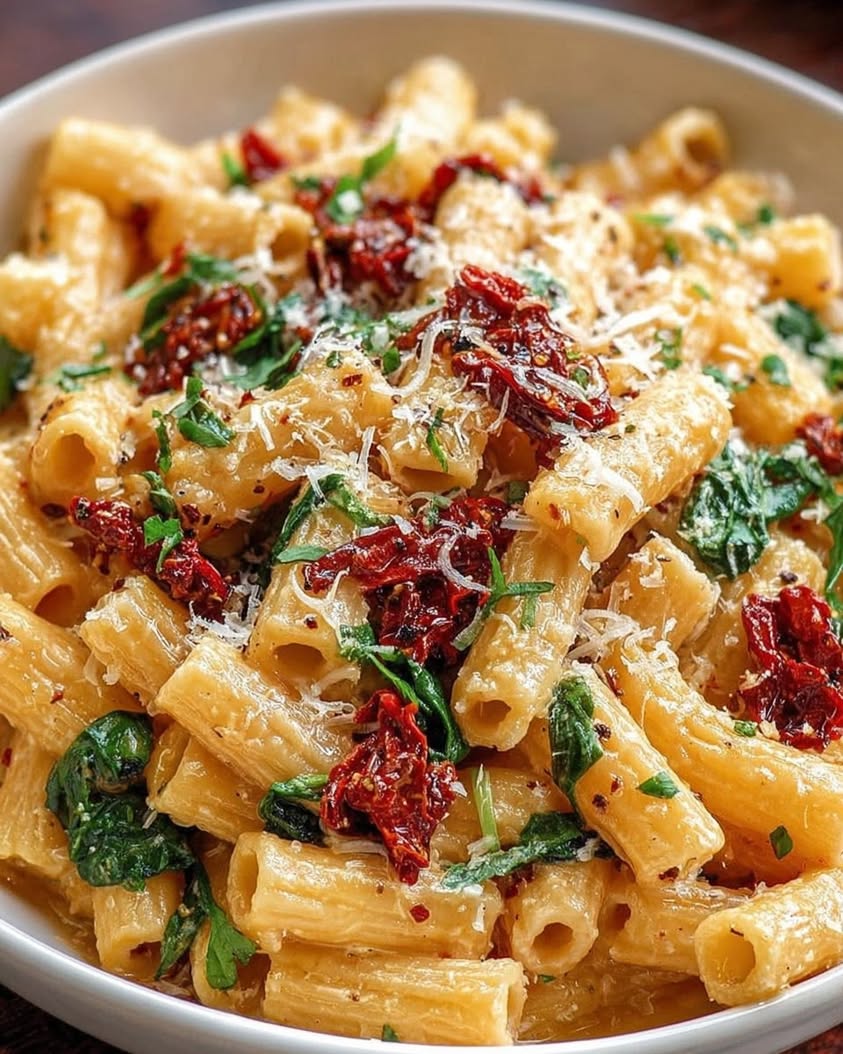
Creamy Sun-Dried Tomato Pasta with Spinach and Garlic: A Restaurant-Quality Dinner in 30 Minutes
Imagine a bowl of pasta that tastes like a luxurious Italian getaway. This Creamy Sun-Dried Tomato Pasta with Spinach and Garlic delivers exactly that experience. It transforms simple, humble ingredients into a dish bursting with deep, concentrated flavor and luxurious texture. Furthermore, it comes together in the time it takes to boil water and cook your noodles, making it the ultimate weeknight hero.
The magic lies in the sun-dried tomatoes. Their sweet, tangy, and intensely savory essence infuses every element of the sauce. Meanwhile, the garlic sizzles to golden perfection, creating a fragrant base. Fresh spinach wilts into the creamy sauce, adding a pop of color and a nutritional boost. Ultimately, this recipe proves that you don’t need hours to create a meal that feels special and deeply satisfying.
This Creamy Sun-Dried Tomato Pasta with Spinach and Garlic is more than just a quick dinner. It’s a versatile canvas. For instance, you can easily add protein like grilled chicken or shrimp. Alternatively, you can keep it vegetarian for a stunning meatless Monday option. Regardless of how you serve it, this dish promises to become a regular in your recipe rotation due to its incredible flavor and foolproof method.
Quick Recipe Highlights
- Flavor Profile: This dish boasts a rich, tangy, and savory taste from the sun-dried tomatoes, perfectly balanced by the sweet cream and sharp Parmesan. The garlic adds a warm, aromatic backbone that ties all the elements together beautifully.
- Texture: You get a delightfully creamy and velvety sauce that clings to every strand of pasta. The sun-dried tomatoes offer a pleasant chew, while the wilted spinach provides a tender, silky contrast.
- Aroma: As it cooks, your kitchen will fill with the irresistible scent of toasting garlic and the sweet, tangy perfume of sun-dried tomatoes. This aroma is a sure sign that something delicious is coming.
- Visual Appeal: The vibrant red of the tomatoes and the bright green spinach create a stunning contrast against the creamy pasta and white cheese. It’s a colorful dish that looks as good as it tastes.
- Skill Level Needed: This is a beginner-friendly recipe. If you can boil pasta and sauté garlic, you can absolutely master this Creamy Sun-Dried Tomato Pasta with Spinach and Garlic. The steps are straightforward and forgiving.
- Special Equipment: You only need basic kitchen tools: a large pot for pasta, a large skillet or sauté pan for the sauce, a chef’s knife, and a grater for the cheese. No fancy equipment is required.
Recipe Overview
- Difficulty Level: We rate this recipe as “Easy” because it involves fundamental cooking techniques like boiling, sautéing, and simmering. The process is linear with minimal prep work. Moreover, the sauce is very forgiving; you can adjust creaminess or seasoning easily as you go.
- Category: This dish fits perfectly into several categories: Main Course, Vegetarian Dinner, Pasta Recipes, and Quick Weeknight Meals. It’s substantial enough to stand alone but also pairs wonderfully with a simple side salad or crusty bread.
- Cuisine: This is a modern Italian-American pasta dish. It draws inspiration from the Italian tradition of creating rich, flavorful sauces from pantry staples like tomatoes, garlic, and cheese. However, the use of heavy cream and sun-dried tomatoes gives it a contemporary, restaurant-style twist.
- Cost: This is a cost-effective meal, especially if you use sun-dried tomatoes packed in oil, which are often more affordable than the dry-packed variety. Pasta, garlic, and spinach are inexpensive staples. The cream and Parmesan are the main splurges, but a little goes a long way in creating a luxurious result.
- Season: This Creamy Sun-Dried Tomato Pasta with Spinach and Garlic is fantastic year-round. It brings a taste of summer sunshine in the winter months. Conversely, it’s a light yet comforting option for spring and fall. It truly is an all-season favorite.
- Occasion: It’s ideal for a busy weeknight dinner, a casual date night at home, or a simple dinner party with friends. Because it’s so quick and impressive, it works for both everyday meals and special occasions.
Why You’ll Love This Recipe
First and foremost, the taste is absolutely phenomenal. The sun-dried tomatoes provide a flavor punch that fresh tomatoes simply cannot match. Their concentrated sweetness and tanginess meld with the rich cream and salty Parmesan to create a sauce that is complex and deeply satisfying. Every bite is a perfect harmony of savory, creamy, and tangy notes, with the fresh garlic adding a essential aromatic warmth. This isn’t a bland or boring pasta; it’s a celebration of bold, Mediterranean-inspired flavors that will have everyone asking for seconds.
Secondly, the convenience factor is unbeatable. From start to finish, you can have this restaurant-quality meal on the table in about thirty minutes. The prep work is minimal—just some chopping and grating. Furthermore, the cooking process happens largely in one pan while the pasta boils. This means less cleanup and more time to enjoy your meal. It’s the ultimate solution for those nights when you want something delicious and homemade without spending hours in the kitchen.
Nutritionally, this dish offers more than you might think. Sun-dried tomatoes are packed with antioxidants like lycopene, which is great for heart health. Spinach is a powerhouse of vitamins A, C, and K, as well as iron and fiber. By wilting a large amount of spinach into the sauce, you’re adding significant nutrients and color. Using whole wheat or legume-based pasta can boost the fiber and protein content even further, making it a more balanced meal.
For entertaining, this Creamy Sun-Dried Tomato Pasta with Spinach and Garlic is a superstar. It’s visually impressive with its vibrant colors, and the rich, luxurious taste feels special. Because it cooks so quickly, you can spend more time with your guests instead of being stuck in the kitchen. You can easily double or triple the recipe to feed a crowd. Simply toss it in a large serving bowl, garnish with extra herbs and cheese, and watch it disappear.
Finally, it’s incredibly cost-effective and accessible. The ingredients are easy to find at any standard grocery store. You likely have many of them—like garlic, pasta, and basic seasonings—in your pantry already. Sun-dried tomatoes, once a gourmet item, are now widely available and affordable. This recipe shows how a few simple, quality ingredients can be transformed into something extraordinary without breaking the bank.
Historical Background and Cultural Significance
The story of sun-dried tomatoes begins as a practical method of preservation. In Southern Italy, particularly in regions like Puglia and Sicily, the summer sun is intense. To avoid wasting the abundant tomato harvest, people would slice ripe tomatoes, salt them, and lay them out to dry in the hot sun for several days. This process concentrated their sugars and flavors, creating a chewy, intensely savory ingredient that could be stored in oil for use throughout the year. This tradition dates back centuries and is a cornerstone of Italian cucina povera, or “poor kitchen,” which focuses on creating magnificent food from humble, preserved ingredients.
Culturally, preserved foods like sun-dried tomatoes represent resilience and resourcefulness. They allowed communities to enjoy the taste of summer vegetables during barren winter months. In Italian cooking, they are not just a substitute for fresh tomatoes but a valued ingredient in their own right, prized for their unique sweet-and-savory umami character. They are commonly used in antipasti, breads, and, of course, pasta sauces, adding a depth of flavor that fresh tomatoes cannot provide.
The evolution of this specific recipe—a creamy sun-dried tomato pasta sauce—is a more modern development. It likely stems from the late 20th-century trend in Italian-American cuisine that embraced richer, cream-based sauces like Alfredo. Chefs began experimenting by blending the intense flavor of sun-dried tomatoes with cream to create a luxurious, pink-hued sauce. The addition of spinach is a natural pairing, both for color contrast and nutritional balance, reflecting a more contemporary desire to incorporate greens into every meal. This dish is a beautiful fusion of old-world preservation techniques and new-world culinary innovation.
Regional variations of sun-dried tomato pasta are plentiful. In Italy, you might find “Pasta con Pomodori Secchi” where the tomatoes are simply rehydrated and tossed with garlic, olive oil, and chili flakes. The creamy version is popular in North America and other parts of the world. Other common additions include olives, capers, artichoke hearts, or toasted pine nuts. Some recipes use goat cheese or mascarpone instead of Parmesan for a different creamy tang. This adaptability is a testament to the sun-dried tomato’s versatility as a global pantry staple.
Ingredient Deep Dive
Sun-Dried Tomatoes: These are the star of the show. Historically, they preserved summer’s bounty. Nutritionally, they are exceptionally high in lycopene, an antioxidant more bioavailable than in fresh tomatoes, and they provide fiber, potassium, and vitamins C and K. For the best flavor, choose tomatoes packed in olive oil; the oil itself becomes a flavorful component of the sauce. You can store an opened jar in the refrigerator for several months. If you only have dry-packed tomatoes, simply soak them in hot water for 20 minutes to soften before using.
Heavy Cream: Cream creates the luxurious, velvety texture that defines this sauce. It balances the sharp tang of the tomatoes and the saltiness of the cheese. For a lighter version, half-and-half can work, but the sauce will be thinner. For a dairy-free alternative, full-fat coconut cream is an excellent substitute that adds a subtle sweetness. Always warm your cream slightly before adding it to the pan to prevent curdling and to help it incorporate smoothly into the sauce.
Fresh Spinach: Spinach adds vital color, texture, and nutrients. It’s a rich source of iron, calcium, and vitamins A and C. When selecting spinach, look for bright green, crisp leaves. Baby spinach is ideal as it’s tender and requires no stemming. To store, keep it unwashed in a plastic bag in the crisper drawer. When adding it to the pasta, the residual heat from the sauce is enough to wilt it perfectly, preserving its vibrant color and delicate texture.
Garlic: Garlic provides the essential aromatic foundation. Its history as a culinary staple spans millennia across many cultures. When sautéed slowly, it becomes sweet and nutty, losing its harsh raw bite. For this recipe, fresh garlic is non-negotiable; pre-minced jarred garlic lacks the same potency and can impart a bitter flavor. Always use a sharp knife to mince it finely so it distributes evenly throughout the sauce.
Parmesan Cheese: Authentic Parmigiano-Reggiano, aged for at least 24 months, adds a salty, nutty, umami depth that ties the sauce together. It also helps thicken the sauce slightly. Grating it fresh from a block is crucial, as pre-grated cheese contains anti-caking agents that prevent it from melting smoothly. For storage, wrap the block in parchment paper and then foil, and keep it in the refrigerator. As a substitute, a high-quality Pecorino Romano offers a sharper, saltier flavor profile.
Common Mistakes to Avoid
- Burning the Garlic: Garlic burns in seconds and turns bitter, ruining the entire sauce. Always sauté it over medium-low heat just until it becomes fragrant and lightly golden, which usually takes only about 30-60 seconds. Have your next ingredient (like the tomatoes or cream) ready to go to stop the cooking process immediately.
- Using Pre-Grated Parmesan: Pre-grated cheese contains cellulose to prevent clumping. This additive prevents the cheese from melting into a smooth sauce, often leaving it grainy or clumpy. Always take the extra minute to grate a block of real Parmigiano-Reggiano or a high-quality Parmesan for the creamiest result.
- Overcooking the Sauce: Once the cream is added, you only need to simmer the sauce for a few minutes to thicken it slightly and allow the flavors to meld. Over-simmering or boiling vigorously can cause the cream to separate or become greasy. A gentle simmer is key.
- Not Reserving Pasta Water: The starchy, salty pasta water is liquid gold for sauce-making. Before you drain your pasta, scoop out at least one cup of the cooking water. Adding a splash to your finished sauce helps it emulsify and cling perfectly to the noodles, creating a cohesive dish.
- Adding Cold Cream to the Pan: Adding ice-cold heavy cream directly to a hot pan can shock it and increase the chance of curdling. Let the cream sit out for 10-15 minutes to take the chill off, or warm it slightly in the microwave before incorporating it into the sauce.
- Underseasoning: Pasta and cream require a good amount of salt. Sun-dried tomatoes and Parmesan are salty, but you still need to season the dish in layers. Salt your pasta water generously, taste your sauce before adding the pasta, and finish with a final seasoning at the end. Remember, you can always add more salt, but you can’t take it out.
- Crowding the Pan: When you add the cooked pasta to the sauce, use a large skillet or sauté pan. If the pan is too small, you won’t be able to toss everything together properly, and the pasta won’t get evenly coated. The pasta should have room to mingle with the sauce.
- Skipping the Garnish: A final flourish of fresh basil, a crack of black pepper, and an extra sprinkle of Parmesan aren’t just for looks. They add a final layer of fresh aroma, flavor, and texture that elevates the dish from great to exceptional. Don’t skip this simple step.
Essential Techniques
Sautéing Garlic to Perfection: This is the first and most critical technique. Heat your oil over medium-low heat. Add the minced garlic and cook, stirring constantly, for just 30-60 seconds. You’re looking for it to become very fragrant and turn a very pale gold. The moment it starts to brown, it’s done. The goal is to cook out the raw, pungent flavor and develop a sweet, nutty base without any bitterness. If it burns, it’s best to start over.
Creating an Emulsified Sauce: The magic of a great pasta sauce is in the emulsion—the creamy, unified blending of fat (oil/cream) and water (pasta water). After combining your sauce ingredients, add the cooked pasta directly to the skillet with the sauce. Then, add a splash of the reserved starchy pasta water. Toss everything vigorously over low heat. The starch in the water acts as a binder, helping the creamy sauce coat every inch of pasta evenly, creating a glossy, restaurant-style finish instead of a separated, oily sauce.
Wilting Spinach Properly: To preserve the vibrant green color and delicate texture of the spinach, add it at the very end, off the heat. The residual heat from the pasta and sauce is more than enough to wilt it perfectly. Simply toss it in until it just begins to soften and turn bright green. If you cook it over direct heat for too long, it will become dull, mushy, and release too much water, thinning out your beautiful creamy sauce.
Pro Tips for Perfect Creamy Sun-Dried Tomato Pasta
Use the oil from the sun-dried tomato jar to sauté the garlic. This oil is already infused with incredible tomato flavor and will boost the overall taste of your sauce exponentially.
For a smoother sauce, you can finely chop the sun-dried tomatoes or even give them a quick pulse in a food processor before adding them to the pan. This helps distribute their flavor more evenly.
Let your cream and grated cheese come to room temperature for about 15 minutes before starting. This helps them incorporate into the sauce smoothly and reduces the risk of the cream curdling or the cheese clumping.
If your sauce seems too thick after adding the pasta, don’t hesitate to add more reserved pasta water, one tablespoon at a time, until it reaches your desired consistency. The sauce should be fluid and coat the noodles loosely.
For an extra layer of flavor, add a pinch of red pepper flakes to the garlic as it sautés. This introduces a subtle warmth that complements the sweet tomatoes beautifully.
Finish the dish with a small drizzle of high-quality extra virgin olive oil just before serving. This adds a fresh, fruity note and a lovely sheen to the final presentation.
Variations and Adaptations
Regional Variations: For a more traditional Southern Italian take, omit the cream. Instead, use the oil from the tomatoes, a splash of the pasta water, and some grated Pecorino cheese to create a lighter, emulsified sauce. In the North, you might find a version using mascarpone cheese for an even richer, sweeter creaminess.
Seasonal Adaptations: In summer, add fresh cherry tomatoes, halved and quickly blistered in the pan before adding the cream. In fall, incorporate roasted cubes of butternut squash. For winter, add sautéed mushrooms for an earthy, hearty twist. Spring calls for fresh peas or asparagus tips stirred in at the last minute.
Dietary Modifications: For a gluten-free version, use your favorite gluten-free pasta. To make it dairy-free, substitute the heavy cream with full-fat coconut cream and use a vegan Parmesan alternative or nutritional yeast. For added protein, stir in two cans of drained and flaked tuna or a few cups of shredded rotisserie chicken at the end.
Flavor Variations: Stir in two tablespoons of tomato paste with the garlic for an even deeper tomato flavor. Add a handful of pitted and sliced Kalamata olives or a tablespoon of briny capers for a salty punch. For an herby lift, mix in a quarter cup of chopped fresh basil, oregano, or parsley just before serving.
Texture Modifications: For a chunkier sauce, use roughly chopped sun-dried tomatoes. For a completely smooth and velvety sauce, blend the sautéed garlic, tomatoes, and cream with an immersion blender before returning it to the pan. Add toasted pine nuts or walnuts as a garnish for a delightful crunch.
Presentation Alternatives: Serve the pasta in individual bowls with a grilled shrimp skewer draped over the top. For a family-style centerpiece, transfer it to a large, warm platter and garnish with a mound of fresh arugula in the center, allowing guests to mix it in. You can also bake it with a layer of mozzarella and breadcrumbs on top for a decadent pasta bake.
Serving and Presentation Guide
Plating Techniques: Use tongs to twirl a portion of pasta into the center of a warm, shallow bowl. This creates height and makes the dish look more abundant. Gently spoon any extra sauce and spinach from the pan around and over the twirled nest. Ensure each serving has a good distribution of sun-dried tomatoes and spinach visible on top.
Garnishing Ideas: A final sprinkle of freshly grated Parmesan is essential. Add a few whole basil leaves or a chiffonade of basil for color and fresh aroma. A light dusting of freshly cracked black pepper or a pinch of red pepper flakes adds visual contrast. A final, thin drizzle of your best extra virgin olive oil adds a professional sheen.
Traditional Accompaniments: A simple side salad with a sharp vinaigrette (like balsamic) cuts through the richness of the pasta perfectly. Warm, crusty bread or garlic bread is ideal for mopping up every last bit of the creamy sauce. For a more complete Italian meal, start with a light antipasto platter.
Modern Serving Suggestions: For a casual dinner, serve the pasta directly from the skillet at the table. For individual portions, consider using wide, rimmed pasta plates. Pair it with a glass of crisp white wine, as mentioned in the pairing section, to elevate the entire dining experience.
Temperature Considerations: Pasta is best served immediately, piping hot. Warm your serving bowls by rinsing them with hot water and drying them just before plating. This helps keep the pasta hot longer at the table. Avoid letting the finished dish sit for more than a few minutes before serving, as the pasta will continue to absorb the sauce and may become dry.
Portion Control Tips: This recipe yields four generous servings as a main course. If serving as a primi (first course) before a larger meal, it can comfortably serve six. To stretch it further for a crowd, you can add a can of drained and rinsed cannellini beans or chickpeas to the sauce for extra bulk and protein.
Wine and Beverage Pairing
Wine Pairings: The tangy, creamy, and savory profile of this pasta calls for wines with good acidity to cut through the richness. A Pinot Grigio or Sauvignon Blanc from Italy offers crisp citrus notes that cleanse the palate. For a more aromatic choice, a dry Rosé from Provence works beautifully. If you prefer red, opt for a light-bodied, low-tannin red like a Chianti Classico or a Barbera, served slightly chilled.
Non-Alcoholic Alternatives: Sparkling water with a squeeze of lemon or lime is a classic and refreshing choice. For something more flavorful, try a tart cherry or pomegranate spritzer. Iced herbal tea, such as mint or lemon verbena, also complements the Mediterranean flavors without overpowering them.
Coffee/Tea Pairings: After the meal, a cup of strong espresso is a traditional Italian finish. For tea, a cup of Earl Grey with its bergamot citrus notes can be a lovely palate cleanser. Avoid overly sweet or milky beverages immediately after, as they can clash with the lingering savory notes of the dish.
Temperature Considerations: White and rosé wines should be served well-chilled, between 45-50°F. Light reds, if chosen, are best served at a “cellar temperature” of around 55-60°F, which often feels slightly cool to the touch. Non-alcoholic spritzers should be very cold to provide a refreshing contrast to the warm, rich pasta.
Serving Suggestions: Always serve wine in appropriate glassware to enhance the aroma and taste. Provide a carafe of cold water on the table for guests to sip between bites. If serving non-alcoholic options, consider garnishing them with a herb sprig or citrus wheel to make them feel just as special as the alcoholic pairings.
Storage and Shelf Life
Storage Methods: Allow any leftovers to cool completely to room temperature before storing. Transfer the pasta to an airtight container. Do not leave it sitting out for more than two hours to prevent bacterial growth. For best results, store the sauce and pasta together; separating them can lead to dry pasta and a broken sauce upon reheating.
Temperature Requirements: Refrigerate leftovers promptly. The pasta will keep safely in the refrigerator for 3-4 days. For longer storage, freezing is an option, though the texture of the cream sauce may change slightly upon thawing.
Container Recommendations: Glass containers with tight-sealing lids are ideal as they don’t absorb odors and allow you to see the contents. If using plastic, ensure it is BPA-free and designed for food storage. Portioning leftovers into single-serving containers makes reheating for lunches quick and easy.
Signs of Spoilage: Discard the pasta if you notice an off or sour smell, significant discoloration (like grayish tones in the sauce), or visible mold. If the sauce has separated irreversibly into a greasy, watery mess, it’s also a sign it’s past its prime, even if it doesn’t smell bad.
Reheating Instructions: The best method is on the stovetop. Add the leftover pasta to a skillet with a splash of water, milk, or broth. Heat gently over medium-low heat, stirring frequently, until warmed through. The added liquid will help reconstitute the creamy sauce. You can also use the microwave: place in a microwave-safe dish, cover loosely, and heat in 30-second intervals, stirring in between.
Freezing Guidelines: Freeze for up to 2 months. Thaw overnight in the refrigerator before reheating. Note that the spinach may become softer upon thawing. When reheating previously frozen pasta, you will almost certainly need to add a splash of liquid and stir vigorously to bring the sauce back together.
Make Ahead Strategies
Prep Timeline: You can prep several components up to two days in advance. Mince the garlic and store it in a small airtight container in the fridge. Grate the Parmesan cheese and keep it refrigerated. Measure out your sun-dried tomatoes and spinach. Having everything ready turns the actual cooking into a simple 15-minute assembly.
Storage Between Steps: Keep prepped ingredients in separate containers. Do not mix the garlic with the tomatoes or oil, as the garlic’s moisture can promote spoilage. Keep the cream in its original carton until you’re ready to use it. This organized mise en place ensures freshness and streamlines your cooking process.
Quality Impact Assessment: Pre-mincing garlic may slightly diminish its pungency over two days, but for a cooked sauce, this is negligible. Pre-grated Parmesan is fine if used within a day or two, though a block is always better. The sun-dried tomatoes and spinach will not suffer from being pre-measured. The overall flavor of the final dish will be virtually identical to making it completely from scratch on the spot.
Assembly Tips: When ready to cook, simply boil your pasta and follow the recipe steps. Because your ingredients are prepped, you can focus on the cooking techniques—perfectly sautéing the garlic and properly emulsifying the sauce—without the pressure of chopping and measuring.
Reheating Guidelines: This dish is best served fresh. However, if you must make the entire dish ahead, undercook the pasta by 2-3 minutes (al dente). Toss it with a tiny bit of oil to prevent sticking, then mix it with the finished sauce and store. When reheating, the pasta will finish cooking and absorb the sauce flavors.
Fresh Element Additions: If making ahead, always add the fresh spinach and any delicate herbs like basil during the final reheating stage, not during the initial make-ahead preparation. This preserves their color, texture, and fresh flavor.
Scaling Instructions
Halving the Recipe: To serve two, simply divide all ingredient quantities by two. Use a medium skillet instead of a large one. The cook times will remain roughly the same, but keep a closer eye on the garlic and sauce reduction as smaller volumes can cook faster. You may need slightly less pasta water to adjust the sauce consistency.
Doubling or Tripling: For a crowd, multiply the ingredients accordingly. You will need a very large pot for the pasta and likely a Dutch oven or large stockpot for the sauce. Sauté the garlic in batches if necessary to avoid steaming. The simmering time for the sauce may increase by a few minutes to allow it to thicken properly when made in a larger volume.
Equipment Adjustments: Scaling up requires larger equipment. Ensure your pasta pot has enough room for the increased pasta to cook evenly. Your sauce pan must be large enough to eventually hold all the pasta for the final toss. If you don’t have a pan big enough, mix the sauce and pasta in the empty pasta pot after draining.
Timing Modifications: When doubling, the prep time will increase linearly. The active cooking time for the sauce may remain similar, but bringing a larger volume of cream to a simmer can take a minute or two longer. Start your sauce when the pasta water comes to a boil to ensure everything finishes at the same time.
Storage Considerations: Leftovers from a scaled-up batch will be more abundant. Plan your storage containers accordingly. Remember that a large, deep container of hot pasta will take much longer to cool to a safe refrigeration temperature. Consider dividing it into several smaller, shallow containers to cool faster and more safely.
Nutritional Deep Dive
Macro Breakdown: A serving of this Creamy Sun-Dried Tomato Pasta provides a balance of carbohydrates from the pasta, fats from the cream, oil, and cheese, and a moderate amount of protein from the cheese and the pasta itself. The spinach adds minimal calories but significant micronutrients. Using whole-grain pasta increases the fiber and protein content, making it more satiating and blood-sugar friendly.
Micronutrient Analysis: This dish is a notable source of Vitamin A (from spinach and tomatoes), Vitamin C (from tomatoes and spinach), and calcium (from dairy and spinach). Sun-dried tomatoes are exceptionally high in potassium and the antioxidant lycopene. The garlic provides allicin, a compound with noted health benefits. The olive oil contributes heart-healthy monounsaturated fats.
Health Benefits: The lycopene in tomatoes is linked to reduced risk of heart disease and certain cancers. The fiber from whole-grain pasta and spinach supports digestive health. The calcium is crucial for bone health. The monounsaturated fats from olive oil are beneficial for cholesterol levels. Together, these ingredients make a meal that is indulgent yet offers substantive nutritional value.
Dietary Considerations: As written, this recipe contains gluten (pasta) and dairy (cream, Parmesan). It is vegetarian. For those monitoring sodium, note that sun-dried tomatoes and Parmesan are naturally high in salt, so you may want to reduce added salt elsewhere. The dish is not suitable for a vegan, keto, or strict paleo diet without significant modifications.
Portion Analysis: A standard serving is about one-quarter of the recipe. For those managing calorie intake, be mindful of portion size, as creamy pasta dishes can be calorie-dense. Loading your plate with a large side salad first can help manage portions of the richer main course. Using a smaller plate can also create a visual cue for a satisfying portion.
Weight Management Tips: To make this dish more weight-conscious, use half heavy cream and half whole milk. Increase the volume of spinach to add bulk without many calories. Choose a protein-enriched legume pasta. Measure your cheese and oil instead of pouring freely. These small tweaks reduce the calorie density while preserving the core flavors you love.
Dietary Adaptations
Gluten-Free: Substitute the regular pasta with a high-quality gluten-free pasta made from brown rice, quinoa, or a lentil blend. Be sure to reserve the starchy pasta water, as GF pasta water can be just as effective for saucing. Cook the pasta to al dente according to package directions, as GF pasta can become mushy if overcooked.
Dairy-Free/Vegan: Replace heavy cream with full-fat canned coconut cream for the best richness and texture. Use a vegan Parmesan alternative or 2-3 tablespoons of nutritional yeast for the cheesy, umami flavor. Sauté the garlic in the oil from the tomatoes or plain olive oil. The result will be a creamy, tangy, and completely plant-based version of the dish.
Low-Carb/Keto: Use spiralized zucchini (zoodles) or shirataki noodles as the pasta base. Be sure to sauté zoodles briefly to remove excess moisture before adding the sauce. Use the full amount of cream and cheese as directed. Double-check that your sun-dried tomatoes have no added sugar, as some brands do. This creates a satisfying, keto-friendly meal.
Paleo: Follow the low-carb adaptations using zucchini noodles or spaghetti squash. Ensure all ingredients are paleo-compliant: no dairy, grains, or legumes. Use coconut cream instead of dairy cream and omit the cheese. You can add a tablespoon of almond butter to the sauce to mimic some of the richness and body lost from omitting the cheese.
Low-FODMAP: Garlic is high in FODMAPs. Instead, infuse the oil by gently cooking the garlic cloves whole, then removing them before they brown. Use only the green parts of scallions (spring onions) for a fresh onion flavor. Ensure the sun-dried tomatoes do not contain garlic or onion powder. Use lactose-free cream or a suitable alternative.
Troubleshooting Guide
Sauce is Too Thin: If your sauce hasn’t thickened to your liking, let it simmer for a few more minutes uncovered to reduce and concentrate. Alternatively, create a slurry by mixing 1 teaspoon of cornstarch with 1 tablespoon of cold water, then stir it into the simmering sauce. It will thicken almost immediately. You can also stir in an extra handful of grated Parmesan off the heat.
Sauce is Too Thick: This is an easy fix. Simply add reserved pasta water, one tablespoon at a time, stirring vigorously after each addition until the sauce reaches a loose, creamy consistency that coats the back of a spoon. You can also use a splash of regular water, milk, or broth if you’ve run out of pasta water.
Sauce Has Curdled or Separated: If the cream appears grainy or the oil has separated, don’t panic. Remove the pan from heat. Add a tablespoon of cold water or pasta water and whisk vigorously. This can often bring the emulsion back together. If it remains separated, blending it briefly with Print
Creamy Sun-Dried Tomato Pasta with Spinach and Garlic
- Total Time: 45 minutes
- Yield: 4
Description
A rich and savory pasta dish featuring sun-dried tomatoes, fresh spinach, and garlic in a creamy sauce, perfect for a quick yet indulgent meal.
Ingredients
- 12 oz pasta (such as penne or fettuccine)
- 1 cup sun-dried tomatoes in oil, drained and chopped
- 3 cloves garlic, minced
- 4 cups fresh spinach
- 1 cup heavy cream
- 1/2 cup grated Parmesan cheese
- 2 tbsp olive oil
- Salt and black pepper to taste
- Fresh basil for garnish
Instructions
- Cook the pasta according to package instructions until al dente, then drain and set aside.
- In a large skillet, heat olive oil over medium heat. Add minced garlic and sauté for 1-2 minutes until fragrant.
- Add chopped sun-dried tomatoes and cook for another 2 minutes, stirring occasionally.
- Stir in fresh spinach and cook until wilted, about 3-4 minutes.
- Pour in heavy cream and bring to a simmer. Stir in Parmesan cheese until melted and the sauce thickens slightly.
- Add the cooked pasta to the skillet, tossing to coat evenly in the sauce. Season with salt and pepper to taste.
- Serve hot, garnished with fresh basil.
Notes
You can customize the seasonings to taste.
- Prep Time: 15 minutes
- Cook Time: 30 minutes
- Method: Main
- Cuisine: American