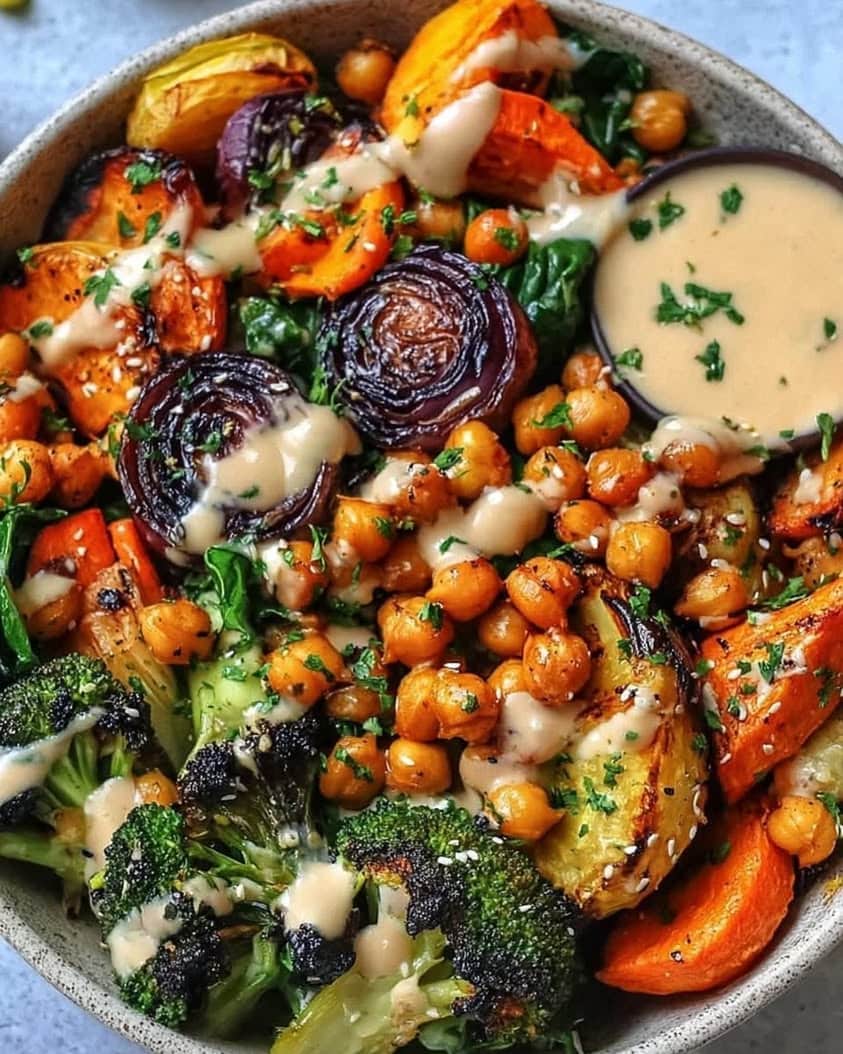
Roasted Veggie & Chickpea Bowls with Maple Tahini Dressing: A Flavor-Packed Weeknight Wonder
Imagine a meal that is both nourishing and deeply satisfying, a vibrant bowl that brings together the earthy sweetness of roasted vegetables with the creamy tang of a dreamy dressing. This recipe for Roasted Veggie & Chickpea Bowls with Maple Tahini Dressing is exactly that. It is a celebration of simple ingredients transformed by the magic of oven roasting. Consequently, it delivers a symphony of textures and flavors that will make you forget you are eating something incredibly good for you.
The star of this show is undoubtedly the Maple Tahini Dressing, a luscious sauce that perfectly balances nutty, sweet, and tangy notes. It drapes over the crispy chickpeas and caramelized vegetables, tying every element together into a cohesive and delightful bite. Moreover, this bowl is a fantastic template for clean eating. You can easily customize it with whatever seasonal produce you have on hand. Ultimately, it is a recipe that proves healthy food can be the most exciting food on your table.
These Roasted Veggie & Chickpea Bowls are designed for real life. They come together with minimal active effort, as the oven does most of the work. This makes them perfect for busy weeknights, yet they are impressive enough to serve to guests for a casual lunch or dinner. The combination of protein-packed chickpeas, fiber-rich vegetables, and healthy fats from the tahini creates a meal that is both balanced and deeply fulfilling. You will find yourself craving this wholesome, flavorful dish again and again.
Quick Recipe Highlights
- Flavor Profile: These bowls offer a complex taste journey. Savory roasted vegetables and chickpeas meet a dressing that is subtly sweet from maple syrup, rich from tahini, and bright with a hint of Dijon mustard and lemon.
- Texture: Expect a wonderful contrast in every bite. You get the tender, caramelized interior of the veggies, the satisfying crispness of their roasted edges, and the delightful pop of the crispy chickpeas, all smoothed over by the creamy dressing.
- Aroma: As the vegetables roast, your kitchen will fill with the warm, sweet scent of caramelizing onions and squash, mingled with the earthy fragrance of chickpeas and rosemary. The dressing adds a fresh, lemony-tahini note when drizzled.
- Visual Appeal: This bowl is a feast for the eyes with its rainbow of colors: deep orange sweet potato, green broccoli, red onion, and golden chickpeas, all artfully arranged and finished with a creamy, drizzle-able sauce.
- Skill Level Needed: This is a beginner-friendly recipe. The techniques involve simple chopping, tossing, and roasting. As long as you can use a knife and an oven, you can absolutely master this dish.
- Special Equipment: You need only basic kitchen tools: a good cutting board, a sharp knife, a couple of large baking sheets, and mixing bowls. A blender or small food processor makes the dressing silky smooth, but a whisk and strong arm will work too.
Recipe Overview
- Difficulty Level: We rate this recipe as “Easy” because it involves fundamental cooking techniques accessible to everyone. The steps are straightforward: chop vegetables, toss with oil and seasonings, and roast. There is no intricate timing or advanced skills required. Success is virtually guaranteed with minimal effort.
- Category: This dish fits beautifully into several meal categories. It is a perfect main course for a vegetarian lunch or dinner. Additionally, it works wonderfully as a hearty side dish or a standout component on a buffet table for gatherings.
- Cuisine: While not tied to one specific tradition, this bowl draws inspiration from Mediterranean and Middle Eastern culinary styles, particularly through the use of tahini, chickpeas, and olive oil. It is a modern, fusion-style bowl that celebrates global, plant-forward eating.
- Cost: This is an incredibly budget-friendly meal. The base ingredients like sweet potatoes, chickpeas, and broccoli are inexpensive, especially when purchased in bulk or in season. The dressing ingredients are pantry staples that last a long time, making the cost per serving very low.
- Season: This recipe is truly versatile across seasons. In fall and winter, the sweet potatoes and broccoli shine. For spring and summer, you can easily swap in zucchini, bell peppers, or asparagus. Therefore, it is a year-round staple.
- Occasion: These bowls are perfect for casual weeknight family dinners, healthy meal prep for the workweek, or a relaxed weekend lunch. They are also a great option for potlucks because they are delicious at room temperature.
Why You’ll Love This Recipe
First and foremost, the taste and texture combination is utterly addictive. The roasting process concentrates the natural sugars in the vegetables, creating deep, caramelized flavors that are inherently satisfying. Paired with the crispy, spiced chickpeas and the uniquely creamy Maple Tahini Dressing, each forkful is a perfect balance. The dressing itself is a revelation; it is rich without being heavy, and it has a subtle sweetness that complements the savory elements beautifully. You will find yourself wanting to put this sauce on everything.
From a convenience standpoint, this recipe is a weeknight hero. Once you have chopped your veggies and tossed them on a pan, the oven takes over. This hands-off time allows you to prepare the simple dressing, set the table, or simply relax. Furthermore, the entire meal cooks on just one or two sheet pans, meaning cleanup is a breeze. There is no need to juggle multiple pots and pans. This efficiency makes it an ideal choice after a long, busy day when you want a wholesome meal without the fuss.
Nutritionally, these Roasted Veggie & Chickpea Bowls are a powerhouse. Chickpeas provide a solid dose of plant-based protein and fiber, which helps keep you full and energized. The variety of vegetables ensures you are getting a wide spectrum of vitamins, minerals, and antioxidants. Additionally, tahini is a great source of healthy fats and minerals like calcium and iron. This meal supports stable blood sugar, digestive health, and overall wellness, proving that eating well can be delicious.
For entertaining, this dish offers fantastic social value. It is naturally vegetarian and can be easily adapted to be vegan or gluten-free, accommodating diverse dietary needs without requiring you to make multiple separate meals. The colorful, build-your-own-bowl presentation is also interactive and fun for guests. You can even set up a topping bar with extras like avocado, fresh herbs, nuts, or seeds, allowing everyone to customize their perfect bowl.
Finally, the cost-effectiveness and accessibility of this recipe cannot be overstated. It relies on humble, readily available ingredients that are easy on the grocery budget. You can adapt it based on what is on sale or in your crisper drawer, reducing food waste. This approachability means anyone, regardless of cooking experience or budget, can create a restaurant-quality, nourishing meal at home. It is a testament to how simple ingredients can yield extraordinary results.
Historical Background and Cultural Significance
The concept of the “grain bowl” or “Buddha bowl” is a relatively modern phenomenon in Western cuisine, gaining massive popularity in the last decade alongside the rise of health-conscious and plant-based eating. However, its roots are ancient and global. Essentially, the idea of combining a grain, legumes, and vegetables in one vessel is a practical eating style found in countless cultures. From the Korean bibimbap to the Hawaiian poke bowl, the principle of a balanced, compartmentalized meal is timeless. Our Roasted Veggie & Chickpea Bowl is a contemporary iteration of this universal concept.
Culturally, the key ingredients carry significant weight. Chickpeas, also known as garbanzo beans, are one of the earliest cultivated legumes, with a history spanning over 7,000 years in the Middle East. They are a cornerstone of diets across the Mediterranean, South Asia, and Africa. Similarly, tahini, a paste made from sesame seeds, has been a staple in Levantine and Eastern Mediterranean cooking for centuries. Combining these two ancient ingredients creates a connection to a rich culinary heritage, even within a modern recipe framework.
The evolution of this specific recipe mirrors broader food trends. It takes traditional, wholesome ingredients and prepares them with a modern technique—high-heat roasting—to maximize flavor and texture. The addition of maple syrup in the dressing is a North American twist, showcasing how global fusion occurs naturally in home kitchens. This evolution represents a shift towards “flexitarian” eating, where vegetable-centric meals are designed to be so satisfying that they become the main event, not just a side.
Regional variations of this bowl are endless, which speaks to its adaptable nature. In the Mediterranean, you might find it with oregano and a lemon-garlic tahini. A Middle Eastern version could include sumac and pomegranate molasses. An Asian-inspired twist might use a miso-ginger tahini dressing. This adaptability is the recipe’s greatest strength. It provides a foundational template that invites creativity and personalization based on local produce and cultural flavor preferences, making it a truly global citizen in the world of food.
Ingredient Deep Dive
Let us start with chickpeas, the protein heart of this bowl. Chickpeas have been nourishing civilizations since the dawn of agriculture. They are incredibly versatile and nutritious, packed with plant-based protein, fiber, and essential minerals like iron and folate. For this recipe, canned chickpeas are perfectly convenient. The key step is to rinse, drain, and thoroughly dry them before roasting; this ensures they become crispy, not steamed. If you cannot find chickpeas, white beans or even lentils make a good substitution, though cooking times may vary.
Sweet potatoes are a New World treasure, rich in history and beta-carotene. They provide a vibrant color and a natural, creamy sweetness that intensifies beautifully when roasted. Their nutritional profile is impressive, offering high levels of Vitamin A, Vitamin C, and potassium. Choose firm sweet potatoes without soft spots. You do not need to peel them; the skin adds extra fiber and texture. As a substitute, butternut squash or carrots will provide a similar sweet, hearty quality and roast well.
Broccoli brings a cruciferous crunch and a wealth of health benefits. Part of the cabbage family, it is renowned for its potential cancer-fighting compounds and high levels of Vitamin K and C. When roasted, broccoli develops deliciously crispy, almost charred florets with tender stems. For the best texture, cut the florets into uniform sizes. If you are not a fan of broccoli, cauliflower is an excellent alternative, as it roasts in a similar timeframe and offers a more neutral flavor base.
Tahini, the soul of the dressing, is a paste made from ground sesame seeds. It is a staple in hummus and baba ganoush. High in healthy fats, calcium, and copper, it creates a luxuriously creamy emulsion. When purchasing, look for pure sesame seed tahini, preferably with just a bit of oil on top that you can stir in. A good tahini should taste nutty, not bitter. If you need a substitute, smooth, unsweetened almond butter or cashew butter can work, though the flavor will be different.
Pure maple syrup is our natural sweetener. It is important to use the real stuff, not pancake syrup, for its complex flavor and mineral content. It balances the tahini’s richness and the lemon’s acidity perfectly. In a pinch, honey or agave nectar can be used. Finally, extra virgin olive oil is our roasting and dressing fat of choice. Its fruity, peppery notes are integral to the Mediterranean flavor profile. A good, affordable bottle is perfect for both roasting and finishing the dressing.
Common Mistakes to Avoid
- Crowding the Pan: This is the most common error. Overcrowding causes vegetables to steam instead of roast. They will become soggy and will not caramelize. Always use two pans if necessary to give each piece enough space.
- Using Wet Chickpeas: Failing to dry canned chickpeas thoroughly is a recipe for chewy, not crispy, results. Pat them aggressively with a clean kitchen towel or paper towels after rinsing to remove all surface moisture.
- Neglecting to Preheat the Oven: A properly preheated oven is non-negotiable for good roasting. It ensures the vegetables start cooking immediately, leading to better browning and texture. Always wait for the oven to reach the full temperature.
- Cutting Vegetables Unevenly: If your vegetable pieces are different sizes, they will cook unevenly. Smaller pieces will burn before larger ones are tender. Aim for uniform, bite-sized chunks for consistent roasting.
- Underseasoning the Vegetables: Vegetables need ample seasoning before roasting. Do not be shy with the salt, pepper, and dried herbs. Seasoning before cooking builds layers of flavor that cannot be replicated by adding salt only at the end.
- Over-blending the Dressing: When making the Maple Tahini Dressing, blend or whisk just until smooth and emulsified. Over-processing can sometimes cause the tahini to seize or become too thick. If it thickens, simply whisk in a teaspoon of warm water at a time.
- Serving Immediately from the Oven: Letting the roasted components rest for 5 minutes after pulling them from the oven allows them to firm up slightly and makes them easier to handle when building your bowls.
- Storing Components Together While Warm: If meal prepping, let all components cool completely to room temperature before combining them in a container. Storing them together while warm creates condensation, which leads to soggy vegetables and chickpeas.
Essential Techniques
High-Heat Roasting: This technique is the engine of flavor for this entire dish. Roasting at a high temperature (425°F) causes the natural sugars in the vegetables to caramelize, creating complex, sweet, and savory notes. The dry heat also draws out moisture, concentrating flavors and creating desirable crispy edges. To master it, ensure your oven is fully preheated and your baking sheets are not overcrowded. The visual cue for success is golden-brown, slightly charred spots on the vegetables and chickpeas.
Emulsifying the Dressing: Creating a smooth, creamy Maple Tahini Dressing involves emulsification—combining water-based ingredients (lemon juice, maple syrup) with fat-based ones (tahini, oil) into a stable, unified sauce. The key is to add the liquid ingredients to the tahini slowly while whisking or blending vigorously. This gradual incorporation prevents the sauce from breaking or becoming grainy. If your dressing is too thick, simply whisk in warm water, one teaspoon at a time, until it reaches a drizzle-able consistency.
Drying Canned Chickpeas: This simple prep step is critical for texture. After rinsing, spread the chickpeas on a clean kitchen towel or several layers of paper towels. Gently roll them around to absorb all the surface moisture. Some cooks even pop them out of their thin skins for extra crispiness, though this is optional. Dry chickpeas will roast up crispy; wet ones will steam and remain soft or become tough.
Pro Tips for Perfect Roasted Veggie & Chickpea Bowls
First, line your baking sheets with parchment paper. This not only prevents sticking but also makes cleanup incredibly easy. Secondly, toss the vegetables and chickpeas in oil and seasonings in a large bowl. This ensures every piece gets evenly coated for consistent flavor and browning. For the crispiest chickpeas, give them a head start. Consider roasting them on a separate tray for 5-10 minutes before adding the vegetables, as they sometimes need a bit longer to become perfectly crunchy.
When making the dressing, use warm water to thin it if needed. Cold water can shock the tahini and make the dressing harder to emulsify. Always taste your dressing and adjust the balance to your liking. You might want more lemon for tang, more maple for sweetness, or a pinch more salt to make all the flavors pop. For meal prep, store the dressing separately in a small jar and drizzle it on just before eating to keep the roasted components crisp.
Do not discard your leftover dressing. It is fantastic as a salad dressing, a dip for raw vegetables, or a sauce for grilled chicken or fish. Finally, get creative with toppings. While the bowl is complete as written, adding a sprinkle of toasted nuts (like almonds or pine nuts), seeds (pumpkin or sunflower), fresh herbs (parsley or cilantro), or a handful of greens (arugula or spinach) can add another layer of texture, freshness, and nutrition.
Variations and Adaptations
For regional variations, take this bowl on a world tour. Give it a Mediterranean twist by adding kalamata olives, crumbled feta cheese, and a sprinkle of dried oregano. For a Middle Eastern flair, add a spoonful of zhoug (herby green sauce) and a dusting of sumac. An Asian-inspired version could include edamame, quick-pickled cucumbers, and a dressing made with tahini, miso, rice vinegar, and ginger.
Seasonal adaptations make this a year-round staple. In spring, use asparagus, snap peas, and radishes. Summer bowls can feature zucchini, bell peppers, and cherry tomatoes. Fall is perfect for the classic sweet potato and broccoli combo, while winter welcomes hearty roots like parsnips, turnips, and Brussels sprouts. The cooking time may adjust slightly based on the vegetable’s density, so keep an eye on them.
Dietary modifications are straightforward. For a vegan bowl, ensure your maple syrup is vegan (most are) and that is all you need. To make it gluten-free, simply serve it over a certified gluten-free grain like quinoa or rice, or enjoy it as is. For a lower-carb or keto adaptation, increase the volume of non-starchy vegetables like broccoli and cauliflower and reduce or omit the sweet potato. You can also use a sugar-free maple-flavored syrup in the dressing.
Serving and Presentation Guide
Plating is part of the fun. Start with a base in a wide, shallow bowl. While the recipe is pictured without a grain, serving it over a bed of fluffy quinoa, brown rice, or farro makes it even more hearty and helps catch all the delicious dressing. Then, artfully arrange the different roasted components in sections or gently pile them together. This showcases the beautiful colors and makes the bowl visually appealing.
Garnishing is the final touch that elevates the dish. A generous drizzle of the Maple Tahini Dressing is essential. Then, consider adding brightness with a squeeze of fresh lemon juice, a sprinkle of chopped fresh parsley or cilantro, or a few microgreens. For crunch and richness, add toasted sesame seeds, chopped roasted almonds, or pumpkin seeds. If you are not vegan, a sprinkle of crumbled feta or goat cheese adds a lovely salty tang.
Consider temperature and timing. These bowls are fantastic served warm straight from the oven, at room temperature for a picnic or potluck, or even cold from the fridge as meal prep. If preparing ahead, add any fresh garnishes just before serving to maintain their texture and color. For portion control, a good rule of thumb is to fill half your bowl with the roasted vegetables, one-quarter with chickpeas, and one-quarter with your chosen base grain.
Wine and Beverage Pairing
Choosing a wine to pair with these vibrant bowls is enjoyable. The earthy vegetables and creamy, nutty dressing call for something with good acidity to cut through the richness. A crisp, dry white wine like a Sauvignon Blanc or Pinot Grigio works beautifully. Their citrus notes complement the lemon in the dressing. Alternatively, a light-bodied, fruity red with low tannins, such as a Gamay or Pinot Noir, can also pair well, especially if the vegetables have nice caramelization.
For non-alcoholic alternatives, the options are fantastic. Sparkling water with a wedge of lemon or lime cleanses the palate between bites. A tart, unsweetened iced herbal tea, like hibiscus or lemon ginger, provides a refreshing contrast. For a creamier, complementary drink, a golden milk latte (turmeric latte) or a simple glass of cold, unsweetened almond milk would be lovely. The goal is to choose a beverage that refreshes without overpowering the meal’s nuanced flavors.
Storage and Shelf Life
Proper storage is key to maintaining quality. Store the completely cooled roasted vegetables and chickpeas in an airtight container in the refrigerator for up to 4 days. Keep the Maple Tahini Dressing in a separate jar or container for up to 1 week. If the dressing thickens in the fridge, simply whisk in a little warm water to return it to a drizzle-able consistency. Never store the dressed bowls assembled in advance, as everything will become soggy.
For freezing, it is best to freeze only the roasted components without the dressing. Spread the cooled vegetables and chickpeas on a baking sheet to freeze individually, then transfer to a freezer bag. They can be frozen for up to 2 months. Reheat directly from frozen in a 400°F oven until hot and re-crisped. The dressing does not freeze well, as it can separate and become grainy upon thawing. Always prepare it fresh or keep it refrigerated.
Make Ahead Strategies
This recipe is a meal prep superstar. You can roast the vegetables and chickpeas up to 4 days in advance. Let them cool completely, then store them separately or together in the fridge. The dressing can be made up to a week ahead. When ready to serve, you have two options. For a hot meal, reheat the roasted components on a baking sheet in a 400°F oven for about 10 minutes to restore crispness. For a cold lunch, simply assemble the cold components straight from the fridge.
The key to successful make-ahead is the separate storage of components. This strategy preserves the contrasting textures that make the bowl so appealing. If you plan to add a grain like quinoa or rice, cook that in advance as well and store it separately. Then, assembly takes mere minutes. Simply scoop your base, top with the reheated or cold roasted goods, drizzle generously with dressing, and add your fresh garnishes. It is the ultimate fast, healthy, and satisfying meal.
Scaling Instructions
Scaling this recipe up or down is simple because it is mostly about increasing or decreasing quantities on your baking sheets. For halving the recipe to serve two, simply use half of all ingredients. You may be able to fit everything on one baking sheet now, but still avoid crowding. For doubling to serve eight, you will definitely need three or four large baking sheets. Roast in batches if your oven cannot accommodate multiple sheets with proper air circulation, swapping their positions halfway through cooking.
When scaling, keep an eye on cooking time. A single, well-spaced sheet may cook slightly faster than a crowded one. Conversely, multiple sheets in the oven can increase cooking time by a few minutes. Always rely on visual cues—golden-brown, tender vegetables and crispy chickpeas—rather than strictly adhering to the clock. The dressing scales linearly; just whisk together proportional amounts of all ingredients. If making a large batch of dressing, a blender is highly recommended for easy emulsification.
Nutritional Deep Dive
This bowl is a nutritional home run. The chickpeas are an excellent source of plant-based protein and dietary fiber, promoting satiety and supporting digestive health. The sweet potatoes provide a huge dose of beta-carotene, which the body converts to Vitamin A, essential for vision and immune function. Broccoli adds Vitamin C, Vitamin K, and sulforaphane, a compound with noted antioxidant properties. Together, they create a meal rich in complex carbohydrates, fiber, and micronutrients.
The Maple Tahini Dressing contributes healthy fats from the sesame seeds and olive oil. These fats are crucial for absorbing the fat-soluble vitamins (A, D, E, K) present in the vegetables. While the dressing contains a small amount of natural sugar from maple syrup, it is balanced by the fat, protein, and fiber in the rest of the bowl, leading to a steady release of energy. This makes the meal excellent for weight management, as it is volumous, satisfying, and nutrient-dense without being calorie-dense.
Dietary Adaptations
This recipe is naturally vegetarian and easily made vegan. For a gluten-free version, simply ensure any grain base you choose (like quinoa) is certified gluten-free, and check that your Dijon mustard is gluten-free (most are, but some brands contain wheat). For a dairy-free bowl, it is already perfect as written. To adapt for a Whole30 or Paleo diet, omit the chickpeas and maple syrup. Increase the vegetable volume and use a date paste or omit the sweetener in the dressing, relying on the natural sweetness of roasted vegetables.
For a lower-carb or keto adaptation, replace the sweet potato with more low-starch vegetables like cauliflower, broccoli, and zucchini. You can also increase the portion of chickpeas slightly for protein, though be mindful of their carb count. Use a sugar-free maple-flavored syrup in the dressing. For a nut-free version, the tahini is seed-based and safe, but always check labels for cross-contamination warnings if you have a severe allergy. In that case, a seed butter like sunflower seed butter could be a potential substitute in the dressing.
Troubleshooting Guide
If your vegetables are soggy, the culprit is almost always overcrowding on the pan. Next time, use more surface area. Also, ensure your oven was fully preheated. If your chickpeas are not crispy, you likely did not dry them well enough. Pat them aggressively. You can also try roasting them on their own tray for a longer period at a slightly lower temperature (400°F) to dry them out thoroughly before crisping.
If your Maple Tahini Dressing is too thick, it simply needs more liquid. Whisk in warm water, one teaspoon at a time, until it reaches a pourable consistency. If it is too thin, you can whisk in a bit more tahini. If the dressing tastes bitter, your tahini might be old or of lower quality. Try a different brand next time, or balance the bitterness with a touch more maple syrup or lemon juice. If your vegetables are burning before cooking through, your oven temperature might be too high, or your pieces might be cut too small. Try reducing the temperature to 400°F and cutting vegetables into slightly larger chunks.
Recipe Success Stories
This recipe has become a favorite in our community for its reliability and deliciousness. Many readers report that it has become their go-to “clean out the fridge” meal, using whatever vegetables need to be used up. One home cook shared that she now doubles the dressing recipe every time because her family loves it so much on salads and as a dip. Another reader successfully adapted it for her vegan book club, and it was a unanimous hit, proving that plant-based food can delight everyone.
Photography tips from our community are helpful. They suggest shooting the bowl in natural light to capture the vibrant colors of the vegetables against the creamy white dressing. Using a shallow, textured bowl adds visual interest. Some like to style it with the dressing drizzled in a zig-zag pattern and a few fresh herbs casually placed on top. The most important tip, however, is to make the recipe first and enjoy it. The best food photos come from a place of genuine love for the dish.
Frequently Asked Questions
Can I use frozen vegetables? Yes, but with caution. Do not thaw them first. Toss frozen vegetables directly with oil and roast. They will release more water, so they may not get as crispy, and cooking time might be slightly longer. It is best with sturdy frozen veggies like broccoli or cauliflower.
What can I use instead of tahini? For a similar creamy, nutty flavor, you can use smooth, unsweetened almond butter or cashew butter. The flavor will be different but still delicious. Sunflower seed butter is a good nut-free alternative.
Is this dressing kid-friendly? Absolutely. The maple syrup gives it a mild sweetness that most kids enjoy. You can even call it a “special sauce” to make it more appealing. It is a great way to get them to eat more vegetables.
Can I make this without oil? For roasting, a small amount of oil is necessary to conduct heat, promote browning, and prevent sticking. You could try using a very generous amount of vegetable broth, but the results will be more steamed than roasted. For the dressing, you could use more water or aquafaba (chickpea liquid) to replace the oil, though the texture will be less rich.
My dressing separated in the fridge. Is it ruined? Not at all. Separation is natural for emulsions when cold. Simply let it sit at room temperature for 10 minutes and then whisk or shake it vigorously until it comes back together. It will be as good as new.
How do I get the chickpeas extra crispy? The secrets are thorough drying, enough space on the pan, and a little patience. Some cooks also toss the dried chickpeas with a 1/2 teaspoon of cornstarch or arrowroot powder before oiling and roasting, which helps create an extra-crispy coating.
Can I add meat to this bowl? Of course. Diced chicken breast or thighs tossed with the same spices and roasted alongside the vegetables would be fantastic. Pre-cooked shrimp added at the end or sliced steak would also be delicious additions for a non-vegetarian version.
What is the best way to reheat leftovers? To maintain crispness, reheat in an oven or toaster oven at 400°F for about 10 minutes, or in an air fryer for 5-7 minutes. The microwave will work in a pinch but will make everything soft.
Can I use dried chickpeas instead of canned? Yes, but it requires planning. Cook 1 cup of dried chickpeas according to package directions until tender. Then, drain, dry thoroughly, and proceed with the recipe as written. You will get a slightly better texture and flavor.
Is this recipe good for weight loss? Yes, it can be an excellent part of a weight management plan. It is high in fiber and protein, which increase feelings of fullness, and is packed with nutrients. Be mindful of the amount of dressing and oil used if you are strictly counting calories.
Additional Resources
If you loved the flavors in this bowl, you might enjoy exploring more recipes that feature tahini. Our website has a fantastic Lemon Garlic Tahini Sauce that is perfect for drizzling on grilled meats or grain salads. For another great roasted vegetable dish, try our Sheet Pan Harissa Chicken and Veggies, which uses a similar hands-off cooking method. To learn more about cooking with dried beans and legumes from scratch, check out our comprehensive guide that covers soaking, cooking times, and seasoning tips.
For equipment, a set of heavy-duty, rimmed baking sheets is the best investment for perfect roasting every time. We also highly recommend a high-speed blender for making the silkiest salad dressings and sauces. Finally, to stay inspired with seasonal vegetables, consider visiting a local farmer’s market. Seeing what is fresh and abundant is the best way to create spontaneous and delicious variations on this versatile Roasted Veggie & Chickpea Bowl template.
PrintRoasted Veggie & Chickpea Bowls with Maple Dijon Tahini Dressing
- Total Time: 45 minutes
- Yield: 4
Description
A hearty, plant-based bowl featuring roasted vegetables and chickpeas, topped with a creamy, sweet-and-tangy tahini dressing.
Ingredients
- 1 large sweet potato, peeled and cubed
- 2 cups broccoli florets
- 1 red bell pepper, sliced
- 1 can (15 oz) chickpeas, drained and rinsed
- 2 tbsp olive oil
- 1 tsp smoked paprika
- Salt and black pepper to taste
- 2 cups cooked quinoa or brown rice
- 1/4 cup tahini
- 2 tbsp maple syrup
- 1 tbsp Dijon mustard
- Juice of 1 lemon
- 2-3 tbsp water, as needed
- Fresh parsley or cilantro for garnish
Instructions
- Preheat oven to 400°F (200°C). Line a baking sheet with parchment paper.
- In a large bowl, toss sweet potato, broccoli, bell pepper, and chickpeas with olive oil, smoked paprika, salt, and pepper. Spread evenly on the baking sheet.
- Roast for 25-30 minutes, stirring halfway, until vegetables are tender and chickpeas are crispy.
- While roasting, whisk together tahini, maple syrup, Dijon mustard, lemon juice, and water in a small bowl until smooth. Add more water if needed to reach a pourable consistency.
- Divide cooked quinoa or brown rice among four bowls. Top with roasted vegetables and chickpeas.
- Drizzle with maple Dijon tahini dressing and garnish with fresh herbs before serving.
Notes
You can customize the seasonings to taste.
- Prep Time: 15 minutes
- Cook Time: 30 minutes
- Method: Main
- Cuisine: American