Mediterranean Layered Beet, Sweet Potato & Feta Gratin with Walnuts: A Vibrant, Hearty Side Dish
This Mediterranean Layered Beet, Sweet Potato & Feta Gratin with Walnuts is a stunning celebration of color and flavor. Moreover, it transforms humble root vegetables into a show-stopping centerpiece. The earthy sweetness of beets and sweet potatoes pairs perfectly with the salty tang of feta cheese. Ultimately, this dish delivers a comforting, satisfying experience that feels both rustic and elegant.
Imagine pulling this vibrant gratin from the oven. The top is golden and bubbling, while the interior reveals jewel-toned layers. The aroma of roasted vegetables and herbs fills your kitchen. Consequently, this dish promises to be the star of any dinner table. It is a hearty side that complements a wide variety of mains, from roasted chicken to grilled fish.
This recipe is a fantastic way to enjoy seasonal produce. It is naturally gluten-free and packed with nutrients. Furthermore, it is surprisingly simple to assemble. You just need a sharp knife, a baking dish, and a bit of patience while it bakes. The result is a visually impressive and deeply flavorful vegetarian dish that will earn you rave reviews.
Quick Recipe Highlights
- Flavor Profile: This gratin offers a beautiful balance. The natural sweetness of the roasted root vegetables is contrasted by the salty, briny feta. Fresh herbs like thyme add an aromatic, earthy note, while toasted walnuts provide a final layer of rich, nutty crunch.
- Texture: You get a wonderful contrast in every bite. The vegetables become meltingly tender and almost creamy as they bake. Meanwhile, the feta softens but maintains some structure. Finally, the walnut topping adds a crucial, satisfying crunch that elevates the entire dish.
- Aroma: While baking, the gratin fills your home with an irresistible scent. The primary notes are the sweet, caramelizing sugars from the beets and sweet potatoes. These blend with the savory fragrance of onions and garlic, all underpinned by the woody aroma of fresh thyme.
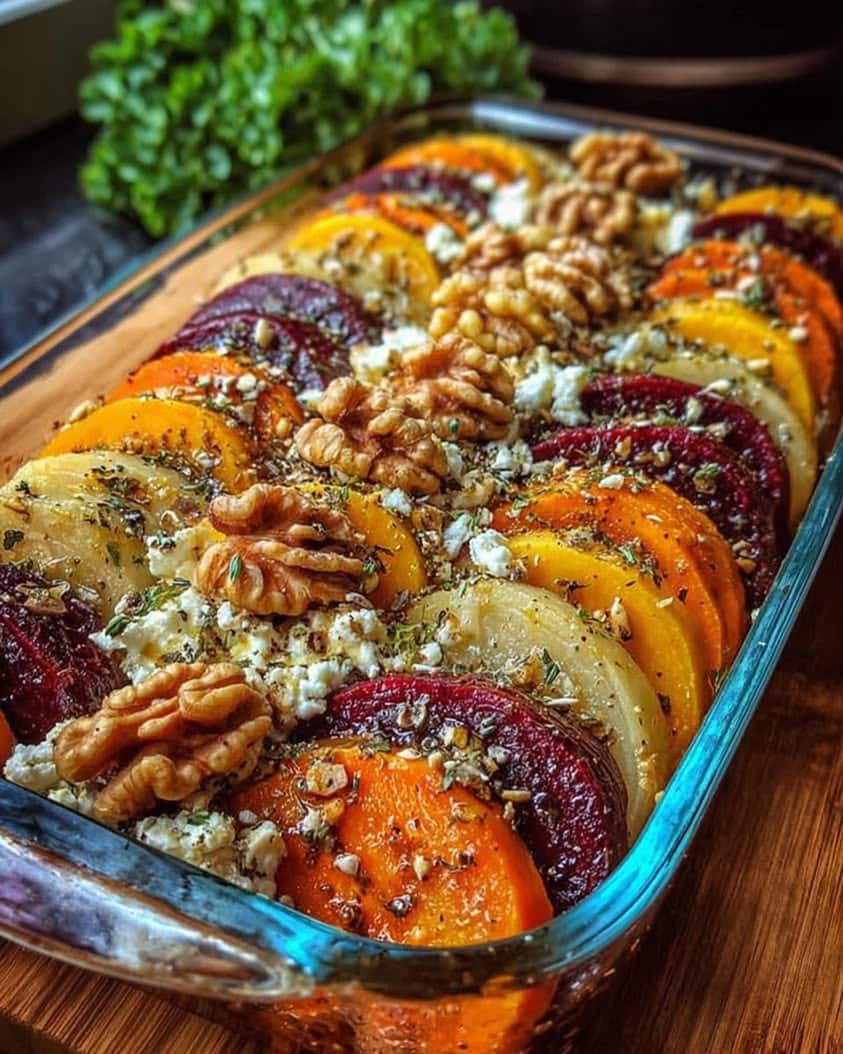
- Visual Appeal: The presentation is spectacular. The alternating layers of deep ruby red beets and vibrant orange sweet potatoes create a striking, striped effect. After baking, the golden-brown cheese and toasted walnut topping make the dish look as good as it tastes.
- Skill Level Needed: This is an accessible recipe for most home cooks. The key skills are simple vegetable slicing and layering. There is no complicated sauce-making or advanced techniques required. Therefore, it is perfect for a confident beginner or anyone looking for a straightforward yet impressive dish.
- Special Equipment: You only need basic kitchen tools. A sharp chef’s knife and a sturdy cutting board are essential for prepping the vegetables. Additionally, a mandoline slicer can save time and ensure even slices, but it is not mandatory. Finally, a 9×13 inch baking dish is the perfect vessel.
Recipe Overview
- Difficulty Level: We rate this Mediterranean beet and sweet potato gratin as easy. The process involves straightforward prep work: peeling, slicing, and layering. There is no fussy technique or precise timing during assembly. The oven does most of the work, making it a low-stress recipe with a high-reward outcome.
- Category: This dish fits beautifully into several categories. Primarily, it is a spectacular vegetarian side dish or a hearty vegetable main course. It also works wonderfully as part of a holiday spread or a special weekend dinner. Furthermore, it is an excellent make-ahead option for meal prep or entertaining.
- Cuisine: The flavor inspiration is firmly rooted in Mediterranean cuisine. The use of feta cheese, olive oil, and fresh herbs like thyme reflects the simple, ingredient-driven cooking of the region. This gratin is a modern, baked interpretation of those classic, vibrant flavors.
- Cost: This is a very cost-effective dish. Root vegetables like beets and sweet potatoes are typically affordable, especially in season. Feta cheese and walnuts are the pricier components, but a little goes a long way. Overall, you can create this impressive dish for a fraction of the cost of a restaurant equivalent.
- Season: This gratin is perfect for fall and winter. These are the peak seasons for beets and sweet potatoes, meaning they are at their sweetest and most flavorful. However, it is a welcome dose of color and comfort any time of year, especially since these vegetables are often available year-round.
- Occasion: It is incredibly versatile for different events. Serve it as the star side for Thanksgiving or Christmas dinner. Alternatively, it makes a fantastic centerpiece for a vegetarian dinner party. It is also substantial enough for a cozy family Sunday supper.
Why You’ll Love This Mediterranean Beet and Sweet Potato Gratin
First, the taste and texture combination is truly exceptional. Each forkful delivers a symphony of sweet, savory, salty, and crunchy elements. The tender, almost custardy layers of vegetable melt in your mouth. Then, you get the delightful pop of flavor from the feta and the final textural contrast from the walnuts. This complexity makes every bite interesting and deeply satisfying. You will find yourself going back for just one more taste.
Next, consider the convenience and preparation benefits. This Mediterranean beet and sweet potato gratin is largely a hands-off recipe. After the initial slicing and layering, the oven takes over. Consequently, you can prepare the rest of your meal, set the table, or simply relax. It is an ideal dish for entertaining because you can assemble it ahead of time. Then, you simply pop it in the oven an hour before you want to eat.
Furthermore, the nutritional advantages are significant. Beets and sweet potatoes are nutritional powerhouses. They are packed with fiber, vitamins, and antioxidants. This dish is a delicious and sneaky way to get more vegetables onto your plate. Using olive oil and walnuts adds heart-healthy fats. Altogether, it is a meal that makes you feel good from the inside out, proving that healthy food can be incredibly indulgent.
Additionally, the social and entertaining value is high. This gratin is a guaranteed conversation starter. Its stunning appearance immediately draws attention and compliments. It looks like you spent hours on a complicated recipe, yet the process is wonderfully simple. Serving a beautiful, homemade dish like this Mediterranean Layered Beet, Sweet Potato & Feta Gratin with Walnuts makes any meal feel like a special occasion. It shows care and thoughtfulness to your guests.
Finally, it is remarkably cost-effective and accessible. The ingredients are easy to find at any standard grocery store. You do not need any rare or expensive components. This recipe makes a large quantity that can feed a crowd or provide leftovers for days. For the price of a few root vegetables, some cheese, and nuts, you create a restaurant-quality dish at home. It is an economical way to eat well and impress your family.
Historical Background and Cultural Significance
The concept of a gratin has deep roots in French cuisine. Traditionally, a gratin involves a creamy sauce and a browned topping, often of cheese or breadcrumbs. However, this Mediterranean beet and sweet potato gratin represents a modern, healthier evolution. It forgoes the heavy cream in favor of the vegetables’ own natural moisture and sweetness. This shift reflects a contemporary desire for lighter, vegetable-forward dishes that still deliver on comfort and flavor.
Culturally, the dish pulls inspiration from across the Mediterranean basin. The use of feta cheese points directly to Greece, where it is a staple. Meanwhile, the generous use of olive oil and fresh thyme is common throughout Italy, southern France, and the Levant. This gratin is less about replicating one specific traditional dish and more about celebrating a shared culinary philosophy. That philosophy prioritizes fresh, seasonal produce, simple preparations, and bold, honest flavors.
The recipe has evolved significantly from its rich, dairy-heavy ancestors. Modern cooks are creatively using vegetables to create their own creamy textures. Layering thinly sliced vegetables allows them to steam and soften in the oven, becoming tender without needing a cup of cream. The addition of nuts for crunch is another contemporary touch, adding protein and texture. This evolution makes the gratin adaptable to various dietary preferences while maintaining its soul-warming essence.
Regional variations of vegetable gratins are endless. In Provence, you might find a Tian, a similar layered dish often featuring zucchini and tomatoes. In other parts of the Mediterranean, layers might include eggplant, potatoes, or spinach. This specific variation with beets and sweet potatoes is a newer, colorful take. It showcases how global ingredients can merge with classic techniques to create something both familiar and excitingly new.
Ingredient Deep Dive
Beets: Beets have a long history, cultivated since ancient times in the Mediterranean. They are incredibly nutritious, rich in folate, manganese, and dietary fiber. Their vibrant color comes from betalains, powerful antioxidants. When selecting beets, look for firm, smooth roots with vibrant greens attached if possible. Store them unwashed in the refrigerator for up to two weeks. For a substitution, try using golden beets for a milder flavor and to avoid the deep red color, or parsnips for a different earthy sweetness.
Sweet Potatoes: Contrary to popular belief, sweet potatoes are not closely related to potatoes. They originated in Central or South America and are packed with beta-carotene, vitamin C, and potassium. Choose firm sweet potatoes without soft spots or wrinkles. Store them in a cool, dark, well-ventilated place, but not the refrigerator, as cold temperatures can alter their texture and flavor. As a substitute, butternut squash or regular potatoes like Yukon Gold would work, though the flavor profile will shift.
Feta Cheese: Authentic feta is a Greek treasure, made from sheep’s milk or a sheep-goat blend and preserved in brine. It provides a tangy, salty punch and is a good source of calcium and protein. For the best flavor, seek out block feta sold in brine rather than pre-crumbled. Store it in its brine in the refrigerator. If you need a substitute, try ricotta salata for a firmer, less tangy option, or a creamy goat cheese for a different tang.
Walnuts: Walnuts are one of the oldest tree foods, revered since ancient times. They are an excellent source of omega-3 fatty acids, antioxidants, and minerals like manganese. Always taste walnuts before using to ensure they are not rancid. For the best flavor and texture, buy them raw and toast them yourself. Store walnuts in an airtight container in the freezer to prevent their oils from going bad. Pecans or pine nuts make good alternatives for a different nutty flavor.
Common Mistakes to Avoid
- Uneven Vegetable Slices: Slicing your beets and sweet potatoes to different thicknesses is a common error. Consequently, some pieces will be undercooked while others turn to mush. Aim for consistent 1/8-inch slices using a sharp knife or mandoline for even cooking throughout the gratin.
- Skipping the Onion and Garlic: Do not underestimate these aromatics. They create a crucial flavor base. Sautéing them until soft and fragrant builds a savory depth that balances the vegetables’ sweetness. Raw onion layered in will not cook properly and can be harsh.
- Forgetting to Season Between Layers: Seasoning only the top is not enough. The interior layers will taste bland. Lightly salt and pepper each layer as you build the gratin. This ensures every bite is properly seasoned and flavorful.
- Overcrowding the Baking Dish: Packing the slices in too tightly can prevent steam from circulating. This may lead to uneven cooking and a soggy texture. Arrange the slices neatly but not forcefully, allowing a little space between them for the best result.
- Using Pre-Crumbled Feta: Pre-crumbled feta often contains anti-caking agents and can be dry. It also lacks the creamy tang of a block feta in brine. For superior flavor and texture, always buy a block and crumble it yourself just before using.
- Adding Walnuts Too Early: If you mix the walnuts into the layers or add them before baking, they will become unpleasantly soft and lose their crunch. Always sprinkle toasted walnuts on top after the gratin comes out of the oven to preserve their texture.
- Not Covering with Foil Initially: Baking uncovered the entire time can cause the top layer to burn before the interior vegetables are tender. Covering with foil for the first part of baking traps steam to cook the vegetables through, then removing it allows for browning.
- Underseasoning the Overall Dish: Root vegetables need a generous amount of seasoning. Do not be shy with salt and pepper. Taste a piece of vegetable before layering to gauge the seasoning. Remember, feta adds salt, but the vegetables themselves need help to shine.
Essential Techniques
Thin, Even Slicing: This is the most important technique for a successful Mediterranean beet and sweet potato gratin. Uniform slices ensure everything cooks at the same rate. Using a mandoline slicer is the fastest and most precise method. If using a knife, take your time. The goal is slices about 1/8-inch thick. Thicker slices will take much longer to become tender, while paper-thin slices may disintegrate.
Sautéing Aromatics: Cooking the onion and garlic in olive oil is not just a step; it is building flavor. The goal is to cook them until they are soft, translucent, and fragrant, but not browned. This process, called sweating, gently coaxes out their natural sugars and savory qualities. This flavor base then infuses the entire dish as it bakes, providing a crucial savory counterpoint to the sweet vegetables.
Layering for Structure: Proper layering creates the beautiful visual stripes and ensures even cooking. Start with a thin drizzle of oil in the dish. Then, shingle the vegetable slices in slightly overlapping rows, alternating colors. Sprinkle some of the sautéed onion mixture and herbs over each layer. This method distributes flavor throughout and helps the gratin hold together when served.
Steam-Roasting with Foil: The initial covered baking phase is a hybrid cooking method. The foil traps the steam released from the vegetables, creating a moist environment that tenderizes them without drying them out. This is essential for achieving that soft, almost creamy texture inside the gratin. The final uncovered bake then evaporates excess moisture and creates the desirable golden-brown top.
Pro Tips for Perfect Mediterranean Layered Beet, Sweet Potato & Feta Gratin
First, wear gloves when peeling and slicing beets to avoid staining your hands a vibrant pink. The pigments are strong and can linger for a day. Alternatively, you can use golden beets which are much less messy.
Second, let the gratin rest for 10-15 minutes after removing it from the oven. This allows the layers to set slightly, making it much easier to cut neat, clean portions that hold their shape on the plate.
Third, use a pastry brush to lightly oil the bottom and sides of your baking dish before adding the first vegetable layer. This extra step helps prevent any stubborn sticking and makes cleanup easier.
Fourth, if your vegetables seem particularly dry, you can drizzle a couple tablespoons of vegetable broth or water over the layers before adding the final foil cover. This guarantees enough steam for cooking.
Fifth, for an extra flavor boost, mix a teaspoon of finely grated lemon zest into the crumbled feta before sprinkling it on top. The bright citrus note cuts through the richness beautifully.
Sixth, toast your walnuts in a dry skillet over medium heat for 3-5 minutes, stirring often, until fragrant. This intensifies their flavor and ensures maximum crunch for the topping.
Seventh, invest in a good quality, block feta stored in brine. The flavor and texture are far superior to pre-crumbled varieties and make a noticeable difference in the final dish.
Eighth, use a sharp, thin-bladed knife to slice the baked gratin. Dip the knife in hot water and wipe it clean between cuts for the absolute cleanest, most presentable slices.
Variations and Adaptations
For regional variations, consider adding a Middle Eastern twist by sprinkling za’atar or sumac between the layers. A French-inspired version might include a layer of sautéed mushrooms or a sprinkle of Gruyère cheese alongside the feta. The basic template is wonderfully adaptable to different flavor profiles from around the Mediterranean.
Seasonal adaptations are easy. In the summer, incorporate thin slices of zucchini or eggplant between the root vegetables. For a spring version, add layers of thinly sliced asparagus or artichoke hearts. You can adjust the herb profile as well, using dill or oregano in place of thyme depending on the season.
Dietary modifications are straightforward. For a vegan Mediterranean beet and sweet potato gratin, omit the feta and use a vegan cheese alternative or a sprinkle of nutritional yeast for a cheesy flavor. Add a layer of cooked lentils for more protein. To make it dairy-free, simply leave out the cheese or use a plant-based feta.
Flavor variations can personalize the dish. Add a pinch of red pepper flakes to the onion mixture for heat. Incorporate a layer of caramelized onions for deeper sweetness. A drizzle of balsamic glaze over the finished gratin adds a sweet-tart complexity that pairs wonderfully with the beets.
Texture modifications can cater to different preferences. For a creamier interior, pour a half-cup of coconut milk or cream over the layers before baking. For a more defined, al dente vegetable texture, slice the vegetables slightly thicker and increase the covered baking time by 10-15 minutes.
Presentation alternatives offer creative freedom. Instead of a large rectangular dish, assemble individual gratins in ramekins for a elegant, portion-controlled serving. You can also arrange the vegetable slices in concentric circles in a round pie dish for a stunning, floral-like presentation when sliced.
Serving and Presentation Guide
Plating techniques matter for this visually stunning dish. Use a wide, flat spatula to transfer a full portion from the baking dish to the plate. Wipe the edge of the plate clean for a professional look. Alternatively, for a family-style meal, bring the entire baking dish to the table and let guests serve themselves, showcasing the beautiful layered cross-section.
Garnishing ideas can elevate the presentation further. Beyond the toasted walnuts, a final sprinkle of fresh, chopped herbs like parsley, dill, or chives adds a pop of green color and fresh flavor. A few microgreens or edible flowers make it truly restaurant-worthy. A light drizzle of high-quality extra virgin olive oil just before serving enhances richness.
Traditional accompaniments keep the meal Mediterranean-focused. This gratin pairs beautifully with simply grilled lamb chops, chicken, or fish like salmon. For a vegetarian feast, serve it alongside a large Greek salad, hummus, and warm pita bread. It also complements hearty soups and stews perfectly.
Modern serving suggestions include slicing it into squares and serving it at room temperature as part of a brunch or lunch buffet. You can also cut it into smaller pieces and serve it as a hearty appetizer or side at a party. It is versatile enough for any dining context.
Temperature considerations are key. This Mediterranean beet and sweet potato gratin is best served warm, not piping hot. The resting period allows the flavors to settle and the structure to firm up. It is also delicious at room temperature, making it excellent for picnics or potlucks. Leftovers can be enjoyed cold straight from the fridge.
Portion control tips are helpful. As a main course for a vegetarian meal, plan for one-quarter of the baking dish per person. As a side dish, one-sixth to one-eighth of the dish is a generous serving. The gratin is rich and satisfying, so a little goes a long way alongside other menu items.
Wine and Beverage Pairing
Wine pairings should complement the earthy sweetness and salty cheese. A crisp, acidic white wine like a Sauvignon Blanc or Pinot Grigio cuts through the richness beautifully. For red wine lovers, a light-bodied, low-tannin red such as a Pinot Noir or Beaujolais works well. The key is to avoid overly oaky or heavy wines that would overwhelm the vegetables.
Non-alcoholic alternatives can be just as thoughtful. A sparkling water with a squeeze of lemon or lime provides a clean, palate-cleansing effervescence. For something more complex, try a tart cherry juice spritzer or a ginger-based mocktail. The spice from ginger pairs wonderfully with the sweet potatoes and beets.
Coffee and tea pairings are excellent for a lunch or brunch setting. A medium-roast coffee with low acidity complements the earthy notes without clashing. For tea, a robust black tea like English Breakfast stands up to the hearty flavors, while a fruity herbal tea like hibiscus can mirror the beet’s natural sweetness.
Temperature considerations for beverages are standard. Serve white wines and non-alcoholic spritzers well chilled. Red wines should be served slightly below room temperature. Coffee and tea, of course, should be served hot to provide a comforting contrast to the warm, baked gratin.
Serving suggestions include offering a choice. When entertaining, set out a bottle of white and a bottle of red wine to cater to different preferences. Always have chilled sparkling water and lemon wedges available as a non-alcoholic base. This ensures every guest has a perfect beverage match for this flavorful Mediterranean beet and sweet potato gratin.
Storage and Shelf Life
Storage methods are simple for leftovers. Allow the gratin to cool completely to room temperature. Then, cover the baking dish tightly with plastic wrap or aluminum foil, or transfer portions to an airtight container. Proper storage is crucial for maintaining quality and preventing the absorption of other refrigerator odors.
Temperature requirements are standard refrigerator cold. Store the gratin in the main body of your refrigerator, not in the door, where temperatures fluctuate. The ideal storage temperature is below 40°F (4°C). At this temperature, your leftovers will stay fresh and safe to eat.
Container recommendations depend on your space. For short-term storage, leaving it in the original baking dish covered tightly is fine. For longer storage or to free up the dish, transfer it to a glass or BPA-free plastic container with a tight-fitting lid. This also makes reheating individual portions easier.
Signs of spoilage are easy to spot. Discard the gratin if you notice an off or sour smell, significant mold growth (often fuzzy and green or white), or if the texture becomes unpleasantly slimy. When in doubt, it is always safer to throw it out.
Reheating instructions are flexible. For best results, reheat individual portions in a covered oven-safe dish at 350°F (175°C) for 15-20 minutes until warmed through. You can also use the microwave, but this may soften the texture. Add a fresh sprinkle of walnuts after reheating to restore crunch.
Freezing guidelines are possible but with a caveat. The gratin can be frozen for up to 2 months. However, the texture of the vegetables may become slightly softer upon thawing and reheating. Thaw overnight in the refrigerator before reheating in the oven. Note that the walnuts should be added fresh after reheating, not before freezing.
Make Ahead Strategies
Prep timeline can save you stress on the day of serving. You can peel and slice the beets and sweet potatoes up to a day in advance. Store them separately in water-filled containers in the refrigerator to prevent oxidation and drying out. The onion and garlic mixture can also be cooked a day ahead and stored covered in the fridge.
Storage between steps is straightforward. Keep prepped vegetables and aromatics in separate, sealed containers. Drain and pat the vegetable slices very dry with a clean kitchen towel before layering. Any excess water will make the gratin soggy. Having everything prepped makes assembly a quick, 10-minute task.
Quality impact assessment is positive. Making components ahead does not diminish the final dish’s quality. In fact, it can improve flavor as the vegetables have time to firm up after slicing. The key is to assemble the gratin just before baking for the best texture and to prevent the vegetables from releasing too much liquid prematurely.
Assembly tips for make-ahead are simple. You can fully assemble the gratin in the baking dish, cover it tightly with plastic wrap, and refrigerate it for up to 8 hours before baking. Let it sit at room temperature for 20-30 minutes while your oven preheats. Then bake as directed, adding a few extra minutes to the covered time if it’s going into the oven cold.
Reheating guidelines for a fully made gratin are easy. If you bake it ahead, let it cool, then cover and refrigerate. To reheat, cover with foil and warm in a 325°F (160°C) oven for 20-30 minutes until heated through. The texture will be slightly softer but still delicious.
Fresh element additions are the final touch. Always add the toasted walnuts and any fresh herb garnishes after reheating or just before serving. This ensures they retain their optimal texture and vibrant flavor, making the dish taste freshly made.
Scaling Instructions
Halving the recipe is simple for smaller households. Use an 8×8 inch baking dish. Precisely halve all ingredient quantities. The baking time may be slightly reduced; start checking for tenderness at the 45-minute mark. All other techniques and steps remain exactly the same, ensuring your smaller Mediterranean beet and sweet potato gratin turns out perfectly.
Doubling or tripling the recipe is great for a crowd. Use multiple baking dishes or a very large roasting pan. Double or triple all ingredients proportionally. The baking time will increase; expect the covered baking phase to take 70-80 minutes for a doubled recipe in a deep dish. Check for doneness by piercing the center with a knife.
Equipment adjustments are necessary when scaling. For a doubled recipe, a standard 9×13 dish may overflow. Use a deeper 9×13 ceramic dish or a 10×15 roasting pan. Ensure your oven racks are positioned to allow for proper heat circulation around the larger dish. Rotating the dish halfway through baking can promote even browning.
Timing modifications are intuitive. While prep time scales linearly, baking time does not double. It increases, but not proportionally. A double batch may take 1.5 times the original bake time. Always rely on the visual and textural doneness cues—tender vegetables and a golden top—rather than the clock alone.
Storage considerations change with scale. A large batch means more leftovers. Plan your storage containers in advance. Consider dividing the baked gratin into meal-sized portions before storing. This makes reheating easier and helps you avoid repeatedly reheating the entire batch, which can degrade quality.
Nutritional Deep Dive
Macro breakdown of this Mediterranean beet and sweet potato gratin is favorable. A serving provides a good balance of complex carbohydrates from the vegetables, healthy fats from olive oil and walnuts, and a moderate amount of protein from the feta and walnuts. It is a satiating dish that provides sustained energy without being overly heavy, thanks to the high fiber content.
Micronutrient analysis reveals a powerhouse of vitamins and minerals. Beets are rich in folate and manganese, sweet potatoes are loaded with vitamin A (as beta-carotene) and vitamin C, and walnuts provide essential omega-3 fatty acids. Feta contributes calcium and B vitamins. Together, they create a nutrient-dense meal supporting immune function, vision, bone health, and heart health.
Health benefits are significant. The antioxidants in beets (betalains) and sweet potatoes (beta-carotene) combat oxidative stress. The fiber promotes digestive health and helps regulate blood sugar. The monounsaturated fats in olive oil are heart-healthy. This dish is a delicious example of how food can be both medicinal and indulgent.
Dietary considerations are mostly positive. The recipe is naturally gluten-free. It is vegetarian. For those monitoring sodium, you can reduce the salt added during layering and choose a lower-sodium feta. The dish is not suitable for a strict vegan or dairy-free diet without modifications, but adaptations are simple as outlined earlier.
Portion analysis shows it is a calorie-conscious choice when served as a side. As a main, it is a complete and satisfying meal. The high fiber and water content in the vegetables contribute to a feeling of fullness, which can aid in weight management by preventing overeating. It is a wholesome alternative to heavier, starch-based sides.
Weight management tips include being mindful of the olive oil and cheese portions if you are strictly counting calories. You can lightly spray the layers with oil instead of drizzling. Using a strong feta means you can use less for the same flavor impact. The dish’s inherent balance makes it an excellent part of a healthy eating plan.
Dietary Adaptations
Gluten-free adaptation is automatic. This Mediterranean beet and sweet potato gratin contains no gluten-containing ingredients. Simply ensure all packaged ingredients like pre-crumbled cheese or broth are certified gluten-free if you have celiac disease or a severe sensitivity. The recipe is safe and delicious as written for a gluten-free diet.
Dairy-free adaptation requires omitting the feta. For a cheesy flavor and texture, use a high-quality vegan feta alternative made from almonds or tofu. Alternatively, sprinkle nutritional yeast between the layers for a savory, umami depth. The result will be a lighter but still deeply flavorful and satisfying vegetable bake.
Vegan adaptation combines the dairy-free changes with a check on all ingredients. Use vegan feta or omit it. Ensure you are using a plant-based oil. The dish is otherwise vegan. For added protein, consider adding a layer of seasoned, cooked lentils or chickpeas. This creates a nutritionally complete vegan main course.
Low-carb adaptation is challenging due to the starchy vegetables. For a stricter low-carb or keto version, replace the sweet potatoes with layers of zucchini, yellow squash, or turnips. Beets are moderately high in carbs, so use them sparingly or substitute with radishes, which become mild when roasted. The flavor profile will change but can still be delicious.
Keto adaptation follows the low-carb guidelines but requires careful macronutrient calculation. Focus on low-carb vegetables like zucchini, cauliflower, and broccoli. Increase the fat content by adding more olive oil and a layer of full-fat cream cheese or mascarpone. Top with extra nuts and seeds for fat and protein.
Paleo adaptation requires removing the dairy. Omit the feta cheese entirely. Use ghee or avocado oil instead of olive oil if preferred. Ensure all other ingredients are whole, unprocessed foods. The dish becomes a simple, flavorful bake of vegetables, herbs, and nuts, fully compliant with paleo principles.
Low-FODMAP adaptation needs specific swaps. Onion and garlic are high in FODMAPs. Replace them with the green tops of scallions (green parts only) and a dash of garlic-infused oil, which captures the flavor without the fructans. Feta is typically low-FODMAP in moderate servings (about 40g). Stick to a single serving size to keep it gut-friendly.
Troubleshooting Guide
Texture issues like a watery gratin often stem from not patting the vegetable slices dry or from vegetables with very high water content. Solution: Dry slices thoroughly before layering. If using summer vegetables like zucchini, salt them and let them drain in a colander for 30 minutes first. Also, ensure you bake uncovered long enough to evaporate excess surface moisture.
Flavor balance problems, such as blandness, usually mean underseasoning. Solution: Remember to season each layer lightly with salt and pepper. The vegetables need it. If the baked gratin tastes flat, a sprinkle of flaky sea salt and a squeeze of lemon juice over the top just before serving can brighten and correct the seasoning instantly.
Temperature problems like a burned top but raw middle indicate your oven heat is too high or the rack is too close to the top element. Solution: Bake in the center of the oven and ensure you cover with foil for the first phase. If browning too quickly later, tent loosely with foil again. An oven thermometer can verify your oven’s true temperature.
Equipment challenges like a mandoline can be intimidating. Solution: Always use the safety guard! If you do not have a mandoline, use a very sharp chef’s knife and take your time. Consistency is more important than speed. You can also use the slicing side of a box grater for small, firm vegetables like beets, though it requires more care.
Ingredient substitution concerns are common. Solution: For any substitution, consider the role of the ingredient. Replacing feta? Choose another salty, tangy cheese. No walnuts? Use another crunchy nut or seed. The goal is to maintain the balance of sweet, salty, creamy, and crunchy. Most swaps will work if they fulfill a similar culinary function.
Timing concerns for a dinner party are real. Solution: Assemble the gratin fully up to 8 hours ahead and refrigerate. Account for extra bake time if it goes in cold. You can also bake it completely 1-2 hours ahead, let it rest covered, then reheat at 300°F for 15 minutes before serving. It holds heat very well.
Recipe Success Stories
Community feedback on this Mediterranean beet and sweet potato gratin has been overwhelmingly positive. Many home cooks report it becoming a permanent fixture in their holiday meal rotation. They love that it is a vegetable dish that even picky eaters and vegetable-skeptical guests enjoy. The stunning colors consistently receive compliments, making cooks feel like culinary artists.
Variation successes are frequently shared. One reader added a layer of sautéed kale for extra greens, which worked beautifully. Another used a mix of golden and red beets for a stunning marbled effect. A family with nut allergies successfully substituted toasted pumpkin seeds for the walnuts, maintaining the crucial crunch. These adaptations show Print
Mediterranean Layered Beet, Sweet Potato & Feta Gratin with Walnuts
- Total Time: 45 minutes
- Yield: 4
Description
A vibrant, savory gratin featuring layers of earthy beets, sweet potatoes, and tangy feta cheese, topped with crunchy walnuts for a Mediterranean-inspired comfort dish.
Ingredients
- 2 medium beets, peeled and thinly sliced
- 2 medium sweet potatoes, peeled and thinly sliced
- 1 cup crumbled feta cheese
- 1/2 cup chopped walnuts
- 1/2 cup heavy cream
- 2 cloves garlic, minced
- 1 teaspoon dried oregano
- 1/2 teaspoon salt
- 1/4 teaspoon black pepper
- 2 tablespoons olive oil
Instructions
- Preheat oven to 375°F (190°C). Grease a baking dish with olive oil.
- In a bowl, mix heavy cream, minced garlic, oregano, salt, and pepper.
- Layer half the beet slices in the dish, then half the sweet potato slices. Drizzle with half the cream mixture and sprinkle with half the feta.
- Repeat layers with remaining beets, sweet potatoes, cream mixture, and feta.
- Cover with foil and bake for 25 minutes. Remove foil, sprinkle walnuts on top, and bake uncovered for 10-15 minutes until golden and tender.
- Let cool for 5 minutes before serving.
Notes
You can customize the seasonings to taste.
- Prep Time: 15 minutes
- Cook Time: 30 minutes
- Method: Main
- Cuisine: Mediterranean