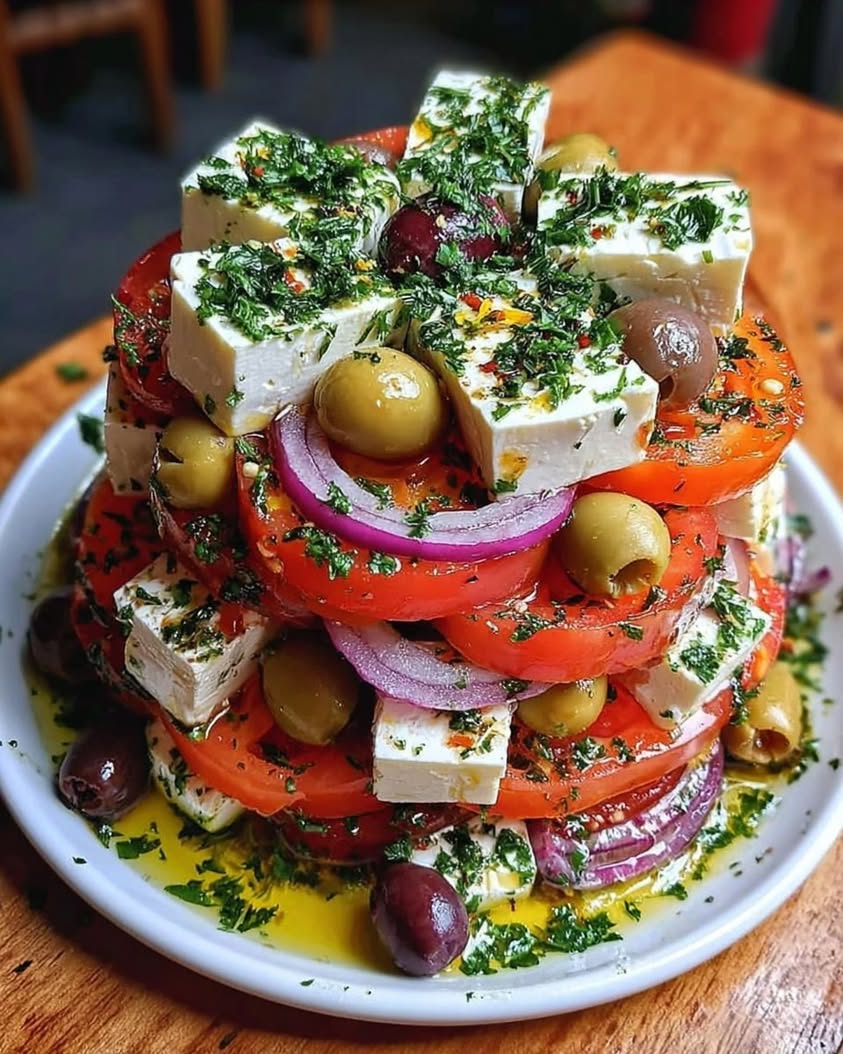
Greek Feta Salad Tower: An Elegant and Easy Appetizer for Any Occasion
Imagine serving an appetizer that looks like it came from a gourmet restaurant but took you only minutes to assemble. This stunning Greek Feta Salad Tower does exactly that. It transforms the classic, beloved flavors of a Greek salad into a vertical masterpiece. Consequently, it becomes the star of any appetizer spread. Moreover, this dish delivers a perfect harmony of creamy, briny, and fresh tastes in every single bite.
This recipe focuses on simplicity and presentation. You layer vibrant, crisp vegetables with rich, creamy feta cheese. Then, you bind everything together with a tangy homemade vinaigrette. The result is a visually impressive and deliciously shareable starter. Ultimately, this Greek Feta Salad Tower proves that impressive appetizers do not require complicated techniques or hours in the kitchen. Instead, they just need fresh ingredients and a little creativity.
Furthermore, this dish is incredibly versatile. You can serve it as a light lunch, a elegant starter for a dinner party, or a centerpiece for a summer picnic. The combination of textures and flavors is universally appealing. For instance, the crunch of cucumber meets the juicy pop of tomato, all balanced by the salty feta. Therefore, learning to craft this stunning Greek Feta Salad Tower will elevate your entertaining game instantly.
Quick Recipe Highlights
- Flavor Profile: This tower bursts with the classic Mediterranean flavors of tangy feta, briny Kalamata olives, and fresh herbs. A simple red wine vinaigrette with oregano ties all the elements together beautifully, creating a balanced and refreshing taste.
- Texture: Enjoy a delightful contrast between the creamy, crumbled feta cheese and the crisp, juicy vegetables. The cucumbers and bell peppers provide a satisfying crunch, while the tomatoes add a soft, juicy element.
- Aroma: Fresh dill and dried oregano release a fragrant, earthy scent that is unmistakably Greek. The aroma of extra virgin olive oil and a hint of garlic from the dressing completes the sensory experience.
- Visual Appeal: The layered presentation in a clear ring mold creates a striking, colorful tower. Vibrant red tomatoes, green cucumbers, and peppers, white feta, and black olives make for a feast for the eyes before the first bite.
- Skill Level Needed: This is a beginner-friendly recipe requiring no cooking. The essential skills are simple knife work for chopping and the ability to whisk a dressing. Assembly is straightforward and fun.
- Special Equipment: You will need a 3-inch round cookie cutter, metal ring mold, or even a clean, empty can with both ends removed. This tool is key for creating the perfect tower structure.
Recipe Overview
- Difficulty Level: We rate this recipe as easy because it involves no heat application or complex techniques. The steps are purely assembly-based: chopping, mixing, and layering. Anyone can achieve a beautiful result on the first try with minimal guidance.
- Category: This dish fits perfectly into the appetizer and starter category. It also works wonderfully as a light vegetarian lunch or a vibrant side salad for grilled meats. Its flexibility makes it a valuable recipe for various meals.
- Cuisine: This is a modern presentation of a classic Greek salad, or Horiatiki. It stays true to the core ingredients and flavors of traditional Greek cuisine while offering a contemporary, elegant twist on plating and serving style.
- Cost: The cost is very reasonable, especially when tomatoes, cucumbers, and peppers are in season. The main expense is a block of quality Greek feta cheese and a good extra virgin olive oil, both of which are worth the investment for flavor.
- Season: This recipe shines brightest in late summer when tomatoes and cucumbers are at their peak sweetness and flavor. However, it is a refreshing option year-round, particularly as a bright counterpoint to heavier winter meals.
- Occasion: It is ideal for dinner parties, potlucks, holiday gatherings, or bridal showers. The impressive presentation makes it suitable for celebratory events, while its ease makes it perfect for casual weekend entertaining.
Why You’ll Love This Recipe
First and foremost, you will adore the incredible taste and texture appeal of this Greek Feta Salad Tower. Each layer offers a distinct sensation, from the cool crunch of cucumber to the creamy saltiness of the cheese. The homemade vinaigrette soaks into the vegetables just enough to marry the flavors without making anything soggy. Consequently, every forkful delivers a complete and satisfying experience of the Mediterranean.
Next, consider the sheer convenience and preparation benefits. This recipe requires zero cooking, meaning you can stay cool in the kitchen. All the work is simple chopping and assembling. Furthermore, you can prepare the individual components ahead of time. Then, you simply layer them before serving. This makes it a stress-free choice for hosting, as you can socialize instead of being stuck at the stove.
Additionally, this dish boasts significant nutritional advantages. It is packed with vitamins from fresh vegetables, healthy fats from olive oil and olives, and a good amount of protein and calcium from the feta cheese. It is a nutrient-dense choice that feels indulgent but is actually quite wholesome. Therefore, you can enjoy it guilt-free, knowing you are feeding your body well.
The social and entertaining value of this tower cannot be overstated. It creates an immediate “wow” factor when you bring it to the table. Guests are always impressed by the elegant presentation. It serves as a fantastic conversation starter and shows you put thought and care into the meal. Ultimately, it elevates the entire dining experience with minimal effort on your part.
Finally, this recipe is remarkably cost-effective and accessible. You do not need expensive or hard-to-find ingredients. Most components are pantry staples or easy to get at any grocery store. The special ring mold is a one-time purchase that you can use for countless other recipes. For these reasons, this stunning Greek Feta Salad Tower is a recipe you will return to again and again for impressive appetizers.
Historical Background and Cultural Significance
The origin story of this dish is rooted in the classic Greek salad, known in Greece as “Horiatiki Salata,” which translates to “village salad.” Traditionally, this salad was a farmer’s meal, made from ingredients readily available in the garden: tomatoes, cucumbers, onions, olives, and a slab of feta cheese drizzled with olive oil. It was a practical, nourishing dish that celebrated the simplicity and quality of local produce. The concept of stacking or towering the salad is a modern culinary innovation aimed at enhancing visual presentation for contemporary dining.
This salad holds deep cultural importance in Greece. It is a staple on nearly every taverna table and represents the heart of the Mediterranean diet. The combination of ingredients showcases the Greek philosophy of eating: fresh, seasonal, and flavorful. The feta cheese itself is a protected designation of origin (PDO) product in the European Union, meaning true feta must come from specific regions in Greece and be made primarily from sheep’s milk, sometimes with up to 30% goat’s milk. This protection underscores its national significance.
The evolution of the recipe from a rustic, tossed salad to an elegant tower reflects broader trends in global cuisine. Chefs began deconstructing and reassembling classic dishes to create new sensory experiences. The tower format allows each ingredient to be distinctly visible and appreciated. It also provides better control over the distribution of dressing and flavors in each bite. This modern take respects the original flavors while presenting them in a novel, upscale way.
Regional variations of the base Greek salad exist throughout the Mediterranean. For example, some islands add capers, while others might include bell peppers or skip the lettuce entirely. The tower format is adaptable to these variations. You could create a Cretan-inspired tower with barley rusks (dakos) at the base or a Cypriot version with halloumi cheese. This flexibility allows the stunning Greek Feta Salad Tower to be a canvas for expressing different regional Greek culinary traditions.
Ingredient Deep Dive
Let us start with Feta Cheese. Authentic Greek feta is a brined curd cheese with a crumbly texture and tangy, salty flavor. Culturally, it has been made in Greece for thousands of years. Nutritionally, it is a good source of calcium, protein, and beneficial fatty acids. When selecting feta, look for the PDO label to ensure authenticity. For the best texture in your tower, buy a block and crumble it yourself rather than using pre-crumbled cheese. Store leftover feta in its brine in the refrigerator. If you need a substitution, other salty, crumbly cheeses like Bulgarian sirene or French feta can work, but the flavor profile will shift.
Next, consider the Tomatoes. Use the ripest, juiciest tomatoes you can find, such as Roma or vine-ripened. They are the juicy heart of the tower. Historically, tomatoes came to Greece in the early 19th century and quickly became integral to the cuisine. They are rich in lycopene, vitamin C, and potassium. For the best results, choose tomatoes that are heavy for their size and fragrant at the stem. Never refrigerate tomatoes, as cold temperatures degrade their texture and flavor. If tomatoes are out of season, you can use high-quality cherry tomatoes, halved, for a sweeter, more consistent option.
Now, examine the Cucumber. English or Persian cucumbers are ideal because they have fewer seeds and thinner skin. They provide essential crunch and freshness. Cucumbers have been cultivated for over 3,000 years and are known for their hydrating properties, as they are about 95% water. They also provide vitamin K and potassium. Select cucumbers that are firm and bright green. You can peel them or leave the skin on for added color and nutrients. For storage, keep them in the crisper drawer of your refrigerator. There is no perfect substitute, but crisp jicama sticks could provide a similar crunch in a pinch.
Finally, the Extra Virgin Olive Oil in the dressing is non-negotiable. It is the liquid gold of Greek cuisine, used for both its flavor and health benefits. High-quality olive oil has fruity, peppery notes that elevate the entire dish. It is rich in monounsaturated fats and antioxidants. Always choose a cold-pressed extra virgin olive oil for dressings. Store it in a cool, dark place to prevent rancidity. While other oils can be used, they will not provide the authentic Mediterranean flavor. For the olives, Kalamatas are preferred for their meaty texture and deep, winey flavor, but any good quality black olive will suffice.
Common Mistakes to Avoid
- Using a Dull Knife: A dull knife will crush your tomatoes and cucumbers instead of slicing them cleanly. Consequently, you will lose precious juices and end up with a soggy, messy tower. Always use a sharp chef’s knife for clean cuts.
- Skipping the Draining Step: Failing to drain the chopped vegetables, especially the cucumbers and tomatoes, is a critical error. The excess water will pool at the bottom of your tower, causing it to collapse and diluting the flavorful dressing.
- Over-mixing the Feta: When you add the feta to the dressing, gently fold it in. If you stir too vigorously, the feta will turn into a paste. You want distinct, creamy crumbles throughout the tower for the best texture.
- Using Pre-Crumbled Feta: Pre-crumbled feta often contains anti-caking agents that can make it dry and chalky. For superior creaminess and flavor, always buy a block of feta and crumble it yourself just before using.
- Assembling Too Far in Advance: The tower should be assembled no more than 15-20 minutes before serving. If it sits too long, the vegetables will release water and the layers will compress, losing their distinct definition and becoming soggy.
- Packing the Layers Too Tightly: When building the tower, gently press each layer into the mold. Do not pack or compress them forcefully. You want the ingredients to hold together but still be light and airy when you lift the ring off.
- Neglecting to Oil the Mold: Lightly brushing the inside of your ring mold with olive oil is a small step with a big impact. It ensures the tower releases cleanly and smoothly onto the plate without sticking or breaking.
- Using Low-Quality Olive Oil: The dressing is simple, so every ingredient counts. A bland or rancid olive oil will make the entire dish taste flat. Invest in a good bottle of extra virgin olive oil for dressings and finishing.
Essential Techniques
The first essential technique is proper vegetable draining. After dicing your tomatoes and cucumbers, place them in a colander and sprinkle lightly with salt. Let them sit for 10-15 minutes. The salt will draw out excess moisture. Then, gently pat them dry with a paper towel. This step is crucial because it prevents a watery tower. The visual cue for success is vegetables that look vibrant and dry to the touch, not sitting in a pool of liquid.
Next, master the gentle folding of the feta. After whisking your vinaigrette, add the crumbled feta cheese. Use a rubber spatula to fold the cheese into the dressing. Fold by cutting down through the center, sliding the spatula along the bottom of the bowl, and lifting the mixture over the top. Repeat just until combined. This technique is important because it maintains the cheese’s crumbly texture. The common pitfall is stirring, which creates a homogenous, pasty mixture. Success looks like feta crumbles evenly coated in dressing but still holding their shape.
Finally, perfect the layering and unmolding process. Place your oiled ring mold on the serving plate. Start with a stable base layer, like the tomato and cucumber mix. Use the back of a spoon to gently press it down evenly. Continue layering, pressing lightly after each addition. To unmold, slowly and steadily lift the ring straight up. The key is a confident, vertical lift. If you wiggle or tilt the ring, you risk disturbing the layers. The success cue is a clean, freestanding tower with visible, distinct layers on the plate.
Pro Tips for Perfect Greek Feta Salad Tower
Chill your serving plates beforehand. A cold plate helps keep the tower firm and refreshing, especially on a warm day. This simple step significantly enhances the final eating experience.
Add a fresh herb garnish after unmolding. Sprinkle extra chopped dill or oregano on top and around the base of the tower. This adds a final pop of color and a burst of fresh aroma.
Use a small offset spatula or butter knife to help release the tower. Gently run the tool around the inside edge of the mold before lifting it. This ensures a clean separation.
For extra flavor, marinate the Kalamata olives in a little of the dressing before adding them to the tower. This intensifies their taste and integrates them better into the overall flavor profile.
If your tomatoes are not very flavorful, add a tiny pinch of sugar to the tomato layer. This trick enhances their natural sweetness without making the dish taste sweet.
Create a base “moat” of dressing on the plate. Before placing the mold, spoon a small circle of vinaigrette onto the plate. Then set the mold over it. When you lift the ring, the tower will be beautifully framed by the dressing.
For a more stable base, you can add a thin layer of finely chopped, well-drained cucumber at the very bottom of the mold. It provides a solid foundation for the taller layers above.
Let the assembled tower rest for 5 minutes before unmolding. This brief rest allows the layers to settle and adhere to each other slightly, reducing the chance of a collapse.
Variations and Adaptations
Consider regional variations to customize your tower. For a Cretan twist, place a small, toasted round of barley rusk (dakos) at the base of the mold before adding the salad. The rusk will soak up the delicious juices. For a Cypriot version, replace the feta with grilled or pan-fried halloumi cheese. The squeaky texture and salty flavor of halloumi create a delightful contrast. You can also add a teaspoon of dried mint to the dressing for an authentic Cypriot herb note.
Seasonal adaptations keep this recipe exciting year-round. In winter, use roasted cherry tomatoes and roasted bell peppers for a deeper, sweeter flavor profile. You can also add segments of citrus, like blood orange, for a bright winter note. In spring, incorporate fresh peas, chopped radishes, and plenty of mint. For autumn, add roasted cubes of butternut squash or beet to the layers for earthy sweetness and stunning color.
Dietary modifications are straightforward. For a vegan Greek Feta Salad Tower, use a high-quality vegan feta alternative made from tofu or almonds. Ensure your olives are packed in brine, not oil containing dairy. For a gluten-free version, the recipe is naturally compliant—just confirm your vinegar is gluten-free. To make it lower in sodium, rinse the feta and olives briefly under cold water to remove some surface brine, and reduce or omit the salt in the dressing.
Experiment with flavor and texture modifications. Add a layer of creamy, blended avocado for extra richness. Incorporate a spoonful of pesto into the dressing for a basil-forward twist. For added crunch, sprinkle toasted pine nuts or chopped walnuts between the layers. You can also add a thin layer of hummus at the base for a protein boost and a creamy texture that pairs wonderfully with the vegetables.
Serving and Presentation Guide
Mastering plating techniques will make your tower look professional. Always place the tower slightly off-center on the plate for a more dynamic, artistic presentation. Use a large, flat plate or a small appetizer plate with a slight rim. After unmolding, you can gently tilt the plate and spoon a little extra dressing around the base to create an elegant sauce “pool.” This frames the tower and adds visual interest.
Garnishing ideas extend beyond a simple herb sprinkle. Consider adding a single, perfect Kalamata olive on top. Place a small sprig of fresh dill or oregano leaning against the tower. You can also add a light dusting of sweet paprika or sumac over the top for a pop of color and subtle flavor. For a more dramatic effect, drizzle a thin stream of high-quality balsamic glaze in a zigzag pattern across the plate.
Traditional accompaniments include warm, grilled pita bread cut into triangles. You can also serve it with crispy lavash crackers. For a more substantial offering, place the tower on a bed of mixed baby greens or arugula. The peppery arugula complements the salty feta beautifully. In Greece, this salad is often served alongside grilled meats like souvlaki or lamb chops, making it a perfect starter for a Mediterranean-themed meal.
Consider modern serving suggestions for different settings. For a cocktail party, create mini towers using a 1.5-inch ring mold for bite-sized appetizers. Serve them on small spoons or Asian soup spoons for easy one-bite consumption. For a family-style meal, you can build one large, impressive tower on a platter and let guests serve themselves. Alternatively, prepare individual towers on each guest’s plate for a formal dinner setting.
Wine and Beverage Pairing
Choosing the right wine pairings enhances the Mediterranean experience. A crisp, dry white wine like Assyrtiko from Santorini is the classic and perfect choice. Its high acidity and citrus notes cut through the richness of the feta and complement the fresh vegetables. Alternatively, a Greek Rosé or a Sauvignon Blanc from elsewhere would also work wonderfully. For a red option, choose a light-bodied, low-tannin red like a Beaujolais or a Greek Xinomavro rosé. The key is to avoid heavy, oaky wines that would overwhelm the salad’s delicate flavors.
For non-alcoholic alternatives, consider beverages that mirror the wine’s refreshing qualities. Sparkling water with a squeeze of fresh lemon or lime is always a winner. A homemade lemonade infused with fresh herbs like basil or thyme makes a sophisticated pairing. Iced herbal teas, such as mint or chamomile, are also excellent choices. You could even serve a tart pomegranate juice spritzer for a festive, colorful drink that echoes the salad’s vibrant flavors.
While coffee and tea are not typical pairings for a salad appetizer, if serving this as a light lunch, follow it with a cup of strong Greek coffee. The intense, bold flavor of the coffee provides a striking contrast to the fresh, salty salad. For tea, a light green tea or a mint tea would be a clean, palate-cleansing finish to the meal. Ultimately, the goal is to choose beverages that refresh the palate between bites.
Temperature considerations are vital for both wine and non-alcoholic drinks. Serve white wines and rosés well-chilled, between 45-50°F. Sparkling water and homemade spritzers should be ice-cold. This contrast between the cool beverage and the cool salad keeps the entire course refreshing. Avoid serving lukewarm drinks, as they will make the salad feel less vibrant. Always have a chilled carafe of water on the table as well.
Storage and Shelf Life
Understanding storage methods is key for food safety and quality. The assembled Greek Feta Salad Tower does not store well and should be eaten immediately. However, you can store the prepped components separately. Keep the chopped, drained vegetables in an airtight container in the refrigerator for up to 24 hours. Store the crumbled feta and dressing mixture in a separate container for up to 2 days. The olives can be kept in their brine in the fridge.
Pay close attention to temperature requirements. All components must be kept refrigerated at or below 40°F until assembly. Do not leave the chopped vegetables at room temperature for more than 2 hours during prep. After assembling the tower, serve it within 20 minutes. If you need to hold it slightly longer, you can place the assembled but unmolded towers in the fridge for no more than 15 minutes before serving.
Container recommendations are simple. Use glass or BPA-free plastic containers with tight-fitting lids for prepped ingredients. For the dressing, a small mason jar is perfect because you can shake it to re-emulsify before using. Do not store the dressed feta mixture for more than two days, as the acid in the vinegar will continue to break down the cheese, altering its texture.
Recognize the signs of spoilage. Discard any vegetables that have become slimy, discolored, or developed an off odor. If the feta mixture smells overly sour or the oil in the dressing smells rancid, it is time to throw it out. Because this dish uses fresh ingredients, it does not have a long shelf life. When in doubt, it is always safer to prepare a fresh batch.
Make Ahead Strategies
Creating a prep timeline reduces day-of stress. The day before your event, wash and dry all your vegetables. You can also make the vinaigrette and store it in a jar in the fridge. On the day of serving, about 2-3 hours before your event, chop the vegetables, salt and drain them, and pat them dry. Crumble the feta cheese. About 30 minutes before serving, mix the feta with the dressing. Then, assemble the towers 15-20 minutes before guests arrive.
Proper storage between steps maintains quality. After draining the vegetables, store them in a container lined with a paper towel to absorb any residual moisture. Keep the container in the fridge. Store the dressing and the crumbled feta separately until the final assembly phase. This prevents the vegetables from getting soggy and the feta from becoming overly soft. Only combine the feta and dressing when you are ready to build the towers.
Assess the quality impact of make-ahead steps. Pre-chopping vegetables may cause a minimal loss of crispness, but the draining step counteracts this. The flavor of the vinaigrette often improves when made ahead, as the herbs and garlic infuse the oil and vinegar. The texture of the feta is best when crumbled fresh, so avoid doing that more than a few hours in advance. Overall, a strategic make-ahead plan has a very positive impact, saving you time without sacrificing significant quality.
Follow smart assembly tips for the final moment. Have all your prepped ingredients, oiled ring molds, and serving plates ready on the counter. Build the towers in a logical assembly-line fashion. Once assembled, you can hold the unmolded towers in the fridge for a brief 10-15 minute window if needed. Add any delicate fresh herb garnishes only after unmolding and just before serving to keep them looking vibrant and fresh.
Scaling Instructions
Halving the recipe is simple for a smaller gathering. Simply divide all ingredient quantities by two. Use a smaller ring mold, about 2 inches in diameter, to maintain the proportional height of the tower. The prep time will remain roughly the same, as you are still performing all the same steps. The assembly time will be slightly faster with fewer towers to build. Storage considerations remain identical; just use smaller containers for the prepped ingredients.
Doubling or tripling the recipe for a crowd requires a bit more planning. Multiply all ingredients carefully. The most efficient method is to prepare each component in large batches. Use a very large colander or multiple colanders for draining the increased volume of vegetables. You may need to work in batches when mixing the feta with the dressing to avoid crushing the cheese. Consider setting up an assembly station with several ring molds to speed up the building process.
Equipment adjustments are necessary when scaling. For a large party, you may not have enough ring molds. In this case, you can build one very large, impressive tower on a platter using a large biscuit cutter or even a clean, empty tin can from which both ends have been removed. Alternatively, serve the salad deconstructed in a large bowl, with the dressing and feta mixture on the side, allowing guests to build their own “tower” on their plates.
Timing modifications are minimal when scaling up. The vegetable prep time will increase linearly with the volume. However, you can enlist help for the chopping to save time. The assembly time will also increase. To manage this, prepare all components ahead of time and recruit a friend to help with the layering just before serving. The key is to keep the assembly line organized to ensure each tower is built consistently and efficiently.
Nutritional Deep Dive
Examining the macro breakdown reveals a balanced profile. One serving of this Greek Feta Salad Tower provides a good mix of healthy fats from the olive oil, olives, and feta. It offers moderate protein from the cheese and a modest amount of carbohydrates from the vegetables. The dish is relatively low in sugar, with the natural sugars coming primarily from the tomatoes and bell peppers. It is also a good source of dietary fiber, thanks to the cucumbers, peppers, and tomato skins.
A micronutrient analysis shows this dish is a powerhouse of vitamins and minerals. Tomatoes and bell peppers are excellent sources of Vitamin C and antioxidants like lycopene. Cucumbers provide Vitamin K. Feta cheese contributes significant calcium and phosphorus for bone health. The extra virgin olive oil is rich in Vitamin E and polyphenols, which have anti-inflammatory properties. The olives add iron and copper to the mix.
The health benefits of this Mediterranean-style dish are well-documented. The combination of ingredients supports heart health through monounsaturated fats and antioxidants. The fiber promotes good digestive health. The nutrients support skin health and immune function. Furthermore, this is a satiating dish due to its fiber, protein, and fat content, which can help with weight management by preventing overeating later in the meal.
Consider important dietary considerations. The dish contains dairy (feta) and is not suitable for those with a milk allergy or strict vegan diets. It is naturally gluten-free. The sodium content can be moderate due to the feta and olives, so those on a sodium-restricted diet should rinse these ingredients and limit added salt. For those counting carbohydrates, the net carbs are relatively low, making it a potential fit for low-carb eating styles when consumed in appropriate portions.
Dietary Adaptations
For a gluten-free version, this recipe is naturally compliant. Simply ensure that the red wine vinegar you use is certified gluten-free, as some vinegars can be derived from gluten grains. All other core ingredients—vegetables, feta, olives, oil—are inherently gluten-free. This makes the stunning Greek Feta Salad Tower an excellent and safe choice for anyone with celiac disease or gluten sensitivity.
Creating a dairy-free or vegan Greek Feta Salad Tower requires a cheese substitute. Many high-quality vegan feta alternatives are now available, made from ingredients like tofu, almonds, or coconut oil. Look for one that is firm enough to crumble. Also, confirm that your olives are packed in brine or oil that does not contain dairy. The rest of the recipe remains the same, resulting in a plant-based appetizer that is still impressive and flavorful.
For a low-carb or keto adaptation, this recipe is already quite friendly. The primary carbohydrates come from the vegetables. To reduce them further, you can increase the ratio of feta and olives to vegetables. Use a smaller amount of tomato and bell pepper, and increase the cucumber, which is lower in carbs. Ensure your dressing uses a keto-approved vinegar and a high-quality olive oil. This adaptation keeps the dish within strict macronutrient guidelines.
Adapting for a Paleo diet involves removing the dairy and any processed ingredients. Omit the feta cheese entirely or replace it with a Paleo-friendly “cheese” made from nuts and nutritional yeast. Ensure all other ingredients are whole, unprocessed foods. The olives should be simple brine-cured olives without any artificial additives. This version focuses on the fresh vegetables and herbs, with a simple olive oil and lemon juice dressing.
Troubleshooting Guide
If you encounter texture issues like a soggy or collapsing tower, the cause is almost always excess moisture. Solution: Be more diligent with the draining step. Salt your diced tomatoes and cucumbers and let them drain in a colander for a full 15 minutes. Then, press them gently between layers of paper towels or a clean kitchen towel to remove as much liquid as possible before assembling.
When the flavor balance seems off—perhaps too salty or not tangy enough—you can adjust post-assembly. If it’s too salty, serve with a wedge of lemon on the side; the fresh acid can help balance it. If it’s bland, drizzle a little extra vinaigrette around the base of the tower on the plate. For future attempts, taste your feta before adding salt to the dressing, as some brands are saltier than others.
If the tower will not release cleanly from the mold, do not force it. First, ensure you oiled the mold. Then, gently run a thin paring knife or small offset spatula around the entire inner edge. You can also try gently warming the outside of the metal mold with your hands for a few seconds to slightly loosen it. If it still sticks, carefully lift one side to let a little air in, which should break the suction.
For equipment challenges, like not having a ring mold, get creative. Use a clean, empty can (like a tuna can) with both ends removed. A wide-mouth glass or a sturdy cookie cutter also works. In a pinch, you can form the tower freehand by carefully stacking the ingredients in a small, neat pile, though this requires a steadier hand. The goal is to create defined layers, not necessarily a perfect cylinder.
Recipe Success Stories
Community feedback on this Greek Feta Salad Tower has been overwhelmingly positive. Many home cooks report that it has become their go-to “impressive but easy” appetizer. One reader mentioned bringing it to a potluck where it was the first dish to disappear, with several guests asking for the recipe. Another shared that they now make mini versions for their annual holiday party, and they are always a hit. The consistent theme is how the elegant presentation belies the simple preparation.
Variation successes from readers are inspiring. One cook added a layer of quinoa for a heartier vegetarian main course. Another used the same technique but with ingredients for a Caprese salad—tomatoes, fresh mozzarella, and basil—creating an Italian-inspired tower. A family with kids made a “deconstructed” version where the ingredients were served separately, allowing the children to build their own edible towers, making dinner fun and interactive.
Reader suggestions have also improved the recipe. Several suggested adding a thin layer of finely chopped red onion that has been soaked in ice water to remove its harsh bite. This adds a wonderful sharpness and crunch. Another excellent tip was to use a mixture of yellow and red cherry tomatoes for even more visual appeal. One reader recommended serving the tower on a round of grilled eggplant, which adds a smoky flavor and makes the dish more substantial.
Photography tips from successful makers emphasize natural light. Shoot your tower near a window in indirect sunlight to make the colors pop. Shoot from a slight overhead angle to showcase all the beautiful layers. A plain, white plate is often the best backdrop to let the vibrant colors of the salad shine. Remember to garnish just before taking the photo so the herbs look fresh and vibrant. These small steps can make your culinary creation look as stunning in a picture as it does on the table.
Frequently Asked Questions
Can I make this Greek Feta Salad Tower ahead of time? You can prep all components ahead, but assemble no more than 20 minutes before serving. The vegetables will release water and the tower will become soggy if assembled too early. Store chopped veggies, dressing, and feta separately in the fridge, then layer quickly before your event.
What can I use if I don’t have a ring mold? A clean, empty can with both ends removed works perfectly. A wide-mouth glass or a sturdy metal cookie cutter are also great substitutes. In a pinch, you can form the layers freehand into a neat stack, though a mold gives the cleanest, most professional look.
Is this recipe gluten-free? Yes, this stunning Greek Feta Salad Tower is naturally gluten-free. The core ingredients are vegetables, cheese, olives, oil, and vinegar. Just double-check that your Print
Greek Feta Salad Tower
- Total Time: 15 minutes
- Yield: 4
Description
A stunning layered salad featuring fresh Mediterranean ingredients, stacked into an elegant tower for a visually impressive and flavorful appetizer or light meal.
Ingredients
- 2 large ripe tomatoes, diced
- 1 English cucumber, diced
- 1 red onion, thinly sliced
- 1 green bell pepper, diced
- 1 cup Kalamata olives, pitted and halved
- 8 oz block of feta cheese, cubed
- 1/4 cup extra virgin olive oil
- 2 tbsp red wine vinegar
- 1 tsp dried oregano
- Salt and black pepper to taste
- Fresh dill or parsley for garnish
Instructions
- In a large bowl, combine the diced tomatoes, cucumber, red onion, bell pepper, and Kalamata olives.
- In a small bowl, whisk together the olive oil, red wine vinegar, dried oregano, salt, and pepper to make the dressing.
- Pour the dressing over the vegetable mixture and toss gently to coat everything evenly.
- Using a round mold or a small bowl, layer the salad mixture and feta cubes alternately, pressing down gently to form a compact tower.
- Carefully remove the mold and garnish the top with fresh dill or parsley. Serve immediately.
Notes
You can customize the seasonings to taste.
- Prep Time: 15 minutes
- Cook Time: 0 minutes
- Method: Appetizer
- Cuisine: Greek