Sweet Potato Rounds with Halloumi, Roasted Beets, and Walnut Sage Pesto: A Vibrant Vegetarian Feast
Imagine a dish that bursts with color, texture, and flavor, all on a single plate. These Sweet Potato Rounds with Halloumi, Roasted Beets, and Walnut Sage Pesto deliver exactly that experience. This recipe transforms humble root vegetables and simple cheese into an elegant, satisfying meal. Consequently, it is perfect for a cozy dinner or an impressive appetizer for guests. The combination of earthy roasted beets, creamy sweet potato, and salty pan-fried halloumi creates a symphony of tastes. Ultimately, the homemade walnut sage pesto ties everything together with its rich, nutty, and aromatic finish.
This dish celebrates the beauty of seasonal produce and straightforward cooking techniques. Moreover, it is a fantastic way to enjoy a meatless meal that feels substantial and gourmet. The vibrant hues of orange and deep red make it visually stunning. Additionally, the textures range from the tender-crisp sweet potato rounds to the squeaky, golden halloumi. Each component can be prepared ahead of time, making assembly a breeze. Therefore, whether you are a seasoned cook or a beginner, this recipe guides you to a delicious result. It is a celebration of plant-based ingredients that will delight your senses and nourish your body.
Quick Recipe Highlights
- Flavor Profile: This dish offers a beautiful balance of sweet, savory, and earthy notes. The natural sweetness of the roasted sweet potato and beets contrasts perfectly with the salty, briny halloumi cheese. Furthermore, the walnut sage pesto adds a layer of herbal, nutty complexity that elevates every bite.
- Texture: You will experience a delightful contrast in textures. The sweet potato rounds become tender with slightly crispy edges, while the halloumi develops a golden, crisp exterior and a soft, squeaky interior. The roasted beets add a dense, earthy chew, and the pesto provides a creamy, coarse finish.
- Aroma: As the vegetables roast, your kitchen will fill with the warm, caramelized scent of sweet potatoes and earthy beets. Meanwhile, pan-frying the halloumi releases a savory, salty aroma. Finally, the fresh sage and toasted walnuts in the pesto contribute a deeply herbal and nutty fragrance.
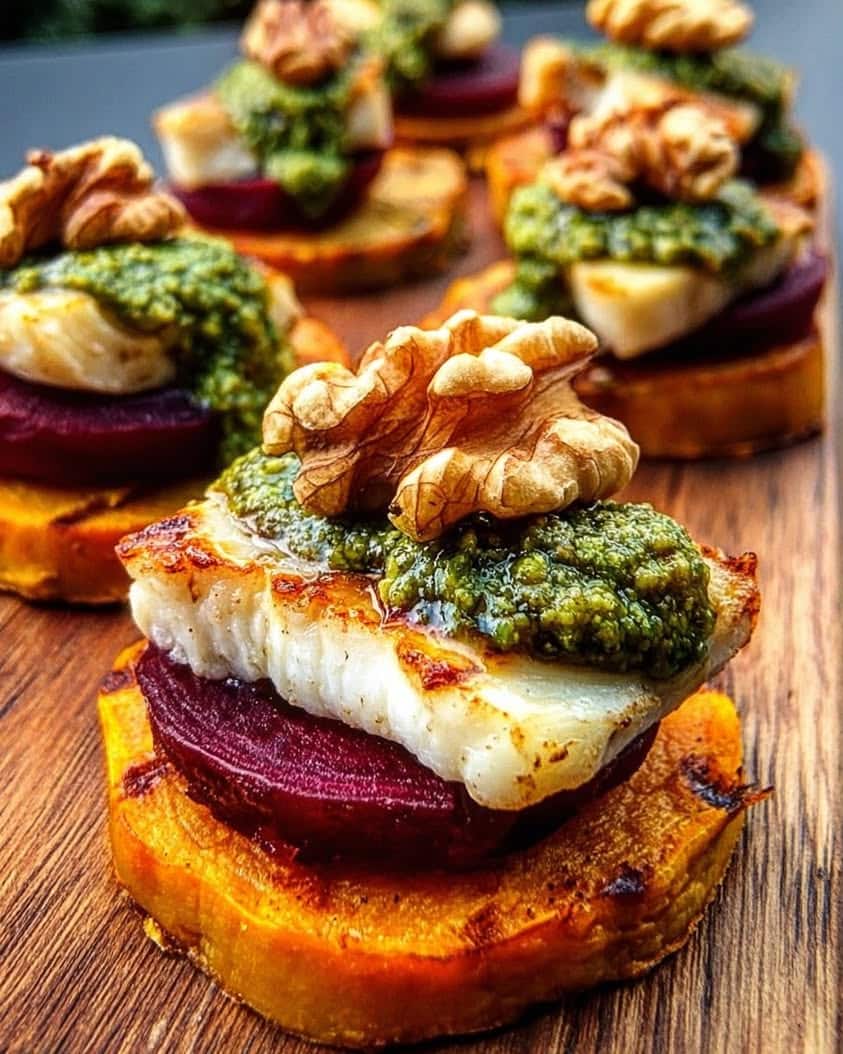
- Visual Appeal: This plate is a feast for the eyes with its stunning color palette. The bright orange sweet potato rounds, deep magenta beets, and golden-brown halloumi create a vibrant mosaic. A generous drizzle of green pesto adds the final artistic touch, making it perfect for photography.
- Skill Level Needed: This is an accessible recipe for most home cooks. It involves basic techniques like roasting vegetables and pan-frying cheese. Additionally, making the pesto requires simple food processor skills. With clear instructions, even a novice can achieve impressive, restaurant-quality results.
- Special Equipment: You will need a baking sheet, a skillet, and a food processor or blender. A mandoline slicer can help achieve uniformly thick sweet potato rounds, but a sharp knife works perfectly. Otherwise, no unusual kitchen gadgets are required for this wholesome dish.
Recipe Overview
- Difficulty Level: We classify this recipe as easy because it breaks down into simple, manageable steps. Roasting vegetables is largely hands-off, and frying halloumi takes just minutes. Moreover, the pesto comes together quickly in a processor. The assembly requires no special technique, making it a stress-free cooking project for any night of the week.
- Category: This versatile dish fits multiple categories beautifully. It serves wonderfully as a vegetarian main course, a substantial side dish, or an elegant appetizer for sharing. You can also present it as part of a larger mezze or brunch spread. Its flexibility is one of its greatest strengths for meal planning.
- Cuisine: While not tied to one specific tradition, this recipe draws inspiration from Mediterranean and Middle Eastern flavors. Halloumi cheese originates from Cyprus, and pesto has Italian roots. The use of walnuts and sage gives it a rustic, autumnal feel that transcends borders, creating a modern fusion dish.
- Cost: This is a reasonably affordable recipe, especially when root vegetables are in season. Sweet potatoes and beets are typically inexpensive. Halloumi can be a pricier ingredient, but a little goes a long way. Walnuts and fresh herbs are pantry staples for many, keeping the overall cost moderate for a special meal.
- Season: This dish shines brightest in the fall and winter months. Sweet potatoes and beets are harvest vegetables, offering peak flavor and nutrition during cooler seasons. The warm, roasted elements and hearty pesto provide comfort on chilly evenings. However, you can enjoy it year-round with great success.
- Occasion: It is perfect for a festive holiday meal, a date night at home, or a dinner party where you want to impress vegetarian guests. Conversely, it is simple enough for a rewarding weeknight dinner. The beautiful presentation makes it suitable for any gathering where food is the centerpiece.
Why You’ll Love This Recipe
First and foremost, the taste and texture appeal is undeniable. Each forkful delivers a complex journey from sweet to savory and from creamy to crisp. The halloumi provides a satisfying, protein-rich element that makes the dish feel complete. Meanwhile, the walnut sage pesto is so flavorful you will want to put it on everything. This combination ensures that your palate never gets bored, offering a new discovery with every bite. It is a recipe that turns simple ingredients into something truly extraordinary and memorable for your taste buds.
Next, consider the convenience and preparation benefits. You can roast the sweet potatoes and beets on the same tray, minimizing cleanup. The pesto can be made days in advance, and the vegetables can be roasted ahead of time and reheated. Consequently, when you are ready to eat, you only need to quickly pan-fry the halloumi and assemble the plates. This make-ahead flexibility is a game-changer for busy cooks and entertainers. It removes the last-minute stress and allows you to enjoy your own party.
Furthermore, the nutritional advantages are significant. Sweet potatoes are packed with beta-carotene and fiber, while beets offer folate and beneficial nitrates. Walnuts provide healthy omega-3 fats and protein. Halloumi adds a good dose of calcium and protein. Together, they create a balanced meal rich in vitamins, minerals, and antioxidants. This dish proves that eating vibrantly colored, whole foods can be an indulgent and delicious experience, not a restrictive one.
Additionally, the social and entertaining value is high. This dish is a natural conversation starter due to its stunning appearance. Serving individual composed plates feels special and thoughtful. It caters easily to vegetarians and can be adapted for other dietary needs with simple swaps. Guests will appreciate the effort and creativity, often asking for the recipe. It elevates a simple dinner into an event, making any meal feel like a celebration.
Finally, it is cost-effective and accessible. The core ingredients are readily available in most supermarkets year-round. You do not need expensive or exotic items to create this gourmet-looking dish. Investing in a block of halloumi and some fresh sage yields a meal that feels far more luxurious than its total cost. This accessibility means you can enjoy restaurant-quality flavors in your own kitchen anytime the craving strikes.
Historical Background and Cultural Significance
The individual components of this dish have rich and diverse histories. Sweet potatoes, for instance, have been cultivated for thousands of years in Central and South America. They later spread across the globe through exploration and trade. In many cultures, they are a vital staple food due to their hardiness and nutritional value. Their natural sweetness and versatility have made them a beloved ingredient in both savory and sweet dishes across continents, symbolizing sustenance and comfort.
Halloumi cheese carries deep cultural significance in Cyprus, where it originated. Traditionally made from a mixture of sheep and goat milk, it was a way to preserve milk in the warm Mediterranean climate. Its unique ability to hold its shape when heated made it perfect for grilling over open fires. This characteristic has earned it the nickname “the grilling cheese.” Consequently, halloumi is a cornerstone of Cypriot cuisine and a point of national pride, enjoyed for centuries in simple, rustic preparations.
The concept of pesto has evolved dramatically from its Genoese origins. Traditional pesto Genovese is a strict combination of basil, pine nuts, garlic, Parmesan, and olive oil. However, the technique of pounding nuts, herbs, and oil into a sauce has inspired countless variations worldwide. The use of sage and walnuts in this recipe reflects a more autumnal, rustic adaptation. This evolution shows how culinary traditions can be respectfully adapted using local and seasonal ingredients while honoring the core technique.
Roasted beets have a long history in Eastern European and Nordic cuisines, often stored through winter as a crucial source of nutrients. The practice of roasting vegetables to concentrate their sugars is ancient and universal. Combining these globally inspired elements—a Cypriot cheese, an Italian sauce technique, and universal roasting methods—creates a modern fusion dish. This recipe exemplifies contemporary cooking, where borders blur, and the focus is on harmony of flavor, texture, and seasonal goodness above strict tradition.
Ingredient Deep Dive
Sweet Potatoes: These vibrant tubers are native to the Americas and were domesticated over 5,000 years ago. They are an excellent source of beta-carotene, which the body converts to vitamin A, crucial for vision and immunity. They also provide fiber, vitamin C, and potassium. For the best results, choose firm sweet potatoes with smooth, unblemished skin. Store them in a cool, dark, well-ventilated place—not the refrigerator. If needed, you can substitute with regular potatoes, carrots, or even parsnips for a different flavor profile.
Halloumi: This semi-hard, brined cheese from Cyprus is famous for its high melting point. Historically, it was made by pastoral communities and preserved in brine for long journeys. Nutritionally, it is a good source of protein and calcium but can be high in sodium. Look for halloumi in the specialty cheese section. For storage, keep it submerged in its brine in the refrigerator. If you cannot find halloumi, good alternatives include paneer, queso para freír, or even thick slices of extra-firm tofu for a vegan version.
Beets: Beets have been cultivated since ancient times, initially for their leafy greens rather than their roots. They are rich in folate, manganese, and dietary nitrates, which may support heart health and athletic performance. Select small to medium beets that feel firm and heavy for their size, with crisp greens attached if possible. Store them unwashed in the refrigerator crisper drawer. Golden beets can be used for a less messy, equally sweet variation. For a substitute, try roasted carrots or turnips.
Walnuts: As one of the oldest tree foods, walnuts have been prized since 7000 B.C. They are uniquely high in alpha-linolenic acid, a plant-based omega-3 fat, and antioxidants. Always choose walnuts that smell fresh and nutty, not rancid. For longest storage, keep them in an airtight container in the freezer. Toasting them before use maximizes their flavor. In the pesto, pine nuts, pecans, or almonds would make suitable replacements, each offering a distinct taste.
Fresh Sage: This aromatic herb has a long history of use in both culinary and medicinal contexts, dating back to ancient Rome. It has earthy, slightly peppery notes that pair perfectly with fall ingredients and rich foods. Sage contains antioxidants and compounds traditionally associated with cognitive health. Choose bunches with vibrant, firm green leaves without black spots. Wrap them in a damp paper towel and store in a plastic bag in the fridge. In a pinch, fresh thyme or rosemary can work, though the flavor will be different.
Common Mistakes to Avoid
- Cutting Sweet Potatoes Too Thin or Thick: If the rounds are too thin, they will burn before becoming tender. Conversely, if they are too thick, they will take much longer to cook and may not caramelize properly. Aim for consistent 1/4 to 1/3-inch slices for the perfect balance of tender interior and crispy edges.
- Overcrowding the Baking Sheet: Placing the sweet potato and beet pieces too close together causes them to steam instead of roast. Steaming prevents the caramelization that develops deep, sweet flavors. Always use two sheets or roast in batches if necessary to ensure each piece has enough space for hot air to circulate.
- Not Drying the Halloumi: Halloumi often sits in brine, making it wet. Frying wet cheese leads to excessive splattering and prevents a proper sear. Always pat the halloumi slices thoroughly dry with a paper towel before they hit the hot pan. This simple step is crucial for achieving that perfect golden-brown crust.
- Using a Cold Pan for Halloumi: Adding halloumi to a cold skillet will make it stick and absorb oil without crisping. Always preheat your skillet over medium-high heat until it is properly hot before adding the oil and cheese. A hot pan ensures immediate searing and creates that desirable non-stick surface.
- Over-processing the Pesto: Blitzing the pesto in the food processor for too long can heat the ingredients and turn the sauce bitter. It can also make the texture too smooth and paste-like. Pulse the ingredients just until they are coarsely chopped and combined, preserving some texture and fresh flavor.
- Skipping the Toasting of Walnuts: Raw walnuts can have a slightly bitter edge and lack depth. Taking a few minutes to toast them in a dry pan or oven unlocks their natural oils, intensifies their nutty flavor, and adds a crucial layer of complexity to the pesto. Do not skip this flavor-building step.
- Underseasoning the Vegetables: Root vegetables need ample seasoning to shine. Do not be shy with salt and pepper before roasting. The seasoning should enhance their natural sweetness, not mask it. Taste a piece after roasting and adjust with a little more salt if needed before assembling.
- Adding Garlic Raw to the Pesto: A large clove of raw garlic can be overpowering and leave a harsh aftertaste. For a mellower, sweeter garlic flavor, try quickly roasting the unpeeled clove with the vegetables for 10-15 minutes, then squeezing out the soft paste. Alternatively, use just half a small raw clove.
Essential Techniques
Uniform Roasting: Achieving evenly roasted vegetables is fundamental to this recipe. The key is cutting your sweet potatoes and beets into pieces of similar size and thickness. This ensures they cook at the same rate, preventing some pieces from being undercooked while others burn. Toss them in oil and seasoning thoroughly so every surface is coated. Finally, spread them in a single layer with space between each piece to allow hot air to circulate and promote caramelization, not steaming.
Pan-Frying Halloumi: Mastering halloumi requires high heat and patience. Start with a preheated, dry non-stick or well-seasoned cast-iron skillet over medium-high heat. Add a thin layer of oil just before adding the dried cheese slices. Do not move them for 1-2 minutes, allowing a golden crust to form. Once you see browning around the edges, flip them carefully. The cheese should release easily when properly seared. Cook just until the second side is golden; overcooking can make it tough.
Emulsifying Pesto: The goal is to create a cohesive sauce where the oil binds with the solid ingredients. Use a food processor for the best control. First, pulse the nuts, garlic, and herbs until coarsely chopped. Then, with the machine running, slowly drizzle in the olive oil through the feed tube. This gradual incorporation helps form a stable emulsion. Finally, pulse in the cheese (if using) and seasonings. The result should be a textured paste, not a completely smooth puree.
Pro Tips for Perfect Sweet Potato Rounds with Halloumi, Beets, and Pesto
Use a mandoline slicer for perfectly even sweet potato rounds. This guarantees uniform cooking and a professional presentation. If you use a knife, take your time to measure thickness. Meanwhile, wear gloves when peeling and cutting beets to avoid stained hands. Their vibrant pigment is beautiful on the plate but notoriously difficult to remove from skin.
Toss the beet pieces in oil separately before adding them to the tray. This prevents the red juice from staining the sweet potatoes orange. You can roast them on the same sheet but keep them in their own little section. Furthermore, reserve a few whole sage leaves before making the pesto. Fry them quickly in the halloumi pan oil for a crispy, aromatic garnish.
Let the roasted vegetables cool slightly before assembling. Placing hot halloumi on top of steaming-hot sweet potatoes can make the cheese soften and lose its delightful squeak. A brief rest ensures every element’s texture is at its best. Additionally, warm your serving plates slightly. A warm plate keeps the assembled dish at an ideal temperature for longer as you bring it to the table.
Make extra walnut sage pesto. It stores wonderfully in the fridge for a week and is fantastic on pasta, sandwiches, grilled meats, or as a dip. Simply top it with a thin layer of olive oil before sealing to preserve its vibrant green color. Finally, for the best flavor, bring the halloumi to room temperature for about 15 minutes before frying. This helps it cook more evenly from edge to center.
Variations and Adaptations
For regional variations, consider a Greek twist by adding Kalamata olives and oregano to the pesto instead of sage. A Middle Eastern version could feature a drizzle of pomegranate molasses and a sprinkle of za’atar over the assembled dish. Alternatively, for a Nordic feel, use dill in the pesto and add a dollop of crème fraîche on the side. These simple swaps can transport the core recipe across continents, showcasing its incredible adaptability.
Seasonal adaptations are easy and rewarding. In spring, use asparagus tips and green garlic in place of beets. During summer, top the rounds with grilled zucchini and a basil pesto. For a heartier winter meal, add roasted Brussels sprout halves to the tray. You can also change the nut in the pesto based on what you have—hazelnuts in autumn, pistachios in spring. This flexibility lets you enjoy the recipe’s format year-round with peak-season produce.
Dietary modifications are straightforward. For a vegan version, omit the halloumi or use a vegan “grilling” cheese or marinated tofu. Ensure the pesto is dairy-free by using nutritional yeast or a vegan parmesan substitute. For a nut-free pesto, use sunflower seeds or pepitas. To make it gluten-free, simply ensure all packaged ingredients are certified GF—the recipe is naturally gluten-free otherwise. These adaptations ensure everyone can enjoy this beautiful dish.
Experiment with flavor variations by changing the herb in the pesto. Try rosemary for a piney note, mint for freshness, or parsley for a classic taste. You could also add a teaspoon of lemon zest to the pesto for brightness. For a spicy kick, include a pinch of red pepper flakes in the pesto or sprinkle them over the halloumi while frying. Swapping sweet potatoes for butternut squash rounds is another delicious alternative that works perfectly.
Serving and Presentation Guide
Start with a warm, neutral-colored plate to make the vibrant ingredients pop. Place two or three sweet potato rounds slightly overlapping as a base. Scatter the roasted beet pieces around and in between the rounds. Then, artfully lean the golden halloumi slices against the sweet potato stack. The goal is to create height and dimension, not a flat, single layer. This arrangement makes the dish look abundant and thoughtfully composed.
For garnishing, drizzle the walnut sage pesto in zig-zags or dots around the plate. Do not drown the components; let them be visible. Add those reserved crispy sage leaves and a few extra toasted walnut halves for crunch. A final flourish of flaky sea salt and a crack of black pepper just before serving enhances both flavor and visual texture. A microplane of lemon zest over the top adds a fresh, colorful finish.
Consider traditional accompaniments like a simple arugula salad with a lemon vinaigrette to add a peppery, fresh contrast. A side of warm, crusty bread is perfect for scooping up any leftover pesto and roasted vegetable bits on the plate. For a more substantial meal, serve it alongside a bowl of lentil soup or a grain salad with quinoa or farro.
Wine and Beverage Pairing
A medium-bodied white wine with good acidity complements this dish beautifully. An Oregon Pinot Gris or an Alsatian Riesling can handle the sweetness of the vegetables and cut through the richness of the cheese and pesto. For red wine lovers, a light, fruity Pinot Noir with low tannins works well, as it will not overpower the earthy beets and sage. The key is to choose a wine that refreshes the palate between bites.
For non-alcoholic alternatives, a sparkling water with a twist of lemon or lime is always refreshing. An herbal iced tea, like peach sage or mint, echoes the herbal notes in the pesto. Alternatively, a tart cherry juice spritzer (mixed with soda water) provides a sweet-tart contrast that pairs wonderfully with the salty halloumi and earthy vegetables. These drinks cleanse the palate and enhance the dining experience.
If serving for brunch or considering coffee pairings, a medium-roast coffee with nutty or chocolatey notes would be lovely. Avoid very acidic or citrusy light roasts, as they might clash with the earthy flavors. A chai tea latte, with its warm spices of cinnamon and cardamom, could also be a surprisingly cozy and complementary beverage choice for a cool-weather meal.
Storage and Shelf Life
Store components separately for best results. Place cooled roasted sweet potatoes and beets in an airtight container in the refrigerator for up to 4 days. Keep the halloumi in its original brine or wrap it tightly; it will last for weeks unopened. The walnut sage pesto should be stored in a jar with a thin layer of olive oil on top to prevent oxidation; it will keep for 5-7 days. Assembled dishes do not store well, as the halloumi will soften and the textures will degrade.
For reheating, warm the roasted vegetables on a baking sheet in a 350°F oven for about 10 minutes, or until heated through. This method helps restore some of their texture better than microwaving. Re-fry the halloumi in a hot pan for a minute per side to re-crisp it; it will not be quite as perfect as fresh but will still be delicious. The pesto should be used cold or at room temperature; do not heat it, as it can separate and lose its fresh flavor.
You can freeze the pesto successfully for up to 3 months. Pour it into an ice cube tray, freeze solid, then pop the cubes into a freezer bag. Thaw cubes as needed for a quick flavor boost. Do not freeze the roasted vegetables or halloumi, as their textures will become unpleasantly watery and mushy upon thawing. Always label containers with dates to keep track of freshness.
Make Ahead Strategies
You can prep this recipe over a two-day timeline with excellent results. On day one, roast the sweet potatoes and beets. Let them cool completely, then store them covered in the fridge. Also, make the walnut sage pesto and store it in its jar. On the day of serving, all you need to do is pan-fry the halloumi and assemble the plates. This strategy cuts active cooking time down to just 10 minutes before dinner, making it ideal for entertaining.
When storing components between steps, ensure the roasted vegetables are not sealed while still warm, as this creates condensation and sogginess. Let them cool on the baking sheet for 15 minutes before transferring to a container. For the pesto, pressing a piece of plastic wrap directly onto its surface before sealing the jar minimizes air exposure and browning. These small steps preserve quality remarkably well.
Assemble the dish just before serving for the best texture contrast. If you must assemble plates slightly ahead, keep them at cool room temperature and add the hot halloumi at the very last moment. Do not refrigerate assembled plates, as the cold will make the sweet potatoes hard and the pesto congeal. The make-ahead magic of this recipe lies in the component prep, not in pre-assembling.
Scaling Instructions
Halving the recipe is simple for a smaller meal. Use one medium sweet potato and one small beet. A 4-ounce block of halloumi is sufficient. For the pesto, halving a clove of garlic and an egg can be tricky; it is often easier to make the full pesto recipe and use the extra on pasta later. Keep roasting times the same, but check for doneness a few minutes earlier, as a less crowded pan may cook faster.
Doubling or tripling the recipe for a crowd works well. Use multiple baking sheets, and rotate them in the oven halfway through cooking for even roasting. You may need to fry the halloumi in batches; keep finished batches warm on a wire rack in a low oven (200°F). Triple the pesto recipe in a large food processor. Consider setting up an assembly line for plating to streamline the process when serving many people.
Nutritional Deep Dive
This dish provides a balanced mix of macronutrients. The sweet potatoes and beets offer complex carbohydrates and fiber for sustained energy. The halloumi and walnuts contribute substantial protein and healthy fats, making the meal satiating. The olive oil in the pesto and for roasting adds heart-healthy monounsaturated fats. Overall, it is a nutrient-dense meal that avoids refined carbs and focuses on whole food sources of energy.
Micronutrient analysis reveals a powerhouse of vitamins and minerals. Sweet potatoes are exceptionally high in Vitamin A (as beta-carotene). Beets provide folate and manganese. Walnuts offer copper and magnesium. Halloumi is rich in calcium and phosphorus. Together, they support vision, bone health, energy production, and antioxidant defense. The fresh sage also contains vitamin K and various beneficial plant compounds.
For dietary considerations, one serving is relatively high in sodium, primarily from the halloumi and added salt. If you are monitoring sodium intake, you can rinse the halloumi briefly under water and pat dry, and be moderate with added salt. The dish is naturally vegetarian and can be adapted to be vegan and gluten-free. It is not low-carb, but the carbs are from high-fiber, nutrient-rich sources with a low glycemic impact when balanced with the fats and protein.
Dietary Adaptations
For a gluten-free version, this recipe is naturally compliant as written. Simply double-check that your halloumi brand does not use any wheat-based additives (most do not). For dairy-free or vegan adaptation, omit the halloumi or use a firm, marinated, baked tofu block sliced and pan-fried. For the pesto, substitute the parmesan with 2 tablespoons of nutritional yeast and an extra pinch of salt.
For a paleo adaptation, omit the halloumi (as cheese is not paleo) and the parmesan in the pesto. Increase the walnuts slightly for more substance. You could add a sliced, pan-fried chicken breast or a piece of salmon as the protein component instead. For a low-FODMAP version, use only the green tops of scallions instead of garlic in the pesto, and ensure your serving of sweet potato is limited to 1/2 cup per person to stay within fructose limits.
Troubleshooting Guide
If your sweet potatoes are not crispy, the oven may not be hot enough, or the pieces were overcrowded. Always preheat your oven fully and use the convection setting if you have it. Ensure the pieces are dry before oiling them. If they are soggy after roasting, you can finish them under the broiler for 1-2 minutes, watching closely to add some color and crispness.
If the halloumi is sticking to the pan, the pan was not hot enough, or you moved it too soon. Let the pan preheat for a full 2-3 minutes over medium-high heat. Add the oil, let it shimmer, then add the cheese. Do not touch it for at least 90 seconds to allow a crust to form. If it still sticks, your pan may need re-seasoning (if cast iron) or you may need a better non-stick skillet for this purpose.
If the pesto is too bitter, the garlic may be too strong or the walnuts may be rancid. Next time, try roasting the garlic first or using less. Always taste walnuts before using. If the pesto is too thick, pulse in a tablespoon of warm water or more olive oil until it reaches a drizzle-able consistency. If it separated, simply pulse it again briefly to re-emulsify.
Recipe Success Stories
Many home cooks have shared their joy with this recipe. One reader reported serving it as a Thanksgiving appetizer, and it was the first platter to empty. Another found it was the perfect way to get her kids to eat beets, as the combination with sweet potato and “squeaky cheese” was irresistible. Several have noted that the walnut sage pesto became a new staple in their fridge, used on everything from eggs to grilled fish.
Creative adaptations have also been a success. A cook with a nut allergy used toasted sunflower seeds in the pesto with great results. Another added crumbled cooked bacon over the top for a non-vegetarian crowd-pleaser. One entertaining story involved a guest who was so impressed they assumed it was ordered from a caterer, proving that with a little care, home cooking can achieve stunning, professional-looking results.
Frequently Asked Questions
Can I use pre-cooked beets? Yes, you can use vacuum-sealed pre-cooked beets to save time. However, they will not have the same concentrated, caramelized flavor as freshly roasted ones. If using pre-cooked, simply cube them and warm them gently in the oven or skillet just before assembling.
My pesto turned brown. What happened? Pesto can oxidize when exposed to air, turning brown. To prevent this, always store it with a thin layer of olive oil directly on the surface, and press plastic wrap onto the pesto before sealing the lid. A squeeze of lemon juice can also help preserve the green color.
Can I grill the halloumi instead of pan-frying? Absolutely! Grilling adds a wonderful smoky flavor. Preheat your grill to medium-high, brush the halloumi slices with oil, and grill for 1-2 minutes per side until grill marks appear. Be careful, as it can stick to grill grates if they are not clean and well-oiled.
Is there a substitute for sage? Yes. Fresh thyme or rosemary would be lovely autumnal substitutes. For a different profile, try fresh basil or parsley. If using dried herbs, use about one-third the amount, but note that the flavor will be less vibrant and the texture different.
Can I make this recipe vegan? Definitely. Omit the halloumi or use a vegan grilling cheese alternative. For the pesto, omit the parmesan and add 2 tablespoons of nutritional yeast for a cheesy flavor. You could also add a handful of white beans to the pesto for creaminess and protein.
How do I know when the sweet potatoes are done roasting? They should be tender enough to easily pierce with a fork, and the edges should be slightly caramelized and maybe even a little puffed. The bottoms will have golden-brown spots. They will continue to soften a bit as they cool.
Can I use a different nut for the pesto? Of course. Pine nuts are classic. Pecans, almonds, or hazelnuts would all be delicious. For a nut-free version, try toasted sunflower seeds or pepitas (pumpkin seeds). Each will impart a unique flavor to the final dish.
What can I do with leftover halloumi? Leftover halloumi is fantastic cubed in salads, sliced in sandwiches, or served with fruit like watermelon or pear. You can also re-crisp it in a pan and have it for breakfast with eggs. Store it in its brine in the fridge.
Do I need to peel the sweet potatoes? It is not strictly necessary, especially if the skins are smooth and clean. The skins add fiber and texture. However, if you prefer a more uniform, tender bite, or if the skins are thick or blemished, peeling is recommended.
Can I prepare the entire dish ahead of time and reheat it? It is not recommended to assemble and reheat. The halloumi will become rubbery, and the textures will suffer. The beauty of this recipe is the contrast between the hot, crisp halloumi and the warm, tender vegetables. Prep components ahead, but assemble and cook the halloumi fresh.
Additional Resources
If you loved the flavors here, explore other recipes that celebrate seasonal vegetables. A hearty roasted vegetable grain bowl with a similar pesto would be a great next project. For more halloumi inspiration, try a halloumi and watermelon salad in the summer, or halloumi fries with a dipping sauce. Learning the basic formula of a pesto (herb + nut + cheese + oil + garlic) opens up a world of sauce possibilities for any meal.
For technique guides, consider mastering the art of roasting different vegetables to perfect doneness. Understanding how to properly sear and cook cheeses like halloumi and paneer is another valuable skill. Investing in a good quality chef’s knife or mandoline will make prepping vegetables like sweet potatoes and beets faster, safer, and more consistent, elevating all your cooking endeavors.
PrintSweet Potato Rounds with Halloumi, Roasted Beets, and Walnut Sage Pesto
- Total Time: 45 minutes
- Yield: 4
Description
A vibrant vegetarian dish featuring roasted sweet potato rounds topped with crispy halloumi, earthy roasted beets, and a fragrant walnut sage pesto.
Ingredients
- 2 large sweet potatoes, sliced into 1/2-inch rounds
- 2 medium beets, peeled and diced into 1/2-inch cubes
- 8 oz halloumi cheese, sliced into 1/4-inch thick pieces
- 1 cup fresh sage leaves
- 1/2 cup walnuts, toasted
- 1/2 cup extra virgin olive oil, divided
- 2 cloves garlic
- 1/4 cup grated Parmesan cheese
- Salt and black pepper to taste
- 1 tbsp maple syrup (optional)
Instructions
- Preheat oven to 400°F (200°C). Toss sweet potato rounds and diced beets with 2 tbsp olive oil, salt, and pepper. Arrange on a baking sheet in a single layer and roast for 25-30 minutes until tender and slightly caramelized.
- While vegetables roast, make the pesto: In a food processor, combine sage, walnuts, garlic, Parmesan, and remaining olive oil. Blend until smooth, seasoning with salt and pepper to taste.
- Heat a non-stick skillet over medium-high heat. Add halloumi slices and cook for 2-3 minutes per side until golden brown and crispy. Remove from heat.
- To assemble, place sweet potato rounds on a serving platter. Top each round with a piece of halloumi, a spoonful of roasted beets, and a drizzle of walnut sage pesto. Serve warm.
Notes
You can customize the seasonings to taste.
- Prep Time: 15 minutes
- Cook Time: 30 minutes
- Method: Main
- Cuisine: Mediterranean-inspired