
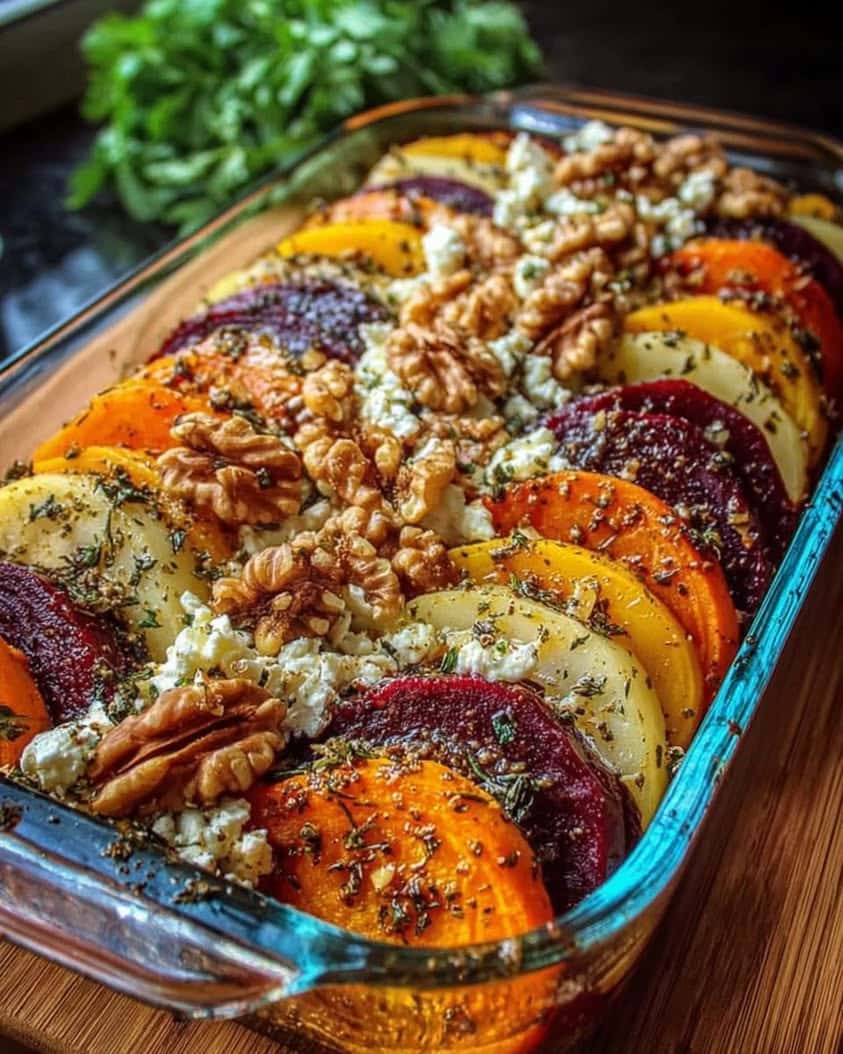
Mediterranean Layered Beet, Sweet Potato & Feta Gratin with Walnuts: A Stunning Vegetarian Centerpiece
Imagine a dish that looks like a stunning edible mosaic and tastes like a celebration of the Mediterranean. This Mediterranean Layered Beet, Sweet Potato & Feta Gratin with Walnuts is exactly that. It transforms humble root vegetables into an extraordinary, show-stopping meal. Moreover, the vibrant layers of deep crimson beets and orange sweet potatoes create a visual masterpiece. Consequently, this dish is perfect for impressing guests or elevating a simple family dinner.
The flavor profile is a beautiful balance of earthy, sweet, and tangy notes. Roasted beets offer a deep, mineral-rich sweetness, while sweet potatoes provide a creamy, comforting base. Meanwhile, briny feta cheese and crunchy toasted walnuts add pops of salty tang and rich texture. Ultimately, this Mediterranean beet and sweet potato gratin with feta and walnuts is a testament to how simple ingredients can create complex, satisfying flavors. It is a hearty vegetarian main or a spectacular side dish that will have everyone asking for the recipe.
Creating this gratin is a rewarding kitchen project. The process of thinly slicing and layering the vegetables is almost meditative. Additionally, the aroma of roasting garlic, herbs, and vegetables that fills your kitchen is utterly irresistible. This dish is a fantastic make-ahead option for entertaining, as its flavors deepen beautifully. In essence, this Mediterranean Layered Beet, Sweet Potato & Feta Gratin with Walnuts is more than just food; it is a warm, colorful, and delicious experience.
Quick Recipe Highlights
- Flavor Profile: This gratin masterfully balances earthy sweetness from roasted beets and sweet potatoes with the sharp, salty tang of feta cheese. Herbs like thyme and oregano add a fragrant Mediterranean flair, while toasted walnuts contribute a final note of rich, nutty crunch.
- Texture: Expect a delightful contrast between the tender, melt-in-your-mouth layers of thinly sliced vegetables and the creamy, bubbling cheese sauce. The toasted walnut topping provides an essential crunchy counterpoint that makes every bite interesting.
- Aroma: As it bakes, the gratin releases an intoxicating scent of roasting garlic, sweet caramelizing vegetables, and fragrant herbs. The nutty aroma of toasting walnuts just before serving adds the final olfactory delight.
- Visual Appeal: The alternating layers of deep red beet and bright orange sweet potato create a stunning striped or spiral effect when sliced. Topped with white feta crumbles, green herbs, and brown walnuts, it is a true feast for the eyes.
- Skill Level Needed: This recipe requires basic knife skills for consistent slicing and a bit of patience for layering. However, the steps are straightforward, making it accessible for confident beginners and a joy for experienced cooks.
- Special Equipment: A mandoline slicer is highly recommended for achieving perfectly thin, even vegetable slices quickly. You will also need a sturdy baking dish and a small saucepan for making the simple cream sauce.
Recipe Overview
- Difficulty Level: We rate this Mediterranean beet and sweet potato gratin as medium difficulty. The primary challenge lies in preparing the vegetables; slicing them thinly and uniformly is crucial for even cooking. However, the assembly and sauce-making steps are simple. With careful attention to the layering process, any home cook can achieve beautiful results.
- Category: This dish is incredibly versatile. It shines as a satisfying vegetarian main course, especially when paired with a simple green salad. Alternatively, it serves as a spectacular and substantial side dish for roasted meats, poultry, or fish. It fits beautifully into holiday menus, potlucks, and special Sunday dinners.
- Cuisine: This recipe draws direct inspiration from the sun-drenched flavors of the Mediterranean basin. It incorporates classic elements like feta cheese, olive oil, and oregano. The use of layered vegetables baked in a creamy sauce also nods to European gratin traditions, creating a delicious fusion.
- Cost: This is a very cost-effective dish, especially when root vegetables are in season. Beets, sweet potatoes, onions, and garlic are budget-friendly staples. Feta cheese and heavy cream are the primary splurges, but a little goes a long way. Overall, it delivers restaurant-quality presentation and taste for a fraction of the price.
- Season: This Mediterranean Layered Beet, Sweet Potato & Feta Gratin with Walnuts is perfect for fall and winter. These seasons are when root vegetables are at their peak of sweetness and flavor. Its warm, comforting nature is ideal for cooler weather. That said, its bright flavors also make it a lovely choice for a spring Easter brunch or dinner.
- Occasion: This gratin is special enough for holiday feasts like Thanksgiving or Christmas. It is also ideal for dinner parties, as it can be prepared ahead. For a cozy night in, it turns an ordinary meal into something celebratory. It is a guaranteed conversation starter at any potluck or gathering.
Why You’ll Love This Recipe
First and foremost, the taste and texture of this Mediterranean beet and sweet potato gratin are utterly captivating. Each forkful delivers a harmonious blend of sweet, earthy vegetables, creamy sauce, salty cheese, and crunchy nuts. The flavors are complex yet familiar, satisfying yet sophisticated. Furthermore, the visual appeal of the sliced layers never fails to impress, making you feel like a culinary artist. It is a dish that delights all the senses from the moment it comes out of the oven.
From a convenience standpoint, this recipe offers significant benefits. While the baking time is substantial, the active prep work is manageable and can even be done in stages. You can slice the vegetables ahead of time and store them in water. Additionally, the entire assembled gratin can wait in the refrigerator for several hours before baking. This make-ahead flexibility is a lifesaver for busy hosts and hostesses who want to enjoy their own party.
Nutritionally, this gratin is packed with goodness. Beets and sweet potatoes are excellent sources of fiber, vitamins, and antioxidants. They provide sustained energy and support overall health. Using olive oil and walnuts adds heart-healthy fats. While the cream and cheese offer indulgence, they are used in moderation within a vegetable-forward dish. Consequently, you get a meal that feels decadent while still providing substantial nutritional value.
For social and entertaining value, this dish is a true superstar. It serves a crowd beautifully and caters easily to vegetarian guests. Its stunning appearance makes it a natural centerpiece for the table. Moreover, the act of slicing into the beautiful layers creates a moment of shared anticipation and delight. It is a recipe that fosters connection and compliments, making any meal feel more special and memorable.
Finally, this Mediterranean Layered Beet, Sweet Potato & Feta Gratin with Walnuts is remarkably cost-effective and accessible. The ingredients are common and affordable, with no exotic or hard-to-find items. It demonstrates how to create a luxurious-tasting dish on a sensible budget. The recipe is also adaptable; you can swap herbs or use different nuts based on what you have available. Ultimately, it empowers you to create restaurant-quality magic in your own kitchen without stress or excessive expense.
Historical Background and Cultural Significance
The concept of baking layered vegetables with a creamy binding sauce has deep roots in European peasant cooking. Specifically, the gratin technique originated as a thrifty way to make tough or humble ingredients more palatable and appealing. By slicing vegetables thinly, combining them with a bit of dairy, and baking them until golden, cooks could create a comforting, cohesive dish. The word “gratin” itself comes from the French “gratter,” meaning “to scrape,” referring to the delicious crust that forms on top. This Mediterranean beet and sweet potato gratin is a modern, colorful evolution of that timeless, resourceful tradition.
This recipe draws significant cultural influence from the Mediterranean region. The use of feta cheese immediately evokes the flavors of Greece, where the brined sheep’s milk cheese is a staple. Herbs like oregano and thyme are quintessential to the aromatic profiles of Southern European and North African cuisines. Furthermore, the prominent use of olive oil as a cooking fat is a cornerstone of the healthy Mediterranean diet. By combining these elements with the gratin method, the dish creates a beautiful culinary bridge between rustic French technique and bright Mediterranean flavors.
The evolution of this specific recipe mirrors broader food trends towards vegetable-centric, visually striking meals. As home cooks and chefs began exploring beyond the classic potato gratin, vibrant vegetables like beets and sweet potatoes became popular candidates. Their natural sweetness intensifies when roasted, and their bold colors create dramatic presentations. The addition of nuts for texture and cheese for savory depth reflects a modern desire for complex flavor and textural contrast in every bite. This Mediterranean Layered Beet, Sweet Potato & Feta Gratin with Walnuts is a product of this creative, vegetable-forward movement in home cooking.
Regional variations of this concept are endless. In Provence, a “tian” is a similar baked vegetable dish, often featuring zucchini and tomatoes. In Italy, “parmigiana” dishes layer vegetables with cheese and sauce. This recipe invites personal interpretation; you could add layers of spinach, use goat cheese instead of feta, or substitute pecans for walnuts. The core principle—layering, baking, and creating a golden top—remains a universal symbol of home-cooked comfort and care across many cultures. It is a versatile template that welcomes seasonal produce and personal taste.
Ingredient Deep Dive
Beets: Beets have a long history dating back to ancient Roman times, where they were cultivated primarily for their greens. The root itself gained popularity later. Nutritionally, they are a powerhouse, rich in folate, manganese, and dietary nitrates that may support blood pressure and athletic performance. When selecting beets, look for firm, smooth bulbs with vibrant greens attached if possible, a sign of freshness. To store, remove the greens (which are edible) and keep the roots in a plastic bag in the refrigerator for up to two weeks. For a substitution, try using golden beets for a milder flavor and to avoid the deep red color, or parsnips for a different earthy sweetness.
Sweet Potatoes: Contrary to popular belief, sweet potatoes are not related to white potatoes. They originated in Central or South America and have been a staple food for millennia. They are exceptionally high in beta-carotene (which converts to Vitamin A), Vitamin C, and fiber. Choose firm sweet potatoes without soft spots, cracks, or wrinkles. Store them in a cool, dark, well-ventilated place—not the refrigerator, as cold temperatures can alter their texture and taste. For a variation, Japanese sweet potatoes (with purple skin and white flesh) offer a drier, chestnut-like flavor, while garnet yams provide the classic orange hue and moist texture.
Feta Cheese: Authentic Greek feta is a Protected Designation of Origin (PDO) product, made from at least 70% sheep’s milk, often blended with goat’s milk. Its briny, tangy flavor and crumbly texture are iconic. It provides protein and calcium, but it is also high in sodium. For the best flavor in your Mediterranean beet and sweet potato gratin, seek out feta packed in brine. Store leftover feta in its brine in the refrigerator. If you need a substitute, try other crumbly brined cheeses like Bulgarian sirene or French feta. For a milder option, fresh goat cheese (chèvre) works, though it will be less salty and more creamy.
Walnuts: Walnuts are one of the oldest tree foods, with evidence of cultivation dating back thousands of years. They are uniquely rich in alpha-linolenic acid (ALA), a plant-based omega-3 fatty acid, and antioxidants. Toasting walnuts is non-negotiable for this recipe; it deepens their flavor and improves their crunch. Always buy walnuts in small quantities from a source with high turnover, as their high fat content makes them prone to rancidity. Store them in an airtight container in the freezer for longest shelf life. For a different nutty profile, you can substitute toasted pecans or hazelnuts in this gratin.
Common Mistakes to Avoid
- Uneven Vegetable Slices: Slicing vegetables too thickly or unevenly is the top mistake. Thick slices will not cook through properly and will make layering difficult. Consequently, the gratin may be undercooked in the center. Always use a mandoline for uniform, thin slices, or take great care with a sharp knife.
- Skipping the Toasting Step for Walnuts: Adding raw walnuts to the topping is a missed opportunity. Raw nuts can taste bland and have a soft texture. Toasting them separately in a dry pan or the oven until fragrant unlocks their rich, nutty flavor and ensures they stay crunchy on top of the baked gratin.
- Overcrowding the Baking Dish: It is tempting to pack in all the vegetables, but they need space for the cream to circulate and for steam to escape. Overcrowding leads to steaming rather than proper baking, resulting in a watery, soggy gratin. Arrange the slices neatly but not too tightly.
- Using Pre-Crumbled, Dry Feta: The dry, sandy feta found in shelf-stable bags lacks moisture and flavor. It will not melt or integrate nicely into the gratin. For the best creamy, tangy results, always buy a block of feta in brine and crumble it yourself just before using.
- Not Seasoning Between Layers: Seasoning only the top layer leaves the interior bland. Vegetables need salt to bring out their natural sweetness. Lightly season each layer of vegetables as you build the gratin. Remember, the feta is salty, so adjust the added salt accordingly.
- Underbaking the Gratin: Impatience can lead to pulling the dish out too early. The gratin is done only when a sharp knife easily pierces the center through all the layers and the top is beautifully golden and bubbly. Underbaking means the vegetables will be unpleasantly firm.
- Forgetting to Let it Rest: Cutting into the gratin immediately after baking causes it to fall apart. Let it rest for at least 15-20 minutes. This allows the creamy sauce to set slightly, making it possible to slice clean, beautiful portions that hold their layered shape.
- Using a Baking Dish That is Too Deep or Too Shallow: The wrong dish affects cooking time and presentation. A very deep dish may cause the bottom to overcook before the top browns. A very shallow dish may not hold all the layers. A standard 2-quart rectangular or oval baking dish is ideal.
Essential Techniques
Mandoline Slicing: Using a mandoline is the single most important technique for this Mediterranean beet and sweet potato gratin. It guarantees paper-thin, uniform slices that cook evenly and stack neatly. Always use the safety guard to protect your fingers. Move the vegetable in a smooth, consistent motion. If you do not have a mandoline, a very sharp chef’s knife and patience are required; aim for slices no thicker than 1/8 inch.
Layering for Structure and Visual Appeal: Proper layering is what creates the gratin’s signature look and ensures even distribution of flavors. Start with a thin layer of the cream mixture on the bottom to prevent sticking. Then, alternate the beet and sweet potato slices, either in neat rows or concentric circles, slightly overlapping each slice. Lightly season each layer. This method builds a stable structure that, when sliced, reveals those beautiful, defined stripes.
Creating a Simple Cream Sauce: The sauce is not a traditional béchamel but a lighter mixture of cream, garlic, and herbs. The key is to infuse the cream with flavor by gently warming it with the garlic and herbs. Do not boil it; just heat it until it is steaming and the garlic is fragrant. This step blooms the flavors and ensures every part of the gratin is seasoned from within.
Testing for Doneness: Visual cues are important, but the true test is with a knife. The top should be golden brown with bubbly edges. However, to ensure the vegetables in the center are fully tender, insert a thin paring knife or skewer into the middle of the dish. It should slide through all the layers with little to no resistance. If it meets firmness, continue baking in 5-minute increments.
Pro Tips for Perfect Mediterranean Layered Beet, Sweet Potato & Feta Gratin with Walnuts
First, wear disposable gloves when handling the beets to prevent your hands from staining red. This simple step makes prep much cleaner and more pleasant.
Second, if you have time, briefly roast the beet slices on a sheet pan for 10-15 minutes before layering. This concentrates their flavor and removes excess moisture, preventing the gratin from becoming watery.
Third, let your cream mixture cool slightly before pouring it over the layered vegetables. Pouring very hot cream can start to cook the top layers prematurely, leading to uneven baking.
Fourth, cover the gratin with foil for the first 30-40 minutes of baking. This traps steam and ensures the vegetables become tender. Then, remove the foil to allow the top to brown and crisp beautifully for the remaining time.
Fifth, add a sprinkle of fresh breadcrumbs mixed with a little olive oil to the topping along with the feta and walnuts. This creates an extra-delicious, crunchy golden crust.
Sixth, for an elegant touch, garnish individual servings with a small drizzle of high-quality balsamic glaze or reduction. The sweet-tart acidity cuts through the richness perfectly.
Seventh, if your gratin seems to be browning too quickly on top but the center is not done, simply place a loose tent of foil over the top to shield it while the interior finishes cooking.
Eighth, always use full-fat heavy cream for the sauce. Lower-fat alternatives like half-and-half or milk will not thicken properly and can curdle or separate during the long baking time.
Variations and Adaptations
For regional variations, consider a French twist by using Gruyère cheese instead of feta and adding a pinch of nutmeg to the cream. A Middle Eastern version could include layers of sautéed spinach, use a sprinkle of sumac in the cream, and top with toasted pine nuts instead of walnuts. The basic gratin structure welcomes these cultural flavor swaps beautifully.
Seasonal adaptations are easy. In spring, incorporate thin slices of asparagus or artichoke hearts between the root vegetable layers. For summer, add layers of thinly sliced zucchini or yellow squash. In the heart of winter, a layer of peeled and sliced celery root or parsnips would be a wonderful addition, complementing the earthy beet and sweet potato flavors.
For dietary modifications, a vegan version is achievable. Replace the heavy cream with full-fat canned coconut milk and use a vegan feta alternative or crumbled, seasoned tofu. To make it gluten-free, ensure any breadcrumb topping uses certified gluten-free crumbs. For a dairy-free option, use a rich, unsweetened plant-based cream and a dairy-free cheese that melts well.
Flavor variations can personalize the dish. Add a layer of caramelized onions for deep sweetness. Mix a tablespoon of harissa paste into the cream for a spicy North African kick. Incorporate different herbs like rosemary or sage for a more autumnal flavor profile. A sprinkle of lemon zest in the cream can add a wonderful brightness that cuts through the richness.
Texture modifications might include adding a layer of cooked lentils or quinoa for extra heartiness and protein. For a creamier interior, increase the amount of cream sauce slightly. For a firmer, more defined slice, let the gratin cool completely and then reheat individual portions, which allows it to set more firmly.
Presentation alternatives are fun. Instead of a large baking dish, assemble individual gratins in ramekins for a personalized touch. You can also create a “deconstructed” gratin by roasting the vegetable slices separately, then plating them stacked with the feta, walnuts, and a drizzle of the reduced cream sauce.
Serving and Presentation Guide
Plating this gratin is part of the enjoyment. Use a sharp, thin-bladed knife or a pie server to cut clean portions. Wipe the knife between cuts for neat edges. For a formal presentation, place a portion in the center of a warm plate. Alternatively, for a family-style meal, present the entire baking dish on the table and let guests serve themselves, showcasing the beautiful layered cross-sections.
Garnishing adds the final flourish. Beyond the toasted walnuts, consider a scattering of fresh, soft herbs like chopped parsley, dill, or chives for a pop of green color and fresh flavor. A few microgreens or arugula leaves make an elegant garnish. A final drizzle of extra-virgin olive oil or a balsamic reduction adds shine and a touch of acidity.
Traditional accompaniments for a gratin like this are simple. A crisp, green salad with a lemony vinaigrette is the perfect counterbalance to the rich, baked dish. For a non-vegetarian meal, it pairs wonderfully with simply roasted chicken, pork loin, or seared fish like salmon or cod. Crusty bread is also essential for soaking up any delicious sauce left on the plate.
Modern serving suggestions might include pairing it with a grain salad like farro or quinoa for a complete vegetarian feast. For a brunch option, serve it alongside poached eggs. You can also slice leftovers cold and serve them over a bed of dressed greens for a fantastic next-day salad.
Temperature considerations are key. This Mediterranean beet and sweet potato gratin is best served warm, not piping hot. The resting period allows the flavors to settle and makes slicing easier. If it cools down too much, reheat individual portions in an oven or toaster oven to restore the creamy texture and crisp top without drying it out.
Portion control is easy with this dish. As a main course, plan for one generous slice per person. As a side dish, a smaller slice is sufficient. Remember, it is rich and satisfying, so a little goes a long way. Leftovers are a coveted treat, so do not be afraid to make the full recipe even for a smaller group.
Wine and Beverage Pairing
Wine pairings for this gratin should complement its earthy sweetness and creamy saltiness. A crisp, dry white wine like a Sauvignon Blanc or Pinot Grigio cuts through the richness beautifully. For a red option, choose a light to medium-bodied wine with low tannins, such as a Pinot Noir or a Grenache. These wines have enough acidity to balance the dish without overpowering the delicate vegetable flavors. An orange wine, with its oxidative notes and texture, can also be a fascinating and delicious pairing.
Non-alcoholic alternatives are just as important. A sparkling water with a squeeze of lemon or lime provides refreshing palate cleansing. For something more complex, try a tart cherry or pomegranate juice spritzer. An iced herbal tea, like mint or lemon verbena, offers a refreshing and aromatic complement. Even a simple glass of cold, whole milk can be a surprisingly comforting pairing with the creamy, baked flavors.
While not a traditional coffee or tea dish, certain pairings work if serving this gratin for brunch or a late lunch. A light roast coffee with bright acidity can contrast the creamy richness. A cup of Earl Grey tea, with its bergamot citrus notes, can provide a lovely aromatic lift after the meal. Avoid very heavy, bitter, or overly sweet beverages that might clash with the gratin’s balanced profile.
Temperature considerations for beverages are straightforward. White wines and non-alcoholic spritzers should be well-chilled. Red wines should be served slightly below room temperature, around 60-65°F. Iced teas and waters should be cold. The goal is to have a beverage that refreshes the palate between bites of the warm, rich gratin.
Serving suggestions include offering both a white and a red wine option if you are entertaining, as personal preferences vary. Always provide plenty of still and sparkling water on the table. If serving a non-alcoholic spritzer, consider making a large pitcher so guests can help themselves, garnished with citrus slices or fresh herbs.
Storage and Shelf Life
Proper storage is essential for maintaining quality. Once cooled completely, cover the baking dish tightly with plastic wrap or transfer portions to an airtight container. Store it in the refrigerator for up to 4 days. The flavors often meld and improve after a day, making leftovers a true delight.
Temperature requirements are simple: always refrigerate. Do not leave the gratin at room temperature for more than two hours after cooking. When reheating, ensure the internal temperature reaches 165°F for food safety. A cold gratin slice can be enjoyed, but warming it restores its creamy texture.
Container recommendations include glass or BPA-free plastic containers with tight-fitting lids. If storing in the original baking dish, ensure the wrap is sealed tightly over the top to prevent the gratin from absorbing other refrigerator odors and to keep it from drying out.
Signs of spoilage are typical for dairy-based dishes. Look for an off smell, a sour taste, or visible mold. If the texture becomes excessively watery or slimy, it is time to discard it. When in doubt, throw it out. The high moisture content of the vegetables means it will not last as long as drier baked goods.
Reheating instructions are best done in the oven for optimal texture. Preheat your oven to 350°F. Place individual portions or the whole dish in an oven-safe container, cover with foil, and bake for 15-20 minutes, or until heated through. You can also reheat single slices in a toaster oven. The microwave is a last resort, as it can make the texture rubbery and uneven.
Freezing guidelines are possible but with caveats. The gratin can be frozen for up to 2 months. However, the texture of the vegetables and cream sauce may change slightly upon thawing, becoming a bit more watery. To freeze, wrap portions tightly in plastic wrap and then foil. Thaw overnight in the refrigerator before reheating in the oven.
Make Ahead Strategies
A prep timeline makes entertaining stress-free. You can slice the beets and sweet potatoes up to a day in advance. Store them separately in bowls of cold water in the refrigerator; this prevents oxidation and keeps them crisp. The cream mixture can also be prepared a day ahead and stored in a jar in the fridge. On the day of serving, simply assemble, bake, and add the final walnut topping.
Storage between steps is straightforward. Keep prepped vegetables in water, covered, in the fridge. Keep the cream sauce sealed. You can even fully assemble the gratin (without the final walnut topping) up to 8 hours before baking. Cover it tightly with plastic wrap and refrigerate. You may need to add 5-10 minutes to the baking time since you are starting with a cold dish.
Quality impact assessment is positive. Making components ahead does not harm the dish; in fact, it can help. The vegetables have time to release some starches into the water, which can result in a slightly cleaner-looking gratin. The flavors in the cream sauce have more time to meld. The key is to add the crunchy walnut topping just before baking or after baking to preserve its texture.
Assembly tips for a make-ahead gratin are simple. When you are ready to assemble, drain the vegetable slices and pat them very dry with clean kitchen towels or paper towels. Excess water is the enemy of a creamy gratin. Layer as directed, using your chilled cream sauce. If the sauce has thickened in the fridge, give it a good stir or warm it slightly to make it pourable again.
Reheating guidelines for a fully baked and refrigerated gratin are the same as for leftovers. Cover with foil and reheat in a 350°F oven until warmed through. If the top needs re-crisping, remove the foil for the last 5-10 minutes of reheating. You can also refresh the walnut topping by sprinkling the nuts on for the last few minutes of reheating.
Fresh element additions are the final touch. If you made the entire gratin ahead and reheated it, consider adding a fresh garnish. Sprinkle on some newly toasted walnuts and a handful of fresh chopped herbs just before serving. This adds a burst of fresh flavor and texture that makes the dish taste newly made.
Scaling Instructions
Halving the recipe is simple for smaller households. Use a smaller baking dish, like an 8×8 inch square or a 9-inch round pie dish. Precisely halve all ingredient quantities. The baking time may be slightly reduced, perhaps by 10-15 minutes, so start checking for doneness around the 50-minute mark. All other techniques and steps remain exactly the same.
Doubling or tripling the recipe is perfect for large gatherings. Double or triple all ingredients. Use two separate standard baking dishes rather than one enormous one, as a very deep gratin will not cook evenly. You may need to rotate the dishes in the oven halfway through baking for even browning. Expect the total baking time to increase by 10-20 minutes for a doubled recipe in two dishes.
Equipment adjustments are necessary when scaling. For a larger batch, ensure you have a large bowl for tossing vegetable slices and a big enough saucepan for the increased cream sauce. For a halved recipe, a small saucepan is fine. The key is to match your tools to the ingredient volume for ease of preparation.
Timing modifications are minimal but important. Prep time will increase linearly when doubling—slicing twice the vegetables takes roughly twice as long. Baking time does not double; it only increases moderately because the surface area and depth change. Always rely on the knife test for doneness rather than a strict timer when working with scaled recipes.
Storage considerations change with scale. A large batch means more leftovers. Plan your storage containers accordingly. If you are making a double batch for a party but expect leftovers, consider baking them in two separate dishes. You can serve one and freeze the other unbaked for a future meal, which is a fantastic time-saving strategy.
Nutritional Deep Dive
This Mediterranean beet and sweet potato gratin provides a balanced macro breakdown. It is a good source of complex carbohydrates from the vegetables, providing sustained energy. The heavy cream and feta contribute fats, including some saturated fat, which carry flavor and create richness. The feta and walnuts offer a moderate amount of protein. While not a low-calorie dish, it is nutrient-dense, meaning the calories come packed with vitamins, minerals, and fiber.
A micronutrient analysis reveals a wealth of benefits. Beets are rich in folate, essential for cell function, and manganese, important for bone health. Sweet potatoes are famously high in beta-carotene (Vitamin A), crucial for vision and immunity. Walnuts provide Vitamin E and important minerals like copper and magnesium. The dairy contributes calcium and Vitamin B12. Together, they make this a dish that supports multiple body systems.
The health benefits are significant. The high fiber content from the vegetables promotes digestive health and helps regulate blood sugar. The antioxidants in beets and sweet potatoes combat oxidative stress. The monounsaturated and polyunsaturated fats from olive oil and walnuts support heart health. While indulgent, this dish fits into an overall pattern of eating whole, colorful foods, which is a cornerstone of a healthy diet.
Dietary considerations are important to note. The dish contains dairy (cream, feta) and nuts. It is naturally gluten-free if no breadcrumb topping is used, and vegetarian. It is not suitable for vegan, paleo, or low-carb/keto diets in its standard form, though adaptations are possible as outlined earlier. Those with lactose intolerance should be cautious due to the cream and cheese.
Portion analysis helps with mindful eating. One serving as a main course is satisfying and filling due to the fiber and fat content. As a side dish, a smaller portion complements a protein without overwhelming the plate. Understanding that it is a rich dish allows you to enjoy it fully without overindulging, pairing it appropriately with lighter sides like a green salad.
Weight management tips include being mindful of portion size, as the cream and cheese add significant calories. Enjoying this gratin as part of a balanced meal with lean protein and vegetables can help. You can also use the “lightening” adaptations, such as using half cream and half whole milk, or reducing the amount of cheese slightly. Remember, it is a dish for celebration and enjoyment, not everyday eating.
Dietary Adaptations
For a gluten-free version, this recipe is naturally compliant if you omit any breadcrumb topping. Simply ensure all other ingredients, like pre-packaged broth or cream, are certified gluten-free. The base of vegetables, cream, cheese, and nuts contains no gluten. This makes the Mediterranean beet and sweet potato gratin an excellent choice for those with celiac disease or gluten sensitivity.
A dairy-free adaptation requires substitutions for both the cream and feta. For the cream, use full-fat canned coconut milk; it provides the necessary richness and fat content. For the feta, use a store-bought vegan feta alternative or make your own from crumbled firm tofu marinated in lemon juice, nutritional yeast, and salt. The result will be different but still deliciously creamy and tangy.
Creating a vegan version combines the dairy-free adaptations. Use coconut milk for the sauce and a vegan feta substitute. Ensure the walnuts are toasted in oil, not butter. The dish will still have beautiful layers and great flavor. You might add a sprinkle of nutritional yeast to the cream sauce for an extra “cheesy” umami depth to compensate for the missing dairy.
For a low-carb or keto adaptation, this standard recipe is not suitable due to the high carbohydrate content of beets and sweet potatoes. A radical adaptation would replace them with low-carb vegetables like turnips, daikon radish, or zucchini. The cream and cheese fit a keto profile, but the vegetable swap fundamentally changes the dish’s character and sweetness.
A Paleo adaptation would exclude dairy and grains. Follow the dairy-free instructions using coconut milk and omit the cheese entirely. You could add nutritional yeast for flavor. Ensure all ingredients are whole, unprocessed foods. While it diverges from the original, it can still be a satisfying baked vegetable dish Print
Mediterranean Layered Beet, Sweet Potato & Feta Gratin with Walnuts
- Total Time: 45 minutes
- Yield: 4
Description
A vibrant, savory gratin featuring layers of roasted beets and sweet potatoes, topped with crumbled feta and toasted walnuts for a Mediterranean-inspired side dish.
Ingredients
- 2 medium beets, peeled and thinly sliced
- 2 medium sweet potatoes, peeled and thinly sliced
- 1/2 cup crumbled feta cheese
- 1/4 cup chopped walnuts
- 2 tablespoons olive oil
- 1 teaspoon dried oregano
- 1/2 teaspoon garlic powder
- Salt and black pepper to taste
- Fresh parsley for garnish
Instructions
- Preheat the oven to 375°F (190°C). Grease a baking dish with olive oil.
- In a bowl, toss the beet and sweet potato slices with olive oil, oregano, garlic powder, salt, and pepper.
- Layer the slices alternately in the baking dish, overlapping slightly.
- Cover with foil and bake for 25 minutes, or until vegetables are tender.
- Remove foil, sprinkle feta and walnuts on top, and bake uncovered for 5 more minutes until cheese softens.
- Garnish with fresh parsley before serving.
Notes
You can customize the seasonings to taste.
- Prep Time: 15 minutes
- Cook Time: 30 minutes
- Method: Side
- Cuisine: Mediterranean