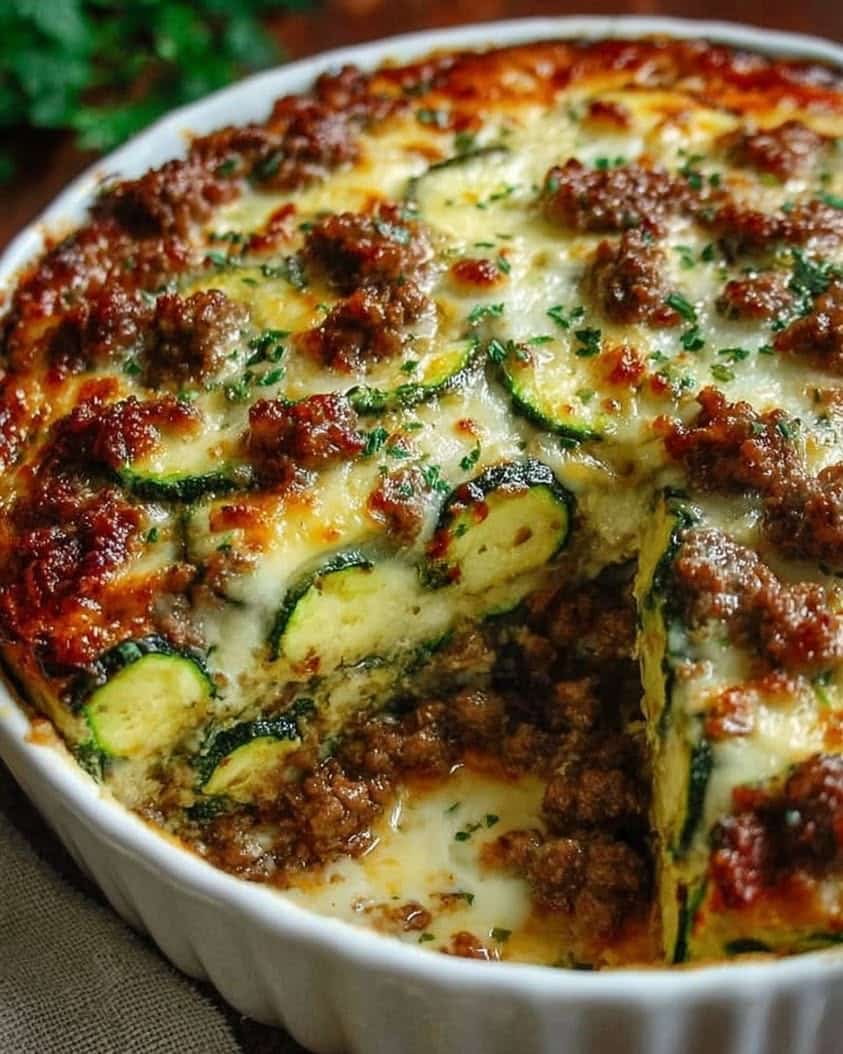
Low Carb Ground Beef Zucchini Bake: A Simple Keto-Friendly Dinner
Are you searching for a satisfying, family-friendly dinner that fits your healthy lifestyle? This Low Carb Ground Beef Zucchini Bake is the answer. It combines juicy ground beef, tender zucchini, and a blanket of melted cheese into a comforting casserole. Consequently, it delivers incredible flavor without the heavy carbs of traditional pasta bakes. Moreover, it’s a perfect one-dish meal that simplifies your weeknight routine.
Imagine pulling a golden, bubbly dish from your oven, filled with savory aromas of garlic, herbs, and roasted vegetables. This recipe transforms simple ingredients into a hearty and nutritious feast. Furthermore, it cleverly uses zucchini as a low-carb base, absorbing all the delicious juices from the beef and tomatoes. Ultimately, this bake is a guaranteed crowd-pleaser that will have everyone asking for seconds.
This dish is more than just dinner; it’s a versatile solution for meal prep and healthy eating goals. It freezes beautifully and reheats like a dream. Therefore, you can enjoy a wholesome meal any day of the week with minimal effort. Embrace the simplicity and flavor of this ultimate comfort food.
Quick Recipe Highlights
- Flavor Profile: This bake offers a robust, savory taste with notes of garlic, onion, and Italian herbs. The tomato paste and diced tomatoes provide a tangy, slightly sweet backbone that perfectly complements the rich ground beef. Finally, the sharp cheddar cheese adds a salty, creamy finish that ties everything together.
- Texture: You will experience a wonderful contrast of textures. The ground beef becomes crumbly and savory, while the zucchini softens but retains a slight bite. Meanwhile, the melted cheese creates a gooey, stretchy top layer that is incredibly satisfying. The overall mouthfeel is hearty and comforting without being heavy.
- Aroma: As it bakes, your kitchen will fill with the irresistible scent of browning beef and aromatic garlic. The dried oregano and basil release their earthy, fragrant notes, blending with the sweet aroma of roasting tomatoes. This combination creates a classic, home-cooked smell that builds anticipation.
- Visual Appeal: The finished dish is a masterpiece of rustic comfort food. A golden-brown cheese crust bubbles over a vibrant interior of red tomatoes and green zucchini flecks. Served in a baking dish, it looks generous, inviting, and perfectly homemade.
- Skill Level Needed: This is a beginner-friendly recipe. The steps are straightforward: browning meat, sautéing vegetables, and combining everything to bake. No advanced techniques are required. Basically, if you can use a skillet and an oven, you can master this Low Carb Ground Beef Zucchini Bake.
- Special Equipment: You only need basic kitchen tools. A large skillet for the stovetop steps and a 9×13 inch baking dish are essential. Otherwise, standard utensils like a wooden spoon, knife, and cutting board will complete the job. No fancy gadgets are necessary.
Recipe Overview
- Difficulty Level: We rate this recipe as “Easy” for several important reasons. First, the techniques are fundamental: chopping, browning, and baking. Second, there is no fussy timing or precision required. The ingredients are common and forgiving. Finally, the assembly is simply mixing and transferring to a dish, making it accessible for cooks of all levels.
- Category: This dish firmly belongs in the category of healthy family dinners and weeknight meals. It also fits into meal prep, low-carb mains, and gluten-free casseroles. It’s a complete protein and vegetable dish that stands alone. Therefore, it eliminates the need for complicated sides.
- Cuisine: While not strictly authentic to one region, this bake draws strong inspiration from Italian-American cuisine. The use of garlic, oregano, basil, tomato, and Parmesan cheese creates those familiar flavors. However, the substitution of zucchini for pasta gives it a modern, health-conscious twist that is popular in contemporary American home cooking.
- Cost: This is a very budget-friendly recipe. Ground beef and zucchini are typically affordable, especially in season. Canned tomatoes and common pantry spices keep the cost low. Overall, you can expect to feed a family of six for a fraction of the cost of takeout, making it an economical choice.
- Season: This Low Carb Ground Beef Zucchini Bake is fantastic year-round. However, it shines in late summer and early fall when zucchini is at its peak freshness, flavor, and lowest price. It’s a comforting dish for cooler evenings but light enough for a summer meal when you want something hearty without turning on multiple burners.
- Occasion: It’s perfect for busy weeknights, casual weekend family dinners, and potluck gatherings. It’s also an excellent dish for sharing with friends who follow low-carb, keto, or gluten-free diets. Because it’s so easy to scale up, it works well for feeding a crowd at informal events.
Why You’ll Love This Recipe
First and foremost, the taste and texture of this Low Carb Ground Beef Zucchini Bake are utterly comforting. Each bite delivers the familiar, savory satisfaction of a classic beef casserole, but with a fresh, vegetable-forward twist. The zucchini becomes tender and soaks up the flavorful tomato and beef juices, while the cheese provides that irresistible creamy, salty pull. Consequently, you won’t miss the carbs at all. The blend of Italian herbs and garlic creates a deeply aromatic profile that makes your kitchen smell amazing.
From a convenience standpoint, this recipe is a true weeknight hero. It comes together in one skillet and one baking dish, meaning cleanup is a breeze. The prep is simple and quick, involving basic chopping and browning. Furthermore, the hands-off baking time allows you to set the table, help with homework, or simply relax. This efficiency makes it a reliable go-to when time and energy are in short supply. It’s the definition of a simple, satisfying dinner solution.
Nutritionally, this bake is a powerhouse. It’s packed with high-quality protein from the ground beef, which helps keep you full and supports muscle maintenance. Zucchini adds volume, fiber, and essential vitamins like Vitamin C and potassium, all for very few calories. By omitting traditional pasta or breadcrumbs, this dish becomes naturally low-carb and keto-friendly. Therefore, it aligns perfectly with health goals like weight management or stable blood sugar, without sacrificing an ounce of flavor.
For social and entertaining value, this casserole is a guaranteed crowd-pleaser. It’s hearty, cheesy, and universally appealing to both adults and kids. Because it’s so easy to double, you can effortlessly feed a large group at a potluck or casual dinner party. Additionally, its “healthyish” profile allows you to cater to diverse dietary preferences in one dish. Serving this bake demonstrates thoughtfulness and care, making guests feel nourished and satisfied.
Finally, its cost-effectiveness and accessibility are major wins. The ingredients are humble, affordable, and available at any standard grocery store. You likely have many of the spices and canned goods in your pantry already. This recipe transforms these economical items into a meal that feels special and indulgent. Ultimately, it proves that eating well doesn’t require expensive specialty products or complicated techniques. It’s accessible, delicious, and kind to your budget.
Historical Background and Cultural Significance
The concept of the casserole is deeply rooted in practical home cooking traditions across many cultures. Essentially, combining meat, vegetables, and a binder in a single dish to bake is a timeless method for creating hearty, economical meals. The American casserole, in particular, gained immense popularity in the mid-20th century, often utilizing canned soups and pasta. This Low Carb Ground Beef Zucchini Bake is a modern evolution of that tradition, swapping processed ingredients for whole foods like fresh zucchini and tomatoes to meet contemporary nutritional values.
Culturally, dishes like this bake represent the fusion of immigrant influences and American ingenuity. The flavor profile leans heavily on Italian-American cuisine, with its use of tomato, garlic, and oregano. However, the structure is pure American comfort food. This blend creates a dish that feels both familiar and nourishing. It signifies a shift towards “healthified” comfort food, where classic flavors are preserved but delivered in a nutritionally denser package. It’s a recipe born from the desire to eat well without abandoning the foods we love.
The evolution of this recipe directly mirrors dietary trends like the low-carb and keto movements. As people sought alternatives to grain-heavy dishes, vegetables like zucchini and cauliflower became popular stand-ins. Spiralized zucchini, or “zoodles,” paved the way for using it in baked applications. This Ground Beef Zucchini Bake is a natural progression: a layered, baked dish that forgoes noodles altogether, allowing the vegetable to be the star. It’s a testament to how home cooking adapts to new nutritional understandings.
Regional variations of this concept abound. In the Mediterranean, similar bakes might include eggplant and lamb. In Mexico, the flavors could shift to cumin and chili powder, topped with pepper jack cheese. The beauty of this formula is its incredible adaptability. Your version with ground beef, zucchini, and Italian seasoning is a classic, approachable take that has found a beloved place in the repertoire of home cooks focusing on low-carb living. It’s a contemporary classic in its own right.
Ingredient Deep Dive
Ground Beef (85/15 lean-to-fat ratio): This protein is the hearty foundation of the bake. Nutritionally, it provides high-quality protein, iron, zinc, and B vitamins. The 85/15 ratio offers a good balance; it has enough fat to keep the beef juicy and flavorful during baking without making the final dish overly greasy. When selecting, look for bright red meat with fine texture. For storage, use within 1-2 days of purchase or freeze for up to 3 months. For substitutions, ground turkey, chicken, or pork work well, though they may be slightly drier.
Zucchini: This summer squash is the brilliant low-carb star. Historically, zucchini originated in the Americas but was refined in Italy, which explains its affinity for Italian flavors. It’s incredibly low in calories and carbs while providing fiber, vitamin C, and potassium. Choose firm, medium-sized zucchini with glossy, unblemished skin. Avoid very large ones, as they can be seedy and watery. Store unwashed in a plastic bag in the fridge for up to a week. Yellow squash can be used as a direct substitute.
Canned Diced Tomatoes: Tomatoes bring essential acidity and moisture to the dish. Using canned tomatoes is a practical choice; they are picked and packed at peak ripeness, ensuring consistent flavor year-round. They are a great source of lycopene, an antioxidant. Opt for no-salt-added versions if you are monitoring sodium, and give them a quick drain to control liquid in the bake. Fire-roasted diced tomatoes add a wonderful smoky depth. Store unused portions in a non-reactive container in the fridge for up to 5 days.
Tomato Paste: This concentrated ingredient is the secret to rich, deep tomato flavor without adding excess liquid. It acts as a natural flavor intensifier and thickener. Look for tomato paste in tubes, which allows you to use a small amount and store the rest easily. A little goes a long way. If you don’t have it, you can simmer a cup of tomato sauce until reduced by half. Store an opened tube in the refrigerator or freeze tablespoon portions for future use.
Shredded Cheddar Cheese: Cheese provides the irresistible creamy, salty, golden topping. Cheddar melts beautifully and offers a sharp flavor that stands up to the savory beef. It also adds fat and protein. For best results, shred your own cheese from a block, as pre-shredded varieties contain anti-caking agents that can make the melt less smooth. Monterey Jack, mozzarella, or an Italian blend are excellent substitutes. Always store cheese tightly wrapped in the refrigerator.
Common Mistakes to Avoid
- Not Draining the Beef Fat: After browning, always drain the excess fat from the ground beef. Otherwise, your final bake will be greasy and the vegetables may steam in oil instead of baking properly. This step is crucial for texture and flavor balance.
- Skipping the Zucchini Salting Step: Zucchini contains a lot of water. Salting it and letting it sit draws out excess moisture. If you skip this, you risk a watery, soggy casserole. Take the extra 10 minutes for a much better result.
- Using Pre-Shredded Cheese Exclusively: While convenient, pre-shredded cheese has coatings that prevent clumping. These can also prevent it from melting into a perfectly smooth, creamy layer. For the best texture, shred a block of cheese yourself.
- Overcrowding the Skillet: When browning the ground beef, avoid crowding the pan. Cook it in batches if necessary. Overcrowding steams the meat instead of searing it, resulting in grey, boiled beef without the flavorful browned bits.
- Forgetting to Season in Layers: Season the beef while it browns. Season the vegetable mixture as it cooks. This builds depth of flavor throughout the dish, rather than having all the seasoning sit on the surface.
- Using Fresh Herbs Interchangeably with Dried: The recipe calls for dried oregano and basil. If substituting fresh, use three times the amount, as dried herbs are more concentrated. Adding fresh herbs at the wrong time (like before baking) can cause them to burn or lose flavor.
- Not Letting it Rest After Baking: Pull the bake from the oven and let it sit for 5-10 minutes. This allows the juices to redistribute and the cheese to set slightly. Cutting in immediately can cause it to be too loose and fall apart.
- Using a Baking Dish That’s Too Small: A 9×13 inch dish is specified for a reason. A smaller dish will be too deep, causing the center to steam instead of bake properly and potentially leading to uneven cooking and a soggy bottom.
Essential Techniques
Browning Ground Beef: This technique, called the Maillard reaction, is vital for developing deep, savory flavor. To master it, ensure your skillet is hot before adding the meat. Break the beef into small crumbles but avoid constantly stirring; let it sit for a minute to develop a brown crust. Drain the fat afterward to prevent greasiness. A visual cue for success is plenty of browned bits on the meat and on the bottom of the pan, which will deglaze with your onions and garlic.
Sweating Vegetables (Onion & Garlic): Sweating means cooking vegetables in a little fat over medium heat until they become soft and translucent but not browned. This gentle process releases their natural sugars and mellows their flavors, creating a sweet, aromatic base. The common pitfall is having the heat too high, which causes browning or burning before they soften. Success is achieved when the onions are soft, shiny, and fragrant without any significant color change.
Drawing Moisture from Zucchini (Salting): This technique is crucial for preventing a watery casserole. Salting sliced zucchini and letting it sit pulls water out of the cells via osmosis. After 10 minutes, you rinse the salt and squeeze the zucchini dry in a clean towel. The key is to squeeze firmly to remove as much liquid as possible. Skipping this leads to excess water pooling in your bake, diluting flavor and creating a soggy texture.
Building Flavor in Layers: Great cooking builds flavor at every step. Season the beef as it browns. Cook the aromatic vegetables in the flavorful beef residue. Add herbs and tomato paste to toast slightly before adding liquid. This sequential addition allows each ingredient to develop its full potential and create a complex, integrated final taste. The mistake is adding all ingredients at once and seasoning only at the end.
Pro Tips for Perfect Low Carb Ground Beef Zucchini Bake
For maximum flavor, use a combination of cheeses. Try a mix of sharp cheddar for bite and mozzarella for its superior melt. A sprinkle of Parmesan added with the other cheeses will introduce a nutty, salty complexity.
If you’re short on time, you can skip the zucchini salting step, but be prepared to drain any visible liquid from the baking dish about halfway through the cook time. This will help salvage the texture.
Add a pinch of red pepper flakes to the beef while it browns. This introduces a subtle, background heat that elevates all the other flavors without making the dish spicy.
Let your baked dish rest for a full 10 minutes after pulling it from the oven. This resting period allows the structure to set, making it much easier to cut clean portions that hold their shape on the plate.
For a richer sauce, stir a quarter cup of heavy cream or full-fat coconut milk into the beef and tomato mixture before transferring it to the baking dish. This creates a creamier, more luxurious texture.
Garnish just before serving with fresh elements. A sprinkle of chopped fresh parsley or basil adds a pop of color and a burst of fresh flavor that contrasts beautifully with the baked, savory notes.
If your zucchini seems particularly large and seedy, scoop out the soft seed core with a spoon before slicing. This area holds the most water and can contribute to sogginess.
Use the residual heat from the skillet after browning the beef to toast your dried herbs. Add them for the last 30 seconds of cooking the onions and garlic to “bloom” them, unlocking more of their essential oils and fragrance.
Variations and Adaptations
Regional Variations: Transform this into a Mexican-inspired bake by swapping the Italian herbs for cumin and chili powder, using pepper jack cheese, and topping with fresh cilantro and avocado after baking. For a Greek twist, use ground lamb, add spinach and kalamata olives, and top with feta cheese and fresh dill.
Seasonal Adaptations: In fall, incorporate layers of thinly sliced butternut squash or pumpkin along with the zucchini. During winter, add hearty greens like chopped kale or Swiss chard to the beef mixture for extra nutrients and color. In spring, asparagus tips or fresh peas make a lovely addition.
Dietary Modifications: For a dairy-free version, use a high-quality vegan cheese shred or a nutritional yeast-based topping. To make it Paleo, omit the cheese and ensure your tomato paste and diced tomatoes contain no added sugar. A low-FODMAP adaptation would use garlic-infused oil instead of fresh garlic and the green tops of scallions instead of onion.
Flavor Variations: Introduce umami with a tablespoon of Worcestershire sauce or soy sauce (or coconut aminos) in the beef mixture. For a smoky profile, use smoked paprika and fire-roasted tomatoes. Add a Mediterranean flair with a tablespoon of sun-dried tomato paste and a handful of chopped artichoke hearts.
Texture Modifications: For a more structured bake, add a layer of thinly sliced eggplant or portobello mushrooms. To create a “crust,” press a layer of riced cauliflower, squeezed very dry, into the bottom of the baking dish before adding the beef mixture. For extra crunch, sprinkle pork rind “breadcrumbs” or crushed nuts on top before the final bake.
Presentation Alternatives: Instead of a large casserole, assemble individual portions in oven-safe ramekins for a elegant, personalized touch. You can also layer the ingredients in a cast-iron skillet and bring it straight from stove to oven to table. For a deconstructed version, serve the beef and zucchini mixture in bowls and let everyone top with the shredded cheese.
Serving and Presentation Guide
Plating Techniques: For a family-style presentation, place the baking dish on a trivet in the center of the table. Use a large, clean-edged serving spoon to scoop out portions. For individual plating, slide a spatula under a portion to lift it cleanly, supporting it with a spoon, and place it slightly off-center on a warm plate to create visual interest.
Garnishing Ideas: Fresh herbs are the simplest and most effective garnish. Chopped Italian parsley, basil, or chives add color and freshness. A light drizzle of high-quality olive oil or a balsamic glaze just before serving adds shine and a flavor accent. For a bit of texture, a sprinkle of toasted pine nuts or pumpkin seeds works beautifully.
Traditional Accompaniments: While this bake is a complete meal, a simple green salad with a sharp vinaigrette is the classic pairing. The acidity and crispness of the salad cut through the richness of the cheese and beef perfectly. A side of garlic sautéed greens, like spinach or broccoli rabe, also complements it well.
Modern Serving Suggestions: For a brunch option, top a serving with a fried or poached egg. Serve it over a bed of cauliflower rice for those wanting even more volume. Alternatively, use leftovers as a filling for low-carb wraps or lettuce cups the next day for a completely different meal experience.
Temperature Considerations: This dish is best served hot from the oven, or at least very warm. The cheese should be molten and stretchy. Ensure your serving plates are warmed to prevent the food from cooling too quickly. If serving buffet-style, consider keeping the baking dish on a warming tray.
Portion Control Tips: The recipe yields six generous servings. To manage portions, you can divide the baked casserole into six equal squares before serving. Using a smaller, individual baking dish or ramekin for assembly automatically controls portion size, which is helpful for specific dietary plans.
Wine and Beverage Pairing
Wine Pairings: The savory, tomato-based nature of this bake pairs wonderfully with medium-bodied red wines. A Chianti or Sangiovese, with their bright acidity and cherry notes, cuts through the richness and complements the Italian herbs. A Zinfandel with its jammy fruit can stand up to the robust beef and cheese flavors. If you prefer white, a fuller-bodied Chardonnay with minimal oak, or a dry Rosé, can also work well.
Non-Alcoholic Alternatives: Sparkling water with a squeeze of lemon or lime provides a clean, palate-cleansing effervescence. For a more flavorful option, try a tomato-based beverage like a Virgin Mary (Bloody Mary without alcohol), as the savory and spicy notes mirror the dish. Iced herbal tea, such as rosemary or basil-infused tea, can echo the herbal elements in the bake.
Coffee/Tea Pairings: While not a typical pairing for dinner, a robust black tea like English Breakfast or Earl Grey could be enjoyed afterward. The tannins can help cut through the fat. A dark roast coffee after the meal would follow the same principle, offering a bitter contrast to the savory, cheesy flavors.
Temperature Considerations: Serve red wines slightly below room temperature, around 60-65°F. White wines and Rosé should be well-chilled. Non-alcoholic sparkling drinks are best served very cold to maximize their refreshing quality against the warm, hearty bake.
Serving Suggestions: Always offer water as a primary beverage to cleanse the palate. If serving wine, consider having it available for guests to pour themselves. For a cohesive experience, you could create a signature herb-infused water (cucumber-basil or lemon-rosemary) that subtly ties back to the flavors on the plate.
Storage and Shelf Life
Storage Methods: Allow the bake to cool completely to room temperature before storing. Transfer leftovers to an airtight container. You can also cover the baking dish tightly with plastic wrap or aluminum foil if you plan to consume it within a couple of days. Always refrigerate promptly.
Temperature Requirements: This dish must be stored in the refrigerator at 40°F or below. Do not leave it at room temperature for more than two hours after cooking, as the meat and dairy create a environment where bacteria can grow rapidly.
Container Recommendations: Glass containers with tight-fitting lids are ideal as they don’t absorb odors and allow you to see the contents. If using the original baking dish, ensure the covering is very secure to prevent the dish from drying out or absorbing other fridge odors.
Signs of Spoilage: Discard the bake if you notice an off or sour smell, significant mold growth (often fuzzy spots in white, green, or blue), or a slimy texture on the surface. If it has been stored for longer than 4 days, it’s safest to err on the side of caution and dispose of it.
Reheating Instructions: The best method is to reheat individual portions in the microwave, covered, until steaming hot throughout. For larger amounts, reheat in a 350°F oven, covered with foil, for 15-20 minutes. You may add a small splash of water or broth to the dish before reheating to prevent drying out.
Freezing Guidelines: This bake freezes exceptionally well. Cool completely, then portion into freezer-safe containers or wrap individual slices tightly in plastic wrap and foil. Label with the date. It will keep for 2-3 months. Thaw overnight in the refrigerator before reheating.
Make Ahead Strategies
Prep Timeline: You can fully prepare this dish up to 24 hours in advance. Complete all steps through assembling the mixture in the baking dish. Instead of baking, cover tightly and refrigerate. When ready to cook, you may need to add 5-10 minutes to the bake time since you’re starting from cold.
Storage Between Steps: If prepping components separately, store the cooked and cooled beef mixture in one container and the salted, squeezed-dry zucchini in another. Keep the shredded cheese separate. This prevents the zucchini from re-absorbing moisture and the cheese from getting soggy. Combine and bake just before serving.
Quality Impact Assessment: Making ahead often improves flavor, as it allows the ingredients to meld. The texture may be slightly softer but not detrimentally so. The key is ensuring the zucchini is thoroughly dried to prevent excess liquid from seeping out during the extended sit time.
Assembly Tips: When assembling a day ahead, press plastic wrap directly onto the surface of the meat mixture before covering the dish. This prevents condensation from dripping back onto the food and creating a watery layer. Remove the plastic wrap before adding the cheese and baking.
Reheating Guidelines: For a cold, assembled-but-unbaked casserole, bake covered at 375°F for 30 minutes. Then uncover, add the cheese, and continue baking for 15-20 minutes until bubbly and the cheese is golden. Use a thermometer to ensure the center reaches 165°F.
Fresh Element Additions: If making ahead, always add the cheese topping just before the final bake. This ensures it browns nicely and doesn’t become gummy or dissolve into the dish. Any fresh herb garnishes should also be added after reheating, right before serving.
Scaling Instructions
Halving the Recipe: To serve three, simply divide all ingredient quantities by two. Use an 8×8 inch or 9×9 inch baking dish. The prep time remains similar, but the cook time may reduce by 5-10 minutes. Keep an eye on it; it’s done when the cheese is bubbly and the edges are browned.
Doubling or Tripling: For a crowd, multiply all ingredients accordingly. You will need to brown the beef in batches to avoid steaming. Use multiple standard 9×13 dishes or one very large roasting pan. Baking time will increase; start checking at the 45-minute mark. The dish may also take longer to heat through to the center.
Equipment Adjustments: Scaling up requires a larger skillet or cooking the beef in sequential batches. Ensure your baking dish(es) have enough surface area so the bake is not too deep (aim for 2-3 inches deep max). A deeper dish requires longer, slower baking to heat the center without burning the top.
Timing Modifications: When doubling, the hands-on prep time will increase due to batching the beef and preparing more vegetables. The oven time will also be longer. Plan for at least an additional 15-25 minutes of total cook time for a doubled recipe, depending on your dish’s depth.
Storage Considerations: A larger batch means more leftovers. Plan your storage containers in advance. Consider freezing half of the baked casserole immediately in portioned containers for future easy meals. This is an efficient way to manage a large cooking effort.
Nutritional Deep Dive
Macro Breakdown: This Low Carb Ground Beef Zucchini Bake is an excellent balance of macronutrients. It is high in protein from the beef and cheese, which promotes satiety and muscle maintenance. The fat content, primarily from the beef and cheese, provides energy and helps absorb fat-soluble vitamins. The carbohydrate count is very low, with most carbs coming from the fibrous vegetables, making it suitable for low-carb and ketogenic diets.
Micronutrient Analysis: This dish is rich in several key micronutrients. Ground beef provides heme iron, which is easily absorbed, and zinc for immune function. Zucchini contributes vitamin C, potassium, and manganese. Tomatoes add lycopene, a powerful antioxidant. Cheese offers calcium and vitamin B12. Together, they create a nutrient-dense meal profile.
Health Benefits: The high protein and fiber content support stable blood sugar levels and prolonged fullness, aiding in weight management. The lycopene from tomatoes is linked to heart health. The low glycemic impact makes it a good choice for metabolic health. The absence of processed grains can reduce inflammation for some individuals.
Dietary Considerations: This recipe is naturally gluten-free and grain-free. It can be adapted to be dairy-free. It fits within Paleo parameters if cheese is omitted. Its low net carb count makes it ideal for keto diets. Always check specific ingredient labels (like tomato paste) if following a strict plan like Whole30 to ensure no added sugar.
Portion Analysis: One serving (one-sixth of the recipe) provides a substantial amount of food that is visually satisfying. The combination of protein, fat, and fiber in this portion size is designed to keep you full for hours. For those with lower calorie needs, the serving can be easily reduced, as the dish is very nutrient-dense.
Weight Management Tips: This bake is a superb tool for weight management due to its high satiety factor. To further reduce calories, you can use 90/10 or 93/7 lean ground beef and reduce the cheese amount by a quarter. Increasing the proportion of zucchini will add volume and fiber for even fewer calories per serving.
Dietary Adaptations
Gluten-free: This recipe is naturally gluten-free as written. Simply ensure that all packaged ingredients, like tomato paste and diced tomatoes, are certified gluten-free, as cross-contamination can sometimes occur in processing facilities. No other modifications are needed.
Dairy-free: Omit the cheddar cheese. For a topping, use a high-quality vegan cheese shred that melts well, or create a creamy alternative with a mixture of nutritional yeast, raw cashews, and a little lemon juice blended until smooth and sprinkled on top before baking.
Vegan: Replace the ground beef with two cans of drained and rinsed lentils or a plant-based ground “meat” crumble. Use the dairy-free cheese alternative mentioned above. Ensure your tomato products have no animal-derived additives. The flavor will be different but still delicious and hearty.
Low-carb & Keto: The recipe as written is perfect for low-carb and keto diets. To ensure it fits your macros, calculate based on your specific brands. You can increase the fat content for keto by using 80/20 beef, adding more cheese, or drizzling with olive oil before serving.
Paleo: Omit the cheese entirely. To add richness, mix a tablespoon of almond flour or coconut flour into the beef mixture to help absorb juices. Increase the herbs and spices to compensate for the missing salty, creamy element from the cheese.
Low-FODMAP: Use garlic-infused oil instead of fresh garlic. Replace the onion with the green tops of scallions (spring onions). Ensure no onion or garlic powder is in your tomato paste or diced tomatoes. Use a lactose-free hard cheese like aged cheddar, which is naturally low in lactose.
Whole30: Omit the cheese. Use compliant tomato paste and diced tomatoes (no added sugar). Ensure your ground beef has no additives. You can add compliant olives or increase the egg count by cracking a few into the bake before the final oven time to add richness.
PrintGround Beef Zucchini Bake (Low Carb)
- Total Time: 45 minutes
- Yield: 4
Description
A hearty, low-carb casserole featuring seasoned ground beef, fresh zucchini, and melted cheese, perfect for a comforting and healthy meal.
Ingredients
- 1 lb ground beef
- 2 medium zucchinis, sliced into rounds
- 1 cup shredded cheddar cheese
- 1/2 cup diced onion
- 2 cloves garlic, minced
- 1 cup marinara sauce (sugar-free)
- 1 tsp dried oregano
- Salt and pepper to taste
- 1 tbsp olive oil
Instructions
- Preheat oven to 375°F (190°C). Grease a baking dish with olive oil.
- In a skillet, cook ground beef over medium heat until browned. Add onion and garlic, cooking until softened. Stir in marinara sauce, oregano, salt, and pepper. Simmer for 5 minutes.
- Layer zucchini rounds in the baking dish. Top with the beef mixture, spreading evenly. Sprinkle cheddar cheese on top.
- Bake for 25-30 minutes, until zucchini is tender and cheese is bubbly and golden. Let cool for 5 minutes before serving.
Notes
You can customize the seasonings to taste.
- Prep Time: 15 minutes
- Cook Time: 30 minutes
- Method: Main
- Cuisine: American