Rich and Flavorful Ravioli with Spinach and Sun-Dried Tomato Sauce: A Restaurant-Quality Dinner at Home
Imagine a dish that feels like a warm hug on a plate. This recipe for rich and flavorful ravioli with spinach and sun-dried tomato sauce delivers exactly that. It transforms simple ingredients into a luxurious meal that will impress your family or guests. The secret lies in the incredible sauce, a creamy, tangy, and savory masterpiece that clings perfectly to every bite of tender pasta.
Furthermore, this dish is a perfect solution for busy weeknights when you crave something special. It comes together in just about thirty minutes. Consequently, you can enjoy a gourmet pasta dinner without spending hours in the kitchen. The combination of sweet sun-dried tomatoes, fresh spinach, and rich Parmesan creates a symphony of flavors. Ultimately, each forkful offers a delightful balance of creamy texture and bright, savory notes.
Additionally, this recipe is incredibly versatile. You can use your favorite store-bought ravioli, whether cheese-filled, mushroom, or even lobster. The sauce is the true star, elevating any pasta you choose. This rich and flavorful ravioli with spinach and sun-dried tomato sauce proves that incredible food doesn’t have to be complicated. It’s a guaranteed crowd-pleaser that will become a regular in your dinner rotation.
Quick Recipe Highlights
- Flavor Profile: This dish boasts a complex and satisfying taste. The sun-dried tomatoes provide a sweet, tangy, and intensely savory base. Meanwhile, the garlic and red pepper flakes add a gentle warmth. Finally, the Parmesan cheese contributes a salty, nutty depth that ties everything together beautifully.
- Texture: The experience begins with perfectly al dente, pillowy ravioli. Then, the sauce offers a luxuriously creamy and velvety mouthfeel. The wilted spinach adds a tender, almost silky component. Moreover, the sun-dried tomatoes provide delightful little chewy bursts in every bite.
- Aroma: As the sauce simmers, your kitchen will fill with an irresistible fragrance. First, you’ll smell the savory garlic and onions sautéing in butter. Next, the distinctive sweet and tangy scent of the sun-dried tomatoes emerges. Finally, the fresh aroma of wilted spinach and nutty Parmesan completes the olfactory experience.
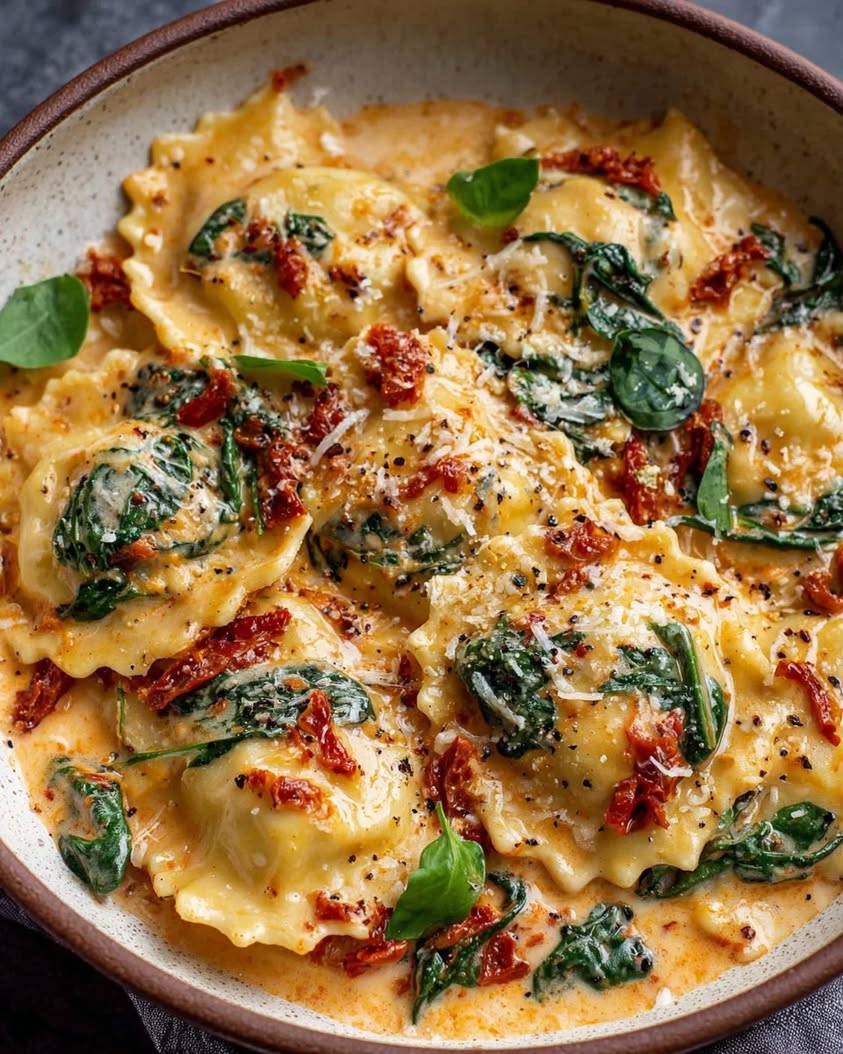
- Visual Appeal: This dish is a feast for the eyes with its vibrant color contrast. The creamy sauce has a beautiful pale orange hue from the tomatoes and cream. Bright green flecks of spinach are scattered throughout. Served in a bowl, the plump ravioli are generously coated, making for a very appetizing presentation.
- Skill Level Needed: This is a fantastic recipe for cooks of all levels. It requires only basic techniques like sautéing and simmering. Importantly, there is no complex pasta-making involved unless you choose to do so. Therefore, even a beginner can achieve restaurant-quality results with ease.
- Special Equipment: You need only standard kitchen tools. A large skillet or sauté pan is essential for making the sauce. Additionally, a large pot for boiling the ravioli and a colander for draining are necessary. A good chef’s knife and cutting board will handle the minimal prep work.
Recipe Overview
- Difficulty Level: We rate this recipe as “Easy” for several key reasons. First, it utilizes convenient store-bought ravioli, eliminating the most time-consuming step. Second, the sauce technique is straightforward, involving simple sautéing and simmering. Finally, the ingredient list is short and composed of items often already in a well-stocked pantry. Consequently, it’s nearly foolproof for a delicious weeknight meal.
- Category: This dish fits perfectly into multiple meal categories. Primarily, it is a fantastic main course for lunch or dinner. It also works wonderfully as a hearty pasta course in a larger Italian-inspired feast. Furthermore, it can be a luxurious comfort food option for a cozy night in.
- Cuisine: The recipe is rooted in Italian-American culinary traditions. It draws inspiration from classic creamy tomato pasta sauces, like a rosé or vodka sauce. The use of sun-dried tomatoes and Parmesan cheese is distinctly Italian. However, the simplicity and use of heavy cream give it a modern, accessible American twist.
- Cost: This is a very cost-effective way to enjoy a gourmet-tasting meal. Store-bought ravioli and basic pantry staples form the foundation. Sun-dried tomatoes and fresh spinach are the only specialty items, and a little goes a long way. Overall, you can feed a family of four for far less than the cost of a restaurant meal.
- Season: This rich and flavorful ravioli is truly a dish for all seasons. In colder months, its creamy, hearty nature provides warmth and comfort. During spring and summer, the bright notes from the sun-dried tomatoes and spinach feel fresh and lively. It’s a versatile recipe you can enjoy year-round.
- Occasion: It’s ideal for a wide variety of occasions. It’s quick enough for a casual Tuesday family dinner. Simultaneously, it’s elegant enough to serve for a date night or small dinner party. It’s also a fantastic option for holiday meals when you want something impressive but simple.
Why You’ll Love This Recipe
First and foremost, the taste and texture of this dish are absolutely divine. Each bite delivers a perfect harmony of flavors. The creamy sauce, with its tangy sun-dried tomato base, clings to the tender ravioli. Meanwhile, the fresh spinach adds a pop of color and a delicate earthiness. The subtle heat from the red pepper flakes and the salty punch from the Parmesan create layers of complexity that will have everyone asking for seconds. It’s a restaurant-quality experience crafted in your own kitchen.
Secondly, the convenience factor is a major win. This entire meal comes together in about thirty minutes from start to finish. You can have a gourmet pasta dinner on the table faster than you could get takeout. The recipe uses mostly pantry staples and one pan for the sauce, minimizing both prep and cleanup. It’s the ultimate solution for busy nights when you want a satisfying, home-cooked meal without the fuss. The simplicity of the process makes it a reliable go-to recipe.
Nutritionally, this dish offers more than just empty calories. Spinach is a powerhouse green, packed with iron, vitamins A, C, and K. Sun-dried tomatoes are concentrated sources of antioxidants like lycopene. Using a moderate amount of cream and cheese provides richness without being overly heavy. You can easily boost the nutritional profile by using whole-wheat or protein-packed ravioli. It’s a meal that feels indulgent while still providing valuable nutrients.
From a social perspective, this recipe is a fantastic entertainer. It’s visually impressive and universally appealing, making guests feel special. The recipe scales up easily for a crowd, and you can prepare parts of it ahead of time. Serving a beautiful plate of this rich and flavorful ravioli shows care and effort. It sparks conversation and creates a warm, welcoming atmosphere for any gathering, from family dinners to festive parties.
Finally, it is remarkably cost-effective and accessible. The ingredients are not exotic or expensive. A jar of sun-dried tomatoes can be used across multiple recipes. You have the flexibility to choose ravioli that fits your budget, from basic cheese to more luxurious fillings. Compared to ordering a similar dish at an Italian restaurant, you save a significant amount of money. This recipe proves that eating well doesn’t require a lavish budget or hard-to-find ingredients.
Historical Background and Cultural Significance
The story of ravioli is a journey through Italian culinary history. While its exact origin is debated, food historians believe stuffed pasta forms like ravioli date back to the Middle Ages. Early references appear in manuscripts from the 14th century in Venice and Genoa. Initially, these stuffed parcels were a practical way to use up leftover meats and cheeses. They were often served in a simple broth, making a hearty and economical meal for families. Over centuries, ravioli evolved from peasant food to a celebrated staple of Italian cuisine.
Culturally, ravioli holds a special place, particularly as a Sunday dinner or holiday dish. In many Italian families, making fresh ravioli is a cherished tradition that brings generations together. The fillings and shapes often vary dramatically from region to region, reflecting local ingredients and customs. For instance, in Lombardy, ravioli might be filled with pumpkin and amaretti cookies. In contrast, coastal regions might feature seafood fillings. This dish represents the heart of Italian “cucina povera” – the art of creating magnificent food from humble ingredients.
The evolution of the recipe, especially the sauce, tells a story of adaptation. Traditional Italian cooking often uses simple, fresh tomato sauces or butter and sage for ravioli. The creamy sun-dried tomato sauce in this recipe is a more modern, Italian-American innovation. Sun-dried tomatoes became widely popular outside of Italy in the late 20th century. Their intense flavor allowed cooks to create robust sauces quickly. Combining them with cream resulted in a luxurious, quick-cooking sauce that pairs perfectly with stuffed pasta, bridging old-world tradition with new-world convenience.
Regional variations of stuffed pasta are endless, showcasing the diversity of Italian food. In Emilia-Romagna, you find tortellini and cappelletti. Sicily boasts its large, square “ravioli alla siciliana” with a ricotta filling. The concept extends globally, with similar dishes like Polish pierogi, Jewish kreplach, and Chinese wontons. This particular recipe, with its creamy spinach and sun-dried tomato sauce, represents a contemporary, fusion-style approach. It respects the soul of the pasta while embracing global pantry ingredients to create something uniquely delicious and accessible for the modern home cook.
Ingredient Deep Dive
Sun-Dried Tomatoes: Historically, sun-drying tomatoes was a preservation method used in Southern Italy and the Mediterranean to capture summer’s bounty for winter. Nutritionally, they are a concentrated source of antioxidants, particularly lycopene, which is linked to heart health. When selecting them, choose dry-packed tomatoes in oil for the best flavor and plump texture. Store an opened jar in the refrigerator, ensuring the tomatoes remain submerged in oil. For a substitution, you can use high-quality tomato paste thinned with a bit of water, though you’ll miss the distinctive chewy texture.
Fresh Spinach: Spinach has a long culinary history, originating in Persia and spreading via trade routes to Europe. It is famously rich in iron, calcium, and vitamins A and K, supporting bone and eye health. Always select vibrant, dark green leaves without yellowing or sliminess. Store it unwashed in a plastic bag in the crisper drawer. If you need a substitute, other hearty greens like Swiss chard or kale will work, though they may require slightly longer cooking. Baby spinach is ideal here for its tenderness.
Heavy Cream: Cream has been used for centuries to add richness and body to sauces across European cuisines. It provides fat, which carries flavor and creates a luxurious mouthfeel. For a lighter version, half-and-half can be used, but the sauce will be thinner and less rich. Always use fresh cream and check the expiration date. To store, keep it tightly sealed in the coldest part of your refrigerator. For a dairy-free alternative, full-fat coconut cream can provide a similar richness, though it will impart a coconut flavor.
Parmesan Cheese: Authentic Parmigiano-Reggiano, with its protected designation of origin, is a cornerstone of Italian gastronomy with a history dating back 900 years. It’s an excellent source of protein and calcium. For the best flavor, buy a block and grate it yourself; pre-grated cheese contains anti-caking agents that can make sauces grainy. Store wrapped tightly in the fridge. As a substitute, a high-quality Pecorino Romano offers a sharper, saltier flavor, while Grana Padano is a milder, less expensive alternative.
Fresh Ravioli: While you can use any ravioli, choosing a quality brand makes a difference. Look for ravioli in the refrigerated section, as frozen varieties can become mushy. Cheese-filled ravioli is a classic pairing, but mushroom, butternut squash, or lobster ravioli create exciting variations. Always check the cooking time on the package, as it can vary. To store fresh ravioli, keep it refrigerated and use it by the “use by” date for the best texture and flavor.
Common Mistakes to Avoid
- Overcooking the Ravioli: This is the most common pitfall. Ravioli cooks very quickly, often in just 3-4 minutes. Follow the package instructions precisely and taste for doneness. Overcooked ravioli becomes mushy and can burst open, losing its filling into the water.
- Using High Heat for the Sauce: Cooking the garlic and red pepper flakes over high heat will cause them to burn in seconds, creating a bitter flavor. Always use medium or medium-low heat when sautéing these aromatic ingredients to gently release their flavors without scorching.
- Adding Cold Cream to a Hot Pan: Pouring cold heavy cream directly into a very hot skillet can cause it to separate or curdle. To prevent this, let the cream sit out for 10-15 minutes to take the chill off, or add it slowly while stirring constantly.
- Overcrowding the Pasta Pot: Adding all the ravioli to a small pot of water will lower the temperature drastically and cause them to stick together. Use a large pot with plenty of generously salted boiling water, and cook the ravioli in batches if necessary.
- Not Reserving Pasta Water: The starchy, salty pasta water is liquid gold for adjusting your sauce. Before draining the ravioli, scoop out at least a cup of the cooking water. You can use it to thin the sauce to the perfect consistency.
- Adding Cheese to a Boiling Sauce: If you stir grated Parmesan into a violently bubbling sauce, the high heat can cause the cheese to seize up into a clumpy, stringy mess. Always remove the sauce from the heat or turn it down to low before incorporating the cheese.
- Skipping the Seasoning Taste Test: The saltiness of your Parmesan, sun-dried tomatoes, and pasta water varies. Always taste the finished sauce before serving and adjust the seasoning with salt and black pepper. This final step is crucial for a balanced flavor.
- Using Pre-Grated Parmesan: While convenient, pre-grated cheese contains cellulose to prevent clumping. This additive can prevent the cheese from melting smoothly into the sauce, resulting in a slightly grainy texture. A block of real Parmesan grated fresh is always superior.
Essential Techniques
Sautéing Aromatics: This foundational technique builds the flavor base of your sauce. Using medium heat, you gently cook the garlic and red pepper flakes in butter or oil until fragrant, which usually takes about 30-60 seconds. The goal is to release their essential oils without browning them, as burnt garlic turns bitter. The visual cue for success is a soft, golden aroma filling your kitchen without any dark spots in the pan. Stir constantly to ensure even cooking and prevent hot spots from causing burns.
Wiltng Spinach: Wilting is a quick-cooking method that reduces volume and tenderizes leafy greens. When you add fresh spinach to the hot pan, it will seem like a massive amount at first. However, as you stir, the heat causes the water in the leaves to release and the spinach to collapse. The technique is complete when all the leaves have turned bright green and are fully limp, which happens in just 1-2 minutes. Overcooking at this stage will turn the spinach slimy and dull its vibrant color, so work quickly.
Creating an Emulsion: A smooth, creamy sauce is a stable emulsion where fat (cream, butter) and water-based liquids (pasta water, tomato oil) are combined. The key is gradual incorporation and constant agitation. After adding the cream to the pan, allow it to heat through gently. Then, when you add the starchy pasta water and cheese, stir vigorously. This helps the fat molecules disperse evenly, preventing separation. The sauce is ready when it is homogenous, slightly thickened, and coats the back of a spoon.
Finishing Pasta in the Sauce: This is a pro chef’s secret for deeply flavorful pasta. Instead of just topping cooked ravioli with sauce, you briefly simmer the drained pasta in the sauce pan. This allows the ravioli to absorb some of the sauce’s flavor and helps the sauce adhere to every nook and cranny. Use a gentle heat and add splashes of reserved pasta water as needed to keep the sauce fluid. The result is a cohesive dish where the pasta and sauce are one unified element, not two separate components.
Pro Tips for Perfect Rich and Flavorful Ravioli
First, always salt your pasta water generously. It should taste like the sea, as this is the only chance to season the ravioli itself from the inside out. This foundational step ensures your pasta is flavorful, not bland.
Second, use the oil from the sun-dried tomato jar to sauté your garlic. This infused oil is packed with flavor and will give your sauce an even more intense tomato essence from the very beginning of the cooking process.
Third, add a splash of dry white wine to the pan after sautéing the garlic. Let it simmer for a minute to cook off the alcohol before adding the cream. This adds a wonderful layer of acidity and complexity to the sauce.
Fourth, if your sauce seems too thin after adding the ravioli, let it simmer for an extra minute or two. The starch released from the pasta will naturally thicken the sauce to a perfect, clingy consistency.
Fifth, for an extra flavor boost, add a teaspoon of fresh lemon zest to the finished sauce just before serving. The bright citrus note cuts through the richness and makes all the other flavors pop beautifully.
Sixth, toast your ravioli for added texture. After boiling and draining, you can lightly sauté them in a separate pan with a little butter or oil until their edges are just golden and crisp.
Seventh, let the finished dish rest for two minutes before serving. This allows the sauce to settle and the ravioli to absorb a bit more flavor, resulting in a more harmonious final bite.
Eighth, garnish with more than just extra Parmesan. A sprinkle of toasted pine nuts, fresh basil ribbons, or a drizzle of high-quality olive oil adds visual appeal and contrasting textures.
Variations and Adaptations
Regional Variations: To mimic a Northern Italian style, use butter instead of olive oil and finish with sage. For a Southern Italian twist, add chopped olives and capers to the sauce and use ricotta-filled ravioli. An American-Italian adaptation might include cooked Italian sausage or shredded chicken stirred into the sauce for a heartier, protein-packed meal.
Seasonal Adaptations: In spring, add fresh peas and asparagus tips along with the spinach. For summer, use fresh cherry tomatoes halved and sautéed, and substitute basil for the spinach. In autumn, incorporate roasted butternut squash cubes and use a sage-infused brown butter sauce as a base instead of the cream sauce.
Dietary Modifications: For a gluten-free version, use certified gluten-free ravioli. To make it dairy-free, substitute the butter with olive oil, the heavy cream with full-fat coconut cream, and the Parmesan with nutritional yeast or a vegan Parmesan alternative. For a lower-carb option, serve the sauce over spiralized zucchini noodles or shirataki noodles instead of ravioli.
Flavor Variations: Add a tablespoon of tomato paste with the garlic for a deeper tomato flavor. Stir in a few anchovy fillets at the garlic stage for a savory umami punch (they will dissolve). Incorporate different herbs like fresh thyme, oregano, or tarragon to change the aromatic profile completely.
Texture Modifications: For a chunkier sauce, roughly chop the sun-dried tomatoes instead of slicing them thinly. Add toasted walnuts or breadcrumbs as a garnish for crunch. For an ultra-smooth sauce, blend the cooked sun-dried tomatoes and cream mixture with an immersion blender before adding the spinach.
Presentation Alternatives: Serve the ravioli and sauce in individual, shallow bowls for a rustic feel. Plate it on a large platter family-style, garnished generously in the center. For a more formal presentation, use a ring mold to create a neat tower of ravioli on each plate, then spoon the sauce around it.
Serving and Presentation Guide
Plating Techniques: For the most appealing presentation, use a pair of tongs or a large spoon to gently place the ravioli in the center of a warm, shallow bowl. Then, ladle the sauce over the top, allowing some to pool around the edges. Avoid drowning the pasta; the goal is to coat it generously while still letting the shapes be visible. This method highlights the main components and makes the dish look carefully composed.
Garnishing Ideas: The right garnish adds color, texture, and a final flavor note. A light snowfall of freshly grated Parmesan is classic. Freshly chopped parsley or basil adds a vibrant green contrast. For crunch, sprinkle with toasted pine nuts, breadcrumbs, or even crispy prosciutto bits. A final drizzle of high-quality extra virgin olive oil or a balsamic glaze adds shine and sophistication.
Traditional Accompaniments: In Italy, a pasta course like this is often served as a “primo” (first course). It would be followed by a simple “secondo” like a grilled chicken cutlet or fish. A crisp, green salad with a lemony vinaigrette served on the side helps cut through the richness of the creamy sauce. Crusty bread, like a baguette or ciabatta, is essential for mopping up every last bit of sauce from the plate.
Modern Serving Suggestions: For a contemporary, all-in-one meal, serve the ravioli in a deep bowl alongside a simple arugula salad dressed with lemon and shaved Parmesan right on top. Alternatively, offer it as a shareable appetizer for a party by serving smaller portions on decorative spoons or in small tasting bowls. Pair it with a glass of the recommended wine right at the table for a complete experience.
Temperature Considerations: Pasta dishes are best served immediately, piping hot. Warm your serving bowls by rinsing them with hot water and drying them just before plating. This prevents the sauce from cooling and congealing too quickly when it hits a cold surface. If you must hold the dish, keep the sauce warm on the lowest possible heat and cook the ravioli at the very last minute.
Portion Control Tips: A standard serving is about 6-8 large ravioli per person for a main course. For an appetizer portion, 3-4 ravioli is sufficient. Remember that the rich sauce is very satisfying, so you may need less pasta than you think. If serving family-style, estimate about 1.5 pounds of fresh ravioli to comfortably serve four adults as a main course.
Wine and Beverage Pairing
Wine Pairings: The rich, creamy, and tangy profile of this dish calls for wines with good acidity to cut through the fat. A Pinot Grigio or Sauvignon Blanc offers crisp citrus notes that cleanse the palate. For a red wine option, choose a lighter-bodied, low-tannin red like a Chianti Classico or a Barbera, whose bright acidity and cherry notes complement the tomatoes without overpowering the dish. An Italian rosé (Rosato) is also a fantastic, versatile choice that bridges the gap between white and red.
Non-Alcoholic Alternatives: Sparkling water with a twist of lemon or lime provides a refreshing, palate-cleansing effervescence. For a more complex option, try a tart cherry juice spritzer mixed with club soda and a basil leaf. Iced herbal teas, like lemon verbena or mint, work wonderfully. A high-quality ginger beer also pairs nicely, as its spicy sweetness contrasts the savory, creamy sauce.
Coffee and Tea Pairings: After the meal, a cup of espresso is a classic Italian finish that helps digest the rich meal. For tea, consider a black tea with citrus notes, like Earl Grey, or a gentle herbal peppermint tea. Avoid overly sweet or milky coffee drinks immediately after, as they can clash with the lingering savory flavors of the Parmesan and garlic.
Temperature Considerations: White and rosé wines should be served well-chilled, between 45-50°F. Light reds like Chianti are best served slightly cooler than room temperature, around 55-60°F, which enhances their freshness. Non-alcoholic sparkling drinks should be ice-cold to provide the best contrast to the warm, rich pasta.
Serving Suggestions: Always offer water on the table alongside any other beverage. If serving wine, pour a small taste first to allow guests to experience the aroma. For non-alcoholic options, consider serving them in elegant glassware to make the experience feel just as special. Encourage sipping between bites to fully appreciate how the beverages interact with the flavors of the dish.
Storage and Shelf Life
Storage Methods: Store leftover ravioli and sauce combined in an airtight container in the refrigerator. It is best to keep them together, as the sauce helps prevent the pasta from drying out. Do not leave the dish at room temperature for more than two hours after cooking. For optimal freshness, transfer leftovers to the refrigerator as soon as they have cooled slightly, within an hour of serving.
Temperature Requirements: Refrigerate leftovers promptly at 40°F or below. This temperature slows bacterial growth and maintains food safety. The dish will keep for 3-4 days under proper refrigeration. If you need to store it longer, freezing is the best option, though the texture of the ravioli may soften slightly upon reheating.
Container Recommendations: Use shallow, airtight containers rather than deep ones. This allows the food to cool more quickly and evenly, which is critical for safety. Glass containers are ideal as they don’t absorb odors and allow you to see the contents. If using plastic, ensure it is BPA-free and designated for food storage.
Signs of Spoilage: Discard leftovers if you notice an off or sour smell, which indicates bacterial growth. Visible mold, however rare on a saucy dish, is an immediate sign to throw it away. If the sauce has separated irreversibly into oily and watery layers, the emulsion has broken, and while it may be safe, the quality is poor.
Reheating Instructions: The best method is on the stovetop. Place the leftovers in a skillet or saucepan with a splash of water, milk, or broth. Gently reheat over medium-low heat, stirring frequently, until warmed through. Avoid boiling, as this can further break down the ravioli. The microwave can be used in a pinch; cover the dish and reheat at 50% power in short intervals, stirring in between.
Freezing Guidelines: This dish can be frozen for up to 2 months. Portion it into freezer-safe containers, leaving about an inch of headspace for expansion. Thaw overnight in the refrigerator before reheating. Note that the spinach may become darker and the ravioli texture may be slightly softer after freezing and reheating, but the flavor will remain excellent.
Make Ahead Strategies
Prep Timeline: You can prepare the entire sauce up to 2 days in advance. Simply follow the recipe through adding the cream and sun-dried tomatoes, but omit the spinach and Parmesan. Cool the sauce completely, then store it covered in the refrigerator. On the day of serving, reheat the sauce gently, then proceed with wilting the fresh spinach and stirring in the Parmesan cheese just before combining with the freshly cooked ravioli.
Storage Between Steps: Store the pre-made base sauce in an airtight container. Keep pre-washed spinach in its original bag or a separate container. Grate the Parmesan cheese ahead of time and store it in a small bag or container. This “mise en place” approach turns final assembly into a quick 10-minute process, as you only need to boil the ravioli and finish the sauce.
Quality Impact Assessment: Making the sauce base ahead actually improves the flavor, as the ingredients have time to meld. However, adding the spinach and cheese in advance is not recommended. Spinach will lose its vibrant color and become slimy when reheated, and cheese can cause the sauce to become grainy or separate if stored and reheated. Therefore, these are “day-of” ingredients for the best texture.
Assembly Tips: For a dinner party, have your pot of salted water ready to boil. Have the pre-made sauce reheating gently on a back burner. The moment your guests arrive, drop the ravioli in the boiling water. By the time you’ve finished greetings, the pasta will be done, and you can instantly finish the sauce and plate a stunning, fresh meal.
Reheating Guidelines: Reheat the pre-made sauce base over low to medium heat, stirring frequently. If it has thickened too much in the fridge, thin it with a little milk, cream, or water to reach the desired consistency. Once hot, proceed with the recipe by wilting the spinach and melting in the cheese.
Fresh Element Additions: This strategy relies on adding fresh elements at the end. Always use fresh spinach rather than frozen for the final wilt. Grate the Parmesan cheese just before using it for the best melting quality. Consider a final garnish of fresh herbs added directly to the plated dish for a burst of color and aroma that says “made fresh.”
Scaling Instructions
Halving the Recipe: Halving this recipe is straightforward for a meal for two. Simply divide all ingredient quantities by two. Use a medium skillet instead of a large one. The cooking times will remain largely the same, but keep a close eye on the sauce as smaller volumes can reduce and thicken more quickly. You may need slightly less pasta water to adjust the sauce consistency at the end.
Doubling or Tripling: To serve a crowd, you can easily double or triple the ingredients. The key adjustment is to use a very large, wide pan or Dutch oven to accommodate the increased volume of sauce without overcrowding. You may need to cook the ravioli in multiple batches to avoid sticking and ensure even cooking. Keep the first batches warm by tossing them with a little olive oil and covering them while you cook the rest.
Equipment Adjustments: Scaling up requires larger equipment. Use your biggest pot for boiling pasta, and consider using two pots if tripling. A wide, high-sided sauté pan or a large stockpot is essential for the sauce. Have a large colander ready for draining, and prepare several warm serving platters or bowls in advance.
Timing Modifications: When scaling up, the sauce will take slightly longer to come to a simmer due to the larger volume. Factor in an extra 5-10 minutes for sauce preparation. The most significant time addition will be cooking the ravioli in batches. To streamline, you can start boiling water and cooking the first batch of ravioli while the sauce is simmering.
Storage Considerations: If you have leftovers from a scaled-up batch, portion them into meal-sized containers before refrigerating. This makes reheating easier and prevents the large mass of food from cooling too slowly, which is a food safety concern. Label containers with the date so you can track shelf life accurately.
PrintRich and Flavorful Ravioli with Spinach and Sun-Dried Tomato Sauce
- Total Time: 45 minutes
- Yield: 4
Description
A comforting and elegant pasta dish featuring cheese-filled ravioli tossed in a creamy, savory sauce with spinach and sun-dried tomatoes.
Ingredients
- 1 lb cheese ravioli (fresh or frozen)
- 2 tbsp olive oil
- 3 cloves garlic, minced
- 1/2 cup sun-dried tomatoes (packed in oil, drained and chopped)
- 4 cups fresh spinach
- 1 cup heavy cream
- 1/2 cup grated Parmesan cheese
- 1/4 tsp red pepper flakes (optional)
- Salt and black pepper to taste
- Fresh basil for garnish
Instructions
- Bring a large pot of salted water to a boil and cook the ravioli according to package directions. Drain and set aside.
- In a large skillet, heat olive oil over medium heat. Add garlic and sauté for 1 minute until fragrant.
- Stir in sun-dried tomatoes and spinach, cooking until spinach wilts, about 2-3 minutes.
- Pour in heavy cream and bring to a simmer. Stir in Parmesan cheese until melted and the sauce thickens slightly.
- Add cooked ravioli to the skillet, tossing gently to coat in the sauce. Season with red pepper flakes, salt, and pepper.
- Serve immediately, garnished with fresh basil.
Notes
You can customize the seasonings to taste.
- Prep Time: 15 minutes
- Cook Time: 30 minutes
- Method: Main
- Cuisine: Italian-American